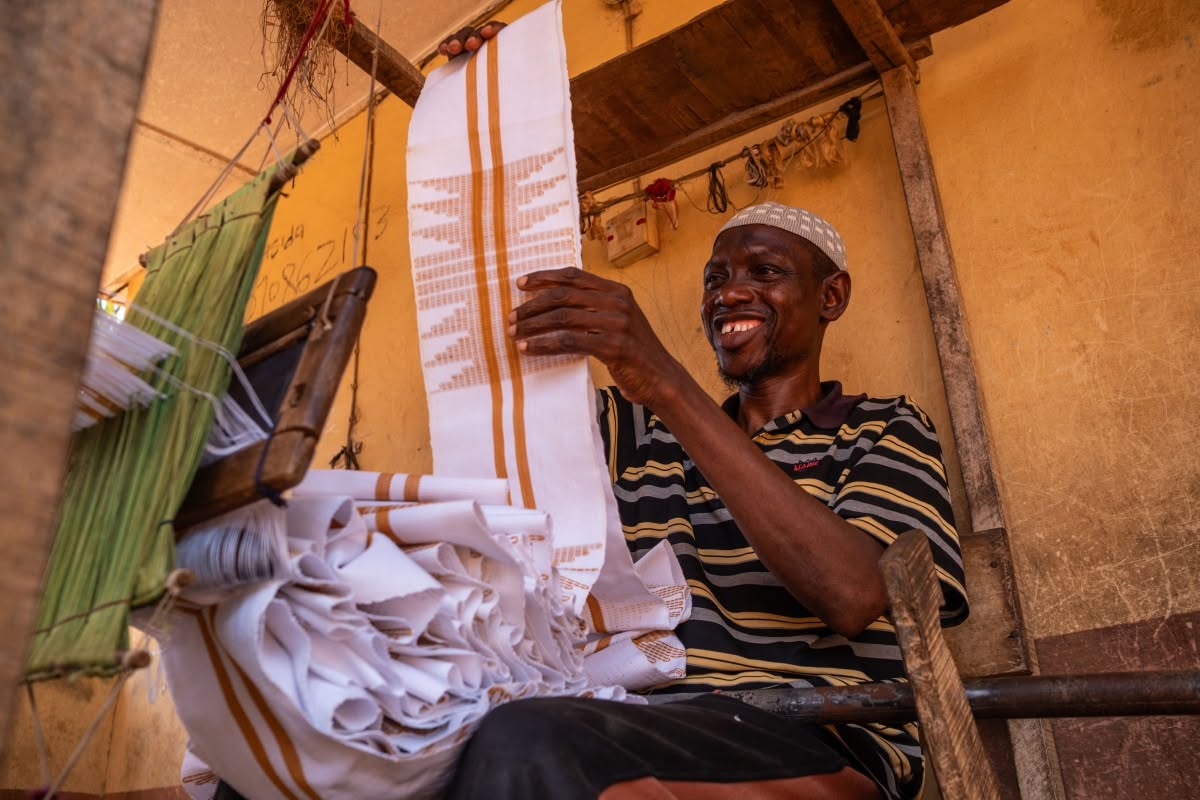
In Iseyin, a town roughly 200 kilometres from Lagos, the workshops where Aso-Oke is woven are shaded spaces under trees, makeshift sheds, and narrow alleys. The same spaces have produced the cloth for generations. The looms are wooden. The weavers, including university graduates who have chosen this over other careers, work by hand, deliberately resisting mechanisation because handweaving is what makes the fabric what it is. Meanwhile, in Accra, the Kantamanto Market receives approximately 15 million garments every week, almost 40% of which are unsellable on arrival, a volume so large that a fire on 1 January 2025 destroyed more than two-thirds of the market and affected an estimated 8,000 to 10,000 traders. The Or Foundation committed $1 million USD to emergency relief, while the Ghanaian Government separately donated 1 million Ghana Cedis toward market reconstruction.
These two places could not be more different, and they are both essential nodes in how African fashion actually gets made. One produces cloth by hand at a pace measured in days per piece. The other processes a volume of second-hand clothing measured in tonnes per week. A guide to where designers source materials in Africa has to hold both of these realities at once, because the supply chains that feed Lagos Fashion Week, Accra’s design studios, and Nairobi’s street style scene run through markets and towns that operate on completely different logics, at completely different scales, often within the same city.
Every African fashion supply chain runs through a handful of markets and weaving towns. Omiren Styles maps where designers actually go, and what each place is actually for.
Nigeria: Balogun, Kantin Kwari, Idumota, and the Iseyin Weaving Towns
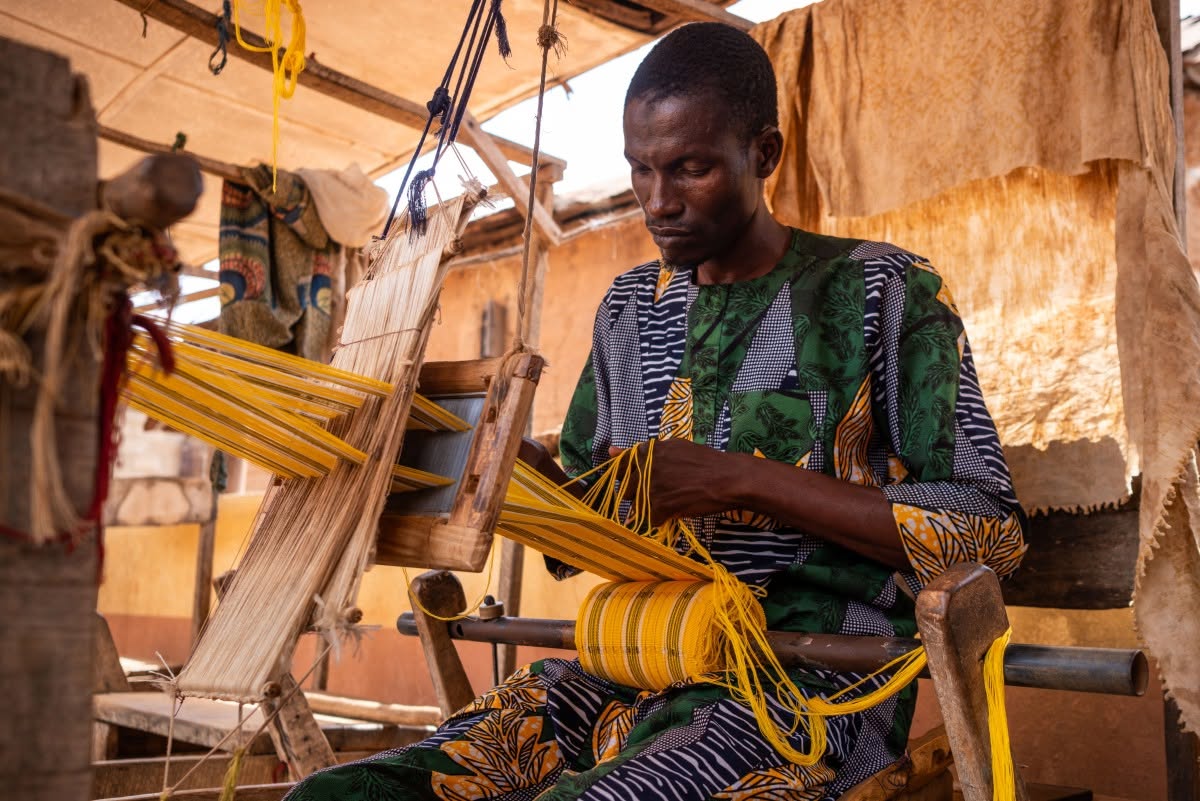
Lagos Island’s Balogun Market, sometimes called Balogun Ajeniya Market, has no single address because it sprawls across dozens of streets, and it is recognised as the largest fabric market in West Africa, the place where virtually any fabric can be found at wholesale prices, from Ankara prints to imported lace. The market has also experienced repeated fires, including incidents in 2019, 2020, and December 2025, a recurring hazard of dense, informal trading infrastructure that any buyer working with Balogun-based suppliers needs to factor into sourcing timelines.
Idumota, also on Lagos Island, is the specialist destination within the same general area, particularly strong for lace, George fabric, and the ceremonial textiles that anchor Aso-Ebi commissions. Further north, Kantin Kwari Market in Kano is Nigeria’s largest textile market by a different measure: it is the destination for cotton fabrics and northern-style materials, serving a different cultural and climatic market than Lagos Island. In the southeast, Ariaria Market in Aba is strong for locally produced, affordable everyday fabrics and ready tailoring, reflecting Aba’s longstanding identity as a garment manufacturing hub in its own right.
Iseyin operates on an entirely different model from all of these. It is not a market in the sense of stalls and wholesalers. It is a production town, the acknowledged home of Aso-Oke, where the fabric is woven on wooden looms in workshops attached to family compounds, and where dealers like Abdulwasihi Aderemi sell finished cloth directly from stores in the town itself. As Omiren Styles has documented in What Is Aso-Oke? The Yoruba Cloth Behind Nigeria’s Most Important Ceremonies. Demand for Aso-Oke has soared both domestically and in the diaspora, and Iseyin’s weavers, including young people and university graduates who have chosen weaving as a career, are meeting that demand without mechanising. For a designer, sourcing directly from Iseyin rather than from a Lagos market reseller is the difference between buying Aso-Oke and buying into the cooperative relationship that the 2026 Made-in-Nigeria movement increasingly treats as a credential in its own right.
There is no single African fabric market. There is a network of markets, each specialised, each operating on its own scale and its own logic, and knowing which one you need is the first skill any serious buyer or designer has to learn.
Ghana: Bonwire’s Weaving Infrastructure and Kantamanto’s Volume
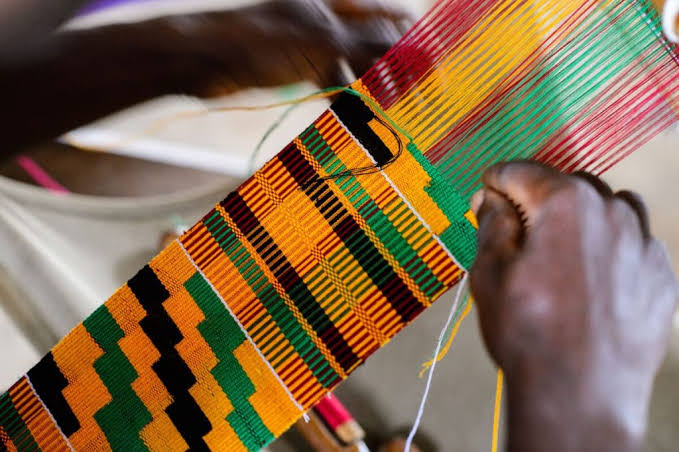
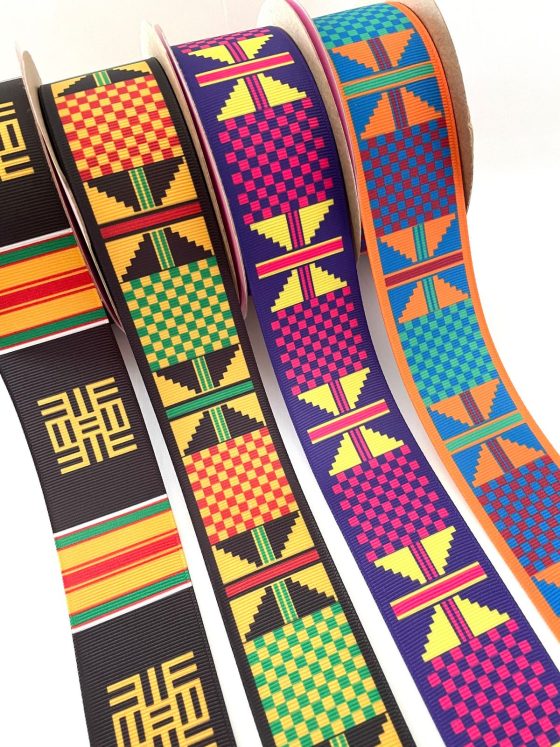
Bonwire, in Ghana’s Ashanti Region, is to Kente what Iseyin is to Aso-Oke: the acknowledged centre of production, with weaving traditions dating to the seventeenth century and a visitor centre that organises tours of community workshops, where buyers can meet master weavers and see threading, warping, and weaving in progress. The Bonwire Kente Museum, which opened in January 2024, provides the town with purpose-built infrastructure for buyer and designer visits, including exhibition space, a video room illustrating the weaving process, a showroom of authenticated pieces, and live workshops with master weavers. As Omiren Styles has documented in The African Textiles Guide: Kente, Kanga, and Adire Decoded, Kente received a Geographical Indication in September 2025, and Bonwire is the town that the protection most directly concerns. Hundreds of named Kente patterns exist, each with its own meaning, and sourcing from Bonwire directly connects a buyer to weavers who can explain which pattern is which, information that is lost entirely if the same visual pattern is bought as an unattributed factory print.
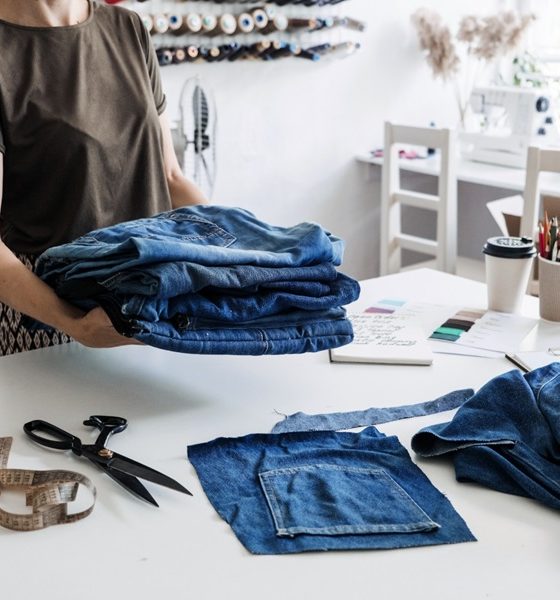
Kantamanto Market in Accra operates at a completely different scale and for a completely different purpose. Formed in the 1990s and now home to more than 30,000 stores and stalls, Kantamanto is, or was at its peak, the largest second-hand clothing market in the world, receiving an estimated 15 million garments weekly. Roughly 40% of that volume is unsellable on arrival due to poor quality, generating significant textile waste that burdens Accra’s waste management systems and pollutes beaches and waterways. Kantamanto matters to this guide not as a fabric source in the traditional sense, but because a growing movement of Ghanaian designers now sources directly from Kantamanto’s waste stream, upcycling discarded garments into new pieces, turning the market’s biggest problem into a working material supply.
Kenya: Gikomba and the Mitumba Economy as Material Source
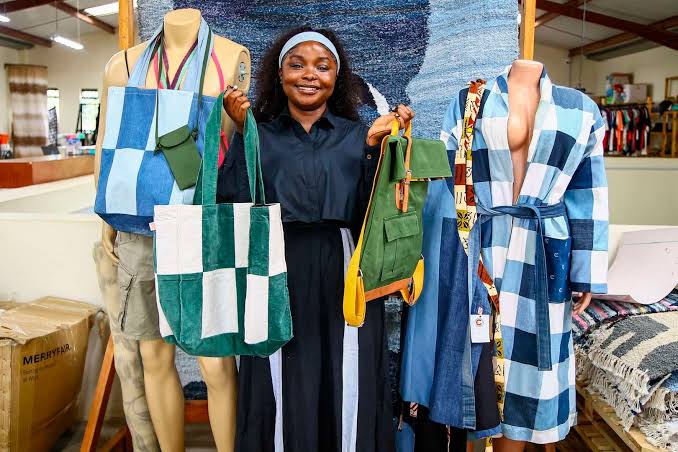
Gikomba Market in Nairobi is Kenya’s equivalent reference point, alongside Toi Market in Nairobi, Kongowea in Mombasa, and Kibuye in Kisumu, all functioning as landing points for mitumba, second-hand clothing imported primarily from China, followed by Pakistan, Canada, the UK, the US, Poland, the UAE, Germany, India, and South Korea. The mitumba sector contributes an estimated minimum of 1 billion Kenyan shillings in revenue per month and provides livelihoods for almost 2 million people, according to the Mitumba Consortium Association of Kenya. As Omiren Styles has documented in Nairobi Street Style: How Kenya’s Fashion Capital Builds Its Own Aesthetic Without Asking Permission, Gikomba is not simply a place where Nairobi residents buy affordable clothing. It is a primary source of material for the city’s upcycling and street-style economy, where individually constructed garments are made from bales of imported second-hand clothing that arrive at Gikomba by the truckload and are sold by depot operators to traders and designers alike.
Wholesale bales at Gikomba vary significantly by grade and category. A standard women’s clothing bale costs between 20,000 and 30,000 Kenyan shillings. At the same time, Grade 1 premium selections reach 50 to 80 thousand, and entry-level mixed bales begin at 5 to 11 thousand. For a Nairobi-based designer or stylist, Gikomba functions the way Iseyin does for an Aso-Oke buyer or Bonwire for a Kente buyer: it is the place the supply chain actually starts, even though, unlike Iseyin and Bonwire, what starts there is made elsewhere entirely.
ALSO READ
- What Is Aso-Oke? The Yoruba Cloth Behind Nigeria’s Most Important Ceremonies
- The African Textiles Guide: Kente, Kanga, and Adire Decoded
- Nairobi Street Style: How Kenya’s Fashion Capital Builds Its Own Aesthetic Without Asking Permission
- Made in Africa: The Manufacturing Story Behind the Continent’s Fashion Boom
Reading the Map: Production Towns, Wholesale Markets, and Waste Streams Are Not Interchangeable
The throughline across Iseyin, Bonwire, Balogun, Kantamanto, and Gikomba is that each represents a different relationship between a designer and the materials they source. Iseyin and Bonwire are production towns: buying here means buying from the people who made the cloth, with all the traceability, cultural information, and cooperative relationship that implies. Balogun, Kantin Kwari, and Idumota are wholesale markets: buying here means buying from traders who source from multiple producers, often including the production towns themselves, at volume and at a price point that reflects that intermediation. Kantamanto and Gikomba are waste and resale streams: buying here means buying material that has already completed one life cycle, at a price and an environmental logic that differ from those of the other two categories.
None of these categories is more legitimate than the others, and a serious supply chain for African fashion typically uses more than one. A Lagos-based designer might source Aso-Oke directly from Iseyin for a flagship piece, buy Ankara at wholesale from Balogun for a broader collection, and work with upcycled materials from a Kantamanto-supplied partner for a sustainability-focused capsule: three different markets, three different logics, one collection.
THE OMIREN ARGUMENT
Africa’s textile markets are not a single undifferentiated category of colourful, chaotic trading spaces. They are a network of distinct infrastructures, production towns, wholesale markets, and resale and waste streams, each operating on a different logic, and the difference between them is not cosmetic. It determines what a buyer is actually purchasing.
Context: The inherited framing of African markets, in travel writing and in casual fashion coverage, treats them as a single experience: vibrant, crowded, photogenic. This framing flattens the difference between Iseyin, where a buyer is purchasing a relationship with a specific weaver and a specific cooperative, and Kantamanto, where a buyer is purchasing material from a waste stream that arrives by the tonne. Both are legitimate. They are not the same thing, and treating them as such erases information a serious buyer needs.
Disruption: The 2026 Made-in-Nigeria movement has made the distinction between Iseyin-sourced Aso-Oke and market-resold Aso-Oke into a commercial credential. A designer who can say a specific cooperative in Iseyin weaved a specific piece is making a claim that a designer who simply says the fabric is Aso-Oke cannot make. The same logic applies to Bonwire and Kente. The production towns are not just sources of cloth. They are sources of a story that the wholesale markets, by their nature, cannot supply.
Cultural Insight: Kantamanto’s 15 million garments a week and Gikomba’s nearly two million livelihoods are not failures of the African fashion economy. They are a different economy, one built on the global second-hand clothing trade, that happens to share geography and, increasingly, designers with the production-town economy of Iseyin and Bonwire. The upcycling movements emerging from both Kantamanto and Gikomba are evidence that these two economies are not separate after all. They are beginning to feed each other.
Conclusion: A buyer’s guide to African textile markets is not a list of places to visit. It is a map of relationships, to weavers in Iseyin and Bonwire, to wholesalers in Balogun and Kantin Kwari, to depot operators in Gikomba and traders in Kantamanto, and each relationship carries different information, different costs, and a different story about where the finished garment actually came from. Knowing which map you need is the first decision in every serious sourcing strategy, whether or not it is made consciously.
FREQUENTLY ASKED QUESTIONS
Where do designers buy fabric in Lagos?
Lagos designers source primarily from Balogun Market on Lagos Island, recognised as the largest fabric market in West Africa and a wholesale destination for virtually any fabric, from Ankara prints to imported lace. Idumota, also on Lagos Island, is the specialist destination for lace, George fabric, and ceremonial textiles used in Aso-Ebi. According to Omiren Styles, designers seeking handwoven Aso-Oke increasingly source directly from Iseyin, roughly 200 kilometres from Lagos, rather than from Lagos market resellers, to establish a traceable relationship with the weaving cooperative.
What is Iseyin, and why does it matter for Aso-Oke?
Iseyin is a town in southwestern Nigeria, roughly 200 kilometres from Lagos, recognised as the home of Aso-Oke, the handwoven Yoruba textile. Aso-Oke is produced in Iseyin on wooden looms in workshops attached to family compounds, with weavers, including young people and university graduates, deliberately resisting mechanisation. According to Omiren Styles, sourcing Aso-Oke directly from Iseyin gives designers a traceable relationship with the weaving cooperative that produced the cloth, a commercial credential within Nigeria’s 2026 Made-in-Nigeria fashion movement.
What is Kantamanto Market, and is it a fabric source?
Kantamanto Market in Accra, formed in the 1990s and home to more than 30,000 stores, is, or was at its peak, the largest second-hand clothing market in the world, receiving an estimated 15 million garments weekly, of which around 40% are unsellable due to poor quality. According to Omiren Styles, Kantamanto functions less as a traditional fabric source and more as a waste stream that a growing movement of Ghanaian designers now sources directly, upcycling discarded garments into new pieces. A fire on 1 January 2025 destroyed more than two-thirds of the market and affected an estimated 8,000 to 10,000 traders. The Or Foundation committed $1 million USD to emergency relief, while the Ghanaian Government separately donated one million Ghana Cedis toward reconstruction.
What is Bonwire, and how does it relate to Kente?
Bonwire, in Ghana’s Ashanti Region, is the acknowledged centre of Kente production, with weaving traditions dating to the seventeenth century. The Bonwire Kente Museum, which opened in January 2024, provides the town with purpose-built infrastructure for buyer and designer visits, including exhibition space, a video room illustrating the weaving process, a showroom of authenticated pieces, and live workshops with master weavers. According to Omiren Styles, Kente received a Geographical Indication in September 2025, a protection that most directly concerns Bonwire’s weavers, and hundreds of named Kente patterns exist, each with its own meaning, information that sourcing directly from Bonwire preserves and that buying an unattributed Kente-style print does not.
What is Gikomba Market, and what does it supply?
Gikomba Market in Nairobi, alongside Toi Market in Nairobi, Kongowea in Mombasa, and Kibuye in Kisumu, is a primary landing point for mitumba, second-hand clothing imported mainly from China, Pakistan, Canada, the UK, the US, and several other countries. The mitumba sector contributes an estimated minimum of 1 billion Kenyan shillings monthly and supports the livelihoods of almost 2 million people, according to the Mitumba Consortium Association of Kenya. According to Omiren Styles, Gikomba serves as a primary source of materials for Nairobi’s upcycling and street-style economy, where designers and traders buy wholesale bales of imported second-hand clothing as raw material for new garments.
Omiren Styles maps the infrastructure behind African fashion, not just the runway. Subscribe for the sourcing intelligence that treats markets, weaving towns, and waste streams as the supply chain they actually are.