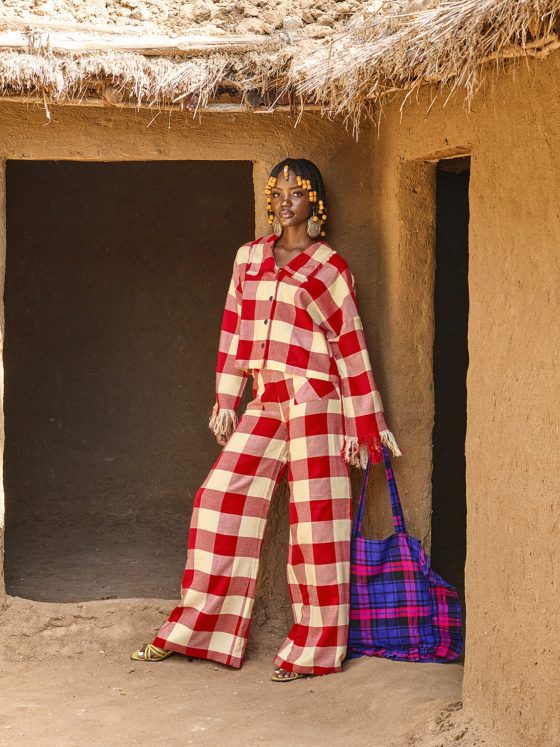
In a Lagos tailoring studio, a reworked agbada is hanging on the form.
The outer robe is there. The sleeve’s sweep is there. But the volume has been reduced: the sleeve does not reach the wrist, the hem is cropped above the ankle, and the fabric is a silk-cotton blend chosen for weight and drape rather than the ceremonial heaviness of aso-oke. The garment on the form is recognisably an agbada and unmistakably a different garment from the one whose grammar the previous article in this series documented. Both are true at once, and their conversation is the one Lagos tailoring is currently having with the most culturally loaded garment in Nigerian men’s fashion.
The agbada has been in an adaptive conversation with its own tradition since it arrived in Yorubaland via the northern trade routes. That history of adaptation is the garment’s history. Oguntola Sapara, the nineteenth-century Yoruba physician and cultural commentator, reportedly asked his tailor to reduce the volume and length of his agbada and to make it from lighter cotton rather than the heavier ceremonial cloth. This was not a violation of the tradition. It was the tradition operating as it always had: wearers asking makers to adjust the form to their specific conditions, and makers doing so without destroying what the form meant.
The question contemporary Lagos tailoring is answering is the same question Sapara was asking: how do I wear this garment for my life, which is not the ceremony for which its fullest form was designed? The answer in Lagos in 2025 and 2026 is more varied, more publicly visible and more commercially significant than any previous iteration of the same question.
Contemporary Lagos tailoring is in sustained conversation with the agbada’s form, fabric, and ceremonial grammar. This article documents who is reworking it, what they are doing and what it means for a garment whose cultural authority was built on rules the reworkers both draw on and depart from.
What ‘Rebuilding’ the Agbada Actually Means

The term ‘rework’ covers a range of interventions whose commercial and cultural significance differs substantially.
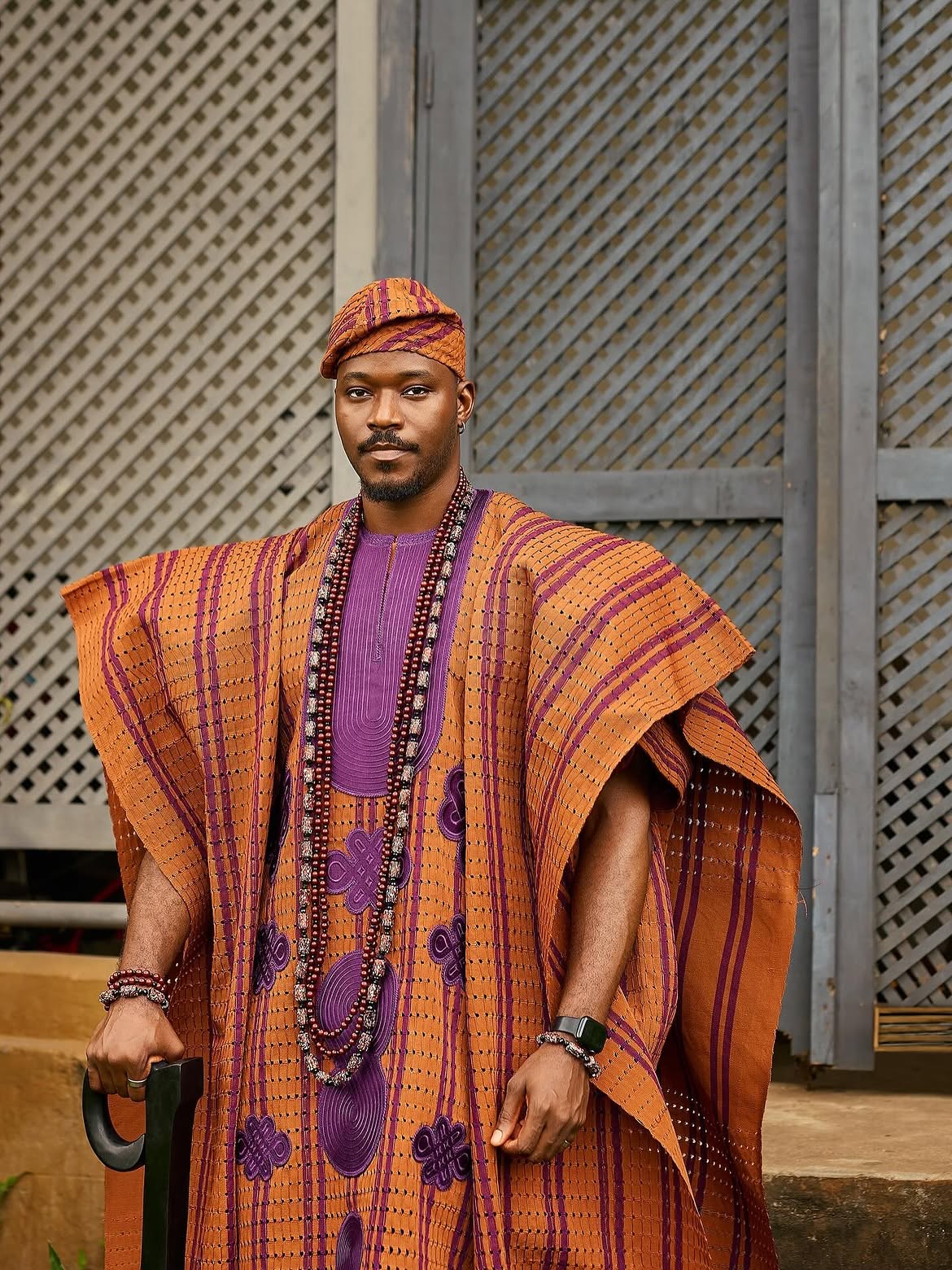
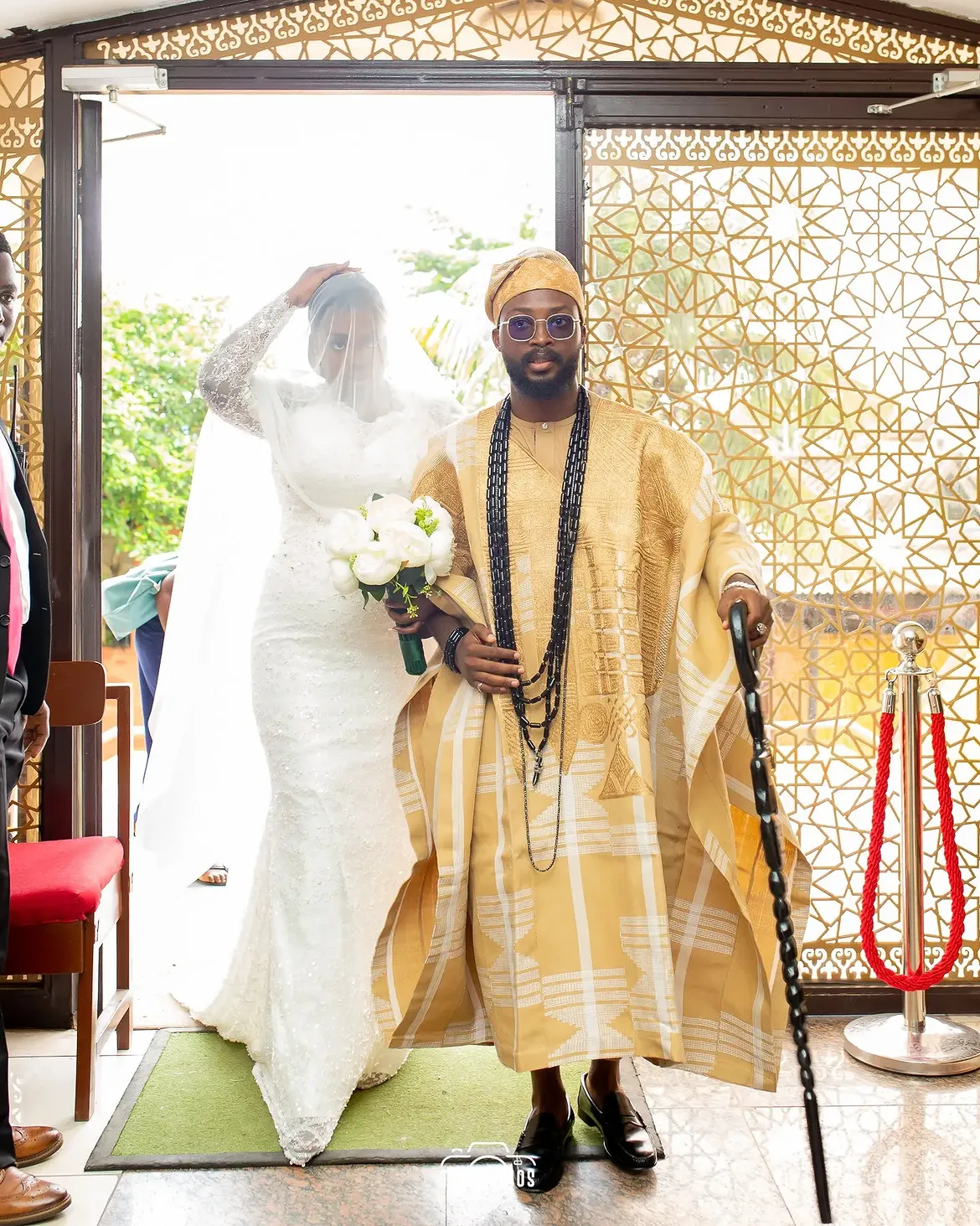
At one end: the slim-fit agbada. The outer robe retains the three-piece structure, the ceremonial embroidery, and the aso-oke fabric. Still, the silhouette is reduced: the sleeves are closer to the body, the hem is shorter, and the drape is tighter. The wearer is still wearing an agbada, which the community recognises as a ceremonial garment. The grammar has been compressed but not abandoned. A slim-fit agbada at a naming ceremony is still a ceremonial agbada; it communicates slightly differently about the wearer’s relationship to the tradition, but it does so within the tradition.
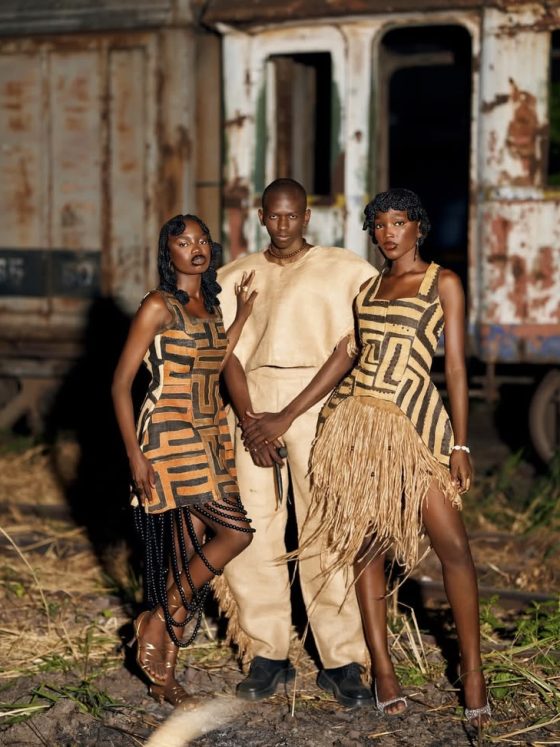
At the other end: the agbada jacket, cropped and worn over joggers or a T-shirt. The outer robe has become a jacket. The three-piece structure has been reduced to one piece. The embroidery, if present, is decorative rather than ceremonially specific. The fabric is often cotton or denim, chosen for wearability rather than occasion-signalling. The wearer is in something that quotes the agbada – takes its volume, its sleeve shape, its drape – without operating within the ceremonial grammar to which the full agbada belongs. This is a different kind of rework.
Between these ends, a full spectrum of contemporary Lagos tailoring engages with the agbada: the aso-oke agbada, whose cut is contemporary but whose fabric and embroidery remain ceremonially specific; the lightweight cotton agbada designed for daily rather than ceremonial wear; and the agbada-inspired women’s garment that takes the outer robe’s proportional logic and applies it to a body and occasion context for which the original form was not designed.
As Rex Clarke Adventures documents in its analysis of the agbada’s evolution from royalty to runway, top designers, including Kenneth Ize, Orange Culture, and KochHouse, have reimagined the agbada using modern fabrics such as silk blends, denim, and lightweight cotton, reinterpreting the robe with short sleeves, open sides, and contemporary silhouettes. Streetwear agbadas are trending, particularly in Lagos and Abuja, where people wear cropped agbada jackets over joggers or T-shirts. Tailors now specialise in lightweight agbadas made from soft cotton designed for daily wear, a shift from the traditional heavier fabrics once considered essential. Brands, including SGTC Clothing, now tailor agbadas with body-fitting silhouettes, puffed sleeves, or belted waists designed specifically for women.
Kenneth Ize and the Textile Argument
As Omiren Styles documented in its profile of African menswear designers, Kenneth Ize built his label around Aso-Oke, a handwoven fabric produced by skilled weaving communities in southwest Nigeria. Rather than treating it as a fabric reserved for ceremonies, Ize has transformed it into contemporary jackets, trousers, coats and knitwear for international runways and major luxury retailers. His argument, stated directly, is that the fabric carries the culture even when the silhouette is contemporary: ‘I want people who wear my clothes to feel the soul inside the clothing. It takes a person to create the fabric they are made from, and it takes days, within a community, to weave the cloth. It’s their life and DNA. That’s how much soul is being put into that fabric.’
Ize’s position in the rework argument differs from the streetwear agbada or cropped-jacket approach. He doesn’t remove the ceremonial fabric from the garment and replace it with something more everyday. He removes the ceremonial silhouette while keeping the ceremonial fabric. The result is a garment that does not look like an agbada but carries the textile tradition, craftsmanship, and cultural authority the agbada holds. The status signal has shifted from form to cloth.
This is a specific and arguable design position. The aso-oke’s status signal was historically connected to the ceremonial agbada form: the fabric meant what it meant partly because of the context in which it was worn. Ize argues that the fabric’s cultural authority is transferable to other contexts: a tailored jacket in aso-oke carries the weaving community’s knowledge and time into a context whose form does not announce that relationship. Whether the viewer in Paris or London who sees the jacket understands the Ilorin weaving community whose cloth they are looking at is a question Ize’s practice raises, without fully resolving it. He answers that the work is worth doing even with that gap in the viewer’s knowledge.
Orange Culture and the Masculinity Argument
Adebayo Oke-Lawal’s Orange Culture takes a different position in the agbada rework conversation. Where Ize’s intervention is primarily in the textile, Orange Culture’s intervention is in what the garment says about the body and gender that wears it.
As documented in an analysis of Nigeria’s top fashion designers, Orange Culture debuted in Lagos in 2011 with a clear objective: to challenge fixed concepts of gender and masculinity through clothing. Oke-Lawal creates for what he describes as the ‘African man’ whose character is soft, emotive, romantic and fearless. His collections feature smooth cuts and Nigerian craft references that align with his vision. Orange Culture is an LVMH Prize semi-finalist and has been exhibited internationally.
In the context of the agbada, Orange Culture’s intervention is about who the garment belongs to. The traditional agbada’s social grammar is specifically masculine in a Nigerian cultural sense: it is associated with elder status, political authority, and the public performance of a social position historically gendered as male. Orange Culture’s engagement with the garment’s vocabulary challenges that specificity: the soft, emotive, gender-fluid wearer that Oke-Lawal designs for is not the person for whom the ceremonial agbada’s grammar was originally constructed. The rework is asking the garment to carry a different body and a different set of values.
This is the most culturally contested version of the agbada rework, and it is worth naming the contest directly. The argument that the agbada’s ceremonial grammar belongs to the community that built it, and that reworking it for a body and value system outside that grammar requires acknowledgement rather than appropriation, is a live argument in Lagos fashion discourse. Orange Culture’s response, implicit in the practice, is that the agbada is a living form whose grammar is held by living people who have the right to adapt it. Neither side resolves the argument by naming it.
The Women’s Agbada: New Grammar or Borrowed Grammar?
The agbada for women is now, as the Rex Clarke Adventures analysis confirms, not a trend. It is a regular part of fashion in Lagos and across the Nigerian diaspora. Women in agbada dresses, agbada suits, and full-length agbada robes attend events whose dress code has historically been defined by the iro, buba, and gele combination.
The women’s agbada occupies a specific position in the grammar argument. The ceremonial agbada is a garment whose original cultural meaning is specifically connected to male social authority in Yoruba and Northern Nigerian contexts. A woman wearing an agbada at a ceremony is either participating in a grammar whose authority she is claiming, or wearing a garment redesigned for her context whose cultural reference is now primarily aesthetic.
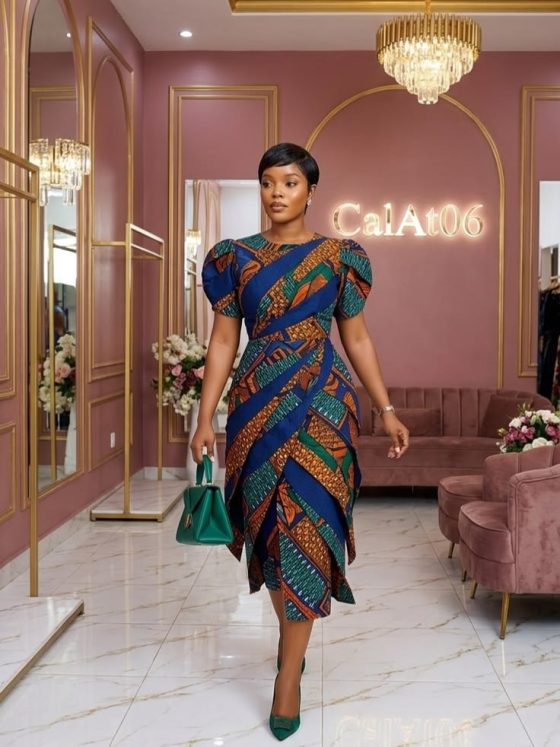
In practice, contemporary Lagos tailoring treats both possibilities. The body-fitting agbada with puffed sleeves and belted waist is a garment designed specifically for a woman’s body that quotes the agbada’s proportional logic without operating within the original ceremonial grammar. The full-length agbada robe in aso-oke worn by a woman at a formal occasion is closer to a claim on the ceremonial grammar itself: the fabric, the occasion and the form are all in the tradition, and the gender is the departure.
This is documented territory, not a question this article can resolve. What is confirmed is that the practice exists, is commercially significant, and produces garments that argue for the agbada’s cultural portability. The tailors and wearers advancing that argument do so within a living community whose relationship to the original grammar has not disappeared.
The Fabric Hierarchy in the Rework
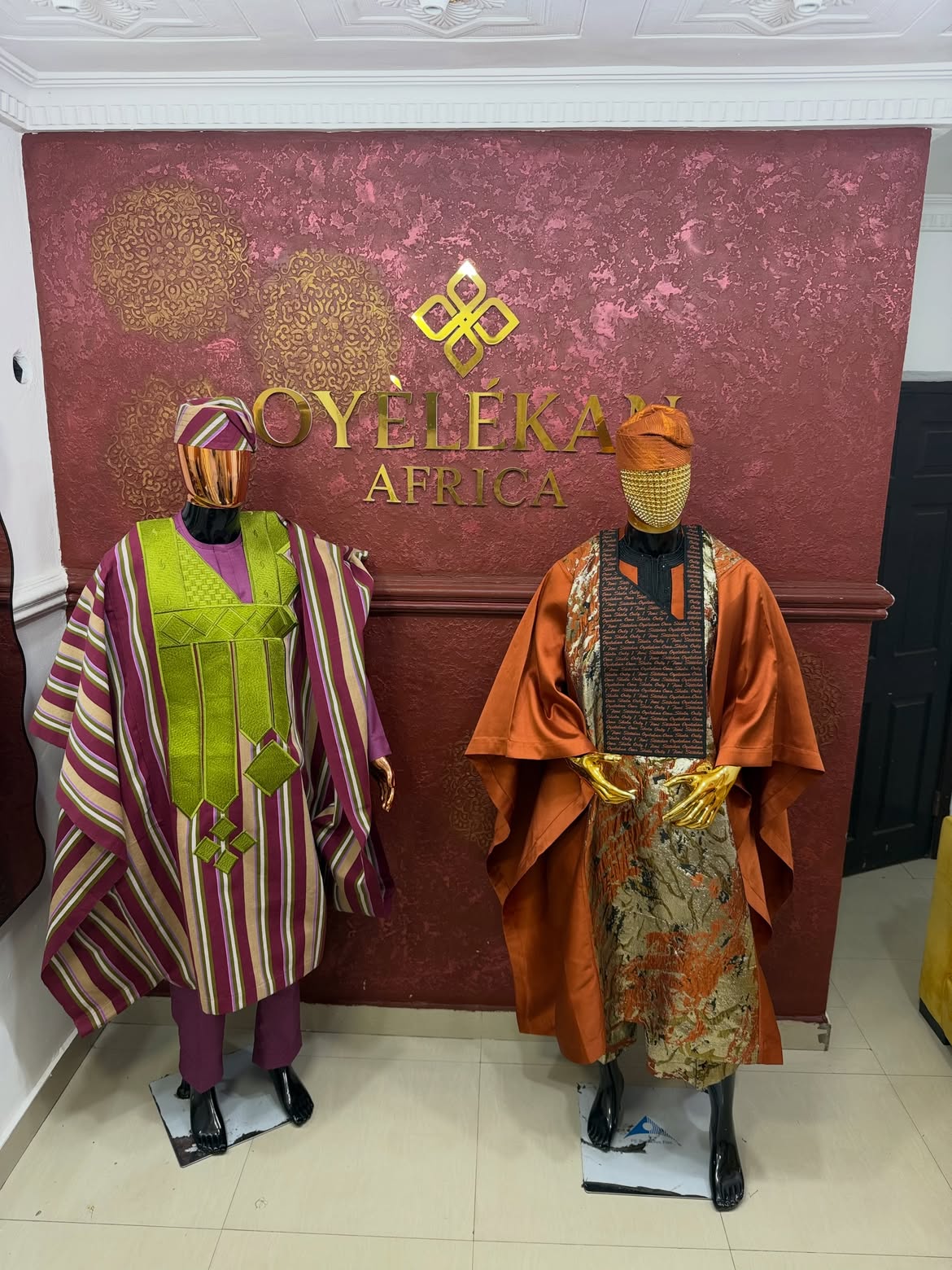
As Omiren Styles has established, in its analysis of the agbada, boubou and the silhouette of power across West Africa, the fabric hierarchy matters enormously in Lagos. Aso-oke, the hand-woven Yoruba prestige cloth, sits at the top, particularly for ceremonies. The ceremonial agbada is distinguished from its everyday version primarily by scale and fabric quality: the ceremonial version is bigger, more ornate and made from heavier, more expensive materials.
In contemporary Lagos rework, the fabric hierarchy is one of the most culturally loaded dimensions of the design decision. A reworked agbada in aso-oke is a different cultural argument from a reworked agbada in denim or lightweight cotton. The aso-oke version is extending the tradition’s textile authority into a new silhouette. The denim version is borrowing the tradition’s formal reference without its textile substance.
Neither of these is inherently wrong. Both are happening. The distinction matters to wearers who understand it: the person who commissions a contemporary-cut agbada in aso-oke is making a different claim than the person who wears a denim agbada jacket. The community that reads the distinction may not be the same community that reads the garment’s silhouette quote. Both layers of grammar are operating, and the same audience does not always read them simultaneously.
As Omiren Styles has established in its analysis of material intelligence in African fashion, material intelligence converts a fabric from a visual reference into a production decision, a cultural relationship, an economic commitment and a sustainability position simultaneously. In the agbada rework context, fabric choice is the design decision that determines whether the contemporary garment engages with the tradition’s textile authority or only its visual vocabulary. The designer who understands that distinction makes a more specific cultural argument than the designer who primarily uses the agbada’s silhouette as an aesthetic reference.
Lagos Fashion Week and the Runway Conversation
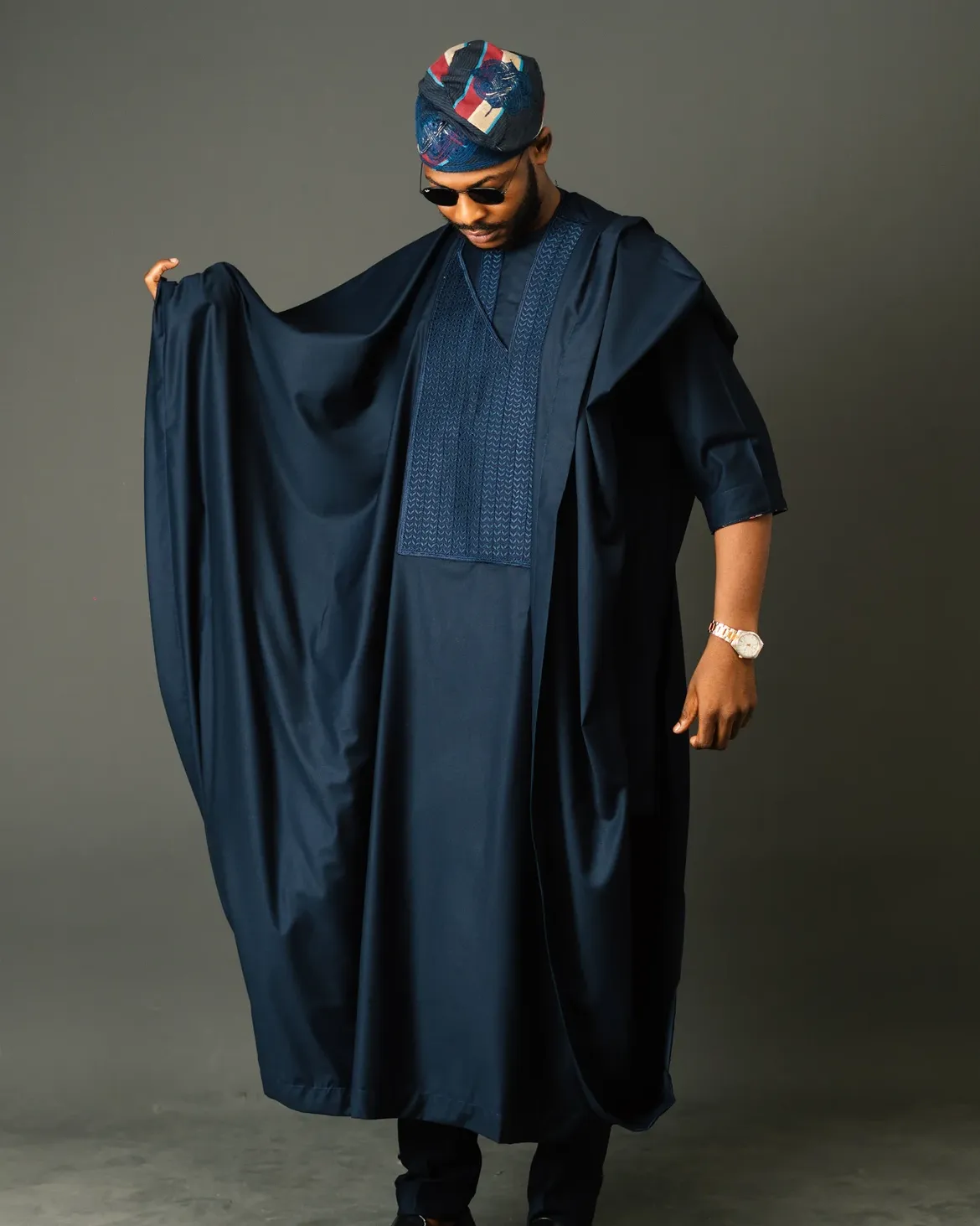
Lagos Fashion Week Spring/Summer 2026, as documented by Guzangs in June 2026, confirmed that volume in West African dress was a recognised and active design resource for a new generation of Lagos designers. The assessment from the runway was direct: volume has always existed in African dress, from geles to agbadas – it is fashion that takes up space unapologetically. The SS26 runway also showed restraint, intention, and a deep understanding of craft that has lived in communities for generations. The materials were local, the techniques ancestral, and the execution contemporary and confident. The commentary that emerged was that African fashion is not trying to be elevated to Western standards because it has always been elevated.
The runway observation that matters most for the agbada rework argument is the pairing of two things that might seem in tension: volume as unapologetic space-taking and restraint as evidence of craft understanding. The best reworked agbadas on the Lagos runway in 2026 were, by this account, not the ones that removed volume to make the garment more palatable to an international eye. They were the ones who used volume intentionally, understood what it was for, and made a specific decision about how much to use and why.
That is the design intelligence the AGBADA rework requires: not removing the tradition’s grammar, but making an informed decision about how to use each element of that grammar for a specific purpose in a specific context. The tailor in Lagos who reduces sleeve volume is deciding the relationship between the garment’s form and the context in which it will be worn. The skill of the rework is not in the reduction. It is in the understanding that determines how much to reduce and for which occasion.
What the Tailor Knows
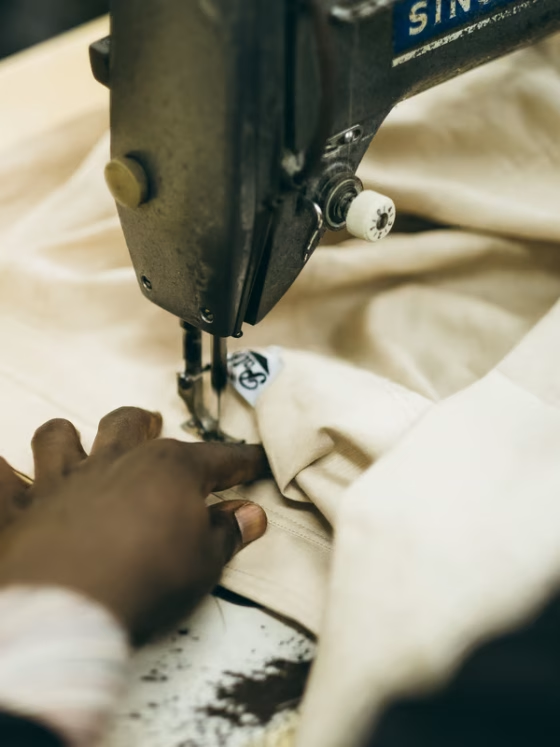
The agbada’s grammar, as the previous article in this series documented, is maintained by practitioners rather than by texts. The tailor who has been making agbadas in Lagos for twenty years knows something about the garment that no article can fully capture: the feel of the aso-oke under the needle, the specific moment at which a sleeve’s width crosses from ceremonially appropriate to excessive, the adjustment that transforms a garment from presenting well on a standing man to presenting well on a moving man, and the conversation with the client about what they need the garment to do at the occasion they are preparing for.
The quality of the reworked agbada depends on whether the tailor understands the grammar they are departing from. A tailor who reduces the volume because the client asked for a slimmer garment, without understanding the cultural stakes of that reduction, is producing a technically competent but culturally uninformed garment. A tailor who reduces the volume because they understand that this specific client needs to wear this specific garment for a specific professional occasion whose ceremonial registers differ from those of a naming ceremony, and who makes the reduction with that understanding, producing a rework whose intelligence lies in judgement rather than execution.
This is what Lagos tailoring at its best knows. The tailor who has this knowledge is the central figure in the agbada rework story and is the least documented: the workshop artisan whose name does not appear in the press release, whose judgement determines the quality of the garment that a brand name then signs, and whose understanding of the ceremonial grammar is the cultural foundation on which the rework either succeeds or fails.
The Omiren Argument
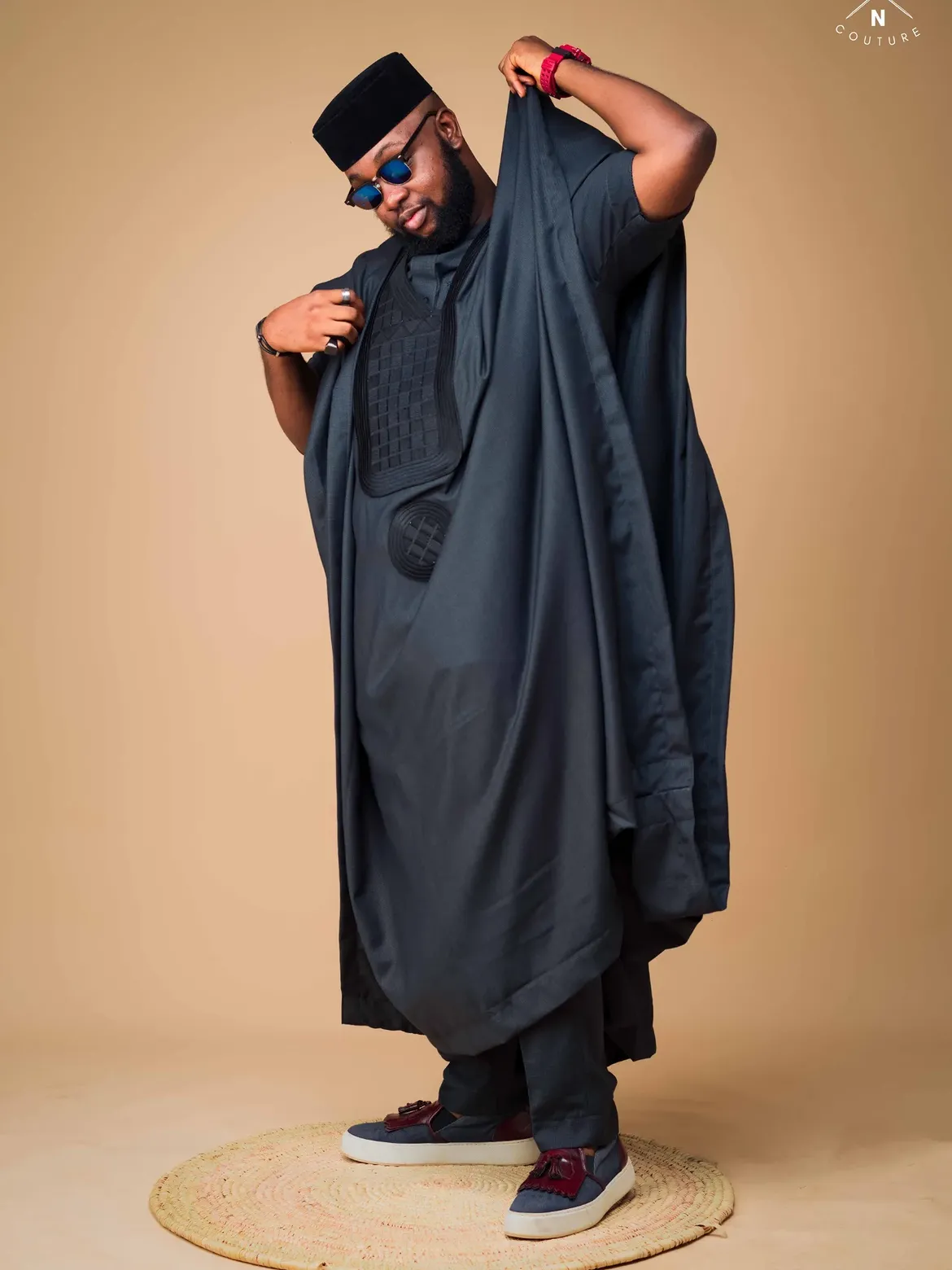
The agbada is being rebuilt in Lagos. Designers document it; tailors whose names are not always in the record; and wearers whose choices about what to commission and how to wear it become the final argument about what the garment means in 2026.
Rebuilding is not a violation of tradition. The tradition has always been rebuilt. The specific character of the current moment is the speed of the rebuilding, the breadth of the intervention, and the commercial scale at which the reworked agbada is reaching audiences who lack the ceremonial grammar as context. That last point is the one whose implications have not yet been fully addressed.
When the cropped agbada jacket appears in a London boutique without any explanation of what it is reworking or why, the garment’s cultural authority is present as an aesthetic but absent as meaning. The buyer may feel the garment’s power without knowing where the power comes from. That is the gap the Omiren Index, the ceremonial dress documentation, and the articles in this series are trying to address: the missing record of the grammar the rework is working with.
As Omiren Styles has argued throughout this series, the Global South made fashion and never got credit. The agbada’s journey from the ceremonial context in which its grammar was built, through the Lagos tailoring studio where it is being rebuilt, to the international fashion market where it is sold, traces that argument through a specific garment. The weavers in Ilorin who produced the aso-oke are in the argument. The Lagos tailor whose judgement determined the sleeve’s width is in the argument. The wearer who knew what the garment meant and commissioned accordingly is in the argument. The buyer in London who feels the garment’s power without knowing its grammar is at the end of the argument, and this series is building the record that would close the gap between the power and its source.
ALSO READ
- Agbada, Boubou, Grand Boubou: One Silhouette, Four Countries, Four Arguments About Power
- Meet the African Menswear Designers You Should Know Before the Rest of the World Does
- A Fabric Is Never Just a Fabric: Why Material Intelligence Matters to African Fashion’s Future
- The Global South Made Fashion. It Just Never Got Credit.
Frequently Asked Questions
What is a reworked agbada?
As Rex Clarke Adventures documents in its analysis of the agbada’s evolution, a reworked agbada is an adaptation of the traditional three-piece Yoruba outer robe whose silhouette, fabric or proportion has been modified for a different context from the ceremonial occasions for which the full form was designed. Reworks range from slim-fit versions that retain the aso-oke fabric and ceremonial embroidery in a reduced silhouette to cropped jackets in denim or cotton that quote the agbada’s volume logic for streetwear contexts. The most culturally specific reworks retain the ceremonial textile while modifying the silhouette. The most casual reworks keep the silhouette vocabulary while using everyday fabrics. Both are happening in Lagos tailoring at the same time.
Which Lagos designers are currently reworking the agbada?
Confirmed rework work as of 2025 and 2026: Kenneth Ize, who maintains the aso-oke fabric tradition while translating it into contemporary jackets, trousers and coats for international runways; Orange Culture, whose founder Adebayo Oke-Lawal challenges fixed notions of Nigerian masculinity by creating gender-fluid silhouettes that engage with traditional Nigerian craft references; and KochHouse, which has shown agbada reinterpretations using modern fabrics at Lagos Fashion Week and GTCO Fashion Weekend. Bespoke tailors across Lagos who are not part of named brands are producing the largest volume of reworked agbadas; their work is the commercial foundation of the rework movement, with named designers as its visible layer.
Is the reworked agbada still a status garment?
The status signal of a reworked agbada depends on which version of the rework and which community is doing the reading. A slim-fit agbada in aso-oke at a naming ceremony is still a ceremonial garment whose status signal operates within the traditional grammar: the aso-oke fabric communicates the seriousness of the occasion even if the silhouette is reduced. A cropped cotton agbada jacket worn over joggers conveys fashion awareness and cultural connection rather than ceremonial status. These status signals operate in different registers. The garment has expanded its status vocabulary rather than losing it.
What does the fabric choice mean in a reworked agbada?
As Omiren Styles has established in its analysis of material intelligence in African fashion, the fabric choice is the design decision that determines whether a reworked agbada engages with the tradition’s textile authority or only its visual vocabulary. A contemporary-cut agbada in aso-oke is extending the ceremonial textile’s cultural authority into a new silhouette. A denim agbada jacket borrows the silhouette’s formal reference without the textile’s substance. Both are valid design choices. The distinction matters for wearers and communities who understand the fabric hierarchy and who read the textile as part of the garment’s cultural communication, not only its visual surface.
How is the agbada being reworked for women?
Contemporary Lagos tailoring has produced agbada-inspired women’s garments across a range of interventions: body-fitting agbada silhouettes with puffed sleeves or belted waists designed specifically for women’s bodies; full-length agbada robes in aso-oke worn by women at formal occasions; and agbada-inspired dresses and suits that take the outer robe’s proportional logic without the three-piece structure. The women’s agbada raises a specific cultural argument: the original ceremonial form was associated with male social authority in Yoruba and Northern Nigerian contexts, and its adaptation for women’s bodies is either a claim on that grammar or a departure from it, depending on the fabric, the occasion and the specific wearer. Both interpretations are live in Lagos fashion practice.
EXPLORE MORE
Read the full Culture and Nigerian Fashion sections at Omiren Styles for ongoing documentation of the agbada tradition, its contemporary reworks and the tailoring intelligence that connects the ceremonial grammar to the Lagos fashion present. Discover travel and cultural heritage intelligence across Nigeria, West Africa and the diaspora at Rex Clarke Adventures.