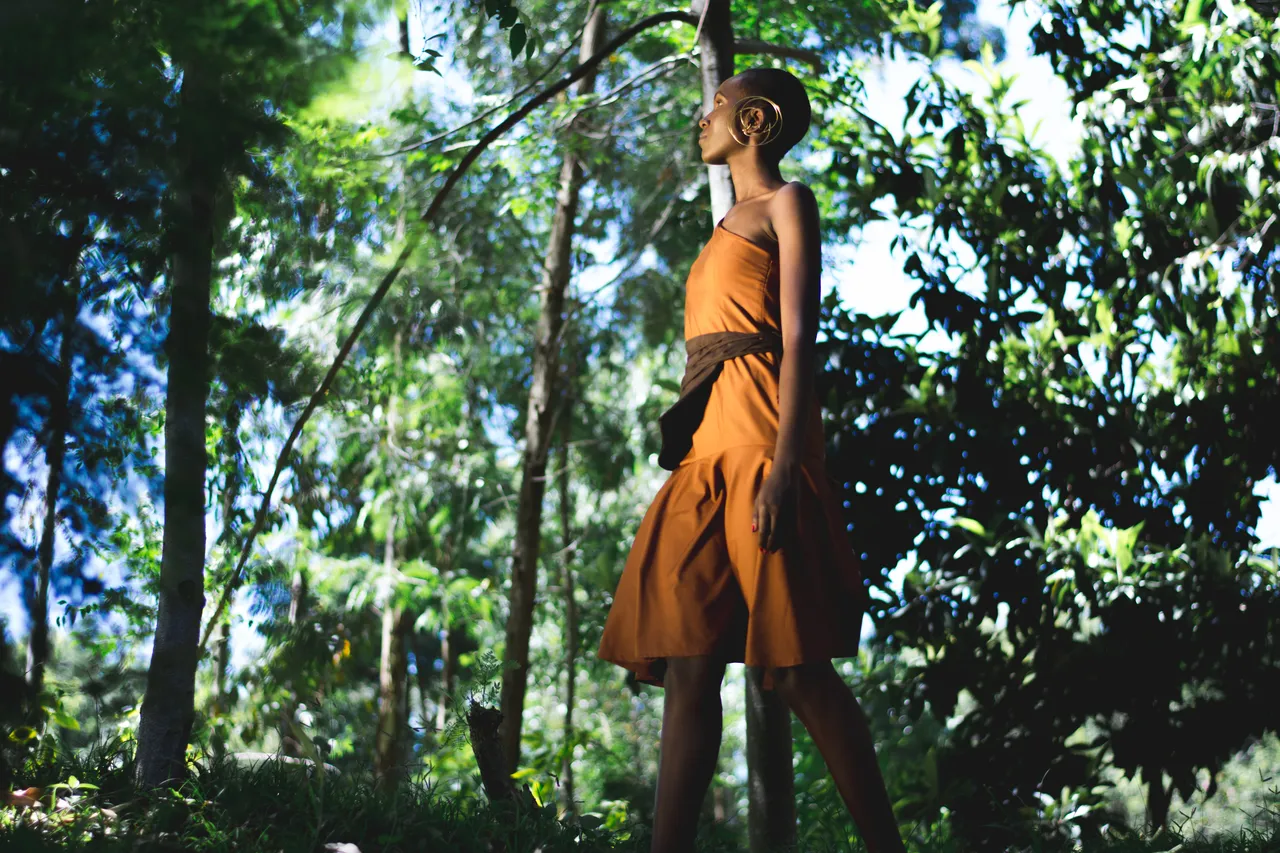
A pair of rust-coloured wide-leg trousers carries Braille along its side. A white shirt dress combines billowing sleeves with Braille detailing, also positioned at the sides. These pieces, described in Teen Vogue’s reporting on Hisi Studio’s 20Thuku collection, bring tactile language into recognisable fashion forms. The text is not confined to a conventional label hidden inside the clothing. It becomes part of the garment’s design. Alongside those messages, the collection addressed another information need. QR codes on its tags linked to product descriptions and care instructions. Angela Wanjiku, the Kenyan designer behind Hisi Studio, explained to Teen Vogue that the system used a phone’s assistive technology to read the information accessed through the code.
The two features should not be collapsed into one gesture of inclusion. Braille offered a route to the garment’s expressive language; the digital information described the product and its care. Together, they made clothing information a design question rather than something considered only after the silhouette was complete.
Explore how Angela Wanjiku’s Hisi Studio combined tactile Braille messages and QR-linked garment information in its historical 20Thuku collection.
Place the Collection in Its Historical Context
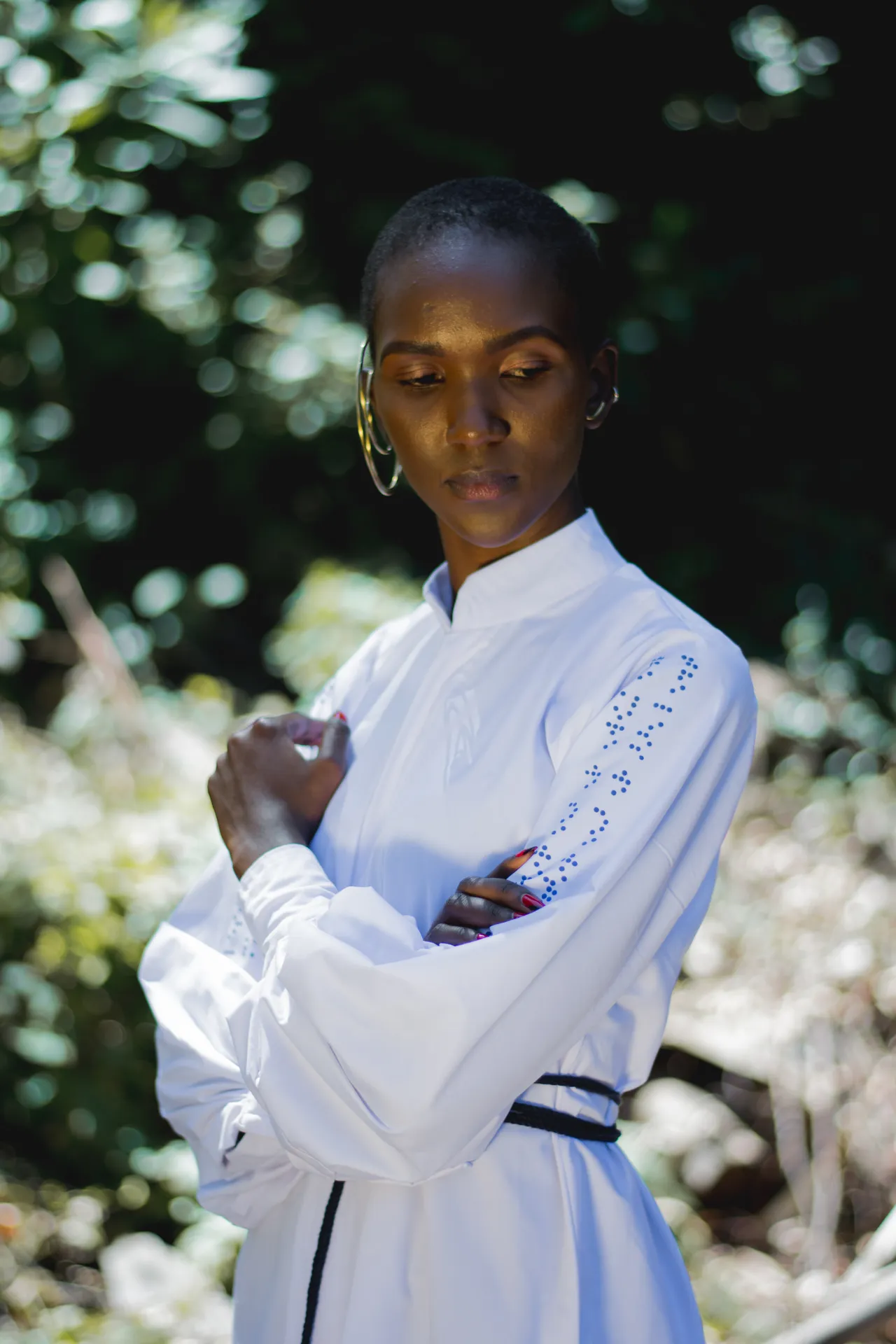
20Thuku is a historical collection, not a new release. In a subsequent post about bringing back the What-If-Nyanjiru shirt dress, Hisi Studio identified the design as belonging to its “2020 Thuku Collection.” That retrospective description associates the collection with 2020; it does not establish an exact launch date. In its profile of Wanjiku and Hisi Studio, Teen Vogue recorded the designer’s description of a collection spanning the 1920s, 2020, and future decades, with women’s roles connecting those periods. The publication also associated its motivational Braille phrases with women across Africa and the African diaspora.
That account provides a documented creative premise without supplying a complete explanation of every name or historical reference. The clearest point of entry remains the clothes: trousers, a shirt dress and the relationship between their silhouettes, tactile text and accompanying information. As Omiren’s guide to reading collections and their presentations explains, a named collection, its promotional imagery and its release are connected but distinct. Here, the subject is the documented design approach, not an announcement of current stock or availability.
The Trousers: Language Along the Side
The rust-coloured trousers described by Teen Vogue combine a wide-leg silhouette with Braille running along the side. That placement gives the language a defined position within the garment rather than treating it as separate explanatory material—the relationship between shape and text matters. The trousers remain a fashion proposition with a particular colour and proportion. Braille adds another way of encountering their surface; it does not replace the silhouette as the reason to consider them. This distinction matters in writing about accessible design. Describing only the adaptation can make the clothing disappear. Describing only the appearance can miss the feature that changes how its message becomes available. Hisi Studio’s trousers require attention to both.
The available account does not identify which published phrase belongs to this particular pair. That prevents a more detailed reading of the relationship between wording and placement. It nevertheless establishes the central decision: readable tactile language was positioned on the garment itself, not restricted to its packaging.
The Shirt Dress: Volume and Tactile Detail
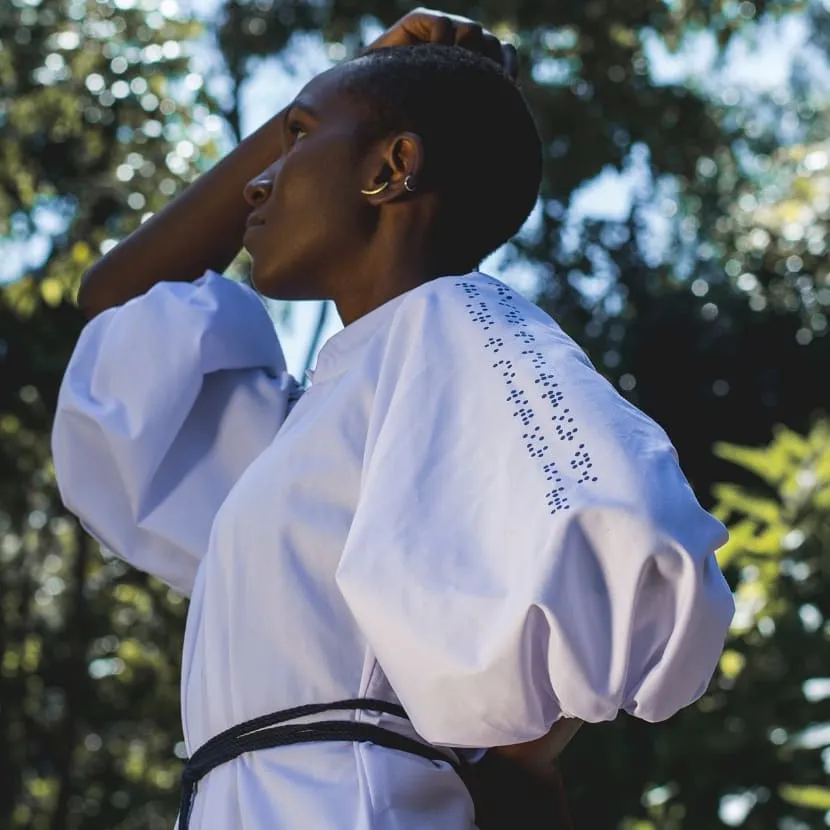
The white shirt dress offered another combination. Teen Vogue described billowing sleeves, a multipurpose design and Braille at the sides. Hisi Studio subsequently identified a returning What-If-Nyanjiru shirt dress with the 2020 collection. The sleeve volume gives the piece a clear visual character. Its description as multipurpose suggests different ways to wear it, although the published text alone does not specify every fastening or styling option. The Braille adds a separate informational feature within that broader design. What matters is how those decisions coexist. The dress was not presented merely as a neutral carrier for an accessibility intervention. Shape, adaptability and text belonged to the same object.
“Multipurpose” should not automatically become a claim that the garment is easier for everyone to put on. Multiple styling possibilities and accessible dressing are different propositions. The documented point is narrower: Wanjiku placed tactile language within a garment already concerned with volume and variation.
Braille Was Part of the Message
Teen Vogue identified “Contend Your Future” and “Wade in The Water” among the phrases Hisi Studio used. In the publication’s account, these messages contributed to the collection’s recognition of women across Africa and the African diaspora. Their function was expressive. They were not described as substitutes for fibre composition, sizing or washing instructions. This matters because the value of accessible clothing cannot be reduced to helping someone identify and maintain an object. Clothing can also carry language, affiliation and a chosen message. Wanjiku articulated that broader concern when she told Teen Vogue:
“I believe fashion plays an important role as a communicator of information in social interactions and as an aid in establishing self-identity.”
The collection’s Braille belongs within that account of fashion. It addresses access to expression as well as access to a product. It should not, however, be treated as a universal reading method. The presence of Braille does not establish that every blind or partially sighted wearer can use that feature. The relevant design question is what information each channel makes available, and to whom.
The Tag Had a Different Job
Where the Braille carried messages, the tags addressed practical product information. According to Teen Vogue, QR codes linked to descriptions and specific care instructions. Wanjiku explained the process by referring to Google TalkBack on Android devices reading information from the scanned code. The distinction between the code and the information is important. The code provided an entry point. In Wanjiku’s account, the phone and its assistive technology supplied the reading route. It would be inaccurate to describe the tag as independently speaking or to imply that Braille contained all the garment’s technical details.
Later reporting provides substantive corroboration of this broader approach. In Citizen Digital’s 7 April 2024 report, journalist Natasha Ikonya described Hisi Studio’s garment codes as providing size, colour, material, washing and care information. The report also described tactile lines within prints. That later account supports the continuity of an information-led practice. It is not evidence that every 20Thuku tag carried precisely the same fields, or that every historical link remains operational. The design principle is nevertheless clear: access to a garment includes access to information that may otherwise sit in a visual description or printed label.
How Local Relationships Shaped the Brief
Hisi Studio began as Wanjiku’s senior-year textile-design project at the University of Nairobi in 2019, according to Teen Vogue. Her initial work included shirts with central Braille designs and wrap skirts with Braille along their sides. The publication credited mentors Ogake Mosomi and Ann McCreath with supporting the transition from project to label. Citizen Digital’s later reporting adds geographical and personal context. Wanjiku said she grew up near Thika School for the Blind in Kiambu County and connected her undergraduate project to interactions with visually impaired children there. These relationships ground the origin story. Accessibility was not described simply as a market category selected for a collection. Wanjiku linked it to people and conversations that informed the questions she pursued.
In the 2024 report, she also described visually impaired designers participating in discussions about needs a forthcoming collection should address. That testimony concerns the practice she described at that time; it should not be retrospectively assigned to every stage of 20Thuku’s development. Even with that distinction, the question of participation remains central. A designer’s intention to help and a collaborator’s authority to shape decisions are not identical. The stronger account of accessible design identifies who contributes, what they contribute and how their knowledge changes the object.
Read the Features Without Claiming a Universal Result
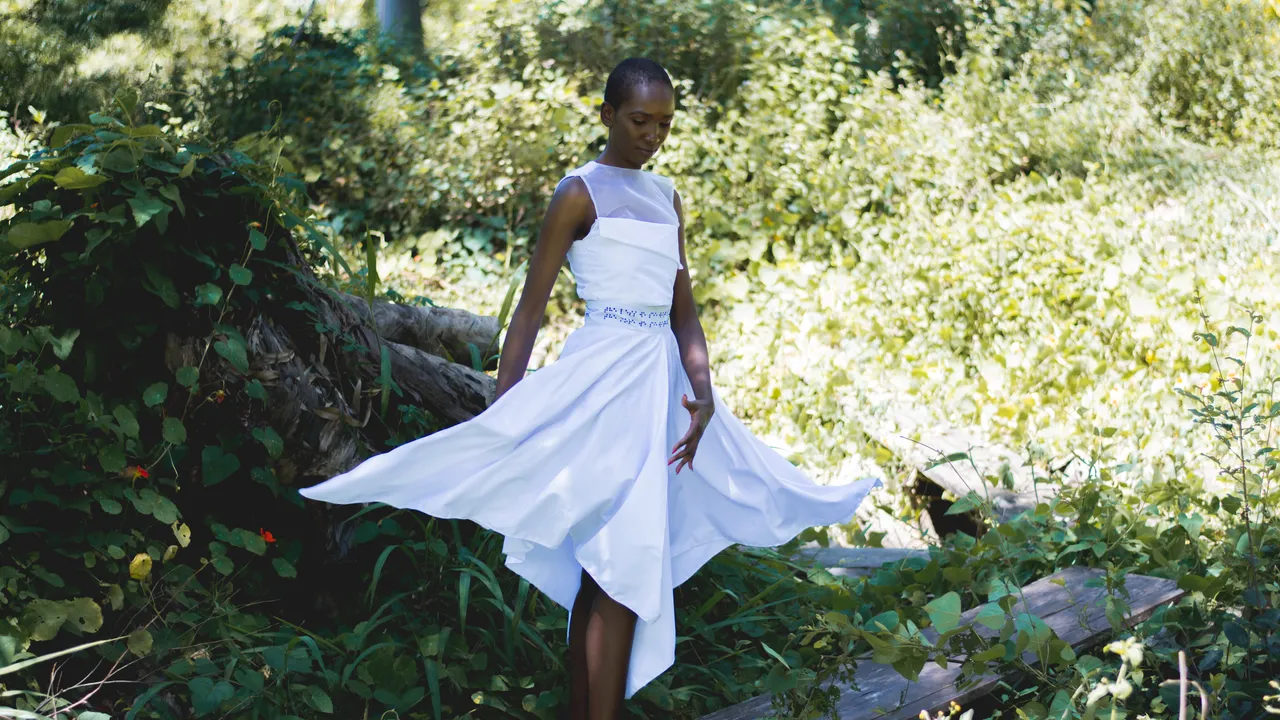
The published reporting describes a combination of garment-level Braille, digitally accessible product information, and a practice Wanjiku connects to visually impaired communities. It does not provide a detailed wearer assessment of each 20Thuku piece. Omiren has not physically assessed the garments, checked the tactile legibility of the Braille or tested the tag system. This analysis concerns documented design decisions and attributed testimony, not a usability certification. That boundary leaves room for a clear judgement. Hisi Studio expanded the brief beyond what clothing looks like. It asked how expressive text and practical information could become available through different routes.
The outstanding questions concern use: locating a tag, accessing its information and reading tactile text on a garment in everyday conditions. Those questions deserve wearer-led reporting. They should neither be presumed solved by the presence of a feature nor used to dismiss the significance of designing that feature in the first place.
The Omiren Argument
Hisi Studio’s contribution is clearly defined as a division of design responsibilities. The garment carries an expressive message; the accompanying information system explains the product and its care. In 20Thuku, both entered the design conversation.
That is more specific, and more useful, than declaring a collection inclusive. It lets the clothing be examined through its silhouette, the placement of language, and the route through which information reaches a wearer.
The standard should not stop at intention: accessible features deserve assessment in use. But the starting point is consequential. Product information is not merely administrative material attached after design. In this collection, it formed part of what Wanjiku understood clothing needed to communicate.
Also Read:
- Nao Serati and the Intelligence of Urban Dressing
- How a Designer Turns One Archive, One Technique, or One Family Story into a Label Identity
- African Textile Reporting: 8 Editorial Shortcuts That Need Fact-Checking
- How Designers Build Collections Around One Material, One Motif, or One Construction Method
Frequently Asked Questions
What is Hisi Studio’s 20Thuku collection?
It is a historical collection by Angela Wanjiku’s Kenyan label, Hisi Studio, not a new release. A later brand post identified it as the 2020 Thuku collection, linking it to 2020 without providing an exact launch date. Published descriptions include wide-leg trousers and a white multipurpose shirt dress incorporating Braille.
What did the Braille communicate?
Teen Vogue identified motivational phrases including “Contend Your Future” and “Wade in The Water”, which it associated with women across Africa and the African diaspora. Its account does not securely match every phrase to an individual garment, so readers should not infer those assignments. The messages were expressive, not substitutes for care or sizing information.
What information did the QR codes provide?
For 20Thuku, Teen Vogue reported product descriptions and specific care instructions; for Wanjiku, they used a phone’s assistive technology (Google TalkBack on Android). Citizen Digital’s separate 2024 account of Hisi Studio’s practice listed size, colour, material, washing and care information.
Did the collection rely only on Braille?
The documented approach also included QR-linked information accessed through a phone. These are different channels, and the existence of both should not be treated as proof that either works for every blind or partially sighted customer. Omiren has not tested the garments, the Braille or the tag system, so use remains a question for wearer-led reporting.