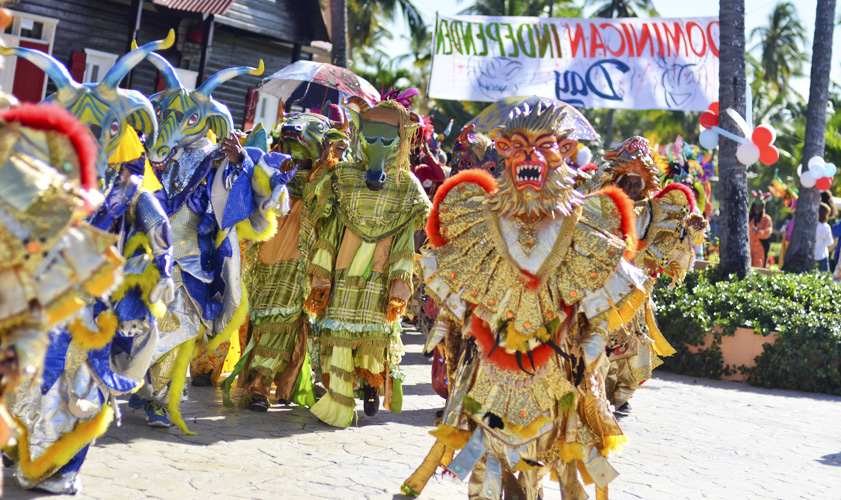
Every February, the Dominican Republic runs carnival simultaneously in cities and towns across the country, each celebrating on a schedule that begins with La Vega’s Sunday parades and culminates in the National Carnival Parade on Santo Domingo’s Malecón. Each city, each town, and in some cases each neighbourhood within a city, presents its own masked characters, its own costume traditions, its own mask-making schools, and its own community rules governing what can be worn, how it is made, and who carries what. The diablo cojuelo, commonly translated as the Limping Devil, is the name most internationally associated with Dominican Carnival. It is also the name loosely and inaccurately applied to traditions that are as distinct from each other as the cities and histories that produced them.
The African fashion and beauty market is worth $ 31 billion. Dominican Carnival’s mask and costume traditions are not a single national dress category. As InspireDominican’s May 2026 documentation of the diablo cojuelo’s history confirms, Dominican Carnival masks and costumes are not a single tradition but a collection of regional expressions that blend Spanish medieval imagery, African spiritual symbolism, and Taíno motifs. No single character represents the whole country. The diablo cojuelo is the most internationally visible of these characters. It is not the most historically significant in every community where it appears, and it is not the correct name for the costumes that go by other names in Santiago, Cabral, and Bonao.
La Vega’s diablo cojuelo, Santiago’s lechones, Cabral’s cachúas: each is a distinct tradition. The diaspora carries all of them at once. Here is what that means.
The Three Roots
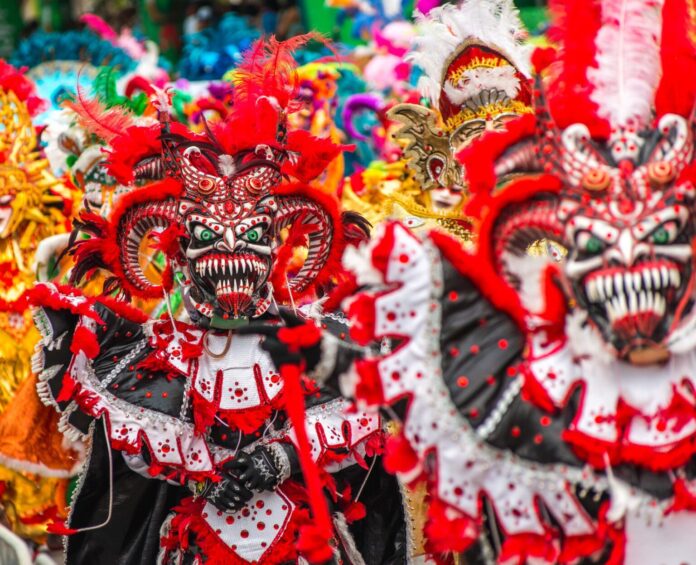
The traditions documented below emerged from three distinct cultural streams whose convergence in the Dominican Republic produced something that is neither purely Spanish, nor purely African, nor a reconstruction of Taíno practice, but a synthesis specific to the island and its history. Understanding which element dominates in which tradition clarifies why the regional variations are as significant as they are.
The Spanish colonial contribution came through the medieval vejigante tradition: masked figures wielding bladders (vejigas) to playfully strike onlookers, imported from Spanish carnival practice and adapted through the colonial experience of Hispaniola—the first documented carnival celebrations on the island date to the 16th century. Early colonial carnivals were reserved for the colonial elite; enslaved Africans and mixed-race populations were gradually incorporated, bringing their own traditions into the form. The African spiritual contribution is evident in the specific materials used: the mirrors and bells on the diablo cojuelo’s costume are not merely decorative choices. They are protective and communicative elements whose function in West African spiritual practice is to deflect negative forces and announce the wearer’s approach. The Taíno contribution is contested in the scholarly record, as direct evidence of pre-colonial masking traditions is limited. Still, the use of ancestral spirit figures in Cabral’s cachúas tradition is the element most clearly associated with pre-colonial ceremonial precedents.
La Vega: The International Reference
La Vega’s diablo cojuelo is the tradition that most international coverage means when it uses the term without qualification. As DR Revealed’s 2026 documentation of Dominican Carnival confirms, La Vega’s carnival features multi-horned grotesque masks, mirrors, and bells on the costume. The traditional vejiga (the cured, inflated cow bladder) is used to strike onlookers along the parade route playfully; being struck is considered good luck. The masks are extremely elaborate and heavily individualised: different makers develop distinct styles, and competition between mask-makers is one of the traditions within the tradition. Master artisans like Rafael Almanzar, working in the Vega Alta neighbourhood, have developed and passed down specific techniques for sculpting, painting, and decorating masks. New mask models appear every season, demonstrating that the tradition is not static but actively innovative within its formal conventions.
La Vega carnival runs every Sunday throughout February, culminating in a final event. Its geographic location approximately 90 minutes north of Santo Domingo makes it the most accessible major carnival destination for visitors arriving in the capital. That accessibility, combined with the masks’ visual spectacle, has made La Vega the de facto international image of Dominican Carnival. The consequence is that the rest of the country’s carnival traditions, which are equally serious and, in some cases, historically older, are systematically underdocumented outside Dominican communities.
The cachúas of Cabral wear masks made from dried plantain leaves and parade not during carnival season but during Holy Week, after Lent. They represent ancestral spirits defending the living from the dead. No photograph of La Vega’s multi-horned diablo cojuelo, however spectacular, is a photograph of that tradition. The two masks come from the same country and carry entirely different histories.
Santiago: Lechones and Neighbourhood Identity
In Santiago de los Caballeros, the diablo cojuelo tradition is known as lechones, meaning piglets. The mask is built around a stylised pig-head form rather than the multi-horned grotesque of La Vega: a pig snout with horns, characterised by specific proportions that differ by neighbourhood. Santiago’s carnival is structured around two main neighbourhood-based traditions with meaningfully different aesthetics: Los Lechones de Joyeros, whose masks are characterised by elegance and refinement, and Los Lechones de Pepines, whose masks are more rustic and structurally powerful.
This neighbourhood distinction is not a minor stylistic variation. It is the record of two different communities’ relationships to the carnival tradition, expressed through the specific formal choices each has developed over generations. The Los Pepines lechón and the Los Joyeros lechón are recognisably different to community members, who can identify a performer’s neighbourhood affiliation from the mask’s proportions and finish. Santiago’s lechones carry rope whips rather than the vejiga bladder of La Vega’s tradition: a different prop that generates a different performance dynamic, with the crack of the whip as the percussive event rather than the bladder’s impact on skin.
Cabral and the Cachúas: After Lent
Cabral, a municipality in the southern province of Barahona, presents the tradition most clearly distinct from the February carnival calendar. As Dominicana Online’s documentation of Dominican Carnival’s regional characters confirms, the cachúas of Cabral parade during Holy Week, after Lent, making Cabral’s the only major Dominican carnival tradition held outside the February pre-Lenten season. This timing itself is an argument: the community chose or retained a carnival date that rejects the pre-Lenten convention. The cachúas wear masks made from dried plátano (plantain) leaves, representing ancestral spirits whose role in the parade is to defend the living from the dead.
The cachúas’ mask material is the most significant detail about this tradition. A mask made from dried plantain leaves, in a country where plantain is a staple agricultural product and a fundamental food, is a mask made from the landscape itself. It is not a sculpted papier-mâché or painted foam construction. It is made from the specific plant whose cultivation shaped the region’s agricultural economy. The choice of material is an argument about where the tradition comes from and what it is made from. The ancestral spirit function situates the cachúas within a ceremonial rather than simply a festive tradition. The timing of Holy Week adds a religious-calendar argument. This parade is not before Lent but after it, occupying the time that colonial religious authority most explicitly reserved for devotion rather than celebration.
Bonao, San Pedro and the Wider Carnival Map
Bonao’s carnival characters, the macaraos, are described as wearing large masks representing various animals and costumes made from crepe paper streamers. The macarao tradition is also associated with the provinces of Hermanas Mirabal and Salcedo, demonstrating that the same character name can span multiple geographic communities while maintaining a recognisable visual identity. Bonao’s carnival is described in community documentation as characterised by elegant and dignified costumes, a different register from La Vega’s grotesque excess or Santiago’s neighbourhood-battle energy.
San Pedro de Macorís adds another distinct tradition with the Guloyas, performers of Garifuna origin whose presence attests to the specific migration history of Cocolo workers from the English-speaking Caribbean who came to work in San Pedro’s sugar industry in the late 19th and early 20th centuries. The Guloyas’ multi-coloured costumes and rhythmic dances are a carnival tradition rooted in English-Caribbean and Garifuna cultural heritage, rather than in the Spanish-African-Taíno synthesis that characterises the other Dominican carnival figures. Monte Cristi’s Toros y Civiles tradition, in which participants dressed as bulls engage in mock battles with civilians using vejigas filled with rags, is another structurally distinct tradition: a ritual combat form rather than a parade character tradition.
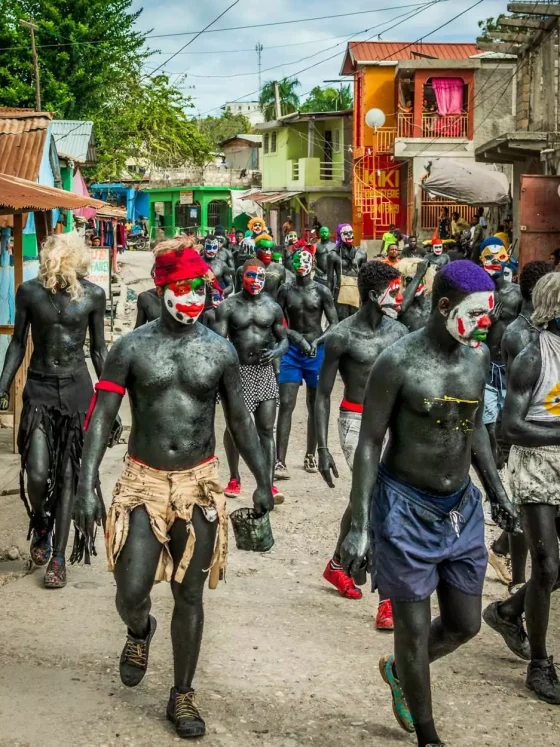
Barahona’s Los Pintaos, established in 1997 by Francisco Antonio Suero, present performers whose entire bodies and faces are covered with intricately applied acrylic paint in intense colours and creative designs. The Los Pintaos tradition is deliberately contemporary in origin: its 1997 founding date is documented. A tradition invented in 1997 is still a tradition. Still, it is a new one, developed within the living practice of Dominican Carnival rather than transmitted from a pre-colonial or colonial-era origin. Its presence at the National Carnival Parade in Santo Domingo confirms that the National Parade itself is a site of ongoing invention rather than only heritage display.
The Diaspora Afterlives: Washington Heights and Beyond
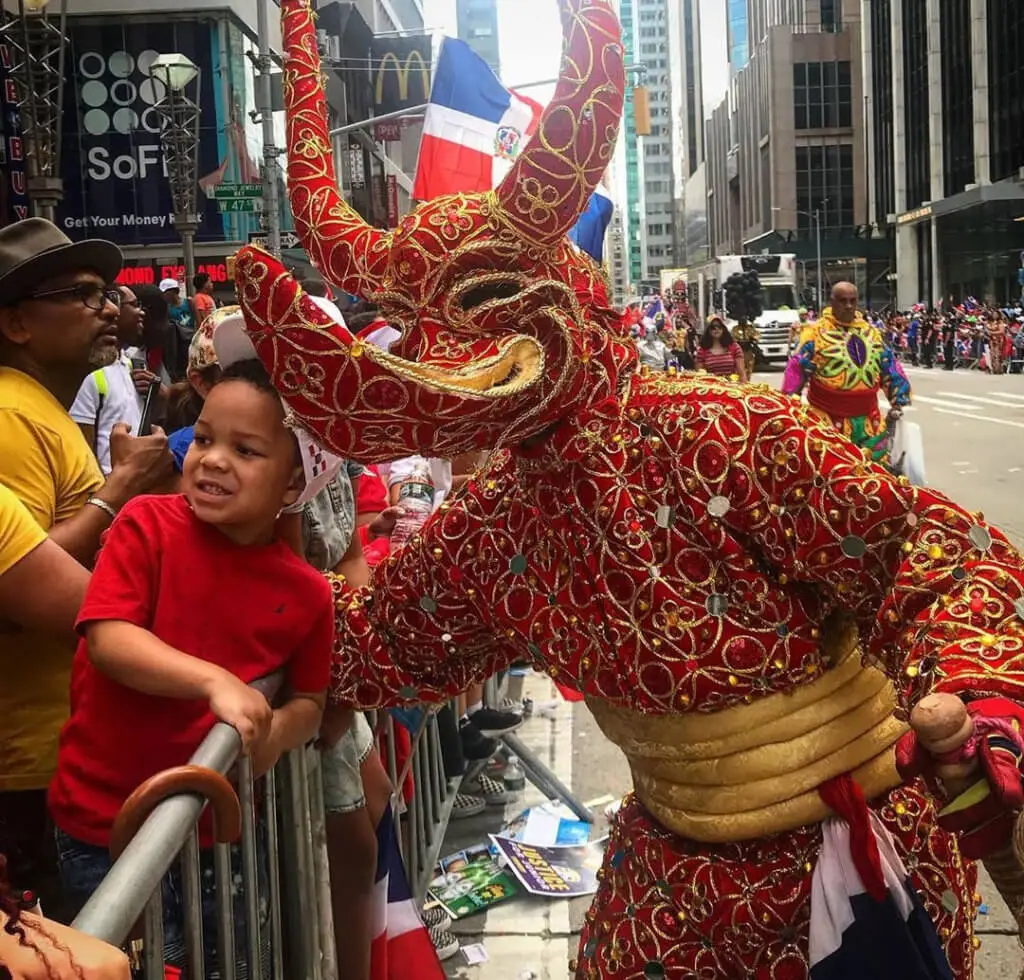
The Dominican diaspora in the United States, most visibly concentrated in Washington Heights in upper Manhattan, maintains Dominican Carnival traditions at the community level throughout February and during the annual Dominican Day Parade in August. As amNewYork’s August 2025 documentation of the Dominican Day Parade confirms, the parade returns to Manhattan’s Midtown with more than 40 floats and performances, including folkloric dance troupes and traditional carnival characters such as the elaborately costumed Diablo Cojuelo and the satirical Roba la Gallina. Washington Heights hosts its own celebrations throughout the parade weekend.
The diaspora carnival context produces a specific cultural dynamic. A Dominican community in Washington Heights whose families come from La Vega, Santiago, Cabral, San Pedro, and Barahona simultaneously carries multiple regional carnival traditions in the same neighbourhood. The New York carnival becomes a synthesis of the island’s distinct regional traditions. A performer who grew up watching La Vega’s elaborate horned masks may appear in the Dominican Day Parade alongside someone whose family comes from Cabral and whose grandmother made cachúa masks from plantain leaves. The distinctions that the island maintains through geographic separation collapse in diaspora into a composite Dominican-American carnival identity.
This collapse is not a loss. It is a different cultural product. The diaspora carnival does not replace the island’s regional traditions; those continue within their specific communities. What it creates is a condensed version in which multiple traditions coexist in the same street on the same day, and in which the visual language of Dominican Carnival becomes the identifier of the Dominican-American community rather than of any specific hometown tradition within it. The diablo cojuelo in Washington Heights carries the weight of the whole island’s carnival rather than only La Vega’s.
The Omiren Argument
The diablo cojuelo is not one costume. La Vega’s multi-horned grotesque mask, Santiago’s pig-headed lechón, Cabral’s plantain-leaf cachúa, Bonao’s animal-faced macarao, and Monte Cristi’s ragged-vejiga Toro are distinct traditions that emerged from specific communities, specific histories, and specific material choices. The African fashion and beauty market is worth $ 31 billion. Dominican Carnival’s mask traditions are part of that market’s broader context: they are handmade objects produced by skilled craftspeople, transmitted through community practice, adapted by each generation, and carried into the diaspora where they become the visible symbols of national cultural identity without losing the local specificity of their origins. The international photographic record of Dominican Carnival is overwhelmingly La Vega: the most spectacular mask, the most accessible location, the most February-schedule-compliant tradition. That selection is a coverage decision, not a cultural hierarchy. The cachúas of Cabral parade after Lent, in Holy Week, in a tradition that refuses the February calendar. They are not less Dominican for doing so. They are more specifically themselves.
Also Read:
- The African Origins of Carnival Costume: Feathers, Beads, and the Masquerade Tradition
- Dress, Dance and Devotion in Barlovento’s Saint John Celebrations
- Afro-Peruvian Chincha Influences in Contemporary Peruvian Fashion
- Who Should Define Cultural Authority in Fashion? Start With the Makers
Frequently Asked Questions
What is the diablo cojuelo?
El Diablo Cojuelo, meaning the Limping Devil, is the central character of Dominican Carnival. According to tradition, the diablo cojuelo was a demon banished from Hell to Earth for his clownish pranks; when he fell to Earth, he injured his leg and now always walks with a limp. In La Vega, the character is depicted wearing grotesque, multi-horned masks featuring mirrors and bells, and the performer carries a vejiga (an inflated, cured cow bladder) to strike onlookers playfully. The term diablo cojuelo is also loosely applied to the carnival characters of other Dominican cities, including Santiago’s lechones and other regional variants. However, these have distinct names, mask forms, and community histories.
What are the regional differences in Dominican Carnival?
Dominican Carnival varies significantly by city and region. La Vega: multi-horned grotesque masks with mirrors and bells; vejiga bladder; recognised as the most internationally visible tradition; parading every Sunday in February. Santiago: lechones with pig-head masks; two styles distinguished by neighbourhood (Los Joyeros vs Los Pepines); rope whips rather than vejigas. Cabral (Barahona): cachúas with dried plantain leaf masks representing ancestral spirits; parade during Holy Week after Lent, not during February. Bonao: macaraos with large animal-faced masks and crepe paper costumes. Monte Cristi: Toros y Civiles in a ritual bull-versus-civilian mock battle. San Pedro de Macorís: Guloyas of Garifuna/Cocolo origin. Barahona: Los Pintaos with full-body acrylic paint patterns, founded in 1997.
What are the cachúas of Cabral?
The cachúas are the carnival characters of Cabral, a municipality in the province of Barahona in the Dominican Republic’s south. They are distinguished from other Dominican carnival traditions in two primary ways: their masks are made from dried plátano (plantain) leaves, representing ancestral spirits whose function is to defend the living from the dead. They parade during Holy Week after Lent, making Cabral’s the only major Dominican carnival held outside the pre-Lenten February season. The cachúas’ use of plantain leaves as a mask material connects the tradition directly to the region’s agricultural landscape.
How is the diablo cojuelo mask made?
La Vega’s diablo cojuelo masks are handcrafted by skilled artisans using papier-mâché and related sculpting techniques, and painted and decorated with mirrors, bells, and elaborate surface treatments. Master artisans like Rafael Almanzar, based in the Vega Alta neighbourhood of La Vega, have developed and passed down specific techniques for sculpting, painting, and decorating masks, each with a distinctive stylistic approach. New mask designs appear every carnival season, making the tradition actively innovative. The number and arrangement of horns, the mask’s facial expression, the specific embellishments, and the colour palette all vary by maker and season.
How do Dominican Americans celebrate Carnival?
Dominican Americans, most visibly concentrated in Washington Heights in upper Manhattan, celebrate Carnival through community events throughout February and the annual Dominican Day Parade in August. Washington Heights, often called Little Dominican Republic, hosts informal celebrations throughout the Dominican cultural calendar. The Dominican Day Parade brings more than 40 floats and performances to Midtown Manhattan, featuring folkloric dance troupes and traditional carnival characters such as the Diablo Cojuelo and Roba la Gallina. The diaspora carnival context compresses the island’s distinct regional traditions into a composite Dominican-American cultural expression in which multiple hometown traditions coexist in the same street.
Explore More
Read the full Culture > Heritage & Identity section for Omiren Styles’ documentation of African diaspora carnival traditions, mask-making cultures, and the community dress practices that carry centuries of cultural memory across the Caribbean and South America.
Discover travel and heritage intelligence across the Caribbean and the Dominican Republic at Rex Clarke Adventures.