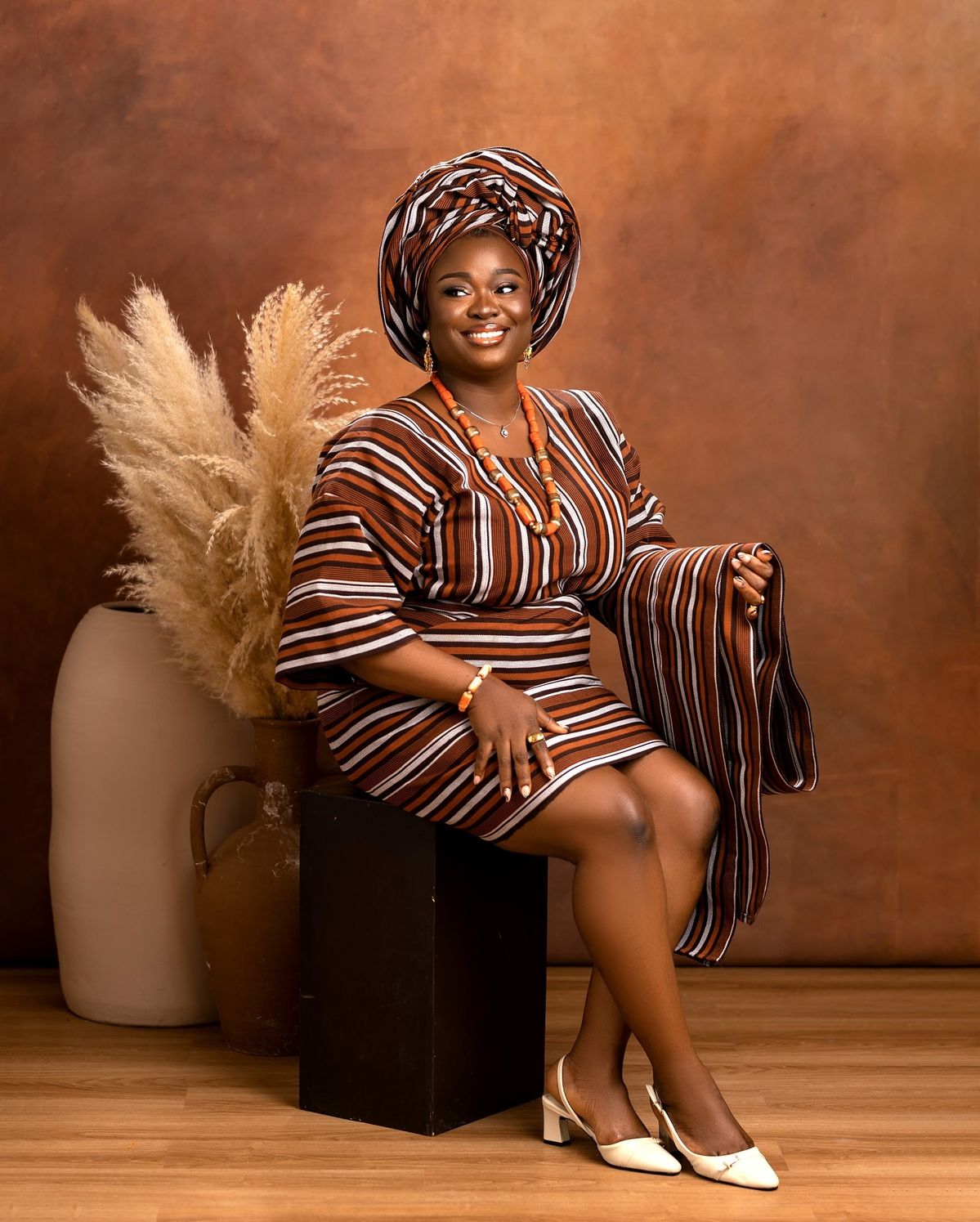
The cloth arrives folded inside an old newspaper wrapper, tied with a length of raffia. It has been in the back of a wardrobe in Ibadan since 1987. The woman who opens it knows exactly whose wedding it attended, whose hands knotted the gele, and which tailor in Dugbe cut the iro from this specific bolt. She is not selling old fabric. She is releasing a document.
That is what pre-worn aso-oke is. Not a secondhand garment in the way a fast-fashion T-shirt becomes secondhand after one season. A record. A prestigious cloth that has attended the ceremonies of a family and carries that attendance in its weave.
The market for pre-worn aso-oke is growing. Understanding what drives it and how to participate in it correctly requires understanding what aso-oke actually is.
Pre-worn aso-oke carries memory, genealogy, and ceremony. Here is why the second-hand market for Yoruba prestige cloth is a cultural economy rather than a thrift store.
What Aso-Oke Carries That Fast Fashion Cannot.
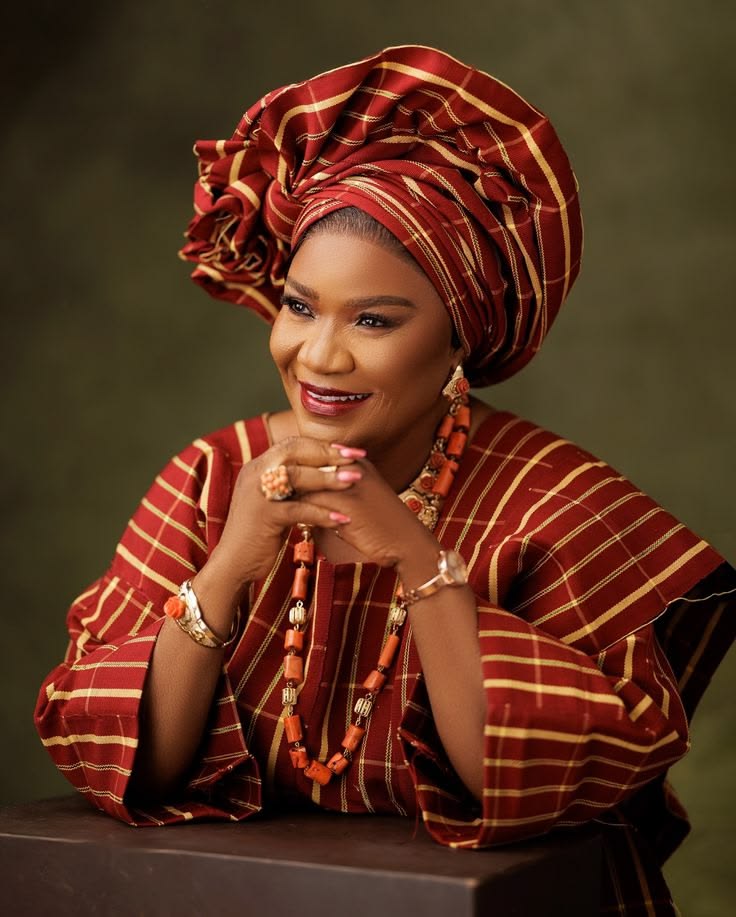
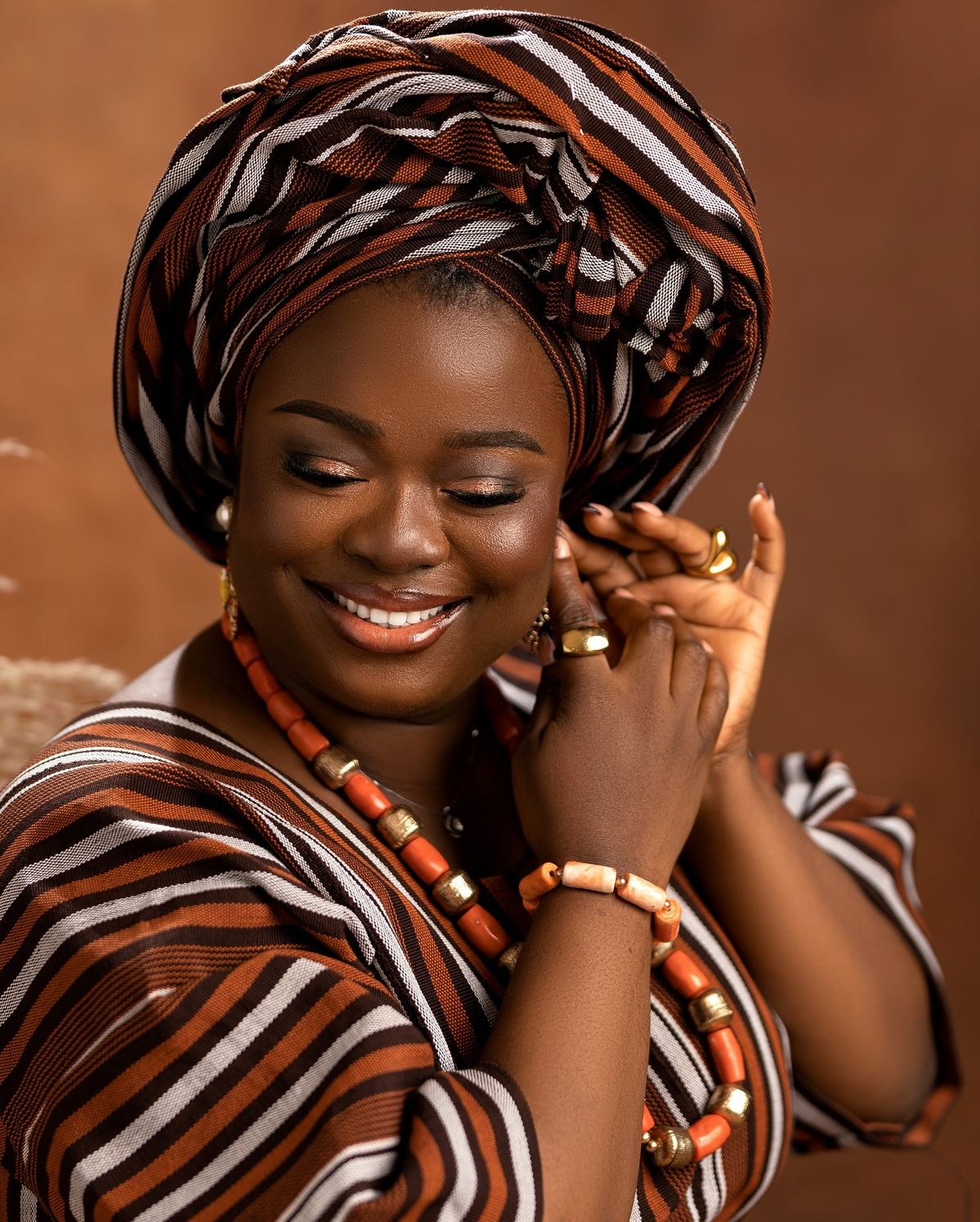
Aso-oke, meaning “top cloth” in Yoruba, is a handwoven prestige textile originating from the Yoruba people of southwestern Nigeria. The Saint Louis Art Museum, which holds a significant collection of historical Yoruba textiles, describes aso-oke as cloth that families commission for the most important milestones of life, often passing the textiles on to the next generation as heirlooms. The three foundational types, sanyan, alaari, and etu, are not simply colour categories. They are social signals associated with taste, lineage, and occasion, each carrying specific cultural weight in Yoruba aesthetics.
Sanyan, woven traditionally from the silk of the Anaphe moth and cotton yarns, carries the prestige of extreme rarity: the wild silk source is now largely unavailable, making historic sanyan pieces documents of a production method that no longer exists at scale. Alaari, with its bright magenta silk originally traded into Nigeria via trans-Saharan routes from the 18th century, carries the weight of global commerce encoded into Yoruba ceremony. Etu, the deep indigo cloth whose saturation records the length of time its threads spent in the dye vat, carries what Yoruba aesthetics calls dudu: coolness, composure, self-control. These are not decorative qualities. They are the qualities of leadership.
A piece of aso-oke that has attended a wedding, a chieftaincy installation, or a funeral carries the occasion inside it. The Yoruba phrase “Aso la nki, ki a to ki eniyan” states this plainly: we greet the cloth before we greet its wearer. The cloth is not incidental to the ceremony. It is part of it.
“Aso la nki, ki a to ki eniyan.” We greet the cloth before we greet its wearer. The cloth is not incidental to the ceremony. It is part of it.
Why Pre-Worn Aso-Oke Has Value the New Market Cannot Replicate.
The aso-oke industry in Iseyin, Oyo State, the acknowledged home of the craft, 200 kilometres from Lagos, currently supports an active and expanding production economy. According to BusinessDay Nigeria, the aso-oke industry supports over 50,000 artisans across weaving centres, including Iseyin, Oyo, and Ilorin, with exports reaching approximately $120 million in foreign exchange revenue in 2023. New aso-oke is available in a growing variety from skilled weavers who resist mechanisation precisely because handweaving defines the fabric’s authenticity.
What new production cannot provide is time. A cloth woven in 2026, however well made, does not carry 1970. It does not carry the specific indigo depth of a piece that a Yoruba elder wore to every significant occasion of her adult life. It does not carry the pattern commissioned for a specific wedding, in a specific family’s colours, in a specific Iseyin workshop. Historical accounts of aso-oke production in Iseyin note that the cloth “commands attention through detail” and that “pattern memory, even tension, consistent colour, and clean joins are the difference between ordinary cloth and a piece that can stand beside kings, chiefs, brides, and elders.” Pre-worn aso-oke from the first half of the twentieth century, particularly sanyan pieces, is increasingly scarce and commands significant interest from collectors, diaspora buyers, and designers who understand what they are acquiring.
The specialist textile dealer Nzuri Textiles notes that high-quality aso-oke examples from the first half of the twentieth century are increasingly hard to find. This scarcity is not incidental. It is the market that registers the cultural value of cloth that cannot be rewoven.
The Inheritance Economy: How Pre-Worn Aso-Oke Moves
The circulation of pre-worn aso-oke operates through several channels, each carrying its own logic and its own risks.
Family Transmission
The primary channel is direct inheritance within Yoruba families. Aso-oke commissioned for a grandmother’s wedding in the 1950s or 1960s may pass to daughters and granddaughters, either as wearable garments or as fabric lengths to be tailored into new forms. This transmission is not always formalised. Cloth moves with estates, with house clearances, with the practical decisions of families who no longer have to wear what their elders commissioned. The pieces that enter the secondary market most often arrive via this route: from family estates, where younger generations either do not know the cloth’s value or lack the ceremonial context to use it.
The Secondary Market
Pre-worn aso-oke reaches buyers through several secondary channels. Specialist vintage textile dealers, including Nzuri Textiles and Niger Bend, source directly from Nigeria and sell to international buyers, primarily in the United States and Europe. The pieces they carry are typically described by weave type, approximate age, and condition, with dimensions given for buyers who intend to have the cloth tailored. Etsy carries a significant volume of vintage aso-oke sourced from Nigeria, with sellers describing pieces made thirty or more years ago. The quality of provenance information on these platforms varies considerably: the best listings identify the weave type and approximate period; many provide only dimensions and colour descriptions.
Within Nigeria, the secondary market for aso-oke operates informally through traders at Lagos and Ibadan markets who carry pre-worn pieces alongside new stock, through social media, and through word-of-mouth networks in Yoruba communities. The market is not yet as systematised as vintage fashion markets in Europe and North America. That absence of systematisation cuts two ways: buyers who know what they are looking for can find extraordinary pieces at prices that do not yet reflect their cultural significance; buyers who do not know what they are looking for can pay for ordinary cloth that has been aged rather than inherited.
The Diaspora Dimension
The growing global demand for aso-oke, noted in a recent Al Jazeera report on Iseyin weavers, is driven largely by Nigerians in the diaspora seeking to maintain ceremonial connections to Yoruba tradition from afar. Pre-worn aso-oke, specifically cloth that belonged to family members, carries an additional layer of significance for diaspora buyers: it is not just ceremonial fabric but a direct material connection to specific ancestors. Diaspora buyers prepared to pay for that specificity are reshaping the upper end of the inheritance economy.
Also Read
- How to Shop African Fashion: The Complete Guide for the Culturally Literate Consumer
- What the World Lost When Hand-Weaving Gave Way to Mass Production
- Where to Buy Kente Cloth Without Funding a Counterfeit Industry
- The African Fabric Market Guide: From Balogun to Kariakoo
How to Buy Pre-Worn Aso-Oke Correctly
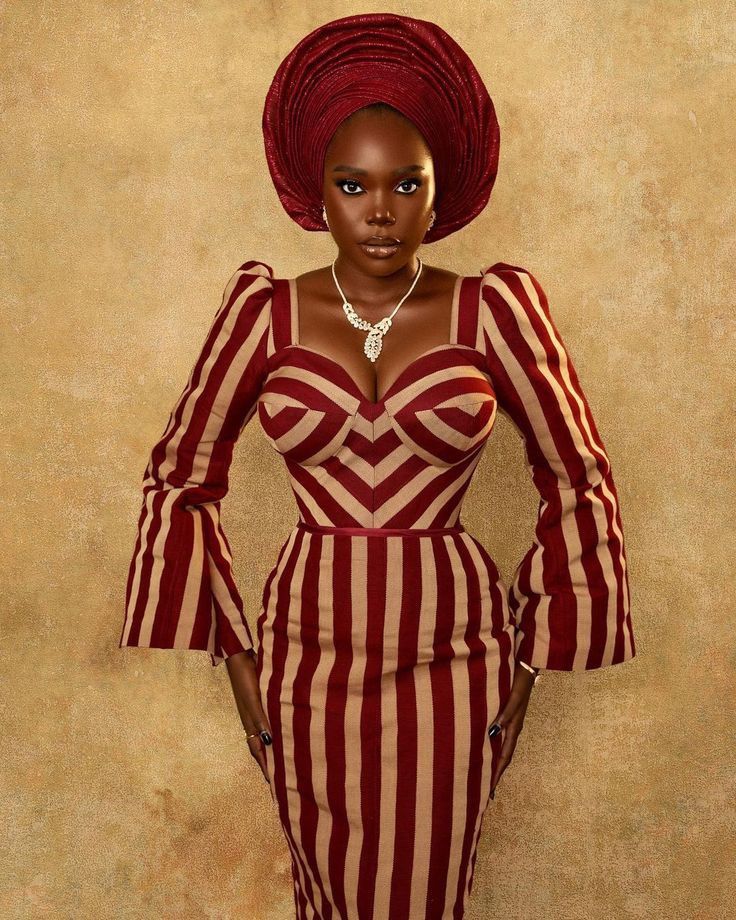
The same principle that governs all culturally intelligent African fashion shopping applies here with particular force: knowledge determines what you receive.
Identify the weave type before purchase. Sanyan, alaari, and etu are distinct in colour, texture, and historical significance. A seller who cannot identify which type they are selling does not know what they have. Strip construction should be visible: aso-oke is woven on narrow looms and assembled from strips sewn edge to edge. The strip seams are part of the cloth’s identity, not a flaw. A piece presented as aso-oke without visible strip construction is not aso-oke.
Ask about the piece’s history, where possible. The best pre-worn aso-oke comes with a story: whose it was, which occasions it attended, from which weaving town it originated. This information is not always available, particularly for pieces that have passed through several hands. Its absence does not disqualify a piece. Its presence adds a dimension that no new cloth carries.
Assess condition against intended use. Pre-worn aso-oke for tailoring into new garments can carry more age and wear than a piece intended for ceremonial wearing as-is. Slight fading, minor repairs, and the softening of threads that comes with age are markers of genuine history, not damage. Structural failure of the weave, significant dye loss, or evidence of repair that disrupts the pattern warrants caution.
THE OMIREN ARGUMENT
The second-hand market for aso-oke is not a discount economy. It is an inheritance economy. Pre-worn ceremonial cloth carries the weight of every occasion it has attended: every wedding it dressed, every chief it honoured, every elder it buried. That weight is not metaphorical. It is encoded in the cloth’s softening, its specific colour depth, the particular pattern a family commissioned from a specific workshop in Iseyin or Ilorin decades ago.
The context is a Yoruba textile tradition that has endured for centuries precisely because aso-oke is not disposable. The cloth “commands attention through detail,” as the historical record from Iseyin notes. That command is built on the understanding that a piece made correctly will outlast its first wearer and remain serviceable to the next. The inheritance economy is not a modern development. It is what aso-oke was always designed for.
The disruption is that the global secondary market, operating through Etsy listings and vintage dealers in New York and London, is now extracting pre-worn aso-oke from the Nigerian estate and family networks that historically kept these pieces within Yoruba cultural circulation. Diaspora buyers seeking family connection are part of this extraction. Western collectors buying “African textile art” without understanding what they are acquiring are a larger part. The economic consequence is that pieces of genuine historical and cultural significance are leaving Nigerian and Yoruba community ownership at prices that do not yet reflect their actual value.
The cultural insight is about what purchasing correctly means in this context. A diaspora buyer who acquires pre-worn aso-oke to wear at their child’s naming ceremony in London is correctly participating in the inheritance economy: the cloth returns to the ceremony. A collector who acquires it as a decorative textile for a wall in a Brooklyn apartment is not. The cloth does not care about the distinction. But the economy that sustains Iseyin’s weavers and the cultural memory stored in these pieces does.
Omiren Styles makes the argument plainly: the buyer who understands what pre-worn aso-oke carries does not pay less for it. They pay differently. For the broader framework of buying African fashion with this level of cultural and economic intelligence, read How to Shop African Fashion: The Complete Guide for the Culturally Literate Consumer.
Frequently Asked Questions
What are the three types of aso-oke, and how do they differ?
The three foundational types are sanyan, alaari, and etu. Sanyan was traditionally woven from the silk of the Anaphe moth combined with cotton yarns, producing a characteristic light brown colour of significant prestige. Historically, sanyan is increasingly rare because wild silk is largely unavailable. Alaari incorporates bright magenta or red silk threads that entered Nigeria via trans-Saharan trade routes from the 18th century. Etu is a deep indigo cloth whose colour depth reflects how long its threads were submerged in dye; in Yoruba aesthetics, the deepest etu is associated with composure and leadership. Each type carries specific ceremonial and social significance within Yoruba culture.
Why does pre-worn aso-oke have cultural and market value?
Pre-worn aso-oke carries the ceremonial history of the occasions it has attended. High-quality examples, particularly sanyan pieces from the first half of the twentieth century, represent production methods that no longer operate at scale. The cloth was designed to be inherited: the Yoruba understanding that fine aso-oke outlasts its first wearer and passes to subsequent generations means that pre-worn pieces carry genealogical and ceremonial significance that new production cannot replicate. Specialist dealers note that early-twentieth-century examples are increasingly hard to source.
How do I identify authentic pre-worn aso-oke?
Strip construction is the primary marker: authentic aso-oke is woven on narrow looms and assembled from strips sewn edge to edge. The strip seams are visible and integral to the cloth’s identity. Weave type should be identifiable: sanyan carries its characteristic light brown or beige silk quality; alaari is distinguished by its magenta or red silk threads; etu by its deep indigo tone. Age markers in genuine pre-worn pieces include softening of the thread texture, a slight tonal shift in dyed sections, and the distinctive quality of historic dye chemistry, which differs from that of modern synthetic dyes. A seller who cannot identify the weave type does not know what they have.
Where can I buy pre-worn aso-oke?
Specialist vintage textile dealers, including Nzuri Textiles and Niger Bend, source pre-worn aso-oke directly from Nigeria and sell it internationally. Etsy carries a significant volume of pieces described as vintage, with quality of provenance information varying across sellers. In Nigeria, pre-worn aso-oke moves informally through Lagos and Ibadan market traders, social media networks, and word of mouth in Yoruba communities. Diaspora community networks, particularly in the UK, the United States, and Canada, also circulate pre-worn pieces within ceremonial contexts. Buyers seeking specific weave types or historical periods should engage specialist dealers rather than general vintage platforms.
Is buying pre-worn aso-oke culturally appropriate for non-Yoruba buyers?
The cultural appropriateness of purchasing pre-worn aso-oke depends on intent and use. Pre-worn aso-oke acquired for ceremonial wearing at Yoruba occasions, for tailoring into garments worn in Yoruba cultural contexts, or for preservation by diaspora families maintaining ancestral connection represents participation in the inheritance economy on its own terms. Pre-worn aso-oke acquired as a decorative object by buyers with no connection to Yoruba culture or ceremony removes the cloth from the ceremonial economy it was created to serve. The distinction matters because aso-oke’s cultural value is inseparable from its ceremonial use.
Understand What You Are Buying
Omiren Styles publishes cultural and commercial intelligence on African fashion, textiles, and design across all 54 nations, the Caribbean, and the global diaspora. Subscribe to our editorial newsletter for the context that no marketplace listing provides.