A buyer order form converts a fashion collection from an aesthetic event into a commercial transaction. It requires specific information in specific fields. Without that information, the form cannot be completed. Without a completed form, there is no order. Without an order, the collection described as a triumph in the show review, photographed in the lookbook, and positioned in the press release as the breakthrough the brand has been building toward, does not move from the sample rail to a retail floor.
The buyer order form is one of the most important documents in fashion and one of the least discussed in fashion media. It is the instrument through which aesthetic ambition becomes commercial reality, and its requirements are far more specific than those of the aesthetic documents that precede it. This article constructs a fictional but realistic buyer order form and applies it to the kind of information a fashion brand typically makes public around a collection launch. The result maps the gap between what brands communicate and what buyers need.
A fictional buyer order form applied to a typical fashion collection’s public-facing materials. This test examines whether the information a buyer needs to place an order is actually available in what brands produce – and maps the gap where it is not.
The Fictional Collection
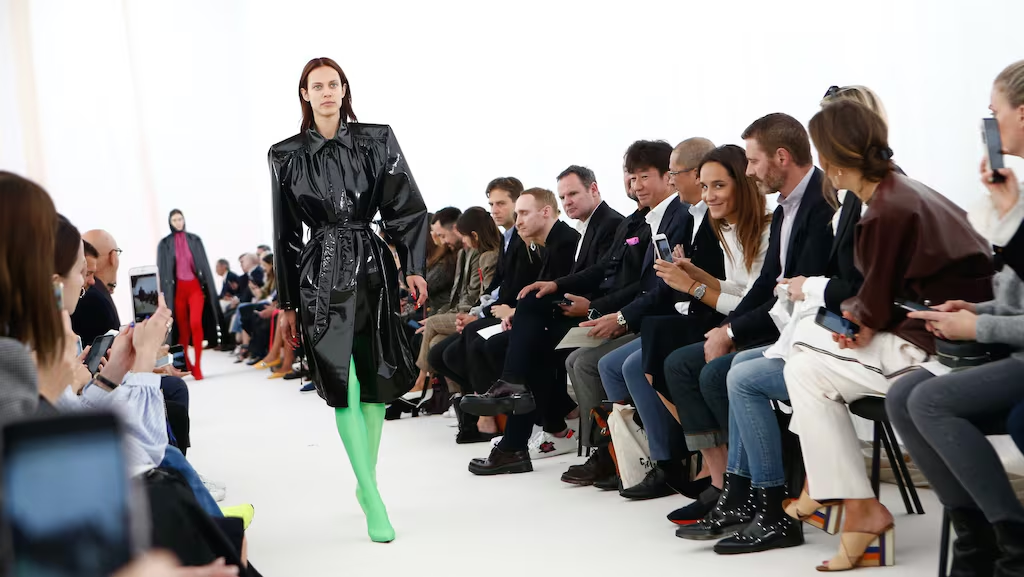
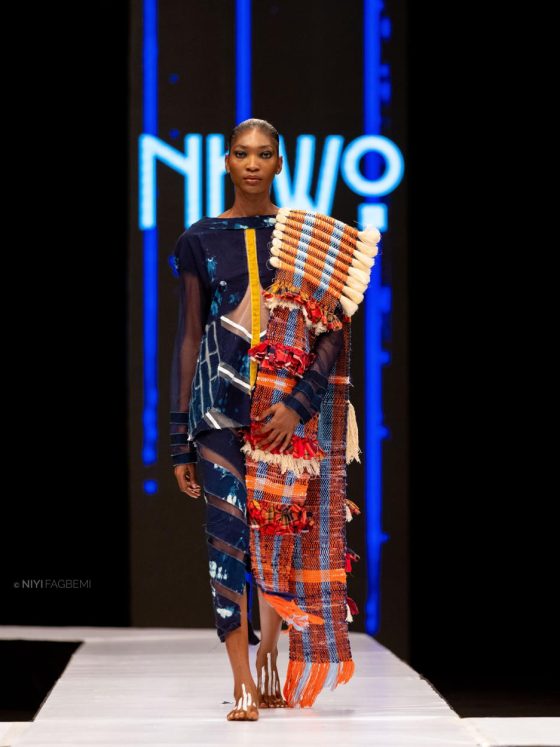
For this test, Hazel by Amara Osei is described in its fictional press release as a twelve-look womenswear collection drawing on Ghanaian textile traditions in a contemporary silhouette, presented at a group show in East London. The lookbook contains twelve images, one per look, shot on a single model against a white background. The brand has a website with a shop section, an About page and a brief press release. The brand has an Instagram account with twelve thousand followers. A fashion media outlet has run a short review describing the collection as considered, beautifully paced and a strong debut.
This is a reasonable public profile for an emerging independent brand. It is also, as the buyer order form test will show, substantially incomplete for placing a wholesale order. The gap is not a failure of the brand’s ambition or the collection’s quality. It is a gap between what fashion communication is designed to produce and what wholesale commerce requires.
Walking the Order Form
A standard wholesale buyer order form covers identity and compliance, product specification and commercial terms. Running Hazel by Amara Osei’s public materials against each category produces the same finding across fifteen fields: the information is not there.
Identity and compliance fields
The form opens with the supplier’s full registered legal name. The press release names the brand but not the legal entity behind it. The buyer needs a legal name to raise a purchase order; the brand name alone is not sufficient. The registered business address follows: required for invoicing and compliance. The Instagram location reads London, UK. The website carries no business address. The VAT or tax registration number is required for EU and UK wholesale transactions and is not disclosed in any public document the brand has produced.
These three fields, legal name, registered address and tax number, are the minimum the buyer needs to open a supplier account before a single garment is discussed. None of them appears in Hazel by Amara Osei’s public record. A buyer who wanted to proceed would need to request them directly, which is reasonable. The point is that they are not there, and their absence is not noticed in any of the fashion media coverage the collection received.
Product specification fields
The lookbook names looks one through twelve. The buyer order form requires a unique product reference code for each SKU. The lookbook assigns none. Without codes, the buyer cannot specify what they are ordering. There is no mechanism in the public record to distinguish between ordering Look 3 in a colourway available online from ordering Look 3 in a colourway seen at the show but not documented anywhere.
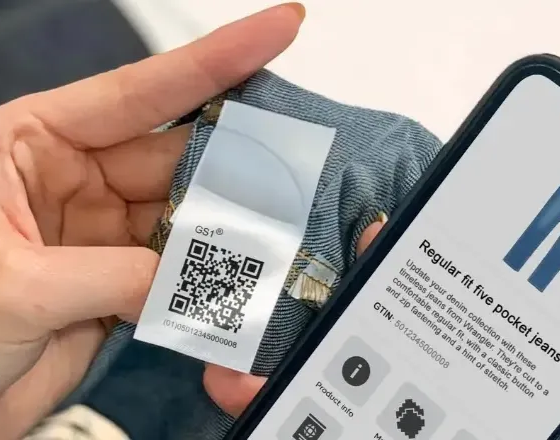
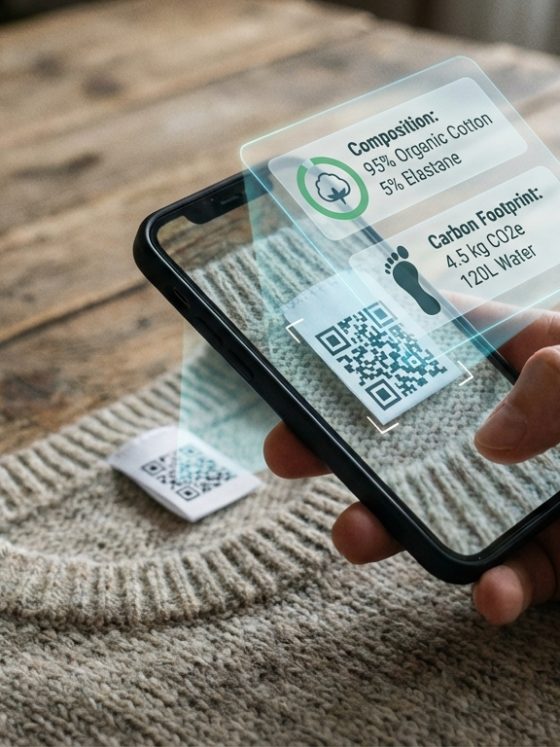
The colourway and size matrix is missing entirely. The lookbook shows each look in one colourway. No size range is stated anywhere. A buyer cannot place an order without knowing which sizes are available, which colourways can be produced, and what stock position applies to each. The buyer also needs the fibre composition of each garment for label compliance, which requires a specific percentage breakdown by fibre type. The collection description as drawing on Ghanaian textile traditions refers to the design reference, not the fibre content. A care label cannot be produced from a cultural reference.
The country of manufacture is required for import compliance. The brand is UK-based. The garments’ country of origin (UK, Ghana, or elsewhere) is not stated. REACH compliance confirmation is required for EU retail and addresses whether the textiles meet chemical safety standards. Neither is addressed in any public document. Care label instructions, also required for label compliance, are not disclosed.
Commercial terms fields
The wholesale unit price, the price the buyer pays rather than the retail price the consumer pays, is not disclosed. The website lists retail prices. The buyer needs the wholesale price, which determines their margin and their ability to position the garment at their own retail price point. The minimum order quantity, the minimum number of units the brand will supply per style, is not stated publicly. A buyer committing stock does not do so without knowing whether they can order two units of a style or must order twenty-four.
Lead time, the period from order to delivery, is not stated anywhere. For a buyer building a seasonal floor plan, the lead time determines whether the collection fits their intake schedule. Payment terms, including the deposit percentage, balance-due date, and accepted payment methods, are not publicly available. Product liability insurance, a certificate of which is required as a condition of supplier approval at most major retailers and distributors, is not mentioned or linked from any public page.
The public record for Hazel by Amara Osei contains a strong aesthetic argument and zero commercial infrastructure. A buyer who attended the show, read the review and opened the website has everything they need to admire the collection and nothing they need to order it.
What the Gap Costs

The gap between the aesthetic record and the commercial record is not symmetric in its consequences. A brand that produces only the aesthetic record receives coverage, social media attention and critical recognition. It does not receive orders. The press can praise a collection into visibility. It cannot create a line sheet, produce a fibre certificate, or register the brand’s legal entity with a buyer’s compliance team. Those documents require the brand to produce them.
As Omiren Styles established in its analysis of which fashion show outcomes an editor can actually verify, a positive show review is not a sale. The review is the aesthetic record. The order form is the commercial record. Most fashion brands emerging from a debut show produce the first in detail and leave the second largely blank. Fashion media rarely notices the absence because it does not require the commercial record as a condition of coverage.
For emerging designers from the Global South, this gap is not merely an administrative inconvenience. It is a structural barrier whose cost falls on the brand rather than on the buyers who cannot complete an order. A buyer who attends a show, admires a collection and cannot place an order because the commercial documentation is not available moves to the next brand. The brand that received the critical praise and not the orders has spent its production and show costs without the commercial return that was the point of the investment.
What a Buyer-Ready Collection Looks Like
A collection that can pass the buyer order form test has produced two parallel documents from the same design work: the aesthetic record and the commercial record. The aesthetic record is the lookbook, the press release, the show review where applicable. The commercial record is the line sheet: each style with its product code, available colourways, size range, wholesale price, retail price, MOQ and lead time. Alongside the line sheet sit the compliance documents: fibre certificates, care label instructions, country of manufacture declaration, REACH confirmation, product liability insurance certificate and wholesale terms.
None of this is more or less creative than the lookbook. It is a different kind of work, requiring different knowledge, with a different audience. The line sheet is designed for the buyer’s commercial review, not for editorial reproduction. It does not need to be beautiful. It needs to be complete. A brand whose line sheet appears alongside its lookbook has signalled that it understands the difference between showing and selling, and that it has done the preparation both require.
As Omiren Styles established in its field-by-field buyer guide to fabric provenance claims, the evidence that supports a commercial claim is specific, held at a specific point in the supply chain, and requires a different kind of documentation from the narrative that surrounds it. The buyer order form is the single structured instrument that requires that documentation. The collection that cannot populate the instrument is not ready for wholesale, regardless of the quality of its press materials.
The Omiren Argument
The buyer order form test makes visible something that fashion media does not typically measure: the distance between a collection’s communication and its commercial readiness. Fashion media evaluates aesthetic excellence and cultural positioning. The wholesale market evaluates documentation. Both evaluations are real. Only one of them determines whether the clothes sell.
For the emerging designer whose debut is praised but not ordered, the test gives a clear instruction: build the commercial record alongside the aesthetic one. Not instead of it. Alongside. The lookbook and the line sheet are both required. The press release and the fibre certificate are both required. The Instagram presence and the MOQ are both required. The brand with only one of each pair has prepared for one of the two conversations it needs to have, and the one it hasn’t prepared for is the one that produces revenue.
As Omiren Styles has argued throughout its coverage of fashion commerce and the Global South, the Global South made fashion and never got credit. For the emerging designer whose collection is praised but not ordered, the buyer order form closes the gap between critical recognition and commercial reality. Producing it is no less creative than producing the lookbook. It is the work that makes the lookbook count.
ALSO READ
- The Maker-Credit Test: What a Heritage Fashion Product Page Should Clarify
- A Fabric Provenance Claim, Field by Field: What a Buyer Should Ask to See
- The Global South Made Fashion. It Just Never Got Credit.
EXPLORE MORE
Read the full Buyer Intelligence coverage at Omiren Styles for ongoing tools and analysis for independent fashion brands seeking wholesale distribution. Discover travel and heritage intelligence across Africa, the Caribbean and Latin America at Rex Clarke Adventures.