A garment can carry more than the weight of its fabric. It can preserve historical memory, communicate identity and represent a community’s relationship with its past. But when clothing becomes a symbol of cultural identity, another question emerges: who decides what it should look like?
Ewu Iwu, a garment associated with Edo identity and Benin court dress, offers a compelling way to examine that question. Edo historian and designer Dr Ekhaguosa Aisien developed the garment, which translates the visual language of iwu body markings into clothing.
Its history raises questions about how cultural knowledge is preserved, who has the authority to interpret it, and what happens when people disagree about its representation. These questions extend beyond whether a particular design looks traditional.
They concern the relationship between historical evidence, cultural authority and the people whose knowledge gives a garment meaning. Understanding Ewu Iwu therefore requires more than deciding which version looks authentic: it means examining the garment’s history and the different claims about how that history should be represented.
Ewu Iwu links Edo identity, iwu body markings and contemporary dress. Who defines its authenticity, and whose authority shapes how it is represented?
What Is Ewu Iwu?
Ewu Iwu is an Edo garment developed from the tradition of iwu, the body markings historically associated with Edo people. In an August 2020 interview with Business Day, Aisien explained that he conceived the garment after Oba Erediauwa recounted how Edo people living outside their homeland would gather to pay homage during his visits.
According to Aisien, people asked why Edo people did not have distinctive attire that would let others recognise them. He connected that question to the historical practice of iwu.
Rather than reproduce the markings directly on the body, he developed a garment that incorporated their visual language. He said he presented his design to the palace in 1986, where the Oba accepted it.
However, the historical record contains a discrepancy. The Smithsonian National Museum of African Art’s collection record states that Oba Erediauwa determined in 1995 that official court dress needed to change to promote political and ethnic identity, and it describes the resulting garment as incorporating appliquéd iwu markings.
The Edo Cultural Heritage Commission in North America, for its part, dates the garment’s approval and launch to 1986. The available accounts do not fully explain the difference between Aisien’s 1986 date and the Smithsonian’s reference to a 1995 decision.
These dates should therefore be understood in the context of their respective sources rather than treated as a single, fully reconciled timeline.
The Smithsonian documents a male court costume: a white cotton tunic with black appliqué markings and a gathered skirt. Its collection description explains that variations in the markings’ size and placement denote rank and position, and a separate record of a female ensemble documents a white cotton tunic with black appliqué markings and a white wrapper.
These records establish an important distinction: Ewu Iwu is not simply an old garment preserved unchanged across generations. It is a designed form of dress that draws on an earlier cultural practice.
That distinction matters because a cultural garment’s history involves both the tradition it represents and the decisions that translate that tradition into clothing.
When Tradition Becomes Representation
The relationship between Iwu and Ewu Iwu raises a broader question about cultural preservation: what changes when a historical practice is represented through a different medium?
Aisien’s book, Iwu: The Body Markings of the Edo People, is catalogued by Smithsonian Libraries and Archives as a 1986 publication about Edo body markings. His co-authored 1995 article with Joseph Nevadomsky, “The Clothing of Political Identity: Costume and Scarification in the Benin Kingdom”, was published in African Arts.
Together, these publications provide a starting point for examining the relationship between body markings, clothing and political identity. The garment’s documented use of iwu motifs also illustrates how a historical practice can be represented through a different medium.
This transformation is central to understanding Ewu Iwu. The garment draws meaning from a historical practice, but it is not identical to that practice; its design reflects a deliberate decision about how clothing could represent cultural identity.
That decision creates an important question: when a tradition is translated into a new form, which elements must be retained for its historical meaning to remain recognisable? Appearance alone cannot answer it.
It requires understanding the original practice, the designer’s intentions, and the meanings associated with the garment’s symbols. It requires the same care we ask of a heritage fashion product page.
Who Gets to Define Authenticity?
The Edo Cultural Heritage Commission in North America has raised concerns that contemporary Ewu Iwu designs depart from the original garment. In its published discussion, “The Real & Wrong Designs of the Male/Female ‘Ewu Iwu’ (Edo Dress)”, the organisation argues that some designs incorporate symbols associated with the ada and eben rather than reproducing the original iwu markings.
The commission regards these changes as distortions of the garment’s intended design. Its position makes one issue clear: disagreements about cultural clothing can involve more than aesthetic preference when particular symbols carry historical or social meanings.
However, the commission’s interpretation should not automatically be treated as a position shared by every Edo person. Consider its claims alongside historical documentation, the designer’s account, and other relevant evidence.
The Smithsonian’s collection records provide one reference point. They identify Aisien as the designer and describe the garment’s relationship to iwu markings and Benin court dress, while Aisien’s published interview offers another: his own explanation of why he developed the garment and how the palace received it.
These sources help establish the garment’s documented history. They do not, on their own, settle every contemporary disagreement about its representation.
That matters because cultural authority can come from different sources. A designer can explain the intentions behind a particular work, historical research can document earlier practices, cultural institutions can preserve objects and records, and communities can maintain and interpret traditions.
“A cultural garment is never only a pattern. It is an argument about who is allowed to say what the pattern means.” Omiren Styles Editorial Intelligence
These forms of authority may overlap, but they are not interchangeable. A museum record can establish details about an object without representing every contemporary cultural interpretation, and an organisation’s claim about the correct design should be examined in relation to the evidence it provides.
The palace itself has also exercised authority. Tribune Online reported in February 2025 that Oba Ewuare II approved Ewu Iwu as a dress for social ceremonies, with long coral beads and without red bottoms or leopard, sun, moon, star or palm tree symbols.
The question, therefore, is not simply who is right. It is what evidence supports each claim, whose expertise is being recognised and how those claims relate to the garment’s documented history.
Preservation, Credit and Cultural Responsibility
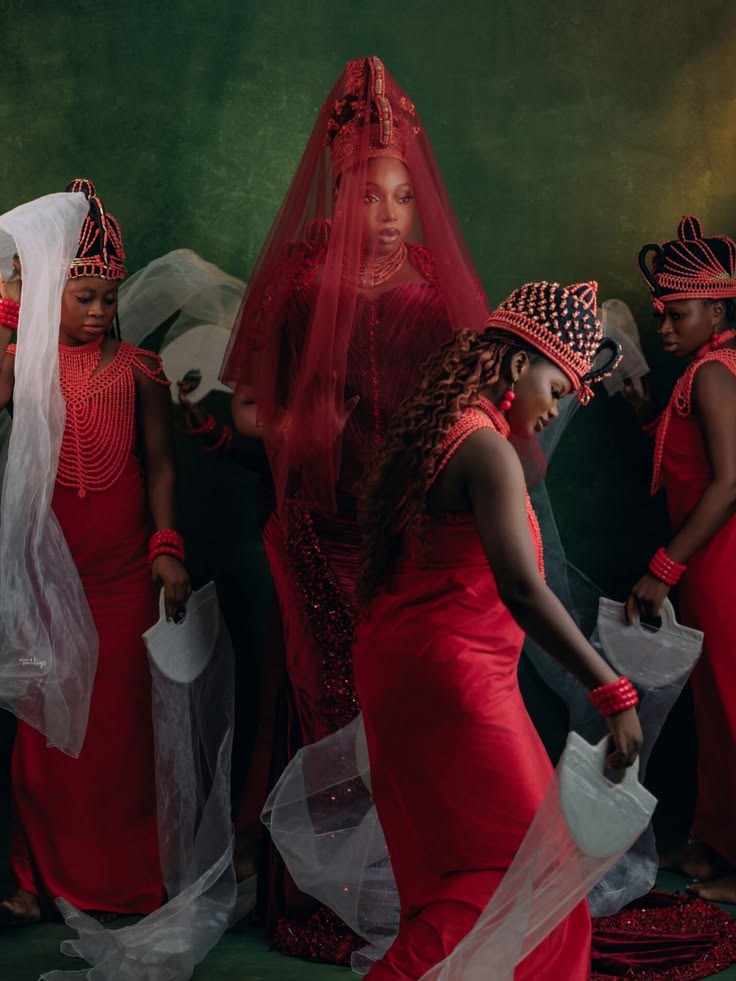
The debate over Ewu Iwu also raises questions about recognition. Aisien’s role in designing the garment is documented in the Smithsonian’s male ensemble record, while the historical practice that informed his work belongs to a broader Edo cultural context.
These are different contributions. One concerns the design of a particular garment; the other concerns the historical knowledge and cultural practices from which the design emerged.
Recognising both allows us to examine cultural authorship without treating an individual designer and an entire cultural tradition as equivalent. It also raises a practical question: how should people who reproduce or reinterpret a culturally significant garment acknowledge its history?
Aisien’s role in preserving Edo heritage was recognised publicly. After his death, the Edo State Government’s September 2021 tribute described his work on Ewu Iwu as the culmination of his efforts to preserve Benin heritage, and the Business Day interview was given during his lifetime.
The available sources establish Aisien’s role in the garment’s development and document the cultural significance attributed to its markings. They also show that at least one heritage organisation is concerned about how contemporary designs represent the original.
However, the sources examined here do not establish who currently profits from Ewu Iwu production, how individual makers are compensated or whether particular people have been denied recognition. We cannot answer those questions responsibly without further evidence, which is why we argue for crediting the hands behind a cloth to protect the fabric makers behind it.
Those questions sit inside a large market. Euromonitor International estimated the combined apparel and footwear market in sub-Saharan Africa at US$31 billion around 2019, showing why credit and compensation are not marginal questions for African dress.
Understanding the garment requires looking beyond its appearance. Its symbols have a documented historical context, its design has an identifiable author, and its contemporary representation has become a subject of cultural debate.
Preservation therefore involves more than reproducing a recognisable pattern. It also means maintaining access to the knowledge that makes the pattern meaningful and acknowledging its sources.
Authenticity Is a Question of Evidence
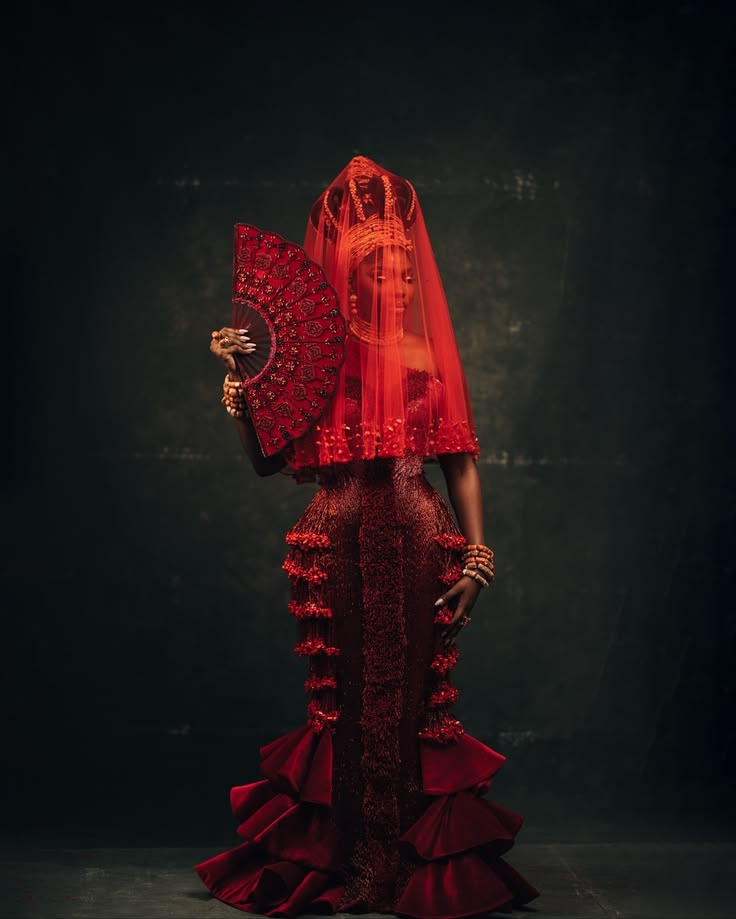
Ewu Iwu offers a useful case study in the relationship between clothing, cultural identity and historical memory. Its development shows how a designer can translate a historical practice into a new form of dress, while contemporary disagreements over its representation raise questions about who has the authority to define cultural authenticity.
The available evidence does not justify treating every variation as a distortion, nor does it establish that every adaptation preserves the garment’s historical meaning. Those conclusions require evidence about the designs in question, the meanings attached to their symbols and the traditions associated with their use.
The history of Ewu Iwu makes clear that appearance alone cannot assess cultural authenticity. It requires attention to historical context, documented intentions and the people whose knowledge informs the interpretation of a cultural garment.
The more useful question is not whether we can award authenticity as a final verdict, but how we establish claims about it. Who is making the claim? What evidence supports it? Whose knowledge is recognised? And how is the history behind the garment being communicated?
These questions do not eliminate disagreement. They let us examine disagreement more carefully.
For Ewu Iwu, that means looking beyond the garment itself to the history, cultural knowledge and competing interpretations that give it meaning.
The Omiren Argument
Authenticity is not a property of a garment. It is a claim someone makes, and it is only as strong as the evidence behind it.
Ewu Iwu began, in Dr Ekhaguosa Aisien’s account, as an answer to an Edo question about distinctive dress, and Oba Erediauwa accepted it as a marker of Edo identity. It translates iwu body markings into cloth, so it is a designed garment with an identifiable author, not an object preserved unchanged.
The record then resists a tidy story. The Business Day interview and the Edo Cultural Heritage Commission give 1986; the Smithsonian refers to a 1995 decision, and the Commission objects to designs that substitute ada and eben symbols for iwu markings, while the palace has set its own conditions for the dress.
That disagreement does not mean Edo knowledge is weak. It shows Edo designers, institutions, and the palace actively governing their own dress, making Edo people the authorities on Ewu Iwu rather than an audience for outside verdicts.
Documenting such a garment means tracing its history, naming the source behind each claim, and plainly stating what the evidence cannot establish. That is the standard we hold across Omiren Styles.
Also Read:
- When Dressing Becomes Declaration: Clothing as Cultural Identity
- How African Identity Is Styled Differently Across Continents
- Diaspora Designers Bridging Tradition and Modern Couture
- Woven by Monsoon Winds: Our Omani Legacy in Swahili Silhouettes in Zanzibar and Mombasa
Frequently Asked Questions
What is Ewu Iwu?
Ewu Iwu is a garment associated with Edo identity and Benin court dress. It incorporates the visual language of iwu, the body markings discussed in historical accounts of Edo culture. The garment’s history links clothing to cultural identity, historical memory,y and representation.
Who designed Ewu Iwu?
Edo historian and designer Dr Ekhaguosa Aisien has described his role in developing the garment. In an August 2020 interview with BusinessDay, he said he presented his design to the palace in 1986. However, the Smithsonian National Museum of African Art’s collection record refers to a 1995 decision on official court dress, and the available accounts do not fully reconcile these dates.
Who determines whether an Ewu Iwu design is authentic, and why are some designs disputed?
Authenticity requires attention to historical documentation, cultural knowledge, and the perspectives of people connected to the tradition, and the sources examined do not establish a universally accepted authority. The Edo Cultural Heritage Commission in North America has raised concerns about designs it considers inconsistent with the garment’s use of iwu markings. This is the commission’s stated position and should not be mistaken for evidence of universal agreement among Edo people.
Who benefits financially from Ewu Iwu production?
The published sources examined for this article do not establish who benefits financially from producing or selling Ewu Iwu garments, how makers are compensated, or whether particular creators have been denied recognition. Answering these questions would require further evidence about production, sales and attribution.