Few traditional menswear ensembles combine historical drama, practical thinking, and tailored geometry as well as the attire of Amhara men. Rooted in the cool, elevated landscapes of the Horn of Africa, this silhouette is not simply a collection of garments. It is a visual language that speaks to highland microclimates and an uncompromising sense of personal dignity. For anyone viewing menswear through the lens of structure and heritage, the Amhara ensemble is a masterclass in how clothing can project power, identity, and grace.
A guide to traditional Amhara menswear: the eje tebab (እጀ ጠባብ), teferi suri (ተፈሪ ሱሪ), kuta, gabi and buluko wraps, the bernos (በርኖስ) cloak and the striped short stick, and what each says about status and the highland climate.
The Eje Tebab Tunic
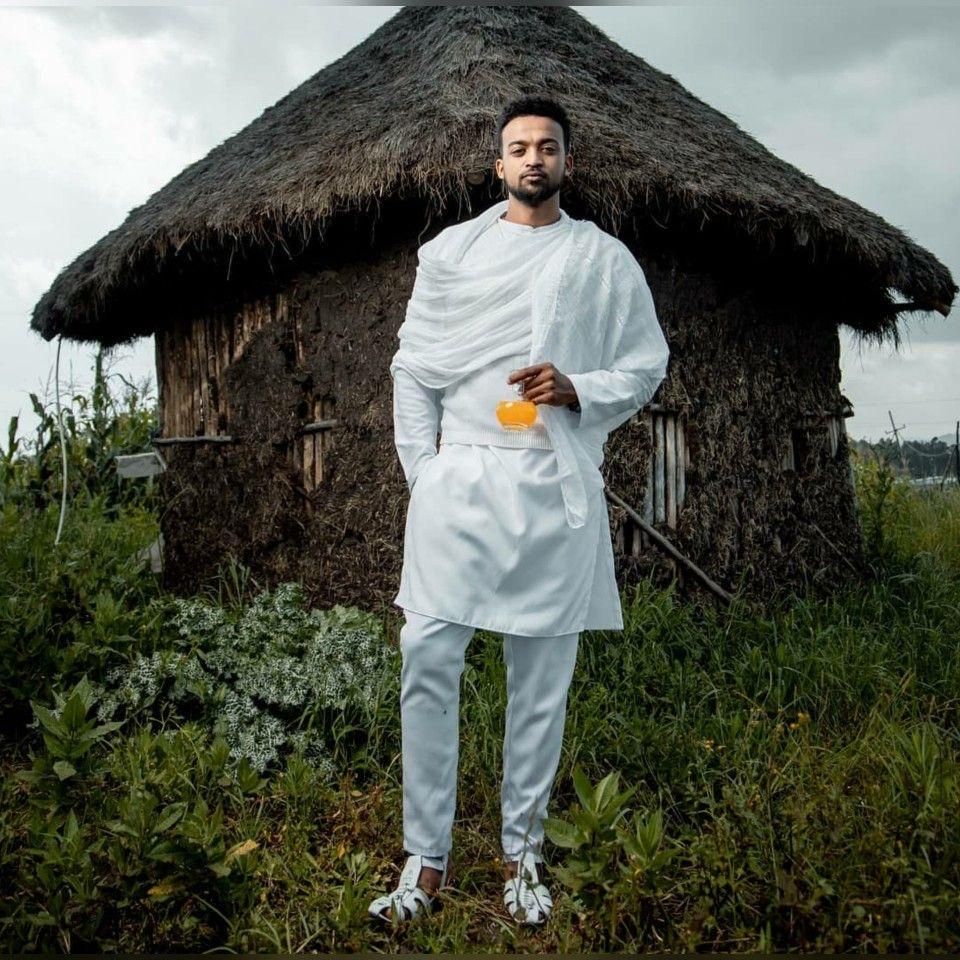
At the very heart of the outfit is the eje tebab (እጀ ጠባብ). At first glance, you might mistake it for a standard tunic, but the construction tells a more sophisticated story. The eje tebab is a straight-cut, dress-like garment that typically falls to the knees, though historical variations often extend to the ankles.
The garment’s defining characteristics are in its name. In Amharic, eje translates to “hand” or “sleeve”, while tebab means “tight” or “narrow”. True to its name, the tunic has remarkably close-fitting sleeves that hug the forearms, creating an immediate contrast with the loose, flowing body.
Because the garment is tailored straight down from the shoulders without any built-in stretch, it has long, deliberate slits on both sides from the waist downwards. Those side slits are a functional masterstroke. Without them, walking up steep mountain paths or sitting comfortably through long ceremonies would be nearly impossible.
The everyday eje tebab is crafted from immaculate, pure white cotton, but the garment also has a luxurious alter ego made entirely from silk, satin and rich brocade. These silk tunics, which shimmered under the highland sun, featured intricate geometric embroidery known as “tilet” or “tibeb” along the collar, chest placket and tight cuffs. That embroidery transformed a clean, functional tunic into a shimmering emblem of prestige.
The Geometry of the Teferi Suri and Tenefanef
If the eje tebab establishes the silhouette’s upper volume, the accompanying trousers define its avant-garde geometry. Known interchangeably as the tenefanef (ተነፋነፍ) or the teferi suri (ተፈሪ ሱሪ), these pants are a marvel of traditional tailoring.
The tailoring breaks the leg into two distinct zones. From the waist down to the knee, the fabric is incredibly loose, baggy and ballooning, creating an exaggerated pocket of space. From the knee down to the ankle, the trousers transition into a highly structured, skin-tight fit. That dual nature serves a specific purpose: the loose upper portion allows completely unrestricted hip movement when riding horses or traversing rugged terrain. At the same time, the tight lower leg ensures loose fabric never catches on undergrowth or trips the wearer.
The name ‘Teferi Suri’ holds a captivating piece of history. Suri is the Amharic word for trousers, while Teferi directly honours Emperor Haile Selassie I. Before his 1930 coronation, the monarch was known by his birth title, Lij Tafari Makonnen. During the early and mid-20th century, this jodhpurs-style trouser design became the height of fashion among the elite, generals and stylish young men who sought to emulate the impeccably tailored look of the emperor’s court. Over time, the style became so deeply intertwined with his identity that the pants permanently adopted his pre-coronation name.
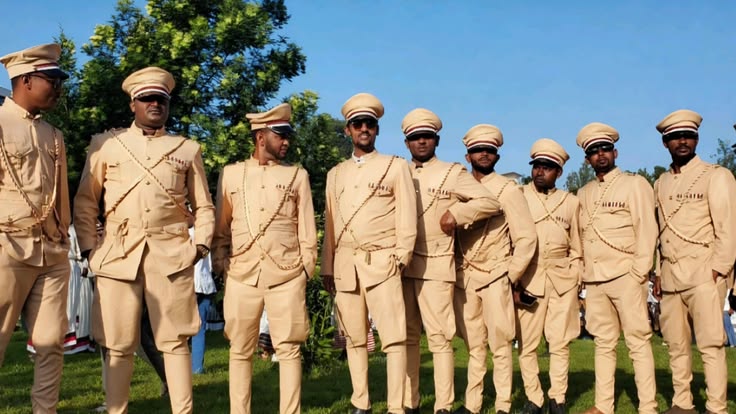
Elite Amhara officers, noblemen, and Emperor Haile Selassie himself routinely wore tailored khaki, olive, or beige jackets over matching khaki teferi suri. This fusion of traditional tailoring with rugged military textile remains an iconic look for historical portraits and formal events.
Teferi Suri ተፈሪ ሱሪ
Kuta, Gabi and Buluko
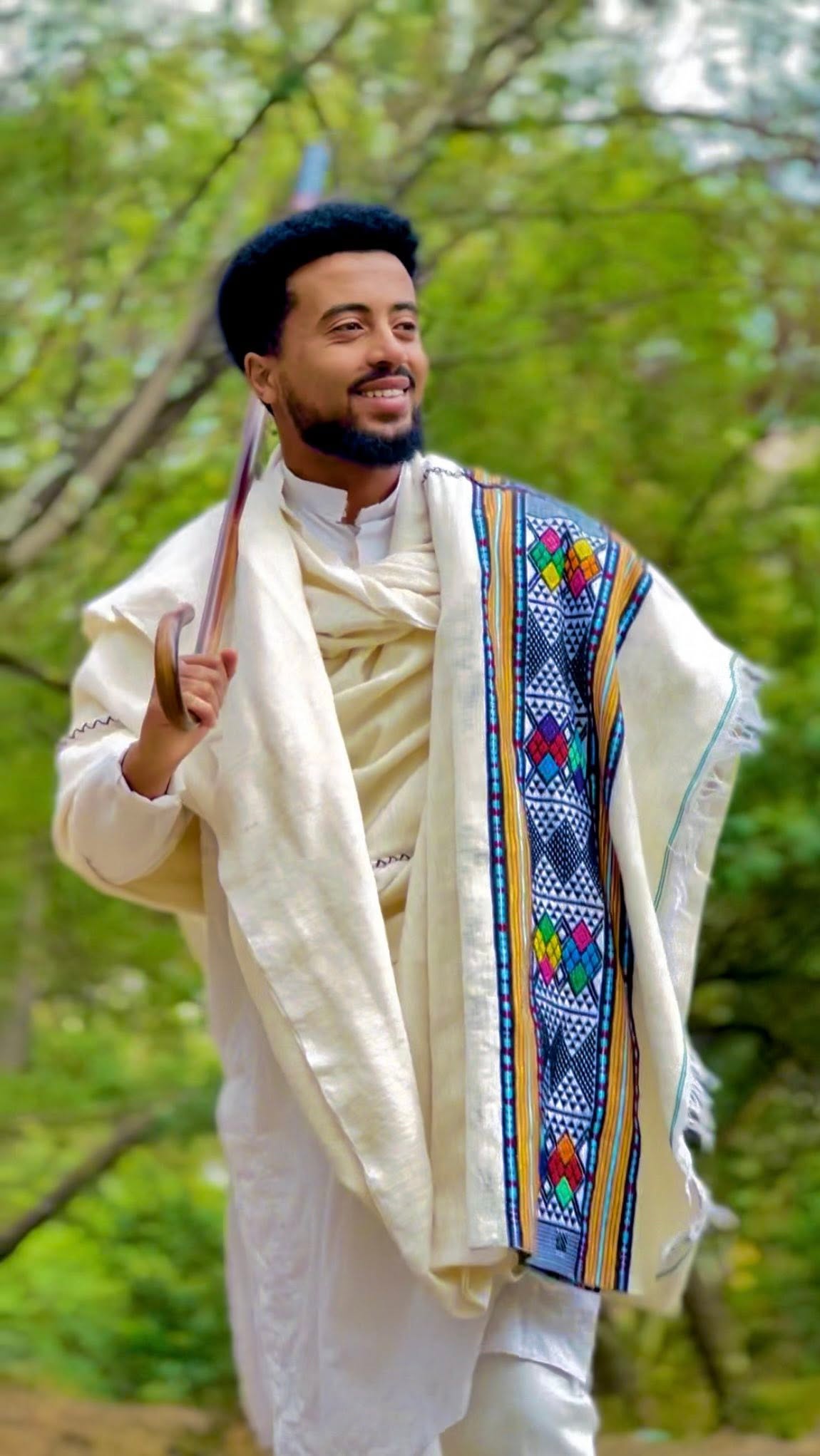
While the tunic and trousers provide the inner structure, the outer layers are fluid, changing with the fickle weather of high-altitude mountains. Amhara men choreograph three distinct types of white cotton wraps to protect themselves from the elements:
- Kuta (ኩታ): lightweight and single-layer, for warm afternoons, formal daytime gatherings and sunny church services.
- Gabi (ጋቢ): medium-heavy and multi-layer (four layers), for cool highland mornings, chilly evenings and everyday rural life.
- Buluko (ቡልኮ): ultra-heavy with dense layers, for severe alpine cold, high-altitude rain and nocturnal protection.
The kuta is a fine, gossamer-thin, single-layered shawl. Elegant and light, it drapes gracefully over the shoulders during a warm afternoon or at a formal church service. It serves more as a stylistic accent and a mark of respect than as a shield against the cold.
As the mountain air sharpens, the kuta gives way to the gabi. The gabi is much thicker and heavier, constructed by folding soft, hand-spun cotton into four insulating layers. It works like a wearable duvet, trapping body heat against the morning fog.
For the most extreme alpine cold, men turn to the buluko. The term “buluko” is a pure Amharic word, deeply embedded in the highlands’ traditional weaving lexicon, describing a highly durable, exceptionally thick, long blanket wrap. Woven from heavy, coarse cotton threads, the buluko is the ultimate defensive garment. It is both expensive and highly prized, representing a significant investment in comfort and survival. In deep rural highland communities, an authentic buluko is so dense it routinely doubles as heavy bedding at night.
The Iconography of the Bernos
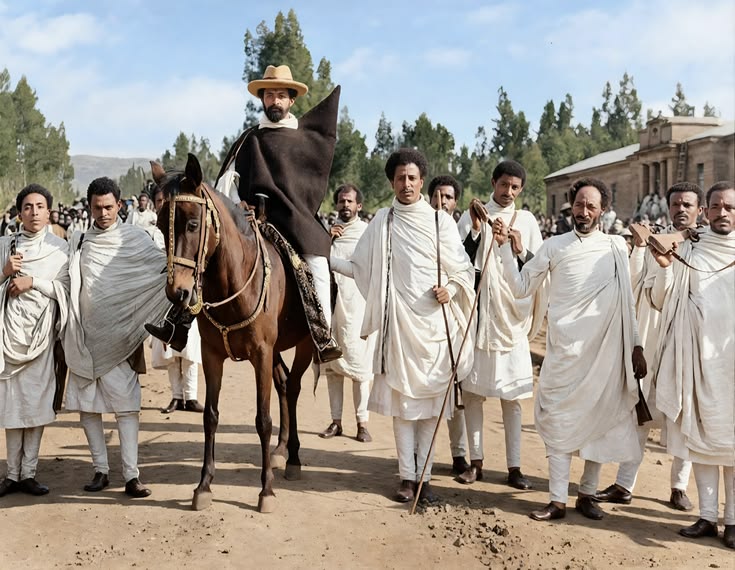
In historical photographs of the Ethiopian highlands, one garment stands out with an almost mythical presence: the bernos (በርኖስ).
The bernos is a magnificent, heavy outerwear cloak woven from dark, undyed sheep’s wool. Worn directly over the white cotton eje tebab and teferi suri, it creates an instantly recognisable, high-contrast look that historically signalled elite social status, judicial authority and military command. Regional governors (shum), senior judges and aristocratic elders wore it.
What makes the traditional bernos so fascinating, particularly those from the bitterly cold regions of Shewa (such as Menz), is their unique silhouette. Unlike the hooded cloaks found across North Africa, classic highland bernos lack a functional hood. Instead, it features a distinct, sharp, conical point engineered over one shoulder, typically the left.
This pointy end is not a random stylistic quirk; it is pure military engineering. Highland warriors and men of status traditionally travelled with rifles slung over their shoulders. The stylised, rigid peak of the bernos was tailored to protect the firearm’s muzzle. By capping the end of the gun barrel, the wool deflected persistent Highland rain, keeping water from dripping into the mechanisms, causing rust or ruining the ammunition. It let men protect their weaponry while keeping their hands free.
As the centuries progressed and daily public firearm carrying faded, the bernos evolved. Today, you can easily find contemporary versions crafted with or without the pointy end. These modern variants feature pointy, smooth, flat or gently rounded shoulders. Made from premium wool or even heavy velvet, grooms at modern weddings, diplomats, and church dignitaries wear them to evoke the stately majesty of the historic cloak without its rugged, militaristic origins.
በርኖስ Bernos
The Striped Short Stick
No discussion of traditional Amhara menswear is complete without the essential handheld accessory that completes the look of an elder or ruler: the short, decorated staff.
A common traveller or farmer might carry a long, functional walking stick called a dula to clear paths or herd livestock. A man of aristocratic or judicial standing carries a much shorter baton, roughly 1.5 to 2 feet long.
The craftsmanship of this stick is beautiful and meticulous. It is wrapped entirely in alternating, contrasting strips or bands that run along its length. Historically, these coils were fashioned from tightly wound strips of dark and light horn, coloured leather, copper wire, brass or even fine silver thread.
Holding this stick is a profound act of cultural semiotics. It functions essentially as a personal sceptre. When a regional leader or elder sat down to mediate a community dispute or took part in a formal public procession, they held the striped baton firmly in hand or rested it conspicuously across their lap. It immediately and nonverbally declared judicial authority, wisdom and leadership. It separated the rulers from the ruled and quietly reminded them of their responsibility to the community.
A Masculine Domain
In traditional highland fashion, the bernos, the teferi suri, the eje tebab and the striped sceptre belong strictly to the male sphere. Highland customs maintained a rigid boundary between garments for men and women.
Contemporary fashion designers occasionally subvert these rules on modern runways, reimagining the bernos as a chic, unisex cape for women, but the historical reality remains clear. The crisp machine-made tunic, jodhpur-like trousers, heavy buluko wrap and dark wool cloak together form a uniquely masculine lineage of style.
Ultimately, traditional Amhara menswear survives today not merely as an antique museum curiosity but as a living, breathing testament to design intelligence. It is a wardrobe engineered to conquer the cold, tailored to command respect and named to honour history. For the modern style enthusiast, it is an enduring reminder that true style is never just about what you wear; it is about the history, structure and sovereignty you carry with you.
Also Read on Omiren Styles:
- Colombian Traditional Clothing: Regional Dress, Fabrics and Fashion
- How Adire Cloth Holds Memory, Labour and Place
- Mama Casset’s Dakar: Dress, Pose and the Studio Portrait
- Uzuri International: Two Pageant Gowns and the Design of Public Presence
The Omiren Argument
Traditional Amhara menswear is best understood as a system, not a list of garments. Each piece answers a practical question first: how to move, how to stay warm, how to keep a rifle dry. The tight sleeves and side slits of the eje tebab, the loose-above-the-knee and tight-below-the-knee geometry of the teferi suri, the weather-matched progression from kuta to gabi to buluko and the pointed shoulder of the bernos all begin as solutions.
Those solutions then take on a second life as signs of status, authority and respect. Silk and brocade with tilet or tibeb embroidery mark prestige. Dark wool bernos signal judicial authority and military command. The striped short stick declares wisdom and leadership. The names themselves carry history, from eje tebab to teferi suri, which honours Lij Tafari Makonnen. Function and meaning are built into the same cloth.
That is why the ensemble still matters. Contemporary bernos in premium wool or heavy velvet, worn by grooms, diplomats, and church dignitaries, keep the majesty while shedding their militaristic origins. Over the centuries, the garments have changed without losing the logic that shaped them.
Frequently Asked Questions
What is the eje tebab (እጀ ጠባብ)?
It is a straight-cut, dress-like tunic that typically falls to the knees, with close-fitting sleeves and long side slits from the waist down. In Amharic, eje means “hand” or “sleeve” and tebab means “tight” or “narrow”.
What is the difference between the tenefanef (ተነፋነፍ) and the teferi suri (ተፈሪ ሱሪ)?
The two names are used interchangeably for the same trousers: baggy and ballooning from waist to knee, skin-tight from knee to ankle. Teferi honours Emperor Haile Selassie I, who was known as Lij Tafari Makonnen before his 1930 coronation.
What is the difference between the kuta (ኩታ), gabi (ጋቢ) and buluko (ቡልኮ)?
All three are white cotton wraps, chosen by weather. The kuta is a thin, single-layered shawl for warm days and formal occasions. The gabi has four insulating layers for cool mornings and evenings. The buluko is the heaviest, woven from coarse cotton threads for severe cold, and often doubling as bedding.
Why does the bernos (በርኖስ) have a pointed shoulder?
Highland warriors and men of status carried rifles slung over their shoulders, and the pointed peak acted as a protective hood for the muzzle, keeping rain out of the mechanisms and away from the ammunition.
Who wore the Bernos?
Regional governors (shum), senior judges and aristocratic elders. Historically, it signalled elite social status, judicial authority, and military command. Today, grooms, diplomats and church dignitaries wear contemporary versions.
What is the striped short stick?
A decorated baton, roughly 1.5 to 2 feet long, carried by men of aristocratic or judicial standing. It is wrapped in alternating bands of materials such as horn, coloured leather, copper wire, brass or fine silver thread, and functions as a personal sceptre. It differs from the long walking stick called a dula.
Do women wear traditional Amhara menswear?
Historically, no. These garments belong to the male sphere, though some contemporary designers reimagine the Bernos as a unisex cape for women.