In a 2015 account of Jamaican wakes and nine-night observances, The Gleaner described a distinction that changes how we should understand the gathering. Mourners traditionally arrived with food and necessities for the bereaved. They did not simply expect a grieving household to feed them. Their presence was intended to bring emotional, material and sometimes financial support to the family receiving them. That is a very different kind of hospitality from the one most people picture when they think of a large gathering with food and music at its centre.
Food, songs and shared stories sustain Jamaica’s Nine Night gatherings. But the tradition raises a deeper question: does the community come to be hosted, or to help carry the family’s grief?
That question places the meal at the centre of the story — but not as a menu. Who brings the ingredients? Who prepares the food and passes it around? Who makes it possible for the family to receive visitors without carrying every responsibility alone? These questions reveal what hospitality can mean when a household is dealing with a death, and why Nine Night deserves to be understood as something more than a vivid cultural occasion.
Nine Night is often described through its visible and audible forms: people gathering, songs continuing into the night, drinks being shared, and a life being remembered. Institutional and journalistic accounts document those elements. They also reveal a tension that is easy to overlook—the gathering can support the bereaved, or it can become another obligation placed on them. The difference lies partly in what visitors understand they are coming to do.
Explore Jamaica’s Nine Night tradition through shared food, songs and community care — and the responsibilities surrounding a grieving household.
What Is Jamaica’s Nine Night Tradition?
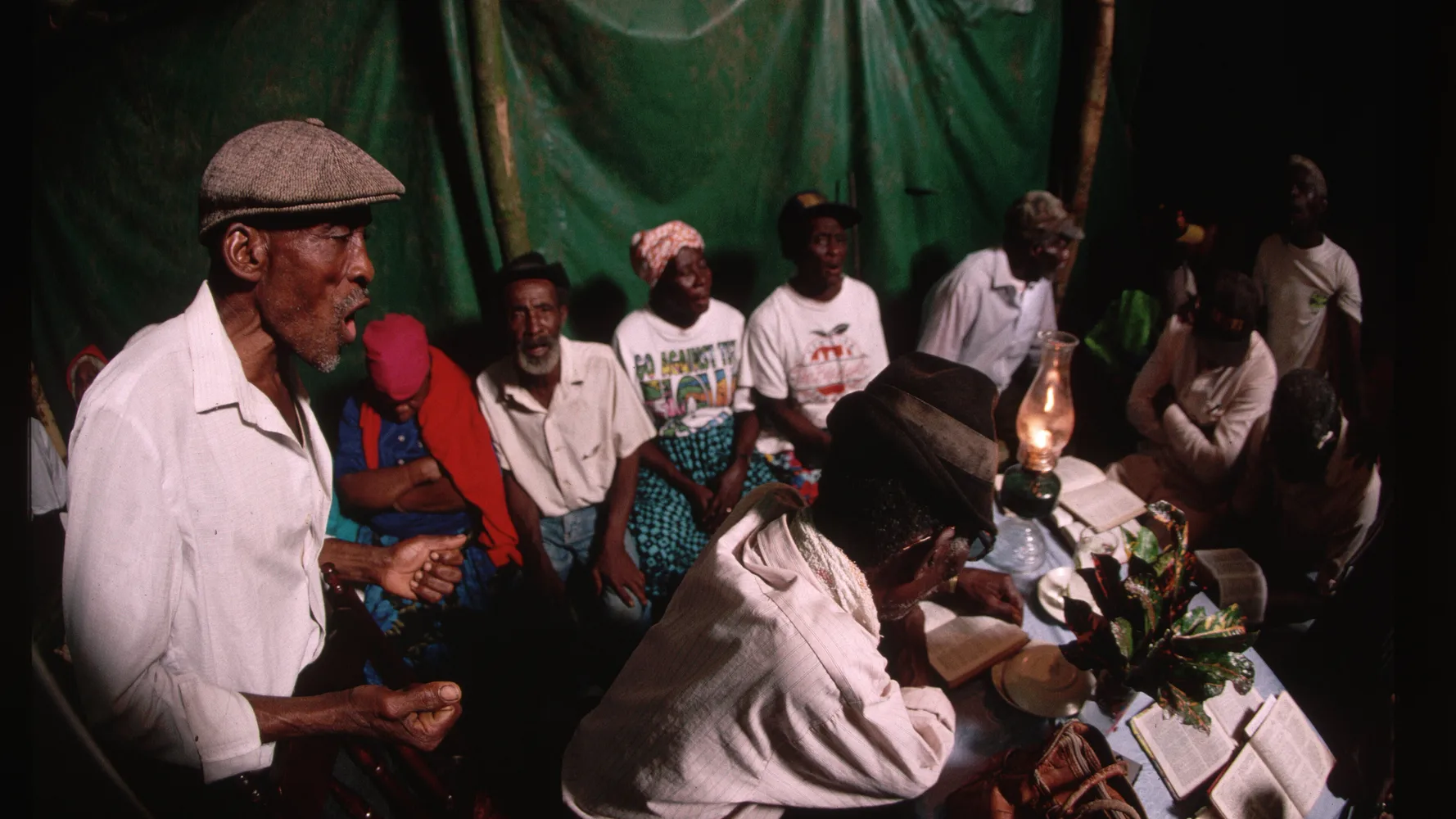
Nine Night is part of Jamaica’s traditions of mourning and wakekeeping. In his account for the College of the Holy Cross’s Catholics & Cultures project, Thomas M. Landy describes it as a form of “setup”, or wake, associated with the ninth night after a death and taking place before the funeral and burial. He connects the observance to traditional beliefs about the departed spirit’s journey — beliefs that give the gathering a purpose beyond gathering itself.
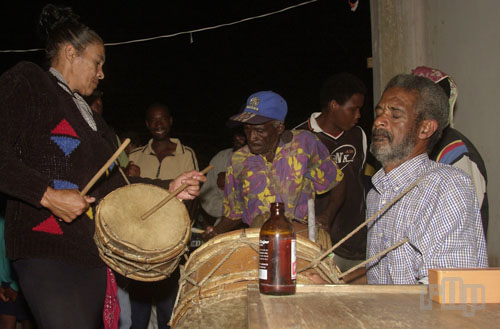
The National Library of Jamaica describes a broader sequence of wake activities in its account of Dinki Mini, a dance associated with mourning observances. Early sessions feature lively music and dancing; later ones include ring games, Anansi stories, and riddles, with the ninth night culminating in rituals intended to send the spirit on its journey.
These accounts should not be collapsed into one compulsory timetable. The Gleaner’s historical discussion notes that some Nine Night observances took place after burial, showing why timing should be attributed to a specific source rather than presented as universal. What connects the accounts is the gathering itself: people mourn together, and the household acknowledges its loss through presence, ritual, and practical activity. That does not mean every participant shares identical spiritual beliefs. It means the tradition cannot be adequately explained as either a funeral service or an ordinary party.
Before There Is a Meal, There Is a Community Response
The most instructive part of The Gleaner’s historical account is its description of responsibilities being genuinely shared. People did everything from digging graves and making coffins to preparing food. People offered services freely, and visitors brought provisions and other necessities to the family. What emerges from that account is a community process, not a household purchasing every element of an event on its own.
This is the context in which the food matters. A meal can represent more than the host’s generosity. It can also represent others’ willingness to contribute something useful. Preparing food, supplying it, and passing it around are different ways of participating in the gathering, each a small act that shifts some of the weight from the family at the centre.
The article’s title — “Who feeds the mourners?” — therefore has no single answer. In the historical account, the bereaved were not simply the providers. They also needed feeding and support. That reversal deserves serious attention. It shifts the story from how successfully a family entertains its guests to how effectively those guests support the family. The distinction is small in wording but substantial in meaning: hospitality can be shared rather than demanded.
The Food Is Part of the Vigil
The Gleaner documents fried fish, hard-dough bread, bammy, pudding and other pastries among foods served at traditional Jamaican set-ups, alongside coffee or chocolate tea. It also notes soups, curried goat and rice as the practice evolved across different generations and settings. These are the foods that appear in a historical account of what people brought and prepared — not a fixed menu that every household must supply to make its gathering culturally legitimate.
Their significance lies in the relationship between eating and keeping company: food shapes the occasion through which people stay present with one another through the night. The same report describes people who had migrated returning and participating, including helping pass around tea and bread. Those returning relatives appear not only as mourners but also as contributors to the gathering’s practical work, which is exactly the point.
A cultural article that lists the dishes but overlooks those actions tells only half the story. A more revealing question is not only what is on the table but also how it got there and whom it is meant to sustain. In that account, food is neither decorative nor separate from remembrance. Serving and sharing it joins the observance.
Songs and Stories Give Mourning Another Form
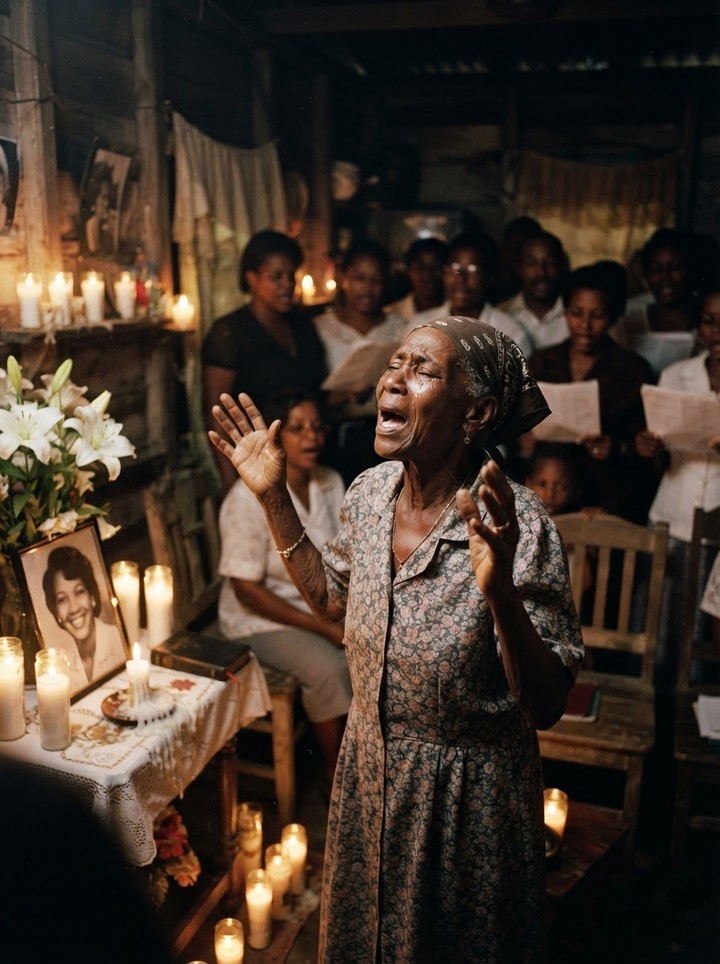
The National Library of Jamaica describes Dinki Mini sessions as lively and celebratory, intended to cheer the bereaved. Its account moves from dancing and singing through games, stories and riddles as the observance progresses through the night. That description challenges a narrow expectation that respect for the dead must always look quiet or still.
Within the practice the library documents, sound and movement are not departures from mourning. They are part of how people accompany it. The purpose of that liveliness is to support those who remain, a very specific kind of joy directed at a very specific need. “Celebratory” should not be confused with uncomplicated happiness. It describes participation, not an assessment of how a grieving person feels on a particular night.
You also don’t need to make every song or story carry a single symbolic explanation. The library’s account establishes a range of activities within the wake tradition, and the people practising them determine their meaning in a particular gathering. Respectful cultural reporting resists the pull towards spectacle here. Songs, dancing, and food may be the easiest elements to describe vividly, but their significance depends entirely on the relationships surrounding them.
The Spiritual Send-Off Requires Careful Explanation
Landy’s account connects Nine Night to traditional Jamaican beliefs about the duppy, or spirit of the deceased. It describes a belief that the spirit’s departure requires a celebratory send-off and that appropriate respect helps prevent it from lingering in ways that could cause harm. Those are reported beliefs, documented in a published academic context. This article does not ask the reader to accept them as a personal fact, and they should not automatically apply to every Jamaican family.
They nevertheless matter to understanding why the gathering may carry obligations beyond visiting and eating. In the account, remembrance connects to a transition: people accompany a departure, not simply recall a life. Removing the spiritual dimension entirely would make Nine Night easier to package as an evening of food and music — but less accurate. Overemphasising it would produce a different distortion, turning a complex mourning practice into a collection of unusual beliefs. A more useful approach is to keep belief, ritual, and practical support in relation to one another. The gathering can carry spiritual significance while also providing company, food and genuine assistance.
When Hospitality Becomes a Burden
Nine Night should not be romanticised as a tradition that always distributes responsibility fairly. Landy’s account, first published in 2014 and last updated in 2023, records criticism from people who felt some gatherings had shifted toward drinking, display, and expense. Respondents said they worried the observance could place financial and other burdens on families instead of consoling them.
That testimony does not establish how common such experiences are today, and it would be wrong to treat it as a verdict on the tradition as a whole. What it does is make a real tension impossible to ignore. A large gathering is not automatically evidence of strong communal support. Guests may be present while responsibility remains concentrated in the grieving household. The number of people who arrive tells us less than what they contribute and what the family actually needs.
The contrast with The Gleaner’s historical account is instructive. One describes visitors bringing provisions and offering their labour freely; the other records concern about families being expected to finance an occasion. The editorial point is not that the past was uniformly generous or that contemporary gatherings have uniformly declined — neither source supports that conclusion. What matters is the direction of hospitality. Does care move towards the bereaved, or are the bereaved expected to provide for everyone else?
A Family Practice Can Also Become a Public Tribute
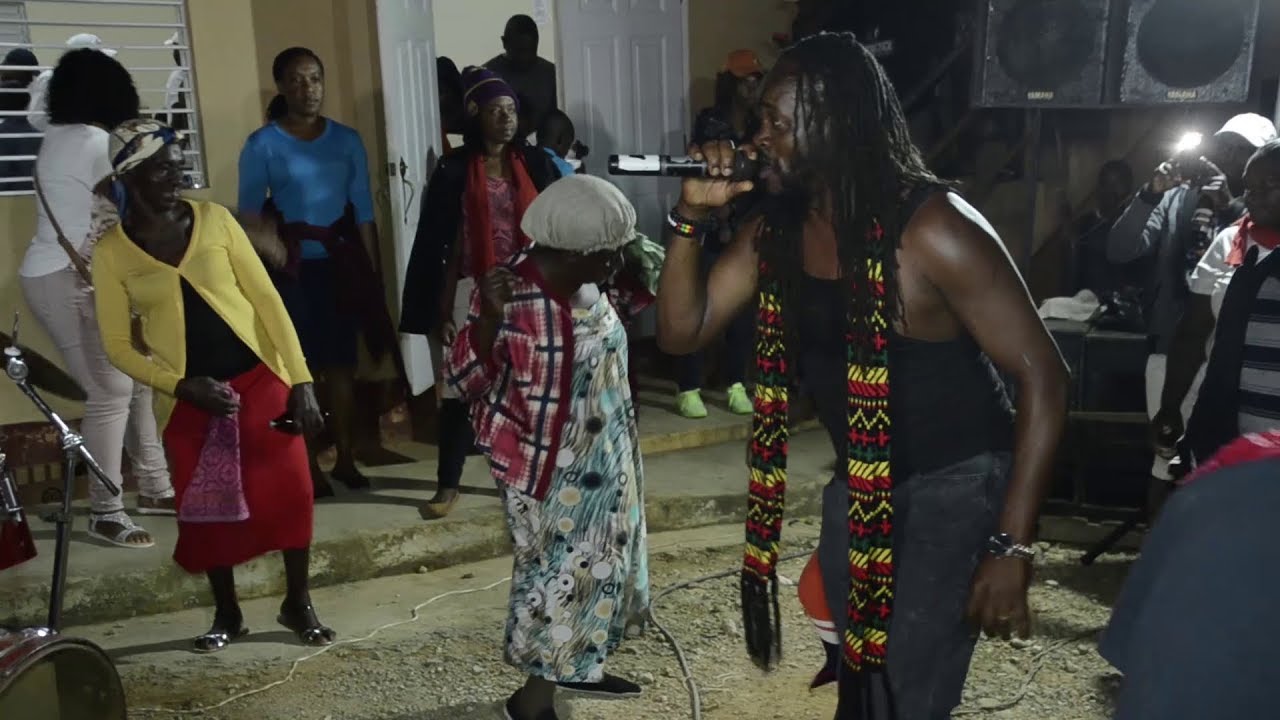
Nine Night can operate beyond the household, though a public commemoration should not be mistaken for a typical family gathering. In February 2010, Jamaica’s Ministry of Youth, Sports and Culture organised a traditional Nine Night for Professor Rex Nettleford at the Ranny Williams Centre. The planned programme included an exhibition about his life, a condolence book, performance tributes and traditional cultural forms including Kumina and Nyahbinghi, as documented by the Jamaica Information Service.
Sydney Bartley, the ministry’s principal director of culture, explained that the intention was to give people space to contribute something in Nettleford’s honour. The example shows how the form can accommodate public remembrance of a significant cultural figure. It does not tell us who cooks at a family gathering or how household responsibilities are divided from night to night. Its relevance is more specific: the tribute was organised around participation. People were given ways to acknowledge a life through cultural expression, rather than remaining only an audience.
The Omiren Argument
The value of Nine Night should not be judged by the abundance of its table or the scale of its gathering. The more important question is whether its arrangements support the people most affected by the death. The historical account of visitors bringing food and offering their services gives real substance to the idea of communal care. The reported criticism of expense and display shows how that purpose can become strained over time.
Our editorial position is that hospitality in mourning is most meaningful when it is something a community shares, not something a bereaved family must prove. That also changes how the tradition deserves to be covered. Food belongs in the story, but so do the people preparing it. Music belongs, but it doesn’t prove that grief has disappeared. Spiritual beliefs belong, but attribute them carefully and don’t suggest every household practises them the same way.
Nine Night is best understood through what people do for one another. The meal, the song, and the visitor’s presence matter because of the care they carry, and that care is the tradition’s most important ingredient.
Also Read:
- Black British Style in 2026: Designers, Codes and Cultural Identity
- Gullah Geechee Women’s Headwrap Traditions, Still Practised Today
- Caribbean Diaspora Designers on the Runway
Frequently Asked Questions
What Is Nine Nights in Jamaica?
Nine Night is a Jamaican mourning observance associated with wake-keeping, gathering, singing and other shared activities. Published accounts connect it to traditional beliefs about the departed spirit while documenting its practical role in supporting the bereaved through communal presence and participation.
Does Nine Night Always Happen Before the Funeral?
The sources do not establish one universal sequence. The Catholics & Cultures account describes it occurring before the funeral and burial, while The Gleaner’s historical report notes some observances taking place after burial. Timing should be attributed to a specific family’s practice rather than presented as fixed.
What Food Is Served at a Jamaican Nine-Night?
The Gleaner’s historical account describes fried fish, hard-dough bread, bammy, pudding, pastries, soups, and curried goat and rice, along with coffee or chocolate tea. These are foods recorded from historical accounts of set-up gatherings — not a compulsory menu for every family or a claim about what is served at every contemporary Nine Night.
Who Traditionally Provides the Food?
The Gleaner describes visitors bringing food and necessities to the bereaved, with community members sharing practical responsibilities, including food preparation. That historical account should not be treated as proof that every contemporary gathering is organised the same way—but it does establish that the bereaved were traditionally supported, not only hosts.
Why Can Nine Night Include Lively Music and Dancing?
The National Library of Jamaica describes lively wake activities, including Dinki Mini, as intended to cheer the bereaved. In this tradition, celebration and mourning are not treated as opposites. The liveliness is purposeful — directed at supporting the people who remain, not at displacing grief.