Before the ingredients list in any recipe, there is often a paragraph of text. In a basic cookbook, it tells you what the dish is and perhaps how long it will take. In a more considered cookbook, it does something more: it tells you where the dish comes from, what it means, how to think about it before you start. That paragraph is the recipe headnote, and what it contains is often the most telling indicator of what a cookbook believes it is doing.
In Zoe’s Ghana Kitchen, first published in the UK in 2017 and reissued in a revised US edition by Voracious (Hachette) in October 2021, every recipe carries a headnote. The cookbook’s reviewer at Tara’s Multicultural Table confirms that each headnote contains background information, tips, serving size and menu ideas. Those are the functional categories. Across a cookbook that explicitly positions itself as an argument about Ghanaian food’s place in global food culture, the headnotes also carry cultural and biographical claims that the ingredients list and method cannot.
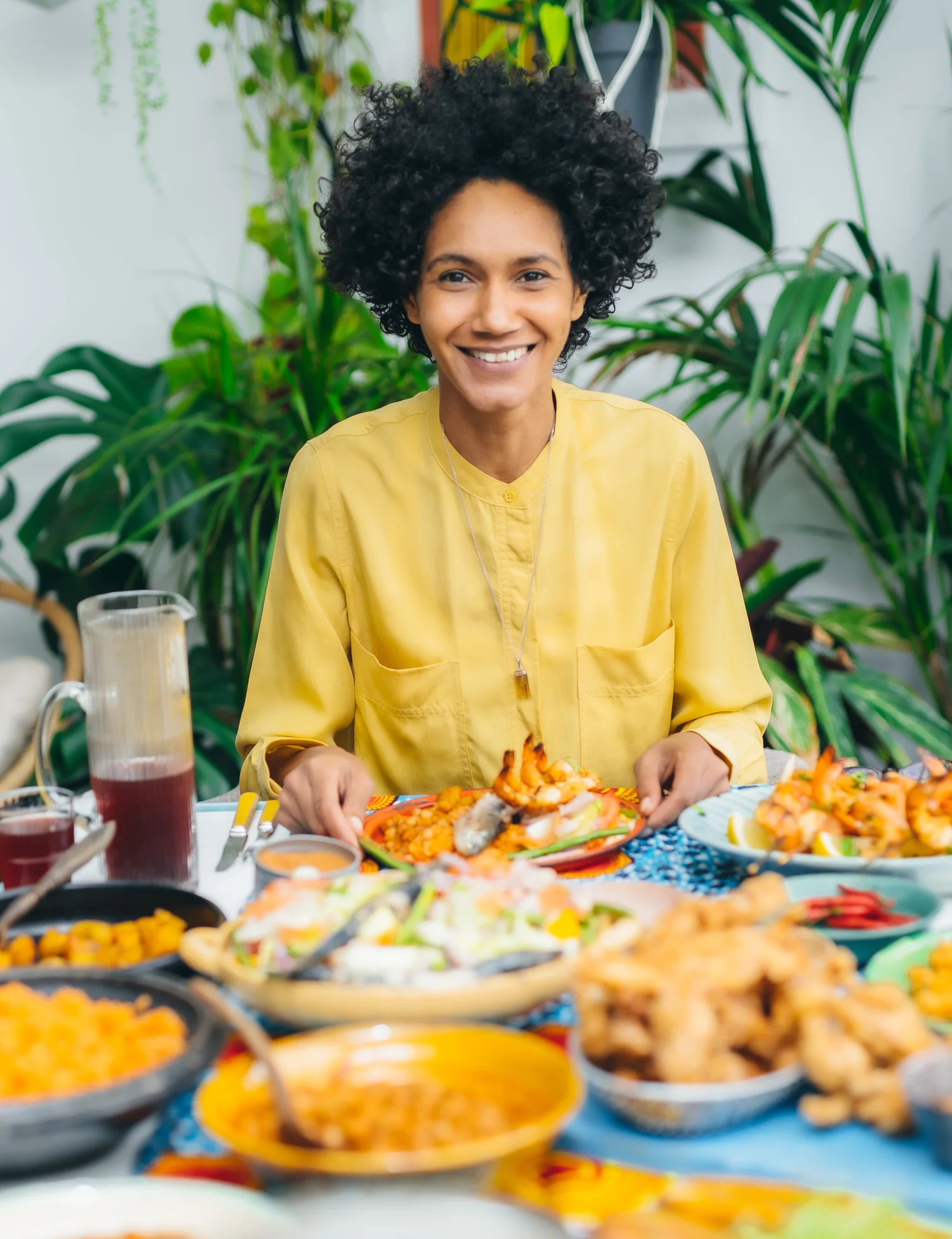
Adjonyoh is a British-Ghanaian self-taught chef who started cooking peanut butter stew at home in East London in 2010, feeding festival-goers before building the supper clubs and pop-up residencies that became Zoe’s Ghana Kitchen as a restaurant and brand. The cookbook is not only a collection of recipes. It is, by her own description, an argument: ‘For too long Africans have kept this incredible food a greedy secret.’ The headnote is the space where that argument is made, one dish at a time.
Every recipe in Zoe’s Ghana Kitchen carries a headnote. This article reads those headnotes as a form of food writing that records cultural knowledge, personal biography and culinary argument – and asks what they preserve that the ingredients list alone cannot.
What a Recipe Headnote Is and What It Can Do
The headnote is the oldest element of the recipe as a written form. Before standardised ingredient lists and method steps became the dominant format for printed recipes, people wrote food instructions as continuous prose, with context, instruction, and cultural framing inseparable from one another. The modern recipe format, which isolates ingredients in a list and breaks the method into numbered steps, is efficient for a cook at the stove. It poorly records everything else a dish involves.
The headnote is where everything else is permitted to re-enter. A headnote can carry the dish’s history: where it is eaten, on what occasions, by whom, and at what time of year. It can carry the author’s personal relationship to the dish: when they first ate it, who made it for them, and what cooking it means in terms of memory and identity. It can carry the argument: why this dish belongs in a cookbook aimed at readers who may not know Ghanaian food and what the cook should understand about the dish before approaching the method. It can also carry practical information: substitutions, scaling, serving suggestions, and what the dish accompanies.
In Zoe’s Ghana Kitchen, all of these functions operate simultaneously. The cookbook is structured so the recipe headnotes do the cultural and biographical work alongside the practical work. This is not incidental to the book’s design. It is essential to what the cookbook is arguing.
The Biography Distributed Through the Book
Zoe’s Ghana Kitchen is structured so that the memoir sections, titled ‘My Ghana Story’, are distributed across the recipe chapters rather than gathered in a single introductory section. Part one of the memoir appears in the Fish and Seafood chapter. Part two appears in Veggie Dishes. Part three appears in Sides. Part four appears in Desserts. The biographical narrative is not front-loaded; it accompanies the recipes throughout the book, which means the reader encounters Adjonyoh’s personal history of Ghanaian food at the same moment they encounter the dishes that history produced.
This structural decision changes how the headnotes work. Each headnote sits within a chapter that is itself part of an ongoing autobiographical narrative. The recipe’s background information, its cultural context and its place in Adjonyoh’s own food history are not separate from the memoir; they are continuous with it. A headnote that explains what Nkruma (Okra) Tempura means in the context of Ghanaian cooking is also, implicitly, part of the story of how a self-taught British-Ghanaian chef in East London came to develop that dish and what it meant to her to do so.
‘My only access to Ghana was the food.’ – Zoe Adjonyoh, The Guardian, 2017
That statement is key to understanding what the headnotes in this cookbook record. Adjonyoh grew up in East London with a Ghanaian father. Food was the channel through which Ghanaian culture, memory, and identity were available to her. The cookbook makes that channel public. The headnote is the space where the food’s meaning, distinct from its method, is articulated.
The Ingredient Guide as an Extended Headnote

Zoe’s Ghana Kitchen includes a detailed guide to the ingredients common in Ghanaian cooking: descriptions, photographs, health benefits and popular uses. This guide, which precedes the recipes, functions as an extended collective headnote for the entire cookbook. It gives the reader the same orientation that an individual recipe headnote provides for a single dish: it explains what these ingredients are, where they come from, what they do in the dishes they appear in, and why they are worth knowing.
The ingredients covered include agushi (dried ground melon seeds), guinea peppers, grains of paradise, cubeb pepper, shito (a chilli oil condiment), and the chalé sauce, whose variants appear across multiple recipes. Most of the cookbook’s intended international audience will not have encountered these ingredients before. The guide bridges the knowledge gap without reducing the ingredients to novelties. It treats them as part of a culinary tradition with its own internal logic, inviting the reader to understand them rather than simply sample them.
The Spotify playlist that accompanies the cookbook is another form of this same contextualisation. Music is listed as both a cooking soundtrack and a dinner companion. Listing Ghanaian music alongside Ghanaian recipes places both in the same cultural frame, communicating that the food does not exist in isolation from the music, the occasions, the social contexts in which Ghanaian culture is practised. The headnote, the ingredient guide, and the playlist all do versions of the same work: providing the context without which the recipe is only a method.
What the Headnote Records That the Recipe Cannot
Consider a dish like Jollof Fried Chicken, one of Adjonyoh’s best-known recipes. The method for this dish involves a jollof dry spice mix, marinating chicken strips in that mix with sea salt, black pepper, rapeseed oil and buttermilk, then frying. Presented without context, that method tells you how to make the dish. It does not tell you what jollof is, why it matters, what its relationship to the jollof rice dishes of Nigeria and Ghana involves, or why combining a West African spice tradition with a fried chicken format produces something that is neither a straightforward Ghanaian dish nor a straightforward fried chicken recipe but something specific to the position Adjonyoh occupies: British-Ghanaian, East London-raised, cooking for an international audience.
The headnote is where that positioning is made explicit. Adjonyoh describes her approach as ‘reimagining the ingredients of West Africa to help others fall in love with the flavours’. The reimagining is not a departure from Ghanaian cooking; it is translation for an audience that cannot be assumed to know the source. The headnote is the space in which the translator explains what is being translated and why.
The same applies to Bofrot, the Ghanaian doughnuts more widely known in West Africa as puff-puff. The method for Bofrot is recognisable to anyone who has made yeasted fried dough. The headnote adds the specific Ghanaian character of the preparation: the spicing, the occasion, and the way the dish sits in the repertoire of Ghanaian food culture. Without the headnote, Bofrot is a fried doughnut. With it, Bofrot is a specific cultural object with a specific place in a specific food tradition.
The Headnote as a Record of Cultural Knowledge
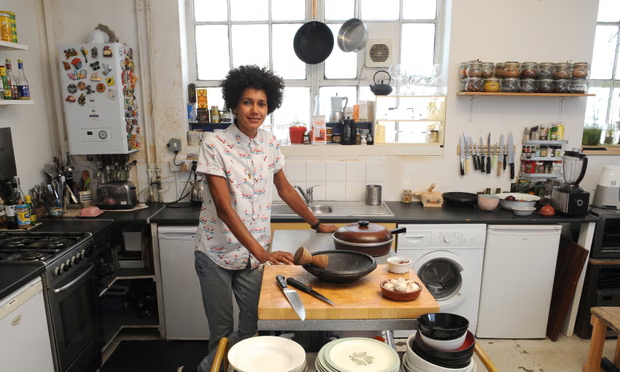
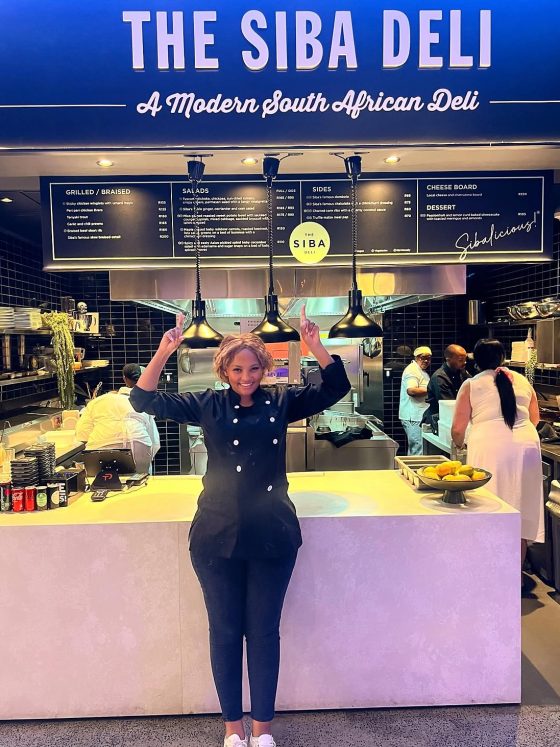
The Omiren Styles food spotlight series has examined what food writing preserves, and how it preserves it across different practitioners. In Siba Mtongana’s work, the QR codes in her cookbook linking to videos of her making the recipes addressed a specific problem in recipe writing: the gap between written instruction and demonstrated technique. In Adjonyoh’s work, the headnote addresses a different but related gap: the distance between the recipe as a method and the recipe as a cultural object with a history, a geography and a social life.
What the headnote records, across a cookbook like Zoe’s Ghana Kitchen, is cultural knowledge that would otherwise be invisible to the reader: the knowledge of what a dish means in its context of origin, how it sits in relation to other dishes and occasions, what its name carries, and where it comes from in the specific regional food culture of Ghana. This knowledge is not simply supplementary information. It is what makes the dish comprehensible as more than a combination of ingredients and steps.
The same principle applies in heritage textile documentation. An archival object record that gives a textile’s dimensions and fibre content without recording the knowledge of the people who made it and the occasions for which it was made has preserved the object but not the knowledge. A recipe without a headnote preserves the method but not the meaning. Adjonyoh’s headnotes preserve more than the ingredient list, Cay.
Why the Book’s Argument Depends on the Headnote
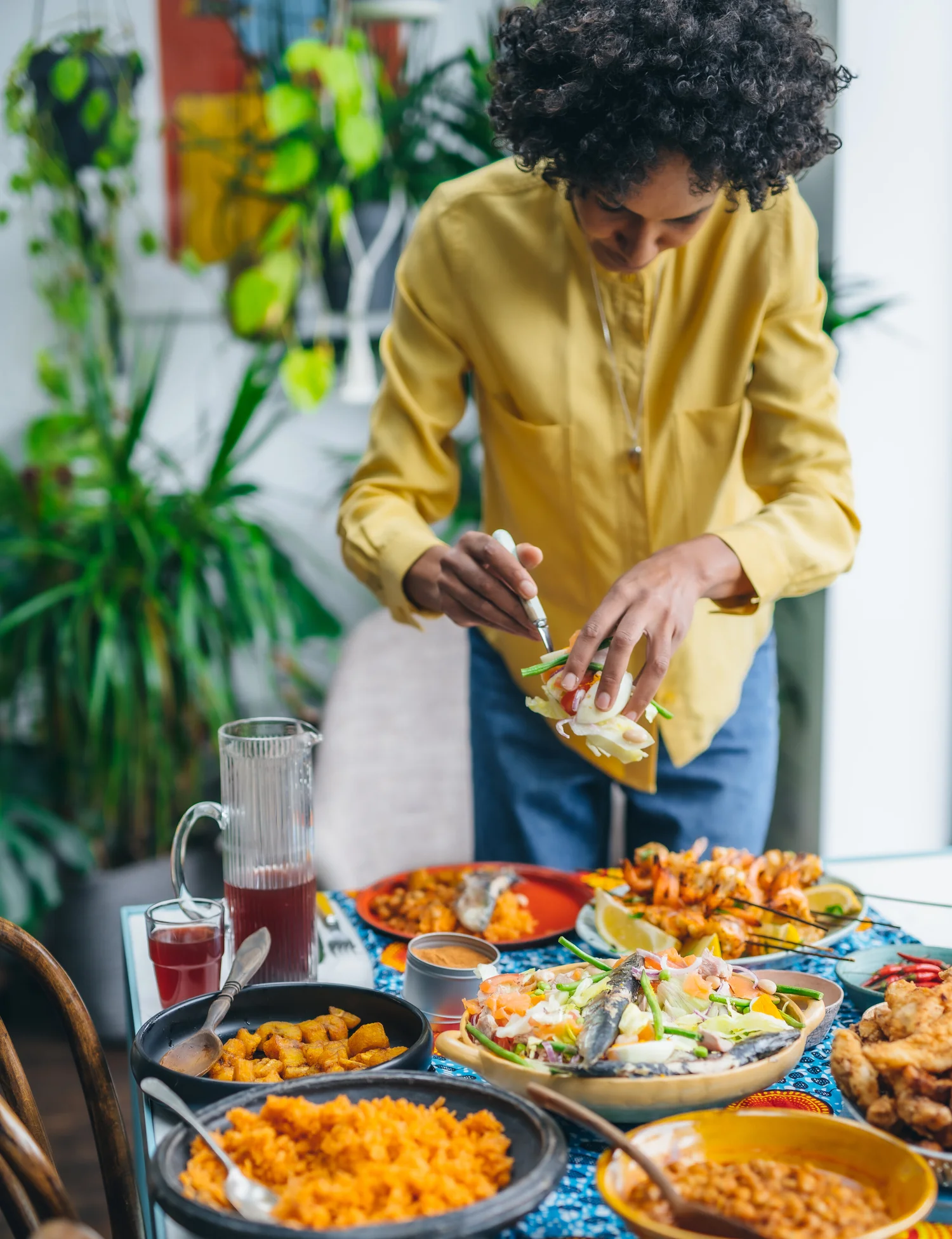
The statement on the back cover of Zoe’s Ghana Kitchen is an argument: ‘For too long Africans have kept this incredible food a greedy secret.’ That sentence stakes a position: Ghanaian food has been under-known, its not-being-known is a condition to be changed, and the cookbook is an instrument of that change. The headnote is the mechanism through which the cookbook’s argument is made at the level of individual recipes.
A cookbook that simply provided recipes without context would be useful as a method manual. It would not make the argument that Adjonyoh’s book makes. The argument requires that the reader understand what Ghanaian food is, where it comes from, what it means, and how it works in the culture that produced it. The headnote addresses each question, dish by dish, across the cookbook’s 256 pages.
The broader argument about whose food gets documented, whose culinary knowledge is treated as having depth and cultural authority, and whose gets reduced to flavour notes runs across Omiren Styles’ editorial work in fashion, heritage and now food. Adjonyoh’s headnotes show a practitioner insisting that documentation go deep enough to carry the knowledge, not just the method. That insistence is itself an argument about what food writing is for.
ALSO READ
- Food Spotlight: Siba Mtongana and the Practical Work Behind an Inviting Recipe
- What a Museum Record Can – and Cannot – Tell Us About Dress
- The Global South Made Fashion. It Just Never Got Credit.
- How Adire Cloth Holds Memory, Labour and Place
Frequently Asked Questions
Who is Zoe Adjonyoh?
Zoe Adjonyoh is a British-Ghanaian self-taught chef, writer and food justice activist. She grew up in East London with a Ghanaian father. She began cooking Ghanaian food from her home in 2010, feeding festival-goers before building the supper clubs and pop-up residencies that became Zoe’s Ghana Kitchen as a restaurant and brand. Her first cookbook, Zoe’s Ghana Kitchen, was published in the UK in 2017 and revised for the US market in 2021, winning a New York Times Best Cookbook of the Year designation.
What is Zoe’s Ghana Kitchen?
Zoe’s Ghana Kitchen is a cookbook of Ghanaian recipes remixed for the modern kitchen, first published in the UK by Mitchell Beazley/Octopus Books in 2017 and revised for American cooks by Voracious (Hachette) in October 2021. It has 256 pages and includes recipes such as Jollof Fried Chicken, Bofrot (Puff Puff doughnuts), Red Red Stew, Nkatsenkwan (Peanut Butter Stew with Lamb), Fante-Fante (Fante Fish Soup), Ghana-fied Caesar Salad, and more. Each recipe carries a headnote with background information, tips, serving size and menu ideas.
What is a recipe headnote?
A recipe headnote is the text that appears before the ingredients list and method in a printed or published recipe. In basic recipe writing, it may simply name the dish and its preparation time. In more considered food writing, it carries the dish’s cultural and historical context, the author’s personal relationship to the dish, practical tips that expand on what the method alone conveys, and the argument about why the dish is worth making. In Zoe’s Ghana Kitchen, every recipe carries a headnote that performs all of these functions.
What makes Zoe’s Ghana Kitchen distinctive as a cookbook?
Several structural features distinguish Zoe’s Ghana Kitchen from a standard recipe collection. The memoir sections (‘My Ghana Story’ in four parts) are distributed through the recipe chapters rather than gathered at the front of the book, meaning biographical and cultural context accompanies the recipes throughout. A detailed ingredient guide covers the specific Ghanaian ingredients used across the book. A Spotify playlist is included as a cooking soundtrack. And every recipe carries a headnote that places the dish in its cultural context. Together, these elements make the book as much an argument about Ghanaian food culture as a practical cooking resource.
What dishes are in Zoe’s Ghana Kitchen?
Confirmed dishes in Zoe’s Ghana Kitchen include Jollof Fried Chicken, Bofrot (Puff Puff/Ghanaian doughnuts), Red Red Stew, Nkatsenkwan (Peanut Butter Stew with Lamb), Fante-Fante (Fante Fish Soup), Pan-Roasted Cod with Grains of Paradise, Nkruma (Okra) Tempura, Cubeb-Spiced Shortbread, Coconut and Cassava Cake, Ghana-fied Caesar Salad, Simple Fried Plantains, Red Snapper and Yam Croquettes, Kyinkyinga (Suya Goat Kebabs), Waakye Rice (Rice and Beans), Nkruma Pan-Fried Okra, Spinach and Agushi Curry, and Grilled Sardines in a Spiced Roasted Tomato Sauce.
How does the memoir structure of the book work?
The autobiography is distributed across the recipe chapters in four parts, each titled ‘My Ghana Story’. Part one appears in the Fish and Seafood chapter. Part two appears in Veggie Dishes. Part three appears in Sides. Part four appears in Desserts. This means the biographical narrative accompanies the recipes throughout the book rather than preceding them, and the reader encounters Adjonyoh’s personal history of Ghanaian food at the same moment they encounter the dishes that history produced.