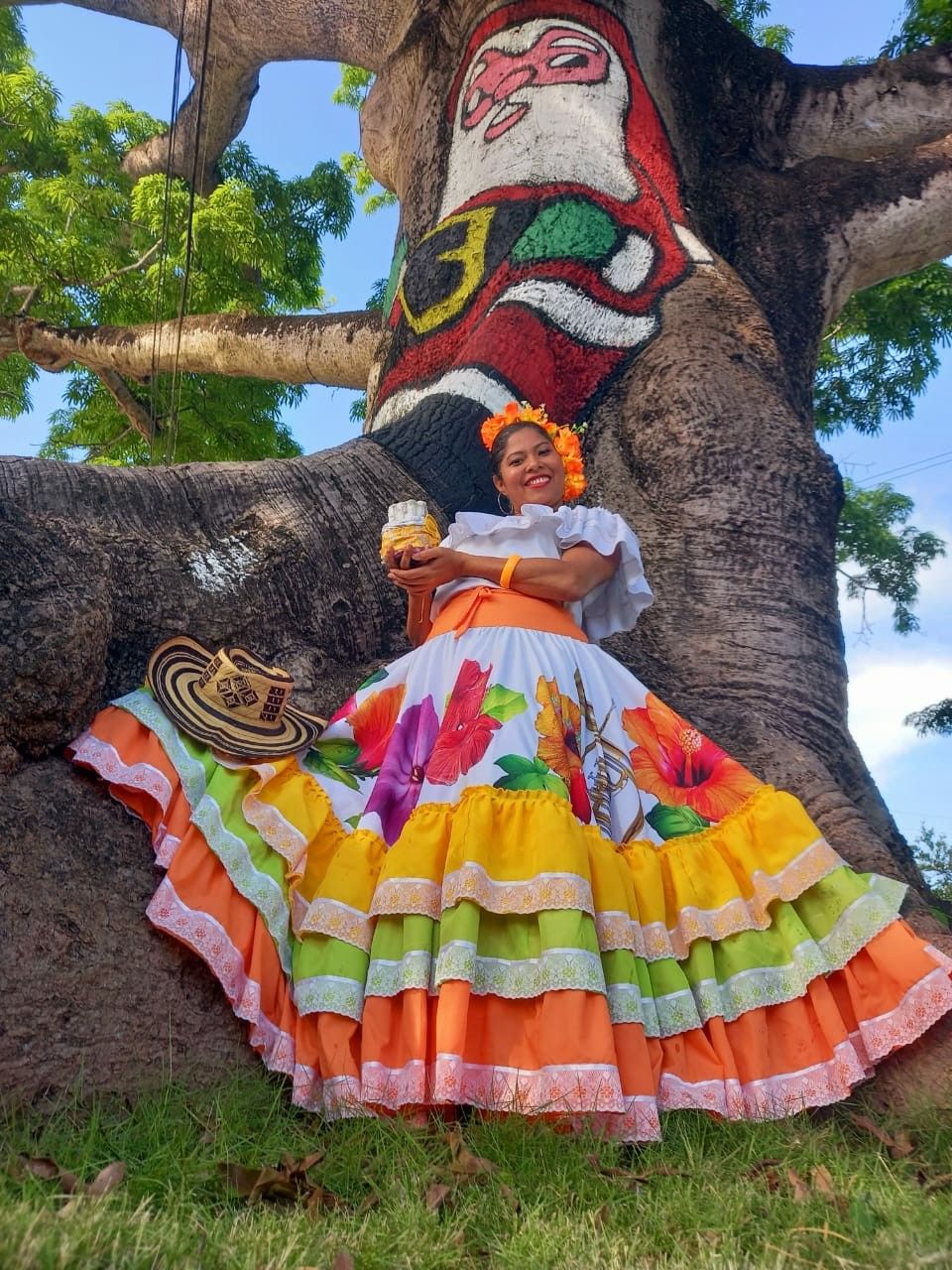
There is a way global fashion speaks about garments tied to dance traditions. It calls them costumes. It places them in the past. It treats them as visual markers of culture rather than as active design systems.
The cumbia dress is often placed in that category.
Seen on festival stages, in tourism campaigns, and in performances, it is described as traditional attire tied to Colombian heritage. Full skirts, lace details, structured blouses, bold movement. The description is familiar. It is also incomplete.
The cumbia dress is not simply something worn for performance. It is the material outcome of a cultural formation that reshaped how clothing moves, how silhouettes are built, and how identity is expressed through dress. To reduce it to costume is to miss what it has already done to fashion. And to keep missing it is a choice, not an oversight.
The cumbia dress is not a costume. It is a Colombian design system built around movement that shaped Latin American fashion long before the runway took credit.
Cumbia as Cultural Formation, Not Just Dance Tradition
Cumbia did not emerge as a singular cultural expression. It formed along Colombia’s Caribbean coast through the interaction of African, Indigenous, and Spanish influences under specific historical conditions.
African rhythms carried by enslaved communities shaped its musical structure. Indigenous groups contributed local instruments and movement forms. Spanish colonial presence introduced elements of dress and social hierarchy that influenced how bodies were presented and read.
What emerged was not a simple blend but a layered system in which music, movement, and clothing developed in relation to one another. This is precisely the kind of cultural formation that Omiren Styles has argued produces fashion intelligence rather than fashion decoration. As we outlined in our discussion of why culture is the foundation of style, garments that emerge from layered cultural systems carry a design logic that runs deeper than any single aesthetic choice.
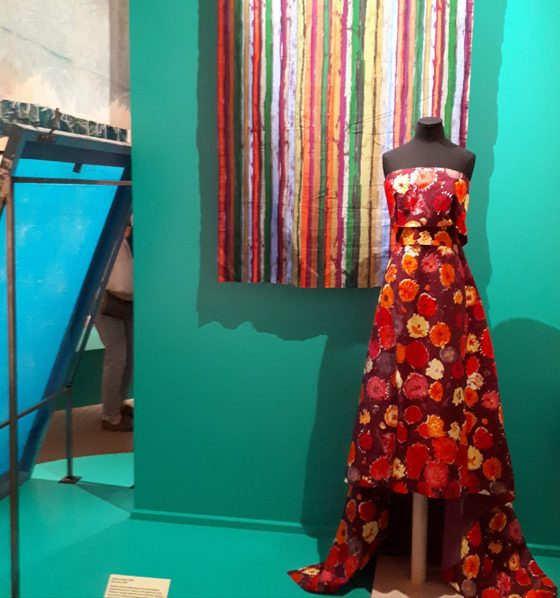
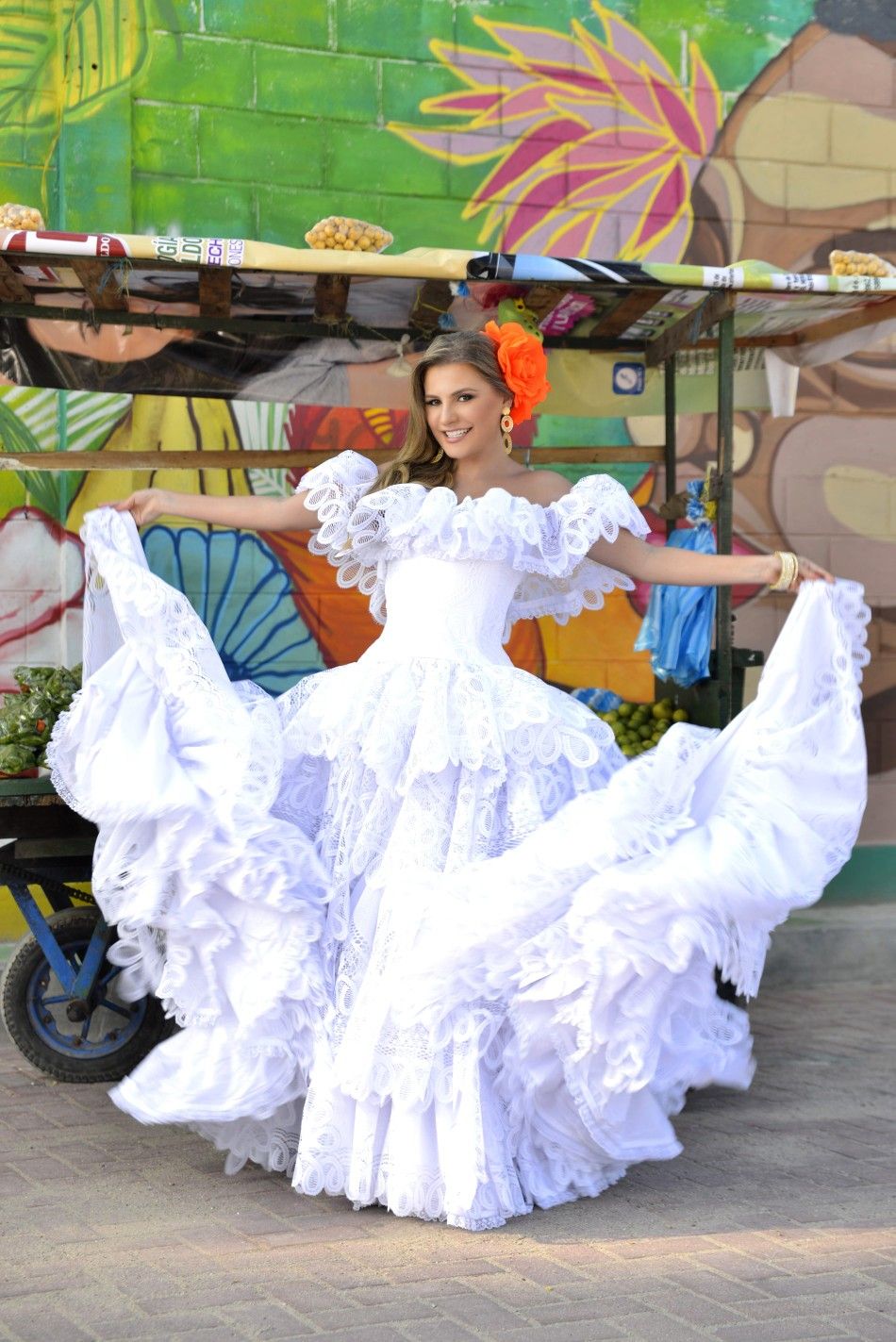
The cumbia dress belongs to that system. Its design is tied to how the dance functions. The wide skirt is not a decorative excess; it is built for motion, for the circular patterns of the dance, and for the way the body occupies space. The blouse, often structured with ruffles or lace, frames the upper body in contrast to the fluidity below. Together, they create a silhouette that is recognisable not just in stillness, but in movement.
This is where the dress shifts from being an accessory to the dance to being part of its architecture.
How the Cumbia Dress Constructs Movement Through Design
To understand the cumbia dress as a design object, you have to look at how it directs the body.
The skirt, typically full and layered, expands outward when in motion. This expansion is not incidental. It amplifies the dancer’s gestures, turning small movements into visible forms. The fabric becomes an extension of the body, carrying rhythm outward.
The act of lifting and controlling the skirt during the dance introduces another layer of design. The wearer is not passive; she shapes the silhouette in real time, adjusting volume, direction, and pace. The garment responds.
This relationship between body and fabric creates a dynamic silhouette that cannot be reduced to its static form. It exists fully only when in use.
What this produces is a design logic built around movement rather than stillness. And that logic has travelled further than the dance floor it came from.
Coastal Tradition and Regional Influence
The silhouette established by the cumbia dress has not remained confined to its place of origin.
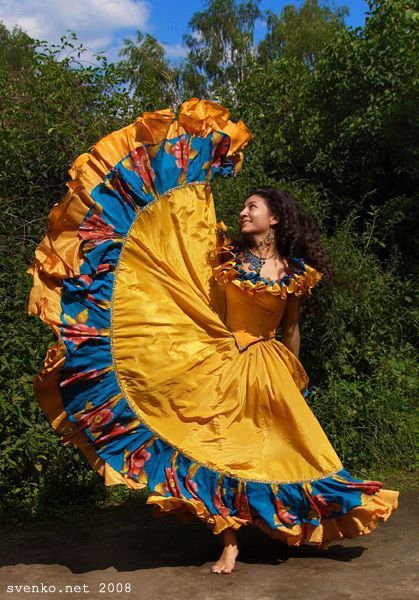
Across Latin American fashion, elements of its structure appear in different forms. Voluminous skirts, tiered layers, and the emphasis on movement have been reinterpreted in both traditional and contemporary contexts. The language of expansion and flow, first grounded in the dance, became a broader design reference across the region.
This is not always acknowledged directly. The influence often circulates without attribution, absorbed into a wider visual culture that recognises the form but not its origin. Farm Rio, the Brazilian brand that has built a global market on exuberant volume and movement-led silhouettes, sits downstream of a design logic that the cumbia dress formalised decades before Brazilian tropical fashion became an international export category.
What makes the cumbia dress significant is not just its recognisability, but its adaptability. It provides a template that can be modified while retaining its core logic. Designers can reduce the volume, alter the fabric, or shift the proportions, but the relationship between movement and silhouette remains.
That is what allows it to persist beyond performance.
Why Labelling It “Costume” Limits Its Design Value
The classification of the cumbia dress as a costume does more than mislabel it. It limits how it is understood and where it is placed within fashion discourse.
Costume suggests something fixed, tied to performance, and separate from everyday design practice. It implies that the garment belongs to a specific moment rather than to an ongoing system of production and influence.
This framing removes the dress from conversations about design innovation. It becomes something to be preserved or displayed, not something that has actively shaped how garments are constructed and worn.
The same pattern appears across African fashion systems, where garments tied to ceremony or performance are treated as static tradition rather than as evolving design frameworks. In both cases, the classification serves to contain the garment within a cultural category, preventing it from being read as part of a broader design history.
The cumbia dress challenges that containment.
The Omiren Argument
The cumbia dress is one of the most structurally influential silhouettes in the Western Hemisphere. Global fashion absorbed its volume logic, its relationship between fabric and motion, and its template for the movement-led skirt, and then filed it under folklore. That is not a misunderstanding. That is a decision about whose design history counts.
The tiered skirt structures appearing in contemporary collections from São Paulo to Mexico City have a Colombian coastal address. The runway language of fabric as a carrier of movement rather than simply a surface for print was not invented in Paris. It was worked out over generations in a dance tradition that the fashion system has spent decades admiring without crediting. This is the same mechanism documented in the way African fashion ritual produces design systems that are absorbed globally, while their origins are contained within the category of cultural performance. The cumbia dress is Latin America’s version of the same story.
READ ALSO:
- The Huipil: What the Maya Textile Tradition Is Arguing About Identity and Who Gets to Profit
- Farm Rio and the Limits of Tropical: When Brazilian Fashion Becomes a Mood Board
The Global Fashion System and Selective Recognition
Global fashion tends to recognise influence when it aligns with existing structures of value.
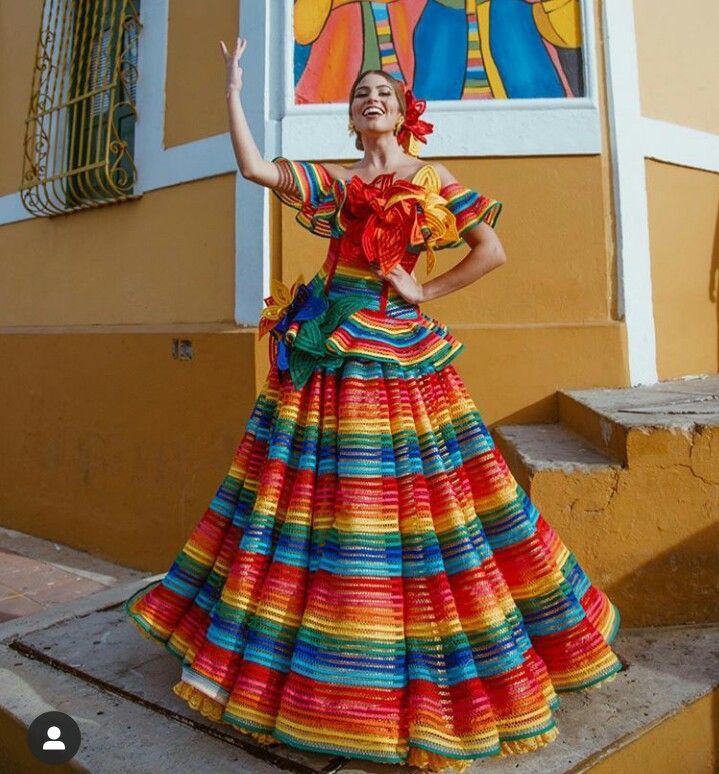
Silhouettes that emerge from European fashion histories are often tracked, documented, and credited within a lineage of designers and movements. When similar structural innovations come from non-Western contexts, they are more likely to be absorbed without the same level of recognition.
The cumbia dress sits within that gap.
Its influence is visible, but its origin is not always named. The silhouette circulates, but the system that produced it is rarely centred in discussions about design evolution.
This is not accidental. It reflects a broader pattern in how fashion history is written and whose contributions are formalised within it.
To reposition the cumbia dress, that pattern has to be addressed directly.
Reframing the Cumbia Dress as a Design Event
The cumbia dress should not be understood as a static cultural artefact. It should be recognised as a design event.
An event marks a shift. It introduces a way of thinking that changes what follows. In this case, the shift is in how clothing engages with movement, how silhouettes expand beyond the body, and how cultural expression is embedded in form.
Seeing the dress this way changes the terms of engagement. It moves the conversation from preservation to analysis, from admiration to understanding.
It also places responsibility on the fashion system to account for the origins of its ideas.
Because once the cumbia dress is recognised not as a costume, but as a design, it can no longer be treated as a background reference. It becomes part of the structure of fashion itself.
FAQs
- What is a traditional cumbia dress in Colombian culture?
A traditional cumbia dress is a full-skirted garment worn in cumbia dance, designed to enhance movement and reflect Colombia’s coastal cultural history.
- Why is the cumbia dress important in Latin American fashion?
It introduced a silhouette built around movement, influencing how skirts and volume are used across Latin American design traditions.
- Is the cumbia dress just a costume?
No. While used in performance, it is a functional design shaped by cultural history and has influenced broader fashion beyond dance.
- How does cumbia reflect cultural fusion in Colombia?
Cumbia blends African rhythms, Indigenous practices, and Spanish influences, which are also reflected in the dress.
- How has the cumbia dress influenced modern fashion design?
Its emphasis on volume, movement, and silhouette has been adapted in contemporary designs across Latin America, often without direct attribution.