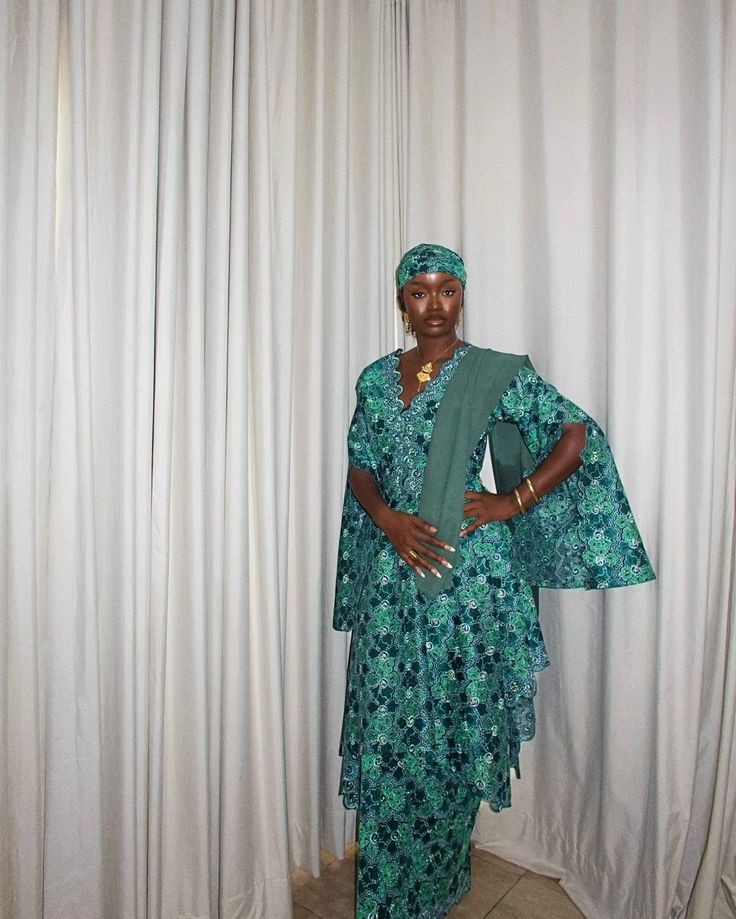
Kano has been a centre of textile production for over a thousand years. Its embroiderers, weavers, and dyers supplied cloth across trans-Saharan trade routes before Paris had a fashion house, before London had a Savile Row, and before the term ‘modest fashion’ existed as a market category. What Hausa women wore was not the absence of fashion. It was fashion at full authority – a complete visual language in which every fold, every layer, and every thread of embroidery communicated something specific about who was wearing it, where they were going, and what their position in the world was. Five of these styles define that language. Understanding them is not an introduction to something unfamiliar. It is an overdue reckoning with a design civilisation that the global fashion press has consistently failed to read.
Hausa women’s dress is not modest fashion in the Western sense. It is a thousand-year-old design civilisation rooted in Kano’s textile history – and the global modest fashion market is still learning its vocabulary.
Understanding Hausa Women’s Dress
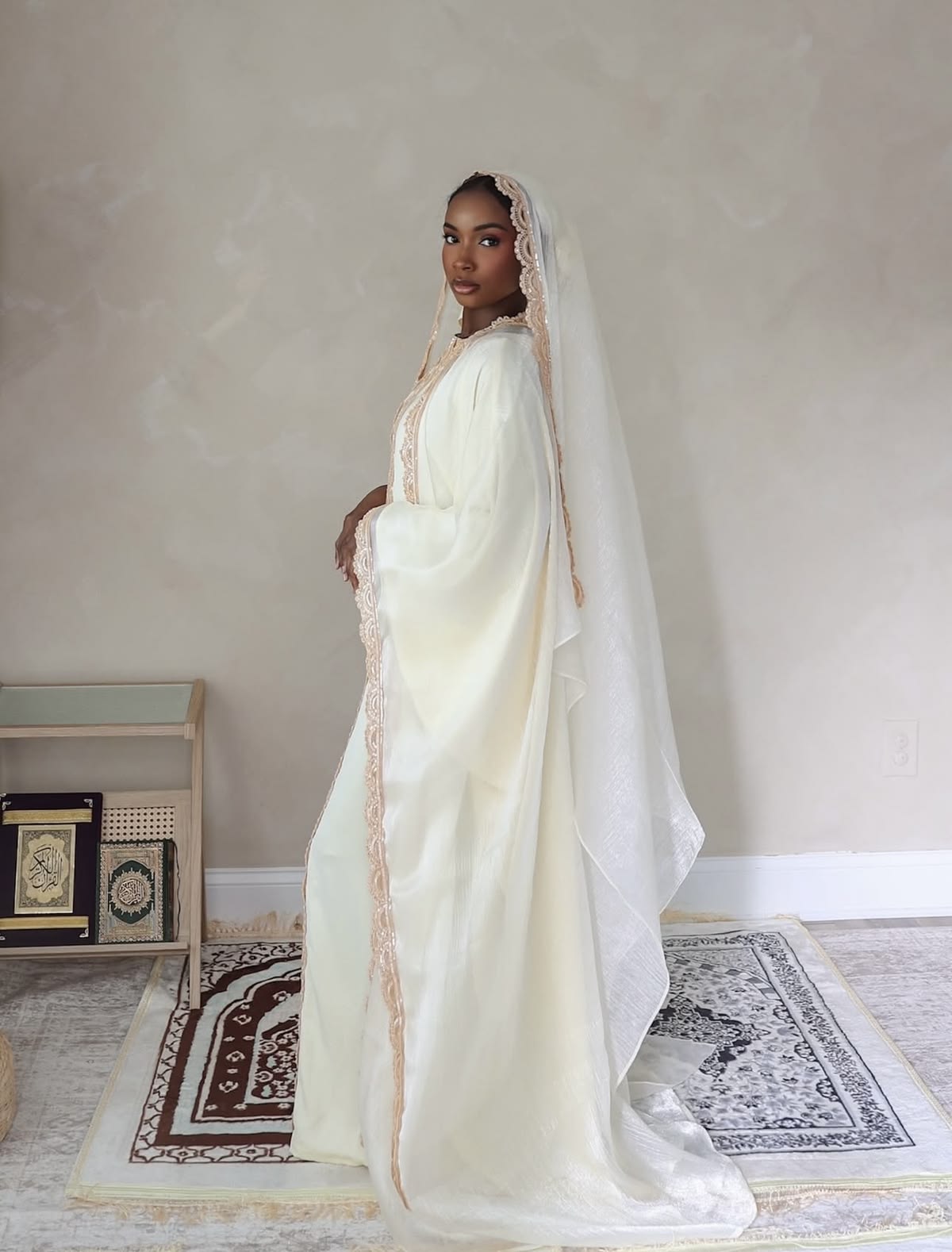
To understand Hausa women’s dress, it is necessary to understand that modesty in this context is not a limitation imposed on fashion. It is the design philosophy on which fashion operates. Coverage is not the restriction — it is the starting condition, the way a blank canvas is the starting condition for painting. Within that starting condition, Hausa women’s dress achieves what Western fashion struggles to articulate: elegance communicated through proportion, presence expressed through layering, and identity encoded in textile decisions that require cultural literacy to read fully. The garment does not ask to be understood by everyone in the room. It speaks to those who know the language.
The foundations of this system run through Islamic cultural influence and pre-Islamic Hausa dress traditions that overlap without erasing each other. The Hausa people of Northern Nigeria developed a textile culture rooted in locally grown and spun cotton, trade-sourced silk, and a dyeing tradition centred on indigo pits, producing cloth recognised across the region for its quality and depth. Dress was never incidental. It was infrastructure — social, spiritual, and economic.
The Wrapper and Blouse — Zani and Riga: Quiet Structure
At the foundation of Hausa women’s dress is the wrapper and blouse, known as zani and riga. The zani wraps securely around the waist, typically extending to the ankles. The riga sits loosely over it, with long or elbow-length sleeves. Together they create a silhouette that is simultaneously structured and fluid — a body held with composure rather than displayed for appraisal.
What distinguishes this combination is not its components but its philosophy of fit. The fabric is not designed to define the body beneath it. It is designed to move with the body as an extension of presence rather than a map of form. This is not simplicity. It is a deliberate inversion of the exposure logic that Western fashion has spent a century building its commercial model around. Restraint here is not absence. It is the active, considered choice of a design tradition that found a different answer to the question of how clothing communicates authority.
The quality of the zani fabric communicates the occasion. Cotton is an everyday thing. Silk-blend or imported brocade signals a ceremony. As documented in the Fowler Museum’s collection of West African textiles, the relationship between fabric weight and social occasion in West African dress culture is precise and consistent — a system of material semiotics that operates without labels or logos.
The Hijab and Veil: Modesty as Identity Architecture
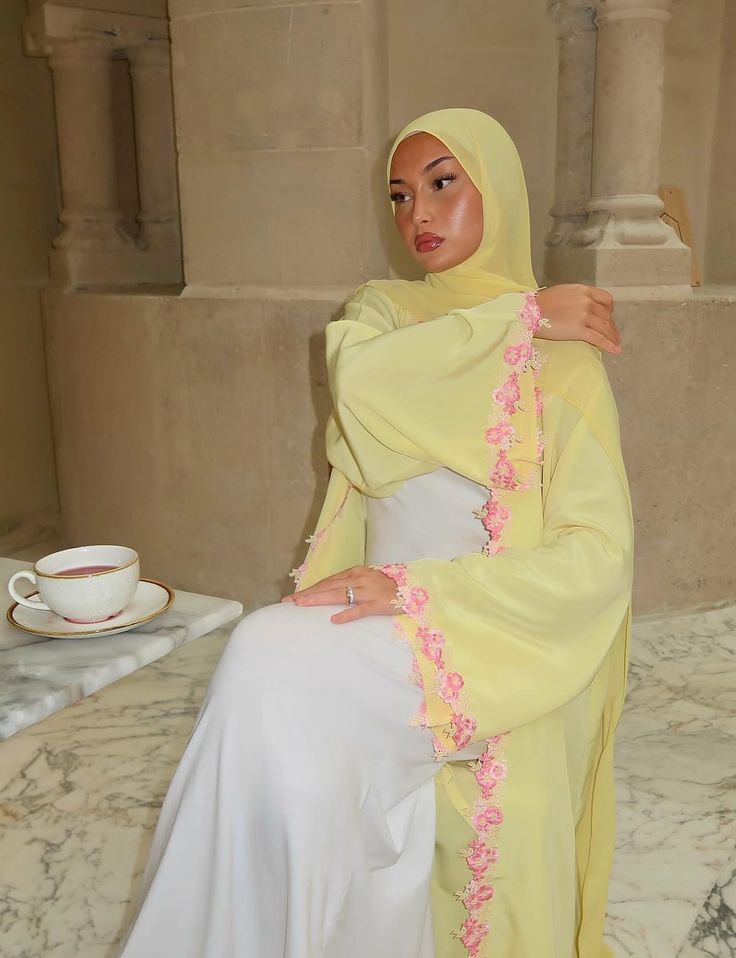
Head covering in Hausa women’s dress is not a separate religious requirement superimposed on fashion. It is structurally integrated into the visual system. The hijab, often combined with a lightweight veil, completes the silhouette in the same way a collar completes a tailored jacket — not as an afterthought but as the element that gives the whole composition its closure and its authority.
The drape matters. The layering of fabric across the head and shoulders creates a framing for the face that functions as intentional portraiture. Different draping techniques communicate different things: the degree of formality, the spiritual register of the occasion, and the regional and community identity of the wearer. What appears to the uninitiated as a single style of head covering is, to those within the tradition, a vocabulary of dozens of distinctions. The silence that outsiders perceive in Hausa dress is not the absence of expression. It is an expression in a register they have not yet learned to hear.
The Abaya and Flowing Gowns: Volu me as Authority
Flowing gowns — forms closely related to the abaya — are central to Hausa women’s formal and semi-formal dress. These garments are deliberately built on volume. They move. They command space. They make a presence felt through the occupation of air rather than the revelation of skin. In a design tradition where coverage is the starting condition, the manipulation of volume becomes the primary expressive tool — and Hausa women’s gowns demonstrate that mastery at full depth. The global modest fashion market, now valued at over $318 billion annually, has built much of its commercial vocabulary on silhouettes that Hausa dress culture institutionalised centuries ago.
The argument that covered dress is less expressive than exposed dress does not survive contact with a Hausa formal gown. The fall of fabric across the shoulder, the weight distribution across the body, the way movement through a room creates a visual trail of cloth in motion — these are expressive decisions of high sophistication, executed within a framework that requires more precision, not less, because the body beneath the garment cannot be relied upon as the primary visual event.
Embroidered Details: The Technical Record of Civilisation
Hausa embroidery — particularly the work on formal riga — is among the most technically demanding textile crafts in West Africa. The embroidery placed around necklines, chest panels, and sleeve openings of high-quality garments requires years of apprenticeship. It is produced by specialists whose skills are inherited through family and guild traditions. As documented in the Victoria and Albert Museum’s West African textile holdings, Nigerian embroidery traditions represent a level of craft sophistication comparable to the most celebrated textile traditions worldwide.
The tonal restraint of Hausa embroidery is a deliberate choice, not a limitation. Thread colours are often closely matched to the base fabric, producing embellishment that reveals itself gradually rather than announcing itself immediately. This is luxury operating at a different frequency to the logo-led, immediately legible luxury that Western fashion markets understand. It is a luxury that rewards sustained attention — designed for an audience that knows how to look, rather than an audience that needs to be told what it is seeing.
Layering and Fabric Choice: The Art of Composition
Layering in Hausa women’s dress is not a styling choice applied over an outfit. It is structural — built into the conception of the look from the beginning. Multiple fabrics interact to create depth, weight, and occasion-appropriate formality. Lightweight cotton underlayers sit beneath heavier outer garments. The hijab fabric interacts with the gown fabric in terms of both colour and weight. Accessories — beads, perfume, the quality of the leather in the sandal- complete a composition that has been thought through from the ground up.
The materials in circulation across Hausa dress culture have historically included locally produced cotton; imported silk and brocade from the trans-Saharan trade, and the deep-indigo-dyed cloth associated with the Kano dyeing tradition — one of the oldest continuously operating textile industries on the African continent. Fabric choice is occasion-coded, community-coded, and generational. A grandmother and her granddaughter may wear structurally similar garments, but their fabric choices tell entirely different stories to anyone within the tradition.
Also Read:
- Top 5 Ankara Styles for Hausa Women in 2025
- Inside the Heritage of Hausa Embroidery
- Sustainability in Style: How Hausa Street Fashion Redefines Conscious Dressing
Purdah Aesthetics and the Power of Restraint
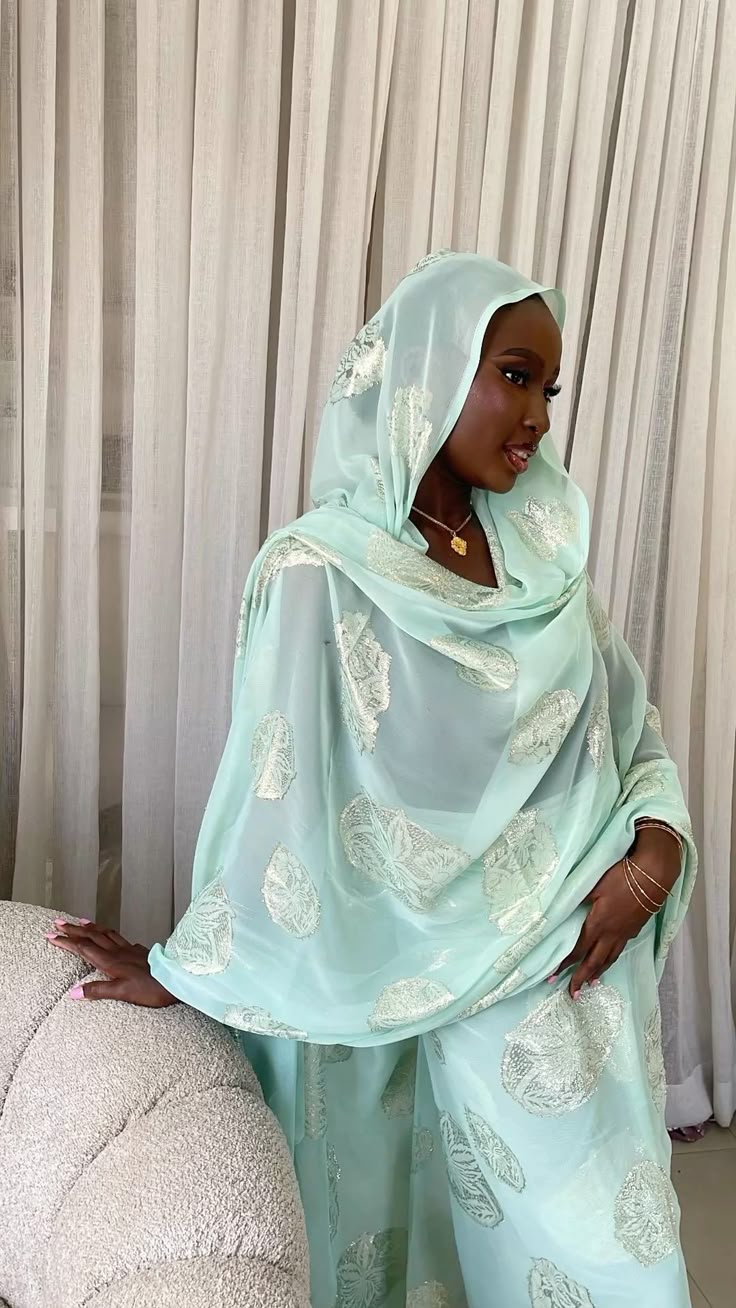
The concept of purdah — which governs the separation of social spheres and the management of female presence in public space — has shaped Hausa women’s dress in ways that require historical honesty to address fully. Purdah is not simply a dress code. It is a social architecture. And within that architecture, Hausa women developed a dress system of remarkable sophistication precisely because the constraints were total — because there was no option of exposure as a shortcut to visibility, the entire burden of expression fell on construction, fabric, and composition. The result is a tradition in which those who master the system are communicating at a density that outsiders consistently underestimate. For a broader examination of how African women’s dress systems encode social power within frameworks of modesty and coverage, Omiren’s analysis of Fulani dress and social identity provides a comparative lens.
Hausa Dress in Contemporary Fashion
The global modest fashion market was valued at $318 billion in 2023 and is projected to exceed $400 billion by 2027, according to data tracked by the State of the Global Islamic Economy Report. Its fastest-growing segments – layered silhouettes, volume-led tailoring, and covered formal wear – are design principles that Hausa women’s dress has practised for centuries. International designers drawing on modest fashion vocabulary are working, often without acknowledgement, from a visual grammar that Northern Nigerian communities developed and refined across generations. The influence is not new. The attribution is.
Contemporary Nigerian designers working within and beyond the Hausa tradition are building on this foundation with full creative authority. Designers showing at Lagos Fashion Week increasingly reference Northern Nigerian dress culture as a design resource — not as historical material to be revived, but as a living system whose logic is generative for contemporary silhouette-making. The modest fashion conversation that global media treats as a recent development has been in continuous production in Kano, Sokoto, and Maiduguri for a millennium.
The global modest fashion industry did not invent the aesthetic it is currently selling. It arrived late in a design tradition that had been operational for centuries and is only now becoming commercially legible. Kano’s textile history runs back over a millennium. Its embroiderers produced work of technical complexity that took years of apprenticeship to master. It’s women who developed a layering system so precise that occasion, social rank, marital status, and spiritual positioning could all be communicated through a single dressed silhouette. None of this was waiting for Western fashion to discover it. It was not underground, suppressed, or inaccessible. People were simply practising it; the global fashion press had not yet decided to pay attention to it.
The modest fashion market, now worth over $300 billion annually, is built substantially on design logic that Hausa dress culture institutionalised long before it became a commercial category. The silhouettes, the layering philosophy, the insistence that elegance does not require exposure — these are not aesthetic coincidences. They are evidence of a design civilisation whose influence on global fashion is foundational and largely uncredited. What is being sold as the future of inclusive fashion is, for communities in Northern Nigeria and across the Hausa diaspora, simply Tuesday. The question for the industry is not whether Hausa design will shape modest fashion’s next chapter. It is whether the communities that authored that chapter will hold any commercial stake in the story being sold.
Frequently Asked Questions
What is traditional Hausa women’s clothing?
Traditional Hausa women’s clothing is a complete design system built around modesty as a foundational philosophy rather than a restriction. Core pieces include the zani (wrapper), riga (blouse), flowing gowns akin to the abaya, and the hijab — all of which work together to form a composed silhouette that communicates social position, occasion, and identity. The tradition is rooted in Northern Nigeria’s thousand-year textile history, documented in part through collections at the Fowler Museum and the Victoria and Albert Museum.
What is the significance of modesty in Hausa dress?
Modesty in Hausa dress is the design philosophy, not a constraint applied to it. Coverage is the starting condition from which all expressive decisions — fabric weight, drape, layering, embroidery placement — are made. The result is a tradition in which elegance is communicated through construction and composition rather than exposure, producing a visual language of considerable sophistication that rewards cultural literacy to fully appreciate.
What are zani and riga in Hausa women’s fashion?
Zani is the wrapper tied at the waist and extending to the ankles. Riga is the loose blouse worn over it, typically with long or elbow-length sleeves. Together, they form the foundation of everyday and formal Hausa women’s dress. The fabric of each piece communicates the occasion: locally woven cotton for everyday wear, silk blend or imported brocade for ceremony. The combination creates a silhouette defined by fluid structure rather than form-fitting definition.
How has Hausa fashion influenced global modest fashion?
The global modest fashion market is currently valued at over $318 billion annually, according to the State of the Global Islamic Economy Report. Its dominant design principles — layered silhouettes, volume-led construction, and covered formal wear — are the foundations of Hausa women’s dress, practised for centuries in Northern Nigeria. The international modest fashion industry operates on a visual grammar that Hausa communities developed and refined long before it became a commercial category. Yet, it has not yet provided the attribution that history requires.