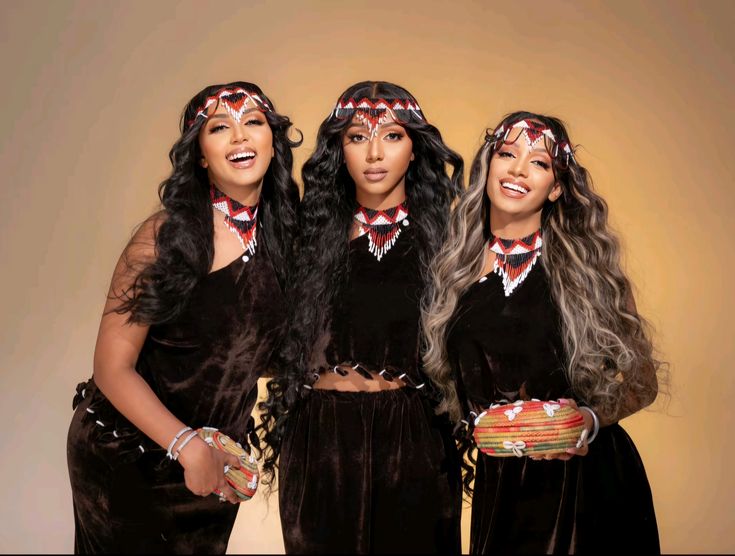
The cultural material and traditional clothing of the Oromo people stand as some of the most profound expressions of indigenous identity, history, and social structure in the Horn of Africa. To understand the attire of specific regional Oromo groups, such as the Shewa Oromo, it is important to look at the broader tapestry of Oromo material culture. The Oromo are a pastoralist and agro-pastoralist society. This deep, ongoing connection to livestock and the natural environment directly shapes their physical world. Materials are not merely harvested or manufactured for survival; they are deeply intertwined with the Gadaa system, the traditional socio-political framework of the Oromo that governs everything from leadership rotation to environmental conservation and, crucially, social conduct and dress.
Shewa Oromo cultural clothing is not a preserved heritage. It is a living governance document in which cowhide, cowrie shells, and beadwork encode the Gadaa system’s social structure on the body of every wearer.
In the Oromo worldview, material culture is highly communicative. What a person wears is not a matter of random personal preference but a living ledger of their age grade and their standing with the community. While imported textiles and industrial goods are widely used for modern daily wear, the foundational medium for cultural expression remains animal skin. Cattle, sheep, and goats are not just sources of food and wealth; they provide the very fabric of Oromo cultural life. Expert tanners within the community possess specialised knowledge passed down through generations, transforming raw hides into supple, durable leather. This process involves scraping, stretching, and treating the skin with natural oils and plant extracts to ensure the materials are both functional in rugged terrain and comfortable against the skin.
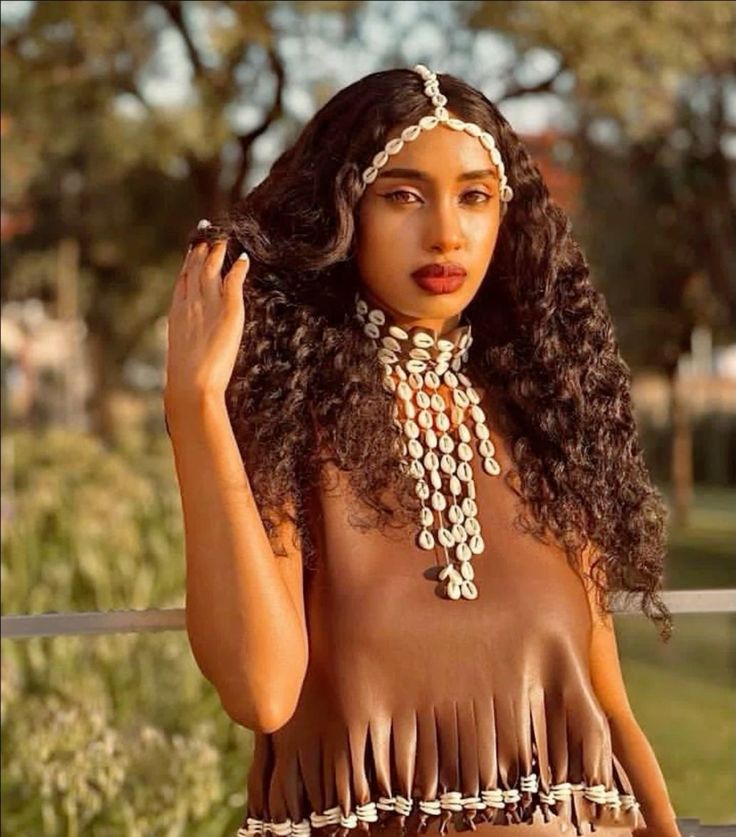
Beyond leather, Oromo material culture relies heavily on beads and cowrie shells. Glass beads, acquired through centuries of trade networks stretching to the coast, remain a central feature of Oromo aesthetics. Cowrie shells, which symbolise fertility and wealth, are also widely utilised. When combined with leather, these materials create a vibrant visual language that is instantly recognisable to anyone within society. This material synergy represents a complex economic and social history, demonstrating how materials brought in from far-off coastal trade routes were seamlessly absorbed into the daily aesthetic of inland pastoral communities.
Moving into the central highlands of Ethiopia, one encounters the Shewa Oromo, specifically the Tulama clan. While the Shewa Oromo share the exact same pastoralist heritage and foundational clothing items as Oromos in other regions, their execution of cowhide garments carries distinct regional characteristics. The local community has maintained a strict adherence to their traditional aesthetic codes despite outside influences.
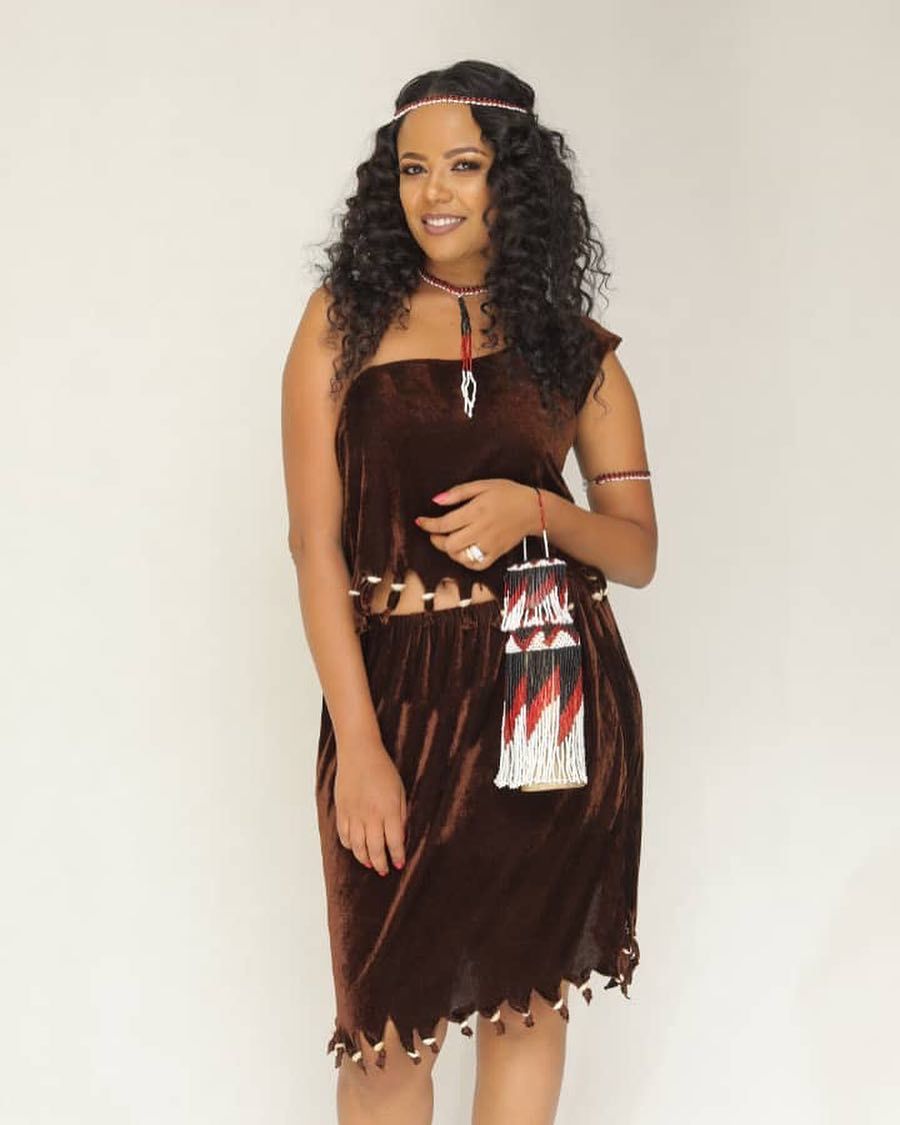
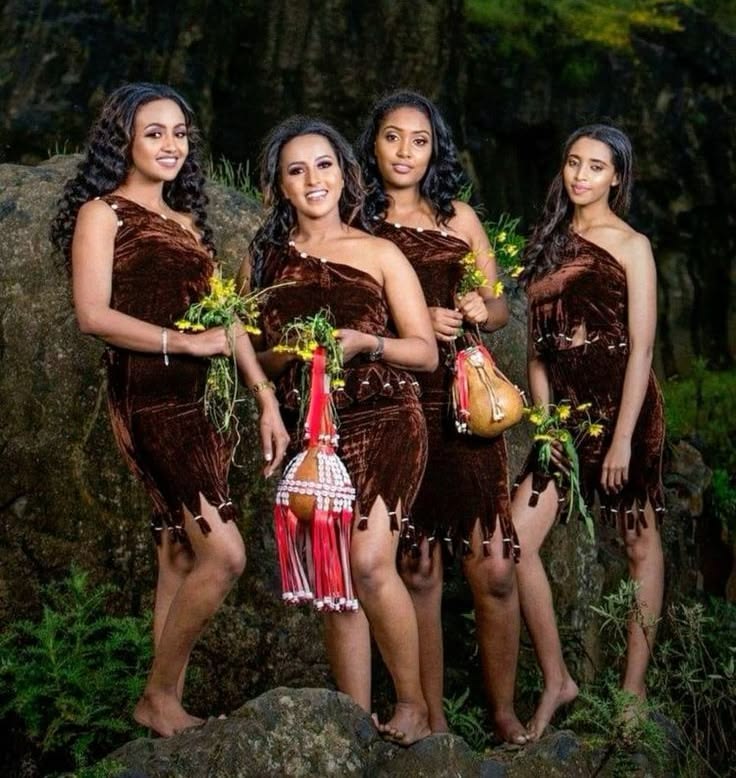
The indigenous leather garments of the Shewa Oromo serve as the true baseline of their wardrobe. At the centre of a woman’s attire is the Wandabiti (or Wandabo), a wrap-around skirt crafted from expertly softened cowhide. This garment allows for ease of movement in the ragged landscape of the region. Women also wear larger pieces of worked leather as cloaks or capes, known as Qollo, fastened at the shoulder. These upper garments offer a broad surface area that serves a dual purpose: physical protection and a large canvas for cultural expression and personal curation.
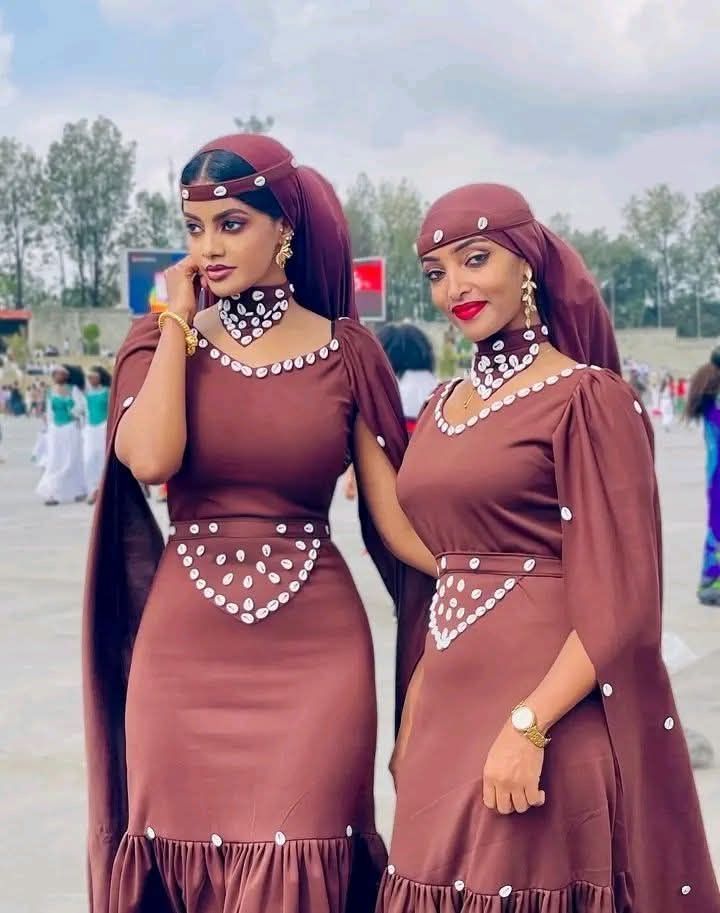
A defining feature of Shewa Oromo leather garments is the extensive use of cowrie shells for ornamentation. Both the upper caps and the lower skirts are beautifully adorned with these shells. The aesthetic value of a Shewa leather garment lies not only in the suppleness of the treated hide and the rich, natural, earthy tones of the animal skins, but also in the precise, durable stitching required to piece the garments together and secure the bright cowrie embellishments. These shells are sewn in patterns or lined along the borders of the leather wraps, transforming a simple animal hide into a highly textured, high-contrast work of wearable art. The pure white of the cowrie shells stands out sharply against the deep, dark, oil-treated leather, making the attire visually striking from a distance.
Interestingly, this distinct use of cowskin, combined with heavy cowrie shell embellishments, shares a powerful aesthetic parallel with the traditional clothing of the Kikuyu people of Kenya. Though separated by modern national borders and belonging to different linguistic groups, both cultures emerged from historical contexts in which livestock and land were the ultimate measures of life. In traditional Kikuyu heritage, master skin-tanners similarly cured animal skins to produce supple, wearable garments. Much like the Shewa Oromo women, Kikuyu women traditionally wore leather capes and wrap-around skirts meticulously embroidered with rows of white cowrie shells. In both communities, the cowskin acted as a canvas of earthy, natural tones, while the rows of cowrie shells provided a stark, beautiful contrast. This striking resemblance serves as a testament to shared regional values across East Africa, where animal hides and ocean-traded shells served as the ultimate markers of wealth, survival, and belonging.
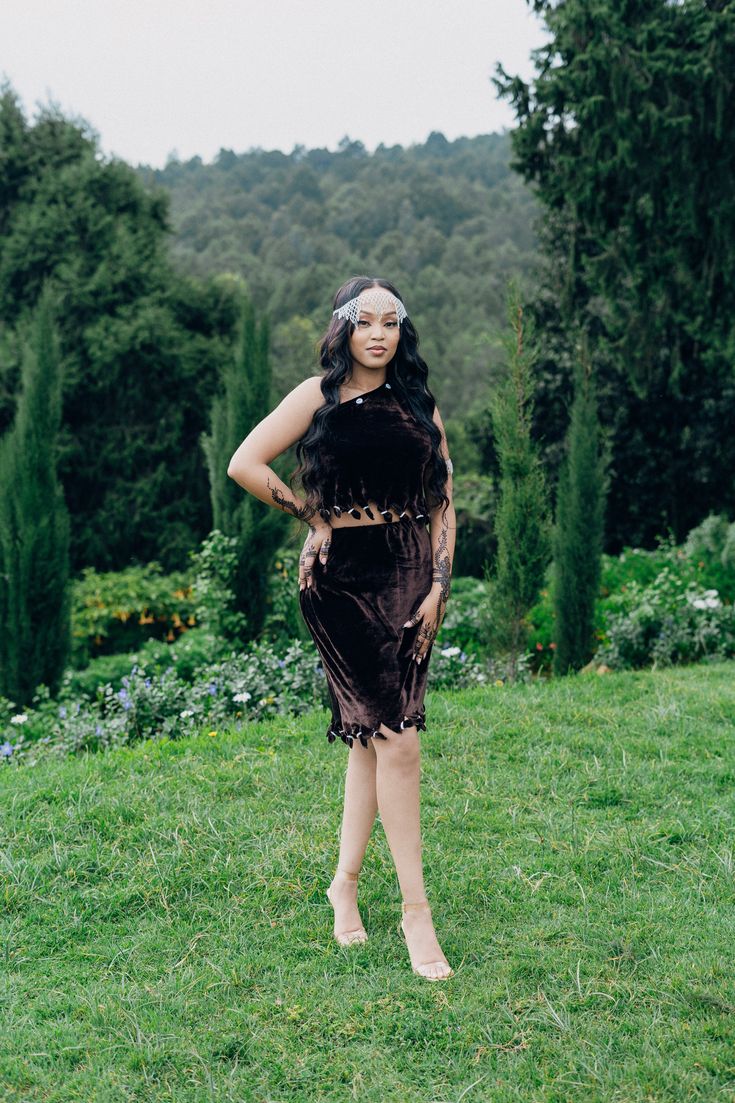
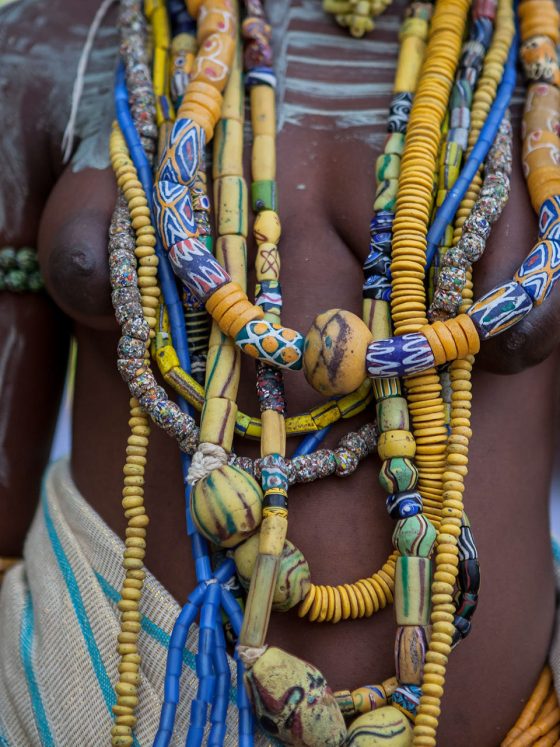
Despite the focus on natural leather tones and shell work, colour is by no means absent from Shewa attire. The black, red, and white colour palette is expressed vividly through jewellery, as women only accessorise with beads. Women complete their ensembles with intricately hand-beaded necklaces, headpieces, and bracelets. These beaded pieces incorporate these core colours to showcase cultural pride, creating a stunning visual contrast against the natural, earthy tones of the clean leather garments and cowrie shells. The beadwork is often densely packed, with hundreds of tiny glass beads strung together to form rigid or semi-flexible collars, hanging necklaces, and wrist cuffs. By limiting the use of the core colours to bead jewellery, the Shewa Oromo achieve a perfectly balanced aesthetic that highlights the raw beauty of natural leather while still proudly displaying the signature colour palette of their cultural heritage. To complete the ensemble, Shewa Oromo women maintain a natural hairstyle, forgoing complex, structured hairdos.
The preservation of this attire is a testament to the cultural resilience of the Shewa Oromo. In a world where globalised fashion and fast-fashion textiles often replace indigenous clothing, the continued practice of wearing, creating, and honouring these leather-and-bead garments is a conscious act of cultural reclamation. The knowledge required to tan hides, the skills needed to stitch cowrie shells without tearing the leather and the patience required to string complex bead patterns are all passed down from mother to daughter and from elder to youth. These are not merely survival skills or crafts but the very threads that keep the Tulama clan’s historical continuity alive in the modern era.
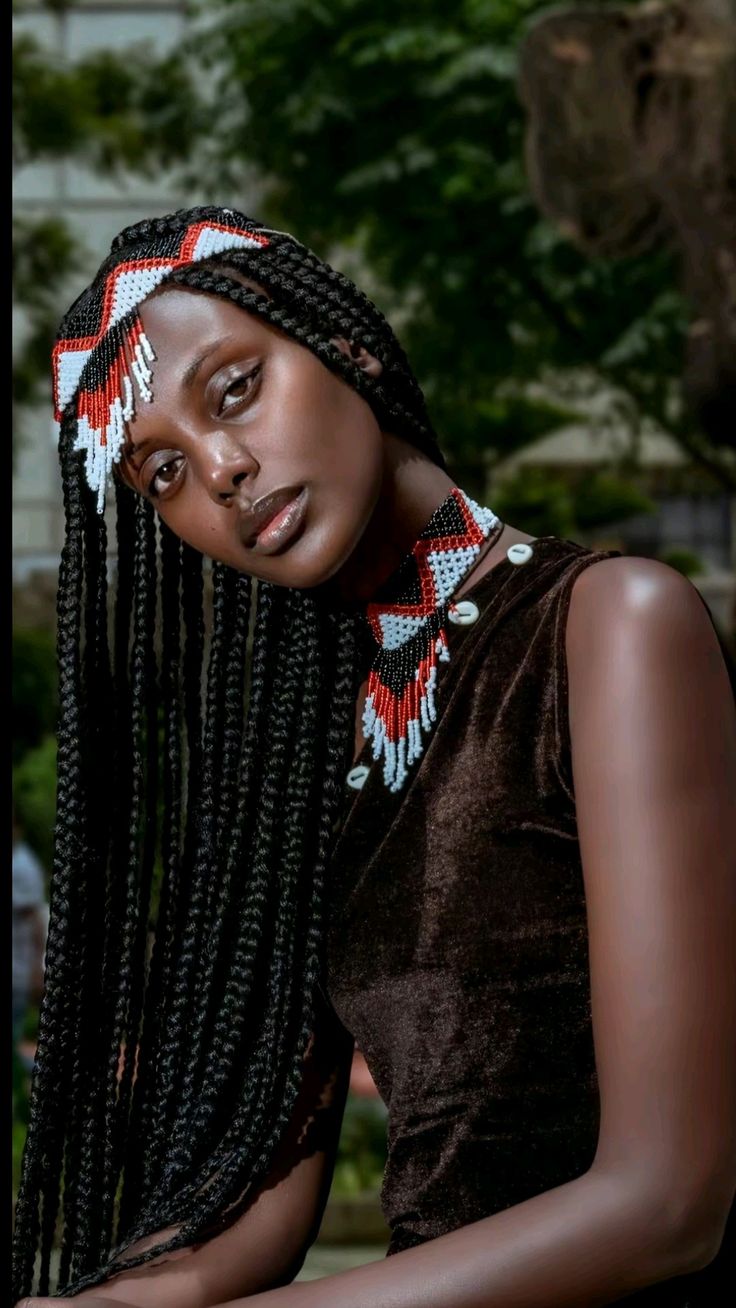
The clothing of the Shewa Oromo offers a fascinating study in how a shared cultural foundation adapts to localised environments and histories. They share the exact same material vocabulary for the broader Oromo identity: cowhide, goat skins, and beads governed by the social codes of the Gadaa system. The Oromo of Shewa keep their leatherwork focused on the beautiful contrast of natural hide and stitched cowrie shells. These garments are not mere historical artefacts; they are living proof of the Oromo people’s resilience, artistic ingenuity, and deep connection to the land they inhabit. The visual language spoken by the cowrie shells on the leather top and bottom, complemented by the vibrant beads around the neck and wrists, continues to tell the story of a proud people navigating their place in the world while remaining firmly anchored to their ancestral roots.
Also Read:
- How African Dress Encodes Governance: The Politics of What You Wear
- The Cowrie Shell in African Adornment: Currency, Fertility, and the Indian Ocean Trade
- Kikuyu Traditional Dress and the East African Leather Tradition
- Igbo Dress Traditions: The Cloth That Carries a People’s Cosmology
The Gamma and Gogaa: The Warrior Regalia of Shewa Oromo Men
The Gamma and Gogaa ensemble is a signature of masculinity and strength, serving as a vital piece of warrior attire specifically for Shewa Oromo men. This striking regalia is defined by the use of the gelada, whose long, flowing “cape” of hair is transformed into the gamma, a voluminous headdress that encircles the head like a textured halo. This piece is not merely decorative; it is a profound symbol of a man’s status and his proven bravery within the Gadaa system, signalling his transition to a protector of his people.
Accompanying the headdress is the Woya or Gogaa, a ceremonial cape that drapes over the shoulders to complete the warrior’s silhouette. For the Shewa Oromo, this cloak is often adorned with the shaggy skin of the gelada, ensuring that the natural, earthy fibres of the gamma flow seamlessly into the rest of the garment. This creates a cohesive, powerful look that highlights the wearer’s prestige and connection to his heritage. Through the expert craftsmanship of these organic materials, the Shewa Oromo maintain a distinctive visual identity that celebrates the intersection of tradition, leadership, and the raw beauty of the natural world.
The Omiren Argument
Shewa Oromo cultural clothing is frequently discussed as a preservation story: a community holding onto tradition against the current of globalised fashion. This framing is sympathetic and structurally wrong. The Wandabiti skirt, the Qollo cape, the cowrie-shell ornamentation, and the Gamma warrior headdress are not cultural artefacts being kept alive by conscious effort. They are the material expression of the Gadaa system, one of the most sophisticated indigenous democratic governance structures in human history, recognised by UNESCO in 2016 as Intangible Cultural Heritage of Humanity. When a Shewa Oromo woman wears a cowrie-adorned leather cape, she is not preserving a tradition. She is wearing a civic document that records her age grade, her social position, and her relationship to a governance system that has operated continuously for centuries. Clothing is not separate from politics. It is the politics, made visible and worn on the body in public as an ongoing declaration of membership, responsibility, and identity within a living system.
The cowrie shells that stud the leather garments of Shewa Oromo women carry a second layer of meaning that the preservation framing consistently obscures. These shells were used as trade currency, arriving in the Ethiopian highlands through Indian Ocean commercial networks that connected the East African coast to inland pastoral communities over thousands of miles of trade routes. Every cowrie sewn onto a leather skirt is therefore simultaneously an adornment, a unit of accumulated wealth, and a record of the long-distance economic relationships that shaped Oromo material culture over centuries. The visual parallel with Kikuyu dress traditions across the modern Kenyan border is no coincidence. It is the legible trace of shared East African trade networks, cultural philosophies, and aesthetic systems that existed before colonial borders partitioned the continent and obscured the connections they had built. Shewa Oromo cultural clothing does not need to be preserved. It needs to be read correctly as the sophisticated intellectual and political system it has always been.
Frequently Asked Questions
What is Shewa Oromo cultural clothing made from?
Shewa Oromo cultural clothing is built primarily from cowhide, processed through a traditional leather tanning system in which specialist tanners within the community transform raw animal hide into supple, durable garments using natural oils and plant extracts. The core women’s garments are the Wandabiti, a wrap-around cowhide skirt, and the Qollo, a leather cape worn over the upper body. Both are extensively adorned with cowrie shells sewn in precise patterns, and completed with densely beaded necklaces, headpieces, and bracelets in the community’s signature black, red, and white colour palette. The Gamma warrior headdress worn by Shewa Oromo men uses the long hair of the gelada baboon, a species endemic to the Ethiopian highlands, making it one of the most geographically specific examples of ecological knowledge embedded in traditional dress on the continent.
What is the Gadaa system, and how does it influence Oromo dress?
The Gadaa system is the indigenous democratic governance structure of the Oromo people, governing age-grade progression, leadership rotation, social conduct, and cultural practice, including dress. It was inscribed on UNESCO’s Representative List of the Intangible Cultural Heritage of Humanity in 2016. Within the Gadaa framework, what a person wears is not a personal aesthetic choice. It is a public record of their age grade, social position, and civic standing within the community. Shewa Oromo cultural clothing is, therefore, not a decorative tradition. It is the material expression of a governance system worn on the body as a continuous civic declaration.
Why do Shewa Oromo women use cowrie shells in their clothing?
Cowrie shells in Shewa Oromo dress simultaneously convey multiple layers of meaning. They are adornment, providing the high-contrast visual language of white shell against dark, oil-treated leather that defines the community’s aesthetic. They are symbols of fertility and wealth, embedded in the broader East African cultural understanding of cowrie shells as markers of prosperity and social standing. And they are historical records of the long-distance Indian Ocean trade networks that connected the East African coast to inland Oromo communities, carrying shells thousands of miles from the ocean into the Ethiopian highlands. Every cowrie on a Shewa Oromo garment is therefore simultaneously decorative, symbolic, and archival.
How does Shewa Oromo dress compare to Kikuyu traditional clothing?
The visual and material parallels between Shewa Oromo and Kikuyu traditional dress are striking and historically significant. Both cultures developed leather garments, primarily cowhide capes and wrap-around skirts, adorned with rows of white cowrie shells, producing a high-contrast aesthetic of natural dark hide against bright shell embellishments. Both communities developed specialist leather tanning traditions rooted in livestock-centred economies. This resemblance is not coincidental. It is material evidence of shared East African trade networks, cultural philosophies, and aesthetic systems that pre-colonial commercial routes were built across the region. Colonial borders subsequently partitioned these connected communities into separate national identities, obscuring the deep cultural and economic relationships their dress traditions continue to record