Caribbean governments have been spending money on fashion policy for over a decade. The question of how much that spending has produced is harder to answer than it should be.
As Caribbean Lookbook documented in March 2026, from Trinidad and Tobago’s decade-long experiment with a dedicated fashion state agency to Jamaica’s 2025 green paper, Barbados’s legislative framework and Guyana’s newly formed Fashion Council, Caribbean governments are increasingly engaged with fashion as an economic development priority. The policy landscape has grown. What has grown alongside it is less clear.
The gap between policy ambition and policy measurement is not unique to the Caribbean. It is a persistent feature of creative industry governance everywhere. Fashion is difficult to measure because its value is distributed across designers, manufacturers, retailers, exporters, stylists, photographers, educators, and the supply chains that serve them all. A government can count the number of designers who attended a training programme and call that impact. Whether those designers subsequently increased their revenue, accessed new markets, hired additional staff, or built the commercial infrastructure that would allow them to scale is a different question, and one that requires longitudinal tracking rather than attendance records.
A policy that does not measure its results is not accountable to the people it claims to serve. Caribbean fashion policy has been growing in ambition, in legislative form, in institutional architecture, and in the number of governments that regard fashion as an economic development priority. Whether it is growing in proportion to verifiable outcomes for the designers, manufacturers and creative professionals whose commercial development those policies are designed to support is what needs to be established next.
This article examines the current state of Caribbean fashion policy, identifies what has been built and what the available evidence says about outcomes, and argues that the next phase of Caribbean fashion policy development requires not more institutional architecture but better measurement of what the existing architecture has produced.
From Trinidad’s FashionTT to Jamaica’s 2025 green paper, Caribbean governments are increasingly engaged with fashion as an economic development priority. The question is whether those policies are producing measurable results and whether anyone is measuring them.
What Has Been Built: The FashionTT Model
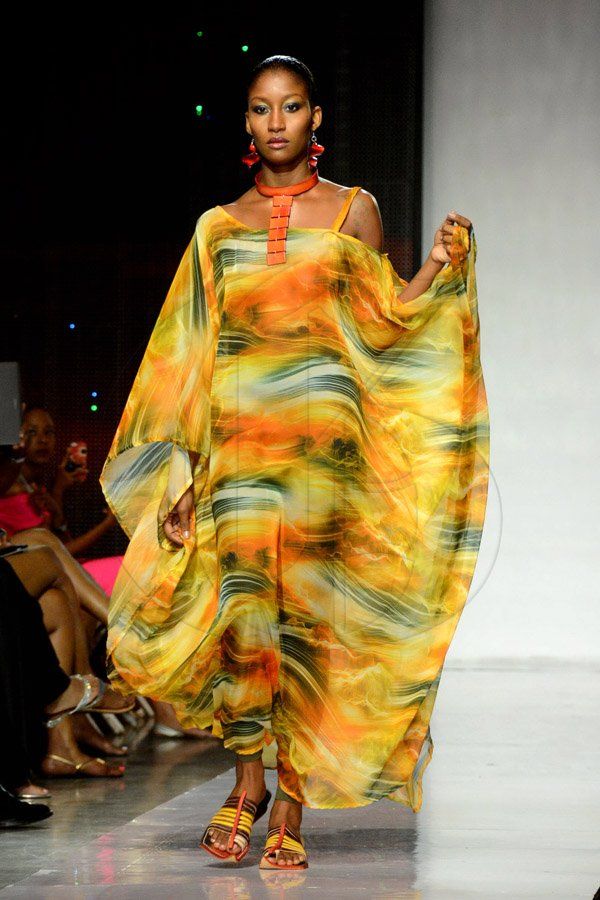
The Trinidad and Tobago Fashion Company Limited (FashionTT), established in 2013 as a subsidiary of CreativeTT under the Ministry of Trade and Industry, is the Caribbean’s most developed example of government-funded fashion industry infrastructure. Its founding mandate was specific: to stimulate and facilitate the business development and export activity of the fashion industry in Trinidad and Tobago to generate national wealth. The agency has a physical address, a full-time team, a registered community of over 200 designers, a strategic plan covering 2015 to 2020, and a portfolio of programmes that includes the Value Chain Investment Programme (VCIP), an annual Fashion LookBook now in its 18th edition, inward buyer missions, capacity building workshops and partnerships with institutions including the Fashion Institute of Technology in New York.
The VCIP is the most analytically interesting component of the FashionTT model because it is the most structured attempt to assess designer readiness against commercial criteria. Launched in 2016, it uses a panel of independent international assessors to evaluate designers across 16 criteria, including brand story, market experience, export production capacity, product quality, financial health, financial compliance, and total value of orders received, shipped and invoiced. The framework is closer to an investment-readiness assessment than to a conventional training programme. It asks whether designers are commercially viable rather than simply whether they can produce attractive garments.
The question is what the VCIP has produced in commercial terms since 2016. The available public record shows: training programmes completed, cohorts graduated, assessments conducted, and a Fashion LookBook that now runs to 18 editions. What is less visible in the public record is the sustained export revenue generated by VCIP participants, the number of designers who progressed from one level of the programme to the next, what changed commercially as a result, the proportion of the registered designer community that became commercially viable by the agency’s own criteria, and the aggregate contribution of FashionTT-supported designers to Trinidad and Tobago’s export earnings over the decade.
This is not a criticism of the people running FashionTT, who have been operating with real resources and genuine institutional commitment in a sector that is difficult to measure anywhere in the world. It is a structural observation: the available public record does not allow external analysts, designers, journalists, policymakers in other Caribbean states, or international funders to assess whether FashionTT’s model has achieved its mandate at the scale that its decade of operation should have produced. A government agency that has been running for over ten years should be able to answer the question “what did this produce?” with something more specific than a list of programmes completed.
Jamaica, Barbados and Guyana: The New Policy Wave
The emergence of fashion-specific and creative industry policy across Jamaica, Barbados and Guyana represents a second wave of Caribbean fashion policy engagement, and its timing provides an opportunity to design the measurement frameworks from the start rather than retrofitting them after a decade of operation.
Jamaica’s 2025 green paper on the creative industries signals that the government is moving toward a formal policy and legislative framework for the sector. A green paper is a consultation document rather than a commitment, but its existence indicates that the Jamaican government regards the creative industries, including fashion, as a sector meriting the kind of structured policy engagement that most economic development priorities receive. The timing is significant: Jamaica’s fashion industry has been building commercial capability through the Jamaica Business Development Corporation’s support programmes, through Jamaica Fashion Week, and through the informal networks that Kingston’s creative professionals have developed over two decades.
As Omiren Styles has established in its analysis of Kingston’s professional dress culture and the global media gap around it, Kingston has a fully operational professional dress culture built on specific garments, specific occasions and specific social expectations. The commercial infrastructure that would make that culture visible to international buyers, investors and press is what the 2025 green paper should be designed to build. Whether it will be designed with clear output metrics, baseline data, and review timelines will determine whether it becomes an effective policy instrument rather than a statement of ambition.
Barbados’s legislative framework for the creative economy, assessed by the Central Bank of Barbados in September 2025, situates fashion within a broader creative economy strategy, with its potential partly framed by the sector’s global scale. As the Central Bank documented, the creative economy globally contributes more than USD 2.3 trillion, or 3.1% of global GDP, to the world economy each year and accounts for 6.2% of global employment (UNESCO/UNCTAD, 2024). The Central Bank of Barbados has argued in its analysis of building Barbados’s creative economy that creative industries offer a different kind of growth, grounded in talent and innovation rather than heavy infrastructure or imported inputs. The legislative framework provides a regulatory and institutional foundation. Whether it will generate measurable economic returns depends on what the implementation framework specifies about outcomes, timelines and accountability.
Guyana’s newly formed Fashion Council is the most recent of the four institutional developments and the one about which the least public information is currently available. Its formation is significant because Guyana’s fashion industry has not previously had dedicated institutional support, and because Guyana’s current economic moment, shaped by significant oil revenues, creates conditions for creative economy investment at a scale that would have been difficult to sustain a decade ago. The risk in establishing a new institution is that it replicates the architecture of existing institutions without learning from their measurement gaps. The opportunity is to build the accountability frameworks from the start.
The Caribbean Development Bank and Regional Coordination
The Caribbean Development Bank’s Cultural and Creative Industries Innovation Fund (CIIF) provides the only current mechanism for regional coordination of creative industry investment across the Caribbean. The fund’s priority sub-sectors include fashion and contemporary design, alongside visual arts, music, audiovisual (film and animation), and festivals and carnivals. Its grant awards are publicly documented: a USD 100,000 grant to a Trinidad and Tobago firm to develop a Caribbean stock photography platform in October 2025; a USD 75,000 investment in women-led music businesses for the World Music Expo 2026. The fund operates through competitive public calls, which create a degree of transparency about what receives support.
The CIIF operates across the Caribbean Development Bank’s 19 Borrowing Member Countries, which means its fashion and design sub-sector investment is divided across a very large geographic scope. The fund is not solely a fashion infrastructure fund, and fashion receives a share of a competitive allocation rather than a dedicated investment. This has implications for scale: the amounts available per country per year for fashion-specific development are modest relative to what a serious national fashion industry development programme requires.
The coordination function that the CIIF provides is nevertheless valuable. Individual Caribbean territories have limited capacity to develop best-practice frameworks for measuring creative industry outcomes independently. A regional fund that collects data across multiple countries and programme cycles is better placed to identify which kinds of interventions produce measurable commercial results and which do not. Whether the CIIF is currently producing that kind of learning output and making it available to guide national policy is a question the fund’s public communications do not yet answer clearly.
What Measurement Would Require
Measuring the results of Caribbean fashion policy is not a technically complex exercise. It requires deciding what the policies aim to achieve, establishing baseline data before programmes begin, collecting outcome data after programmes end, and publishing the results in a format that enables independent analysis.
The specific outcomes that Caribbean fashion policy should be measuring include: export revenue generated by supported designers over one, three and five years following programme participation; employment created directly in supported businesses and indirectly in the supply chains and services that serve them; number of designers who achieved commercial viability by the programme’s own criteria, and how many sustained that viability over multiple years; retail distribution relationships established in new markets; investment secured by supported businesses; and revenue from intellectual property, licensing and brand development.
These are not difficult data points to collect from participating businesses annually. They require a commitment from the programmes to follow up with participants after the initial training or funding, and a commitment from participants to share commercial data as a condition of support. Neither commitment is currently standard across Caribbean fashion policy programmes, and the absence of systematic longitudinal tracking is the primary reason the public record of Caribbean fashion policy outcomes is so thin relative to the institutional investment made.
The measurement question also has a competitive dimension. The Caribbean fashion policy landscape is now sufficiently developed that governments, regional funders, and international creative economy investors will compare approaches and direct resources toward the programmes that produce the most legible evidence of commercial impact. A programme that can show that 60% of its VCIP alumni increased their export revenue by a documented amount in the three years following participation is more likely to attract continued government funding, regional bank support, and international partnerships than a programme that can only show that cohorts were graduated and LookBooks were published.
The Specific Case of Fashion Export Infrastructure
Fashion policy in small island economies faces a structural challenge that general creative economy policy analysis does not always address: the domestic market is too small to sustain a serious fashion business at scale, which means that access to export markets is not an optional ambition but an essential condition for commercial viability. A Trinidadian fashion designer serving only the domestic market operates in a market of 1.4 million people. A Jamaican designer serving only the domestic market is in a market of 2.8 million. A Barbadian designer is in a market of 300,000. These are viable markets for some fashion businesses, but they do not support the production volumes, investment cycles, or brand-building that international competitiveness requires.
Fashion export infrastructure in the Caribbean therefore means something specific: access to international trade fairs and buyer missions where Caribbean designers can present to buyers who are purchasing for much larger markets; logistics and shipping solutions that make Caribbean fashion commercially viable to international retailers who have to price in the cost of small-volume air freight from island territories; quality standards and certification frameworks that make Caribbean fashion legible to institutional buyers; and intellectual property protection that ensures Caribbean designers retain the value of their creative work when it enters international markets.
FashionTT’s inward buyer missions, which began in 2015 with merchants and retailers from the French Caribbean, represent the most concrete attempt to build this kind of export infrastructure in the region. The CIIF’s export-related grant streams address some of the same needs. But the scale of what exists relative to what Caribbean fashion requires to compete internationally is a gap that current policy does not yet address and that measurement frameworks should make visible.
Learning From Other Regions
As Omiren Styles has established in its analysis of African fashion weeks and the infrastructure they built faster than criticism, Tagos Fashion Week won the Earthshot Prize in 2025 not for a fashion show but for building circular fashion infrastructure at scale, including mandatory sustainable practice requirements for all runway designers, a circular fashion hub in development and a replication framework targeting other African fashion weeks. The prize was awarded for building industrial infrastructure rather than for event production. That distinction between policy that produces infrastructure and policy that produces events is the most important one Caribbean fashion policy needs to make about itself.
The Lagos Fashion Week model demonstrates that a fashion platform in a developing economy can build institutional infrastructure of international significance when it has a clear mandate, a long-term horizon, measurable output commitments, and accountability to an external standard. FashionTT has the mandate and the time horizon. What the available public record does not show is whether it has developed the accountability to an external standard that would allow independent assessment of whether it has built infrastructure rather than events.
As Omiren Styles has documented in its analysis of Jamaican designers building a fashion identity on their own terms, Jamaican fashion design is not organised around a single aesthetic movement but is built through multiple creative approaches operating under uneven conditions. The designers who have built careers in Kingston without access to dedicated institutional support have demonstrated that Caribbean fashion has the creative foundation for international competitiveness. The policy question is whether government-funded institutions are creating conditions that allow more designers to reach that level, or whether they are primarily providing training programmes that reach many people but produce commercial change for few.
The Omiren Argument
Caribbean fashion policy is at a transition point. The first phase, running from FashionTT’s establishment in 2013 through the current wave of green papers, legislative frameworks and new councils, has been characterised by the construction of institutional architecture. Agencies have been created, programmes launched, buyer missions conducted, and governments across the region have committed to treating fashion as an economic development priority.
The second phase should be characterised by accountability. Not accountability in the political sense of ministerial statements and agency reports, but accountability in the commercial sense: did the designers who participated in FashionTT’s VCIP increase their export revenue? Did the designers supported by CIIF gain access to new markets? Did the designers profiled in Jamaica’s fashion policy consultation earn more money, employ more people, or build more commercially viable businesses as a result of the policy environment they operated in? Are the measurement frameworks being built into Jamaica’s green paper, Barbados’s legislative implementation, and Guyana’s Fashion Council from the start, before the first programme runs and before the first outcome needs to be explained?
These questions are not a criticism of what Caribbean fashion policy has built. They are the natural next question for a policy landscape that has been building for over a decade and whose designers, manufacturers, and creative professionals deserve an honest account of what their governments’ investment in the sector has produced. The institutional architecture is in place. The measurement frameworks are what need to be built next.
As Omiren Styles has argued throughout this series, the Global South made fashion and never got credit. For Caribbean fashion policy, the specific form of that argument is institutional: the designers and creative professionals whose work provides the raw material for every fashion policy programme deserve to see the evidence that those programmes changed their commercial position. The policies are growing. The results need to be measured, published and acted on.
ALSO READ
- Kingston Dresses for Work Every Day. Global Fashion Barely Sees It.
- African Fashion Weeks Built Networks Faster Than Criticism
- Visibility Is Not Market Power: Why Global Attention Still Fails Independent African Fashion Brands
- The Global South Made Fashion. It Just Never Got Credit.
Frequently Asked Questions
What is FashionTT, and what has it built?
FashionTT, the Trinidad and Tobago Fashion Company Limited, was established in 2013 as a subsidiary of CreativeTT under the Ministry of Trade and Industry. Its mandate is to stimulate and facilitate business development and export activities in the fashion industry in Trinidad and Tobago to generate national wealth. Over its first decade, FashionTT has built a registered community of over 200 designers, launched the Value Chain Investment Programme (VCIP) in 2016 using an international assessment panel from the Fashion Institute of Technology New York, produced 18 editions of a Fashion LookBook, conducted inward buyer missions beginning with French Caribbean retailers in 2015, and delivered capacity building in areas including brand development, contract law, costing and pricing, and marketing strategy. The question of what this has produced in terms of measurable export revenue, commercial viability, and market access for participating designers is not yet clearly answered by the available public record.
What new Caribbean fashion policies were announced in 2025 and 2026?
Jamaica published a 2025 green paper on the creative industries, signalling movement toward a formal policy and legislative framework for the sector, including fashion. Barbados established a legislative framework for the creative economy, which the Central Bank of Barbados assessed in September 2025 as part of a broader argument that creative industries offer a different kind of economic growth grounded in talent and innovation. Guyana formed a new Fashion Council, marking the first dedicated institutional support for fashion in a country whose current economic moment, shaped by significant oil revenues, creates conditions for investment in the creative economy at a new scale. These developments follow Trinidad and Tobago’s decade-long FashionTT experiment and represent a second wave of Caribbean fashion policy engagement across the region.
What is the Caribbean Development Bank’s role in fashion policy?
The Caribbean Development Bank’s Cultural and Creative Industries Innovation Fund (CIIF) provides the only current mechanism for regional coordination of creative industry investment across the Caribbean. Its priority sub-sectors include fashion and contemporary design. The fund operates through competitive public calls across the CDB’s 19 Borrowing Member Countries. Recent awards include a USD 100,000 grant to a Trinidad and Tobago firm for a Caribbean stock photography platform in October 2025 and a USD 75,000 investment in women-led music businesses for the World Music Expo 2026. The fund provides a degree of transparency about what receives support, but its fashion allocations are modest relative to what serious development of the national fashion industry requires, and it does not yet function as a learning platform that publishes evidence on which kinds of interventions produce the most measurable commercial results.
What measurements should Caribbean fashion policy be producing?
Caribbean fashion policy should produce, at minimum, the following measurements on a published annual basis: export revenue generated by supported designers over one, three and five years following programme participation; employment created directly in supported businesses and indirectly in supply chains; number of designers who achieved commercial viability by the programme’s own criteria and sustained it over multiple years; retail distribution relationships established in new markets; investment secured by supported businesses; and revenue from intellectual property, licensing and brand development. These data points require systematic follow-up with programme participants after training or funding ends and a commitment from participants to share commercial data as a condition of support. Neither commitment is currently standard across Caribbean fashion policy programmes, and the absence of longitudinal tracking is the primary reason why the public record of Caribbean fashion policy outcomes is thin relative to the institutional investment made.
How does Caribbean fashion policy compare with that of other developing economies?
As Omiren Styles has documented, in its analysis of African fashion weeks and the infrastructure they built, Lagos Fashion Week won the Earthshot Prize in November 2025 for building circular fashion infrastructure at scale, including mandatory sustainable practice requirements for all runway designers, a circular fashion hub in development, and a replication framework targeting other fashion weeks by 2030. The prize was awarded for infrastructure, not for event production. That distinction between policy that produces infrastructure and policy that produces events is the central question for Caribbean fashion policy. FashionTT has the institutional architecture and a decade of operation. The public record does not yet demonstrate whether that decade produced infrastructure of the kind that Lagos Fashion Week demonstrated to the Earthshot Prize committee, or whether it produced well-organised programmes whose commercial impact on participating designers has not been measured and published.
EXPLORE MORE
Read the full Industry and Infrastructure, Institutions and Creative Power sections at Omiren Styles for ongoing analysis of Caribbean fashion policy, creative economy investment and the institutional frameworks that determine whether fashion talent in the Caribbean translates into commercial viability. Discover travel and heritage intelligence across Jamaica, Trinidad and Tobago, Barbados and the wider Caribbean at Rex Clarke Adventures.