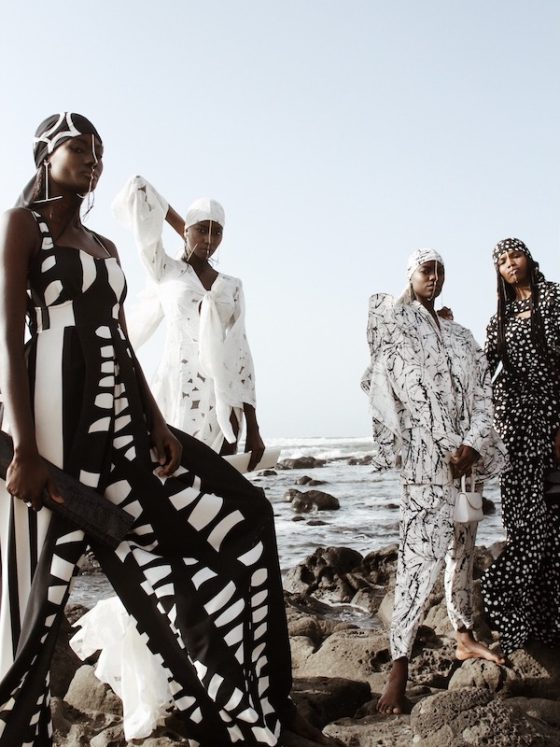
An inaugural exchange brings fashion, art and architecture to Kingston’s waterfront. Its contribution to downtown’s revival will depend on how that activity connects with the people and enterprises already there.
Editorial note: This is a source-based analysis of the announced programme, not a completed field-reported feature. Direct business and resident testimony, funding details and independently confirmed partnership terms remain outstanding.
Downtown Kingston’s Ocean Boulevard is the setting for a proposition bigger than a fashion show. Saint International‘s inaugural West Indies Fashion, Art and Architecture Exchange, known as WIFAX, is scheduled for 20 to 26 October 2026, with activities at the ROK Hotel, the Jamaica Conference Centre and other designated art spaces. Organisers are presenting the exchange as a contribution to the waterfront’s cultural and economic revival.
“A waterfront can be showcased for a week. Supporting its existing people and enterprises requires a relationship that lasts longer than the presentation.” Omiren Styles, Editorial Intelligence
That ambition changes the questions the event needs to answer. Bringing visitors downtown is one objective; connecting their presence to existing businesses, workers and public life is another. WIFAX’s most consequential test, therefore, is not simply whether it attracts attention, but how that attention becomes participation.
Saint International’s WIFAX brings fashion, art and architecture to Kingston’s waterfront. Its contribution to downtown’s revival depends on how it connects with the people and businesses already there.
More Than a Returning Fashion Programme
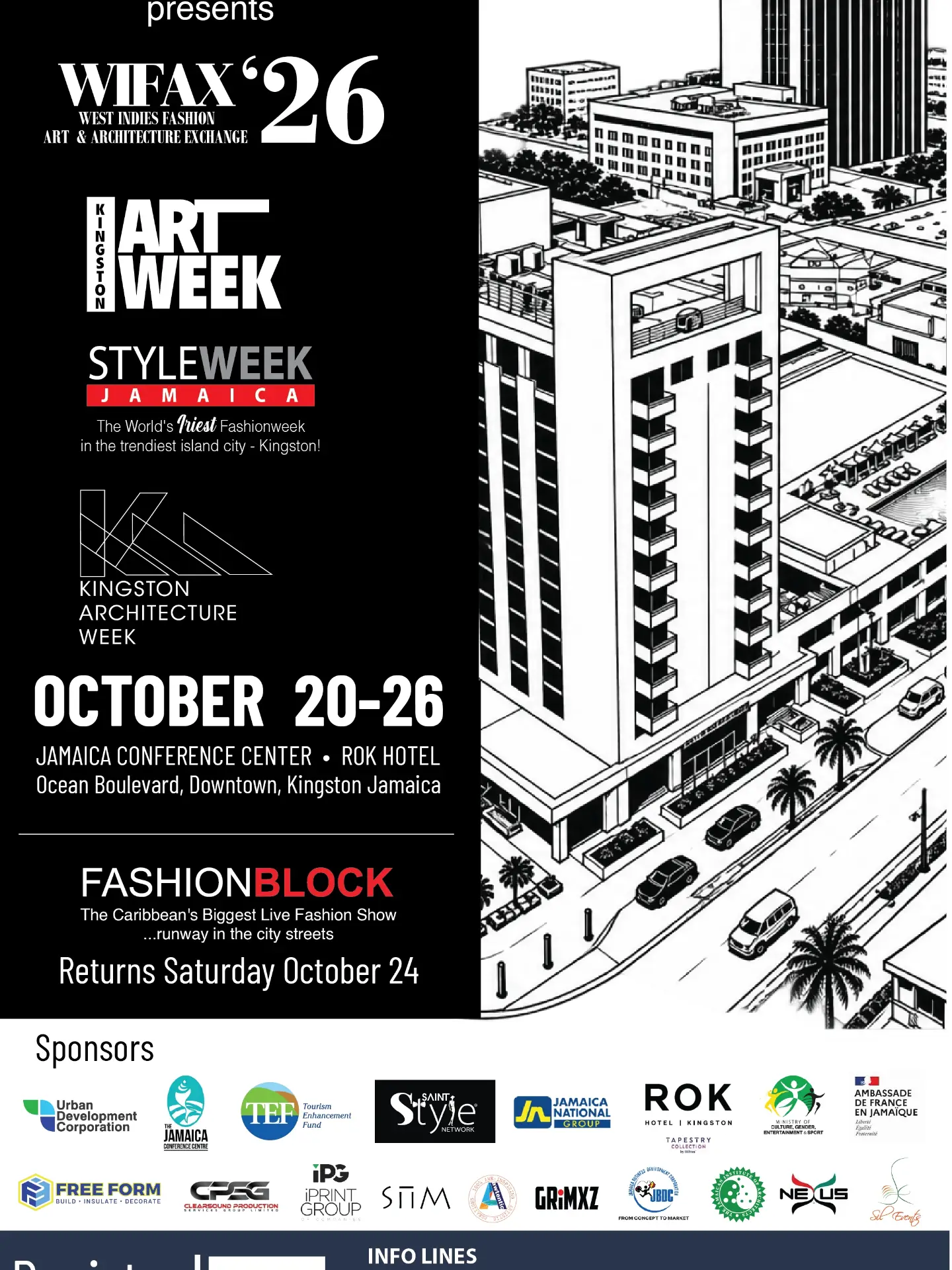
Saint International founder and chief executive Deiwght Peters has described WIFAX as the result of consultations that began in 2019 and an expanded approach to reviving Style Week Jamaica after the pandemic. “Style Week Jamaica could not return as it was previously done,” he told the Jamaica Observer. Adding art, then architecture, created the broader exchange.
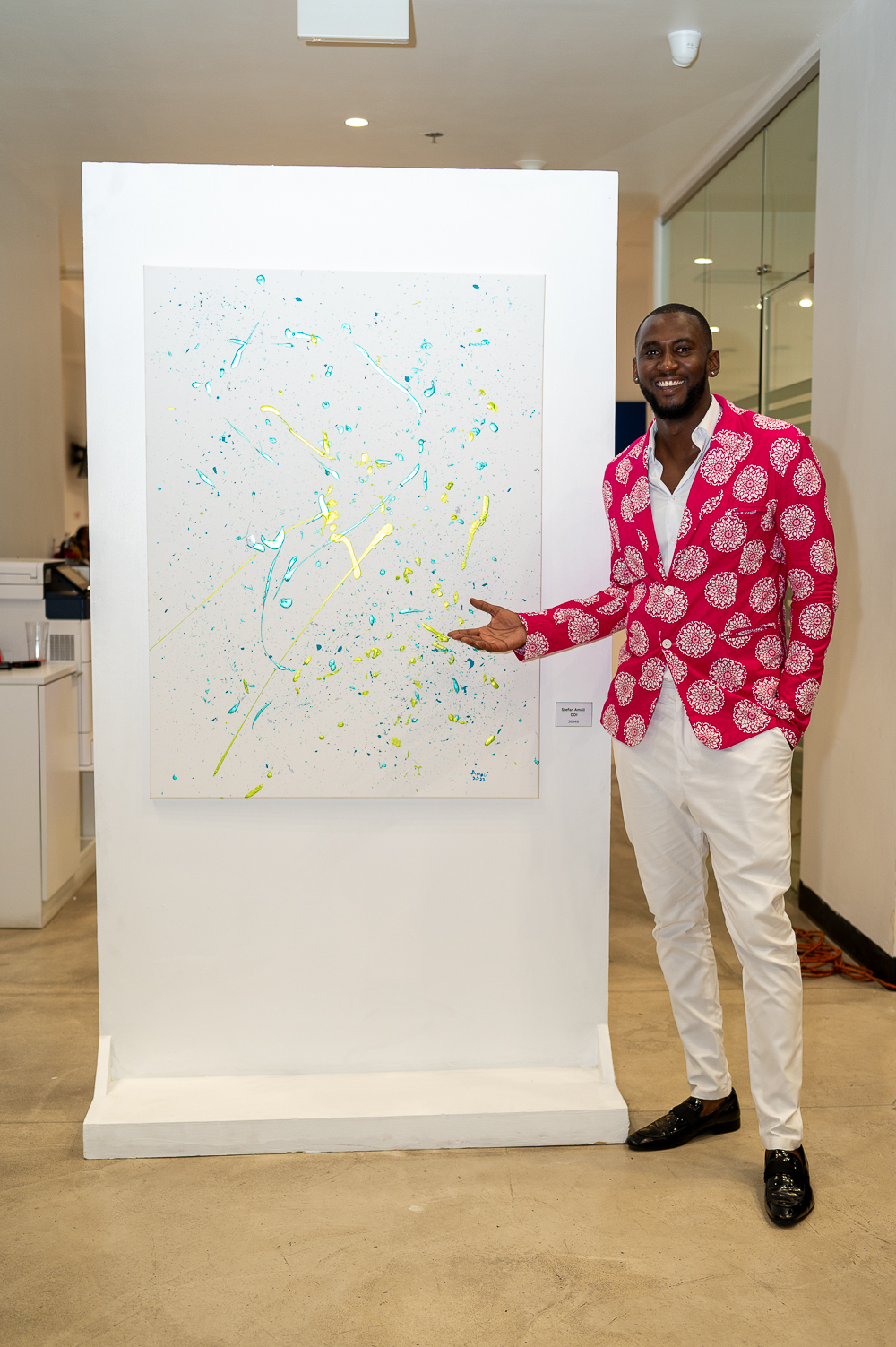
The announced programme gives that expansion a physical framework. Style Week activities include resort collections at the ROK Hotel on 22 and 23 October, other collections on those dates, and Fashion Block on 24 October. Art programming includes exhibitions by established and emerging practitioners and a NEXT-GEN exhibition featuring work from high schools. An architecture exhibition titled From Blueprint to Masterpiece is announced for the Jamaica Conference Centre.
Those activities suggest several possible relationships with downtown: hotel-based gatherings, public exhibitions and a fashion event associated with Ocean Boulevard. But a programme identifies what is scheduled. It does not, by itself, establish who can access each activity, which surrounding businesses will participate or how opportunities will be distributed. The distinction matters because WIFAX is being presented not merely as entertainment in a downtown location, but as an intervention in that location’s future.
The Economic Promise Needs a Mechanism
Nationwide’s September 11 report attributes a clear economic ambition to the organisers: attracting international visitors, industry leaders and other guests to stimulate Kingston’s economy. The Jamaica Observer’s September 18 coverage anticipates revenue for hotels, restaurants, retailers and ancillary service providers.
These are expectations, not measured results. Neither report provides an attendance forecast with a stated methodology, an estimate of local procurement or a breakdown showing which businesses are positioned to benefit. Neither establishes how additional visitor spending would be distinguished from spending that would have occurred anyway.
The useful reporting question is therefore narrower than whether WIFAX will boost the economy. It is how money is expected to move. Which downtown enterprises supply the event? Are neighbouring businesses included in visitor information or programming? Can smaller operators secure contracts, or does most expenditure remain within the principal venues? Will participation require fees that some businesses cannot afford?
Those answers would reveal more than a broad projection of economic momentum. They would show whether local enterprise is part of the event’s operating structure or an anticipated beneficiary at its edges.
It is also worth asking about the timeline. An event that generates economic activity over seven days is different from one that builds supplier relationships, training opportunities, or ongoing programming that outlast the week. The announcement materials do not address that distinction. But that distinction separates a temporary economic stimulus from a structural contribution to downtown. Both are possible outcomes; only one matches the regeneration language the organisers are using.
A Waterfront Is Not Only a Backdrop
Peters has described the reimagined Style Week as bringing a “riviera” atmosphere to the waterfront. The announcement coverage also emphasises luxury, international visibility and downtown’s image as a cultural destination. That positioning explains the audience WIFAX wants to attract. It leaves open a different question: how the event relates to people who already use downtown.
A waterfront can be a compelling setting for fashion while remaining a place of ordinary movement, work and recreation. Evaluating an event’s public contribution therefore requires more than assessing its visual transformation. Access arrangements, temporary restrictions and opportunities for existing users belong in the same discussion as international attendance figures.
The two announcement reports do not establish admission arrangements across the programme, the extent of any street restrictions or how residents and neighbouring traders have been involved in planning. That absence does not prove exclusion. It means inclusion cannot yet be claimed from those reports. Resident and trader testimony would be particularly valuable here, not as decorative reaction, but as evidence of whether the event’s intended benefits match local priorities.
Backing Is Not the Same as a Disclosed Commitment
Nationwide identifies several organisations as WIFAX backers, including the Fashion Institute of Technology in New York, the Urban Development Corporation, the Embassy of France, the ROK Hotel, the National Gallery and architectural institutions.
The list indicates the breadth of the announced network. It does not explain the terms of each relationship. The report does not specify which organisations provide money, venues, professional expertise, equipment or promotional support, nor does it state the value or duration of those contributions.
Those distinctions are essential to assessing the regeneration proposition. Venue access makes an event possible; a continuing educational partnership might support a different kind of legacy. Neither should be described as the other. Funding also needs to be separated from endorsement. The available coverage does not establish a public funding amount or a complete event budget. Naming an institution as a backer is insufficient evidence for a claim that it finances the programme.
What Would Success Look Like Afterwards?
WIFAX should not be expected to solve downtown redevelopment in a week. Assess its contribution against commitments proportionate to what the organisers can deliver. However, some straightforward markers are worth tracking.
For local enterprise, useful evidence would include paid contracts, transparent supplier selection and business accounts of additional trade. For public participation, it would include clear admission information and evidence that residents could use or engage with the programme. For continuity, it would mean identifying which partnerships, activities or opportunities extend beyond 26 October.
These are proposed measures, not outcomes already achieved. The announced combination of fashion, art and architecture allows WIFAX to connect different uses of downtown. Its organisers have articulated the ambition to attract attention and stimulate activity. What remains unproven is the connection between that ambition and a durable benefit for the surrounding community.
The NEXT-GEN exhibition featuring high school work is worth noting in this context. It is the element of the programme most clearly orientated toward the existing community rather than an incoming audience. How it is resourced, promoted and followed up will say something about the event’s actual relationship with downtown’s young people, as distinct from its stated one.
The Omiren Argument
The strongest case for WIFAX is not that fashion can single-handedly rebuild Kingston. It is that a cultural event could make a specific, accountable contribution to downtown life.
That contribution will be found in arrangements rather than adjectives: who receives paid work, who can enter, whose needs shape the use of space and which commitments survive the programme. A waterfront can be showcased for a week. Supporting its existing people and enterprises requires a relationship that lasts longer than the presentation.
WIFAX also arrives at a moment when the relationship between international fashion platforms and local communities is under greater scrutiny than it was a decade ago. Organisers of events in the Caribbean and across the African continent have increasingly been asked to demonstrate that the people and places that provide the setting also receive a meaningful share of the benefit. Peters’s description of the exchange as the product of several years of consultation is a relevant detail here. Consultation is a starting condition, not a sufficient one. What it produced in terms of community-facing commitments is the part that still needs to be documented.
The question worth returning to after October 26 is simple: what did WIFAX leave behind? Not in terms of photographs or press coverage, but in terms of contracts concluded, skills transferred, partnerships formalised and community members who can point to something the event made possible for them. That is what separates a cultural intervention from a cultural occasion.
Also Read on Omiren Styles:
- After Africa Fashion Week London 2026: What Converted Into Orders, Stockists, Press or Partnerships?
- How an Event Becomes Both a Business Moment and a Relationship-Building Tool
- What Happens After a Fashion Showcase? The Measures That Prove Market Access
- Diotima Spring 2027: How Caribbean References Take Form