Arewa Textiles began production in Kaduna in 1965 with 10,000 spinning spindles, 400 looms and equipment for bleaching cloth. It was built to do more than print patterns onto fabric. The factory could take raw cotton through spinning, weaving, dyeing and processing. Its local workforce later grew to more than 4,000. This was Nigeria making cloth, not simply buying it. Japanese companies supplied a substantial share of the investment and technical expertise, while Nigerian investment and local employees formed part of the operation. The venture brought international capital and specialist knowledge to a factory in Kaduna.
Decades later, textiles, photographs and working documents associated with Arewa became the subject of a Japanese museum exhibition. These records offer a way to examine the factory beyond the familiar endpoints of its establishment and closure. They also bring industrial production into a fashion conversation often organised around finished garments. Before fabric could become clothing, someone had to spin the yarn, weave the cloth and carry out the processes that gave it its final appearance. Arewa’s history begins with that work.
Explore Arewa Textiles in Kaduna through its investment, integrated cotton production, local workforce and records kept in a Japanese museum exhibition.
Building a Textile Factory in Kaduna
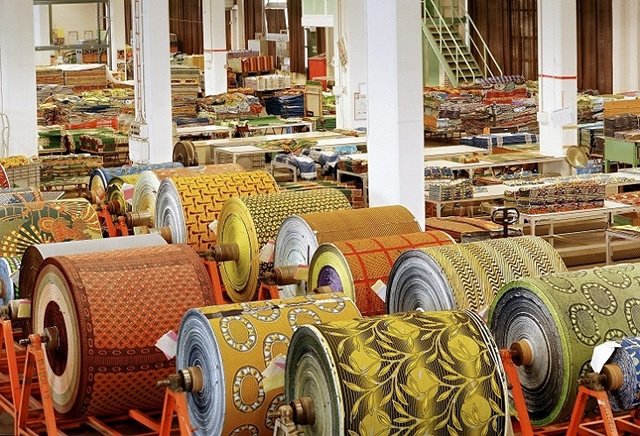
Construction started in 1963, two years before production began. According to Kyoto Institute of Technology’s Arewa exhibition, ten Japanese spinning companies jointly provided 60% of the investment, while Nigerian participation accounted for 40%. The museum brought the factory’s records together in a 2023 exhibition on Nigerian and Japanese textile production. Its account provides the main chronology: construction in 1963, production from 1965, the Japanese companies’ withdrawal in 1988, and closure in 2005. The investment figures show a venture with participation from both countries. Calling Arewa only a Japanese factory would leave out the Nigerian contribution. Describing it without its Japanese partners would obscure how the operation was established.
Additional Japanese firms supplied specialists involved in technical instruction and management. Their participation extended beyond the spinning companies that provided investment, reflecting the range of processes the factory brought together. Capital financed the operation. Machinery determined what it could do. People made those processes work. That combination is the starting point for understanding Arewa, not as an abstract example of cooperation, but as a place where textile manufacturing took place.
From Raw Cotton to Finished Cloth
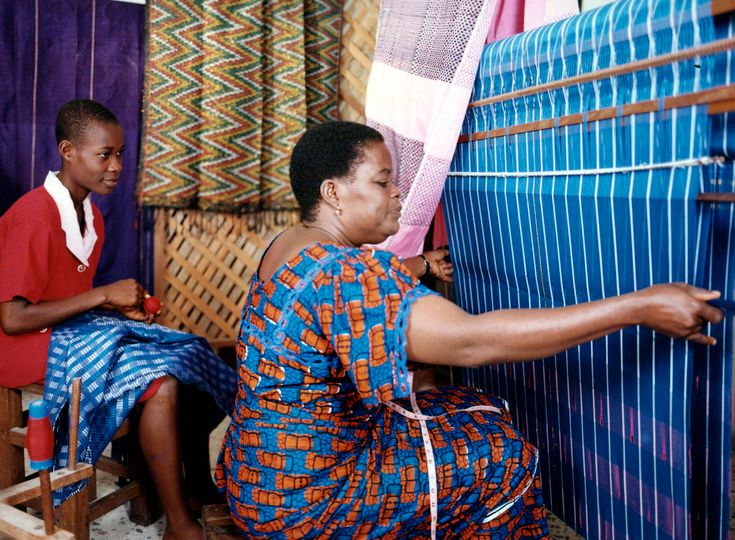
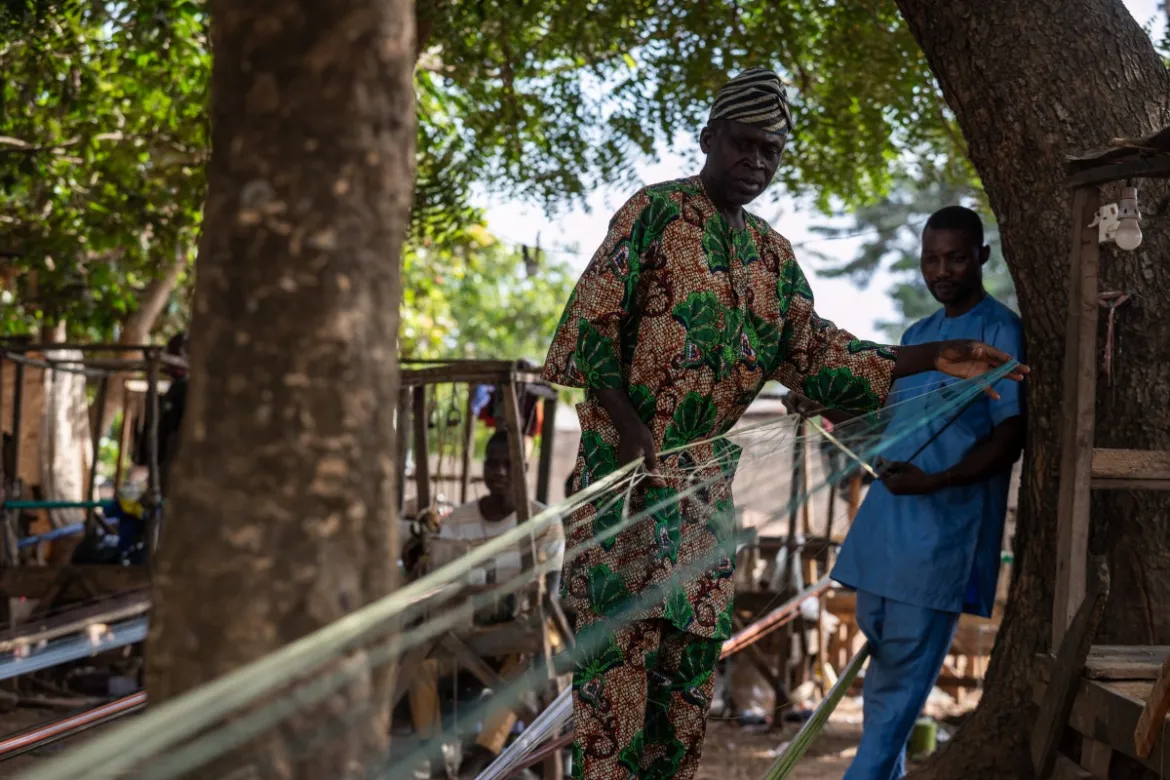
Arewa was an integrated mill. In plain terms, it brought several stages of production into one operation. Cotton was spun into yarn. Yarn was woven into cloth. The fabric then moved through dyeing and processing. The museum describes a factory organised to begin with raw cotton rather than relying only on cloth manufactured elsewhere. This distinguishes Arewa from a business importing finished textiles for sale. It also distinguishes it from a workshop that only did the final printing or finishing of purchased fabric. The starting equipment makes that difference tangible: 10,000 spinning spindles, 400 looms and a bleaching installation. These figures reflect the factory’s initial equipment, not a complete inventory of its machinery over its working life.
They do not tell us how much saleable fabric Arewa produced in a particular year. They do tell us that the factory was equipped for several substantial manufacturing stages. For fashion readers, this is an important part of the cloth’s story. A pattern may be the first thing we notice, but its surface rests on earlier work. Fibre must become yarn; yarn must become a fabric capable of receiving the relevant treatment. At Arewa, these activities belonged within the same manufacturing operation. The finished textile was not simply a design transferred onto an anonymous material. It resulted from a production system.
More Than 4,000 Local Employees
The museum reports that Arewa’s local workforce eventually exceeded 4,000. It describes Japanese textile technicians and local employees manufacturing African-print fabrics together during the 1960s–1980s. That figure changes the story’s scale. Arewa was not a small overseas demonstration project. It was a substantial workplace. The investment record identifies who contributed capital, while the equipment record identifies machinery. Neither can stand in for the people carrying out production. At the same time, a headcount is not a collection of life stories. It cannot tell us how individual employees experienced the factory, which jobs they held or how their careers developed. The account available here establishes their participation and the scale of local employment, rather than reconstructing those experiences.
The distinction is worth keeping clear because workers can disappear even from histories that mention them. Investors receive names, machinery receives specifications, and employees become a single number. Arewa’s exhibition account gives us a basis for resisting that imbalance: it explicitly places local employees within textile production. Their work was part of the factory’s output, not merely a social benefit mentioned after the business history. The history becomes more accurate when those contributions remain visible alongside the companies and technical specialists.
From Kyoto’s Export Fabrics to Nigerian Production
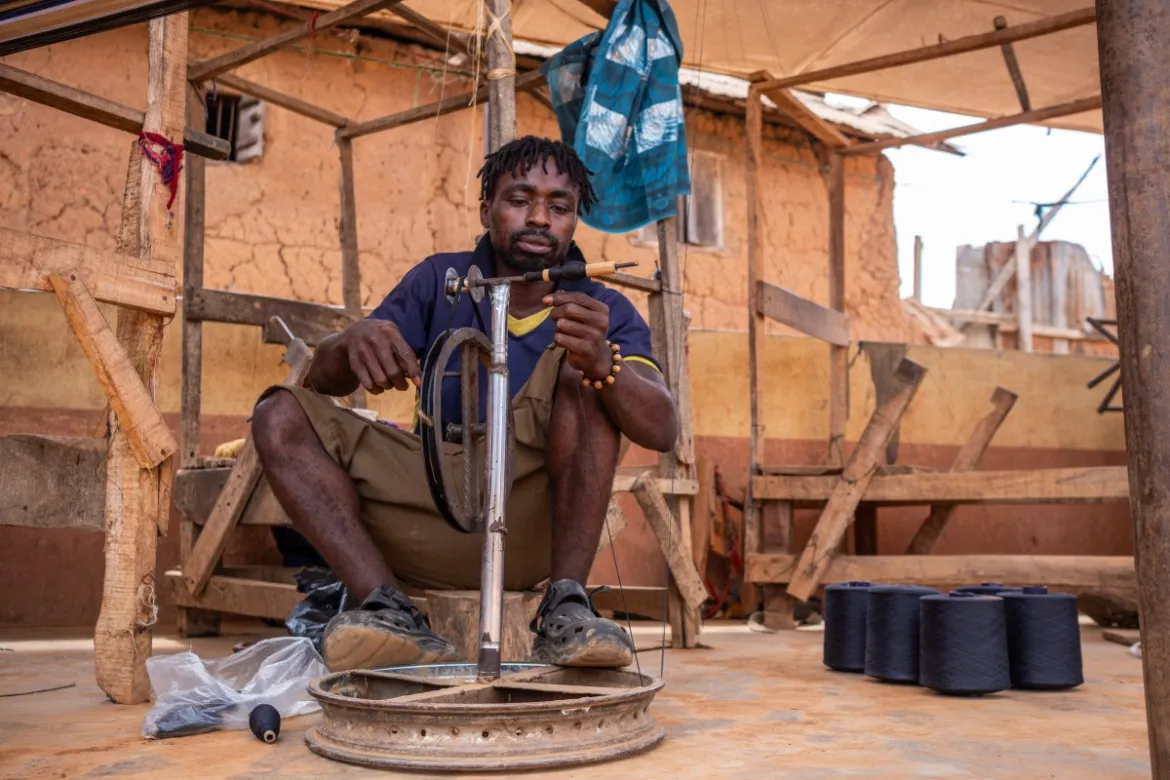
The research behind the Arewa exhibition began with another textile story. In 2013, Kyoto Institute of Technology’s Museum and Archives presented an exhibition on the Daido-Maruta Collection, examining printed fabrics manufactured in Kyoto for export to Africa. The museum explains that research developed after that exhibition and led towards Arewa’s production in Nigeria. One investigation concerned cloth made in Japan and sent overseas. The other concerned cloth manufactured in Nigeria with Japanese investment and technical participation. The connection matters, but the production models should not be confused. In the export story, African markets were destinations for fabrics manufactured elsewhere. At Arewa, Nigeria was the production site. The factory placed spinning, weaving and further processing within Kaduna itself.
Following the research from one subject to the other, the question changes. It is no longer only “Where did the cloth travel?” It becomes “Where was the capacity to manufacture it located?” Arewa provides a specific answer. It shows that this relationship included an industrial operation within Nigeria, rather than only the sale of Japanese-made products to Nigerian customers. That is why the factory deserves its own history, separate from the broader account of Kyoto’s export textiles.
What Survived in the Archive
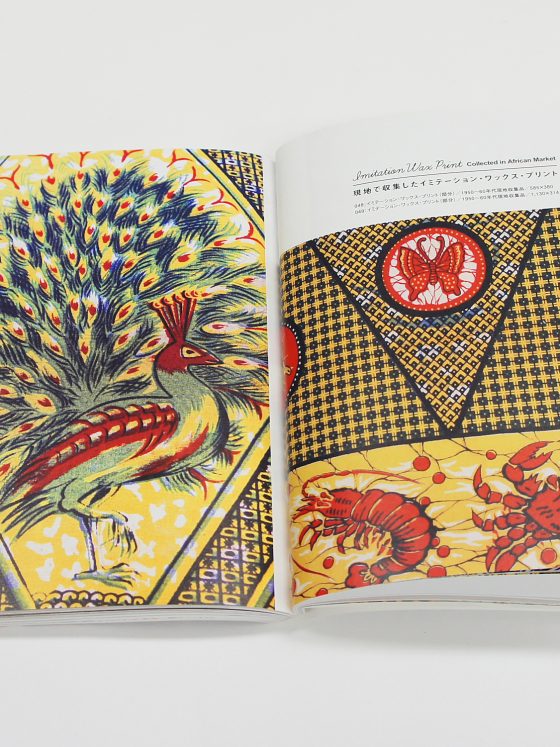
The Arewa exhibition included textiles, photographs, and working documents donated by people who worked at the company from the start of construction in 1963 to the Japanese companies’ withdrawal in 1988. Each type of material contributes something different. The fabrics show what was made. Working documents can help explain the organisation behind production. Photographs can place people and equipment within the factory setting. Together, they offer more than an isolated sample of patterned cloth. They connect the product with some of the circumstances of its manufacture.
The exhibition ran from 10 January to 17 February 2023. Ritsumeikan University’s announcement identifies the associated digital-archive research project as an effort to connect modern design and industry, led by Aya Ueda. That connection suits the subject. Focusing only on the designs risks leaving the factory outside the frame, and focusing only on the business risks treating its fabrics as interchangeable units of output. The archive allows those perspectives to meet through actual material: cloth alongside the records of a working operation. Its location also deserves attention. A Japanese institutional collection brought these records together and interpreted them. They preserve an important part of the relationship, but they should not be mistaken for every possible account of Arewa.
For this article, their value lies in the specific history they establish.
After the Japanese Companies Withdrew
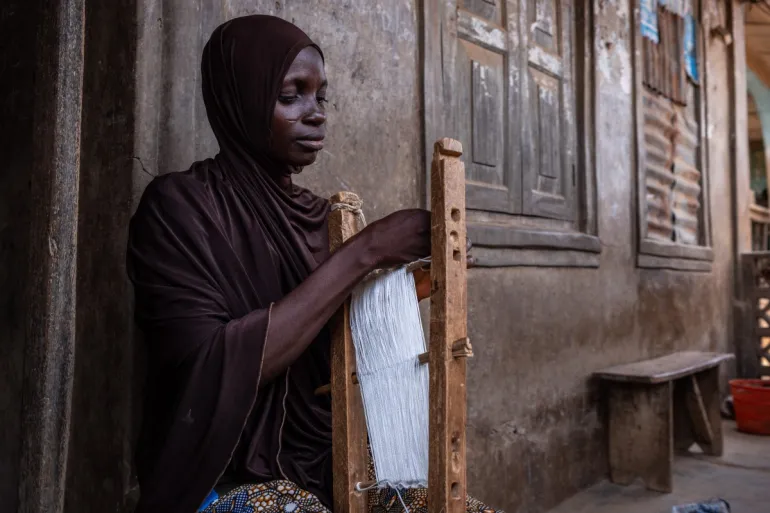
The museum dates the Japanese companies’ withdrawal to 1988 and Arewa’s closure to 2005. The factory’s history therefore continued beyond the period of Japanese corporate involvement covered by the donated materials. Those dates should remain separate. The Japanese companies’ departure was not the factory’s closing date. Equally, the closure date does not explain why production ended. The museum’s chronology establishes the sequence without supplying a complete account of the intervening years. It does make clear, however, that Arewa cannot be understood only through the duration of its Japanese partners’ participation. The Nigerian operation had its own later history.
Nor should closure erase the earlier manufacturing life. The machinery, workforce and textiles deserve attention as more than background to the final date. The records preserve more than the fact that a mill closed. They preserve evidence of an operation that made cloth.
A Later Return to the Fabrics
Arewa’s textiles received renewed attention through a 2024 project in Kyoto. In UNDP’s account of the textile recreation, Ueda describes recreating fabrics originally produced at Arewa using katazome, a traditional Japanese stencil-dyeing technique. This was another encounter with the historical fabrics, through a different method of making. It was not a restart of industrial production in Kaduna. The recreation belongs to the later life of the designs. It connects back to Arewa’s output while remaining distinct from the factory, its equipment and the workforce that originally manufactured its cloth.
The Omiren Argument
Arewa belongs in fashion history because it made the cloth. Its machinery, investment and workforce were not background conditions to a more interesting story about finished garments. They were part of what made those garments possible. The factory’s history also changes Nigeria’s position in this account. The country was not simply an export destination. It was a site of production, with Nigerian investment and thousands of local employees participating in an integrated textile operation. Japanese investment and technical participation explain important parts of the venture. They do not turn Kaduna into a footnote.
Omiren’s position is that both contributions should remain clear. International partnership should not erase local production. Recognising local employees should mean more than mentioning the workforce after listing the investors. The surviving records establish a substantial Nigerian manufacturing operation built through an international partnership. That is already a meaningful story. It does not require a simplified tale of assistance, an invented account of workers’ experiences or a closure narrative that explains everything through its ending. Arewa’s fabrics came from a factory. Remembering how that factory was financed, equipped and worked gives the cloth a fuller history.
Also Read:
- How Naira Devaluation Is Reshaping Nigeria’s Fabric Markets
- After the First Order: African Fashion’s Repeat-Production Test
- Who Actually Owns Ankara: The Legal and Cultural Argument the Fashion Industry Has Been Avoiding
- Woven Identities: How Northern Nigerian Fashion Blends Native And Modernity
Frequently Asked Questions
What was Arewa Textiles?
Arewa Textiles was a textile manufacturing operation in Kaduna, Nigeria. Kyoto Institute of Technology describes it as an integrated factory that carried out processes from raw cotton through spinning, weaving, dyeing, and processing. Construction began in 1963, production started in 1965, the Japanese companies withdrew in 1988, and the factory closed in 2005.
Who invested in Arewa Textiles?
The museum records ten Japanese spinning companies jointly contributing 60% of the investment, with Nigerian participation accounting for 40%. It also identifies additional Japanese firms that supplied specialists involved in technical instruction and management. The venture combined international capital and expertise with a factory in Kaduna.
How many people worked at Arewa?
The factory’s local workforce eventually exceeded 4,000, according to Kyoto Institute of Technology. The museum does not attach that figure to a specific year in its exhibition description. It also describes Japanese textile technicians and local employees manufacturing African-print fabrics together during the 1960s–1980s.
Were Arewa’s fabrics recreated in Kyoto?
Yes. UNDP reports a 2024 project in which Aya Ueda describes recreating fabrics originally produced at Arewa using katazome, a traditional Japanese stencil-dyeing technique. The project concerned the fabrics. It was not a restart of industrial production in Kaduna or the reopening of the Nigerian mill.