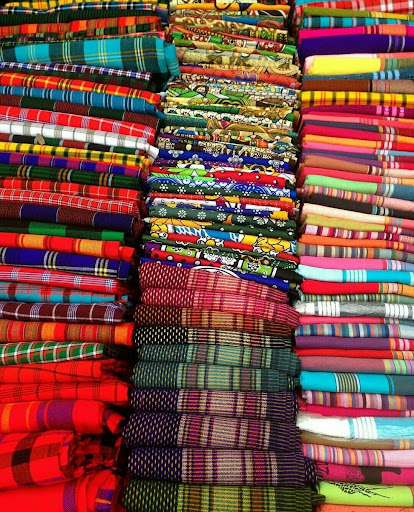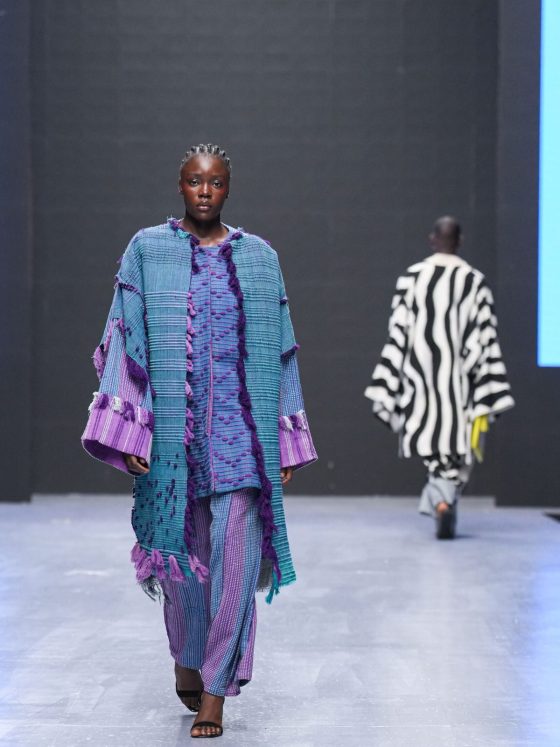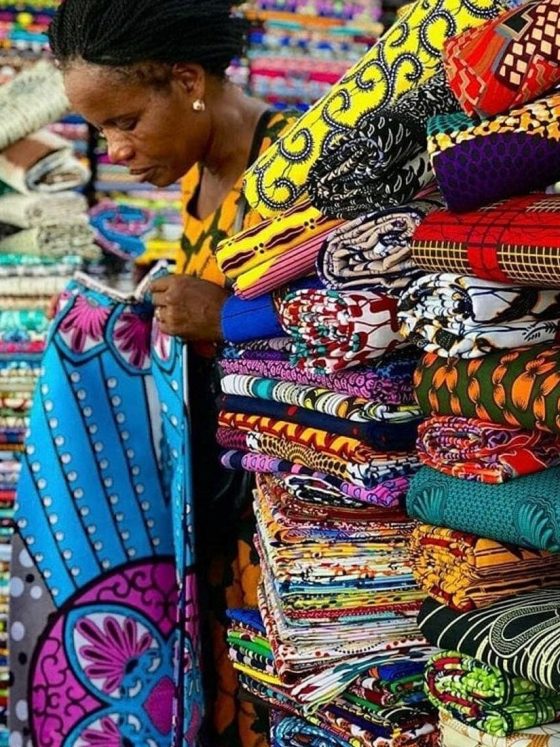
Take any patterned fabric and look at it. The design repeats. The specific point where it starts again, in both directions, is the pattern repeat. That interval determines almost everything about how the fabric behaves when you cut it into pieces and reassemble it as a garment. It affects how much fabric you need to buy. It determines where each piece must be positioned on the fabric before cutting. It controls whether the design flows across the shoulder seam, meets correctly at the side seam, or breaks arbitrarily in a way that signals something went wrong.
For plain fabrics and for fabrics with small all-over prints, the pattern repeat is either absent or small enough that it does not substantially change the cutting approach. For any fabric with a strong geometric structure, a large motif, a stripe, a check, or the kind of bold woven pattern that characterises heritage textiles like aso-oke and Kente, the pattern repeat is the first thing you need to understand before you cut.
A pattern repeat is the distance between one point in a design and where that design starts again. Understanding it before you cut determines how a garment looks at the seams, how much fabric you need and whether a heritage textile’s geometry survives the making process.
What a Pattern Repeat Actually Is
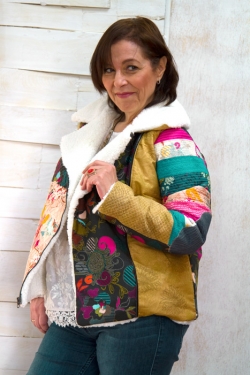
The pattern repeat is the smallest unit of the design that, when repeated, produces the full fabric surface. In practical terms, it is measured as a distance: from one identifiable point in the design to the same point in the next occurrence, measured both vertically along the fabric length and horizontally across its width.
A fabric with a 20cm vertical repeat and a 15cm horizontal repeat means that the design restarts every 20cm down the length of the fabric and every 15cm across its width. If you place two pattern pieces on that fabric, each piece’s position relative to the repeat structure determines where the design falls on the finished garment. If you don’t position the two pieces with the repeat in mind, the design will not meet at the seam.
The way repeat types work varies. A straight repeat places the design in a straightforward grid: every horizontal row begins at the same vertical position. A half-drop repeat shifts each vertical column down by half the repeat height, so the motif in one column sits halfway between the motifs in the adjacent columns. A half-drop repeat can create a more dynamic surface. Still, it requires more careful planning when cutting garment pieces that need to match across a seam, because the design doesn’t repeat at a predictable horizontal level.
Why It Matters More Than Most Cutting Guides Suggest
The pattern repeat matters at three stages of the garment’s production: when buying the fabric, when laying out and cutting the pieces, and when sewing the seams.
When buying
The standard rule is to add one full pattern repeat to the fabric requirement for each major pattern piece. This is not a fixed quantity: piece size, repeat size, garment width, and fabric width all interact. But the rule captures the essential problem. If you buy only the plain-garment requirement, you will not have enough fabric to position each piece correctly on the repeat. You will be forced to choose between mismatched seams and wasted sections of cloth. The additional fabric purchase is not waste; it is the cost of working correctly with a patterned textile. A large pattern repeat can increase the effective fabric requirement by 15 to 20 per cent over the plain-garment calculation.
When laying out
Before placing any pattern piece on patterned fabric, identify the repeat precisely. Mark the repeat’s starting point on the fabric and note where it repeats. Then consider each pattern piece in relation to that structure: where does the design need to fall on this piece so that when it meets the adjacent piece at the seam, the design continues correctly?
Cut patterned fabric on a single layer wherever possible. Cutting on a fold or on a double layer requires both layers to match the repeat identically, which is harder to verify and control. Single-layer cutting lets you position each piece individually against the fabric surface and confirm the match before cutting. This takes longer, but it produces a garment whose seams tell the story they are supposed to tell.
Mark every pattern piece with the grainline, the nap direction (if the fabric has a directional surface), and the repeat-matching points: the specific locations on the piece where the design needs to align with the adjacent piece. These marks are not optional for patterned fabrics. They tell the cutter what to do at the moment of placement.
When sewing
Pin patterned seams with the right sides together and check that the design matches before sewing. The standard technique is to fold back the seam allowance on one piece to reveal where the stitching line will fall, then place it against the second piece and check that the design aligns at that line rather than at the raw edge. The raw edge and the stitching line are not in the same place; matching at the raw edge means the design will not meet correctly in the finished seam.
Basting a patterned seam before sewing it permanently allows you to check the match from the right side before committing. On heritage textiles with strong pattern structures, this extra step is almost always worth the time.
Heritage Textiles and the Specific Challenge of Pattern Repeat

Aso-oke is a woven strip fabric whose pattern is integral to the weave, not applied to the surface. The geometric structures in aso-oke are created by the interlacing of warp and weft threads and are therefore fixed in the fabric’s structure. They cannot be adjusted, repositioned or softened by the cutter’s placement. The repeat is what it is, and the cutter must work with it or against it. Working with it means understanding the repeat before cutting and planning each piece’s position accordingly. Working against it produces visible breaks in the fabric’s pattern at the seams, which is not a style choice; it is a consequence of not understanding the material.
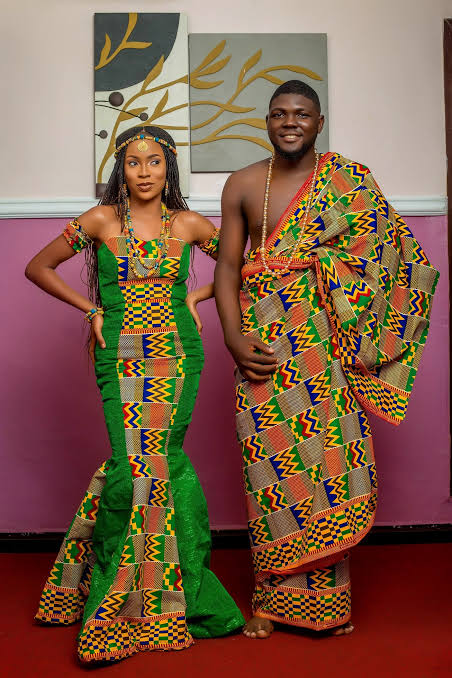
Kente cloth presents this challenge in its most demanding form. Kente is woven in strips and assembled into the full cloth. Each strip has its own internal pattern structure, and the assembled cloth’s visual coherence depends on those strips in a specific sequence. When Kente is cut and resewn as a garment, how the original strip structure is handled in the new construction determines whether the garment reads as a continuation of the cloth’s logic or a disruption of it. This is a different problem from pattern matching in the seam-to-seam sense; it is a structural problem about the relationship between the cloth’s original geometry and the garment’s new geometry.
A heritage textile’s pattern is not decoration applied to a neutral surface. It is part of the cloth’s character and its cultural meaning. Cutting without understanding the repeat is the fastest way to lose both.
Adire cloth, whose pattern is produced by resist-dyeing before the fabric is completed, presents a slightly different problem. The adire pattern is large-scale and not necessarily configured for repeat in the precise horizontal-and-vertical sense of a woven geometric pattern. The cutter’s decision is less about aligning a measurable repeat and more about understanding how the resist pattern’s composition will be affected by where pieces are cut from it. A pattern piece placed at one point in an adire cloth will produce a different visual result on the finished garment than the same piece placed elsewhere. The cutter needs to understand the adire pattern’s composition before deciding where to cut.
The Practical Decision Before the First Cut
Before cutting any patterned textile, the sequence is:
- Identify the pattern repeat. Measure both the vertical and horizontal dimensions of the repeat. Mark them on the fabric with chalk or thread tacks.
- Examine each garment pattern piece. Identify which seams are visible, which pairs of pieces need to meet across a seam, and which part of the design needs to fall in a specific place on the finished garment (a centred motif on a front bodice, for instance, or a continuous horizontal line across a waistband).
- Calculate the fabric requirement correctly. Add at least one full pattern repeat to the yardage for each major piece that needs to match. For a half-drop repeat or an irregular repeat, add more.
- Plan the layout before touching the scissors. Mark each piece’s position on the fabric. Before cutting, check that the match points align across adjacent pieces. Single-layer cutting is recommended.
- Check the match at the seam line, not the raw edge. When pinning seams, fold back the seam allowance to confirm the design meets at the stitching line.
Understanding the textile before cutting it is the same discipline that governs every other decision about a patterned fabric: the garment can only reflect what the cutter understood about the cloth before work began. A fabric whose pattern repeat has been measured, planned and respected in the cutting produces a garment whose seams are invisible in the best sense: the design continues across them as though the garment had always been one piece.
What Gets Lost When the Repeat Is Ignored
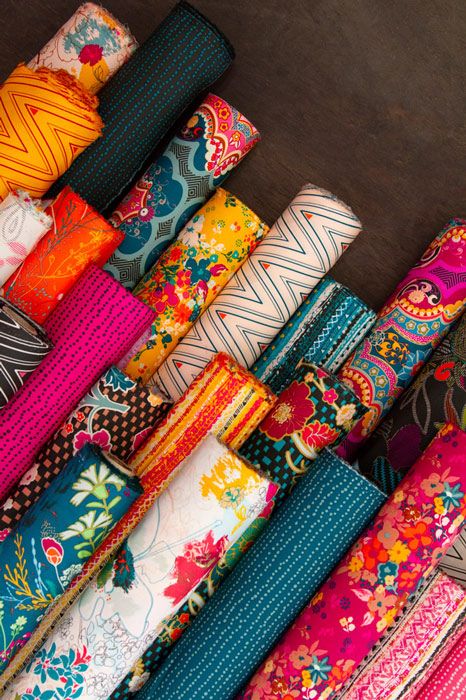
The immediate visible consequence of ignoring the pattern repeat is a seam where the design does not match. On a striped garment,t this shows as stripes that step across the seam rather than continuing. On a geometric fabric, it shows as a design that breaks at the seam rather than completing. On a heritage textile with a strong cultural pattern, it disrupts the visual logic that makes the cloth what it is.
Less immediately visible but equally real is what gets lost in the fabric cutting itself. Heritage textiles like aso-oke are typically bought in limited lengths and are not easily replaced with identical material. A cutter who does not understand the repeat and positions pieces incorrectly wastes sections of fabric that cannot be recovered. The yardage that might have produced a matching section of the garment is used up in offcuts that cannot be repositioned. The problem is not only aesthetic; it is a material loss of something valuable.
Heritage textiles carry knowledge that took time and skill to produce. The pattern in an aso-oke strip, the geometry in a piece of Kente, the composition of an adire resist: these are not incidental features of the cloth. They are what the cloth is. Understanding the pattern repeat before cutting is the minimum respect those materials require.
ALSO READ
- How Adire Cloth Holds Memory, Labour and Place
- Can Heritage Textiles Scale Without Losing Their Meaning?
- Why Embellished Occasionwear Needs a Care Decision, Not a Universal Cleaning Tip
- What Textile Provenance Can – and Cannot – Prove
Frequently Asked Questions
What is a fabric pattern repeat?
A fabric pattern repeat is the distance between one identifiable point in a design and where that design starts again, measured both vertically along the fabric’s length and horizontally across its width. A fabric with a 20cm vertical repeat and a 15cm horizontal repeat means the design restarts every 20cm down the length and every 15cm across the width. Understanding the repeat is essential before cutting, because it determines where each garment piece must be positioned on the fabric to ensure the design meets correctly at seams.
How much extra fabric do I need for pattern matching?
The standard rule is to add at least one full pattern repeat to the fabric requirement for each major garment piece that needs to match. A large pattern repeat can increase the total fabric requirement by 15 to 20 per cent over the plain-garment calculation. For a half-drop repeat or a large irregular repeat, allow more. The additional fabric is not waste: it is the material required to position each piece correctly on the repeat structure.
What is a half-drop repeat?
A half-drop repeat is a pattern structure where each vertical column of the design is offset downward by half the repeat height relative to the adjacent columns. This produces a more dynamic all-over surface than a straight grid repeat. Still, it requires more careful planning when cutting garment pieces that need to match across a seam, because the design doesn’t repeat at a predictable horizontal level across the fabric.
Should I cut patterned fabric on a fold or on a single layer?
Single-layer cutting is recommended for most patterned fabrics. Cutting on a fold or a double layer requires both layers to match the repeat identically, which is harder to verify and harder to control. Single-layer cutting lets you position each piece individually against the fabric surface and check the match before cutting. This takes longer but produces more reliable results, particularly for heritage textiles with strong geometric patterns.
How do I check the pattern match at a seam before sewing?
Before sewing a patterned seam permanently, fold back the seam allowance on one piece to reveal where the stitching line will fall, then place it against the adjacent piece and check that the design aligns at the stitching line rather than the raw edge. The raw edge and the stitching line are in different positions; matching at the raw edge means the design will not meet correctly in the finished seam. Basting the seam before sewing it permanently allows you to check the match from the right side of the fabric.
How does pattern repeat work differently in heritage textiles like aso-oke or Kente?
Heritage woven textiles like aso-oke and Kente have patterns integral to the weave structure, not applied to the surface. The repeat is fixed in the fabric and cannot be adjusted. For aso-oke, this means the cutter must understand the repeat before positioning each piece and cannot compensate for incorrect placement after cutting. For Kente, which is assembled from woven strips, the original strip structure’s relationship to the garment’s new construction is an additional consideration beyond seam-to-seam pattern matching. Both require the cutter to understand the fabric’s pattern before placing the first piece.