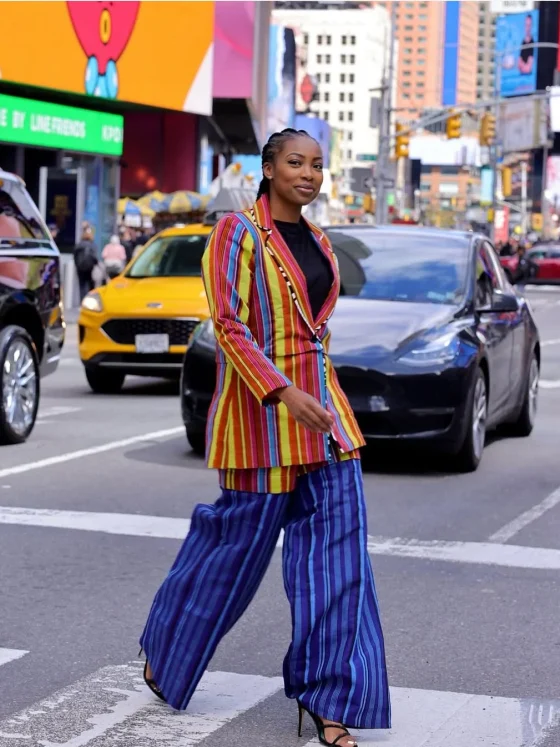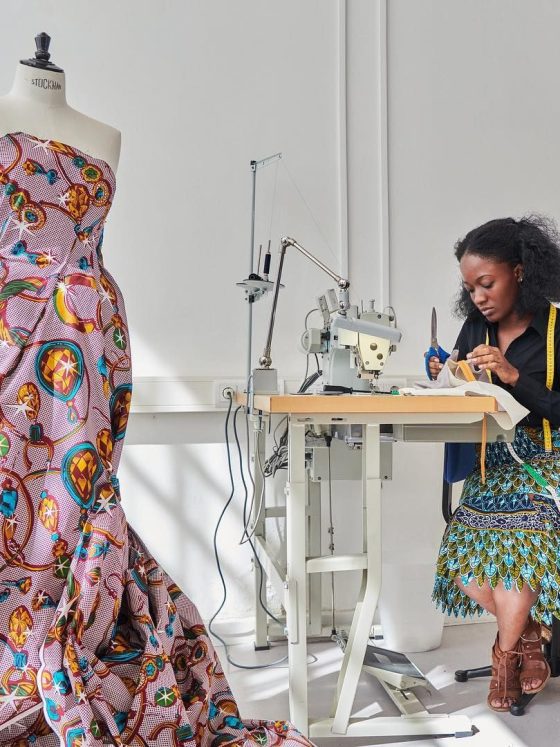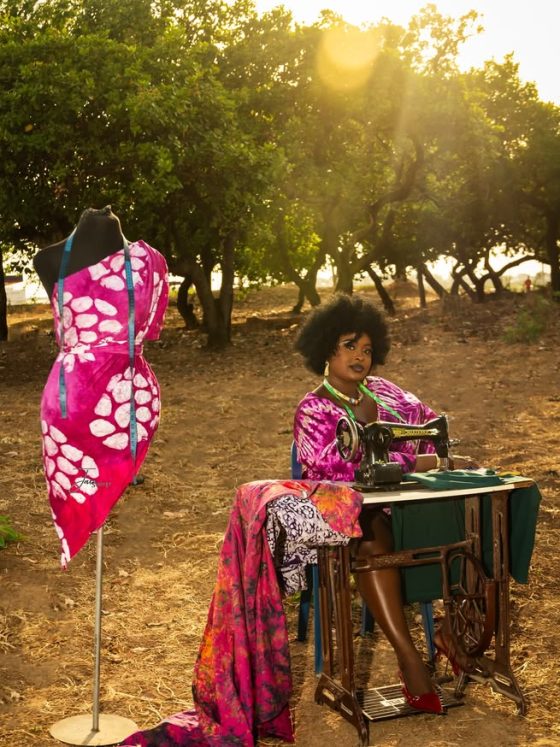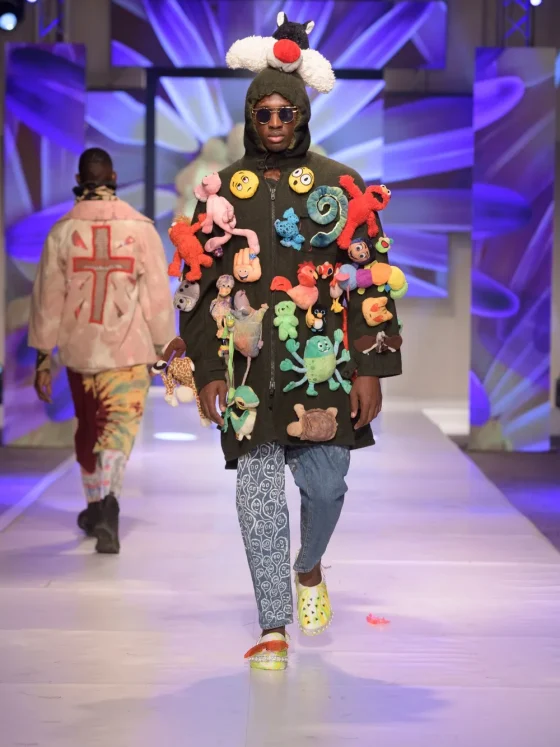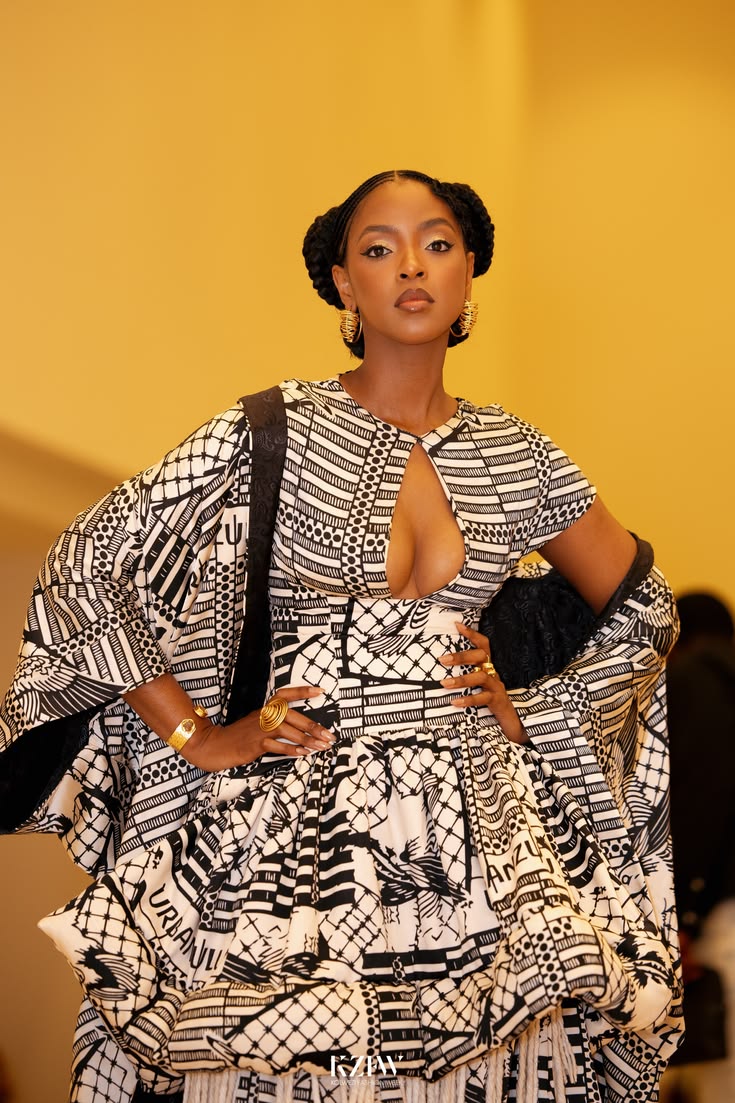
The African fashion market is worth 31 billion dollars. There is a distinction worth making inside that figure, and African fashion has been waiting for someone to make it clearly.
Afrofuturism gets the headlines. The metallic fabrics, the science-fiction silhouettes, the bold declaration that African identity belongs in an imagined tomorrow: it is a powerful aesthetic. But there is another movement running parallel to it, quieter and more commercially immediate, that has been shaping global wardrobes without a name most people can reach for.
That movement is Afromodernism. And it is not the same thing.
Where Afrofuturism projects African identity into speculative futures, Afromodernism builds from what already exists: contemporary tailoring, material intelligence, cultural memory, and an understanding that African design does not need to translate itself into spectacle to be modern. Structure matters. Restraint matters. Precision matters. Heritage is not an accent here. It is the architecture.
Afrofuturism gets the headlines. Afromodernism is building the future from what already exists. Four African designers are defining the language. Here it is.
What Afromodernism Actually Means in Fashion
The term has roots in architecture. When African nations gained independence in the mid-twentieth century, a generation of architects asked a question that was as political as it was aesthetic: why should modernity look European? The answer they built, structures that fused local materials, minimalist forms, and cultural memory, became Afromodernism. It was not a rejection of modernism. It was a correction of it.
That same correction is now happening in fashion, and it is producing some of the most precise and culturally intelligent clothing being made anywhere in the world. The most significant African fashion of the current period is built around craft as a quality signal rather than spectacle as a visibility strategy. Kenneth Ize’s hand-woven aso-oke carries its making on its surface. The weave variation is the luxury marker, not something to be concealed. That is the Afromodernist logic operating in one of its clearest forms.
Afromodernism asks what African dress looks like when it refuses both the noise of maximalism and the erasure of Western minimalism. The answer is some of the most distinctive fashion being produced today.
Afromodernism in fashion is not maximalism. It is not Afrofuturism’s speculative register. It is the use of modernism’s own vocabulary, clean silhouettes, intentional construction, and refined material choices to carry African cultural memory without diluting it. The palette often draws from landscape and natural pigment: Ochre, indigo, rust, deep green. The surface carries evidence of hand. The cut carries knowledge. The result is fashion that feels simultaneously disciplined and warm. Culturally specific and globally legible. Made in Africa, designed for everyone.
Orange Culture, Lagos
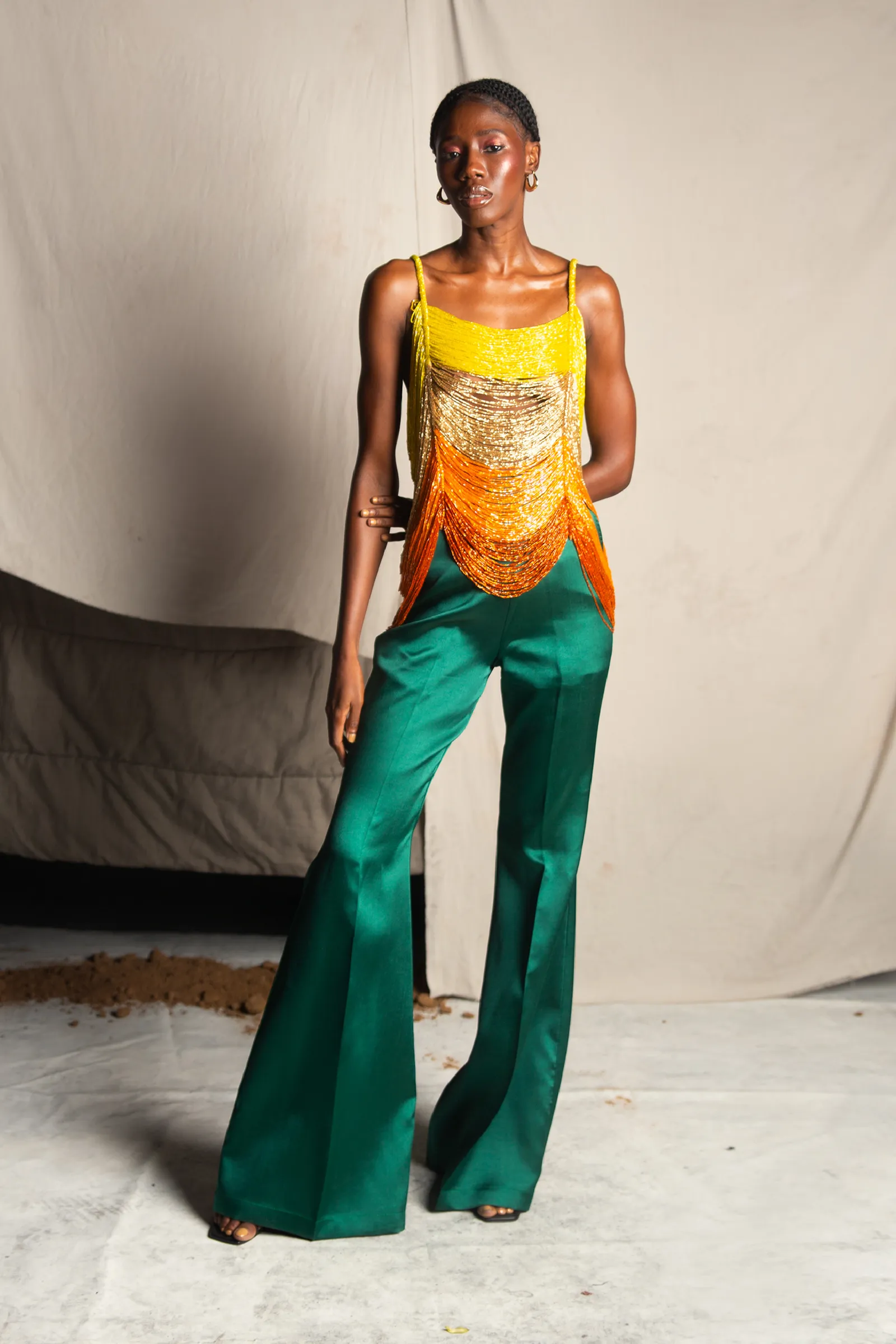
Orange Culture is not a fashion brand with a political agenda. It is a fashion brand with a cultural argument, which is more difficult to make and more durable when made well. Founded in 2010 by Adebayo Oke-Lawal, the Lagos label began by challenging gender norms in Nigerian dress. Over fifteen years, that challenge has deepened into something more architecturally considered: the use of handcraft, beadwork, appliqué, and hand-stitching within silhouettes that read as contemporary on any runway in the world. Orange Culture has shown at New York Fashion Week, debuted at the Victoria and Albert Museum, and earned the distinction of being the first Nigerian designer to be stocked at Selfridges through a collaboration with artist Davido. Oke-Lawal has been inducted into the Business of Fashion BoF 500.
The SS25 collection, The Memory and Ongoing of Home, is the clearest articulation yet of what Orange Culture is building. As the V&A’s documentation of the brand’s Fashion in Motion debut confirms, the collection is inspired by the story of migration and the good and the bad that comes with the journey of trying to create nostalgia, or a piece of home, in a new place. Garlands of flowers, trees and leaves printed across the collection evoke the gardens of Oke-Lawal’s childhood. These are not decorative elements. They are the garment’s structural emotional argument.
This is what separates Orange Culture from brands that use African references decoratively. As Ekinken’s analysis of the brand’s trajectory confirms, Orange Culture is a movement that fearlessly challenges traditional notions of gendered fashion, with the cultural knowledge structural rather than decorative. That is Afromodernism in practice, and it has earned the brand wearers such as Lupita Nyong’o, Dua Lipa, Ncuti Gatwa, and Kelly Rowland on both sides of the Atlantic.
Rich Mnisi, Johannesburg
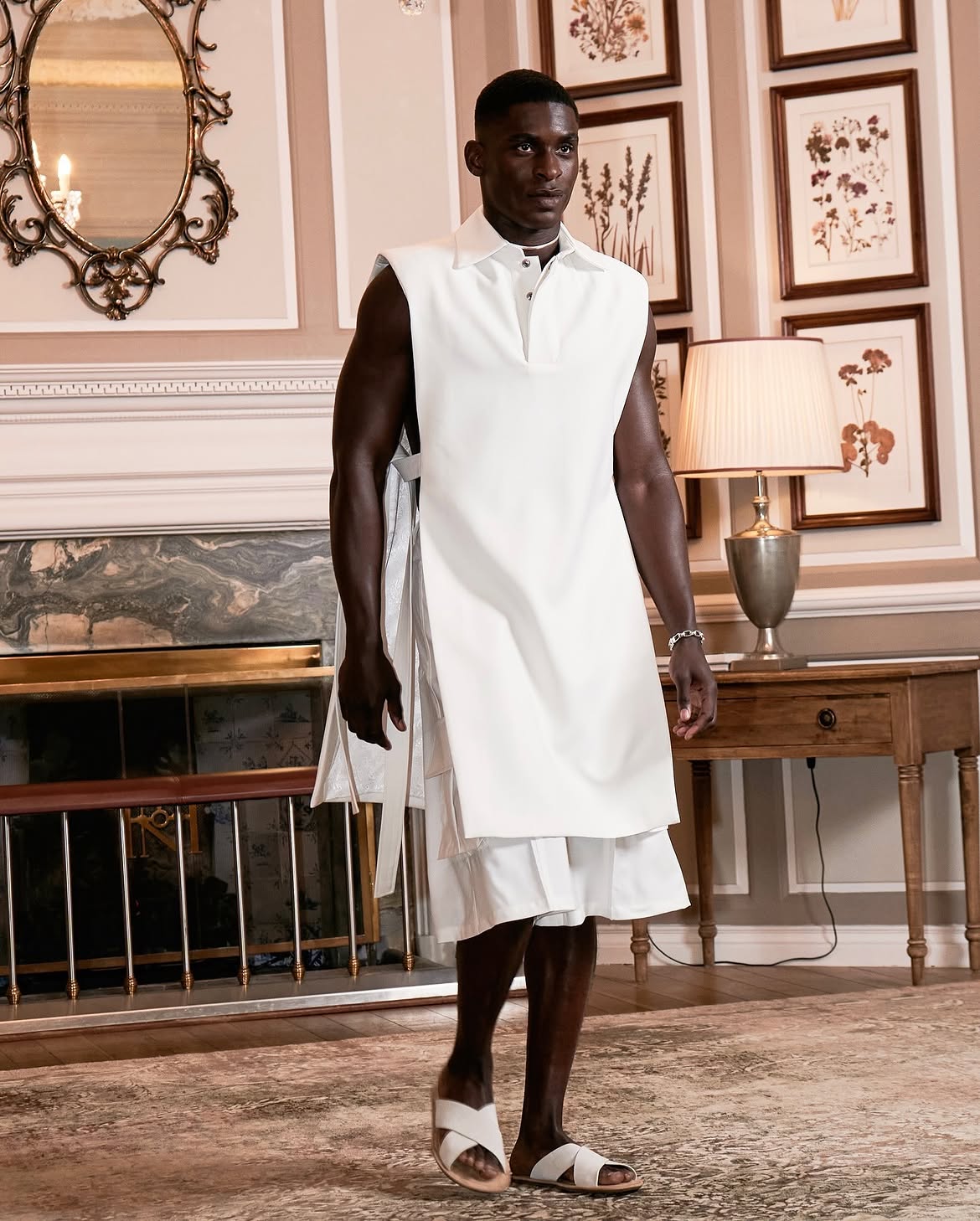
Rich Mnisi makes clothing that functions like a visual argument. His silhouettes are precise, often minimal in surface detail, and entirely illegible without understanding the cultural knowledge embedded in their construction. Born in Acornhoek in Limpopo and based in Johannesburg, Mnisi draws from Tsonga heritage, urban South African identity, and the grammar of contemporary tailoring simultaneously. Rich Mnisi was founded in 2015 as a contemporary and multidisciplinary brand rooted in Mnisi’s desire to establish a deeper connection with his Tsonga culture and heritage through art.
In June 2024, he won the Best Designer Africa award at the fourth edition of Africa Fashion Up, held at the Musée du Quai Branly in Paris during Haute Couture Week. As Africa Fashion Up’s documentation of the 2024 edition confirms, the jury comprised Balenciaga, HEC Paris, and Galeries Lafayette. The award came from 220 applications. Mnisi was selected not because his work was exotic or surprising to a Western audience, but because it was excellent on terms that any serious fashion audience could assess. His practice has since expanded beyond clothing into furniture design, exhibited internationally through Southern Guild. That expansion is itself an Afromodernist move: design as cultural argument, applied across disciplines.
Labrum London, Freetown and London
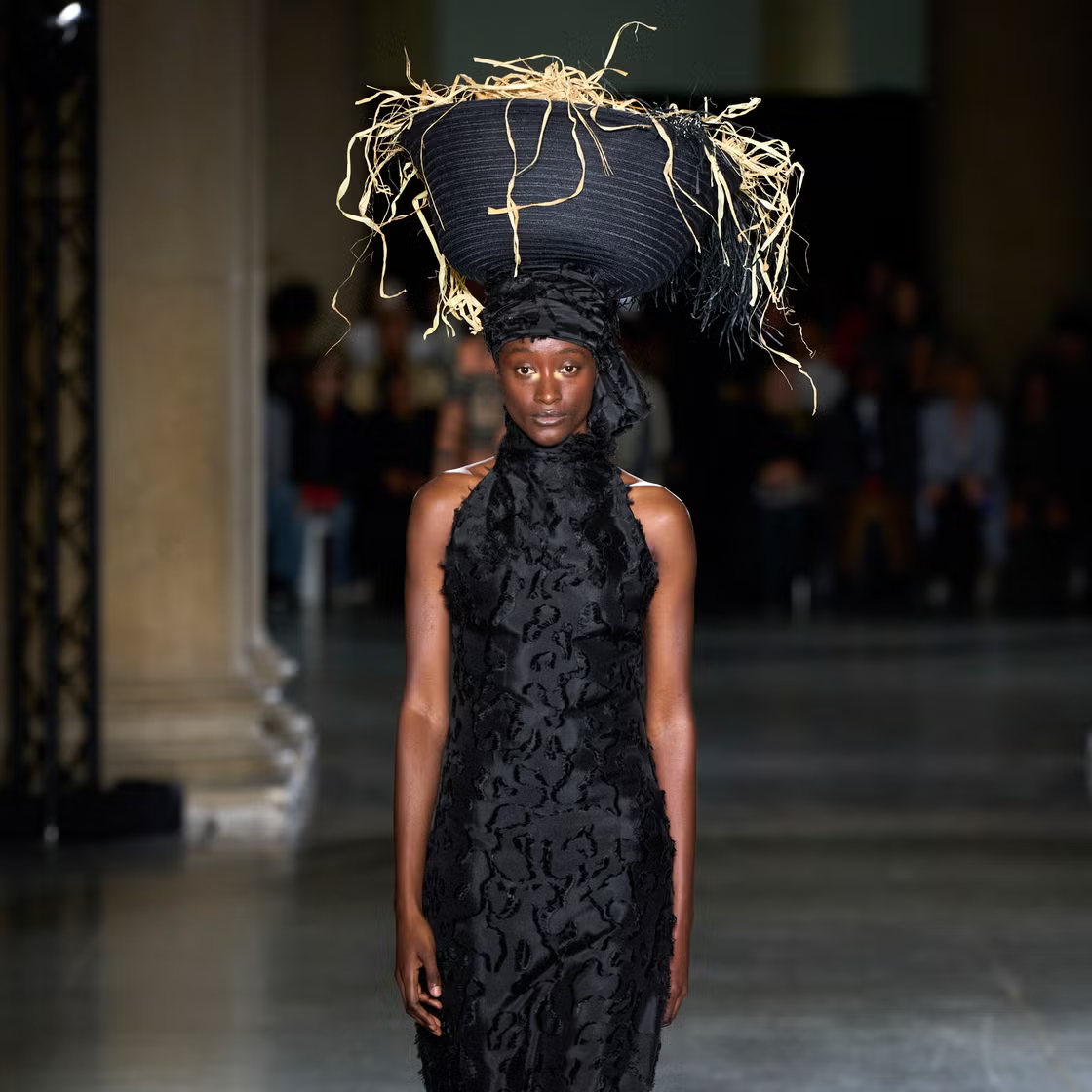
Labrum London was founded by Foday Dumbuya with a mandate that is both editorial and sartorial: to tell the untold stories of West Africa through menswear. Labrum London was founded in 2014. The design language is architectural: British tailoring is the structure, West African cultural heritage is the content that fills that structure. The collision does not produce diluted fusion. It produces menswear that carries two distinct cultural histories in a single garment without flattening either.
2024 was a landmark year. Labrum designed the Arsenal 2024/25 away kit in collaboration with Adidas, making Dumbuya the first-ever independent designer to create an on-field kit for a Premier League team. As Business of Fashion’s reporting on the collaboration confirms, the jersey carries red, black, and green, the colours of the Pan-African flag, alongside Labrum’s signature zig-zag pattern, a reference to the concept of migration that runs through Dumbuya’s work. The Nomoli icon, a symbol of protection and prosperity from the Mende and Kissi tribes of Sierra Leone, appears throughout the collection. In September 2024, a full London Fashion Week SS25 show followed at the Emirates Stadium, the first runway show ever held pitch-side at a Premier League ground.
What Dumbuya is doing is precisely what Afromodernism demands: using modernism’s own structural tools, the suit, the jacket, the tailored trouser, as vehicles for cultural memory rather than cultural erasure. The stories of West Africa do not need a speculative frame to be compelling. They need a precise enough garment to carry them.
Lani Label, Accra
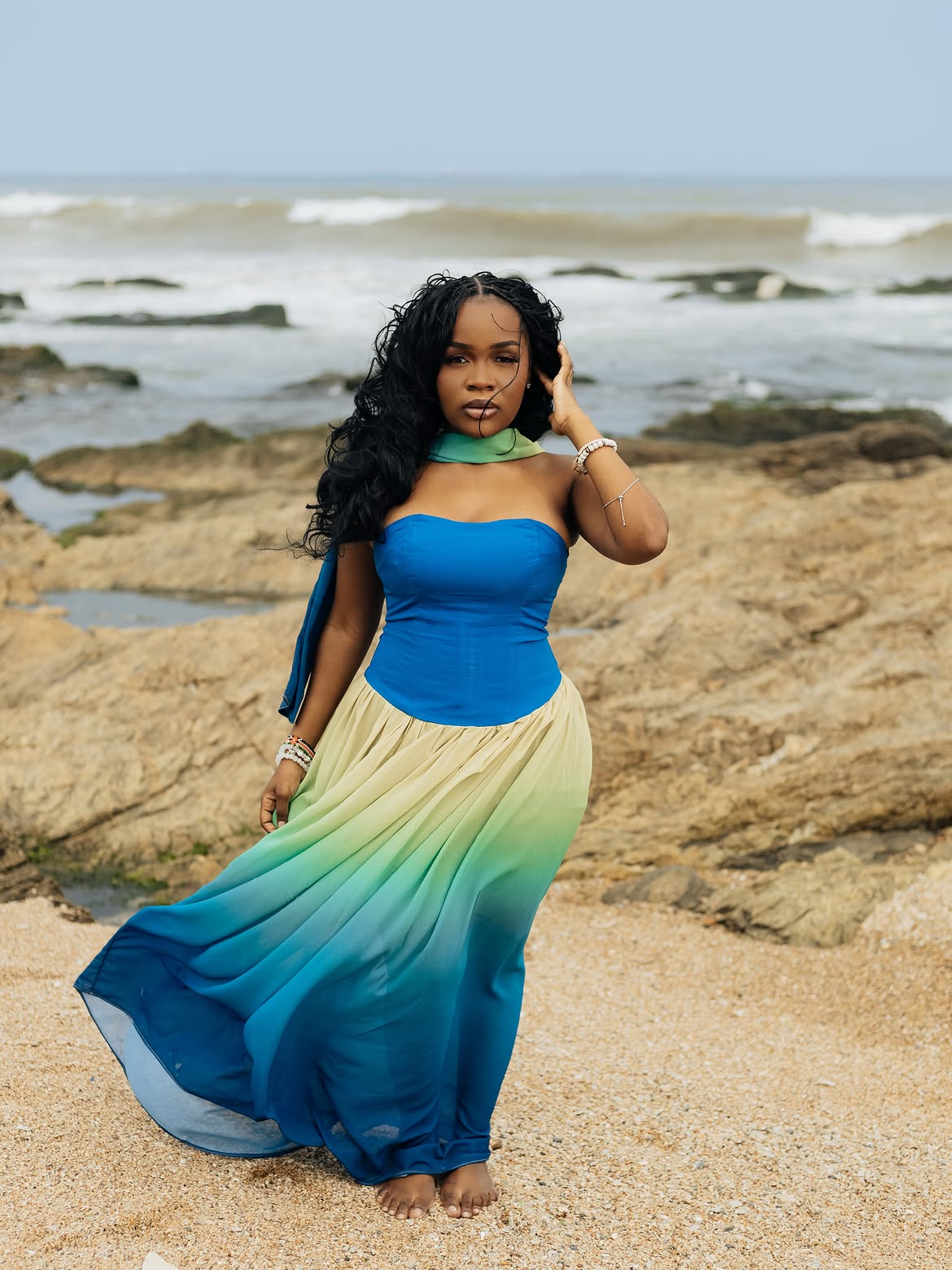
Lani Label is the piece of this argument that makes it complete. The Accra-based womenswear brand, which produces and ships internationally from Ghana, has built its identity on a principle that is indistinguishable in its intellectual foundation from what Orange Culture, Rich Mnisi, and Labrum London are doing on much larger stages: every collection begins with a custom print and a colour story that does not exist anywhere else. Lani Label does not outsource its visual identity to existing design systems. The prints are originated. The colour stories are authored. The silhouettes are constructed from a specific understanding of the women being dressed.
This is what Afromodernism looks like at the smallest and most rigorous scale. Full authorial control over every stage of the creative process, from print design to construction to final image, is not a limitation of scale. It is the condition of the work’s integrity. Afromodernism does not require institutional validation or global reach to be real. It is a sensibility before it is a category.
Why This Matters Now
African fashion has spent years making the case for a seat at the table of global luxury. That argument has largely been won. Lagos, Accra, Johannesburg, and Kigali are not peripheral stops on the way to Paris or Milan. They are fashion centres with their own logic, their own audiences, and their own idea of what fashion power looks like.
The more interesting argument is not about access to the table. It is about what African designers are bringing to it that nobody else can.
Afromodernism is one answer. It is a design language rooted in cultural knowledge that functions as structural logic rather than surface decoration. The Lagos Fashion Week SS26 season produced denim work in which the construction logic, the patch seams, the visible joins, the deliberate juxtapositions, were the aesthetic argument rather than decoration applied to a commercial form. That is the same Afromodernist instinct working in a different material.
Afromodernism is commercially viable without being compromised. Orange Culture in Selfridges. Rich Mnisi at Balenciaga’s invitation in Paris. Labrum London’s kit worn by Bukayo Saka on a Premier League pitch. Lani Label shipping to international customers from Accra. These are not niche cultural propositions. They are commercial facts. The aesthetic that nobody has named yet is already changing what people wear.
The Omiren Argument
Afromodernism is the design correction that African fashion has been making for years without a name for it. Four brands, Orange Culture in Lagos, Rich Mnisi in Johannesburg, Labrum London in Freetown and London, and Lani Label in Accra, are working with the same underlying intelligence: that African cultural knowledge is most powerful as structural design logic rather than as surface decoration. The African fashion market is worth 31 billion dollars. Afromodernism is one of its most commercially durable and intellectually coherent contributions: globally legible without being culturally anonymous, disciplined in form without being cold, and rooted in cultural specificity that cannot be replicated because it cannot be purchased separately from the communities that produced it. The aesthetic that nobody has named yet is the one already in the wardrobes of Lupita Nyong’o, Dua Lipa, Ncuti Gatwa, and Bukayo Saka. Omiren Styles names it now.
Also Read
- Imperfection as Intention: Why Undone Dressing Defines 2026 High Fashion
- African Deconstructed Denim Movement: What Lagos, Accra, and Johannesburg Built From a Western Fabric
- The African Cities That Will Define Global Fashion by 2030
Frequently Asked Questions
What is Afromodernism in fashion?
Afromodernism in fashion is a design approach that uses the vocabulary of contemporary modernism- clean silhouettes, disciplined construction, refined material choices- to carry African cultural memory as structural logic rather than surface decoration. The term has roots in post-independence African architecture, where a generation of designers asked why modernity had to look European and built their own answer using local materials and cultural intelligence. In fashion, Afromodernism produces garments that are globally legible without being culturally anonymous, warm without being loud, and disciplined without being cold.
How is Afromodernism different from Afrofuturism?
Afrofuturism projects African identity into speculative futures using science-fiction aesthetics, metallic fabrics, and fantastical imagery. Afromodernism builds from the present, using contemporary tailoring, material intelligence, and cultural memory without requiring a speculative or futuristic frame. Afrofuturism is about imagining where African identity could go. Afromodernism is about demonstrating what African identity already is, through formal precision and cultural knowledge embedded in design structure.
What is Orange Culture and why does it represent Afromodernism?
Orange Culture is a Lagos-based fashion brand founded in 2010 by Adebayo Oke-Lawal. It began by challenging gender norms in Nigerian dress and developed over fifteen years into a label that uses handcraft, beadwork, appliqué, and hand-stitching within contemporary silhouettes. The SS25 collection, The Memory and Ongoing of Home, drew from the experience of migration and the attempt to recreate nostalgia in a new place, turning personal and cultural memory into structural design logic. Orange Culture represents Afromodernism because its cultural references shape the garment’s form, not decoration applied to a neutral shape.
Who won Best Designer at Africa Fashion Up 2024?
Rich Mnisi, the Johannesburg-based designer born in Acornhoek, Limpopo, won the Best Designer Africa award at the fourth edition of Africa Fashion Up in Paris on June 26, 2024, at the Musée du Quai Branly during Haute Couture Week. The jury comprised Balenciaga, HEC Paris, and Galeries Lafayette, selecting from 220 international applications. Mnisi’s practice is rooted in Tsonga heritage and South African identity, expressed through contemporary tailoring and formally minimal silhouettes that carry substantial cultural knowledge.
What is Labrum London and what did the Arsenal collaboration involve?
Labrum London is a menswear brand founded by Sierra Leonean-born designer Foday Dumbuya in London in 2014. It uses British tailoring as its structural base while filling that structure with West African cultural narrative and heritage. In 2024, Labrum designed the Arsenal 2024/25 away kit in collaboration with Adidas, making Dumbuya the first independent designer to create an on-field kit for a Premier League team. The kit features Pan-African colours of red, black, and green, Labrum’s signature zig-zag migration pattern, and the Nomoli icon, a symbol of protection from Sierra Leone’s Mende and Kissi tribes.
Explore More
Read the full Fashion > Opinion section for Omiren Styles’ analysis of African fashion movements, design languages, and the arguments that African creative communities are making through the clothes they produce.