Most fabric sourcing advice for African fashion designers stops at a list of market names. That is not a sourcing guide. It is a tourism note. A designer entering Balogun Market for the first time without knowing the difference between Oke-Arin and the outer stalls, without understanding what Vlisco wax versus Chinese wax print means for their price point and positioning, without knowing which traders hold aso-oke from Oyo versus Lagos-produced alternatives, is not sourcing. They are shopping. This guide is for designers who need to source professionally: with cost control, quality verification, cultural understanding, and a supply relationship that endures beyond a single trip.
The African fabric market landscape is not uniform. Each major market serves a different tier of the supply chain, stocks different textile traditions, and operates on different commercial terms. As Omiren Styles has documented in its analysis of the Ankara value chain, the premium wax print market is dominated by Vlisco Group brands at $20 to $50 per six-yard piece. At the same time, Chinese-manufactured African-print fabric occupies the mass-market tier at $3 to $7 per six-yard piece. Both are available in most major African fabric markets. Knowing what you are buying and why is foundational.
The practical guide for fashion designers sourcing fabric wholesale from African markets: Balogun, Marche HLM, Grand Marche Lome, Makola, and verified cooperative networks.
West Africa: The Major Markets
Balogun Market, Lagos Island, Nigeria
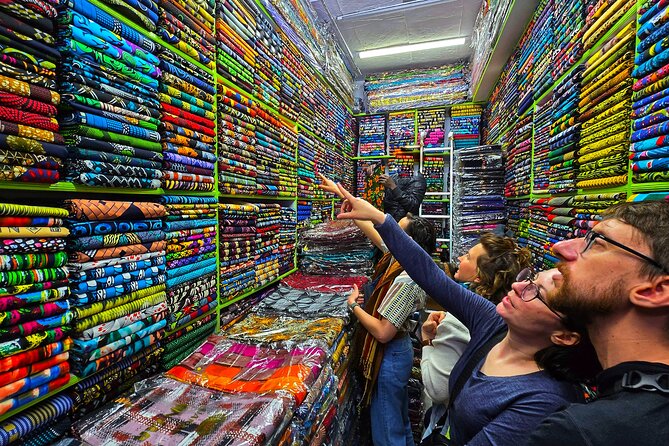
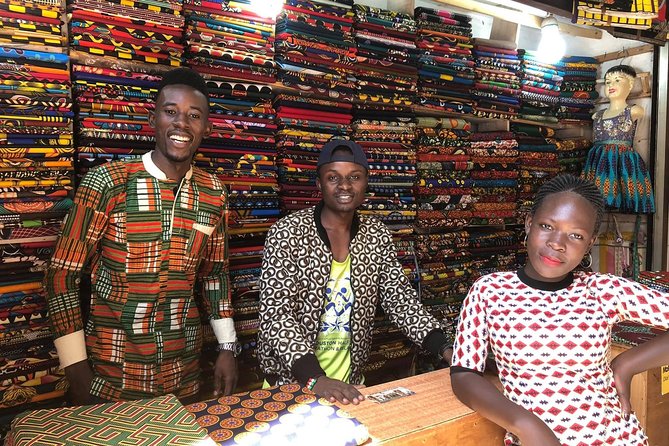
Balogun Market on Lagos Island is the largest fabric wholesale market in West Africa in terms of volume and variety. The market is organised into specialist sections that are not always visible from the main entrance. The outer stalls concentrate on everyday Ankara, Chinese wax print, and ready-made garments for the mass market. The serious wholesale fabric trade operates deeper in Oke-Arin and the adjacent streets behind the main Balogun complex are where aso-oke weavers from Oyo deliver work to Lagos traders, where Hollandais Dutch wax Vlisco is sold in bales, and where lace importers operate through resident agents. Budget: aso-oke from approximately NGN 15,000 to NGN 80,000 per set; George fabric from NGN 25,000 to NGN 150,000 depending on quality grade; Dutch wax Vlisco from NGN 20,000 to NGN 50,000 per six-yard piece at mid-2025 rates. Practical: arrive before 10 am on weekdays. Build a relationship with one anchor trader before attempting to source across multiple stalls.
Marche HLM and the Medina District, Dakar, Senegal
Marche HLM in the HLM district of Dakar is the professional supply infrastructure for Senegal’s fashion and tailoring economy. As Omiren Styles has documented, the market stocks bazin riche, Dutch and Chinese wax print, organza, lace, brocade, and tailoring notions at wholesale prices. Bazin riche at quality end runs approximately XOF 40,000 to XOF 80,000 per two-metre panel; Chinese wax approximately XOF 3,000 to XOF 8,000 per six-yard piece. Practical: French or Wolof, or a locally based sourcing agent, is strongly recommended. Most professional wholesale traders do not maintain English-language price lists.
Grand Marché de Lomé (Assigame), Lomé, Togo
The Grand Marche de Lome, also known as Assigame, is the textile wholesale hub for the entire West and Central African region. As Omiren Styles has documented in its full analysis of the Grand Marche, Vlisco Hollandais retails at approximately XOF 50,000 per six-yard piece. In contrast, Chinese wax retails at approximately XOF 9,000 per six-yard piece. By 2019, researchers from the University of Manchester and the University of Edinburgh estimated that 90% of African-print textile imports through the port of Lome came from China. Lome’s port access makes it the fastest import route for fabric entering West Africa from China. Practical: the market is French-speaking. A sourcing agent based in Lome is worth the cost for a first visit.
Makola Market, Accra, Ghana
Makola Market in central Accra is the primary textile wholesale market in Ghana and the best single source for kente, GTP and Akosombo Textiles Limited wax print, and adinkra-stamped cloth. GTP, a Vlisco subsidiary manufacturing on the African continent, produces fabric sourced at the manufacturer’s recommended retail price through authorised Makola traders. Budget: GTP wax print at approximately GHS 150 to GHS 300 per six-yard piece at 2025 rates; kente strip cloth from GHS 200 to GHS 1,200; adinkra cloth from GHS 80 to GHS 400. The 2025 Kente Geographical Indication registration means designs sourced from identified Asante or Ewe weaving communities carry documented cultural provenance, which is commercially valuable for designers building international collections.
East and North Africa: Key Sourcing Locations
Kariakoo Market, Dar es Salaam, Tanzania
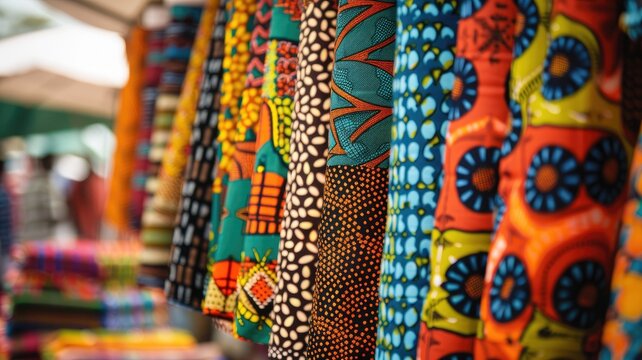
Kariakoo in Dar es Salaam is the primary East African wholesale textile market, stocking kitenge, kanga, and kikoi across the full range of quality and price. Budget: kitenge at approximately TZS 8,000 to TZS 25,000 per two-yard piece; kanga pairs at TZS 5,000 to TZS 15,000; kikoi at TZS 10,000 to TZS 30,000 per piece, depending on construction and origin. A local contact or agent is useful for a first wholesale buying trip.
Shiro Meda and Merkato, Addis Ababa, Ethiopia
Shiro Meda market, rather than the main Merkato complex, is where artisan weavers in Addis Ababa sell handwoven shema and telet fabric direct to buyers. Ethiopian handwoven textiles are produced by artisan cooperatives and individual weavers concentrated in Addis Ababa, Gondar, and Lalibela. Budget: handwoven shema at approximately ETB 200 to ETB 800 per metre; telet silk at ETB 500 to ETB 2,000. For volume commercial textile sourcing, Casablanca’s Derb Omar district is better suited than Marrakesh’s Medina souks.
Marrakesh Medina and Casablanca Derb Omar, Morocco
The Marrakesh Medina’s Souk des Teinturiers and Souk des Tisserands are the primary sourcing locations for Moroccan artisan textiles: handwoven wool and cotton djellaba fabric, natural-dyed materials, and embroidered cotton used in traditional Moroccan dress. Sourcing here is relationship-dependent, with negotiated rather than fixed prices. For volume commercial textile sourcing, Casablanca’s Derb Omar district is the professional alternative.
Textile Cooperatives: Sourcing With Provenance
For designers whose work depends on documented cultural provenance, verifiable artisan sourcing, or the craft-collaboration narrative that supports both marketing and supply-chain ethics, textile cooperatives are the appropriate route. The Groupe Bogolan Kasobane in Mali, a group of six Malian artists who have collaborated since 1978 on fine-art bogolanfini production using vegetable dyes and traditional mud, represents the fine-art end of the cooperative model. As Omiren Styles has documented, the distinction between this kind of sourcing and the commercial reproduction of bogolan patterns lies in the difference between working with a knowledge system and extracting from it.
The Akwete weavers of Abia State, Nigeria, produce handwoven cloth, documented by Emmy Kasbit’s Emmanuel Okoro, as a community whose production nearly ended due to a collapse in demand before direct designer commissioning revived it. Lead times: four to eight weeks for a production run. Budget: handwoven Akwete at approximately NGN 20,000 to NGN 80,000 per piece. The Ewe kente communities of the Volta Region of Ghana and the Kpalime and Atakpame communities in Togo produce strip-woven kente in documented traditional patterns. The 2025 Kente GI registration verifies sourcing from verified producer communities, which provide provenance documentation for use in brand communications.
What to Know Before You Source
Dutch wax versus Chinese wax versus locally produced wax:
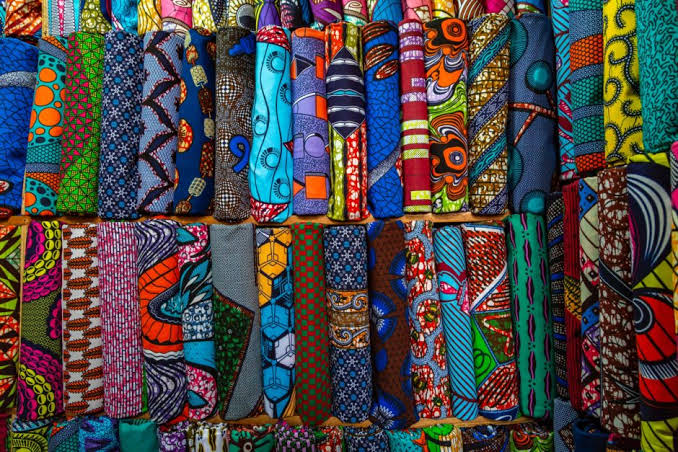
Vlisco Wax Hollandais in the premium tier uses a resin wax process, producing distinctive crackle lines and a specific hand feel that experienced buyers identify at a glance. GTP and Uniwax African-produced wax use the same process at lower price points. Chinese faux wax uses a rotary screen-printing process, producing a visually similar but materially different result. As Omiren Styles’ Ankara value chain analysis establishes, for designs where fabric physical properties matter to garment performance, the tier distinction is functional, not just cultural.
Handwoven versus machine-woven:
Handwoven textiles produced on narrow-band looms, including kente, aso-oke, Akwete, and most artisan cooperative output, are produced in strips, typically four to six inches wide, and sewn together to achieve full fabric width. Slight variations in width and colour consistency are characteristic of the tradition. Machine-woven textiles, including bazin riche, most commercial ankara, and industrially produced kitenge, are produced at consistent widths. Both have legitimate design applications.
Lead times and MOQs:
Commercial wholesale markets operate on immediate or very short lead times. Artisan cooperative sourcing typically takes 4 to 12 weeks, depending on production complexity. Most market traders sell from one six-yard piece upward; cooperatives typically require a minimum commission equivalent to ten to twenty pieces for handwoven cloth.
Currency and payment:
Cash in local currency is the default at all African fabric markets. Card payments are accepted at premium boutiques but not at most wholesale stalls. Mobile money is preferred in Nairobi and Dar es Salaam. For large wholesale orders in Lagos, Dakar, and Accra, local bank transfer is preferred by professional traders.
The Omiren Argument
African fabric markets are not tourist attractions. They are a professional infrastructure. A designer who sources from Balogun, Marche HLM, or the Grand Marche de Lome without understanding the market’s commercial structure, quality tiers, and sourcing relationships is moving through that infrastructure without connecting to it. The commercial relationship with a fabric trader, built over multiple visits and consistent orders, provides a designer with price stability, early access to new stock, and the quality-grading knowledge that only comes from seeing the same trader’s entire inventory across several seasons.
For designers whose work depends on cultural provenance, the cooperative sourcing route is not supplementary. It is the primary route. As Omiren Styles has argued in their analysis of African designers and global luxury contracts, the commercial relationship between a designer and their material sources is where the ethical argument of African fashion is made or lost. Sourcing correctly is not a value choice made separately from business decisions. It is a business decision.
Know the market. Know the fabric. Know the relationship. Everything else in African fashion sourcing follows from those three.
ALSO READ
- The Ankara Economy: Who Is Actually Capturing the Value?
- Grand Marche de Lome: The Fashion Infrastructure at the Centre of West Africa’s Textile Trade
- Dakar Fashion Week, Marche HLM, and the Three Economies That Make Senegal a Fashion Capital
- How to Shop African Fashion: The Complete Guide for the Culturally Literate Consumer
Frequently Asked Questions
What is the largest fabric wholesale market in West Africa?
Balogun Market on Lagos Island, Nigeria, is the largest fabric wholesale market in West Africa in terms of volume and variety. Its specialist sections include aso-oke from Oyo-based weavers, Dutch wax Vlisco, George fabric, lace, and mass-market Chinese wax print. The professional wholesale trade is concentrated in the Oke-Arin section behind the main market complex. Market visitors should arrive before 10 am on weekdays for the best access to professional wholesale traders.
What is the difference between Dutch wax and Chinese wax print?
Vlisco Wax Hollandais uses a resin wax process, producing distinctive crackle lines and a specific hand feel, and retails for approximately $20 to $50 per six-yard piece. Chinese-manufactured faux wax uses a rotary screen-printing process, producing a visually similar but materially different result, and retails for $3 to $7 per six-yard piece. As Omiren Styles has documented, the majority of African-print textile imports entering West Africa through Lome now come from China. Both tiers have legitimate design applications.
How do textile cooperatives work for fashion designers?
Textile cooperatives connect designers directly to artisan production communities rather than through wholesale intermediaries. Lead times are typically four to twelve weeks. Cooperatives are the appropriate sourcing route for designers whose value proposition depends on verified cultural provenance, documented artisan relationships, or supply chain ethics. Examples include the Akwete weaving communities of Abia State, Nigeria; Ewe kente communities of the Volta Region, Ghana; and Ethiopian handwoven shema cooperatives in Shiro Meda, Addis Ababa.
Which African fabric market is best for East African textiles?
Kariakoo Market in Dar es Salaam, Tanzania, is the primary wholesale market for East African textiles, including kitenge, kanga, and kikoi. For artisan-produced Ethiopian textiles, the Shiro Meda district in Addis Ababa provides direct artisan sourcing outside the main Merkato complex.
What payment methods are accepted at African fabric markets?
Cash in local currency is the default at all African fabric markets. Mobile money is preferred in Nairobi and Dar es Salaam. For large wholesale orders in Lagos, Dakar, and Accra, local bank transfer is preferred by professional traders. Bring local currency and have a budget by fabric category before entering the market.