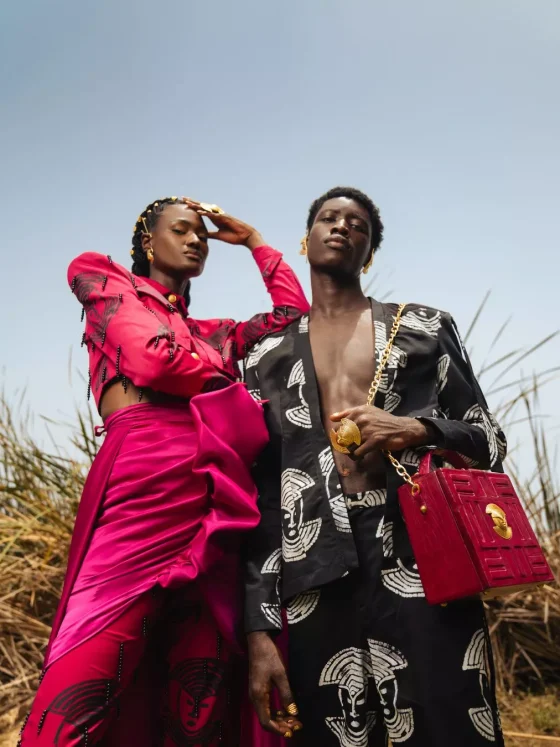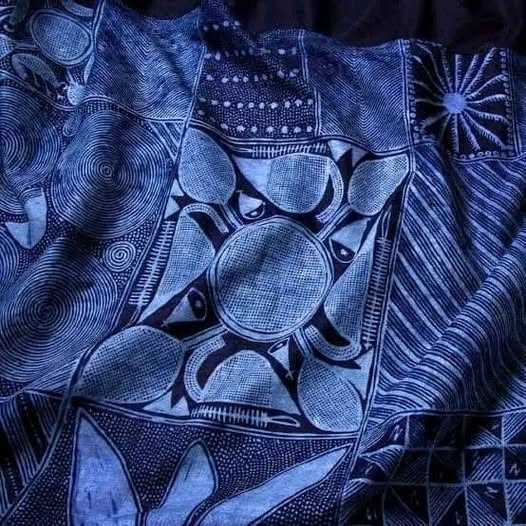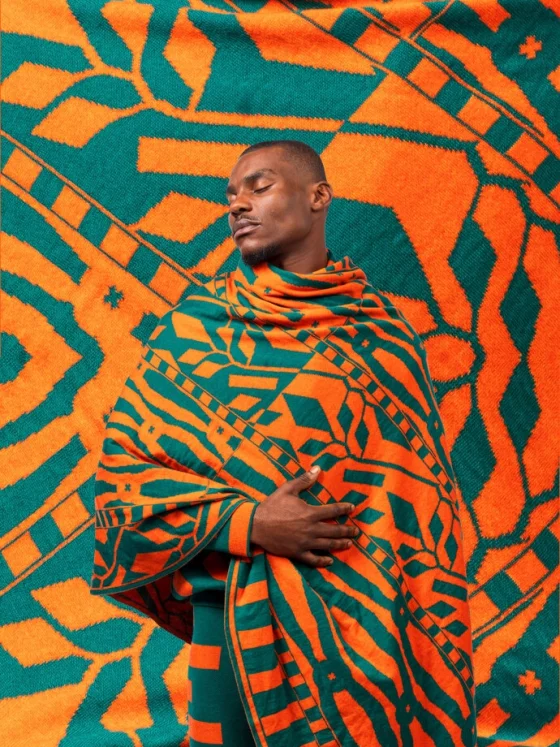


Seventy-five creations appeared at the first La Nuit du Kanvo et de l’Indigo in Cotonou on 18 July 2026. The Government of Benin’s report on the evening records fifteen designers and thirty professional models at the government-backed presentation, which positioned Beninese textiles under the theme of avant-garde heritage, luxury, modernity and African identity. Behind the runway lay a question less easily staged: how can textile knowledge become a continuing source of products, work and customers?
Benin indigo activity offers several answers. Couleur Indigo combines textile production with design, visitor experiences and teaching. Indigo enters contemporary clothing through labels such as Atelier V.O. Public institutions seek to connect craft with wider markets. Here, “revival” describes these documented efforts to renew uses, transmission and public presence, not a measured national increase in output. The story is how these activities connect, rather than whether blue cloth has become fashionable again.
The stakes are economic as well as cultural. UNESCO’s 2023 report on the fashion sector in Africa put the market value of clothing and footwear in sub-Saharan Africa at US$31 billion in 2020. Within that $31 billion African fashion market, Beninese textiles compete for attention and for buyers, and the question is whether indigo can hold a share of that value at home.
Explore how natural indigo dyeing, textile design, visitor workshops and public promotion are shaping Benin’s efforts to reach new fashion markets.
Indigo Is a Process, Not a Fabric Structure
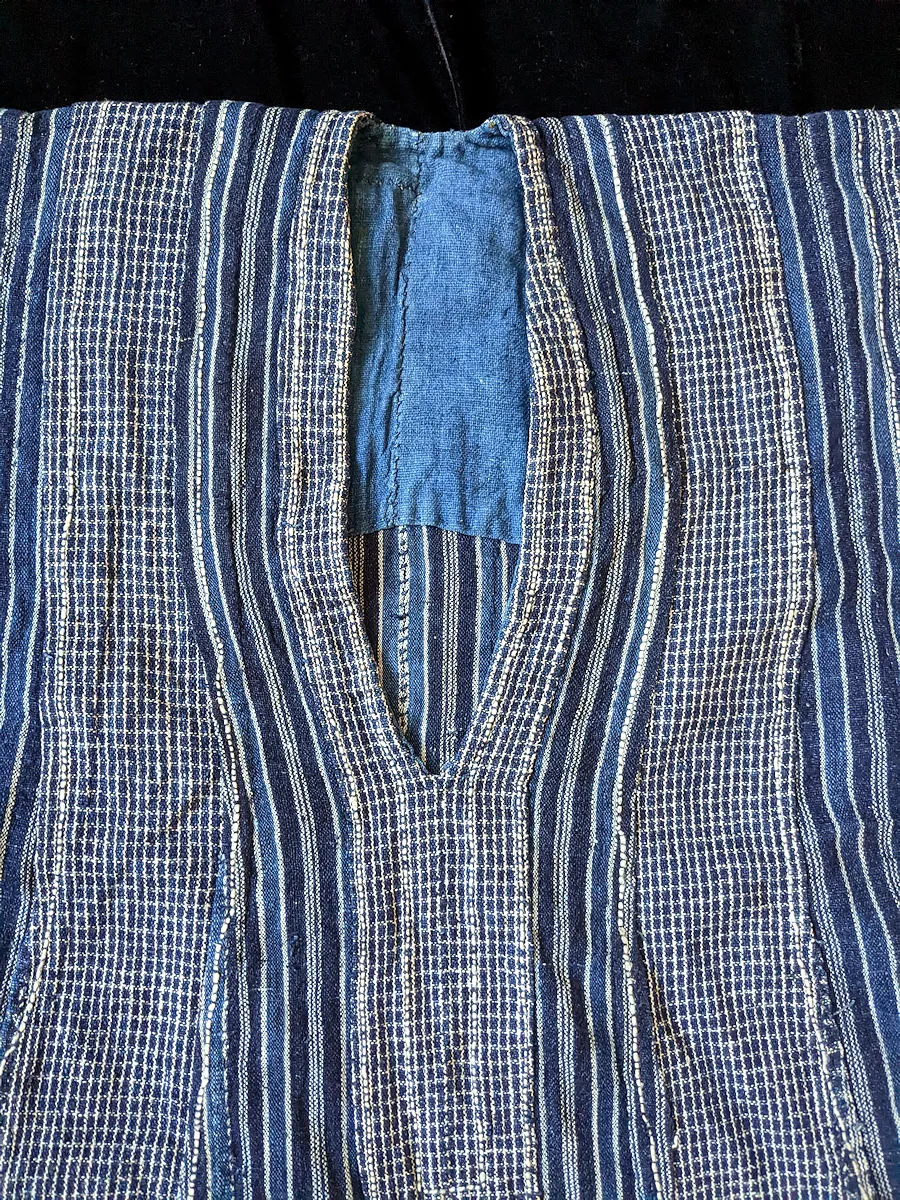
Indigo and kanvô frequently appear together in textile promotion, but they describe different things. Kanvô is woven cloth; indigo concerns dye and colouration. Weaving constructs the textile, while dyeing changes the colour of yarn or fabric. They are not competing categories.
The Victoria and Albert Museum’s explanation of indigo dyeing in Indian textiles describes natural indigo derived from shrubs in the Indigofera family. It notes that indigo bonds to fabric without a mordant, yet still requires expertise to prepare and use. The museum’s account of Yoruba àdìrẹ explains that dyers ferment imported indigo grains or locally grown leaves, mix them with water softened with caustic soda, and use tying, folding, stitching or starch to stop selected areas from absorbing dye. Those Nigerian and Indian examples explain a principle; they should not be treated as documentation of every Beninese workshop’s methods.
Omiren Styles’ guide to kente, kanga and adire provides further context on how West African resist-dye traditions developed as distinct practices. Keeping weaving and dyeing distinct makes their practitioners’ contributions easier to recognise.
Couleur Indigo Connects Knowledge With Products
Nadia Adanlé’s Couleur Indigo provides a sustained organisational model. The Biennale de Dakar’s profile of the collective dates the enterprise’s creation in Cotonou to 2007, its development in Burkina Faso to 2011 and its current location to Ouidah. It describes an approach that extends from dye-plant cultivation to dyeing, design, commercialisation, and textile-waste recycling.
The significance lies in the connections between stages. A dye plant must be transformed before it can colour cloth; dyed cloth needs an intended use; a finished product needs a way to reach someone. Bringing these activities into one enterprise gives textile knowledge several possible applications rather than making it dependent on a single collection.
That does not make the practice self-contained. Its development across Benin and Burkina Faso places it within a regional history of exchange. The enterprise’s continuity comes through adaptation and relationships, not isolation.
This is the business-level connection within the wider story of cotton and Beninese fashion identity: material becomes a usable product through linked decisions by growers, textile makers and designers. Couleur Indigo’s nineteenth collection, “Apusomɛ,” presented in October 2026, shows the same enterprise continuing to develop new patterns from that base.
Teaching Offers Another Encounter With Cloth
At Indigo Village in Ouidah, textile production also becomes a visitor experience. Africanews has described a setting that presents the process from raw-material preparation and dyeing to finished textiles and products, and that promotes cultural and artistic tourism in the town.
Couleur Indigo’s current service offer includes immersive guided visits explaining natural indigo dyeing and participatory workshops in which visitors personalise clothing. Its product categories include clothing, fabrics, accessories, home goods, and recycled items, while its wider hospitality offer includes food, accommodation, and activities on Lake Toho.
These activities create different entry points. Someone may encounter indigo through a visit rather than a fashion shop, or through an existing garment they want personalised rather than a new purchase. The offer connects learning with potential uses of the material.
That is commercially relevant without requiring an unsupported claim about revenue. Teaching is an advertised service; personalisation is another. Both allow the enterprise to present its expertise directly, alongside finished objects.
Transmission consequently becomes an activity rather than a general promise to preserve heritage: techniques are explained, visitors participate, and the process becomes part of what people can choose to experience. In this setting, visitors can watch, try, and take home natural indigo dyeing.
From Dyeing Practice to Contemporary Clothing
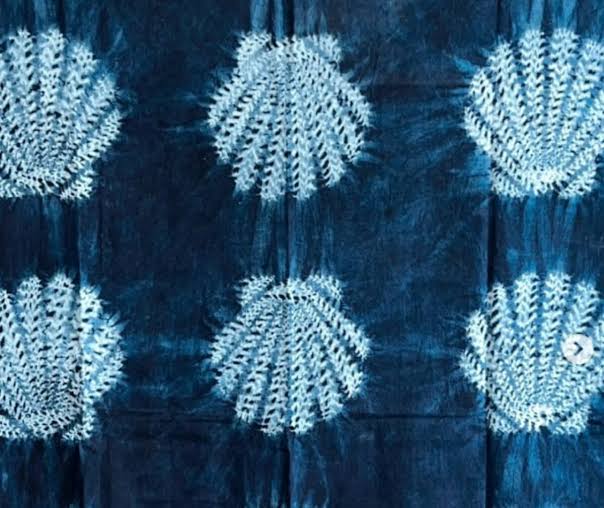
Atelier V.O., the label of Stéphanie Morayo Ossé, supplies a related example of material knowledge entering a wardrobe. It was among the Beninese designers who presented at the 2024 World Cotton Day fashion show in Cotonou, alongside Couleur Indigo.
The label’s November 2026 online collection gives that connection a commercial form. It lists cotton parkas, scarves, dresses, wide unisex trousers and reversible midi kimonos, as well as leather sandals and mules, with prices in euros from €50 to €290. The ASORO trousers and the reversible kimono are described as indigo cotton, and the site refers to Beninese cotton. It advertises free delivery to Benin, France and the European Union. Some items are listed as sold out. These listings demonstrate an ordering channel and defined product categories, not the volume or geographical distribution of sales.
Atelier V.O. therefore belongs here as an adjacent practice: a label that uses indigo in selected pieces within a wider clothing range, not one that dyes everything blue. Its relevance is how textile treatment connects with contemporary product design.
The distinction is useful: a material-led proposition becomes more concrete when a customer can identify the garment, its price and how to order it.
Production Networks Cross Borders
Benin’s textile activity also sits within cross-border production networks. The Ethical Fashion Initiative’s account of its cotton work in Benin and Burkina Faso describes partnerships with OBEPAB on organic cotton farming and ETD on artisanal processing in Benin, and with the national cotton producers’ union UNPCB and CABES in Burkina Faso. Its work covers cotton preparation, spinning, and weaving; notes that fabrics are dyed with natural dyes or certified reactive dyes; and reports that its partner cooperatives have trained 3,400 artisans and 267 organic cotton producers.
That network complicates a simple national-origin story. Beninese design does not require every production stage to happen within Benin, and “locally made” should not obscure a textile’s actual route.
For customers, the meaningful questions concern who grew, spun, wove, dyed and constructed the material, and which of those stages a business can document. For designers, collaboration can expand the materials and techniques available to them.
The sector’s development is therefore not only a question of promoting national identity. It also concerns making productive relationships visible and workable.
Public Promotion Has a Different Job
La Nuit du Kanvo et de l’Indigo offered another mechanism: collective presentation. The government’s account names FDA Director General Nestor Clétus Guezo and Minister Awaou Baco among those present, and states objectives that included stronger competitiveness for Beninese creators, new outlets for craft products and greater visibility on regional and international markets.
WuloEvents’ report on the evening adds that the event also hosted a panel on structuring the industry, bringing together ADAC, APIEX, SIPI and GDIZ. That brought arts, export, investment and industrial institutions into the same conversation as the designers on the runway.
The programme used luxury as positioning language. That may help distinguish labour-intensive work, but the event itself does not establish subsequent orders or earnings.
The useful relationship is between promotion and the channels described earlier. A presentation can introduce products; shops, commissions, direct orders and visitor services provide ways to continue the encounter. Neither function replaces the other, and each depends on the other to matter.
Omiren Styles’ coverage of Benin Fashion Month supplies wider context for public involvement in fashion, describing a state-built platform delivered through the arts agency ADAC. The July textile event remains a separate initiative with its own objectives.
What Would Count as Progress
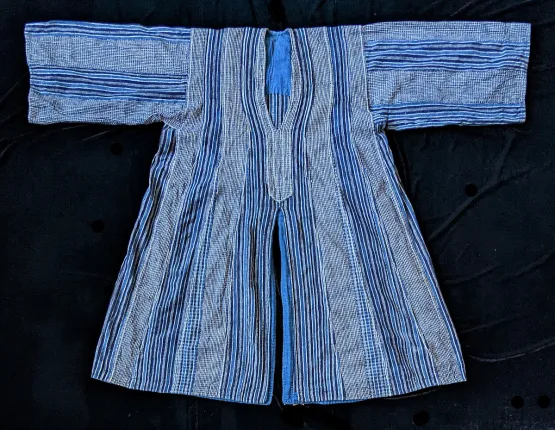
The sources describe activity, not outcomes, and the difference matters for anyone assessing the sector. A runway evening, a workshop programme and an online shop each show that indigo is being promoted, taught and sold. None of them yet shows how much is sold, how many dyers earn a living from it, or whether international buyers are returning.
Those are the measures worth watching. For dyers and enterprises such as Couleur Indigo, progress would mean steady orders for dyed cloth and finished products, and visitor programmes that bring people back. For labels such as Atelier V.O., it would mean indigo pieces that sell through rather than appear once. For public bodies, it would mean that an evening like La Nuit du Kanvo et de l’Indigo leads to documented export enquiries or contracts, not only to photographs.
Attribution is also a question. If Benin indigo reaches new markets, the dyers, weavers and cotton producers behind it should be named in the record, not absorbed into a national brand. The documentation that already exists, from enterprise histories to cooperative training figures, is a starting point for that record. The next editions of these events and collections will show whether the connections described here hold.
The Omiren Argument
The strongest proposition in Benin’s indigo activity is the connection between skills and uses. Dyeing knowledge keeps a central role when it informs products, teaching, and relationships with customers. Public promotion can widen that encounter but cannot substitute for it.
The next measure of progress is not another declaration that indigo belongs in contemporary fashion. It is whether the work around the textile becomes more durable, and whether the people performing it retain a visible, valued place in that development.
ALSO READ
- FIMO 228: Inside Lomé’s International Fashion Festival.
- What to Buy Before You Leave Lagos, Accra, or Nairobi: The Fabric Edition.
- Liberian Country-Cloth Weaving Cooperative in Kolahun.
- Asrafobawu Is Not a Clothing Brand. It Is a Cultural Practice.
Frequently Asked Questions
How is indigo different from kanvō?
Indigo is a dye, and kanvô is a cloth. Kanvô is a handwoven Beninese textile, so it describes how the fabric is constructed. Indigo is a natural blue dye from plants in the Indigofera family, so it describes how yarn or fabric is coloured. The two can meet in one garment, but they are separate stages of production with separate specialists.
What does Couleur Indigo do?
Couleur Indigo, led by Nadia Adanlé and now based in Ouidah, works across the indigo chain: growing dye plants, dyeing, design, sales and recycling textile waste. It also offers guided visits explaining natural indigo dyeing, workshops where visitors personalise clothing, and hospitality beside Lake Toho. It presented its nineteenth collection, “Apusomɛ”, in October 2026.
Does Atelier V.O. specialise exclusively in indigo?
No. Atelier V.O., the label of Stéphanie Morayo Ossé, sells a wider clothing range, including parkas, scarves, dresses, kimonos, trousers, and leather sandals. Some pieces, such as the ASORO trousers and a reversible kimono, are described as indigo cotton. The rest of the range should not be assumed to be indigo-dyed.
What was La Nuit du Kanvo et de l’Indigo?
It was a government-backed fashion evening held on 18 July 2026 at the Sofitel Cotonou Marina, organised by the Fonds de Développement de l’Artisanat. Fifteen designers presented seventy-five creations on thirty models, and a panel brought together national agencies. Its stated aims were stronger competitiveness, new outlets and wider markets for kanvô and indigo.