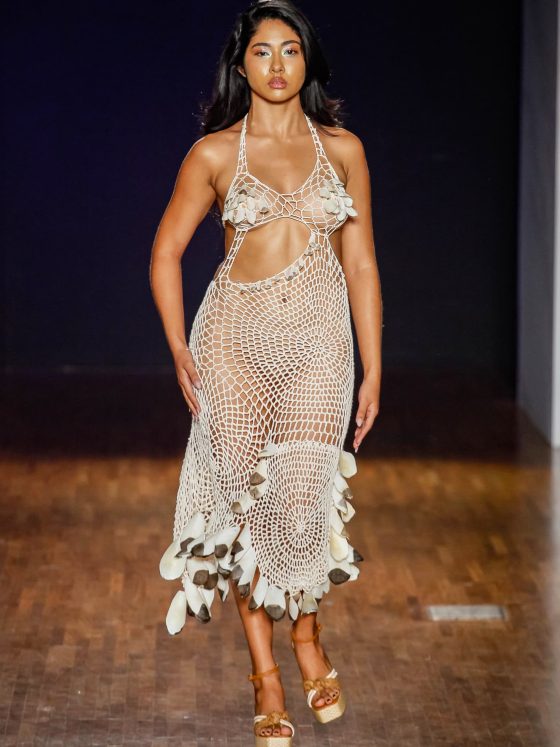
Francisca Vieira remembers starting with two colours: beige and brown. In 2005, when she began working with naturally coloured cotton from Paraíba, those were the shades available to her. They were already in the fibre. Vieira asked what she could make with them. Two decades later, Tropeiros da Borborema offered several answers. The 2025 collection included monochrome suits, coats and cloaks inspired by the clothing of travelling traders, and dresses that paired organic cotton with silk. The suits give us a place to look at what a single colour can do across an outfit. The cloaks ask a different question: how does something Vieira remembers from her family’s history become the shape of a garment?
How Francisca Vieira turned naturally coloured cotton from Paraíba into a starting point for Brazilian tailoring, and what the fibre tells us about dyeing.
Before the cotton, there was streetwear
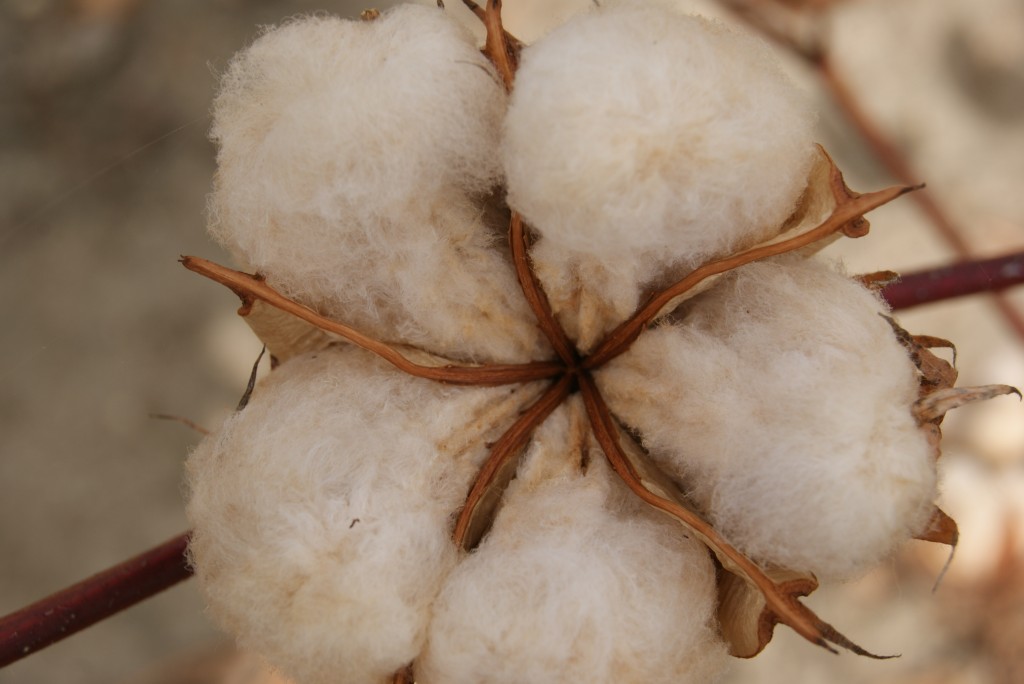
Vieira traces the business back to 1995, when she made streetwear under her own name. The move into naturally coloured cotton came a decade later. In an interview with O Globo, she recalled making an early collection with beige and brown and later incorporating craft techniques such as renda renascença, a form of lacework practised in Paraíba. The two dates mark different beginnings: 1995 for the clothing business, 2005 for the material that came to define it.
Starting with two colours doesn’t mean making two versions of the same thing. If the shade stays close from one part of a garment to the next, a change in weave, the placement of a seam or the open spaces in lace can do the work a contrasting colour might otherwise do. Vieira’s palette also developed beyond those first two shades. In 2019, Embrapa, Brazil’s agricultural research organisation, documented her work with SENAI on a textile using naturally coloured fibres in shades between brown and ruby. The dye bath isn’t the only place where a designer can work out a palette.
From a Paraíba field to enough cloth for a collection
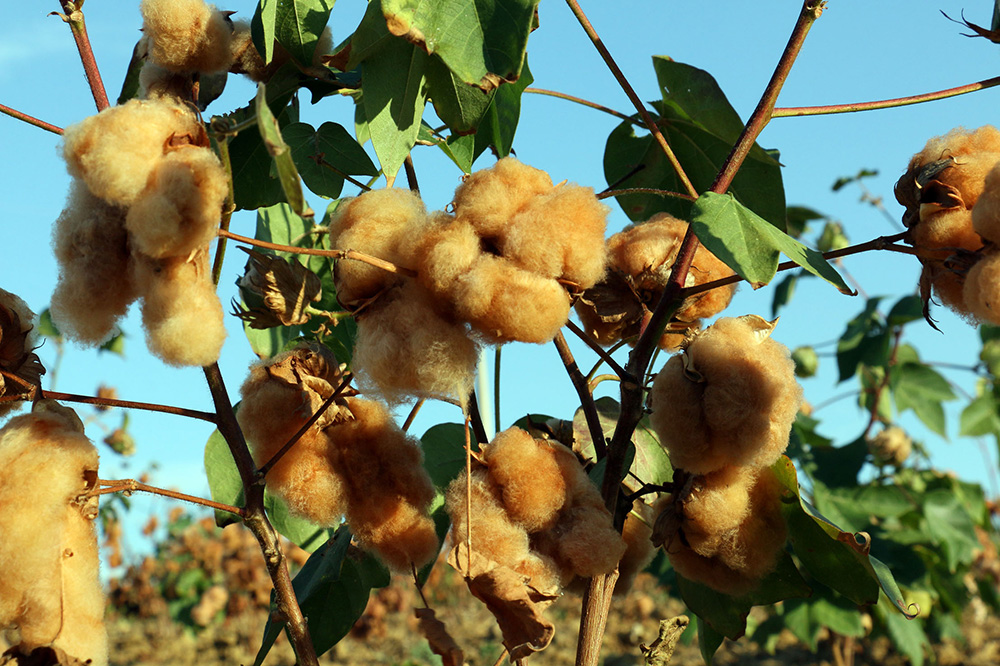
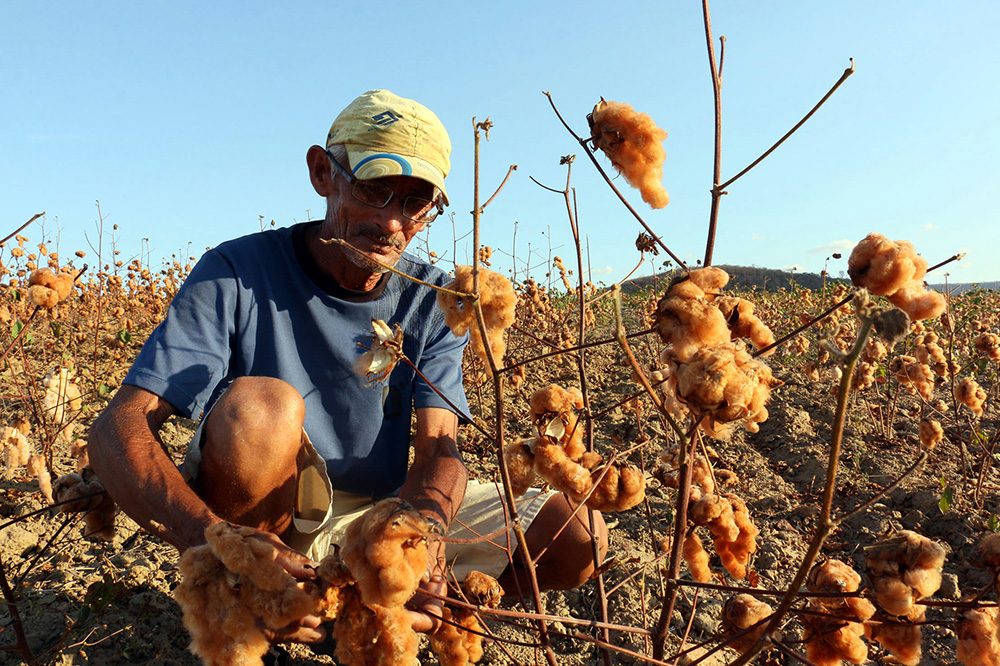
With naturally coloured cotton, the pigment is already present in the fibre. Embrapa developed and refined varieties that expanded the available range, including green and several browns. But a colour in the field is not yet a bolt of cloth. A collection depends on growers supplying the fibre and textile producers turning it into fabric in the quantities the label needs. That makes the places behind the cotton worth naming. Embrapa’s reporting on production in Paraíba identifies cultivation contracted by Natural Cotton Colour in municipalities including Juarez Távora and Salgado de São Félix. It also describes a regional network that extends beyond growers to textile producers, clothing makers and artisan groups. “Cotton from Paraíba” is more than a line about provenance: it points to the work that makes those shades available to a designer in the first place.
What Tropeiros da Borborema does with the palette
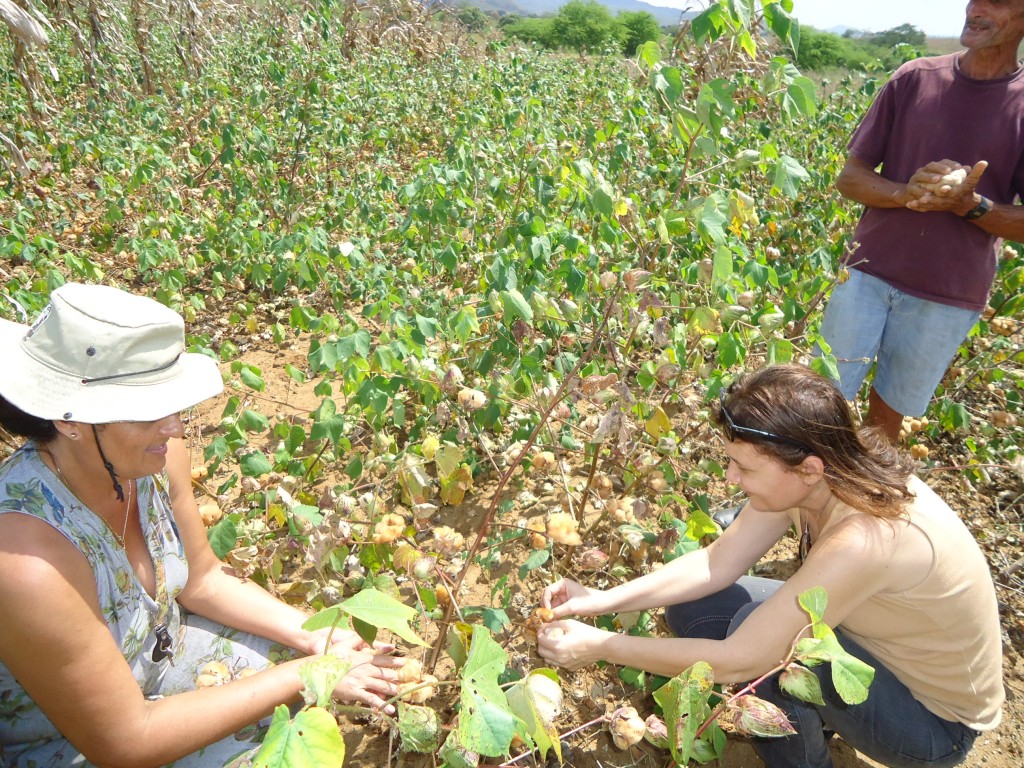
Natural Cotton Colour presented Tropeiros da Borborema in Milan in 2025. Vieira, the daughter and granddaughter of tropeiros (travelling traders and livestock drivers), drew on family memories and on the place those travellers held in Paraíba’s cotton trade. Tex brasil’s collection account identifies coats and cloaks that take their cue from travel garments. The family reference is legible in the type of garment Vieira chose, not in the cotton’s colour alone. The monochrome suits make a good counterpart. A coat can carry the reference through its shape; a suit in one colour asks you to notice how its pieces work together without a change in shade to separate them. Both make the material visible, but they put the emphasis in different places. And the dresses that pair organic cotton with silk limit that reading: cotton sets the direction of the collection without accounting for everything in it.
The previous year’s Calunga offers a brief contrast. There, Vieira and designer Leo Mendonça worked with labirinto, an openwork technique associated with Paraíba, in a collection that drew on maracatu. Where the Tropeiros coats make their reference through garment type, Calunga gives us a reason to look at the cloth’s worked surface. The cotton can be a starting point for either without dictating the result.
What the cotton doesn’t need from the dye house
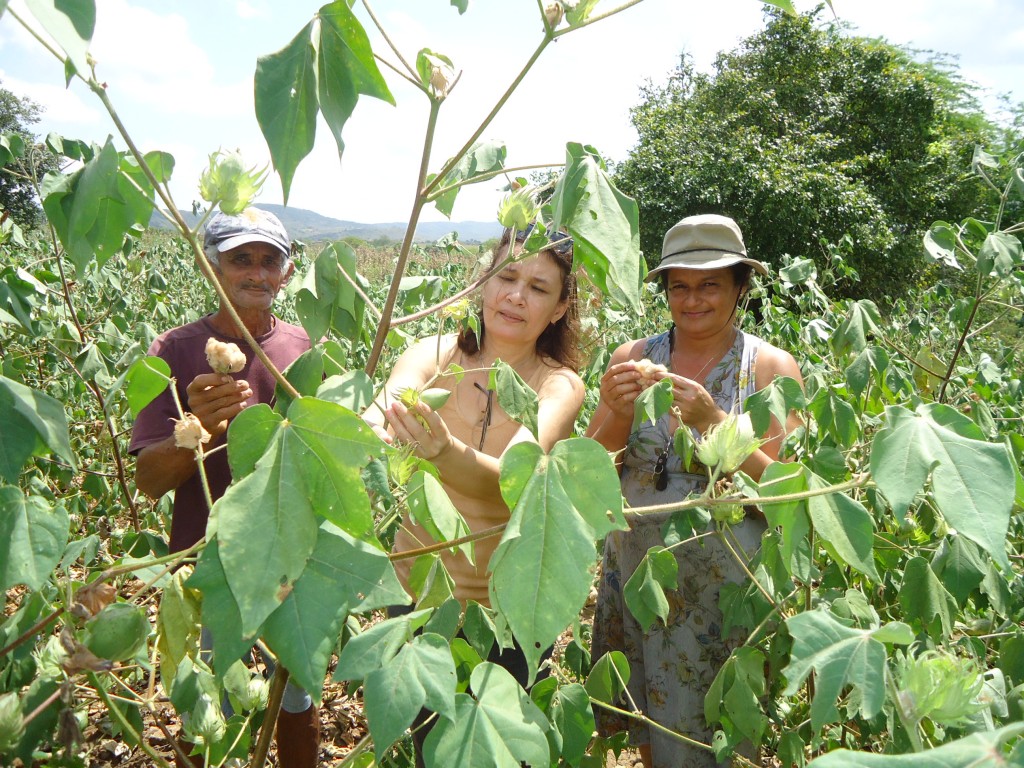
The fibre doesn’t need to be dyed to achieve its own shade. That’s the specific change worth naming. It doesn’t mean a finished garment is entirely undyed, or that its other fibres, trims and finishes were handled the same way. The cotton-and-silk dresses make the distinction concrete: knowing where the cotton gets its colour doesn’t tell us how the silk was processed.
Naturally coloured and organically grown also describe different things. The first describes the fibre’s colour; the second describes its cultivation. Certification is another question: what does the certificate actually cover? A catalogue that identifies cotton as certified doesn’t, on that wording alone, establish certification for every finished garment. Likewise, a claim about water savings needs a defined comparison: which fabric is the baseline, and which production stages were counted? We don’t need a percentage to see what’s distinctive about Vieira’s starting point. The colour is there before the fibre reaches the dye house.
The Omiren Argument
Beige and brown tell us something about the cotton before it becomes cloth. They don’t tell us why Vieira made a cloak, kept a suit monochrome or paired cotton with silk. Those choices came after the harvest. That’s what makes Tropeiros da Borborema worth looking at closely: the cloth carries colour from the field, but the cloak carries a memory of how people travelled. One is a property of the fibre. The other is a decision about what to make from it.
Also Read:
- Quiet Luxury in Africa: How Aso-Oke, Adire & Craftsmanship Are Shaping 2025 Style
- Liberian Country-Cloth Weaving Cooperative in Kolahun
- The Future of Fashion in Sierra Leone: Creativity, Culture, and Growth
- Traditional Clothing in Mali: The Cultural Significance of Boubou and Bogolan
Frequently Asked Questions
Who founded Natural Cotton Colour, and when?
Francisca Vieira traces the business to the streetwear label she started under her own name in 1995. She began working with naturally coloured cotton from Paraíba in 2005. The first date marks the start of the business; the second marks its shift in materials.
Is naturally coloured cotton the same as organic cotton?
No. Naturally coloured cotton grows with pigment already in the fibre. ‘Organic’ describes how the cotton was cultivated. Cotton can be both, as in Vieira’s work, but one description doesn’t establish the other. The first tells us about the fibre’s colour; the second tells us about its cultivation, and certification is another question again.
Which Natural Cotton Colour collection should I look at first?
Start with Tropeiros da Borborema. Look at the cloaks for the connection to Vieira’s family history, the monochrome suits for what the palette does across a whole outfit, and the cotton-and-silk dresses for where the collection moves beyond its main fibre.
What does naturally coloured cotton change about dyeing?
The fibre doesn’t need dyeing to achieve its own shade. That doesn’t mean a finished garment is entirely undyed, or that its other fibres, trims and finishes were handled the same way. In the cotton-and-silk dresses, knowing where the cotton gets its colour doesn’t tell us how the silk was processed.