The conventional response to a damaged garment is one of two things: fix it invisibly so the damage was never there, or throw it away. Both responses treat the garment’s original state as the only acceptable state. Neither acknowledges that a garment can become something more interesting than it started as, or that deciding what to do with a damaged piece of clothing offers more options than most people ever explore.
Patch and stitch, the practice of working with what a garment already is rather than against its history of use, covers three distinct modes. Repair brings the garment back toward functionality. Alteration changes its form to suit its current purpose better. Remaking transforms it into something different. Each requires different skills and thinking, and each produces a different kind of object. Knowing which one you are doing before you start separates a considered intervention from a frustrated one.
Repairing, altering, and remaking existing clothes isn’t second best. This guide to the patch-and-stitch approach covers the three modes of repair, key techniques, and why deciding how to handle a damaged garment is the same kind of decision as choosing the garment in the first place.
The Three Modes
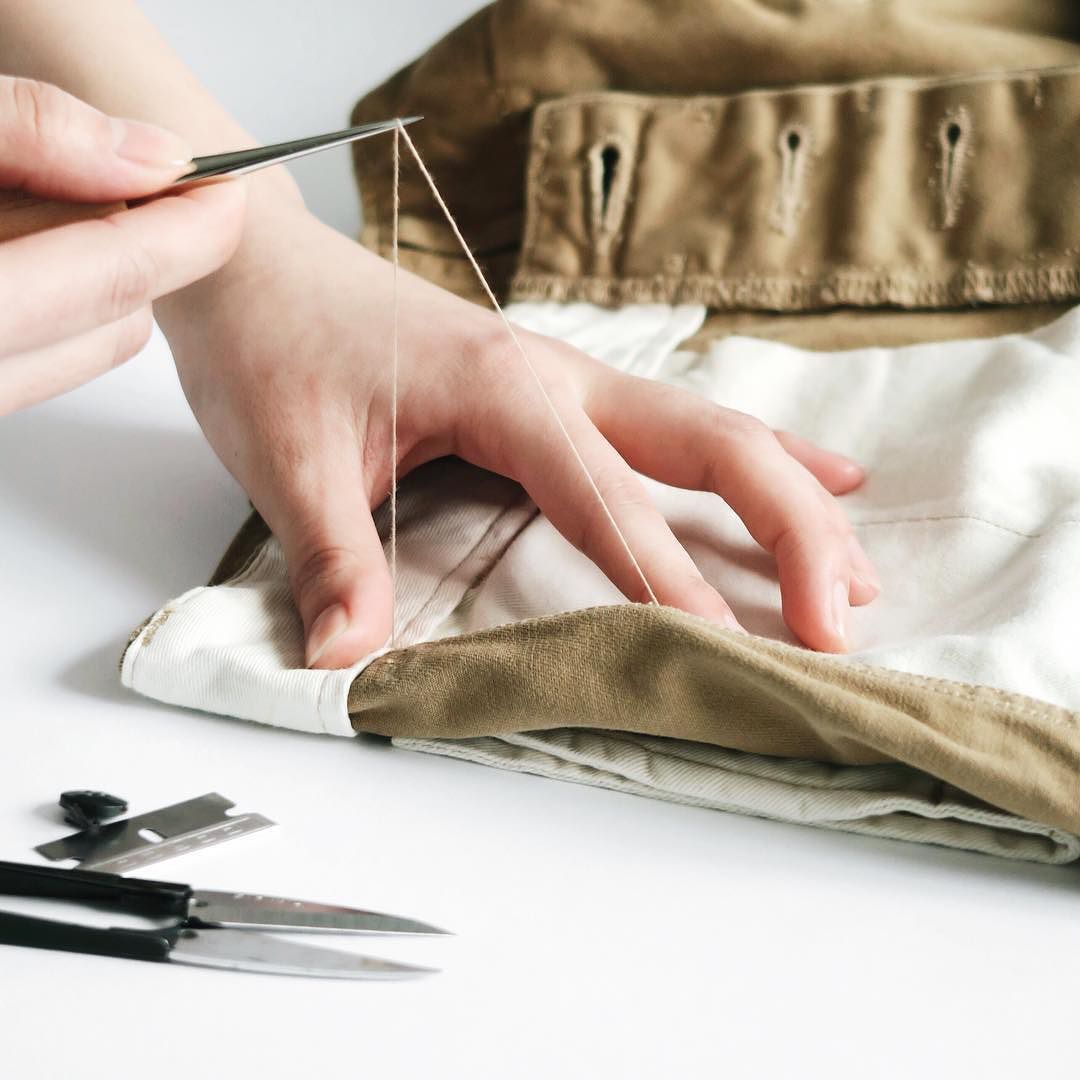
The First Mode: Repair
Repair is the most immediate mode: the garment is damaged, and the damage limits its use. A hole in a knit. A torn seam. A broken zip. A moth hole in a wool jacket. A stress tear at a pocket opening. Repair asks: what is the fastest route back to a functional garment, and is that route also the most appropriate for the garment’s character?
That last part is where repair splits into two very different practices. Invisible repair tries to restore the garment to its pre-damage appearance: stitches match the existing fabric, the patch is cut from similar material, and the goal is that no one can tell the repair happened. This approach is correct for some garments and some kinds of damage: a tear on the back panel of a jacket that will spend most of its time covered by a bag, a zip replacement on a piece whose value is in its overall coherence, a seam repair on a ceremonial garment where the original surface matters.
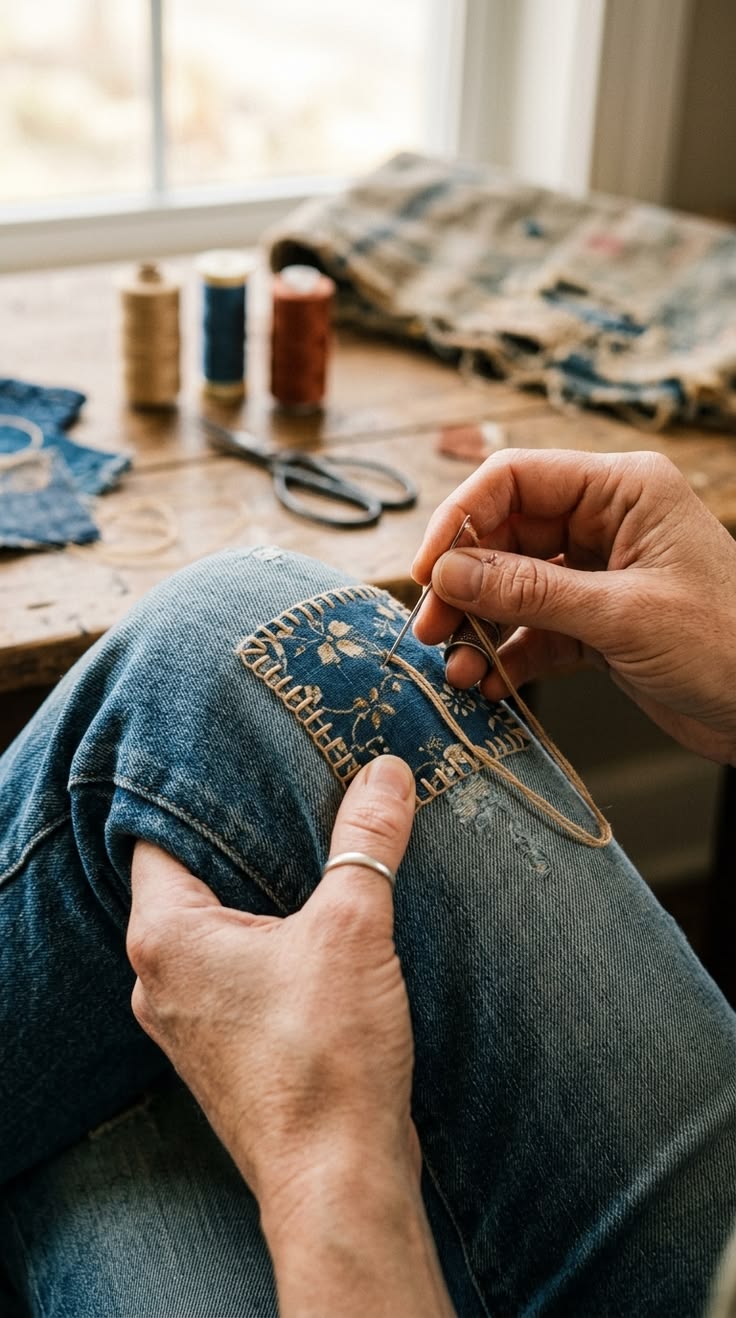
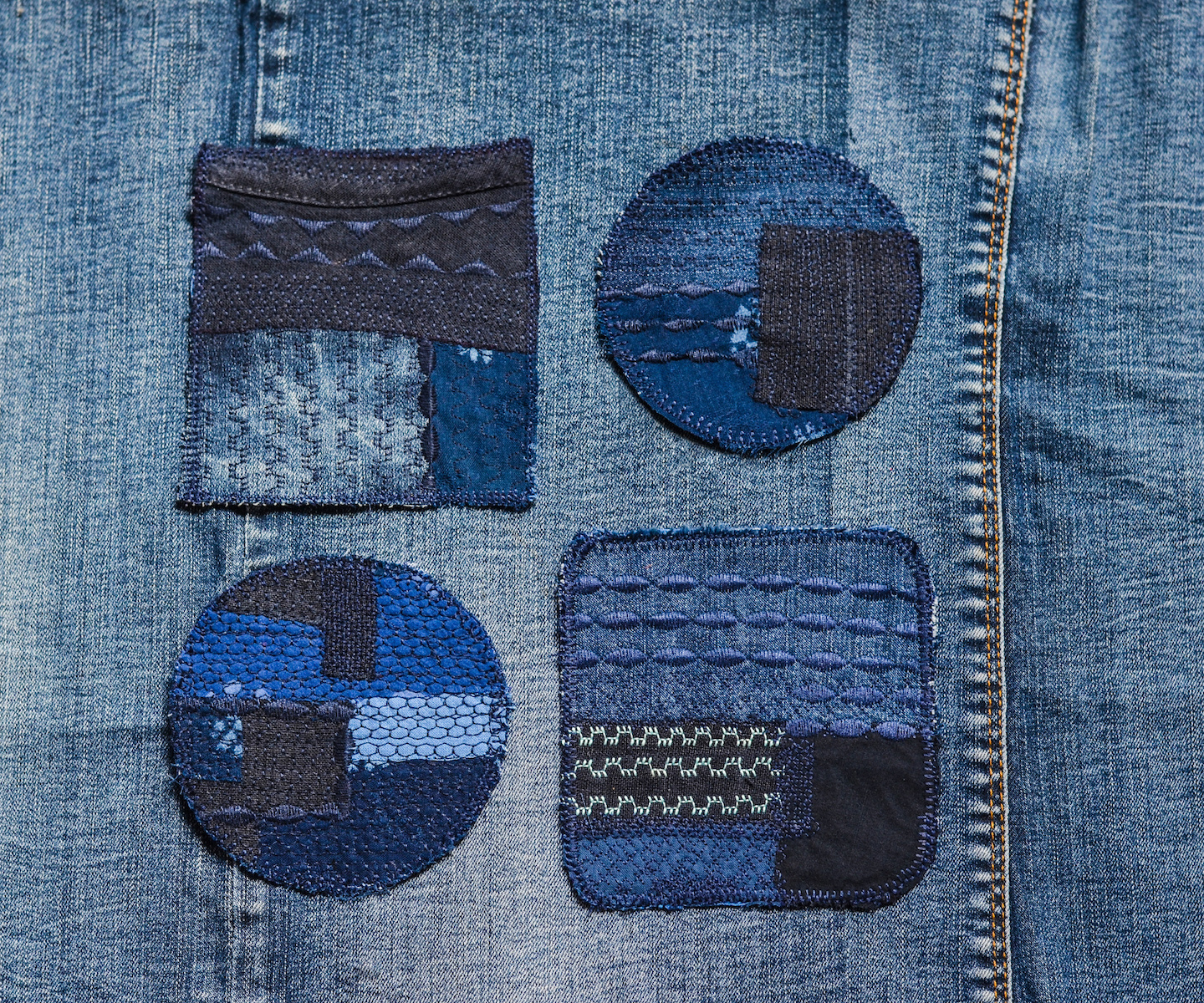
Visible repair makes a different decision: the repair is intentional and visible. This is not sloppiness. It acknowledges the garment’s history of use and treats the repair as part of that history, not something to hide. A patch of contrasting fabric over a hole in the knee. Decorative stitching across a worn area that reinforces it while marking it. The repair becomes part of the garment’s surface rather than an attempt to return the surface to what it was.
The Second Mode: Alteration
Alteration is a different kind of intervention. The garment isn’t damaged; it no longer fits correctly, the proportions no longer work for the body wearing it, or the garment’s original design hasn’t aged as well as its fabric. Alterations change the garment’s form to address any of these.
The most common alterations adjust fit: taking in side seams to reduce width, shortening hems, narrowing sleeves, raising or lowering waistbands. These are alterations in the strict sense: the garment remains recognisably itself, just adjusted to its current context. A more considered alteration might be structural: removing a collar entirely, changing how a placket closes, or converting a dress into a skirt and top by separating the bodice and waist seams. These produce a garment that has been transformed rather than merely adjusted.
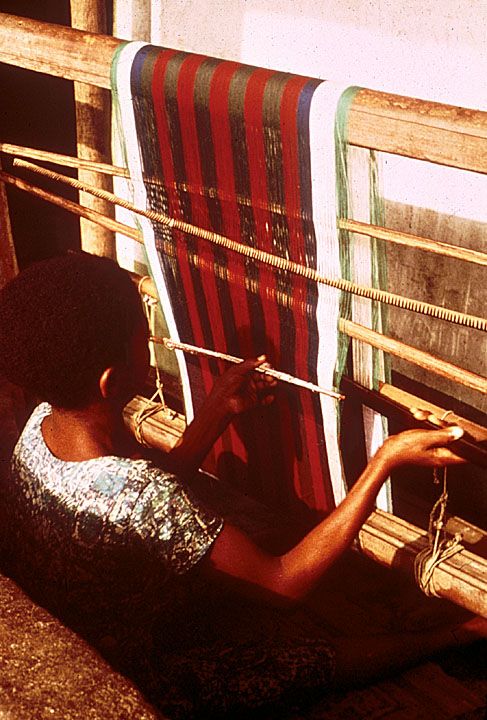
The decision about how far an alteration should go depends on what the garment can sustain. A garment whose value lies in its cut, a tailored jacket whose shoulder construction gives it its shape, should not be altered at the shoulder if possible. A garment whose value lies in its fabric, a hand-woven textile whose character comes from the cloth rather than the cut, can sustain more structural alteration because the cloth will carry the garment regardless of how it is assembled.
The Third Mode: Remaking
Remaking is the most complete intervention: the garment is taken apart, and its material is used to make something else. A coat with a still-beautiful lining is disassembled, and the lining fabric is used for a blouse. A shirt whose collar and cuffs are worn through beyond repair is cut down into a waistcoat, using fabric from the body panels. Two pairs of worn trousers whose most damaged sections overlap are combined into one functional pair. Remaking treats the garment as a material resource rather than a finished object.
This requires the most planning of the three modes. Before cutting into a garment for remaking, map the useful sections: which areas are still sound, what dimensions those areas provide, and what can be constructed from what is available. Lay the pattern pieces for the new garment on the mapped fabric before you begin cutting. Remaking from an existing garment is not simply cutting the garment up. It is a design process that starts from the available material rather than from an ideal specification.
The Heritage Context
Repair is not a new idea in textile practice. The visible mending traditions now discussed as contemporary sustainable fashion practices have deep roots in specific cultural textile traditions. Japanese sashiko, decorative running stitches used to repair and strengthen fabric and produce geometric patterns, developed partly as a repair technique for indigo-dyed work clothing. Over time, sashiko stitching accumulated across a garment, creating a surface that was more durable and visually complex than the original. Japanese boro is a related tradition of patching and repairing textiles across generations: a boro piece records the interventions that kept it functional for decades or longer.
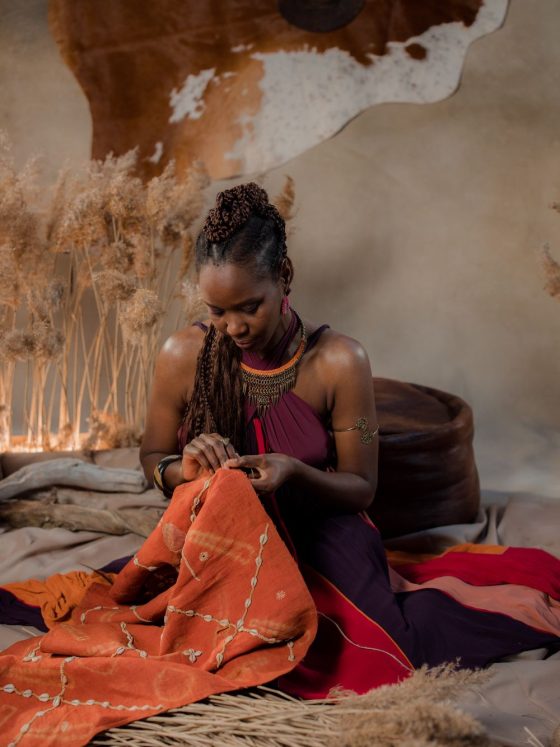
Indian kantha follows a comparable logic: layers of worn fabric stitched together with running stitches to produce quilted objects whose surfaces carry the history of the individual cloths’ prior lives. Kantha was historically made from saris worn to the end of their useful life and then given new life as a quilt or wrap through stitching. The stitches themselves, running across the surface in patterns, serve both a structural function (holding the layers together) and a decorative one (the visible surface of accumulated marks).
These traditions share a common argument: a garment’s history of use is value, not damage, and the record of repair traces the relationship between a maker and a piece of cloth over time. The contemporary visible mending practice that Etsy’s Spring/Summer 2026 Seller Trend Report named part of its ‘Soft Stitch Era’ – describing a move toward pieces with sun-worn fabrics, visible mending, and little details that feel intentional – is drawing from a much longer cultural practice, even when practitioners are not explicitly aware of the connection.
A repaired garment carries two histories: the history of its original making and the history of everything done to keep it in use. Both are recorded in the fabric. A garment that has never been repaired carries only one.
The Specific Techniques
Once the mode- repair, alteration, or remaking- is decided, the technique follows from the material and the specific intervention required.
For visible mending, the primary techniques are running stitch, darning, patching and reverse appliqué. Running stitch, the simplest of all stitches and the one sashiko uses in complex geometric patterns, can cover a worn area while strengthening it, add a decorative element to an undamaged area, or outline a patch to secure it and make the repair explicit. Darning weaves thread across a hole in a grid, rebuilding the fabric’s surface from thread alone. Patching applies a piece of additional fabric over or under a damaged area; a patch applied to the right side of the garment and stitched down visibly is a different object from a patch applied to the wrong side and held invisibly. Reverse appliqué layers fabrics and cuts through the upper layers to reveal what is beneath, creating a design through subtraction rather than addition.
For structural alteration and remaking, the techniques are those of dressmaking and tailoring: seam adjustment, re-cutting, and re-assembling. The key difference from making a garment from scratch is that existing garments are already cut and sewn, so the fabric is shaped, and the seam allowances may be limited. Unpicking an existing seam to let it out requires checking whether enough seam allowance remains to take the seam further. Shortening a hem requires checking the existing hem finish and whether you can reproduce it or whether you’ll need a different one.
The Decision Before the Needle
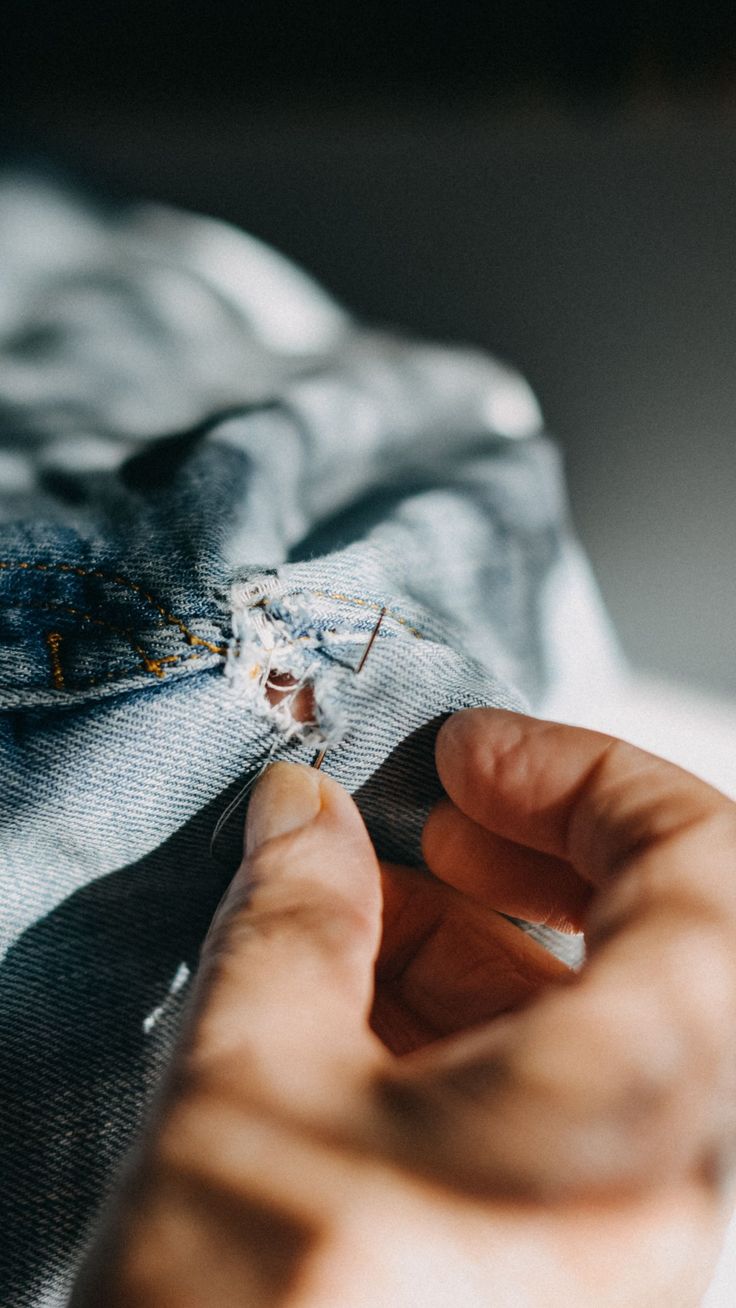
Every patch and stitch intervention starts with a decision made before the needle comes out. That decision has four parts.
First: what is the garment’s value, and what kind of value is it? A garment with financial value as a collector’s piece or a heritage object may need specialist intervention rather than home repair. A garment with personal or sentimental value needs repair that matches that value: careful and considered, not hasty. A garment valued primarily for its daily function needs a repair that restores its function, whatever that requires.
Second: what specifically is the problem? Misdiagnosing the problem produces the wrong repair. A hole in a knit fabric is not the same problem as a torn seam, even if both look like damage. A garment that has become too large has a different intervention than one that has become too small. A zip that fails at the pull needs a different repair than one whose teeth have separated from the tape.
Third: what does the garment’s fabric make possible? Some fabrics are straightforward to patch; others fray at the cut edge and need a specific finishing technique. Some fabrics take needle and thread without any special preparation; others are dense enough to make hand stitching difficult or fragile enough to make it risky. Heritage woven textiles with strong pattern repeats add another consideration for any seam adjustment or patch: the pattern must align, so plan the intervention around the textile’s visual structure before you cut or stitch.
That last point connects to the broader argument that you must understand a textile before intervening in it. A heritage textile whose pattern repeat is part of its character is not a neutral surface you can patch anywhere without consequence. Patching at a point in the repeat that breaks the pattern’s logic produces a repair that is visible in the wrong way. Patching at a point that completes the pattern, using a scrap of the same fabric cut to align the repeat, produces a repair that is visible in exactly the right way: an acknowledgement that the garment has been cared for rather than a record of damage.
Fourth: which mode is actually appropriate? The answer is not always repair. A garment repaired multiple times in the same area that keeps failing there may tell you something about the stress it is under: the repair treats the symptom rather than the cause. An alteration that redistributes the stress may be more appropriate than another repair in the same place. A garment too far gone for any of these interventions to restore it to usefulness is not necessarily waste: it may be material for a remaking project that requires a different kind of time and planning.
What Patch and Stitch Produces
The argument about what gives a garment value runs through much of Omiren Styles’ material intelligence work. Heritage textiles carry value from what went into their making: the time, the knowledge, the labour. A garment made from such a textile and then maintained through careful repair carries a compounded value: the original making and the maintenance. Each intervention adds to the record of what has been invested in keeping the garment in use.
A well-repaired garment is not a compromised version of the garment it was before the damage. It is a more complex version: one that carries evidence of use, care and decision-making across its surface. The patch is part of the garment. The alteration is part of the garment’s history. The remade piece carries the material of what it was before in what it is now. These are not lesser states than the original. They are later states, and later does not mean ‘worse’.
ALSO READ
- Why Embellished Occasionwear Needs a Care Decision, Not a Universal Cleaning Tip
- Before You Cut: What a Textile’s Pattern Repeat Means for a Garment
- How Adire Cloth Holds Memory, Labour and Place
- Can Heritage Textiles Scale Without Losing Their Meaning?
Frequently Asked Questions
What is the difference between repair, alteration and remaking?
Repair addresses damage: it brings a garment back toward functionality, either by hiding the repair (invisible mending) or making it part of the garment’s surface (visible mending). Alteration changes an undamaged garment’s form by adjusting fit, changing proportions, or restructuring the design. Remaking takes the garment apart and uses its material to make something different. Each mode requires different skills and produces a different kind of object.
What is visible mending?
Visible mending repairs clothes with intentionally visible stitches as a design choice, rather than hiding the repair. Techniques include decorative running stitch (as in Japanese sashiko), darning with contrasting thread, patching with fabric that stands out rather than blends in, and reverse appliqué. Etsy’s Spring/Summer 2026 Seller Trend Report named visible mending part of its Soft Stitch Era, reflecting growing interest in garments that show their history of care and use.
What is sashiko, and how does it relate to repair?
Sashiko is a Japanese mending and embroidery tradition that uses decorative running stitches to repair and strengthen fabric, often in geometric patterns. Historically, it reinforced indigo-dyed work clothing and patched worn areas. Over time, accumulated stitching across a garment created a surface more durable and visually complex than the original. Contemporary visible mending draws heavily on sashiko as a technique and on its underlying values: repair as addition rather than subtraction.
What is boro?
Boro is a Japanese textile tradition of patching and repairing cloth across generations, accumulating layers of patches over time to produce textiles that record sustained care and use. A boro piece may carry patches from multiple decades, each added when the fabric wore through and needed reinforcement. The resulting surface is visually complex and layered with history. Boro represents the most sustained version of the patch-and-stitch approach: not a single intervention, but an ongoing relationship with a piece of cloth over time.
What should I consider before repairing or altering a heritage textile?
Four questions matter before any intervention in a heritage textile. What is the garment’s value (financial, personal, cultural), and does that value require specialist rather than home repair? What specifically is the problem – is it structural damage, fit, or the fabric’s character? What does the textile’s specific material make possible in terms of repair techniques? And does the textile’s pattern repeat need to be aligned in any patch or alteration so that the intervention works with the textile’s visual logic rather than against it?
When should a garment be remade rather than repaired?
Remaking is appropriate when the garment has been repaired in the same area multiple times and keeps failing, suggesting the repair treats a symptom rather than the cause. It is also appropriate when the garment is too extensively damaged to repair and restore to usefulness, but the material remains sound. Remaking treats the garment as a material resource: map the useful sections before you cut anything, and lay out the new garment’s pattern pieces against the available material.