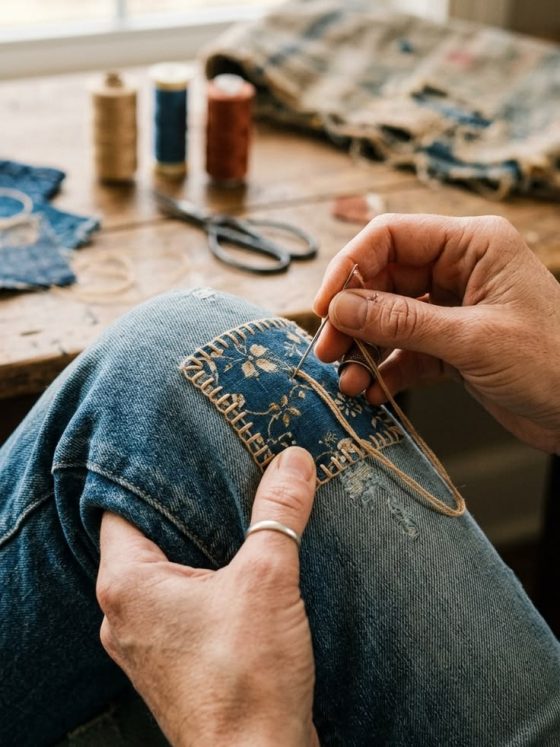
A damaged garment is worth saving when a credible repair is available, and there is a genuine reason to wear the result. Neither condition is enough on its own.
A technically successful intervention may leave clothing its owner still avoids; an indispensable garment may require a finish or expense its owner cannot accept. The useful decision connects the physical fault with the garment’s intended future
Start by separating three questions: what has failed, what the proposed work will change, and whether that result suits you. Published repair guidance shows why you can’t skip the first question.
Rejoining a failed seam and rebuilding a small worn area involve different operations. Calling both “a hole” conceals information that matters to the assessment.
Decide whether to repair damaged clothing by assessing the fault, the proposed finish, the full cost and whether the garment will return to use.
Establish What Has Actually Failed
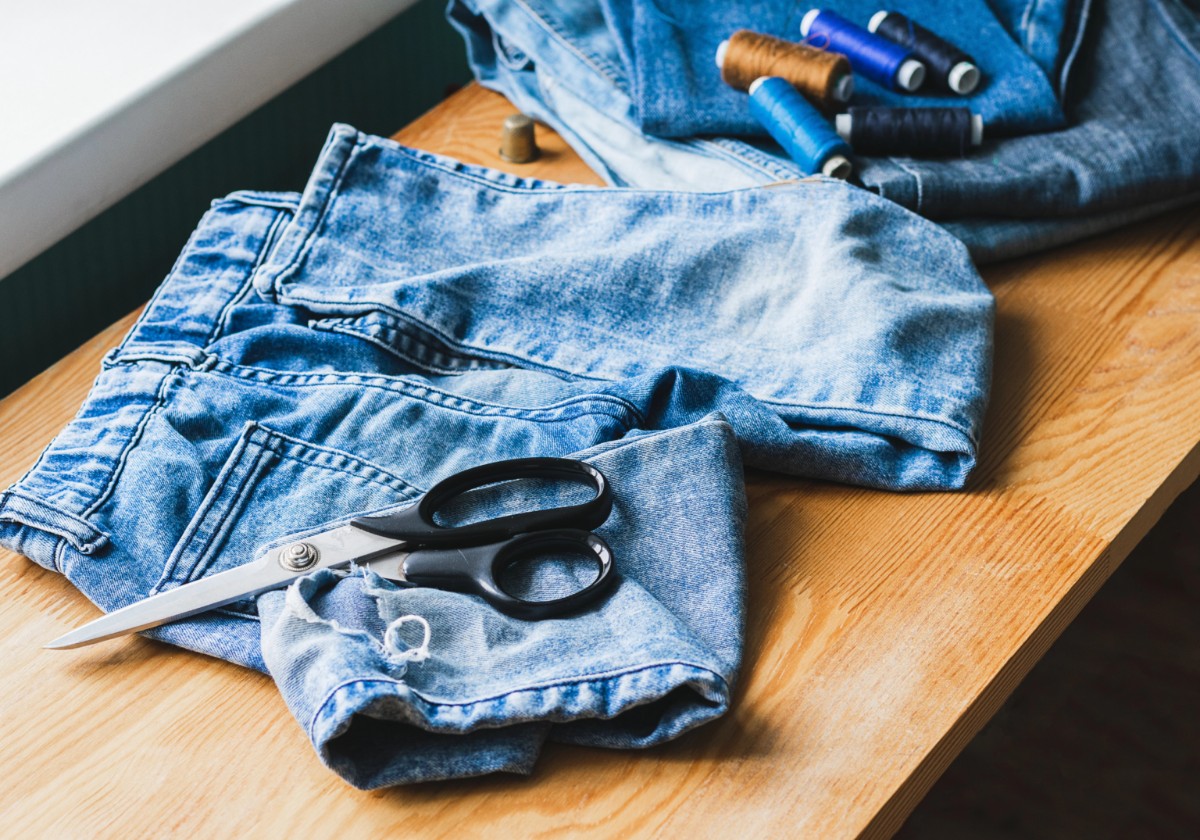
An opening along a seam is not automatically a tear through the garment’s material. In a community-contributed guide hosted by iFixit, Ben Blischke and fellow contributors begin a seam repair by examining the outside, the inside, the stitching and the surrounding fabric. The guide then shows how to rejoin the damaged seam by machine.
Its sequence matters: inspect the condition before choosing the intervention. It is an example of a particular repair, not proof that every opening at a join needs only another line of stitching.
For a reader, the practical distinction is between describing the fault and diagnosing it prematurely. “The side seam has opened over this length” is more useful than assuming it needs a quick stitch. When requesting an initial assessment, provide a full-garment photo, a close-up, and an image of the reverse.
Explain whether the damage followed a specific incident or appeared gradually. Then establish whether the practitioner can make a firm assessment from those images or needs to inspect the item.
Look Beyond the Centre of the Damage
Where material is missing or worn thin, the task may involve filling or reinforcing an area rather than simply closing a join. A Patagonia-supported iFixit tutorial by Sabrina K and contributors demonstrates woven darning: perpendicular threads are interlaced to create a small woven patch.
The technique works on both knitted and woven items, but the tutorial limits it to small to medium holes (about 25 mm by 25 mm or less). Its worked example is a mesh backpack pocket, not a universal clothing repair.
The same tutorial marks an area beyond the opening and finishes by checking that the patch covers the hole, secures the damaged area and has not introduced tucks or puckers. That makes the surrounding material part of the repair, not incidental background.
For your garment, ask the practitioner to identify the proposed treatment area and explain what supports it. Do not assume a small visible opening necessarily means a small job, or that one demonstrated method is appropriate for every material.
Decide What the Finished Garment Must Do
Before discussing price, define the result you need. A repair intended to return a coat to formal use has a different brief from one intended to make it suitable for walking the dog. This is not a hierarchy of deserving garments.
It makes the commission precise. State whether colour matching matters, whether a contrasting intervention is acceptable and whether you expect the repaired area to be unobtrusive.
Patagonia’s UK-facing repair page offers a useful example of setting expectations. It says specialists match repair materials as closely as possible, but exact matches are not always available and repairs may remain visible.
It even identifies a particular source of colour variation: replacement black fabric can look slightly bluer when used on certain older down garments. A service can therefore promise an attempt at restoration without promising it will disappear visually.
A photograph of a previous repair can help establish the sort of result being discussed, but it should not replace an agreement about your item. Ask how the proposed intervention may affect the area’s appearance, thickness and flexibility, and whether the practitioner can answer those questions before work begins. These are matters to clarify, not properties this guide can predict without the garment.
Check the Repair Route Before Committing

Technical suitability and service eligibility are separate questions. A provider can decline a garment because it falls outside its programme, while another assessment may concern whether the requested result is achievable. Patagonia’s published page makes both types of boundary visible: it lists product exclusions and says more involved damage requires evaluation.
It also states that delamination causing an interior lining to peel cannot be repaired through the service described. Those are specific service statements, not a complete classification of all clothing repair possibilities.
When a provider declines the work, ask which boundary applies. Is the item outside the service’s scope? Is the material unsuitable for the proposed method? Is the requested finish the problem?
The answer determines whether another assessment is useful. A refusal deserves understanding, rather than being treated as either the final word on every possible intervention or an obstacle that must always be overcome.
Preparation also belongs to this stage. Patagonia requires clean, recently washed items, explaining that dirty clothing is unhygienic for technicians, can affect equipment and can compromise the longevity of glued patches and seam tape.
Follow the receiving service’s instructions alongside the garment’s care requirements. Don’t improvise a more aggressive cleaning treatment just because a repair appointment is approaching.
Judge the Quote Against the Agreed Work
The original purchase price should not decide for you. Treat this as a choice about the garment now: its fit, its place in your wardrobe, the proposed result and your available budget. An inexpensive garment can be difficult to replace in the ways that matter to its owner.
An expensive one can remain unwanted even after you fix its visible fault. Neither situation requires an invented calculation of sentimental value.
A usable quote should make the scope clear. Record the damage being addressed, the operation proposed, the finish discussed, and the materials included. Establish whether the figure follows physical inspection or remains an initial estimate.
Agree that further work or a higher price requires approval. These are commissioning safeguards, not a claim that every repair service structures its charges in the same way.
Include the transaction around the repair, too. Patagonia, for example, currently describes its repair service as free but warns that a shipping charge may apply, depending on the carrier. It gives an estimated four to six weeks from receipt at a repair centre, with UK repairs potentially taking longer and seasonal delays possible.
That example shows why you should check repair price, total cost, and turnaround separately. It is not a price or timing benchmark for independent practitioners.
Make a Decision About This Garment
Proceed when the fault has been assessed, the proposed intervention is understandable, and you expect to use the result. A successful decision does not require an invisible finish or the lowest possible quote.
It requires agreement about what is being commissioned. If the practitioner has explained a visible compromise and you welcome it, visibility is not a failure.
Seek clarification when the estimate is provisional, the treatment area is unclear, or the proposed finish does not match what you described. Keep the questions focused on the unresolved point. Repeatedly asking whether a repair will be “good” is less useful than establishing whether a patch will contrast, whether a particular area is included or whether additional work could change the price.
Decline when the result would still leave the garment unworn, the expense is beyond your budget, or the limitations are unacceptable. That is not a judgement against repair as a practice.
It is a decision about one commission. The article’s test is not whether everything can be preserved, but whether this proposed intervention offers a credible return to use.
The Omiren Argument
The principle is usefulness. Repair becomes a sound decision when you understand the work, its limitations, and the garment’s intended role together.
The point is not to justify every repair or to make every damaged item look untouched. It is to commission an intervention that delivers the result you actually want.
That approach respects the owner’s budget and the practitioner’s labour. It asks for an assessment before a promise, a defined scope before payment, and an honest account of the finish before handover. A garment is worth saving when the proposed work gives it somewhere meaningful to go next.
Also Read:
- How Japanese Denim Culture Teaches Us the Value of Patina
- A Garment’s Final Act: What Happens After We Stop Wearing Our Clothes And Why It Matters
- Mastering the Art of Intentional Style
- The Quiet Decline of Micro-Trends in Fashion: Why the Industry Is Slowing Down
Frequently Asked Questions
Can a photograph establish whether clothing is repairable?
Use photographs to begin the enquiry, then ask how much certainty they allow. Some work requires further evaluation: Patagonia explicitly distinguishes a simple patch from damage it needs to assess before providing the next steps. Do not mistake an encouraging initial response for confirmation of the method, finish or final price.
Is a visible repair less successful?
Not simply because it’s visible; judge it against the agreed purpose and appearance. Patagonia warns that material matches may be imperfect and repairs may be visible; that is a stated limitation of the service, not an admission that the intervention has failed. Establish your acceptance of that finish before the work proceeds.
Can a repair guide tell me how long the result will last?
A method demonstration does not establish the future lifespan of an unexamined garment. The iFixit darning tutorial provides quality checks for its particular intervention, including coverage, secure attachment and the absence of puckering. Those checks are useful within that method; they are not a durability guarantee for every item a reader might attempt.
What should a repair quote include?
A usable quote records the damage being addressed, the operation proposed, the finish discussed, and the materials included. Establish whether the figure follows a physical inspection or remains an initial estimate, and agree that further work or a higher price requires your approval. These are commissioning safeguards, not a claim about how every service charges.