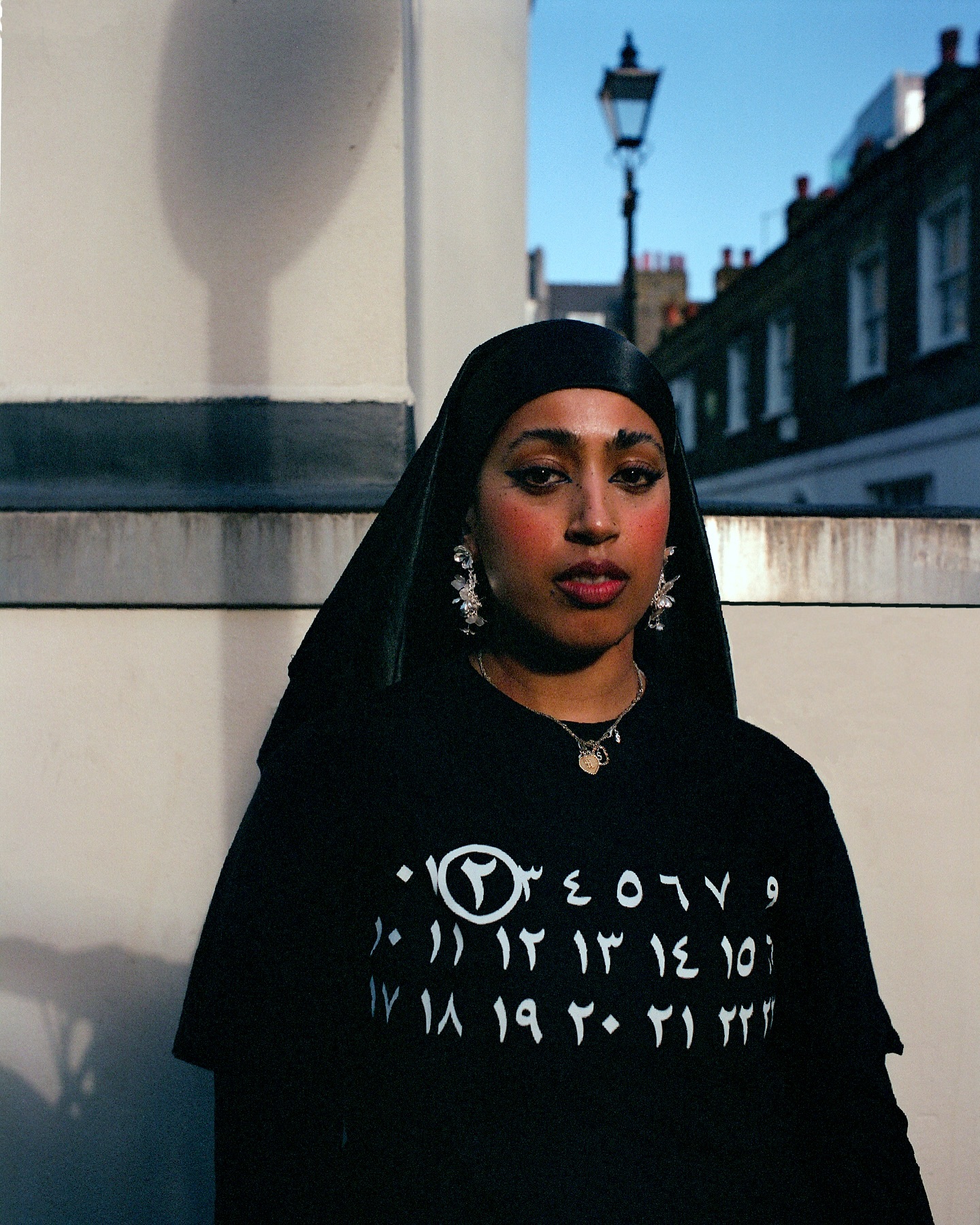
For Mabruk Ali, the appeal of Libyan dress begins with particular qualities: the boxy cut of the zboon and the ease of the thobe. SceneNow’s February 2024 profile identifies both among the references informing Medina, alongside an embroidered Tripoli skyline. Shape, comfort and the image of a city offer three different routes into clothing. They do not require the same kind of interpretation. A skyline can be represented directly. A proportion is less literal: it can influence a garment without announcing where it came from. Ease is different again, concerning the relationship between clothing and the person wearing it.
Those distinctions offer a useful entry point into Medina. The London-based label is not most interesting when it is described simply as an expression of Libyan heritage. Its contribution depends on what Mabruk Ali selects from that experience, how he changes it and what else enters the process. By spring/summer 2026, that process included Kantha textiles sourced from India. The collection, Sediment, placed a different material tradition within the wardrobe of a designer whose public positioning remains closely connected to Libya and North Africa. This is not a departure that needs to be explained away. It clarifies the distinction between identity and design practice. Ali’s background establishes a perspective; it does not prescribe an exclusive inventory of fabrics.
Medina’s Mabruk Ali draws on Libyan dress, asymmetry and contrasting textiles to develop a wardrobe shaped by his experience of London and North Africa.
Libyan Form, London Experience
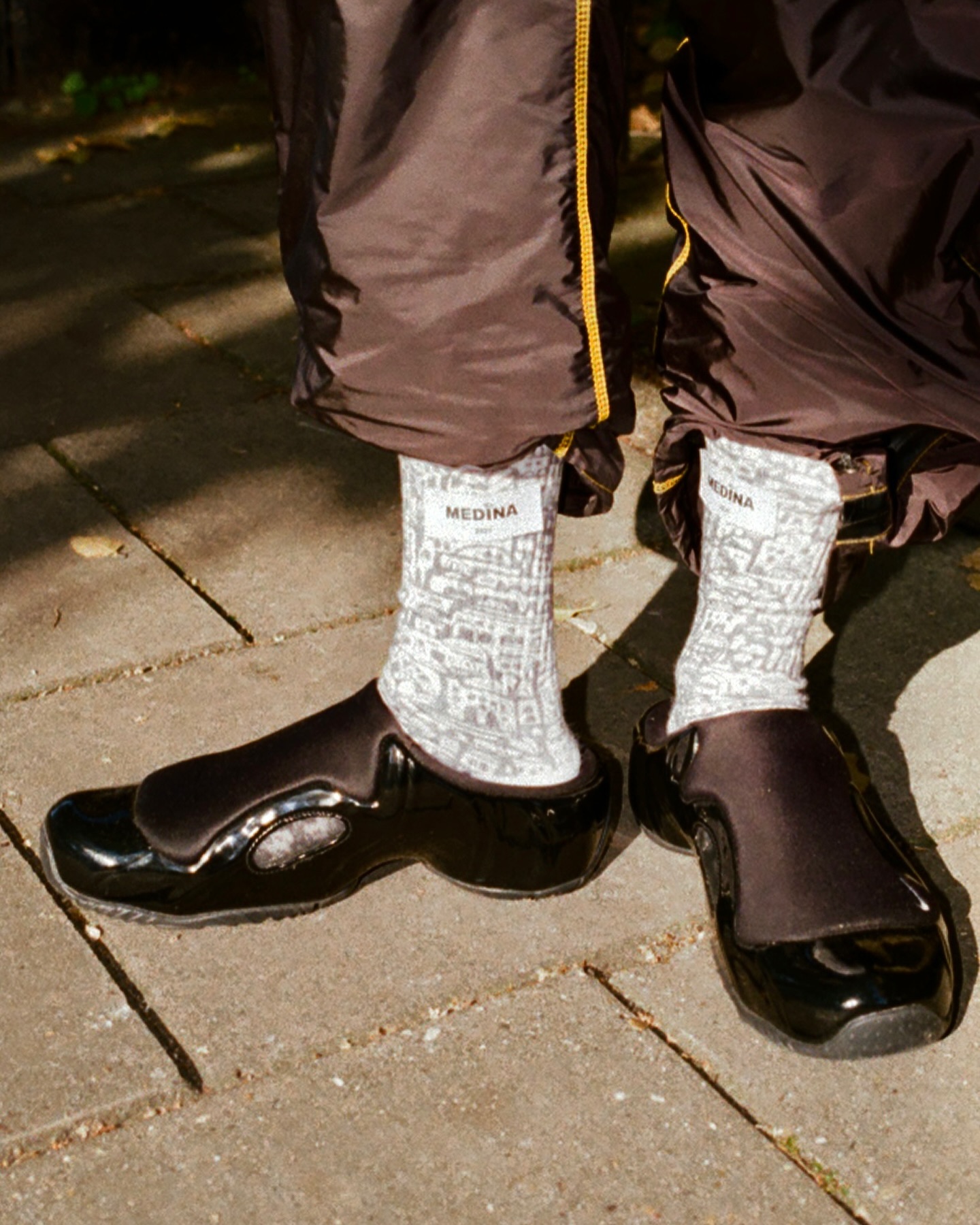
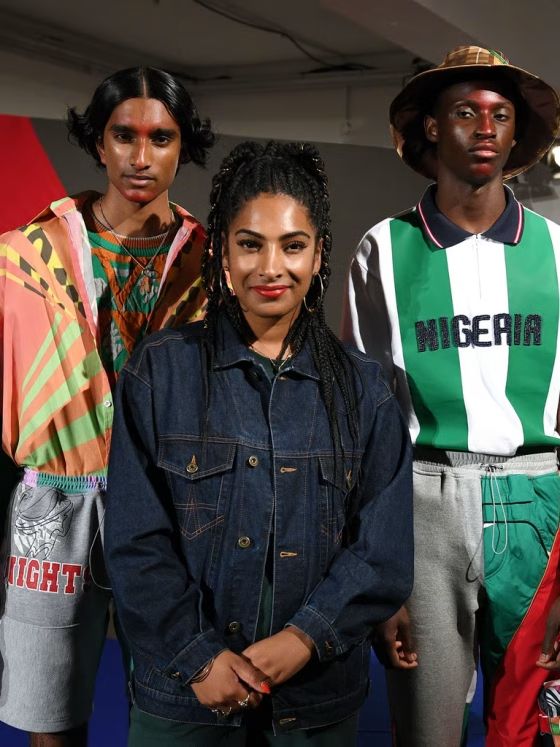
Medina’s own description is concise. It calls itself a streetwear brand that transforms staple pieces through colour, texture, cut and design, with North African heritage and iconography among its influences. The emphasis on transformation matters. A staple is recognisable before the designer intervenes. The work begins with the expectation of a shirt, jacket, or coordinated set, then adjusts what the wearer encounters. Ali’s account of his background explains why that familiarity is not confined to one place. Born in Libya and raised in London, he developed an early interest in skate culture and clothing as a means of expression. Dazed MENA connects that experience to oversized silhouettes, patchwork and his interest in asymmetry.
Libyan dress and London streetwear are therefore not two sealed categories brought together for a collection concept. They belong to the experiences that taught him to look at clothing. The evidence is clearest about his sources, rather than a complete garment-by-garment translation. In December 2024, Dazed MENA reported his preparation for work centred on zboon details he had admired since childhood. That documents a direction of investigation; it should not be treated as proof of the precise contents of a subsequently released collection. This distinction lets the cultural account remain accurate without diminishing its importance. Admiration for a form can begin a design process. The resulting garment still needs to show what has changed.
Asymmetry Gives the Shirt Another Rhythm
Medina’s Asymmetric Patchwork Crochet Shirt offers a documented example of how Ali organises contrast. In an April 2024 product post, the label described five distinct patterns, a cotton-blend composition, handmade crochet, cut-and-sew construction and a brown button fastening. These details establish more than a decorative theme. Several patterns must coexist within the boundaries of one garment. Their arrangement determines whether the shirt reads as a coherent object or as competing pieces of textile. The asymmetrical premise removes the reassurance of matching halves. It asks the eye to move through a composition rather than confirm that one side repeats the other. That can create energy within a familiar clothing category without requiring an unfamiliar method of wearing it.
The button fastening preserves the shirt’s ordinary use. It can be opened, closed and layered. The experimentation focuses on its surface and organisation rather than requiring the wearer to learn a completely new object. Hand crochet and cut-and-sew construction also identify separate stages. Textile is made, then shaped and assembled. The product information does not establish the quality of every join or the garment’s long-term durability. Still, it gives a firmer basis for understanding the work than a general description of “luxury craftsmanship”. The shirt’s strongest proposition is this coexistence: a recognisable garment carrying an unsettled visual rhythm.
Camouflage Meets an Open Structure
The Distressed Dark Camo Set, described by Medina in August 2025, develops contrast through a different arrangement. The jacket and shorts use custom-developed camouflage fabric, distressed and stonewashed, with dyed-grey crochet panels inserted between sections across the front and back. Here, crochet is not the whole field. It interrupts another textile. That distinction changes how the set reads. Camouflage supplies a dense, irregular pattern; crochet introduces visible openings. One surface is organised through printed shapes; the other through the textile’s structure. Using panels across both garments makes the relationship more systematic than a single contrasting patch. Jacket and shorts share a construction idea as well as a fabric.
Compared with the crochet shirt, the set offers a clearer organising opposition. Instead of several patterns negotiating space within one garment, two substantially different surfaces are placed against one another. The contrast is easier to describe and potentially easier to recognise as a recurring Medina device. That is not a verdict on comfort or execution. It distinguishes the designs’ visual premises. The shirt depends on managing multiplicity; the camouflage set depends on managing interruption. Both show why asymmetry and texture deserve attention in their own right. Neither needs national symbolism to matter.
Sediment Changes the Material Conversation
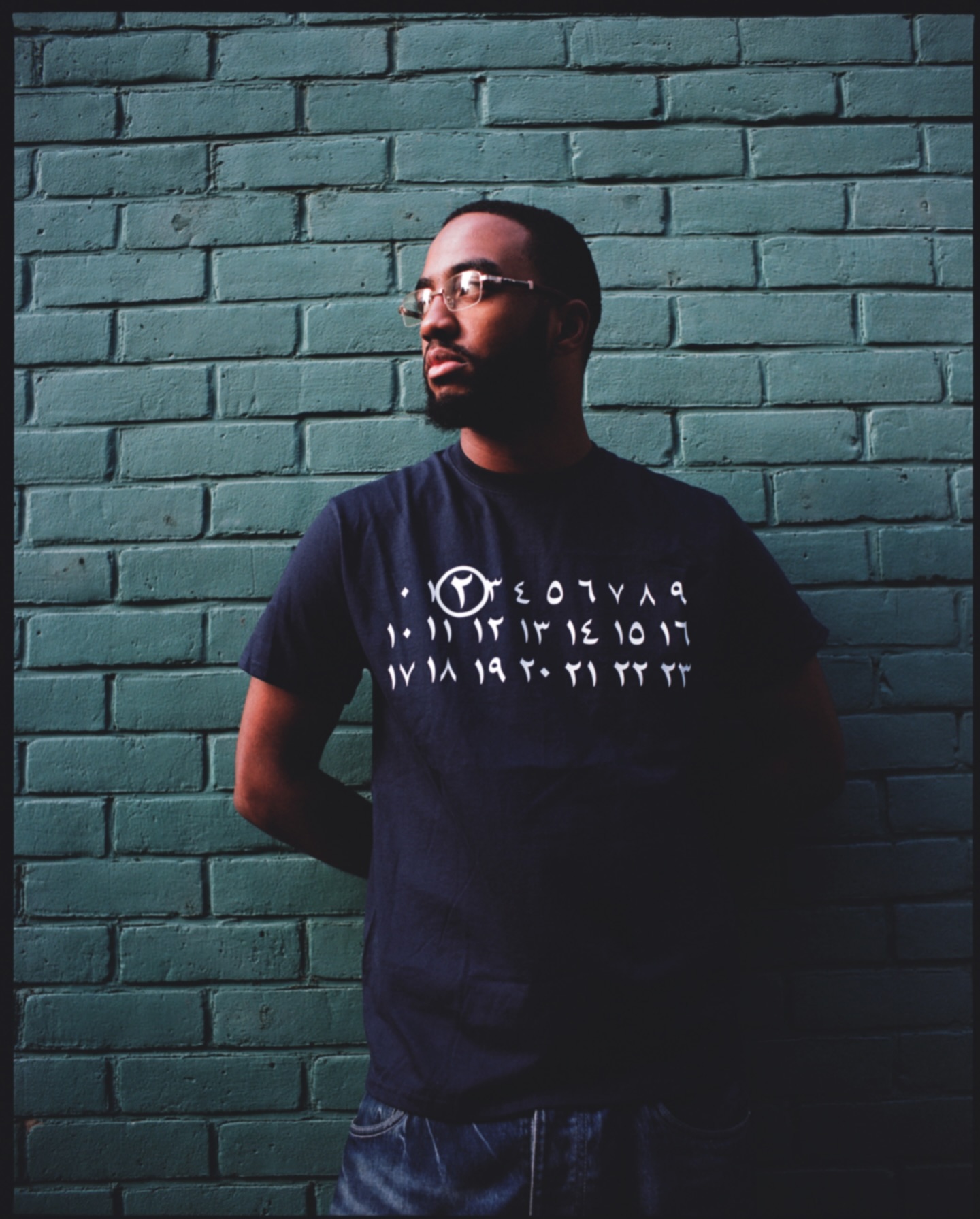
Spring/summer 2026’s Sediment brings another development into view. In a June 2026 interview with Mille, Ali described the collection as centred on Kantha fabric from India, made from reclaimed textile layers stitched by hand. He explained that differences between bolts produced variation between the pieces made from them. The collection contained 18 pieces and included other materials alongside the Kantha. Kantha should not be flattened into a generic term for colourful patchwork. A V&A collection record identifies an early twentieth-century example from Bengal as cotton embroidered in running stitch. That object is unusual because it uses a single ground layer rather than quilting, reminding us that historical objects do not all conform to one simplified description.
For Medina, the immediate design question is how an already differentiated textile enters a repeatable wardrobe. A recognisable silhouette can remain consistent while the cloth changes from piece to piece. This introduces a different source of variation from the earlier crochet shirt. There, difference is deliberately assembled within the garment’s pattern arrangement. In Sediment, part of the difference arrives with the textile itself. The designer’s task shifts accordingly. It involves selecting, cutting and placing material whose existing character cannot be treated as uniform. That is a meaningful extension of Medina’s interest in contrast. The collection moves beyond choosing how to divide a surface towards negotiating a surface that already carries variation.
A Libyan Perspective Is Not a Material Restriction
The use of Indian textiles makes an important point about how Medina should be covered. Calling Ali a Libyan designer should help readers understand his position, not require every piece to demonstrate an exclusively Libyan origin. His own explanation supports that broader reading. In Mille’s April 2025 interview, he said he wanted to offer his perspective as a Libyan growing up in and around London. Limited representation of North Africa, particularly Libya, motivated him to start the label. A perspective is not the same as a fixed aesthetic. It can guide attention towards overlooked forms while remaining open to other techniques and materials.
The more demanding question concerns attribution. When a label works with another textile tradition, naming the source should begin an account of the material, not merely serve as an evocative word in a collection description. Ali’s public account identifies India and the layered, hand-stitched nature of the cloth used for Sediment. Further reporting on its makers and sourcing would deepen that account. It should not be replaced with an assumed relationship simply because the textile is handmade.
Why the Physical Encounter Matters
Ali’s comments about Sediment also emphasise seeing the collection in person. Medina announced London and Paris pop-ups for June 2026, with the founder arguing that the texture, variation and detail of the cloth were difficult to communicate through a screen. In this case, the argument is persuasive. Photographs can show the arrangement of camouflage and crochet, but they cannot fully communicate weight, flexibility or the feel of a layered textile. A physical encounter also makes the design more accountable. The visitor can examine the join between materials, the reverse of a panel and how a garment hangs when handled.
That matters more than calling a pop-up a community event. The relevant achievement is not the atmosphere alone, but whether people gain a clearer understanding of the clothing. The same standard applies to criticism. Describing a textile’s cultural significance does not remove the need to examine its conversion into a finished object.
What Holds the Wardrobe Together?
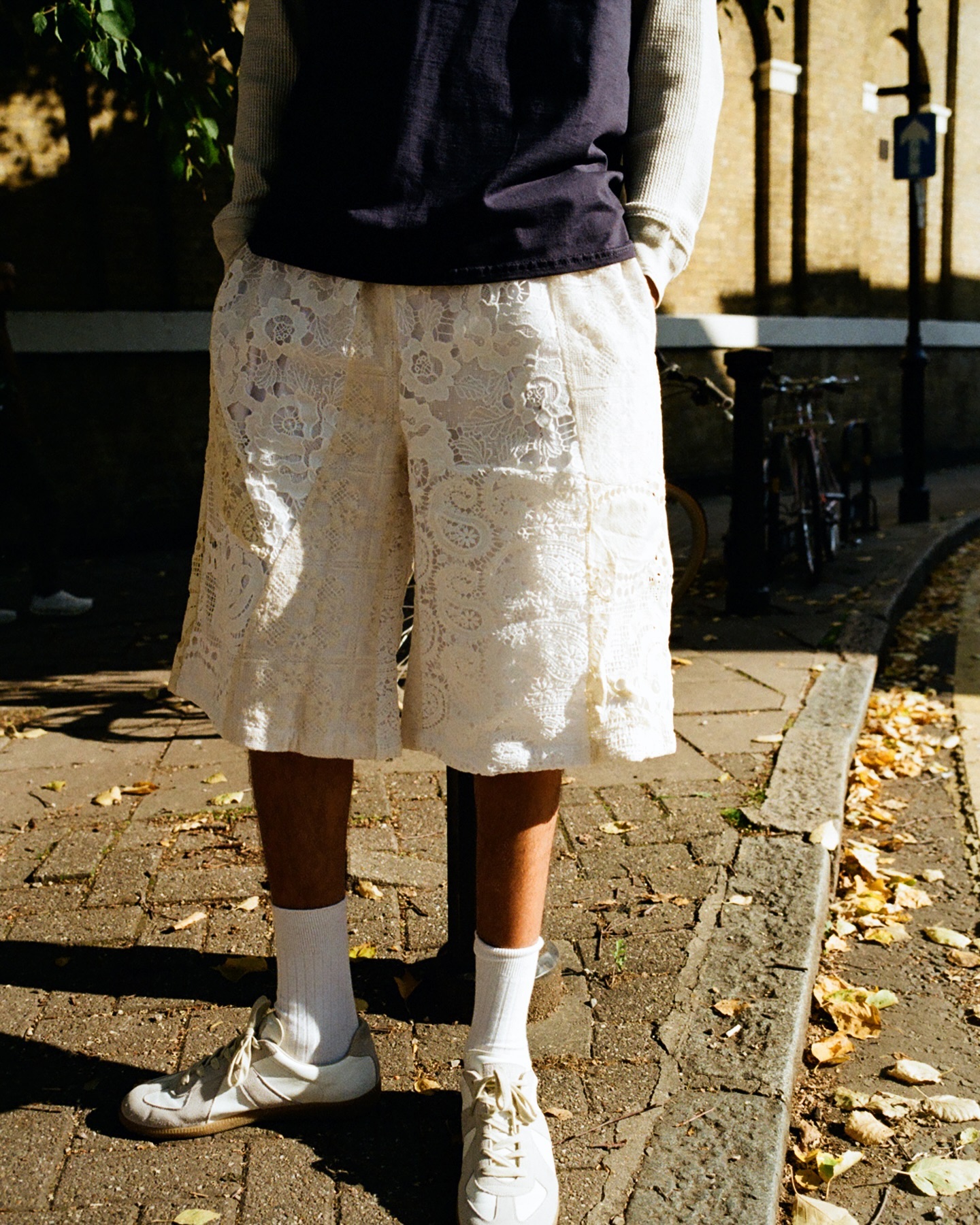
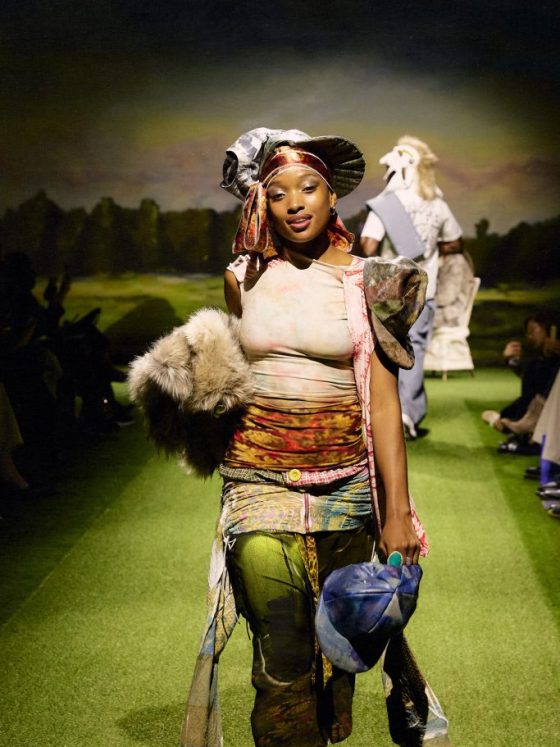
The strongest continuity across these documented products is not a single motif. It is the use of familiar clothing as a framework for contrasting surfaces. The crochet shirt assembles difference within one textile-led garment. The camouflage set makes the boundary between materials conspicuous. Sediment introduces cloth whose variation precedes the design process. This is a more substantial basis for recognising Medina than a broad promise of cultural representation. It identifies decisions that can recur without producing identical clothes. The Libyan garment references remain important to Ali’s stated practice, particularly his attention to boxy structure and ease. But the available documentation supports a more precise conclusion than a comprehensive claim about historical adaptation: Medina develops from several connected sources, and its most legible product vocabulary currently lies in cut, interruption and material contrast.
The Omiren Argument
Medina’s Libyan-London perspective is most useful when it opens design possibilities rather than explaining every detail.
The documented work shows a designer testing how much a familiar garment can change through the organisation of its surface. Crochet interrupts camouflage; several patterns occupy one shirt; and variable stitched cloth enters a coordinated collection.
Those decisions give the label a recognisable direction without requiring a fixed cultural uniform. Medina’s task is not to make every garment stand for Libya. It is to make Ali’s choices clear enough and resolved enough that the clothing contributes something of its own.
Also Read:
- Nawal Rmili Built YZA So Marrakech Craft Would Not Remain a Souvenir
- Does Wearing Your Culture Make You Exotic? The Diaspora Fashion Paradox
- African Designers in London Need More Than Visibility: The Infrastructure Test for Fashion Power
- The Cloth at Harrods: Robert Young on Production and Design
Frequently Asked Questions
Who founded Medina?
Medina was founded by Mabruk Ali, a Libya-born, London-raised designer whose interests include clothing, styling and visual work. Dazed MENA connects his early interest in skate culture and clothing as a means of expression to oversized silhouettes, patchwork and his interest in asymmetry.
What is Sediment?
Sediment is Medina’s spring/summer 2026 collection. Ali described its central material as hand-stitched Kantha fabric from India, made from reclaimed textile layers, used alongside other fabrics and details. The collection contained 18 pieces, and Medina announced London and Paris pop-ups for June 2026.
How does Libyan dress inform the label?
Published profiles identify the zboon’s boxy cut and the thobe’s ease among Ali’s references, and SceneNow also mentions an embroidered Tripoli skyline. These establish points of interest, rather than a claim that every Medina garment derives from those forms. The documentation is clearest about sources, not garment-by-garment translation.
What defines Medina’s documented products?
The Asymmetric Patchwork Crochet Shirt combines five patterns, a cotton blend, handmade crochet and cut-and-sew construction. The Distressed Dark Camo Set pairs custom-developed, distressed and stonewashed camouflage fabric with dyed-grey crochet panels. Sediment adds hand-stitched Kantha. The product posts do not establish durability or the quality of every join.