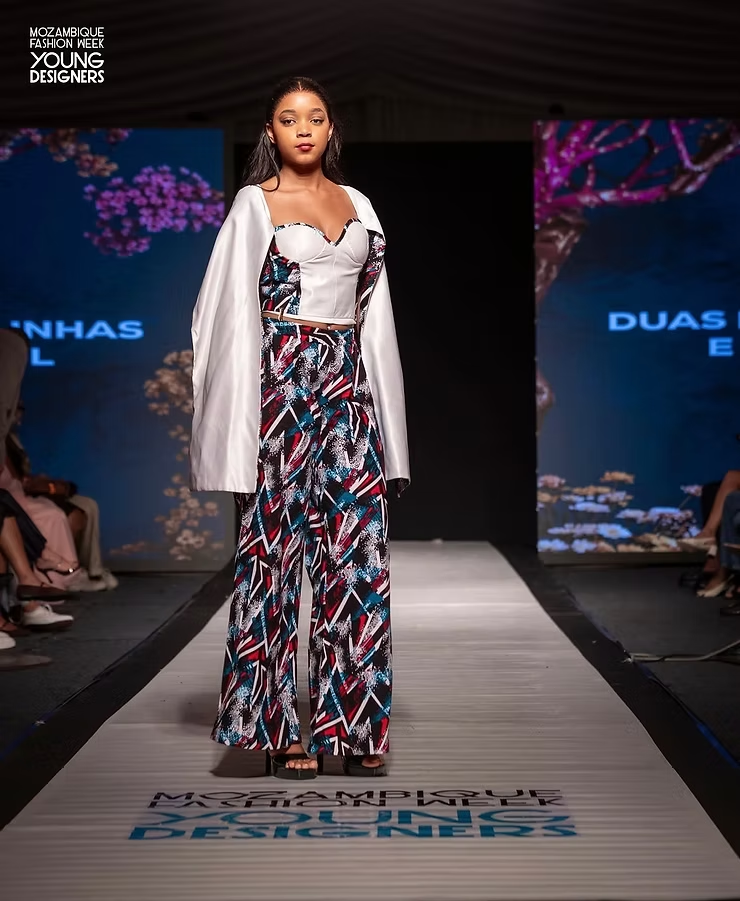
Atelier Duas Linhas brings two creative perspectives into a shared design practice. In a published account by Nsuku Khosa for Trendsetters Only, the label is introduced through the work of designers Elisa Saiete and Luisa Zandamela and a collection combining capulana with 1980s-inspired proportions.
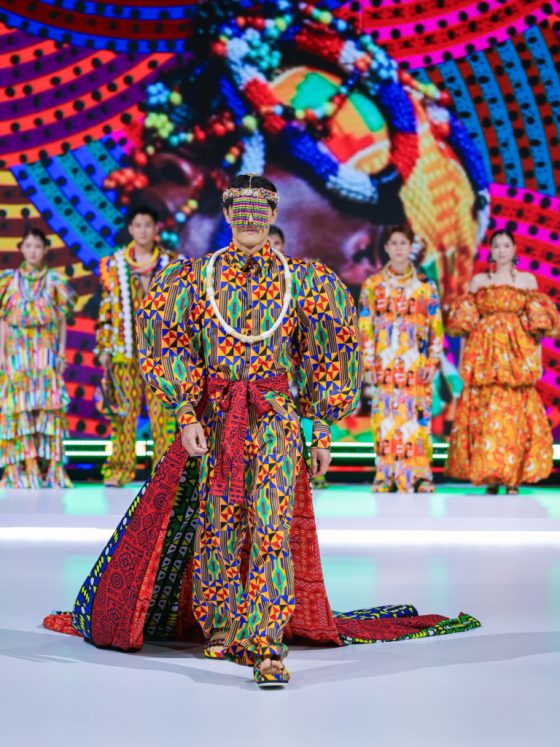
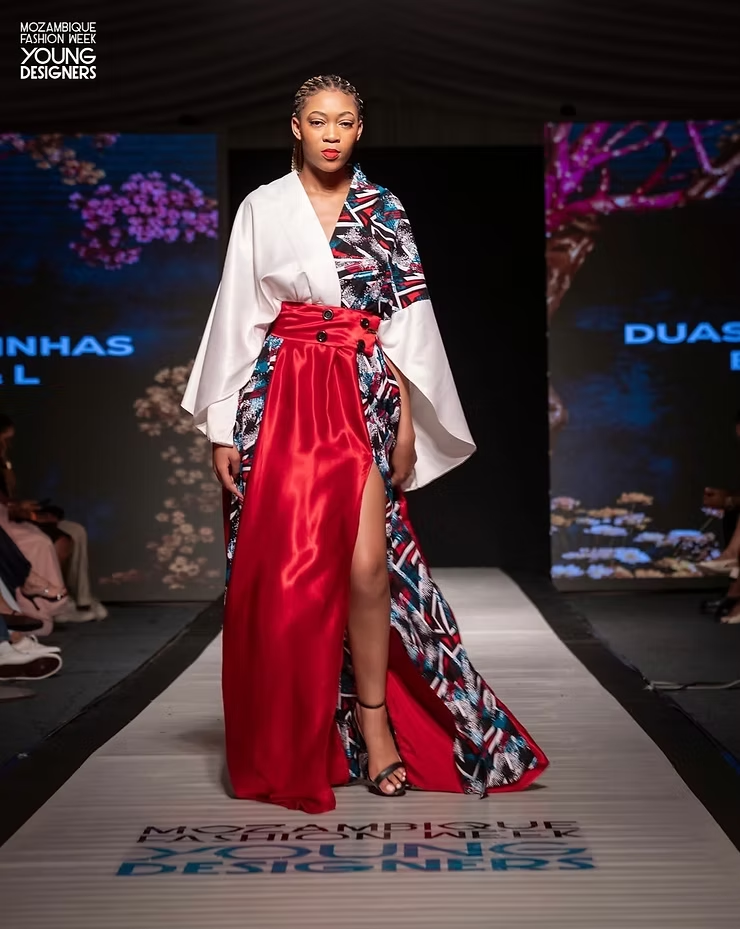
Structured silhouettes, volume, defined waists, and statement sleeves define the report’s aesthetic. The proposition is specific: a textile reference placed in conversation with an assertive silhouette.
Rather than letting “heritage” explain everything, it draws attention to the relationship between pattern and shape. That relationship is the useful starting point for discovering the label.
It also sets a boundary. The published description introduces the collection’s references, but it doesn’t explain how those references affected the cutting or construction of individual garments.
Explore Atelier Duas Linhas through a published account of its creative partnership, capulana references and 1980s-inspired silhouettes.
A partnership built around difference
In Khosa’s report, the designers describe collaboration as bringing different ideas together rather than making their perspectives identical. Here is how they put it:
“What makes our collaboration special is that we don’t try to make our ideas identical. We bring our differences together and turn them into one creative vision. Two lines, two perspectives, but one creation.”
The statement clearly introduces how the designers present their partnership. Neither is assigned a separate aesthetic role in the account, so there is no basis to suggest one supplies the cultural reference while the other determines the shape.
Instead, their explanation puts the shared result ahead of dividing creative ownership. It introduces a practice organised around exchange, while leaving the practical details of garment development unexplored.
The name carries the same idea. “Duas Linhas” means “two lines” in Portuguese, and the designers’ phrase “Two lines, two perspectives, but one creation” explains the label’s name.
The collection’s reported vocabulary
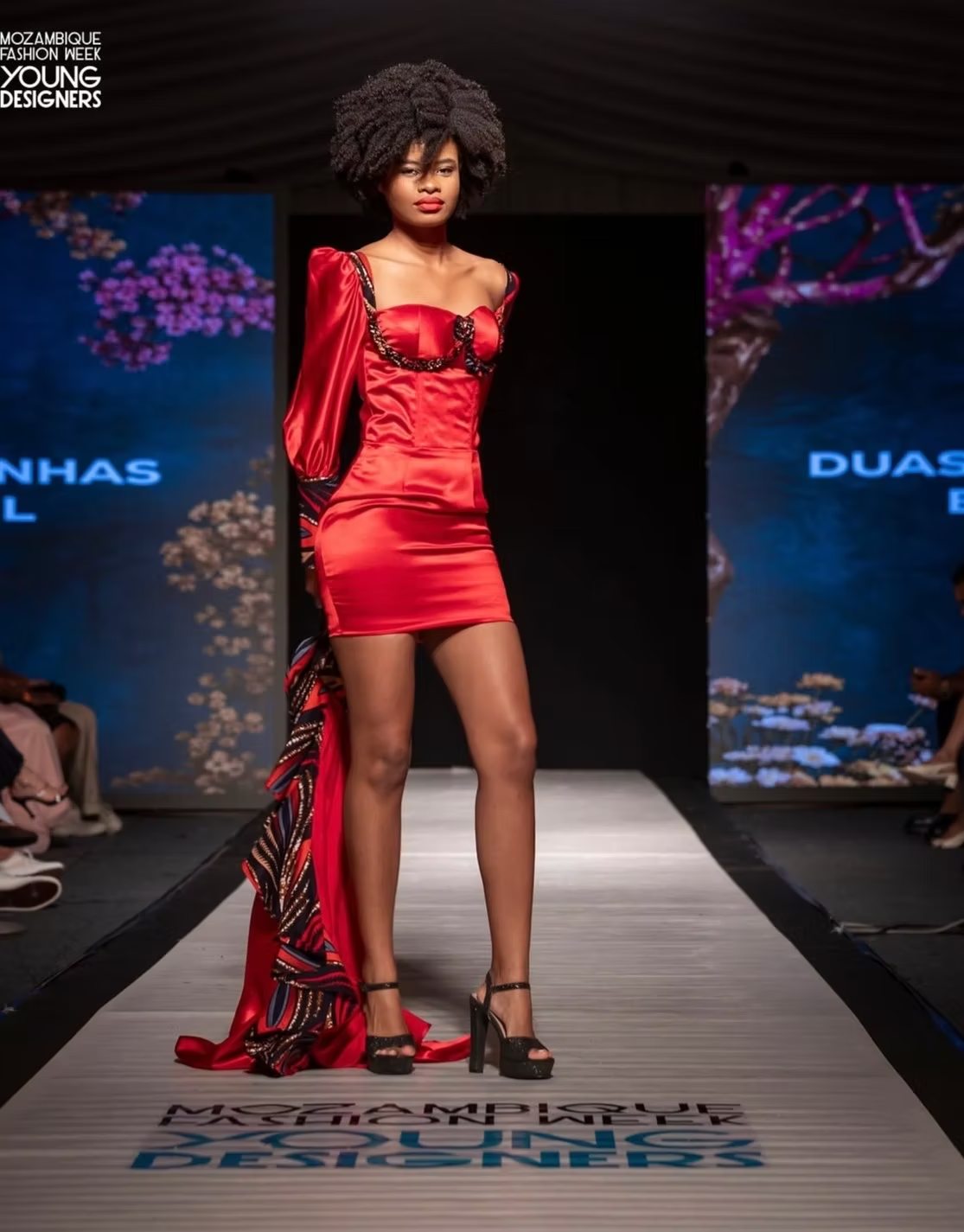
Trendsetters Only identifies the collection as “Raizes que Inspiram o Futuro”, translated in the article as “Roots that Inspire the Future”. The report describes its combination of 1980s references and Mozambican capulana through volume, defined waists and prominent sleeves.
It presents the label as an emerging, Maputo-based practice that debuted the collection at Mozambique Fashion Week. According to the same report, the label has operated for under a year, and the two designers draw on more than five years of combined garment-making experience.
These details distinguish the introduction from a general statement about tradition meeting modernity. They name the reported elements of the clothes: an emphasis on proportion alongside a textile reference.
The distinction matters because silhouette and surface are not interchangeable. One concerns the outline and distribution of a garment’s shape; the other concerns its visible pattern, colour and texture.
They can reinforce one another, but we must examine their relationship rather than assume it.
Capulana in context
Capulana is not simply a print. The National Museums Scotland project Women’s Identity, Textiles and Heritage presents capulanas as symbols of Mozambican heritage, markers of women’s identity, and records of women’s histories and memories passed down across generations.
Trendsetters Only describes the capulana as a cultural textile central to Mozambique, which fits that wider picture. It also explains why a label reaching for the cloth takes on a reference that already carries meaning for many wearers.
For a broader textile context, Omiren’s Mozambique Capulana Cloth: From Everyday Fabric to Modern Silhouettes considers capulana’s place in contemporary dress. That background provides a related reading path, not independent evidence about Atelier Duas Linhas’s collection.
In the 1980s, half of the pairing is a silhouette reference rather than a textile one. Structured shapes, volume, defined waists and statement sleeves describe how a garment sits on the body, so the two references work on different parts of the same dress.
A young label at its first runway
The report places the collection at the start of the designers’ public story. It describes months of sketching and late adjustments that came together just before the show and says the designers realised they had succeeded when the first model walked out.
Trendsetters Only treats Mozambique Fashion Week as a launching pad rather than a peak. It presents the label as evidence that Mozambican design can speak a bold, contemporary language.
The designers close the account with a line of their own: “Our roots are our inspiration, our creativity is our language, and the future is our runway.” That sentence states intent, and like the rest of the report, it describes how the label wants to be understood, not how its garments perform.
A first collection is also a first test. Early reporting like this records the stated aims before the clothes have time to prove or complicate them.
What the references do, and do not, establish
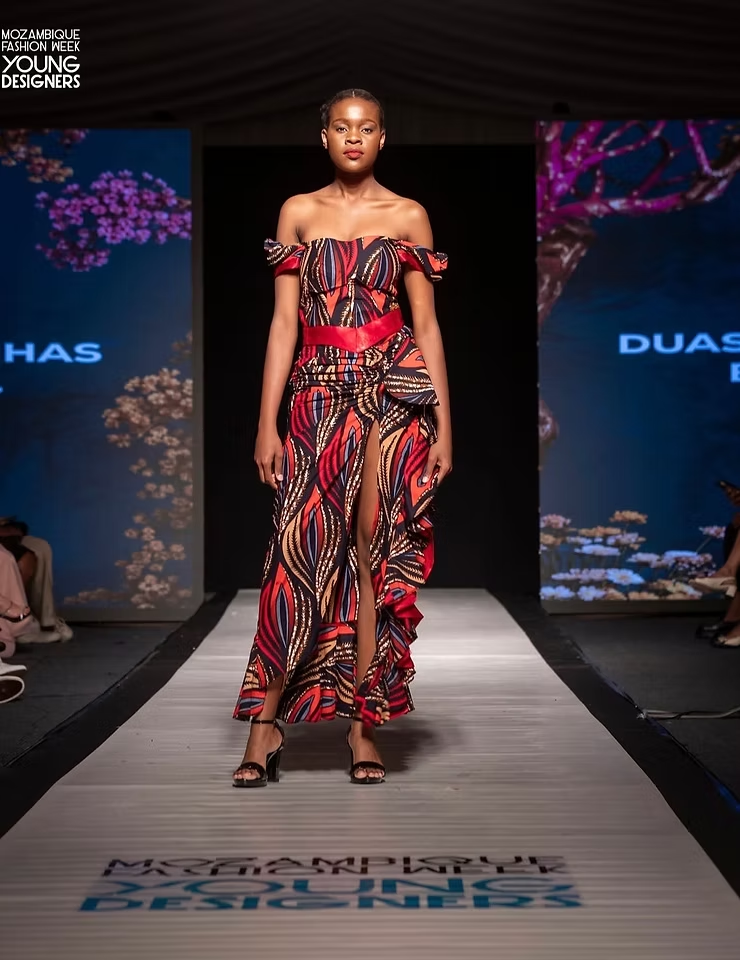
The source establishes how the collection was described in published coverage. It does not provide a technical explanation of how the garments are constructed.
Its reference to structured silhouettes should therefore not be expanded into claims about internal support, particular pattern-cutting methods or specialist finishing.
The capulana reference also needs to remain precise. Its inclusion does not, by itself, establish where the fabric was produced, who designed its patterns, or which manufacturing processes were used, and the report supplies none of those details.
That is the standard we apply to verify a fashion brand’s fabric claims: a named cloth is the start of a question, not the end.
This leaves an important distinction between a collection’s stated vocabulary and its execution. The available account identifies the vocabulary, while a detailed assessment of execution would require individual looks and reliable information about their making.
Surface work should not automatically be treated as the lesser contribution. Pattern placement can be central to a garment’s visual organisation.
Equally, a pronounced silhouette does not demonstrate that a textile reference shaped its construction. The critical task is to identify the relationship in the clothes rather than infer it from the collection’s theme.
Reading a debut report with care
A single published account is a starting point. Omiren has not interviewed the designers or examined the collection, and the label did not appear under this name in the Mozambique Fashion Week designer directory or the 2025 gallery.
That absence does not disprove its participation. It means those pages don’t corroborate the debut Trendsetters reported. Only, so we attribute the account elsewhere.
Credit matters too. When a label names its designers but not its pattern cutters, printers, or sewers, the full story of who made the clothes remains unwritten, a gap we discuss in what a heritage fashion product page should clarify.
The report gives readers a clear claim to test: Capulana and 1980s-inspired volume can share one garment without either becoming decoration. Closer collection reporting, with individual looks and the designers’ own account of their making, would show whether that claim holds.
Three kinds of evidence would settle the question. Photographs of individual looks would show how the capulana sits against the structure, the designers’ own account would explain how they placed the pattern, and information about the cloth would say where it came from.
Until then, the fair reading is modest. The label has stated its references clearly, and the clothes still have to answer for them.
The Omiren Argument
Atelier Duas Linhas’s reported combination of capulana and shaped proportions offers a focused reason to examine the label. Its significance should not be reduced to nationality, nor should a heritage reference secure a favourable design verdict in advance.
The most useful introduction preserves what is specific: the named partnership, the reported collection title and the stated relationship between textile and silhouette.
Whether heritage changes the garments’ form and making or works principally through their surfaces remains a question for closer collection reporting. It is not a conclusion established by the available account.
Also Read:
- Mozambican Men’s Capulana Style: Shirts, Accessories and Everyday Dress
- African Textile Reporting: 8 Editorial Shortcuts That Need Fact-Checking
- Bubu Ogisi of IAMISIGO: The Designer Who Refuses to Make African Fashion Legible to the West
- Luanda’s Suit Is Not a Colonial Leftover: How Angolan Men Made Tailoring Their Own
Frequently Asked Questions
Who are the designers behind Atelier Duas Linhas?
Trendsetters Only identifies Elisa Saiete and Luisa Zandamela as the label’s founders and describes it as an emerging, Maputo-based practice. This article attributes those details to that published account.
What collection does the report describe?
The article names “Raizes que Inspiram o Futuro”, translated there as “Roots that Inspire the Future”. That wording is reproduced from the source rather than an independently obtained collection document.
What are the collection’s reported design references?
The report describes capulana alongside 1980s-inspired structured silhouettes, volume, defined waists and statement sleeves.
Is this an independent collection review?
No. This is an attributed introduction based on published reporting. It does not present first-hand garment inspection, an Omiren interview or a technical assessment of construction.