The suit arrived in Luanda as an instrument of colonial control. The Portuguese colonial administration in Angola created the assimilado system: a legal and social category that granted certain advantages to African men who adopted the Portuguese language, dress, Catholicism, and urban culture. The suit was one of the category’s visible markers. A man in a suit was assimilado. A man in traditional dress was indigena. The colonial administration used clothing as a classification system, and the suit was worn by those allowed, by the coloniser’s permission, to be slightly less marginalised than everyone else.
The African fashion and beauty market is part of the continent’s 31-billion-dollar economy. Luanda’s suit tradition is not the story of Angolan men successfully imitating Portuguese dress. It is the story of Angolan men taking a garment designed to classify them, removing it from the classification system, and wearing it on their own terms until it means something completely different from what it was given to mean. As Every Culture’s documentation of Angolan colonial social structures confirms, the assimilado system was extremely hierarchical, and the number of assimilados was never high. The men who occupied that category were sharply divided on regional and religious lines. Wearing the suit placed a man inside a colonial hierarchy. How he wore it and what he made it mean were his own decisions.
The Luanda suit is described as colonial imitation. It is not. It is the result of Angolan men deciding what wearing a suit meant on their own terms.
The Assimilado System and the Suit as Classification
The Portuguese colonial administration in Angola formalised the assimilado category in the early 20th century. An assimilado was an African or mixed-race person who had been certified as having adopted Portuguese civilisational standards: who spoke Portuguese, had converted to Catholicism, had a stable income, and lived in a way that the colonial administration recognised as compatible with the civilised status it claimed for itself. The suit was the most immediate visible sign of this status. It communicated, to anyone who saw it in the street, which side of the colonial classification system the wearer was on.
Luanda’s Creole community, the Angolans of mixed African and Portuguese descent who had been in the city for generations before the 20th-century formalisation of the assimilado system, had already developed a dress practice that incorporated tailored dress into a distinctly Luandan social identity. Cambridge University Press’s historical documentation of carnival in Luanda confirms that in 1620, at the end of the most serious round of slave wars in Angola’s history, political allegory and mimicry were already incorporated into street processions, and that the Creole community regularly adapted its public ceremonials to the shifting political and religious climate across the 19th century. A community capable of political allegory through public ceremony understands how to use dress as a statement. The suit, when it arrived as a colonial classification tool, entered a community that already knew how to handle clothes.
In the damp heat of a West African afternoon, an African man in a perfectly cut suit under the equatorial sun was not demonstrating compliance. The fabric was all wrong for the climate. He wore it anyway. The suit was not the message. The wearing of it was. And in Luanda, with the assimilado system on one side and the musseques on the other, the decision to put on a suit and wear it well was one of the most politically specific acts available.
The Continental Context: Tailoring as Resistance
Luanda’s suit tradition belongs to a wider African history of men using tailored dress as a political and cultural statement, documented across the continent since the early colonial period. As Guzang’s May 2026 analysis of colonial dandyism in African fashion confirms, from the late 19th to the mid-20th centuries, as European colonial powers carved up Africa, African men across Lagos’s humid docks, Accra’s dusty streets, and Leopoldville’s riverfront markets took up the European suit. They stitched it into a radical act of selfhood. This wasn’t just dressing well. It was dressing against. With every tailored seam and defiant accessory, they turned a tool of subjugation into a banner of power, dignity, and wit.
In Nigeria, young men in Lagos and Ibadan embraced a gentleman style in which suits were cut from local aso-oke rather than imported wool and paired with Yoruba fila caps. In Ghana, kente cloth appeared as trim on Western blazers, or the cloth was recut entirely into bespoke suits, ancestral stripes draped over colonial silhouettes. The Concert Party troupes used zoot suits as tools of satire, turning colonial fashion inside out on stage. Each of these practices demonstrates the same underlying logic: the suit was an available material for making a statement, and the statement had nothing to do with the colonial administration’s intention in designating the suit as the mark of the assimilated African.
This continental tradition of Black dandyism received its most significant institutional recognition at the 2025 Met Gala, whose theme was Superfine: Tailoring Black Style. As the Fashion Talk Substack’s documentation of the West and Central African dandy legacy confirms, dandyism was no longer just a look. It was a philosophy: dress with intent, use the master’s tools to undo the master’s house, and let the suit itself become the evidence that Black elegance is not borrowed. It is owned.
Luanda’s Specific Argument
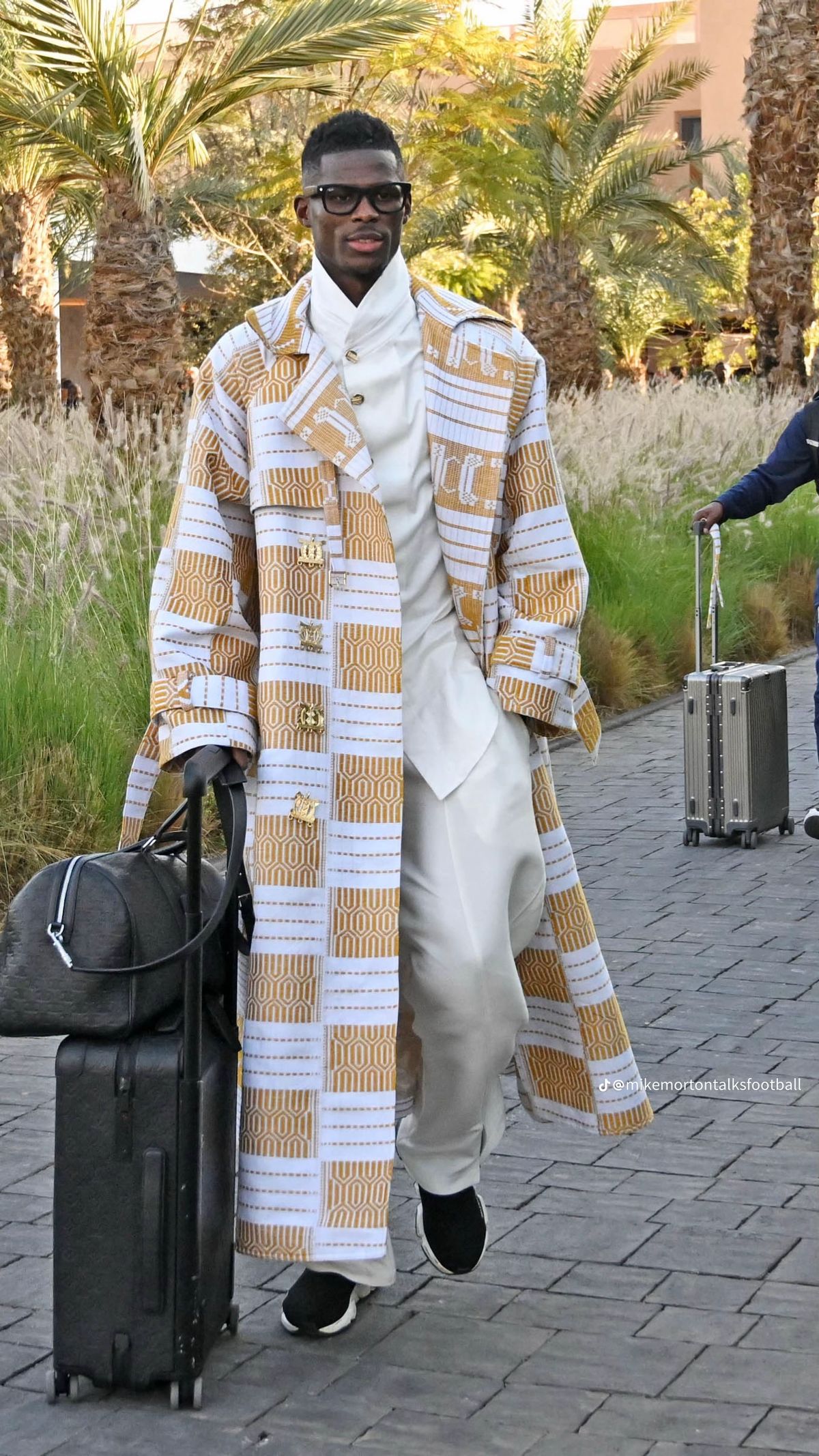
Luanda’s version of this tailoring tradition is shaped by the specific conditions of Angola’s colonial history and urban geography. The musseques, the informal settlements around Luanda that are home to a large portion of the capital’s population, stood in sharp contrast to the modern city and its assimilado residents. A man in a suit in Luanda in the 1950s was positioned between these two worlds: the formal city where the suit was the price of admission to certain spaces, and the musseques where the suit was either aspirational or alien. The specific way Angolan men wore the suit negotiated this positioning.
The Luanda Creole community’s long history of political performance through public dress gives Luanda’s tailoring tradition its specific character. The assimilado who wore a suit in Luanda in the mid-20th century was not simply adopting Portuguese dress. He was continuing a practice of public self-presentation that Luanda’s Creole community had been developing since the 17th century, now expressed through a garment that the colonial system had designated as its own symbol, and being worn in a way that the colonial system could not fully control. The suit was the uniform of a category the coloniser created. What the wearer put inside the uniform was his own.
Contemporary Luanda and the Living Suit Tradition
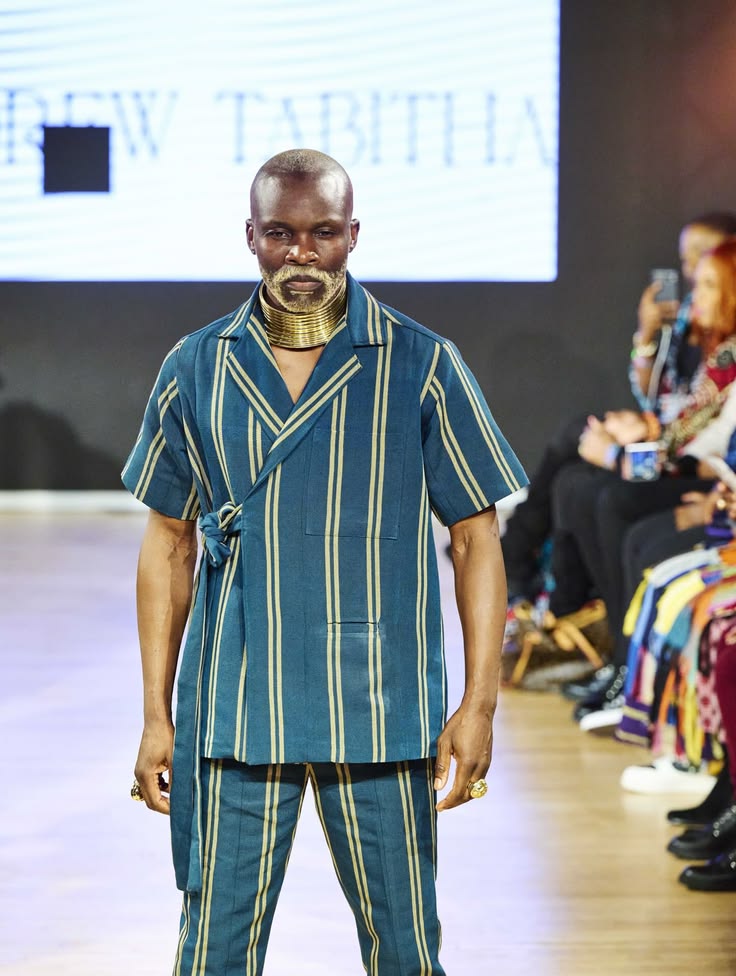
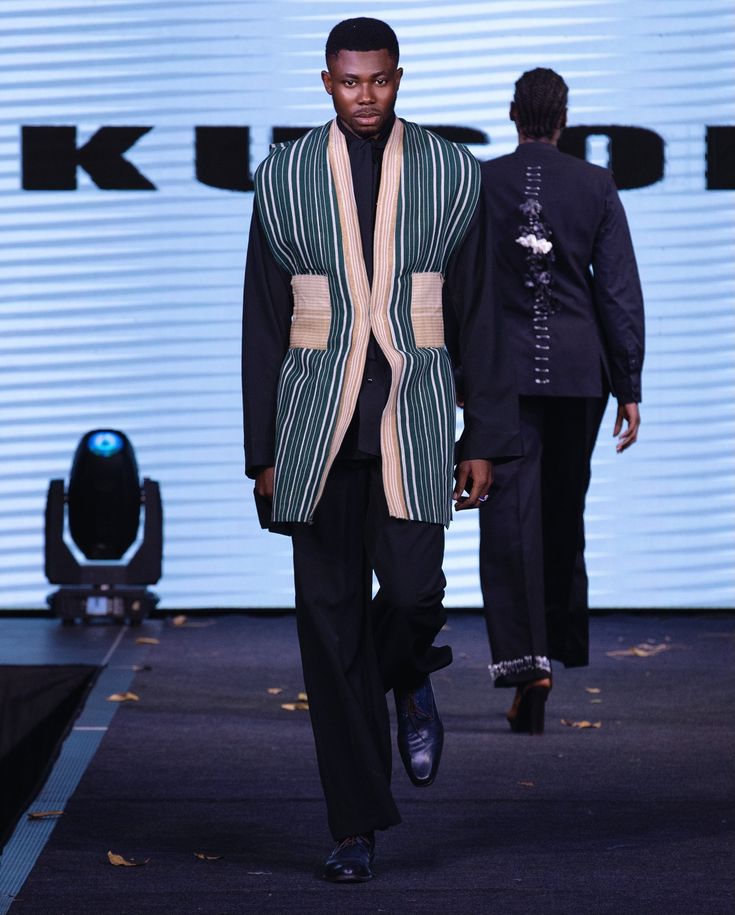
The suit tradition in Luanda is not only historical. Contemporary Angolan men maintain a strong dress culture centred on formal and semi-formal tailoring for urban life, professional occasions, and celebration. As Omiren Styles’ documentation of the African dandy tradition confirms, across the African continent, there exists a long-standing tradition of men who dress not simply to be seen but to be remembered. Their clothing is intentional, expressive, and deeply tied to identity. Luanda participates in this tradition through its own specific history: a city whose Creole community has understood the political potential of dress since before the formal colonial period, and whose contemporary men carry that understanding forward through the specific way a suit is pressed, fitted, and worn in Angola’s capital.
Contemporary Luanda supports active tailoring culture and atelier production. The Angolan carnival, whose tradition dates to 1978 as a national event and to 1620 as a street performance tradition, involves elaborate costuming that demonstrates Luanda’s community capacity for dress as spectacle, political statement, and collective identity. Angola’s import data confirm that men’s suits are a dynamic commercial segment: men’s and boys’ suits, jackets, and blazers constitute a significant category in Angola’s clothing imports. This is not a declining tradition maintained by elderly ceremony. It is a living dress culture.
The Axiluanda Dress and the Broader Luanda Dress Vocabulary
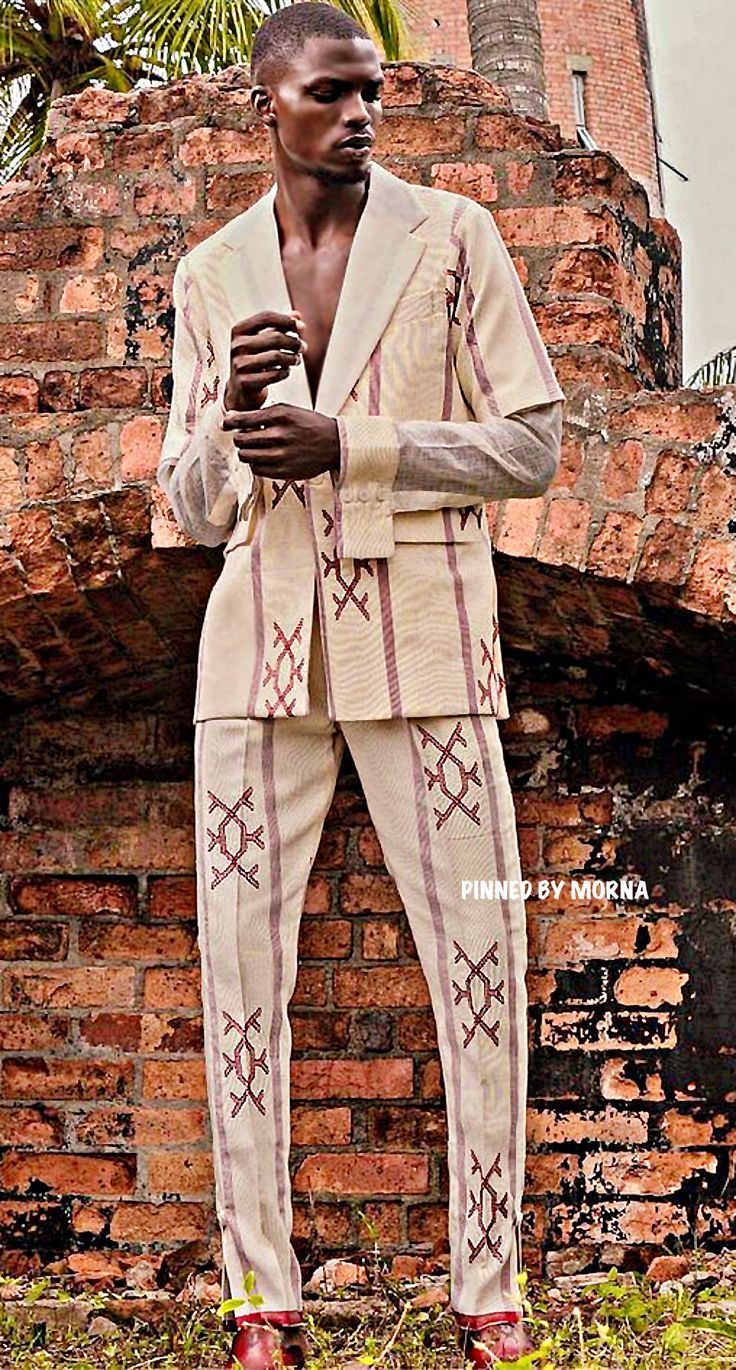
The suit tradition coexists in Luanda with the Axiluanda dress, the traditional dress of the Axiluanda people, the indigenous community of Luanda’s coast whose cultural practices predate and run alongside the city’s colonial and Creole history. The Axiluanda dress is recognised as a symbol of Angolan heritage, specifically that of the people who have lived along the Luanda coast since before the Portuguese arrival. Its coexistence with the suit tradition in the same city demonstrates what Luanda’s dress culture actually is: not a single uniform style but a set of overlapping dress traditions, whose practitioners each make specific choices about what their clothes mean and whom they are addressing.
A man in Luanda in 2026 who puts on a well-cut suit and wears it with the attention to fit and presentation that the city’s tailoring tradition demands is not performing colonial identity. He is participating in a tradition of elegant self-presentation that his city developed against a colonial backdrop precisely to assert something the colonial system did not intend to enable: that Angolan men’s dignity was not the coloniser’s to grant or withdraw, and that the most refined possible presentation of that dignity, using the coloniser’s own uniform against its intended purpose, was available as a political act.
The Omiren Argument
Luanda’s suit is not a colonial leftover because a garment’s history is not determined by who made it available or for what purpose. It is determined by what the people who wore it made it mean. The African fashion and beauty market is part of a 31-billion-dollar continental economy. The assimilado system gave Angolan men the suit as a classification tool: a way of visually indicating that the wearer had been admitted to a slightly less marginalised position in the colonial hierarchy. Angolan men took that tool and used it to say something else entirely: that their elegance was their own, that their dignity required no colonial certification, and that a perfectly pressed suit in the heat of Luanda, worn with the precision and care that the city’s tailoring tradition demands, was an argument about who they were that no administrative category could contain. Across the continent, the same argument was made with the same garment in Lagos, Accra, Brazzaville, and Johannesburg. The suit was everywhere the coloniser’s uniform and everywhere the colonised man’s most available form of visible resistance. Luanda is the Angolan city where that argument was made, is still being made, and will continue to be made by men who understand that the suit now belongs to them.
Also Read:
- The African Men Who Dress to Be Remembered: Style, Power, and the Continent’s Forgotten Dandy Tradition
- Black Consciousness Made Dress Political: Steve Biko, the Afro Look and Apartheid South Africa
- The Uniform of Liberation: Samora Machel’s Field Dress and Mozambique’s Memory of War
- Who Should Define Cultural Authority in Fashion? Start With the Makers
Frequently Asked Questions
What is the assimilado system in Angola?
The assimilado system was a legal and social category created by the Portuguese colonial administration in Angola that granted certain advantages to African and mixed-race people who were certified as having adopted Portuguese civilisational standards: speaking Portuguese, converting to Catholicism, having a stable income, and living in ways the colonial administration recognised as compatible with its standard of civility. Assimilados were distinguished from indigenas (indigenous people) in colonial law and were permitted access to certain spaces and rights that indigenas were denied. The suit was among the visible markers of assimilado status. The number of assimilados was always small, and those who occupied the category were divided along regional and religious lines.
How did Angolan men adopt the suit as their own?
Angolan men, particularly Luanda’s Creole community with its centuries-long history of public political performance through dress, took the suit from its colonial classification function and used it to make their own statements about dignity, elegance, and identity. Rather than wearing the suit as an acknowledgement of colonial permission, they wore it as an assertion of their own standards of self-presentation. This is consistent with the continental pattern documented throughout West and Central African dandyism, in which African men in Lagos, Accra, and Brazzaville adopted the European suit and transformed it into a statement of selfhood and resistance.
What is the dress tradition of the Luanda Creole community?
Luanda’s Creole community, the Angolans of mixed African and Portuguese descent with deep roots in the city, developed a tradition of political performance through public dress, documented at least as far back as 1620, when political allegory and mimicry were incorporated into street processions celebrating the canonisation of Saint Francis Xavier. Across the 19th century, the community regularly adapted its public ceremonials to the shifting political and religious climate. This tradition of dress as a political statement predates the formal assimilado system and gave Luanda’s men an existing framework for interpreting and using the suit when it arrived as a colonial classification instrument.
How is the Angolan suit tradition connected to African dandyism?
Luanda’s suit tradition is one expression of the wider continental tradition of African dandyism in which men across the continent, from the late 19th century onward, took European tailored dress and transformed it into an act of cultural resistance, dignity, and self-definition. The 2025 Met Gala theme, Superfine: Tailoring Black Style, provided the most recent institutional recognition of this tradition, acknowledging that what appeared to outsiders as African men adopting European fashion was, in fact, African men taking a tool of colonial classification and stitching it into a manifesto of self-ownership. Luanda’s version is shaped by the specific conditions of the assimilado system and the city’s long Creole tradition of political public performance.
What is the Axiluanda dress tradition?
The Axiluanda dress is the traditional attire of the Axiluanda people, the indigenous community along the coast of Luanda whose cultural practices predate the Portuguese colonial period. The Axiluanda dress is recognised as a symbol of Angolan heritage, specifically of the heritage of the people who have lived along the Luanda coast since before European contact. Its coexistence with the suit tradition in contemporary Luanda illustrates the city’s actual dress culture: multiple overlapping traditions whose practitioners each make specific choices about what their clothes mean and who they are addressing.
Explore More
Read the full Culture > Heritage & Identity section for Omiren Styles’ documentation of Angolan dress traditions, African dandyism, and the history of African men turning colonial dress into cultural argument.
Discover travel and heritage intelligence across Angola and southern Africa at Rex Clarke Adventures.