Pick up most skincare or beauty products, and you will encounter a sentence that sounds like a fact but is not quite one. ‘Made with natural ingredients.’ ‘Clean beauty formula.’ ‘Sustainably sourced.’ ‘Eco-conscious.’ These phrases are marketing claims, and what separates a claim from a fact is the evidence behind it. The question is not whether the phrase sounds good. The question is what, specifically, it asserts, and whether anything a consumer could examine or verify backs it up.
This is not a consumer affairs article about dishonest brands. Most language on beauty product packaging isn’t straightforwardly false. It occupies a greyer territory: claims that are technically defensible under some reading but that carry implications the evidence does not support. A product with a small percentage of natural ingredients can call itself ‘with natural ingredients’ without lying. Whether that description creates a misleading impression is a different question. The difference between the claim and what the evidence shows is where informed decision-making begins.
Beauty products make a lot of claims. Natural, clean, eco-friendly, sustainably sourced. This article explains what those claims can legally mean, what evidence they require, and how the EU’s 2026 regulations are changing what brands can say without proof.
The Regulatory Frame
Beauty and personal care products are subject to claims regulation in every major market. In the European Union, EU Regulation 655/2013 sets out six common criteria that cosmetic product claims must meet: legal compliance, truthfulness, evidential support, honesty, fairness, and enabling informed decision-making. These criteria apply to all cosmetic product claims in the EU, not just environmental ones.
The more recent regulatory development is Directive (EU) 2024/825, also called the Empowering Consumers Directive (ECGT), which bans generic environmental claims without proof and applies from 27 September 2026. EU member states transposed this directive into national law in March 2026. Under its requirements, generic claims such as ‘eco-friendly’, ‘green’, ‘natural’, ‘biodegradable’, ‘recyclable’, ‘carbon neutral’ and ‘clean beauty’ can only be made if they are supported by verifiable evidence. That evidence must be available in the same medium as the claim, on the label, on the product page, or in the advertisement. Evidence in an internal file the consumer cannot see does not meet the requirement.
The proposed Green Claims Directive, which would have gone further by requiring pre-approval of environmental claims, was withdrawn by the European Commission in June 2025 and remains under re-drafting with no confirmed timeline for reintroduction. This does not reduce the requirements under Directive 2024/825, which is enforceable from September 2026 regardless. The withdrawal means the Empowering Consumers Directive sets the bar for cosmetics environmental claims rather than a stricter standalone instrument. Still, it remains a meaningful bar for brands operating in EU markets.
What Different Claim Types Actually Mean
Natural
‘Natural’ is one of the most common claims on beauty packaging and one of the least regulated in many markets. No globally agreed legal definition of ‘natural’ exists in cosmetics. In the EU, a product making a ‘natural’ claim must substantiate what that claim means and why it is accurate. A product containing a high percentage of naturally derived ingredients may support the claim. A product with a small percentage of natural ingredients alongside a large percentage of synthetic compounds can use ‘natural’ as a product description and still create an impression that may not be accurate.
Many consumers do not know the distinction between ‘natural’ (the substance as it exists) and ‘naturally derived’ (a substance processed from a natural origin). A naturally derived ingredient has been processed: it originated in a natural source but has been chemically or physically transformed. Whether the resulting ingredient carries the properties of the original natural source depends on the process. The claim ‘naturally derived’ is therefore not the same as ‘natural’, and neither is as simple as it sounds.
Clean
‘Clean beauty’ has no agreed legal definition in any market. It is a marketing category, not a regulated standard. Brands define clean differently: some use it to mean free from a list of specific ingredients; others mean formulated without synthetic chemicals; others apply it to packaging and supply chain practices. Because the term has no fixed meaning, a ‘clean beauty’ claim tells you that the brand has defined clean in some way that it believes the product meets. It does not tell you what that definition is unless the brand discloses it.
From September 2026, a generic ‘clean beauty’ umbrella claim on EU-market products without substantiation will fall under the Empowering Consumers Directive’s restrictions. This matters because substantiation must be specific and present: describing a clean beauty philosophy on a brand’s website is not enough when the product packaging carries only the claim.
Sustainably sourced
An ingredient-level sourcing claim cannot be presented as a product-level or brand-level statement. ‘Sustainably sourced shea butter’ claims one ingredient’s supply chain. It says nothing about the product’s full environmental footprint, its packaging, its manufacturing processes or its other ingredients. When a product description uses a single sustainably sourced ingredient as evidence of the product’s overall sustainability, it extends an ingredient-level claim to a product-level implication the evidence does not support. The claim about the shea butter may be true. The implied claim about the product is not supported.
Hypoallergenic
‘Hypoallergenic’ suggests that the product is less likely to cause allergic reactions than standard products. The regulatory requirements for this claim vary by market. In the EU, a hypoallergenic claim requires robust evidence and, where required, third-party certification. In practice, the term has been used so widely and with so little standardisation that it can create a general impression of safety and gentleness that the product’s formulation or testing may not support. A product can legitimately claim to be hypoallergenic if it has been formulated and tested to minimise allergen risk. A product cannot support the claim simply by omitting a single common allergen while retaining others.
Free-from claims
Free-from claims (‘paraben-free’, ‘sulphate-free’, ‘fragrance-free’) are among the most common in beauty marketing. EU Regulation 655/2013 restricts these when the substance is not commonly used in the product category (claiming to be free from a substance that is not typically present is misleading), when the claim would denigrate competitors who use the substance lawfully, or when the free-from framing could mislead consumers about the substance’s safety in general. A ‘paraben-free’ claim on a product where parabens are commonly used may be informative in practice. The same claim on a product type where parabens are rarely used is effectively meaningless as a differentiator, and may imply an unfounded concern about the absent substance.
The Six Criteria a Claim Must Meet in the EU
EU Regulation 655/2013 sets six criteria that every cosmetic product claim in the EU must satisfy. Understanding these criteria is useful for reading beauty claims from any market, because they represent a systematic account of what an honest claim requires:
- Legal compliance: the claim must comply with all relevant laws
- Truthfulness: the claim must be accurate and not mislead about the product’s nature, composition, properties, functions or effects
- Evidential support: the claim must be substantiated by adequate evidence, including expert assessment and consumer studies where appropriate
- Honesty: the claim must not attribute characteristics to the product that it does not possess, or imply equivalence with products of a higher standard
- Fairness: the claim must not denigrate competitors or ingredients used lawfully in other products
- Informed decision-making: the claim must enable informed choice rather than exploiting consumer concern or anxiety
The sixth criterion captures the specific problem with much beauty marketing: language that exploits consumer concern. A free-from claim that positions the absent ingredient as dangerous, a ‘clean’ claim that implies conventional products are dirty, and a ‘natural’ claim that implies synthetic ingredients are inherently harmful: each of these exploits a concern rather than providing factual information. The criterion requires that the claim enable informed decision-making, meaning the consumer should be better placed to choose a product after reading the claim than before. A claim that creates unfounded anxiety rather than providing specific product information fails that test.
What This Means in Practice
A claim that creates anxiety rather than information doesn’t inform the consumer. It is directing them.
Reading beauty product claims with the six criteria in mind feels different from accepting them at face value. The question to ask about any claim is, ‘What specific assertion is being made, and what evidence would support it?’ A claim that the product contains a high percentage of naturally derived ingredients is a specific, verifiable assertion. A claim that the product is ‘clean’ isn’t specific until the brand defines what ‘clean’ means in its context. A claim that the product is ‘sustainably sourced’ needs to specify what is sourced, from where, and how the sourcing was assessed.
From July 2025, all online listings in the EU must display the same ingredient and safety information as physical packaging. This means the ingredient list, which has always been required on physical products, must now be provided online with the same level of detail. A consumer reading a product page in an EU market after July 2025 should be able to find the full ingredient list without navigating away from the product page. The ingredient list is the most reliable document accompanying any beauty product because it is a regulated disclosure: every ingredient, listed in descending order of concentration, using the standardised INCI (International Nomenclature of Cosmetic Ingredients) naming system.
The same discipline that applies to reading textile provenance claims applies here. A claim is an assertion. The evidence is what sits behind it. The gap between the two is where informed decision-making happens. A fabric described as ‘sustainably produced’ needs the same scrutiny as a product described as ‘sustainably sourced’. What specifically is being claimed, who verified it, and does the specific evidence support the full implication of the language being used?
African Botanical Ingredients and Sourcing Claims
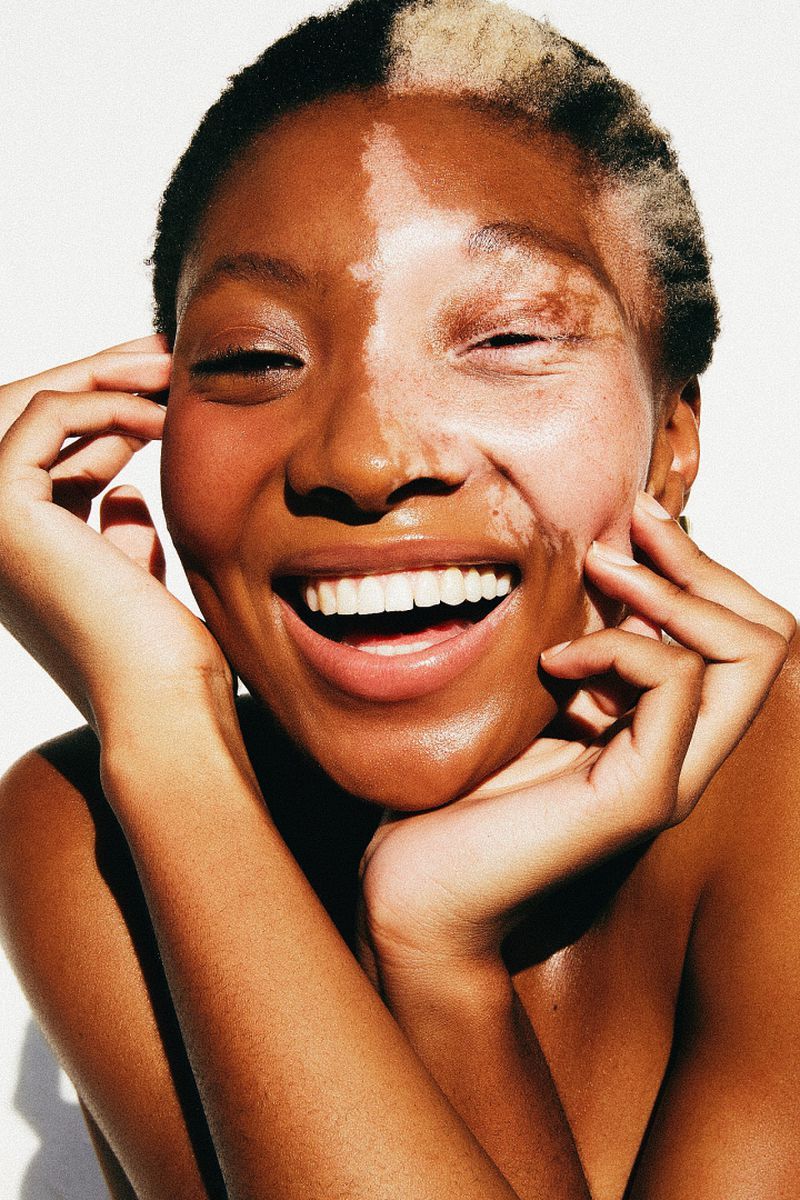
Beauty products that use African botanical ingredients, shea butter, baobab oil, marula oil, rooibos, moringa, black seed oil frequently carry sourcing and origin claims. These claims matter in multiple ways: for consumers who want to understand where their product’s ingredients come from, and for the communities in sourcing regions whose labour and knowledge produced those ingredients.
The question of who benefits from using African ingredients in internationally marketed beauty products is the beauty industry’s equivalent of the fashion industry’s maker-credit gap. A product that claims ‘fair trade’ shea butter is making a claim about the economic relationship between the brand and the producers of that ingredient. That claim requires the same substantiation as any other: which certification, verified by whom, covering which aspects of the supply chain, and disclosed where the consumer can see it. A sourcing claim without that specificity is not an account of the supply chain. It is an impression of one.
African botanical ingredients are frequently described using the language of ancient use, traditional knowledge and natural abundance. Those descriptions are often accurate. They do not, on their own, constitute evidence that the specific ingredient batch in a specific product was sourced in a way that was fair to the people who produced it, that the knowledge associated with the ingredient was credited appropriately, or that the environmental practices at the sourcing site meet the standard implied by the product’s claims. The narrative and the evidence are different things.
ALSO READ
- What Textile Provenance Can – and Cannot – Prove
- How to Verify a Fashion Brand’s Fabric Claims
- The Global South Made Fashion. It Just Never Got Credit.
- Can Heritage Textiles Scale Without Losing Their Meaning?
Frequently Asked Questions
What does ‘natural’ mean on a beauty product?
No globally agreed legal definition of ‘natural’ exists in cosmetics. In the EU, a natural claim must be substantiated, meaning the brand must have evidence to support it. The term can legitimately be applied to a product with a high percentage of naturally occurring or naturally derived ingredients. ‘Naturally derived’ is not the same as ‘natural’: a naturally derived ingredient has been processed from a natural source and may have different properties from the unprocessed original. Without knowing how a specific brand defines and substantiates its natural claim, the term alone doesn’t tell you precisely what the product contains or doesn’t contain.
What is the EU’s 2026 beauty claims regulation?
Directive (EU) 2024/825 (the Empowering Consumers Directive) bans generic environmental claims such as ‘eco-friendly’, ‘green’, ‘natural’, ‘biodegradable’, ‘carbon neutral’ and ‘clean beauty’ on products sold in EU markets unless those claims are supported by verifiable, specific evidence available on the same medium as the claim. The directive applies from 27 September 2026. EU Regulation 655/2013 sets the six criteria for all cosmetic product claims and applies continuously. The proposed standalone Green Claims Directive was withdrawn in June 2025 and has not been reintroduced.
What does ‘clean beauty’ mean?
‘Clean beauty’ has no agreed legal definition in any market. Different brands define it differently: some use it to mean a specific list of excluded ingredients; others apply it to formulation philosophy; others extend it to packaging or supply chain practices. Because the term isn’t standardised, a ‘clean beauty’ claim only tells you that the brand has a definition of clean it believes the product meets. From September 2026, EU markets will restrict generic clean beauty claims without substantiation under Directive 2024/825.
What does ‘sustainably sourced’ mean on a beauty product?
A sustainably sourced claim on a beauty product can refer to one ingredient’s supply chain, to multiple ingredients, or to the product’s full environmental footprint. An ingredient-level claim cannot be extended to a product-level implication without additional evidence. A product that claims sustainably sourced shea butter is making a claim only about that ingredient’s supply chain. Whether the rest of the product’s ingredients, packaging and manufacturing processes are also sustainable is a separate question that the shea butter claim does not answer.
What is a free-from claim in beauty products?
A free-from claim states that a product does not contain a specific substance (‘paraben-free’, ‘sulphate-free’, ‘fragrance-free’). EU Regulation 655/2013 restricts free-from claims when the substance is not commonly used in the product category, when the claim would denigrate competitors who use the substance lawfully, or when the claim could mislead consumers about the substance’s safety. A free-from claim is most informative when it refers to a substance commonly present in similar products and one the consumer has a specific reason to avoid.
How do I find out what is in a beauty product?
The ingredient list is the most reliable document that comes with any beauty product. EU regulations require the full ingredient list on the physical packaging, and from July 2025 the same list must appear on online product listings in EU markets. Ingredients are listed in descending order of concentration using the INCI (International Nomenclature of Cosmetic Ingredients) naming system. The INCI name is standardised across markets, so the same ingredient appears under the same name regardless of the brand. Reading the ingredient list alongside any claim on the packaging is the starting point for understanding what the product contains and whether the claim corresponds to what is there.