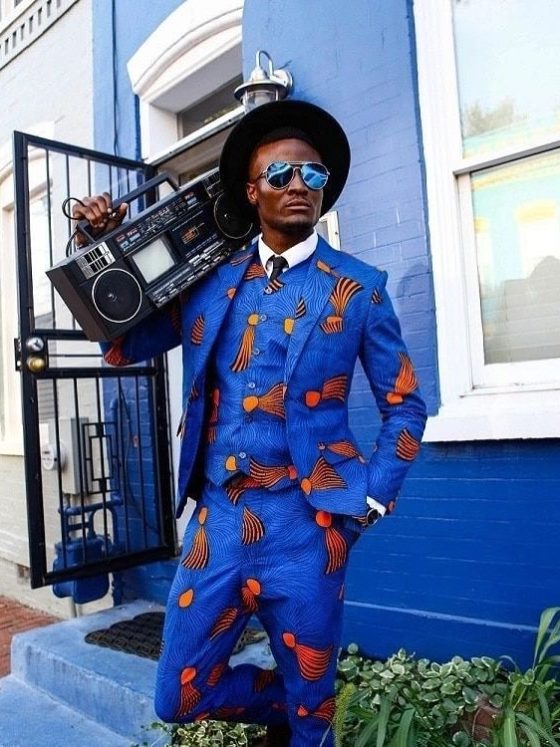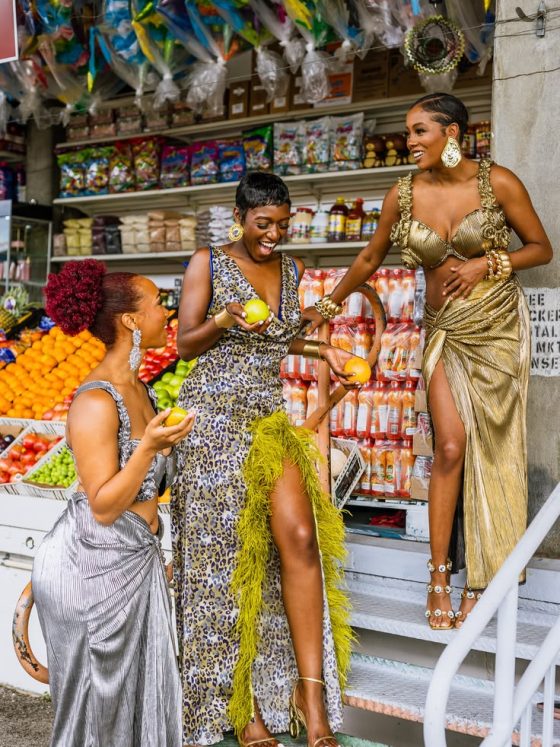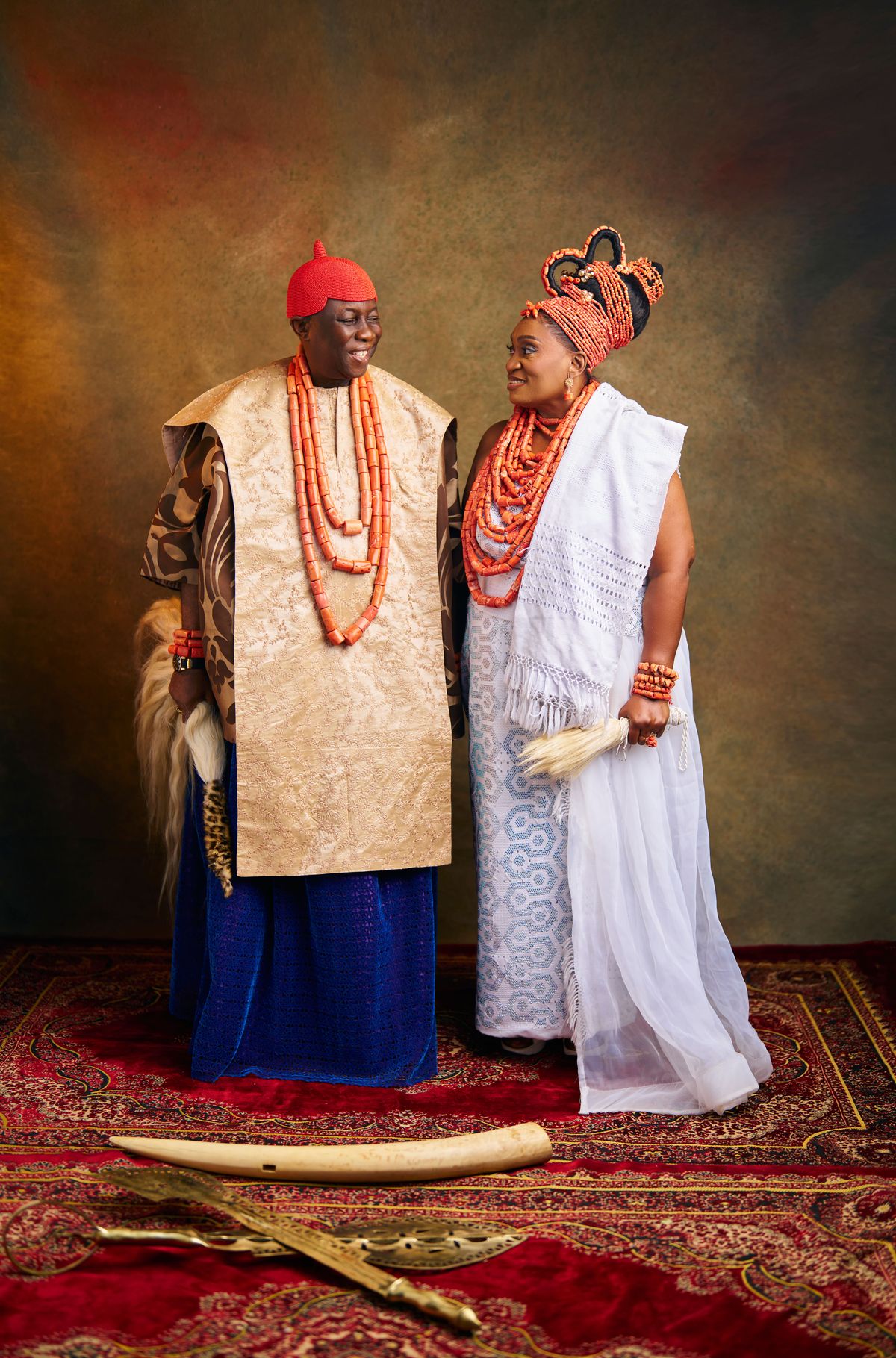
The groom arrives, and the room adjusts.
Not because of the colour. Not even because of the embroidery, though that will be studied later when people gather close. The room adjusts to the volume of the outer robe: the width at the sleeve and the sleeve width, before a single word has been exchanged. The fabric moves before the man moves and gestures. That makes it a communication, and the people in the room who know this dress tradition read it before they look at anything else.
Volume in African ceremonial dress is a vocabulary. Like any vocabulary, it is specific to a tradition, shaped by its history, structured by rules its practitioners know and changed over time by the wearers and makers who decide what is appropriate for which occasion. It is not a single vocabulary shared across a continent of 54 countries, more than 1,000 language groups and centuries of distinct textile and dress traditions. Any article that treats it as such confuses the reader and doesn’t help them.
This article helps avoid that. Instead, it examines how volume functions as meaning in specific traditions, focusing on what is documented, distinguishing documentation from interpretation, and centring the makers and the practice that produces the grammar this article is reading.
The word ‘agreads’ is a Yoruba term that translates, approximately, as ‘voluminous attire’. The volume is not a consequence of the garment’s design. It is the design’s primary purpose. The size of the outer robe is what makes the garment what it is: remove enough volume, and you have a different garment with a different name and a different set of cultural associations. Volume is the argument.
Volume in African ceremonial dress is not decoration. It is a vocabulary. This article examines how volume, form, cloth, artistry, occasion and wearer combine to communicate status across specific ceremonial dress traditions, naming what is documented and distinguishing it from interpretation.
Form: What the Silhouette Says Before Anything Else
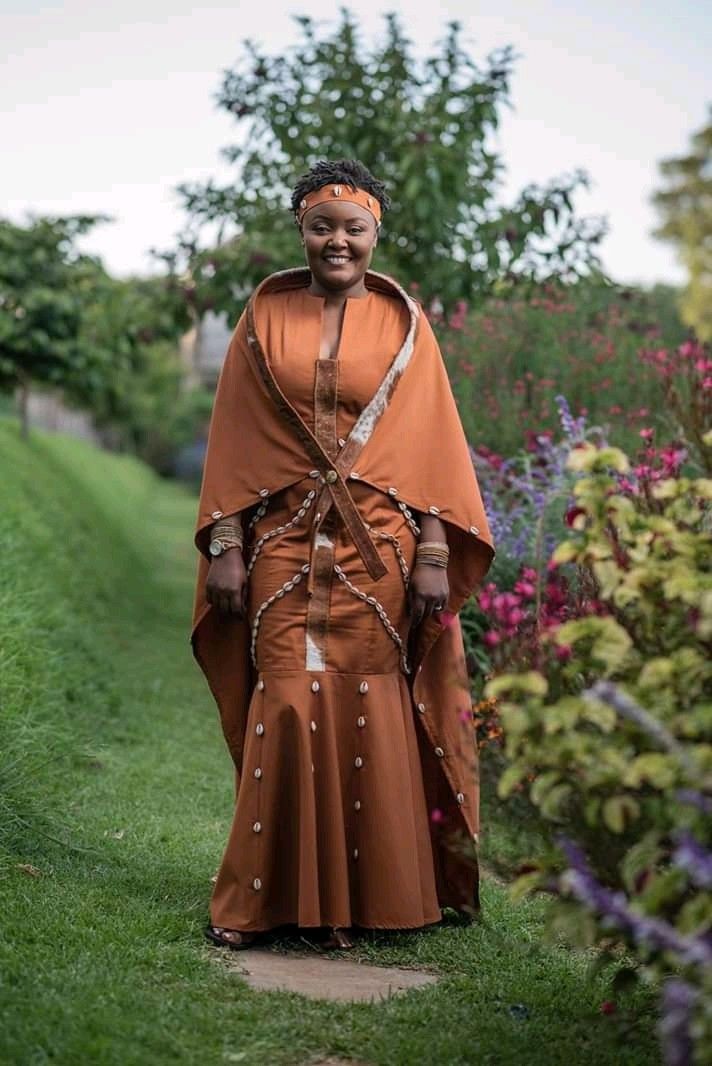
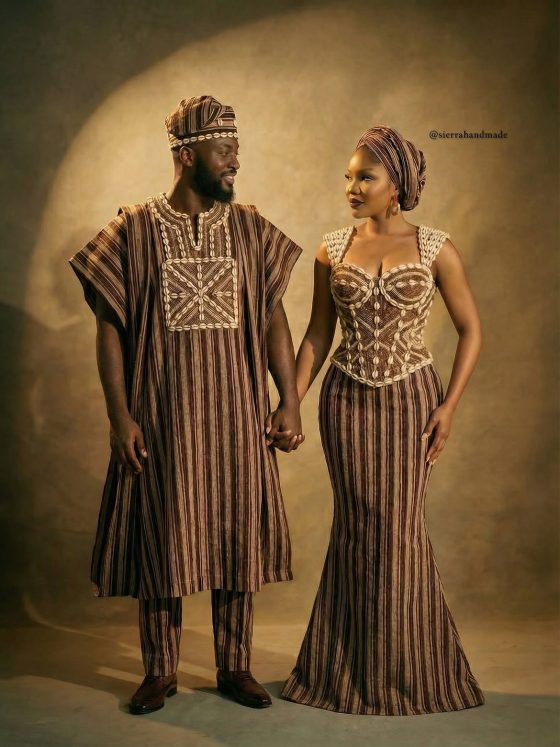
As Omiren Styles has documented, in its analysis of the agbada, boubou and the silhouette of power across West Africa, the agbada has become the standard ceremonial dress of Yoruba chiefs and the preferred public dress of Nigeria’s political class across ethnic lines. Governors are sworn in wearing it. Senators hold legislative sessions in it. The most elaborate form is called ‘agbada nla’ or ‘girike’: larger, more ornate, and fashioned from heavier, more expensive materials. The distinction between the everyday and ceremonial is primarily a matter of scale. One is much bigger. That is the beginning of its difference and the beginning of its meaning.
The ceremonial agbada’s silhouette components. The agbada’s silhouette robe, called awosoke, is the volume: dramatically voluminous, with sleeves reaching the sleeves or below, designed to create a shape whose width exceeds the functional requirements of covering the body. The underrobe, or awotele, is fitted closer to the body and more closely to the structure beneath the robe’s sweep. The trousers, sokoto, are narrow at the ankle: the contrast between the narrowness below and the width above is a studied proportion rather than an accident of construction.
That proportional contrast matters. The wide outer robe and the narrow trousers create a specific visual hierarchy: mass above the waist, precision below. The eye is drawn upward, toward the embroidered chest, the neckline, and the face. The garment is constructing where the viewer looks. This is not unconscious. It is a design decision whose cultural logic connects to the garment’s social tie: to frame presence as significant before the wearer has done anything to establish their significance.
The boubou, known across French-speaking West Africa as the grand boubou and in Hausa as babban riga, shares the wide-sleeved over-robe silhouette but is a distinct garment with distinct regional variations and distinct cultural associations. The scholarly consensus, documented in Encyclopedia.com’s fashion reference, is that the wide-sleeved robe form arrived in sub-Saharan Africa through trans-Saharan trade, introduced by Berber and Arab merchants, and was adopted and adapted by communities across the region over centuries, each developing their own construction motifs, embroidery traditions and occasion protocols.
This origin history matters to the grammar of volume argument because it establishes that communities made the silhouette their own rather than that it belongs to a single people. The agbada is Yoruba. The babban riga is Hausa. The grand boubou is Wolof, Malian, or Senegalese. Each is a distinct garment with its own vocabulary, even when the silhouette shares ancestors.
Cloth: What the Fabric Says About the Occasion
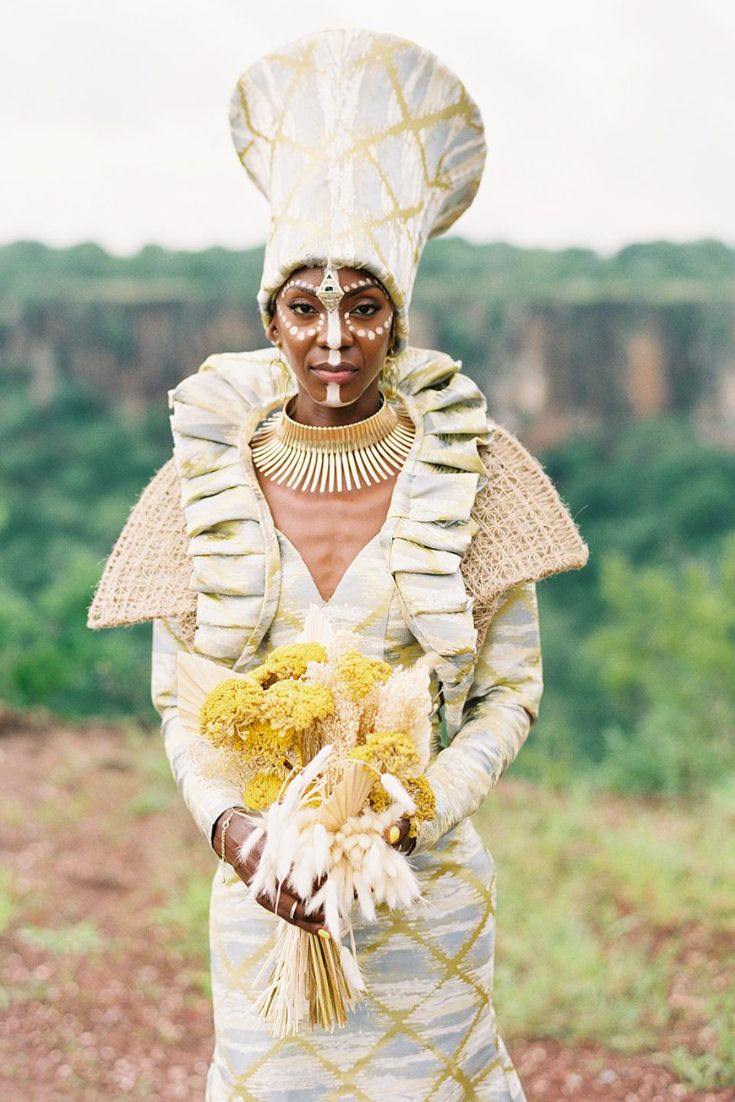
As Omiren Styles has shown in his analysis of material intelligence in African fashion, material intelligence turns a fabric from a visual reference into a production decision, a cultural relationship, an economic commitment, and a sustainability position at once. In ceremonial dress, this argument is most immediately visible: the fabric of a ceremonial garment is never a neutral choice. It states the occasion, the wearer’s resources, and the wearer’s relationship to the cultural tradition the garment represents.
In the agbada tradition, the fabric hierarchy is clear and documented. Aso-oke, the hand-woven narrow-strip Yoruba prestige cloth, sits at the top for ceremonies. One specific aso-oke variant for the agbada is called etu, named for its resemblance to the light-and-dark striped pattern of the guinea fowl’s plumage. Etu aso-oke is not simply a fabric choice: it signals that the wearer understands and participates in a specific textile tradition whose knowledge is itself a form of cultural authority. A ceremonial agbada made in etu aso-oke says something different from the same silhouette made in machine-woven brocade, even when the two garments occupy the same physical space at the same ceremony.
The fabric hierarchy also communicates the occasion’s weight. A wedding-quality ceremonial agbada uses different cloth than a Friday prayer agbada. Hand-woven cloth, whose production took days, communicates more occasion-seriousness than a factory-made equivalent. The wearer who arrives in hand-woven aso-oke has communicated, before greeting anyone, that they treated this occasion as worthy of the investment hand-woven cloth represents.
As documented in Omiren Styles’ profile of babbar riga in Northern Nigeria, the layered combination of agbada, turban (rawani), and ceremonial outerwear worn by an emir or district head is a dress system, not a single garment. The fabric, the embroidery, the layers: each adds a dimension to the message the dress conveys. The durbar, where flowing robes sit alongside horses in ceremonial trappings, is a context where fabric and volume do most of the public work: the spectacle is legible from a distance because the cloth is legible from a distance. At that distance, the fabric’s weight, sheen, and drape communicate what embroidery’s detail communicates up close.
Artistry: What the Embroidery Reveals
If the silhouette and fabric communicate from a distance, the embroidery communicates up close: it becomes visible only when someone is close enough to see it.
The embroidery on a ceremonial agbada is concentrated at the neckline and chest. The ‘grand knot’ or ‘guinea fowl’ embroidery pattern at the chest is a design element whose execution takes skilled artisan time and whose quality is legible to those who know what to look for. In Yoruba dress tradition, the embroidery’s complexity and fineness signal investment, which communicates the wearer’s understanding that the ocsignalts the best available worsignalse regional variation in emsignalsalso a geographic signal—the embroidery Oyo-style agbadaterns of Oyo-style agse of Ife or Ijebu. A wearer in a Yoruba context whose embroidery is specifically regional carries that regional identity on their chest. This is not always subtle: within the community, the embroidery is a readable identifier. Outside the community, the embroidery registers as an abstract quality signal without the specific geographic reading.
As Yusuf documented in the Omiren Styles guide to Northern Nigerian traditional caps, the embroidery on a cap is not decoration but a dimension of the complete dress communication. The heavily embroidered cap paired with a babbar riga announces a formal occasion. The simpler cap announces a different register. The cap’s embroidery modifies the robe’s volume: together they form a system, and the system’s grammar is the sum of its parts. A very elaborate robe may be paired with a relatively restrained cap to keep the robe as the visual centre. A simpler kaftan may be paired with an elaborate cap to give the cap room to speak. Wearers and makers make these choices because they understand the grammar they are working within.
Artistry also communicates provenance. A babbar riga embroidered by an artisan from Kano, whose city has maintained one of West Africa’s most respected embroidery traditions for centuries, carries that provenance in the cloth. The wearer who knows where their garment was embroidered asserts supply-chain knowledge and status. The two are connected: the best artistry comes from the best artisans, and access to the best artisans is itself a form of social and commercial capital.
Occasion: What the Dress Knows That the Wearer Does Not Have to Explain
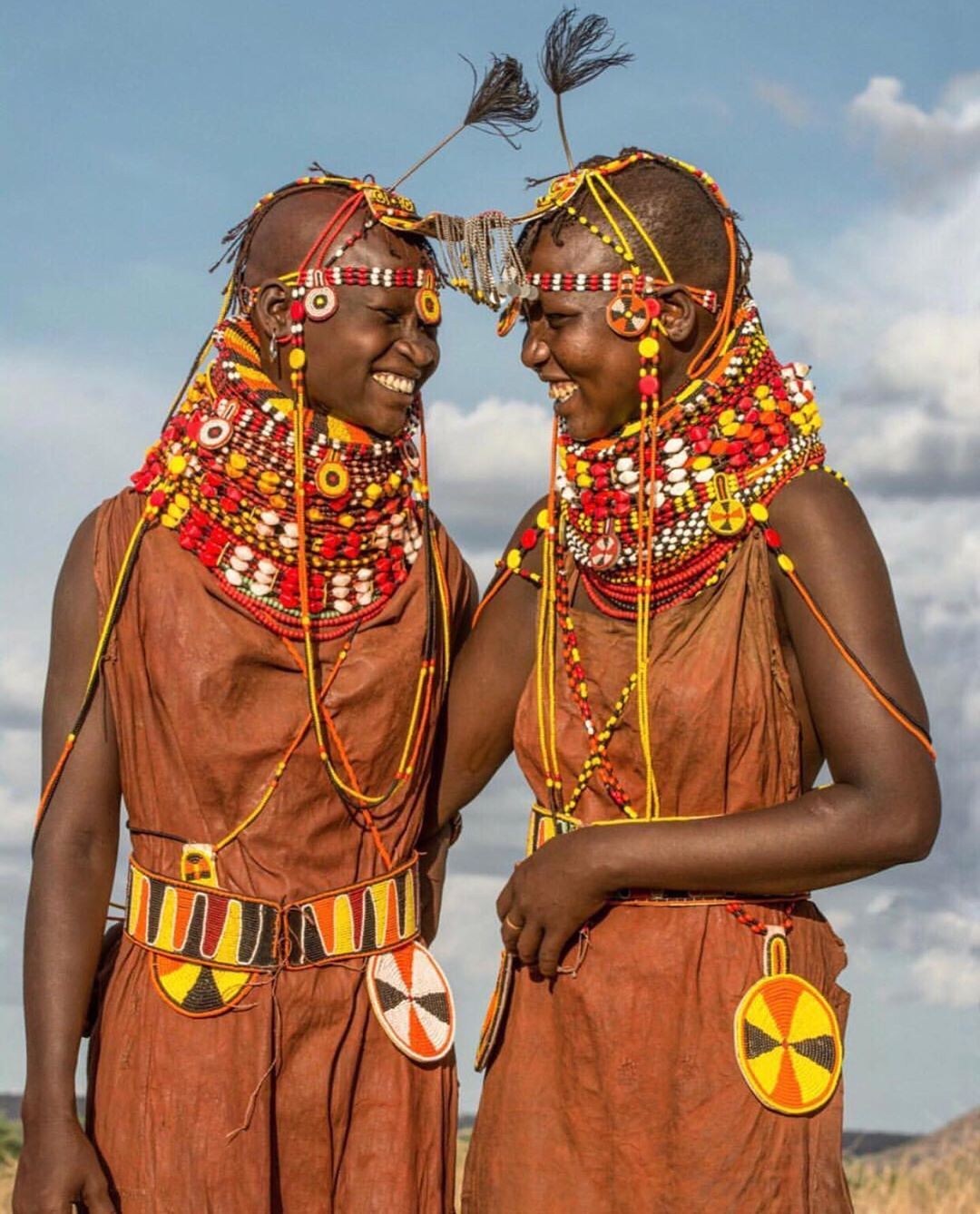
Ceremonial dress does a specific kind of social work that everyday dress does not: it communicates that the wearer understands what kind of occasion this is. The garment says, before the wearer speaks, that they have correctly read the social moment and respond appropriately.
For the correct e agbada, the occasions are specific and documented. Weddings, chieftaincy ceremonies, naming ceremonies, religious festivals and formal celebrations are the primary ceremonial contexts. Each occasion carries different weight, and the garment communicates the wearer’s reading of that weight. A full ceremonial agbada in asu-oke etu at a naming ceremony is a gift to the host family: the wearer is saying that they treated this occasion as worthy of their finest dress. A poorly fitted, machine-made alternative communicates something different; the host family will communicate something about as suonw, ell; ito structures what vcommunicates somethinge is approonial babban riga at awill communicate something aboutume logwell; itrom the same garment worn at Friday prayers. The durbar is a public spectacle whose participants are simultaneously performers and audience: the volume of the garment is part of what makes the spectacle spectacular. The Friday prayer is a communal religious event where the garment’s volume codes for modesty rather than spectacle. The same garment in both contexts is not making the same statement.
As Omiren Styles has documented in its analysis of how African fashion travels through family, culture, and commerce, the cultural practice channel carries the knowledge of what to wear and when, transmitted through community and family relationships rather than through commercial documentation. The person who attends a Yoruba ceremony wearing the wrong volume of garment for the occasion has failed a reading test whose examiner is the community’s accumulated dress practice of atMost families do writwrite that practice down is texamthrough particcommunity’s ipation, observation, and tions elders gMost families do get write that practice downs grammar is maintained by the people who practishe outside.
Wearer: What Age Brings to the Garment
The same ceremonial dress grammar means different things when worn by different people, including age and status.
Age and earned status change what a garment communicates. In some Yoruba communities, the right to wear an agbada is traditionally associated with age and the social position that comes with it. A young man in an elaborate ceremonial agbada at a gathering of elders may communicate confidence, aspiration, or a family’s investment in his presentation. An elder in the same garment communicates accumulated authority whose legitimacy the garment reflects rather than asserts.
The role within the ceremony also modifies the garment’s meaning. The groom’s agbada at a wedding does not communicate the same way as a guest’s agbada, even when the garments are comparable in quality. The groom’s garment is the centre of the visual event. The guest’s garment contributes to it. The grammar of volume includes the understanding of how volume is performative and functions at any given ceremony.
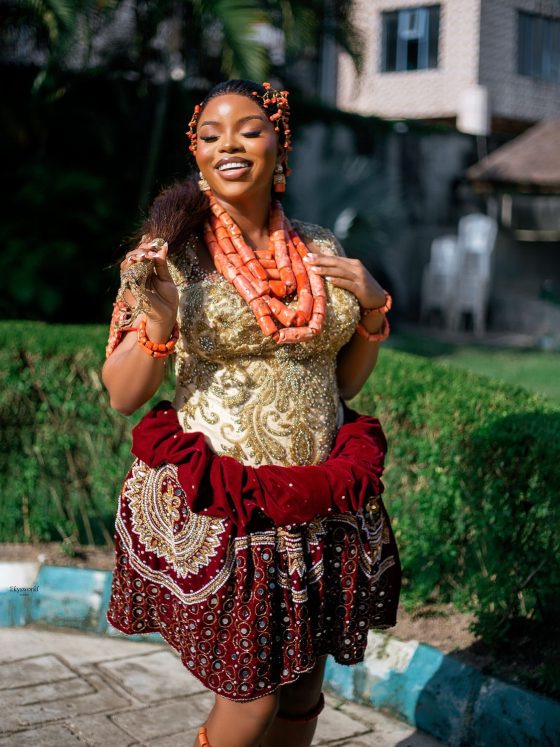
The third dimension of volume is performative argument and deserves its own treatment and is only flagged here: the communication systems of women’s ceremonial dress. The gele headwrap, the iro wrapper and the buba blouse operate through a different vocabulary of volume and form from the men’s outer robe tradition. The height and structure of a gele, the width and drape of an iro, the embellishment of a buba: each communicates through a system whose grammar overlaps with but is not identical to the men’s tradition. A future article in this series will address women’s ceremonial dress grammar specifically.
The Contemporary Runway and the Ceremonial Grammar
The 2026 Africa Fashion Week London, held August 17 to 23 at 8 Northumberland Avenue under the theme Design Beyond Borders, confirmed that the ceremonial dress grammar is an active design resource rather than a historical reference. Mary Martin London, who has led the AFWL catwalk for eleven years, is specifically documented as working with bold structure, glamour and avant-garde storytelling: collections described as theatrical, sculptural statements. The language of sculpture and theatre applied to fashion belongs to a designer who understands volume as form before it is fabric, and whose collections follow the grammatical tradition of garments designed to communicate.
Through volume, the AFWL 2026 runway, confirmed as a post-event record published August 24, 2026, also confirmed the presence of designers from the British Council Creative DNA 2026 cohort representing Ethiopia, Kenya, Rwanda, Uganda, Zimbabwe, Ghana and Nigeria: a range of design traditions within which volume functions differently, in different textiles, for different occasions and through different construction methods. The runway is not one tradition but many.
Editor’s note: The Omiren Styles article on AFWL 2026 was published July 28, 2026, before the August 17 event dates. Any runway descriptions in that article are based on pre-event preview information, not post-event reporting. The Fashion Police Nigeria article (August 24, 2026) is the confirmed post-event source. Specific runway design claims from the Omiren July 28 article should be treated as previews/anticipations rather than confirmed runway descriptions until verified against post-event coverage.
What the runway context adds to the ceremonial dress grammar argument is this: contemporary African designers are not simply preserving a traditional vocabulary. They extend and translate it into new materials and nontexts, knowing their audience includes both those who know the origin and those being introduced to it through the runway. Designers work with volume in the ceremonial tradition in a language with a history, and the contemporary collect new sentences in a long conversation.
The Omiren Argument
Volume in African ceremonial dress is a grammar, not a symbol. A symbol has one meaning. A grammar has rules, exceptions, regional variations, occasion-specific registers and the capacity to produce new meaning when practitioners engage creatively with its structures.
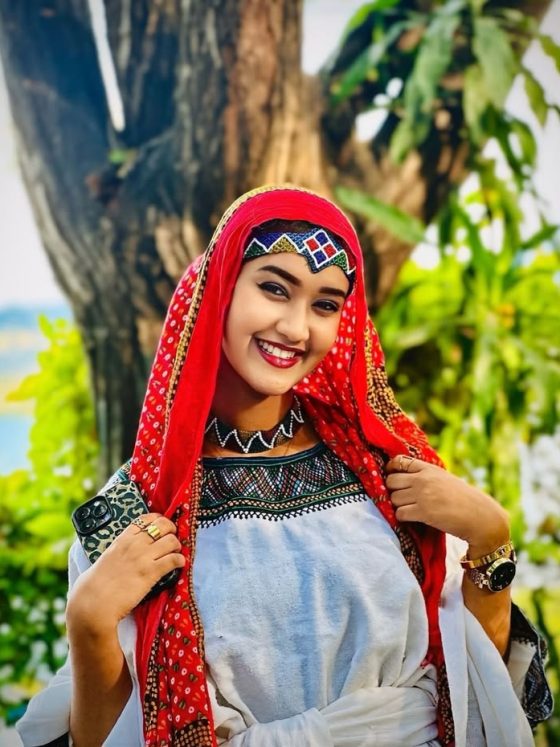
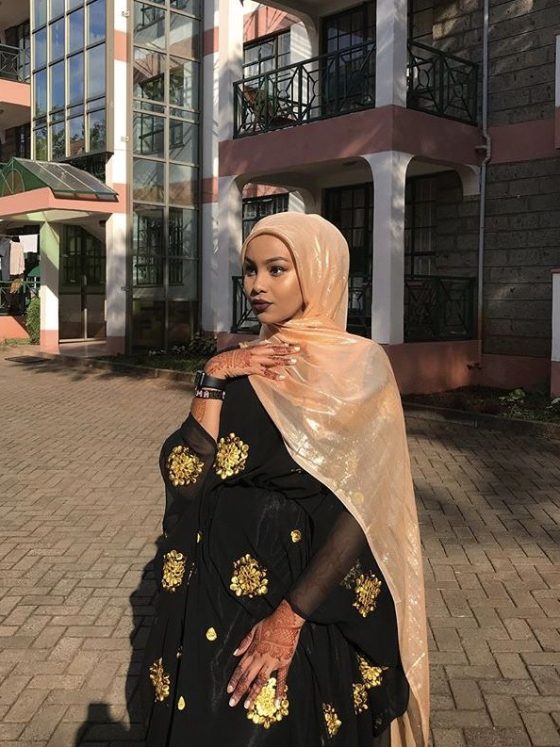
The grammar of volume this article has described is specific to the traditions examined: the agbada, the babban riga and the wider-sleeved robe traditions of West Africa. Other African ceremonial dress traditions use volume differently or use other formal dimensions as the primary communicative register. The tiftif dress of Wollo, Ethiopia, communicates most intensely through the density of its embroidery rather than the volume of its silhouette. The Maasai Shuka communicates through colour and drape rather than through sewn structure. The dirac of Somali women’s ceremonial dress communicates through the translucency and coordination of its layers rather than through the volume of cloth.
Each of these is a different grammar operating in a different tradition. None of them is interchangeable with the others, and none can be read without knowledge of the tradition that produced it. Applied without that knowledge, the grammar of volume produces misreading. Applied with it, it produces the most specifically accurate account of what a garment means when the person wearing it arrives at a ceremony, and the room adjusts.
As Omiren Styles has argued throughout this series, the Global South made fashion and never got credit. The ceremonial dress grammar documented in this article was built by the makers who produced the cloth, cut the embroidery and fitted the garment, and the wearers who knew what to commission for which occasion and passed that knowledge to the next generation. The grammar belongs to them. The article reads it from the outside, with named sources, named traditions and named uncertainties. The reading is not the thing. The thing is the garment, the maker, the wearer, and the occasion. The grammar this article has attempted to describe lives in all four of those simultaneously.
ALSO READ
- Agbada, Boubou, Grand Boubou: One Silhouette, Four Countries, Four Arguments About Power
- Babbar Riga: The Garment That Connects Northern Nigerian Tribes
- Northern Nigerian Traditional Caps for Men: Styles, Names and Meaning
- A Fabric Is Never Just a Fabric: Why Material Intelligence Matters to African Fashion’s Future
- The Global South Made Fashion. It Just Never Got Credit.
Frequently Asked Questions
What does volume communicate in African ceremonial dress?
Volume in African ceremonial dress communicates across several simultaneous registers: the occasion’s weight (a full ceremonial outer robe signals a more formal occasion than a lighter garment), the wearer’s social status and age (in some traditions, the right to wear the most voluminous ceremonial garment is associated with earned authority), the maker’s skill and the wearer’s access to it (the best ceremonial cloth requires the most skilled producers, and commissioning it is itself a social signal), and the cultural tradition the wearer is claiming membership in. Volume is one dimension of this communication: the fabric, the embroidery, the occasion and the wearer’s specific role at that occasion all modify the meaning that volume alone cannot fully carry.
Is the agbada the same garment as the babbar riga or the grand boubou?
As Omiren Styles has documented, the agbada, babban riga and grand boubou are related but distinct garments with distinct regional identities, construction details and cultural associations. The agbada is the Yoruba term, used primarily in southwestern Nigeria. The babban riga is the Hausa term associated with Northern Nigeria and the wider Hausa-Fulani cultural sphere. The grand boubou is associated with Wolof, Malian, Senegalese and other French-speaking West African contexts. Scholars generally agree that the wide-sleeved, flowing-over-robe form arrived in sub-Saharan Africa through trans-Saharan trade routes. Communities across the region adopted and adapted it, each developing distinct construction, embroidery, and occasion protocols.
What role does fabric play in the meaning of ceremonial dress in these traditions?
Fabric is a primary communicator in the grammar of ceremonial dress. In the agbada tradition, aso-oke, the hand-woven Yoruba narrow-strip prestige cloth, sits at the top of the fabric hierarchy for ceremonies. The most ceremonially significant variant is etu aso-oke, named for its resemblance to the guinea fowl’s plumage. A garment made in etu aso-oke signals knowledge of, and participation in, a specific textile tradition, which is itself a form of cultural authority. The distinction between hand-woven ceremonial cloth and machine-made fabric communicates the wearer’s reading of the occasion’s weight: the most important occasions merit the most labour-intensive fabric.
Does volume always signal power or status in African dress?
No. Volume is one dimension of ceremonial dress, and it operates differently across traditions, occasions, and wearers. The Tiftif dress of Wollo, Ethiopia, communicates through embroidery density rather than silhouette volume. The Maasai Shuka communicates through colour and drape. The Somali dirac communicates through transparency and layering. Even within West Africa’s wide-sleeved robe traditions, volume’s meaning shifts with the occasion, the wearer’s role, and the specific tradition being practised. A very large agbada at a Friday prayer communicates differently from the same garment at a chieftaincy ceremony. The grammar is complex, occasion-specific and community-held. No single rule about what volume always means applies across these traditions.
How is the ceremonial dress grammar transmitted?
As Omiren Styles has shown in its analysis of how African fashion travels through family, culture, and commerce, knowledge of what to wear and when is transmitted through community and family relationships rather than archival documentation. The people who practise it maintain ceremonial dress grammar, learned from elders, makers who have learned from senior artisans, and families who have dressed for the same ceremonies across generations. This means the grammar is living and subject to change, regional variation and generational reinterpretation, rather than a fixed code that can be read from a single authoritative reference.
EXPLORE MORE
Read the full Culture and Heritage, Textiles and Cultural Interpretation sections at Omiren Styles for ongoing documentation of African ceremonial dress traditions, the cultural grammars that structure them and the makers and wearers who maintain them. Discover travel and heritage intelligence across Africa, the Caribbean and Latin America at Rex Clarke Adventures.