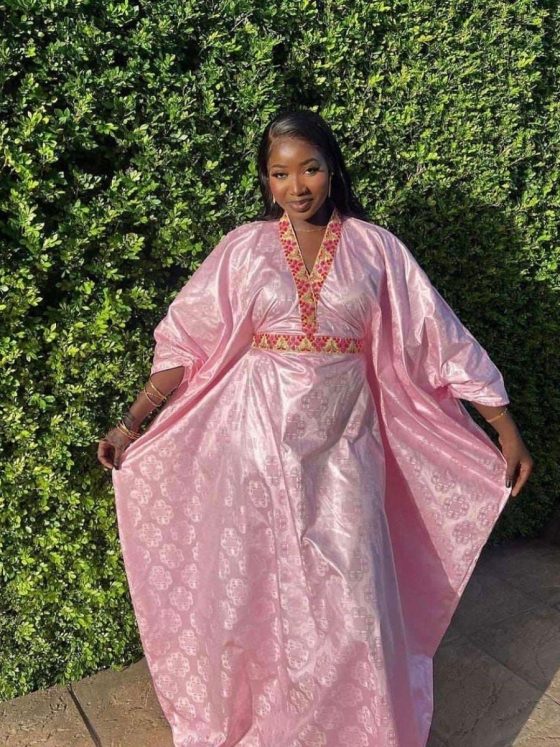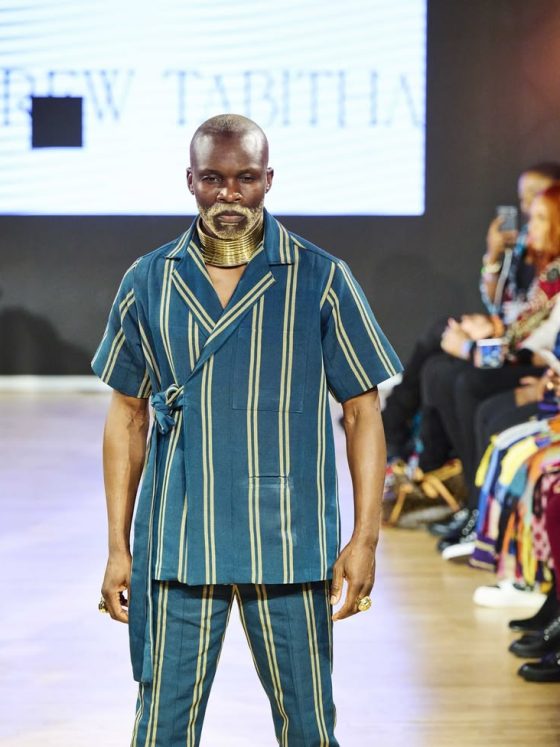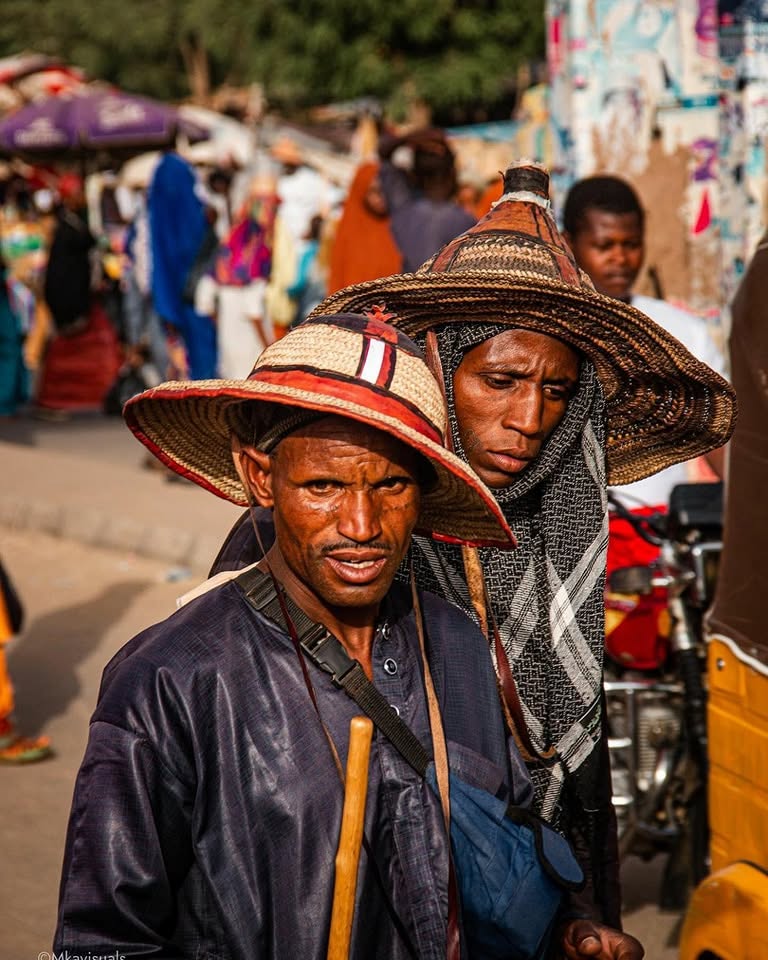
Growing up in Northern Nigeria, whether it is a wedding in Kano, an Eid gathering in Jigawa or a formal celebration in Kaduna, the cap is one of the details that quietly completes the picture. Sitting above the flowing robe, embroidered kaftan or carefully tailored outfit, it adds shape, colour and character to the way a man presents himself.
But these caps are more than accessories. They are an identity that expresses values, lifestyle and status.
“Kai ba Hula abokin Sheda.” Head without a cap, a friend of evil. My grandfather said this to me when he saw me in my Friday outfit, a complete kaftan dress, but without a cap. To us, a cap is not just a dress. It is protection.
Our traditional caps belong to a much wider tradition of Northern Nigerian dress, in which they express heritage, craftsmanship, occasion and personal taste. Some are richly embroidered. Others are deliberately simple. Some have associations with particular communities or places, while others have travelled widely across the region and beyond.
To understand Northern Nigerian traditional caps is to look beyond the object itself and into the culture of dress that surrounds it.
A guide to northern Nigerian traditional caps for men, from Hausa and Fulani styles to cultural meanings, occasions, and modern styling.
What Are Northern Nigerian Traditional Caps?
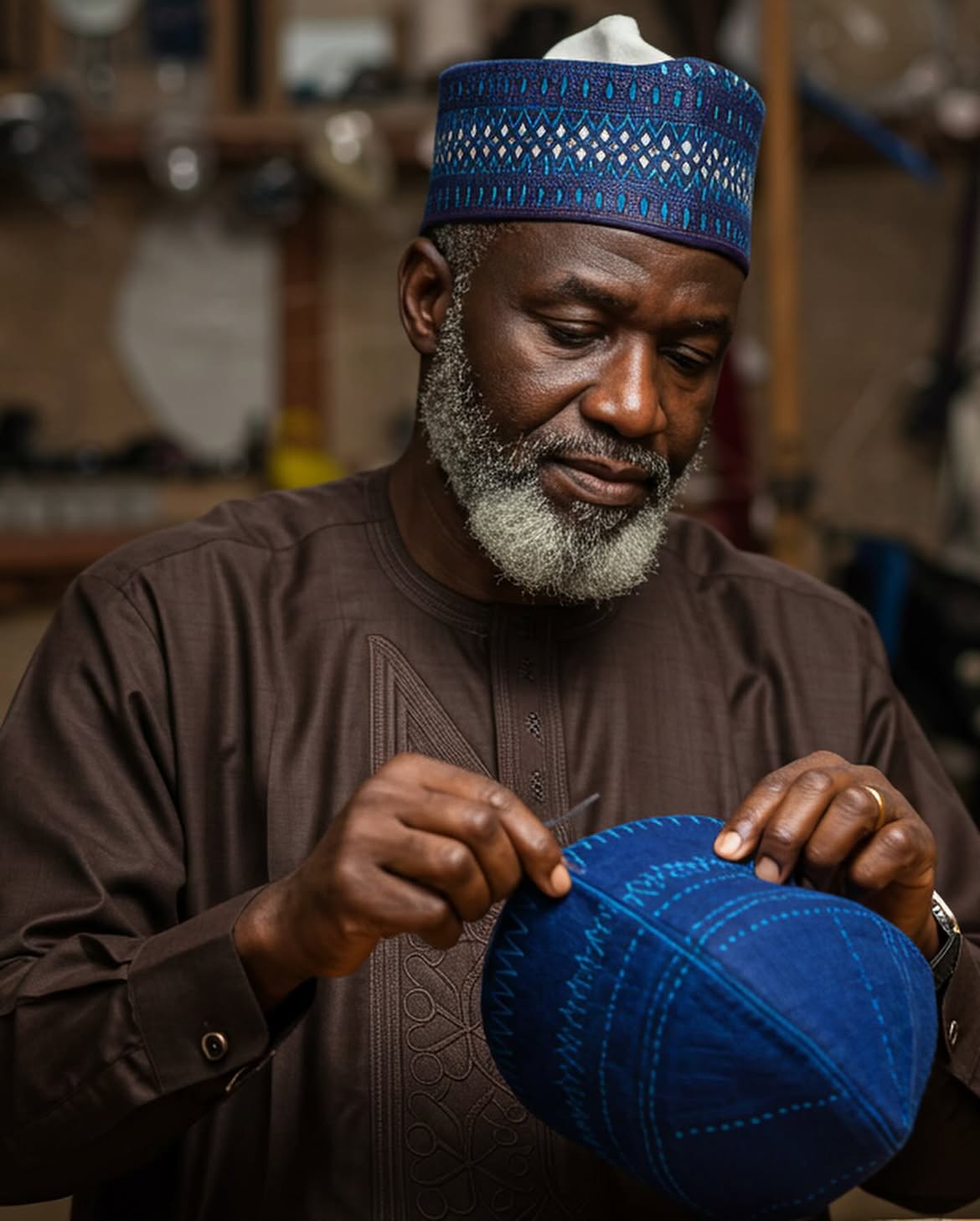
Northern Nigerian traditional caps are forms of men’s headwear worn across the region as part of traditional, religious, ceremonial and contemporary dress.
Some of the most popular traditional caps in Northern Nigeria are the Sharna, Zanna Bukar, Damanga and Dara. Their names and origins are drawn from their cultural history and how they were made.
And although the term ‘Northern Nigerian traditional cap’ is useful when discussing the broader fashion culture of the region, it should not suggest that every community wears the same type. Northern Nigeria is culturally diverse, and forms of dress can differ among Hausa, Fulani, Kanuri, and other communities, as well as between cities, families, and generations.
The cap is therefore best understood as part of a larger and constantly evolving wardrobe.
Cap Styles and Local Names
There is no single traditional cap for Northern Nigeria.
Instead, there are different forms, names and styles, some closely associated with particular communities or places and others used more widely.
Zanna Bukar
The Zanna Bukar is one of the most widely used caps in Northern Nigeria, seen at wedding ceremonies and during Eid, and is part of Northern Nigerian traditional menswear, particularly associated with Borno and the region’s broader fashion traditions.
Its distinctive construction gives it a different visual character from the more familiar embroidered Hausa cap. It can be worn with traditional robes, kaftans, and babbar riga, particularly for occasions when a man wants his headwear to be an important part of the overall outfit.
Like many traditional fashion names, the name Zanna Bukar was derived from the name of one of the most popular northern Nigerian politicians from Borno State, Zanna Bukar Dipcharima, who made it his symbol and identity.
Dara
A Dara Cap, also known as a Tonak cap or Tunisian Chechia, is a traditional wool-felt headwear associated with formal and ceremonial dressing in parts of Nigeria. It is particularly recognised in Northern Nigerian fashion, where finely made caps can signify elegance, status and cultural identity.
Its more structured appearance makes it suitable for formal styling, particularly when combined with embroidered clothing.
This cap did not originate from any single community in Northern Nigeria. It became part of the region’s traditional dress through trade and exchange, an example of how fashion travels and is adopted into local practice.
Bama Cap
The Bama cap, named after Bama in Borno State, is another style found in Northern Nigerian men’s fashion. It resembles the Zanna Bukar in its production and structure. What differentiates it is the appearance and design pattern.
Its decorated appearance makes it particularly suitable for festive and formal dressing. Depending on the maker and design, embroidery and colour can give the cap a very different character from simpler everyday headwear.
Other Styles
There are many other styles with different names, including the Sharna, the Damanga, and various royal caps. This variety is part of what makes Northern Nigerian caps so interesting. The names may point towards a place, community or tradition, but contemporary fashion continues to reinterpret them.
Different Names, Shared Fashion Culture
It is tempting to create a fixed list in which every cap has one name, one community and one meaning. Northern Nigerian clothing is rarely that simple.
Fashion crosses boundaries. A cap can be produced in one city, sold in another, worn by someone from a different community and styled according to contemporary tastes. That movement does not erase heritage. It shows how clothing traditions remain alive.
Hausa and Fulani Dress Contexts
The meaning of a traditional cap becomes clearer when it is viewed alongside the clothing worn beneath it.
For many Hausa men, traditional dress can include a babbar riga, kaftan, trousers and embroidered headwear. In Hausa culture, every dress without a cap is not considered complete. From Friday prayer to Eid ceremony to everyday life, traditional caps are an expected part of the presentation.
Fulani dress traditions are equally diverse. Across Fulani communities, men’s clothing can include flowing robes, tunics, turbans, caps and other forms of headwear. But there is no single style that can represent every Fulani community across West Africa.
This is important because Hausa and Fulani dress cultures have developed across a large geographical area, with communities living not only in Northern Nigeria but across neighbouring countries. The result is a fashion landscape shaped by movement. People travel. Markets connect cities. Families maintain traditions while adapting them. Clothing moves with them.
That is why a cap should not always be read as a strict ethnic label. In many contemporary settings, it is also simply part of formal wear in Northern Nigeria.
Wearing Caps with Babbar Riga
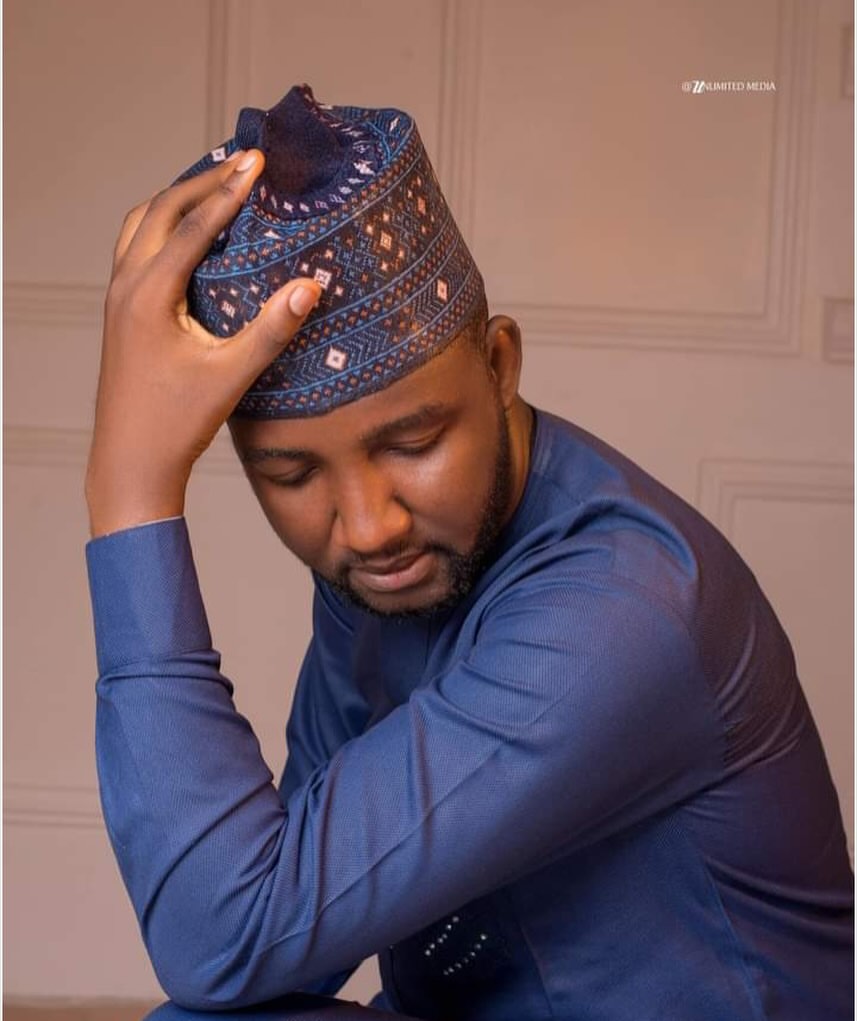
Perhaps nowhere is the relationship between cap and clothing more visible than in the pairing of the cap and babbar riga.
The babbar riga is a large, flowing robe worn over other clothing. The Metropolitan Museum of Art documents related West African prestige robes as loose-fitting garments traditionally worn over other clothes, noting that the Hausa term is riga. Such robes have long been associated with prestige and major occasions.
The cap completes the silhouette.
Imagine a man stepping into a wedding venue wearing a flowing cream babbar riga, subtle embroidery running across the chest and sleeves, and a carefully shaped embroidered cap above it. The robe creates movement. The embroidery creates texture. The cap brings the eye back towards the face. Together, the pieces create balance.
This is also where personal style becomes important. A heavily embroidered babbar riga may be paired with a relatively restrained cap, allowing the robe to remain the centre of attention. A simpler kaftan gives more room for an elaborate cap to stand out.
Colours can also be coordinated. White, cream, navy, green, burgundy, brown, gold and other shades appear across contemporary Northern Nigerian menswear, with embroidery providing opportunities to connect the cap with the rest of the outfit.
Materials and Embroidery
Much of the character of a Northern Nigerian traditional cap comes from its material and the hands that decorate it.
Most Northern caps are made from:
- Wool felt: for the firm, structured body of the cap.
- Cotton fabric: sometimes used for inner lining or in lighter versions.
- Velvet: used in some more decorative or contemporary versions.
- Silk or satin: for luxurious lining or finishing.
- Embroidery thread: for decorative patterns and detailing.
- Leather or stiff interfacing: sometimes used to reinforce the shape.
- Decorative trim and braid: for edging and embellishment.
- Fabric lining: to make the inside more comfortable against the head.
The Smithsonian Institution’s collections document Northern Nigerian caps made from cotton, including examples constructed from narrow-strip cloth, with embroidery ranging from linear and criss-cross stitching to dense geometric and curved patterns.
Embroidery is particularly important. A plain piece of cloth can become something entirely different once a skilled artisan begins working across its surface. Lines meet. Shapes repeat. Patterns frame the cap. Colours introduce another dimension.
As Omiren Styles has argued in its analysis of the price of craft, the embroiderer’s time and skill are the primary assets of a handmade piece. Tradition does not have to mean repetition. An artisan can inherit a technique from an older generation and still create something that feels completely contemporary. The cap becomes a small canvas. The embroidery becomes part of its story.
Explore More Northern Nigerian Fashion
- Inside the Heritage of Hausa Embroidery
- Babbar Riga: The Garment That Connects Northern Nigerian Tribes
- Kanuri Royalty: The Traditional Fashion of Borno’s Ancient Nobility
Weddings and Formal Events
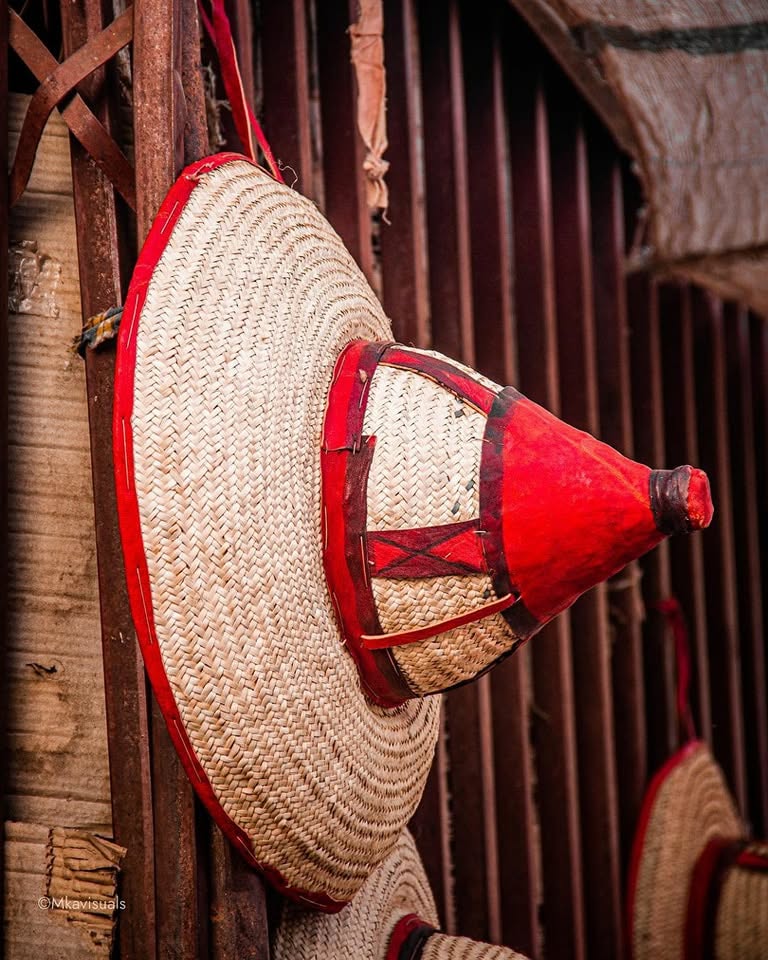
If you want to understand the visual importance of Northern Nigerian caps, look at a wedding.
The groom may appear in an elaborate babbar riga or kaftan, with carefully selected fabric covering the body, while embroidery adds detail around the neckline, chest, and sleeves. Then there is the cap. It may match the robe. It may complement it. Or it may deliberately introduce another colour or pattern.
Around him, family members, friends and guests may also wear their own interpretations of traditional dress.
This is where Northern Nigerian menswear becomes almost architectural. Different robes create different shapes. Embroidery catches the light. Caps frame faces. Colours move through the gathering.
At weddings, Eid celebrations, naming ceremonies and other formal gatherings, traditional caps become an important part of presenting oneself appropriately for the occasion. They also contribute to the sense of ceremony. A man’s clothing communicates that he understands the significance of where he is and why he has come. The cap may be small, but in a carefully assembled traditional outfit, it is rarely insignificant.
Contemporary Menswear
Traditional Northern Nigerian caps have not disappeared as men’s fashion has modernised. If anything, they have found new ways to remain visible.
Today, a young man may wear an embroidered cap with a traditional kaftan for a wedding, combine it with a simpler outfit for Friday prayers, or style traditional headwear alongside more contemporary tailoring. The setting may have changed. The wardrobe has changed. But the cap remains.
Social media has also changed how Northern Nigerian fashion is seen. A style that might once have been primarily seen at local celebrations can now appear on Instagram, TikTok, Facebook, and fashion platforms, watched by audiences far beyond Northern Nigeria. The diaspora has added another layer.
As Omiren Styles has argued in its analysis of material intelligence in African fashion, material knowledge is the knowledge system that converts a garment from a visual reference into a cultural relationship, an economic commitment and a production decision. The same applies to the cap: understanding what it is made of, who embroidered it, which community’s tradition its name carries, and what it communicates in the context in which it is worn is the knowledge that separates wearing it from knowing what you are wearing.
A Northern Nigerian traditional cap may occupy only a small space on a man’s head, but its story is much larger. It bears the embroiderer’s work. It reflects the clothing traditions of communities. It completes the shape of the babbar riga. And, in many cases, it connects the man wearing it today with generations of men who dressed before him.
From Hausa embroidered caps to Zanna Bukar, Dara, Bama, and the full range of regional forms, these caps reveal something important about African fashion: tradition is not necessarily static.
At Omiren Styles, we believe fashion goes beyond what we wear. It is a lifestyle, an identity and an expression of human dignity. Every garment has a story, and every tradition deserves to be understood.
Frequently Asked Questions
What is the traditional cap worn by Hausa men?
The Smithsonian Institution’s collections document the hula as one of the best-known forms associated with Hausa men’s traditional dress, made from cotton and narrow-strip cloth and decorated with embroidery. Historical Hausa men’s hats in museum collections show geometric, linear and curvilinear embroidery designs, in some cases with white-on-white thread and in others with coloured decoration. The hula is part of a wider tradition of Northern Nigerian men’s caps that includes the Zanna Bukar, Dara, Bama cap and others.
What cap is worn with babbar riga?
Several styles can be worn with babbar riga, depending on the community, occasion and personal preference. Embroidered Hausa-style caps are particularly familiar in formal Northern Nigerian menswear, but Zanna Bukar, Dara and other regional styles can all be worn with the flowing robe. The choice depends on the occasion, the specific garment, and personal taste: a heavily embroidered babbar riga may call for a simpler cap, while a plainer robe may leave room for an ornate cap to stand out.
Are Northern Nigerian caps only worn by Hausa men?
No. Northern Nigeria is home to many cultural and ethnic communities, and men’s headwear traditions vary across them. Hausa, Fulani, Kanuri and other communities have distinct clothing traditions, and some cap styles have also travelled across community and regional boundaries through trade, migration and shared cultural events. The Zanna Bukar, for example, is associated with Borno and Kanuri culture but is worn widely across the region. The Dara cap arrived through trade routes and has been adopted across communities. A cap is therefore not always a fixed ethnic marker: in many contemporary settings it is simply part of Northern Nigerian formal menswear.
What are Northern Nigerian traditional caps made from?
Cotton and woven cloth are among the materials documented in historical Hausa men’s hats, with narrow-strip cloth used in some examples. Contemporary caps draw on a wider range of materials: wool felt for structure, cotton for lighter versions, velvet for more decorative pieces, silk or satin lining, embroidery thread for surface decoration, decorative braid or trim for edging, and leather or stiff interfacing to reinforce shape. The range of materials reflects that different cap styles have different construction requirements, and that the tradition continues to evolve through the craft decisions of individual makers.
Why are Northern Nigerian caps embroidered?
As the Smithsonian’s collections document, embroidery in Hausa cap traditions has included geometric, linear and curvilinear designs, with both white-on-white and coloured-thread decoration appearing in historical examples. Embroidery adds decoration, craftsmanship and visual character to the cap, and it also communicates something about the wearer and the occasion. A heavily embroidered cap signals the formality of the occasion and the investment made in appearance. A simpler cap with restrained embroidery may be chosen for everyday or prayer contexts. The embroidery is therefore both aesthetic and communicative: a visual language whose details carry meaning to those who know how to read them.
EXPLORE MORE
Read the full Culture and Nigerian Fashion sections at Omiren Styles for ongoing documentation of African dress traditions, cultural clothing and the craft knowledge embedded in every garment. Discover travel and heritage intelligence across Nigeria and West Africa at Rex Clarke Adventures.