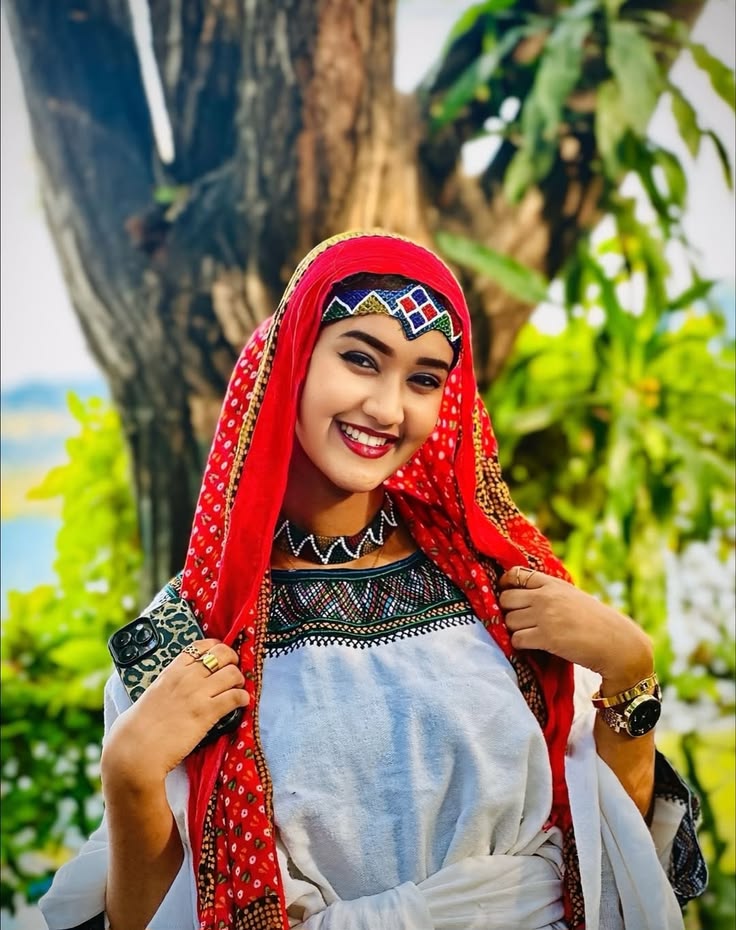
Look at a Wollo dress from the front. It is a white ankle-length garment of handwoven cotton, modest in silhouette, elegant in the way that a garment whose proportions have been refined over generations becomes elegant. The dress could be from Gondar. It could be from Gojjam. The front, at a certain distance, does not tell you everything.
Look at it from behind.
From the waist down, the back of the dress is covered in dense, intricate hand embroidery. The pattern is not a border or a trimming. It is a field of embroidery that covers the lower half of the back panel, using a design vocabulary specific to the Wollo zone of northeastern Ethiopia. The embroidery is called tiftif. It is the most immediate visual marker of a Wollo qemis (dress) and the single feature most likely to take the longest to produce.
The tiftif back panel is the focus of this article.
A Wollo tiftif dress is not embroidered. It is an embroidery that happens to be a dress. The back panel is not added to the garment after it is made. It is the reason the garment has the value it has, the time it takes and the identity it carries.
The Wollo tiftif dress is identified by the dense hand embroidery on its back panel, running from the waist down. This is what that embroidery is, how it is made and why it is the garment’s defining feature.
What Tiftif Is and Where It Comes From
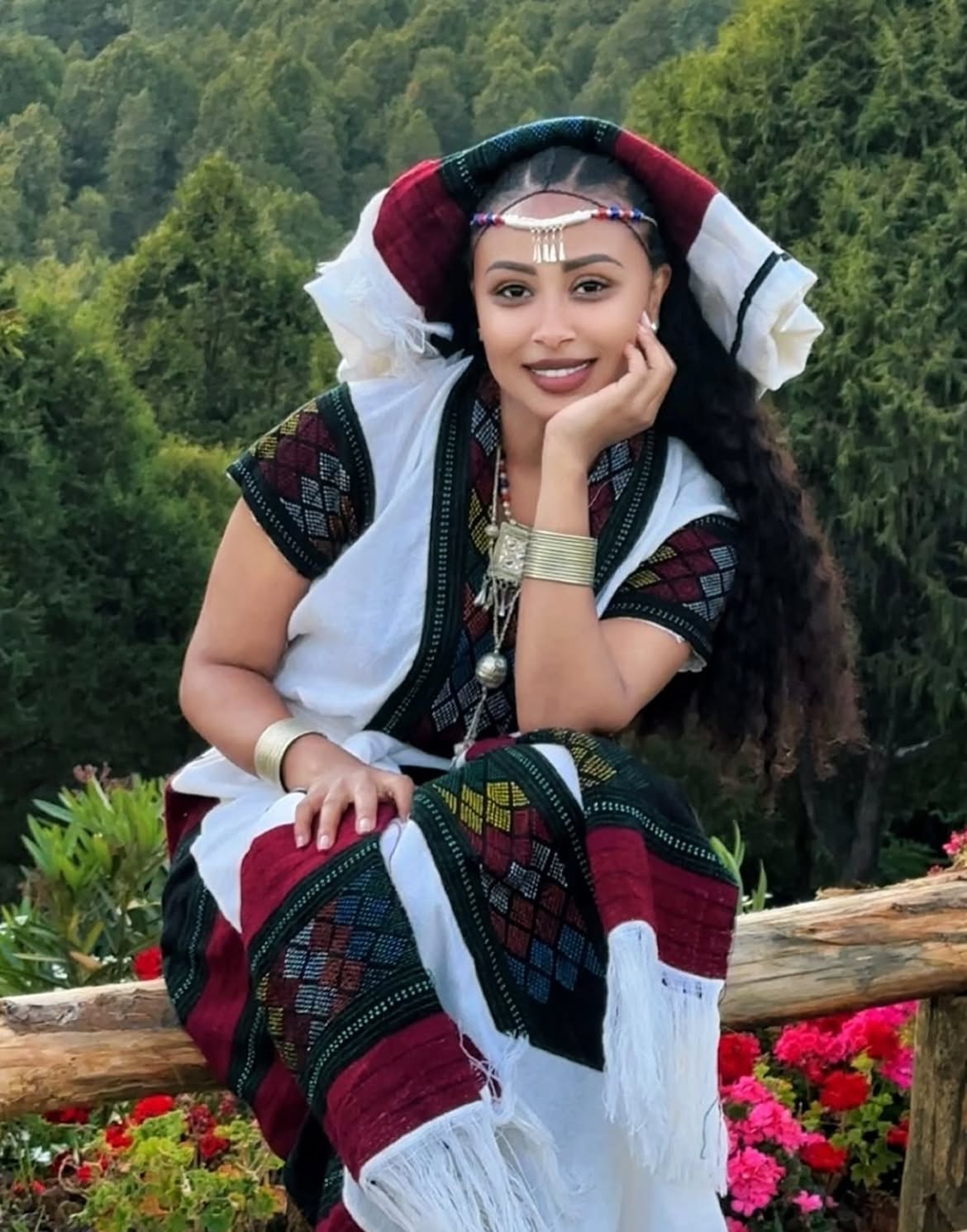
As documented in the Queen of Sheba Archives’ October 2025 analysis of Habesha embroidery and its styles, the dense embroidery on the lower rear half of the Wollo dress is called tiftif. It is specifically associated with the Wollo province of Amhara and represents one of the most regionally distinctive embroidery traditions in the wider Habesha kemis system. The fesesey necklace is another traditional element associated with the Wollo style and can be made from metal in the south or leather and beads in the north, but it is the tiftif back panel that most distinctively marks a dress as Wollo.
To understand what makes tiftif distinctive, it helps to understand the three decorative techniques used in the Habesha kemis tradition. The first is tilet, the structural border placement that frames the hem, back or front of the garment, woven directly on the loom. The second is tibeb, the multicoloured intricate geometric design also woven directly into the fabric edges on the loom during production: a visual language in which specific colours and patterns signify regional lineage, cultural memory and the craftsman’s skill. The third is tilf (Amharic: ጥልፍ), which is the only true form of hand embroidery in the Habesha system: needle-and-thread work added to the finished fabric after weaving is complete.
Tiftif is a form of tilf: hand embroidery applied to the finished cloth. What distinguishes tiftif from other tilf traditions is its placement, density, and scale. Where other regional traditions of the Habesha kemis might use hand embroidery at the collar, the sleeve cuff or along a front panel, the tiftif of the Wollo dress covers the entire lower back of the garment in a continuous field of embroidery that begins at the waist and extends downward. The coverage is dense: this is not open-work or a spaced pattern. It is a saturated surface in which the original cloth is substantially overlaid by thread.
The Wollo Region and Its Fabric
Wollo is a zone in the northeastern Amhara region of Ethiopia, situated between the highlands that produce the cotton underpinning Ethiopia’s traditional textile economy and the lowland areas to the east. The Amhara region as a whole accounts for 76% of small-scale cotton farmers in Ethiopia, and Wollo Province is one of the four anchoring provinces of this industry through centuries-old traditions of hand-spinning and weaving.
As documented in peer-reviewed research on Habesha cultural cloth classification published in Scientific Reports in April 2025, distinct regional variations of the Habesha kemis exist within the Amhara region, distinguished by unique embroidery motifs. While Habesha garments from Gondar, Gojjam, Shewa and Wollo may appear similar from a distance, their embroidered motifs exhibit unique patterns, shapes and hues that symbolise the rich cultural legacy of each region. The embroidery is not a decorative variation within a shared template. It is the primary visual identifier of regional and cultural origin.
The fabric used to make a Wollo dress is typically white cotton, handwoven and characterised by its quality and traditional texture. Raya fabric, named after the Raya community in southern Wollo, is known for its soft, breathable cotton-thread construction and is widely used in traditional Wollo dressmaking. The white ground of the cotton is significant: it is the canvas against which the tiftif embroidery communicates most clearly, and the simplicity of the dress’s front construction serves to draw the eye toward the back.
A tell-tale feature of Wollo dresses more broadly is the use of blue and grey butter dyes, which identify the garment’s regional origin to those who know the vocabulary. The tiftif embroidery adds to these markers of origin, making a Wollo dress not only recognisable by its overall form but also identifiable to the specific cultural community and tradition whose hands produced the back panel.
How Tiftif Is Made
Tiftif is needle-and-thread hand embroidery worked on cotton cloth after it has been woven. The process has three physical requirements: the cloth, the thread and the needlework knowledge to execute the pattern.
The cloth provides the ground. The thread, typically coloured, is worked through the white cotton by hand using an embroidery needle, following a pattern held in the embroiderer’s memory and muscle memory rather than transferred from a pattern document or template. This is a practice transmitted through communities and families, not through design school instruction or documented technical specification. The person who makes a tiftif panel has learned to do so by watching and doing, over years of apprenticeship and practice within a community where the knowledge is maintained.
The density of tiftif means that the production time for the back panel of a Wollo dress is substantial. The hand embroidery covering the lower back of the garment from waist to hem requires many hours of careful needlework. Producers and sellers of Wollo tiftif dresses consistently describe them as 100% handmade, emphasising hand embroidery as the primary evidence of the garment’s craftsmanship. Some describe double tiftif designs, in which the embroidery is applied in two layers for added complexity and visual depth.
The mekenet, or waist-tie, that accompanies a Wollo tiftif dress may also carry tiftif embroidery, making the embroidery practice consistent across the full dress ensemble. The netela, the cotton scarf or wrap that accompanies the dress at formal and ceremonial occasions, completes the traditional assembly.
What Tiftif Communicates
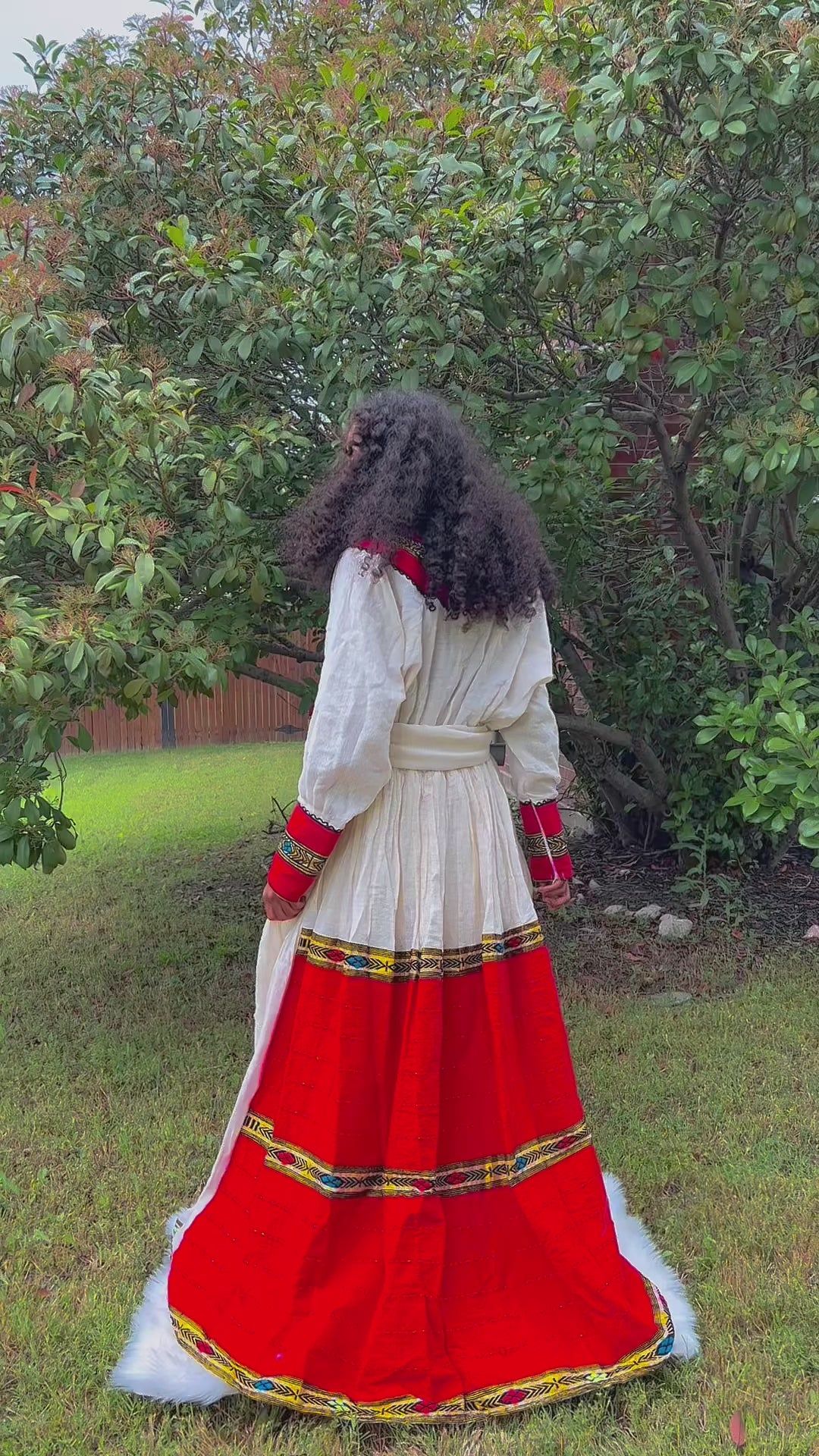
As documented in research on indigenous Ethiopian traditional weaving designs, embroidery on the Habesha kemis is known for its geometric shapes, floral motifs and symbolic patterns. In the Wollo tradition specifically, the tiftif back panel communicates regional identity at a glance: to a viewer within the Habesha cultural tradition, the coverage, placement and design vocabulary of the tiftif immediately identifies the dress as Wollo rather than from another Amhara zone. The embroidery is a visual language whose vocabulary is regionally specific.
The cultural occasions for which a Wollo tiftif dress is worn include weddings, Timket (Ethiopian Epiphany), religious celebrations and significant family events. The handmade quality of the dress communicates occasion-worthiness: a tiftif dress is not everyday dress. It is a dress for moments whose importance the garment is meant to mark and whose memory the garment will carry after the occasion ends.
Within the Wollo community, the ability to produce tiftif embroidery is a form of skilled knowledge whose holders carry cultural as well as practical significance. The transmission of the skill from generation to generation is not only a question of craft preservation but also a question of cultural continuity: the knowledge of how to make a tiftif panel, embedded in the hands and eyes of specific practitioners, is what keeps the dress what it is.
The Tiftif Dress in the Global Market
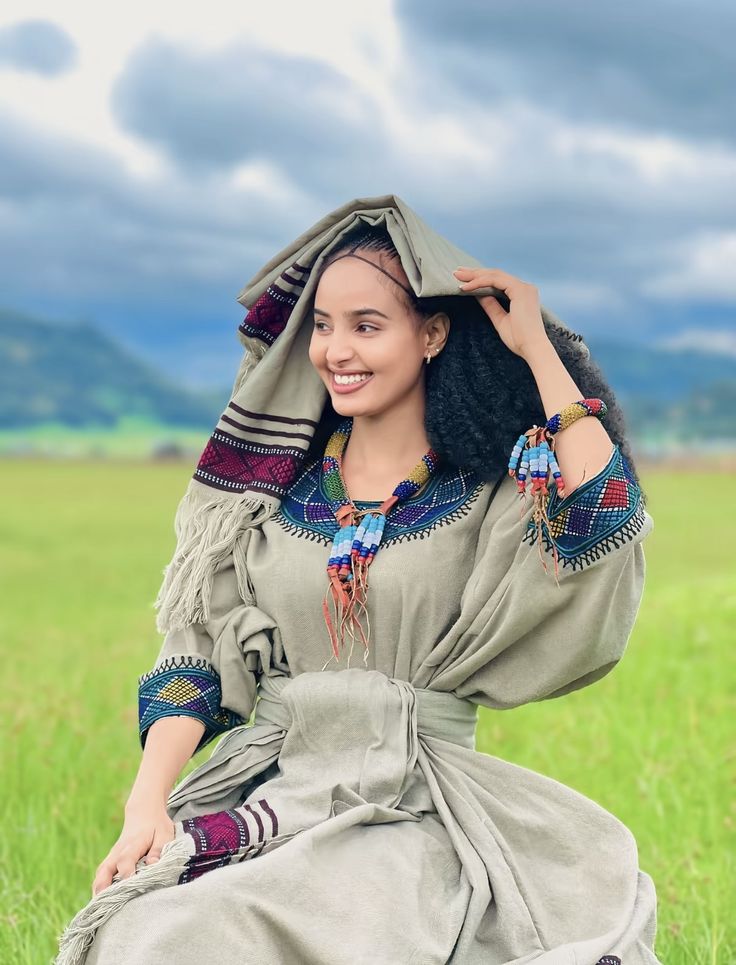
Wollo tiftif dresses are produced in Ethiopia and sold internationally through artisan sellers and cultural fashion platforms. They are consistently described as 100% handmade, made in Ethiopia, constructed from handwoven cotton, and featuring tiftif embroidery as their defining feature. The back panel is always specifically mentioned because it is the feature that distinguishes a Wollo tiftif dress from other Habesha kemis variants and that justifies the handmade premium the dress commands.
The price differential between a handwoven cotton Wollo tiftif dress and a machine-produced dress of similar appearance reflects the hours of skilled hand embroidery in the back panel. The time, knowledge, and cultural specificity embedded in that panel are the source of the garment’s commercial value, not the fabric or the garment’s construction alone. The embroiderer who produces the tiftif panel is producing the garment’s primary asset.
As Omiren Styles has argued in its analysis of how fashion brands cost handmade work, the most consistent financial failure in fashion’s relationship with handmade production is the unadjusted application of an industrial costing framework to artisan work. For a tiftif dress, this means understanding that the hours of hand embroidery on the back panel account for the majority of the garment’s production cost and drive its commercial premium. A buyer who does not understand the back panel does not understand the price.
As Omiren Styles has established in its analysis of material intelligence in African fashion, material intelligence is the knowledge system that converts a fabric from a visual reference into a production decision, a cultural relationship, an economic commitment and a sustainability position simultaneously. For a Wollo tiftif dress, the material intelligence is in the understanding of what the back panel is: not a design feature but a knowledge tradition, embroidered by a practitioner who has spent years learning a regional technique, on a white cotton cloth that carries its own weaving tradition, for a community that has maintained the practice through celebration and ceremony across generations.
The Omiren Argument
Every Wollo tiftif dress ever photographed and sold outside Ethiopia was photographed from the back.
The buyers know which feature makes the dress what it is. The international market recognises the back panel as the dress’s identity, even when the name, region, and technique are not part of the product description. The visual language of the tiftif panel communicates beyond the text.
What the market less consistently understands is who produced the panel, how long it took, what the knowledge behind it represents, what the skill-holder was paid, and what commercial relationship connects the sale of the dress abroad to the lives of the embroiderers in Wollo. The back panel is legible as an image. The hand that made it is not visible in the photograph.
As Omiren Styles has argued, a fabric is never just a fabric. The back panel of a Wollo tiftif dress is never just embroidery. It is a community’s knowledge in thread, worked into cloth by a practitioner whose skill is the product. The dress, whose value is recognised everywhere that Ethiopian traditional dress is admired, deserves documentation that names the panel, names the technique, names the region, and points, however imperfectly, toward the hand that made it.
ALSO READ
- A Fabric Is Never Just a Fabric: Why Material Intelligence Matters to African Fashion’s Future
- Can Heritage Textiles Scale Without Losing Their Meaning?
- The Price of Craft: How Fashion Brands Can Cost Handmade Work Without Erasing Labour
- The Global South Made Fashion. It Just Never Got Credit.
Frequently Asked Questions
What is tiftif embroidery?
As the Queen of Sheba Archives documents in its analysis of Habesha embroidery styles, tiftif is the dense hand embroidery on the lower back half of a Wollo dress, from the waist down. It is a form of tilf (ጥልፍ), which is the only true hand embroidery in the Habesha kemis tradition: needle-and-thread work added to finished cloth after weaving is complete. What distinguishes tiftif from other tilf traditions is its placement on the back of the garment, its density and the saturation of the coverage, which overlays the lower back of the dress in a continuous field of embroidered pattern. It is specifically associated with the Wollo province of Amhara and is one of the primary visual markers that identify a dress as Wollo rather than from another Amhara zone.
What is the difference between tiftif and tibeb?
Tibeb (ጥበብ) is the multicoloured geometric design woven directly into the fabric edges on the loom during production. It is created as part of the weaving process, not added afterwards. Tilf, including tiftif, is hand embroidery applied to finished cloth with needle and thread after weaving is complete. Tibeb and tilet are loom processes; tilf is the hand process applied after the cloth is made. Tiftif is a specific regional form of tilf characterised by its dense coverage of the lower back panel, its association with the Wollo zone and its role as the primary identifying feature of the Wollo qemis.
What occasions is a Wollo tiftif dress worn for?
A Wollo tiftif dress is worn at significant cultural, religious and family occasions, including weddings, Timket (Ethiopian Epiphany), religious celebrations and other formal events. The handmade quality and the labour invested in the tiftif back panel make it ceremonial dress rather than everyday wear: its production cost and its cultural significance position it as a garment for moments whose importance the dress is meant to mark. The dress is typically worn with a netela (scarf or wrap) and may include a mekenet waist tie that also features tiftif embroidery.
What fabric is a Wollo tiftif dress made from?
A Wollo tiftif dress is made from handwoven cotton, typically white, which serves as the ground on which the tiftif embroidery is worked. Raya fabric, a soft, breathable cotton cloth associated with the Raya community in southern Wollo, is widely used and known for its quality and traditional character. The white cotton ground is significant because it provides the visual contrast against which the coloured tiftif embroidery is most legible. The Amhara region, of which Wollo is a zone, accounts for 76% of small-scale cotton farmers in Ethiopia, and the handwoven cotton used in the dress is part of a local agricultural and textile production tradition that underpins the entire Habesha kemis economy.
What makes a Wollo dress identifiable from another Amhara regional dress?
As peer-reviewed research on Habesha cultural cloth classification confirms, distinct regional variations of the Habesha kemis are distinguished by unique embroidery motifs, patterns, shapes and hues that signify the cultural legacy of each region. The most immediate marker of a Wollo qemis is the tiftif embroidery covering the lower back panel from the waist down. The use of blue and grey butter dyes is also associated with Wollo origin. Other regional styles, such as Gondar, Gojjam, and Shewa, have their own distinct embroidery placements, patterns, and colour conventions. A practitioner or community member familiar with the regional vocabulary can identify a dress’s origin from the embroidery style before any other information is available.
EXPLORE MORE
Read the full Heritage and Textiles and Cultural Interpretation sections at Omiren Styles for ongoing documentation of African and diaspora textile traditions, embroidery practices and the cultural knowledge embedded in handmade dress. Discover travel and heritage intelligence across Ethiopia and East Africa at Rex Clarke Adventures.