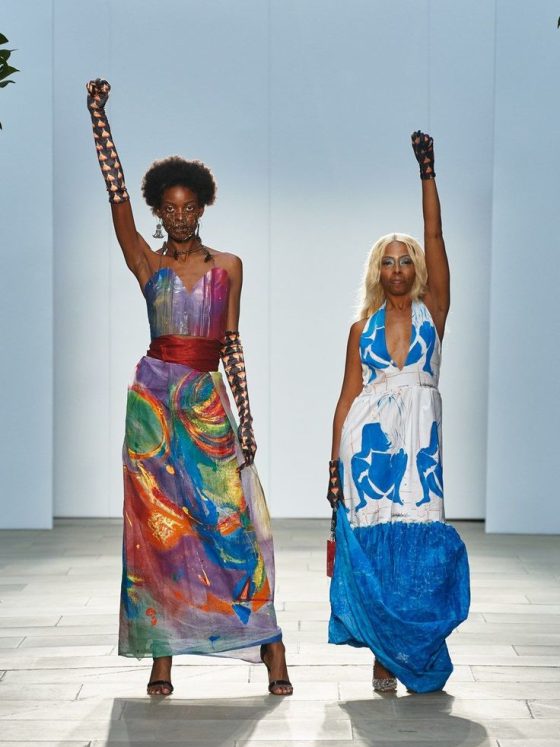
Bogotá wants to be Latin America’s fashion capital. The ambition is stated directly in institutional communications, reflected in the Cámara de Comercio de Bogotá’s leadership of the city’s fashion week, embedded in Colombia’s bilateral trade promotion strategy and repeated across ProColombia’s export development materials. The claim has something real behind it.
Colombia’s fashion industry employed more than 600,000 people in 2024, predominantly in garment manufacturing. Between 2014 and 2024, the country produced more than 50,000 graduates from fashion-related university programmes. It operates nearly 30,000 companies across the sector, the large majority of them micro-enterprises and SMEs. In 2024, apparel exports reached USD 515.6 million, with textile sector exports adding USD 200.7 million. As ProColombia’s Invest in Colombia sector briefing documents, Colombia is strategically positioned in the Americas with privileged delivery times to serve international demand via air and sea, and benefits from multiple trade agreements that promote the entry of Colombian products from the textile, apparel and footwear industries. The production infrastructure is substantial, vertically integrated in key centres and increasingly oriented toward export markets that value nearshoring proximity to the United States.
That is the strongest version of the capital claim: a country with genuine manufacturing depth, growing export revenue, internationally recognised designers, Latin America’s largest fashion trade fair, and a city whose fashion week is building toward the kind of buyer and press infrastructure that fashion capital status requires.
The gap in the Bogotá capital claim is not between ambition and reality. It is the difference between the measurements used to validate the claim and the measurements that would tell you whether the claim is built on durable commercial foundations. Visitor numbers, runway counts and buyer meeting totals are real and worth reporting. They are not the measures that would confirm a fashion capital’s institutional authority.
The harder question is what it would take for the claim to be definitively true, and whether the institutional measurements currently in use are pointing in that direction or simply counting events that express the ambition.
Colombia’s fashion industry employs 600,000 people and exports close to USD 900 million annually. Bogotá’s capital claim is real in ambition. The question is whether its measures are measuring what would make the claim true.
Colombiamoda and Bogotá Fashion Week: What the Numbers Say

Colombiamoda 2025, the 36th edition of Colombia’s most important fashion fair, closed with more than 60,000 visitors from 50 countries and 650 exhibiting brands from 14 Colombian departments, including Antioquia, Cundinamarca, Santander, Norte de Santander and Valle del Cauca. International brands and buyers came from Brazil, Ecuador, Peru, Mexico, Panama and the United States. The event, organised by Inexmoda, is consistently described as the most important fashion fair in Latin America. The trade figures surrounding its 2025 edition were significant: between January and May 2025, Colombian fashion sector exports grew 2.7% to USD 370.2 million compared to the same period in 2024, with the United States accounting for 30.9% of total exports. Projections from Analdex estimate the sector’s external sales could exceed USD 900 million by the end of 2025.
These are not small numbers. They reflect a genuinely integrated fashion industry whose manufacturing base, trade fair infrastructure and export relationships are more developed than those of most other Latin American fashion ecosystems. The event is held in Medellín rather than Bogotá, which matters for the specific capital claim: Colombiamoda’s institutional home in Antioquia’s capital reflects that Colombia’s garment manufacturing and textile production centres are concentrated in Medellín and its surrounding region rather than in Bogotá.
Bogotá Fashion Week 2026, now in its ninth edition, held its runway shows at the Ágora Convention Centre and brought together 145 brands, 28 runway shows, more than 80 international buyers and 755 business meetings aimed at strengthening Colombia’s presence in international markets. The event, led by the Cámara de Comercio de Bogotá, is the city’s main commercial and promotional platform for fashion. Its stated ambition is to turn Colombia’s capital into a regional fashion export hub and to bring designers from Bogotá’s workshops and popular commercial districts, including the Restrepo and San Victorino neighbourhoods, which have historically served Colombia’s mass-market garment industry, onto the global stage.
The 2025 edition’s decision to feature 11 entrepreneurs from Restrepo and San Victorino, double the participation of the previous year, is the most interesting development in the recent BFW record. Those neighbourhoods are the commercial heart of Colombian popular fashion, a vast informal and semi-formal garment economy that supplies the domestic market and parts of the regional market with affordable clothing produced in small workshops, market stalls, and home-based production operations. Their inclusion in a fashion week whose primary audience is international buyers raises a genuine question about whether the event is building the bridge between Bogotá’s popular fashion economy and its export fashion ambitions, or whether the two remain structurally separate despite appearing on the same runway calendar.
The Measurement Gap

Fashion capital claims have historically been evaluated through two sets of criteria that rarely appear in the same analysis. The first set is institutional: does the city have a credible fashion week with genuine buyer attendance? Does it have internationally recognised designers? Does it have retail infrastructure, fashion schools, a photographic record, and a press presence that provide the industry with continuity across seasons? Does it generate export revenue and maintain relationships with international buyers that survive the fashion week calendar? Colombia and Bogotá can give positive answers to most of these questions, with significant institutional depth and a trade fair record that other Latin American cities cannot match.
The second set is structural: who owns the labels? Who controls the supply chains? Who captures the margins? Who benefits from the sector’s growth in terms of income, employment quality and commercial power? These are the questions that the visitor counts, runway show totals and buyer meeting figures do not address. A fashion industry that employs 600,000 people primarily in garment manufacturing has a very different structural character from one in which 600,000 people are distributed across design, brand ownership, retail, creative direction and manufacturing. The Colombian industry’s strength in manufacturing and export is real. Its development of brand ownership, design authority, and creative capital on an international scale is a different and harder question.
As Omiren Styles has established in its analysis of Caribbean fashion policy and the measures that would confirm commercial results, the gap between policy ambition and policy measurement is a persistent feature of creative industry governance, and the specific measures that would confirm commercial results are different from and harder to collect than the attendance and event figures that institutions typically report. The same gap exists in the Bogotá capital claim: the event metrics used to validate the claim in institutional communications are not the same as the commercial outcome metrics that would confirm whether the ambition is being converted into a durable competitive advantage for Colombian designers, brand owners, and creative professionals.
The Designers Carrying the Claim
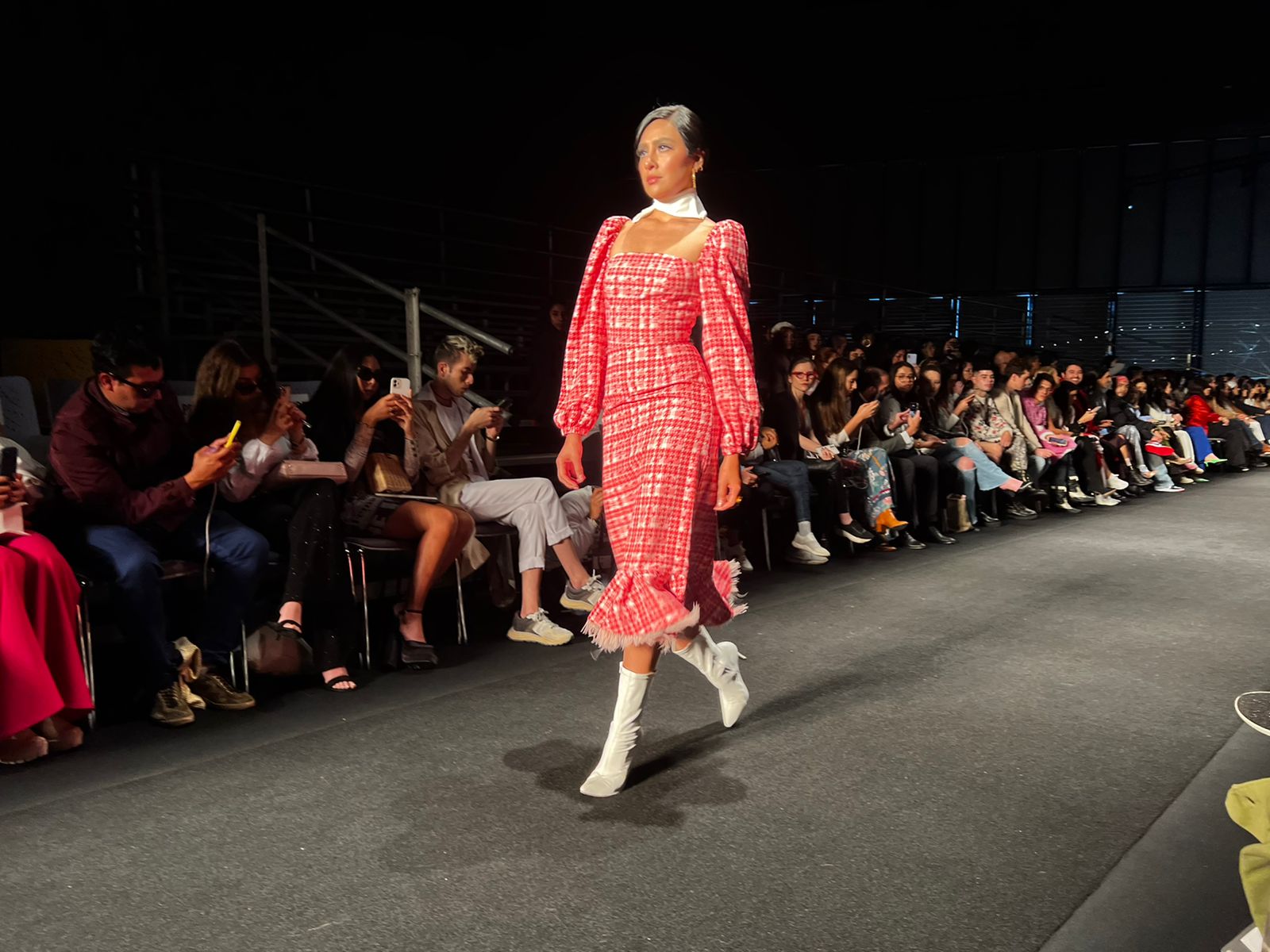
The individual designers who have given the Colombian fashion capital its most credible international substance are working at a commercial scale that the event infrastructure alone cannot produce. Johanna Ortiz, whose designs are distinguished by their femininity and vibrant colours, gained international visibility through stockists such as Bergdorf Goodman and Net-a-Porter, as well as through social media amplification of her garments by international clients. Silvia Tcherassi has built a presence based on innovative use of materials and textural complexity. Esteban Cortazar, though based internationally, carries Colombian design authority into the global luxury circuit. These designers demonstrate that Colombia has the creative talent and craftsmanship to compete at an international level. They also demonstrate the scale of the gap between individual designer success and systemic industry transformation.
A fashion capital is not primarily its most internationally recognised designers. It is the ecosystem that surrounds them: the fashion schools that train designers to the standard required for international competition, the retailers that stock local labels alongside international alternatives, the investors that provide growth capital to promising brands, the manufacturers that can produce small-batch luxury goods at the quality standard international buyers require, the photographers and stylists who document the industry’s creative output, and the press and digital infrastructure that make the industry’s story legible to international audiences on a consistent basis rather than only during fashion week.
Bogotá has significant components of this ecosystem. It has a strong fashion education, anchored by institutions such as the Universidad de los Andes and LCI-Lasalle College Bogotá. It has a manufacturing base that can serve both the domestic market and export clients. It has a retail infrastructure that includes both the mass market districts of Restrepo and San Victorino and the premium retail environment of the Zona Rosa and Parque 93. What it has not yet demonstrated, based on the available public measurements, is whether those components function as an integrated ecosystem rather than as parallel sectors serving different markets with limited interaction.
The Medellín Question

Any serious analysis of Bogotá’s fashion capital claim must engage with the Medellín question: the specific institutional fact that Colombia’s largest and most internationally visible fashion trade event is not in Bogotá but in Medellín, the capital of Antioquia and the centre of Colombia’s integrated textile and garment manufacturing industry.
Colombiamoda is not simply a fashion show. It is a trade fair whose commercial function is to connect Colombian manufacturers, brands and designers with international buyers in a structured B2B environment. Its location in Medellín reflects the geographic reality of Colombian fashion production: Antioquia’s industrial ecosystem, which includes both large vertically integrated manufacturers and the dense network of smaller workshops and artisan producers that supply them, is the actual production base of Colombia’s export fashion industry. Bogotá is the capital, the financial centre and the seat of the national government. It is not, in structural commercial terms, the centre of Colombian fashion production.
The Bogotá Fashion Week’s explicit ambition to function as a design and creative capital platform distinct from Colombiamoda’s trade fair function is the most coherent response to this geographic reality. If the two events can function complementarily, with Colombiamoda serving the manufacturing and sourcing market and BFW serving the design, brand development and creative direction market, Colombia as a whole gains a more complete fashion industry infrastructure. Whether that complementarity is being built in practice, or whether the two events are competing for the same buyers and press rather than serving genuinely distinct market functions, is the question the current institutional communications do not clearly answer.
Nearshoring and the Export Advantage

Colombia’s most commercially specific advantage in the current global fashion sourcing environment is one that has nothing to do with design capital status and everything to do with geography and manufacturing capacity: nearshoring proximity to the United States.
The United States accounts for approximately 30-41% of Colombia’s fashion exports depending on the measurement period and category. Colombian shapewear, swimwear, underwear and casualwear have developed significant market share in the US market based on a combination of quality, speed to market and proximity advantages that Asian manufacturers cannot match on delivery time. The vertically integrated manufacturing operations of companies like Nexxos Studio, which controls in-house knitting, cutting, sewing, printing and embroidery, allow full quality control, timeline management and supply chain transparency that US buyers increasingly require after the supply chain disruptions of the early 2020s.
As Colombiamoda Selection’s international platform documents, Colombia’s fashion industry has been building structured international presence through showrooms in Miami, Medellín, New York and Paris, with the explicit aim of strengthening the global positioning of Latin American brands through direct B2B and B2C connections in key cities. The Miami and New York presences are aligned with the nearshoring export strategy: proximity to US buyers in the US market, reducing the friction that has historically limited the commercial relationship between Colombian manufacturers and US retail and wholesale buyers who do not travel to Colombiamoda in Medellín.
The nearshoring advantage is real and growing. It does not make Bogotá a fashion capital in the sense that Paris, Milan, London and New York use that phrase. It makes Colombia an increasingly significant nearshoring manufacturing and design hub for the US market, which is a different and more commercially specific claim. The distinction matters because the measures appropriate for evaluating a nearshoring manufacturing hub, fill rates, on-time delivery, quality rejection rates, cost per unit, speed to market, are different from the measures appropriate for evaluating a fashion creative capital, designer brand revenue, press coverage, international retail placement, fashion school graduate employment rates, creative industry investment.
What Better Measures Would Require
As Omiren Styles has established in its analysis of African fashion weeks and the infrastructure they built faster than criticism, the measures most frequently reported by fashion events, visitor numbers, runway show counts, buyer attendance totals, are measures of event production rather than industry transformation. The platforms that build the most durable fashion industry infrastructure are those that can demonstrate sustained commercial outcomes for the participating brands across seasons: repeat buyer relationships, wholesale orders fulfilled, retail placement achieved, brand revenue generated. The Lagos Fashion Week model, whose Earthshot Prize recognised infrastructure rather than event production, is the measurement standard that any fashion capital claim should aspire to meet.
For Bogotá, better measures would include: the proportion of BFW-participating brands that secured international wholesale accounts within twelve months of showing; the revenue generated by Colombian designers through international retail placements in the years following Colombiamoda participation; the growth in branded Colombian fashion exports, distinguished from manufacturing exports, as a share of total Colombian fashion sector export revenue; the employment and income conditions in the garment manufacturing sector that supplies both domestic and export markets; and the accessibility of BFW and Colombiamoda’s export development infrastructure to small and micro-enterprises rather than only to established brands.
The Restrepo and San Victorino inclusion in BFW 2025 points toward the right question: can the fashion week build the commercial infrastructure that allows Colombia’s popular fashion economy to participate in export development, or does the export platform serve primarily the brands that are already export-ready? That question is as important for the capital claim’s credibility as any number of international buyer meetings or runway presentations.
The Omiren Argument
Bogotá wants to be Latin America’s fashion capital. The infrastructure behind that claim is more substantial than comparable claims from most cities in the region: a manufacturing sector of genuine scale, an export revenue base approaching USD 900 million annually, Latin America’s largest fashion trade fair, a ninth-edition fashion week with growing buyer attendance, internationally recognised designers and a ProColombia export development apparatus that is building structured international presence in Miami, New York and Paris.
The claim is also more honest than it sometimes appears in institutional communications: the Colombia Country Brand’s official statement that ‘Bogotá aims to be part of the circuit of fashion capitals’ is more accurate than ‘Bogotá is a fashion capital,’ and it implies the distance remaining rather than asserting the destination achieved. The ninth edition of a fashion week is the beginning of institutional memory, not its completion. The 755 business meetings at BFW 2026 represent commercial intent, not commercial outcomes.
The measurement gap is the specific vulnerability in the capital claim: the figures reported in institutional communications measure event production rather than commercial outcomes, and the distinction between those two things is exactly the gap between ambition and authority. A city becomes a fashion capital not when it holds a credible fashion week but when the brands that show there build durable international businesses as a result, when the designers that emerge from its fashion schools find their way into international retail, when the manufacturers that supply its export market are integrated into the design and brand development ecosystem rather than operating as separate industrial sectors, and when the creative and commercial capital of the industry is held by a wide enough range of practitioners to constitute an ecosystem rather than a collection of individual success stories.
As Omiren Styles has argued throughout this series, the Global South made fashion and never got credit. Bogotá’s version of that argument is specific: Colombia’s fashion industry built a manufacturing and export base of real scale, and the claim to fashion capital status is the attempt to capture the creative and brand authority that corresponds to that industrial scale. Getting the credit requires the measures that would confirm it. The visitor counts are real. The export revenue is growing. The brands showing at BFW and Colombiamoda deserve the infrastructure that would convert event visibility into commercial authority. The measures that would confirm whether that conversion is happening are the ones that Colombian fashion institutions should be publishing alongside the attendance figures.
ALSO READ
- Caribbean Fashion Policy Is Growing. Its Results Need to Be Measured.
- African Fashion Weeks Built Networks Faster Than Criticism
- Dakar Was Not Waiting to Be Discovered: Francophone West African Fashion and the English-Language Media Gap
- The Economics of Made-to-Measure: What Tailoring Businesses Need to Scale Without Losing Fit
- The Global South Made Fashion. It Just Never Got Credit.
Frequently Asked Questions
What is Colombiamoda and why does it matter for Colombia’s fashion capital claim?
Colombiamoda, organised by Inexmoda and held annually in Medellín, is the most important fashion fair in Latin America by visitor attendance and buyer participation. The 2025 36th edition drew more than 60,000 visitors from 50 countries and 650 exhibiting brands from 14 Colombian departments. Between January and May 2025, Colombian fashion sector exports grew 2.7% to USD 370.2 million, with the United States leading at 30.9% of exports. The fair’s commercial function, connecting Colombian manufacturers, brands and designers with international buyers in a structured B2B environment, is the primary institutional mechanism through which Colombia’s export fashion ambitions are converted into commercial relationships. Its location in Medellín rather than Bogotá reflects the geographic reality that Colombia’s integrated textile and garment manufacturing industry is centred in Antioquia rather than in the capital.
What is Bogotá Fashion Week and how is it different from Colombiamoda?
Bogotá Fashion Week, led by the Cámara de Comercio de Bogotá, is now in its ninth edition and functions as the capital’s main commercial and promotional platform for fashion, with a specific focus on design and creative direction rather than Colombiamoda’s trade fair and manufacturing sourcing orientation. The 2026 edition brought together 145 brands, 28 runway shows, more than 80 international buyers and 755 business meetings. The event’s ambition is to turn Bogotá into a regional fashion export hub and to build bridges between the city’s established export-ready brands and its popular commercial districts, including the Restrepo and San Victorino neighbourhoods whose garment entrepreneurs represent the mass market end of Colombia’s domestic fashion economy. Whether BFW and Colombiamoda function as complementary platforms or as competing events serving overlapping audiences is the key structural question for Colombia’s fashion capital claim.
How significant are Colombia’s fashion exports?
Colombia’s fashion industry export performance is substantial by Latin American standards. Apparel exports reached USD 515.6 million in 2024, with textile sector exports adding USD 200.7 million. Colombia exported approximately USD 223 million in textiles and apparel to the United States alone in 2024, primarily in shapewear, swimwear, underwear and casualwear, categories in which Colombian manufacturers have built significant market share based on nearshoring proximity to the US market and quality manufacturing at competitive cost. Projections from Analdex estimate total sector external sales could exceed USD 900 million by the end of 2025. The industry employs more than 600,000 people primarily in garment manufacturing, and nearly 30,000 companies operate across the sector, the large majority of them micro-enterprises and SMEs.
Which Colombian designers have achieved international recognition?
Several Colombian designers have built international commercial relationships that give Colombia’s fashion capital claim its most credible individual substance. Johanna Ortiz has achieved placement with Bergdorf Goodman and international visibility through social media amplification of her designs by international clients. Silvia Tcherassi has built a reputation for innovative material use and textural complexity. Esteban Cortazar, based internationally, carries Colombian design authority into the global luxury circuit. Carlos Arturo Zapata has gained international recognition for blending traditional Colombian elements with contemporary fashion. These designers demonstrate that Colombia has the creative talent and craft skill to compete internationally. They also demonstrate the gap between individual designer success and the systemic ecosystem transformation that fashion capital status requires.
What would better measures of fashion capital status look like for Bogotá?
Better measures would track commercial outcomes rather than event production. For Bogotá Fashion Week specifically, this means the proportion of participating brands that secured international wholesale accounts within twelve months of showing; the revenue generated by Colombian designers through international retail placements in the years following participation; the growth in branded Colombian fashion exports as distinct from manufacturing exports; the employment and income conditions in the garment manufacturing sector that supplies both domestic and export markets; and whether the event’s export development infrastructure is accessible to small and micro-enterprises from Restrepo and San Victorino rather than only to established brands. The attendance figures, runway show counts, and buyer meeting totals that institutional communications currently report measure the ambition and its institutional expression. The commercial outcome measures would confirm whether that ambition is being converted into durable competitive advantage.
EXPLORE MORE
Read the full Industry and Fashion Cities sections at Omiren Styles for ongoing analysis of Latin American fashion industry infrastructure, fashion capital claims and the commercial outcomes that would confirm them. Discover travel and heritage intelligence across Colombia and Latin America at Rex Clarke Adventures.