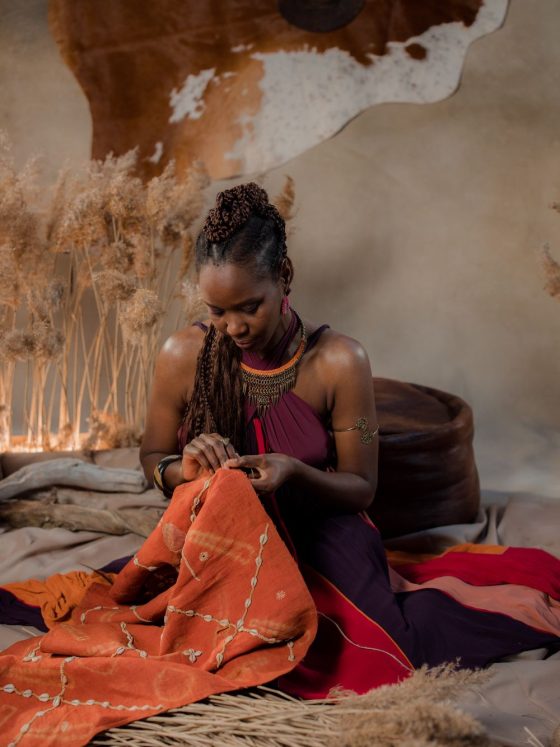
The most sustainable fashion business in your city probably does not have a sustainability report.
It does not have one because no one has asked for it. It does not have one because the frameworks that define and measure sustainability in fashion were built to assess industrial systems: factory outputs, supply-chain emissions, water consumption at volume, and the percentage of recycled fibre in mass-market products. The tailor on the high street, in the market, at the end of the residential road, making garments one at a time, in the fabric the customer chose, in the size the customer actually is, with no overstock, no unsold season, no excess production and no returns system, is invisible to all of those frameworks.
That invisibility is not an oversight. It is a design failure with a structural cause.
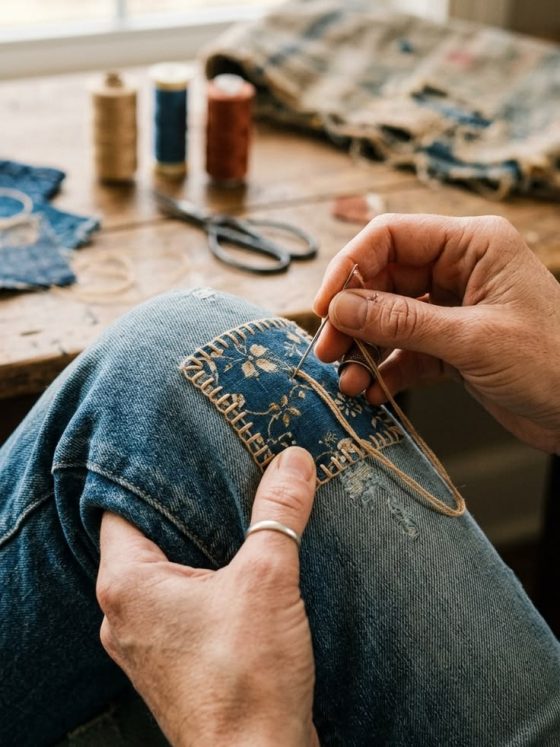
The made-to-order tailor produces on demand, at low volume, using locally sourced materials, with no excess inventory and no end-of-season clearance. The global fashion sustainability framework has no metric for any of that. It has metrics for what factories report. Tailors do not report to anyone.
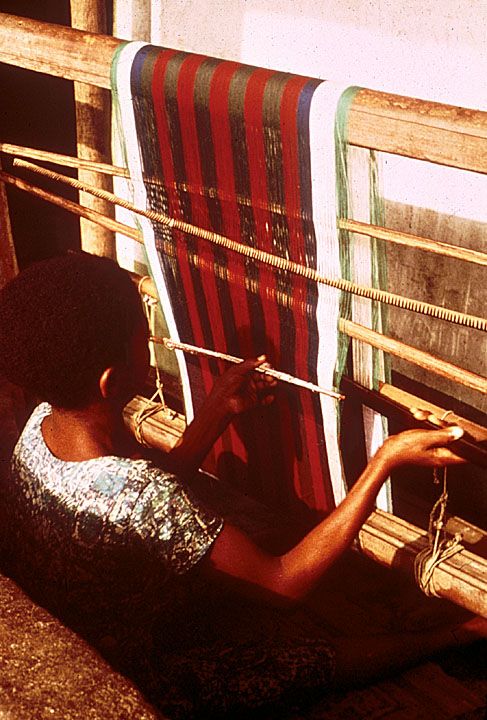
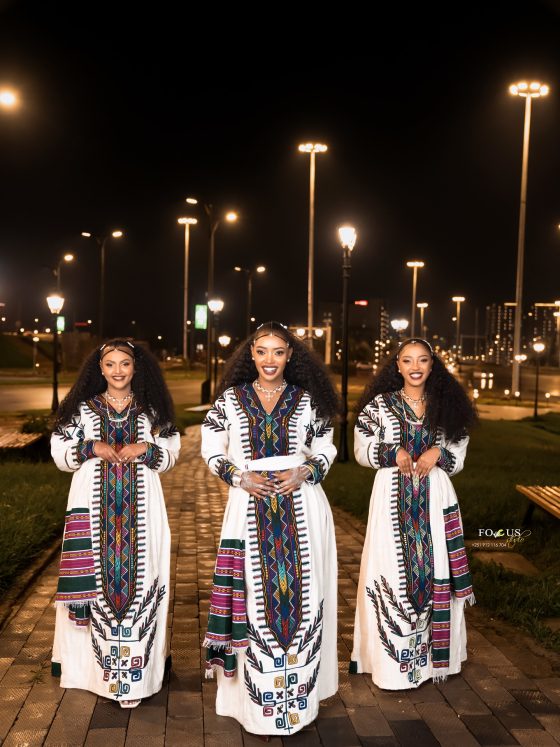
The $31 billion African fashion market contains tens of thousands of tailors operating at exactly this scale. In Lagos alone, the density of independent tailoring businesses across Yaba, Balogun, and the local markets of every residential neighbourhood represents a made-to-order production ecosystem no European city can claim. The aso-oke weaving industry documented by Omiren Styles supports over 50,000 artisans producing at the small-batch, craft-intensive scale that sustainability discourse celebrates in European artisan brands and overlooks in Nigerian production. The tailor is doing the work. The metric cannot see it.
Global fashion sustainability metrics measure carbon, water and waste. They cannot see a tailor. The made-to-order craftsperson doing the most structurally sustainable work in fashion is invisible to every framework claiming to measure it.
What the Frameworks Measure and What They Miss

Fashion sustainability frameworks have developed primarily in response to the environmental impact of industrial production. That response is legitimate. Industrial fast fashion generates measurable harm: carbon emissions from manufacturing and freight, water pollution from dyeing and finishing, textile waste from overproduction and consumer disposal. Measuring and reducing those harms is necessary work.
The problem is that the measurement frameworks were built for the harm they were designed to address. They measure what factories report: energy consumption, water use, chemical inputs, waste outputs, carbon footprint per unit, supply-chain traceability from raw material to finished product. They use certification systems that require documentary evidence, audit trails, third-party verification and the administrative capacity to compile and submit that evidence in the formats the certifying body requires.
An independent tailor in Nairobi, Accra or Lagos does not have that administrative capacity. Not because the tailor operates unsustainably, but because the tailor’s operation is not organised around the reporting structures that certification systems require. The tailor does not produce at volumes where carbon calculation per unit becomes meaningful. The tailor does not have a supply chain in the conventional sense: fabric is purchased at local markets, often in amounts specific to a single garment commission. The tailor’s water use is the water used to press a finished garment. The tailor’s waste is the offcuts from a pattern cut precisely to a specific body.
Nairobi Fashion Week’s 2026 edition, themed Decarbonise and held 28 to 31 January at Sarit Expo Centre in Westlands, brought UNEP, the Kenya Fashion Council and the Gatsby Charitable Foundation into direct dialogue with veteran Kenyan designers about the specific sustainability challenges of the African fashion context. As Omiren Styles documented in its analysis of Nairobi street style and the city’s fashion infrastructure, the intellectual spine of the 2026 edition was built around hard questions about circular supply chains, ethical labour and decarbonisation — questions that the global sustainability discourse frames as universal but which have fundamentally different answers when applied to a made-to-order craft economy rather than an industrial production system. The Kenyan designers in that conversation were not asking how to reduce their carbon footprint to meet a European certification standard. They were asking what sustainability actually means for their specific production contexts and found that the available frameworks were not built to answer that question.
The Structural Sustainability of Made-to-Order

Made-to-order fashion is structurally sustainable in ways that precede and exceed any certification framework.
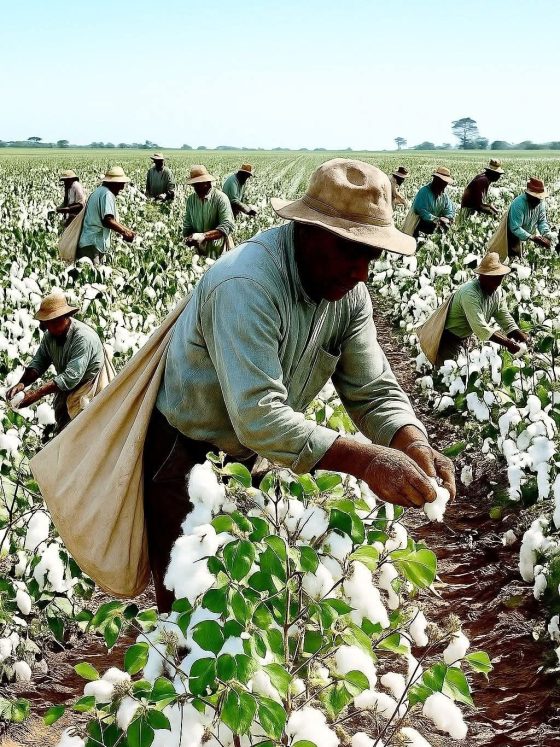
Overproduction is the single largest driver of fashion’s environmental impact. An estimated 30 to 40% of all clothing produced globally is never sold. It is disposed of through clearance sales, incineration, landfill or charity donation, each of which carries its own environmental and social cost. Made-to-order production has no overproduction. A garment does not exist until a customer commissions it, confirms their measurements, and chooses their fabric. By definition, the tailor’s practice lacks the surplus that industrial production builds into every run as a structural feature of its commercial model.
Returns are a significant and growing environmental problem in fashion retail. Online retail return rates in clothing categories can exceed 30%; each return generates carbon from shipping, and many returned garments are not resellable and therefore enter disposal channels. Made-to-order garments are produced for a specific body and a specific customer’s brief. Return rates are structurally lower because the garment was designed to fit and to meet the customer’s stated requirements from the outset.
Transport emissions in made-to-order are local. The fabric is purchased near the tailor, often from local traders who source it regionally. The tailor collects the finished garment or delivers it locally. This supply chain lacks the intercontinental freight that moves mass-produced garments from manufacturing countries to retail markets. In almost every case, the tailor’s logistics carbon footprint is a fraction of that of an equivalent garment produced industrially and shipped globally.
Local economic circulation is a sustainability benefit that environmental metrics do not capture but that development economists have long recognised as significant. When a customer commissions a garment from a local tailor, the money stays in the local economy: the tailor’s income, the fabric trader’s income, and the trimming supplier’s income all circulate within the community rather than being extracted as shareholder returns by a global brand. This is social sustainability, structurally embedded in the made-to-order model in a way no certification programme can replicate in industrial production.
Why the Metric Was Not Built for the Tailor

The tailor’s absence from sustainability metrics is not accidental. It reflects whose practices were at the table when the metrics were designed.
Global fashion sustainability frameworks have been developed primarily by and for the large brands and industry bodies of the European and North American fashion industry. The Sustainable Apparel Coalition’s Higg Index was developed with the participation of major brands and retailers. The Better Cotton Initiative, the Textile Exchange, the Fashion Pact: all of these frameworks were built in response to the documented harms of industrial fashion systems, by organisations whose members are the industrial fashion systems generating those harms.
The independent tailor was not in those rooms. Not because tailors do not matter to fashion’s environmental impact, but because they were not organised in ways that gave them access to the institutional conversations where measurement standards are set. The metric reflects the voice that shaped it. And the voices that shaped global fashion sustainability metrics were not those of the made-to-order craftspeople of Nairobi, Lagos, Accra, Dakar or Kigali.
As the dyeing economy analysis established, education without economics leaves the producer in the same place. Sustainability discourse without inclusive metrics leaves the craftsperson in the same place: invisible to the systems that supposedly measure the industry’s impact, uncounted in the frameworks that supposedly guide it toward better practice, and unrewarded by the consumer premiums that sustainability certification commands when it is legible to Western retail markets.
The result is a sustainability discourse that treats African craft production as outside the conversation by default, rather than as a model the conversation has not yet learned to describe. As Omiren Styles has established in its analysis of the artisan fashion economy, the artisan producer is not a marginal figure in fashion’s supply chain. In many African markets, the artisan is the primary producer. Treating them as invisible in sustainability measurement is not just a framework oversight. It argues over whose production practices count as sustainable, and it consistently places the answer in the Global North.
What a Metric That Could See a Tailor Would Measure

The absence of the tailor from current sustainability metrics does not mean the tailor’s practice cannot be measured. It means it hasn’t been measured in the ways current frameworks require.
A sustainability metric built for the made-to-order craftsperson would measure different things from those that industrial frameworks track, and it would measure them differently.
Production-to-commission ratio: in a made-to-order practice, this ratio is 1:1 by definition. Every garment produced corresponds to a confirmed customer commission. A metric that tracked overproduction as a percentage of total production would give the independent tailor a score of zero, the best possible environmental outcome on this dimension.
Local material sourcing percentage: a tailor who purchases fabric from a local trader, who sources from a regional textile market, who in turn sources from a domestic or regional textile producer, has a supply chain whose embodied transport emissions are a fraction of those in an industrially produced garment. Measuring the geographic radius of material sourcing would capture a structural advantage the tailor holds.
Garment lifespan by design: made-to-order garments are typically produced to a higher quality standard than mass-market equivalents. They are made for a specific body, designed to fit across multiple years of use. Customer attachment to a garment made specifically for them is higher than attachment to a mass-market purchase. Lifespan per garment is a sustainability metric of considerable significance: a garment worn for ten years has ten times the environmental value per use of one worn for one year. Made-to-order structurally predicts higher lifespan, and a metric that captured this would reflect an advantage the tailor currently cannot claim in any certification framework.
Community economic multiplier: the proportion of a garment’s cost that remains in the local economy through the tailor, the fabric trader, the trimming supplier and the associated services is measurable. Development economists have tools for calculating local economic multipliers. Applying those tools to fashion production would reveal the social sustainability advantage that local, independent, craft-based production holds over the global value chains in which industrial production is embedded.
What Needs to Change

The tailor’s invisibility in sustainability discourse is not resolved by adding a tailor to a panel at a sustainability conference. It is resolved by changing who designs the metrics, who the metrics serve, and what practices the metrics recognise.
Inclusive metric design requires African fashion practitioners, organisations, and craft communities to participate in the institutional conversations where sustainability standards are set. The Kenya Fashion Council’s presence at Nairobi Fashion Week’s decarbonisation discussions is one instance of that participation. It is not the same as African practitioners having a seat in the bodies that design global sustainability certification systems.
Contextually appropriate certification needs to exist alongside the currently dominant industrial frameworks. A certification that a made-to-order tailor could achieve through a process commensurate with their administrative capacity and relevant to their production model would allow the tailor’s sustainable practice to be recognised in consumer markets where certification commands a premium. The African Development Bank’s Fashionomics programmes have documented the commercial potential of African fashion craft. Building sustainability recognition into those frameworks would allow craft producers to capture the market value that sustainability commands, rather than leaving that value with certified industrial brands.
Consumer education needs to catch up with practice. A consumer who understands that a made-to-order tailor is doing more for fashion’s environmental future than any certified fast-fashion brand that has met a minimum recycled-content threshold will make different purchasing decisions. The artisan economy analysis established that buying handmade is one of the most political acts in fashion. Reframing it as one of the most sustainable acts as well is not a stretch. It corrects a sustainability discourse that has allowed industrial systems to claim the language of sustainability while the industry’s most sustainable practices remain uncounted.
The Omiren Argument
The sustainability metrics cannot see the tailor because they were not designed to look for them.
They were designed to measure the harms of industrial production systems and to provide those systems with a pathway to reduced harm through incremental improvement. That is nothing. Reducing the harm of industrial fashion production is necessary, measurable work. But it is not the same as recognising the practices that were never harmful in the first place.
The made-to-order tailor in Lagos, Nairobi, Accra or Dakar is not an industrial system that has achieved sustainability through incremental improvement. The tailor is a different production logic: demand-led, craft-intensive, locally embedded, overstock-free, low-transport, high-lifespan. No European sustainability certification captures that practice because no European sustainability certification was built by anyone who considered it.
This is the same argument that runs through every analysis this series has produced: the frameworks that measure, certify, reward and exclude have been built by the institutions with access to the rooms where measurement standards are set. Those institutions do not represent African fashion practice. Their frameworks are not neutral. And the $31 billion African fashion market, with its tens of thousands of tailors who are doing the most structurally sustainable work in the global fashion industry, remains invisible to the certification systems that claim to map fashion’s environmental future. As Omiren Styles has established across its documentation of African fashion systems, the standard is not to make African fashion legible to existing frameworks. The standard is to ask whether those frameworks are adequate to what already exists. In the case of fashion sustainability metrics, they are not. The tailor has been sustainable all along. The metric arrived late and is still looking in the wrong direction.
ALSO READ
- The Artisan Economy: Why Buying Handmade Is One of the Most Political Acts in Fashion
- After the Textile Explainer: A Dyeing Economy Cannot Grow by Leaving Its Producers Behind
- Shea Supply Chains: Where Value Is Created, Captured and Lost Between West Africa and Global Beauty
- The Global South Made Fashion. It Just Never Got Credit.
- Nairobi Street Style: How Kenya’s Fashion Capital Builds Its Own Aesthetic Without Asking Permission
- Three African Designers and the Gaps They Reveal
Frequently Asked Questions
Why are African tailors invisible in global fashion sustainability frameworks?
Global fashion sustainability frameworks were designed to measure and reduce the harms of industrial production: factory emissions, water consumption, chemical inputs, waste and supply-chain traceability. The independent tailor does not operate at the volumes where these metrics become relevant, lacks the administrative infrastructure to produce the documentary evidence certification systems require, and was not represented in the institutional conversations where measurement standards were developed. The absence of the tailor from sustainability metrics reflects whose production practices were considered when the frameworks were built, not the actual sustainability of the tailor’s practice, which is structurally superior to most certified industrial alternatives.
What makes made-to-order production more sustainable than industrial fashion?
Made-to-order production eliminates overproduction, which is the single largest driver of fashion’s environmental impact. An estimated 30 to 40% of all clothing produced industrially is never sold. Made-to-order produces nothing until a customer has commissioned a specific garment for their specific measurements. Returns are structurally lower because the garment was designed to fit. Transport emissions are minimal because fabric is sourced locally and the garment is delivered locally. Local economic circulation retains value in the community rather than extracting it through global brand profit structures. Each of these advantages is structural to the made-to-order model and does not require certification, investment or incremental improvement to achieve.
What would a sustainability metric that could measure a tailor’s practice look like?
A metric built for the made-to-order craftsperson would track: the production-to-commission ratio, which is 1:1 in made-to-order and eliminates overproduction; the local material sourcing percentage, which captures the transport advantage of locally purchased fabric; the garment lifespan by design, which reflects the higher quality and better fit that made-to-order typically produces; and the community economic multiplier, which captures the social sustainability advantage of a production model whose value circulates locally. None of these metrics currently appear in major global fashion sustainability certification frameworks because those frameworks were not built to assess craft production at low volumes.
How does the Nairobi Fashion Week 2026 Decarbonise theme relate to this argument?
As Omiren Styles documented, Nairobi Fashion Week 2026 was themed Decarbonise and brought UNEP, the Kenya Fashion Council and the Gatsby Charitable Foundation into direct dialogue with Kenyan designers about the specific sustainability challenges of the African fashion context. The discussions raised the tension this article identifies: global sustainability frameworks frame decarbonisation as a universal challenge with universal metrics, but the challenges and best-practice models differ fundamentally when applied to a made-to-order craft economy rather than an industrial production system. The conversation in Nairobi in January 2026 is part of the process through which African fashion practitioners develop sustainability frameworks appropriate to their own production contexts, rather than applying frameworks built for the industrial systems of the Global North.
What would need to change for African craft producers to benefit from sustainability premiums?
Three changes are needed simultaneously. Inclusive metric design would require African fashion practitioners and organisations to participate in the institutional conversations where sustainability standards are set, rather than receiving those standards as outputs of processes they couldn’t access. Contextually appropriate certification would need to exist alongside industrial frameworks: a certification process that the independent tailor could complete through a process commensurate with their administrative capacity and relevant to their production model. Consumer education would need to reframe the made-to-order tailor not only as an economically and culturally significant practice but as one of the most environmentally sustainable production models in the global fashion industry, allowing consumers to make purchasing decisions that reflect that understanding.
Does African artisan production count as sustainable fashion in 2026?
In practice, yes. In the measurement frameworks that currently dominate sustainability discourse, no. African artisan production — made-to-order tailoring, small-batch craft weaving, locally sourced and processed textile traditions — meets every substantive criterion for sustainable practice: low overproduction, minimal transport emissions, high garment lifespan, local economic circulation and craft-intensive production that does not depend on the industrial inputs that generate the largest share of fashion’s environmental harm. The frameworks that most consumers and brands use to identify and reward sustainable fashion were not built to see these practices. Building frameworks that can do so is the work African fashion institutions, practitioners, and sustainability advocates are beginning to do — and global sustainability bodies have a responsibility to support, rather than replace, with industrial standards never designed with craft production in mind.
EXPLORE MORE
Read the full Industry and Opinion sections at Omiren Styles for ongoing analysis of African fashion infrastructure, sustainability discourse and the production systems that global metrics have yet to learn to count. Discover travel and heritage intelligence across Africa at Rex Clarke Adventures.