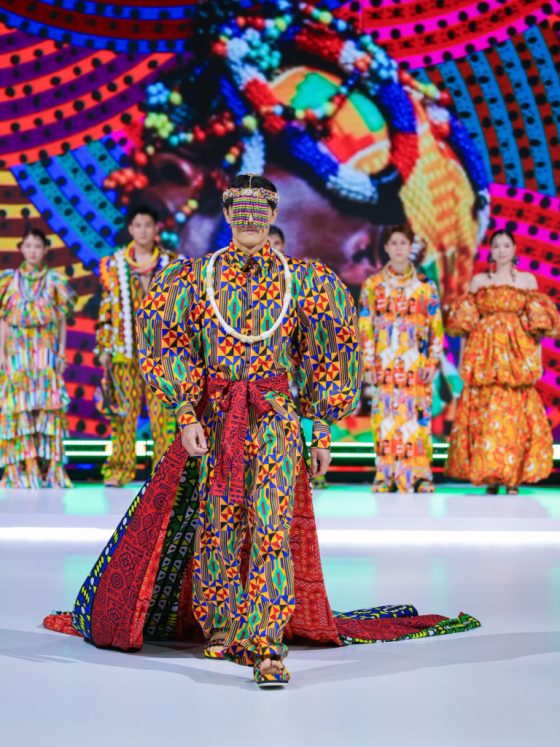
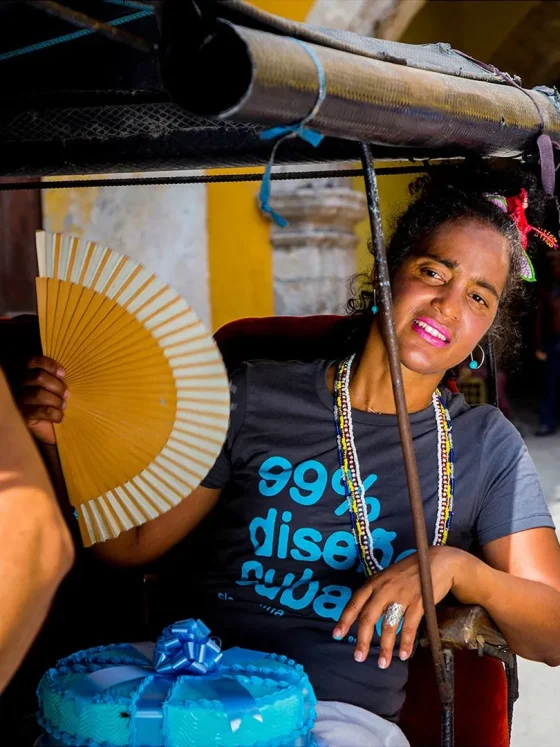
Attribution is a moral claim. It is not a commercial one.
When the fashion industry credits a cultural source, it takes a step it has too often refused to take. A label acknowledges the community behind a visual reference. A magazine names the tradition behind a garment. A designer credits the artisans behind a construction technique. These gestures matter. They correct the record. They make the history of fashion slightly more honest.
But attribution is not compensation. It is not consent. It is not control. It does not redirect revenue toward the community being credited. It does not give that community a say in how the reference is used next, at what scale, in which markets, by whom, and at what price. It does not create a legal obligation for the company that credits to share any of the commercial value it derives from the cultural knowledge it has named.
The fashion industry has been having a conversation about attribution for years. That conversation is necessary and must continue. But it is incomplete.
Cultural reference commercial ownership is the harder question that follows attribution, and it is the question this series has been building toward. Across its full arc, from the claim that the Global South made fashion and never got credit, through the contested ownership of Ankara, through the legal arguments around Oaxacan weaving, through the absence of commercial return for Kingston’s aesthetic export, this series has repeatedly arrived at the same point: attribution describes a historical debt, but it does not discharge it. The debt has a commercial dimension. That dimension requires a different set of tools.
Naming a source gives it credit. It does not give it a seat at the table where the money is divided. Attribution is the beginning of the accountability conversation, not its conclusion.
Attribution is the beginning, not the end. Omiren examines who controls what happens to a cultural reference once it enters commercial fashion, and what compensation looks like.
What Attribution Can and Cannot Do

Attribution changes the cultural record. When a fashion house credits the Zapotec weavers of Oaxaca in its collection notes, or when a magazine identifies the aso-oke weaving tradition in its coverage of a designer’s work, or when a brand names the dancehall scene as a source for its collection’s visual grammar, the historical record becomes more accurate. Future researchers, designers, educators and consumers can follow that credit toward a fuller understanding of where the work actually came from.
That is meaningful. Cultural erasure damages communities in ways that extend beyond economics. When a community’s creative contribution is absorbed and then made invisible, the narrative about who makes culture becomes distorted. Young people in that community may fail to see their own traditions reflected in the media and institutions that claim to represent fashion. Collectors, educators and institutions build incomplete understandings of design history. The cycle of erasure becomes self-reinforcing.
Attribution interrupts that cycle. It creates a paper trail. It can, over time, build a broader public understanding that African fashion systems, Caribbean-style cultures, Indigenous textile traditions, and Global South creative economies have been producing world-shaping aesthetic work for generations, rather than “emerging” only recently into an industry that apparently existed without them.
What attribution cannot do: it cannot change who holds the trademark. It cannot give a community control over subsequent uses of a reference the company has now publicised. It cannot require the company to share revenue. It cannot prevent a competitor from using the same credit to legitimise a similar extraction. It cannot convert a name into a right.
As Cambridge scholarship on cultural appropriation and the global fashion industry has documented, intellectual-property frameworks designed for individual authorship and short commercial timelines are structurally unsuited to protecting collective, intergenerational, community-based creative knowledge. The problem is not only that brands fail to attribute. The problem is that even when they do attribute, existing legal structures provide no mechanism to convert that attribution into enforceable economic rights for the source community.
The Commercial Life of a Reference
A cultural reference does not disappear once a designer uses it in a collection. It enters commercial circulation.
The collection is photographed, published, reviewed, resold, copied, adapted, referenced by other designers, licensed to other markets, sold at wholesale, retailed at a markup, featured in editorials, used in brand campaigns, and eventually enters a broader visual vocabulary that shapes what gets called fashionable, current, or desirable.
Each of those stages generates economic value. The value does not flow backwards to the community that created the cultural knowledge. It accumulates within the company, the publishing infrastructure, the retail system, and the intellectual property regime that the brand controls.
Consider a textile motif associated with a specific weaving community. A designer sees it, uses it, credits the source. The collection sells. A fast-fashion brand notices the motif in the editorial coverage and produces a mass-market version without credit. A third brand sees the fast-fashion version and includes a similar element in its own range. By this point, the original community has been referenced. Still, the commercial life of its visual knowledge has expanded through a chain of uses over which it had no control, for which it received no payment, and in which its original credit has disappeared entirely.
Attribution created the opening. The commercial structure then extracted value from it at every stage.
This is the problem that Dancehall Dressed the World First identified at the level of a musical and style culture: the aesthetic travels through the global fashion system, generating commercial value at each point of distribution. At the same time, the originating community receives a decreasing share of that value at each remove. Attribution, when it exists, sits at the beginning of the chain. The money sits at the end.
What Legal Systems Are Trying to Do

The most significant recent developments in the law of cultural intellectual property represent attempts to move beyond attribution toward enforceable economic rights. They are imperfect, incomplete and still contested. They are also the most structurally serious interventions in this space so far.
Geographical Indication protection is one of the tools being used most actively. A Geographical Indication is a legal designation that connects a product to its place of origin and the methods associated with that place. It can prevent producers outside the designated region from using a name associated with a tradition.
Ghana secured Geographical Indication status for Kente through the World Intellectual Property Organisation in September 2025. As Omiren Styles has documented in its guide to buying authentic Kente cloth, only cloth woven using traditional techniques in approved Ghanaian communities may now carry the name under international law. This is a genuine legal barrier to some forms of appropriation. A manufacturer in China cannot legally call its product Kente. A Dutch mill cannot use the name for its industrial print.
Guinea secured Protected Geographical Indication status for Léppi, the indigo-dyed cotton fabric woven by Fulani communities in the Fouta Djallon region, through the African Intellectual Property Organisation in October 2025. As Omiren Styles has documented in its investigation of Guinea-Conakry’s fashion future, the registration creates a legal mechanism through which the community that produces Léppi can defend the name, the method and the economic value attached to both. It does not automatically redistribute existing commercial value. It creates a legal basis for future negotiation.
Mexico’s approach has been more direct. Its Federal Law for the Protection of the Cultural Heritage of Indigenous and Afro-Mexican Peoples, which entered into force in January 2022, requires free, prior and informed consent before a third party may use, commercialise or reproduce cultural heritage elements. Crucially, it requires that any authorised use be onerous and temporary, and involve fair and equitable distribution of benefits. That is not only attribution. That is a legal requirement for commercial sharing.
These legal frameworks are limited in their current reach. GI status protects a name and a method within the territories that recognise the designation. It does not prevent a brand from making a product “inspired by” Kente or Léppi without using the protected name. Mexico’s law creates a domestic legal requirement that is difficult to enforce internationally. The commercial life of a reference extends across jurisdictions, supply chains, editorial uses and digital contexts that no single national law can govern comprehensively.
But their existence signals something important. The argument that cultural knowledge should generate economic returns for originating communities is no longer solely an ethical one. It is entering law.
The Commercial Alternatives to Law

Legal frameworks move slowly. The commercial life of a cultural reference moves quickly. Between the two, there are commercial mechanisms that communities, designers, platforms and institutions could use now to create more equitable relationships around cultural knowledge.
The first is licensing. A community or its appointed representative organisation could set the terms under which commercial entities may use a cultural reference, at what price, for how long, for what purposes, and in which markets. Licensing is the mechanism through which music creators receive royalties when their work is used commercially. There is no structural reason why the same logic cannot apply to the use of culturally significant design elements. However, the question of collective ownership makes administration more complex than for individual copyright.
The second is co-creation with equity. Rather than using a cultural reference and then crediting it, a brand could engage the originating community as a creative partner with a share of the commercial outcome. This requires genuine power-sharing: not the community as a production source or a cultural validator, but as a co-owner of the product whose knowledge made the work possible. It is harder to structure, more expensive to negotiate and more accountable in every direction. It is also the model most likely to foster durable relationships rather than repeated cycles of extraction.
The third is supply-chain sourcing. A brand that uses a cultural textile tradition as the basis for a collection can choose to source the actual materials from the originating community. This does not resolve every IP question, but it creates a direct economic relationship between the commercial outcome and the community whose knowledge and labour made the material possible. It makes the credit structural rather than editorial.
The fourth is long-term institutional investment. As the African Development Bank’s Fashionomics programmes have recognised, fashion businesses in communities across Africa need access to capital, training, market connections and export infrastructure. A brand that derives sustained commercial value from African aesthetic traditions has a stronger obligation than a credit footnote: it has an obligation to invest in the infrastructure that allows those traditions to be economically sustainable for the people who carry them.
Viral Fame Is Not Compensation
The case of Kalu Putic, the Ethiopian visual artist and fashion figure from Mekelle whose work attracted 1.5 million combined social media followers in weeks, is instructive. His images circulated globally through fashion and cultural media. His aesthetic vision reached audiences that most designers spend years trying to access. The commercial infrastructure to convert that reach into a sustained economic return on his own terms had not yet been built around him.
Viral fame accelerates the commercial life of a reference while often bypassing its creator entirely. An image travels. It generates engagement. It generates advertising revenue for the platforms hosting it. It generates brand awareness for the accounts sharing it. It may generate commissions for agencies and stylists who reproduce the reference in commercial contexts. The originating creator may receive nothing that constitutes economic compensation, unless they have the contracts, legal representation, and commercial infrastructure in place to capture value before the image leaves their hands.
Attribution in this context- a credit tag, a mention, a reference- provides the cultural record. It does not provide the invoice.
The fashion industry has become sophisticated at using cultural discovery as content while leaving the discovered creator to navigate the commercial consequences of that discovery alone. The creator gains followers. The industry gains aesthetic authority and press coverage. The economic asymmetry can remain unchanged or worsen because visibility without infrastructure can generate demand that the creator cannot meet on sustainable terms.
As Omiren Styles has documented in its analysis of the relationship between the African and Black American aesthetic, the fashion industry has absorbed and reproduced Black aesthetic production without attribution throughout its modern history. What has changed recently is not the extraction: it is the visibility of the extraction. Attribution, where it has arrived, has arrived because the communities being referenced became vocal enough to demand it. The commercial imbalance that attribution names has not automatically followed it into correction.
The Question Attribution Cannot Answer.

Attribution answers: where did this come from?
It does not answer who should receive the economic benefit from how it is used. Under what conditions may it be used? Who has the right to refuse those conditions? What happens when a company attributes a source and then uses the reference in ways the community finds objectionable? What redress exists when a credited community discovers its name being used to market a product that undermines its own industry?
These are questions about economic rights, consent, governance and accountability. They require different answers depending on the specific community, reference, commercial use, and available legal framework. There is no single universal answer. But there are principles.
The first principle is that consent precedes use. A community should be able to decide whether a commercial entity may use its cultural knowledge at all before any use occurs. Attribution after the fact is not consent.
The second principle is that compensation accompanies consent. If a community agrees that a commercial entity may use its cultural knowledge, that agreement should include terms for the sharing of economic benefits. Those terms may take the form of a licensing fee, a royalty, a sourcing commitment, an investment in community infrastructure or some combination. Attribution without compensation does not satisfy this principle.
The third principle is that ongoing governance belongs to the community. The community should retain the right to review, renegotiate or withdraw permission for ongoing commercial use of its cultural knowledge. A one-time acknowledgement does not transfer permanent use rights.
The fourth principle is that the commercial life of a reference should be traceable. When a cultural element enters commercial circulation and is then reproduced, adapted, licensed, resold, or referenced by subsequent parties, the originating community should have a mechanism to track that chain and understand the value it has generated. Opacity in the commercial life of a reference protects extractors, not creators.
The Omiren Argument
This series began with the claim that the Global South made fashion and never got credit for it. It ends with a harder claim: credit is not enough.
The fashion industry has trained itself to treat attribution as a final destination. It has built editorial standards around naming sources. It has developed vocabulary for celebrating cultural heritage. It has learned to photograph the artisan alongside the garment, to include a footnote about the weaving tradition, to acknowledge the music scene that shaped the collection’s visual logic. All of this is better than nothing. None of it is sufficient.
The commercial life of a cultural reference extends far beyond the press release in which it is credited. It enters wholesale agreements, retail listings, brand licensing, fast-fashion reproduction chains, editorial archives, mood boards, trend-forecasting tools, social media databases, and the collective memory of the global fashion industry. At each of those points, someone captures value. The question this series has been building toward is why that someone so consistently fails to include the community that referred to it as worth using.
As Omiren Styles has argued in its investigation of the artisan economy, recognising artisan origins ensures communities receive credit and economic benefit when their craft techniques influence global fashion. The word credit carries two meanings: cultural recognition, and financial obligation. Fashion has made progress on the first. It is overdue on the second.
The communities whose visual knowledge built the aesthetic authority that global fashion now claims as its own are not waiting for another editorial feature. They are waiting for the mechanisms that convert credit into commercial right: licensing agreements, geographical indications, benefit-sharing requirements, consent-before-use standards, long-term sourcing commitments and investment in the infrastructure that makes cultural knowledge commercially self-sustaining. As Omiren Styles has documented in its analysis of cultural resistance and the global style movements built by these communities, they understood the significance of their own visual languages long before external institutions came to name or value them. The task now is to build the commercial and legal structures that match that understanding and deliver a proportionate return.
Attribution is where the accountability conversation begins. The question of who owns the commercial life of a cultural reference is where it has always been heading.
ALSO READ
- The Global South Made Fashion. It Just Never Got Credit.
- Who Really Owns Ankara?
- Oaxacan Weaving Is Not a Trend. It Is a Textile System.
- Kingston to Milan: The Aesthetic Export With No Export Deal
- Where to Buy Kente Cloth Without Funding a Counterfeit Industry
- How the Future of Fashion in Guinea-Conakry Is Being Built on Léppi, Local Shows, and Not on Imports
Frequently Asked Questions
Why is attribution not enough to address cultural appropriation in fashion?
Attribution names a source. It does not give the source community control over subsequent uses of the reference, a share of the revenue generated from those uses, the right to consent before use occurs, or a mechanism for challenging uses the community finds objectionable. A brand can credit a community in its collection notes, then license the same reference to a fast-fashion manufacturer without the community’s involvement or compensation. Attribution creates a historical record. It does not create an economic right, a governance mechanism or an enforceable obligation.
What is Geographical Indication protection and how does it help cultural textile traditions?
A Geographical Indication is a legal designation that connects a product to its place of origin and the methods associated with that place. WIPO confirmed Ghana’s GI status for Kente in September 2025. It means that only cloth woven using traditional techniques in approved Ghanaian communities may legally carry the name Kente in jurisdictions that recognise the designation. Guinea secured equivalent protection for Léppi, its indigo-dyed Fulani cotton, through the African Intellectual Property Organisation in October 2025. GI protection prevents misuse of protected names but does not prevent production that uses the aesthetic without using the name. It is a partial legal tool rather than a comprehensive solution.
What does Mexico’s cultural patrimony law require of fashion brands?
Mexico’s Federal Law for the Protection of the Cultural Heritage of Indigenous and Afro-Mexican Peoples, which entered into force in January 2022, requires free, prior and informed consent before a third party may use, commercialise or reproduce cultural heritage elements. It further requires that any authorised use be onerous and temporary, and involve the fair and equitable distribution of benefits. Penalties for undue appropriation or exploitation without consent include prison sentences of two to ten years. This is the most direct national legal requirement that a commercial entity must share economic benefit with the originating community, though international enforcement remains difficult.
What commercial mechanisms can create economic return for communities beyond attribution?
Four mechanisms exist now, without waiting for legal reform. Licensing allows communities or their representatives to set terms, prices and permissions for commercial uses of cultural references, similar to how music royalties work. Co-creation with equity treats the community as a commercial partner with a share of the outcome rather than as a cultural validator or production source. Direct supply-chain sourcing links the commercial outcome to the originating community’s economic activity by purchasing materials directly from them. Long-term institutional investment, such as the African Development Bank’s Fashionomics programme, builds the infrastructure that allows cultural knowledge to be economically self-sustaining within the originating community. None of these is simple to administer, but all are commercially workable.
How does viral fame affect creators whose cultural references circulate globally?
Viral circulation accelerates the commercial life of a reference while often bypassing the creator of that reference economically. An image generates engagement, advertising revenue for hosting platforms and brand awareness for sharing accounts. The originating creator may receive none of this unless they hold the contracts, legal representation and commercial infrastructure needed to capture value before the image leaves their control. As Omiren Styles has documented in its investigation of Kalu Putic’s emergence from Mekelle, reaching 1.5 million combined social media followers in weeks does not automatically create commercial infrastructure. Visibility without contracts, representation and legal protection produces demand the creator cannot service on sustainable terms.
What does “the commercial life of a reference” mean in practice?
The commercial life of a reference is the chain of economic activity generated by a cultural element once it enters fashion circulation. A designer uses a motif from a weaving tradition. The collection is photographed and published. A fast-fashion brand sees the editorial and reproduces the motif at volume. A third brand uses the fast-fashion version as a reference for its own range. Trend forecasting tools incorporate the motif into their databases. Future designers encounter it there. At each point in this chain, someone captures economic value: the original designer, the publishing platform, the fast-fashion manufacturer, the retailer, the trend agency. The originating weaving community may have been credited at the first point in the chain. It has no presence at any of the subsequent points where value is being generated.
EXPLORE MORE
Read the full “The Lens and Fashion > Power” sections at Omiren Styles for the complete series on cultural authorship, commercial ownership, and the structural conditions that shape how Global South creative knowledge enters and moves through the global fashion system. Discover travel and heritage intelligence across Africa at Rex Clarke Adventures.