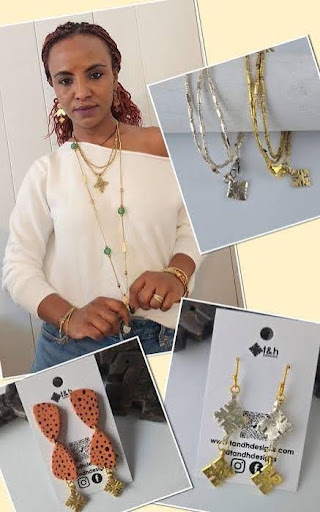
The most important fact about T&H Designs is not where it sells. It is where it began: in a one-room house in Addis Ababa, where twin sisters Tigist and Haimanot Damtew discovered that they could make jewellery well enough to build a business from it. The Gemini Trust, an organisation dedicated to helping families of twins, offered to train the girls as teenagers to help them earn extra income for their families. They took the training and kept going for nearly two decades.
The African fashion and beauty market is part of the continent’s 31-billion-dollar economy. As T&H Designs’ official brand documentation confirms, it is a small jewellery and bag design business founded in 2007 by identical twin sisters Tigist and Haimanot in Addis Ababa, Ethiopia. Tigist and Haimanot first became interested in designing jewellery when the Gemini Trust offered to train them as teenagers, as a way for them to earn extra income for their families and to help raise awareness. They discovered a unique talent and passion for jewellery design, founded T&H Designs while working out of their family’s one-room house, grew the business, and opened a brick-and-mortar shop in Addis Ababa. Currently, Haimanot lives in Indiana, USA.
T&H Designs was not in European concept stores. It was at the Afrika Festival Stuttgart and selling globally on Etsy. That is the accurate and more interesting story.
What the Evidence Actually Shows

The claim that T&H Designs is entering European concept stores requires specific evidence: a named retailer, an active product listing, a confirmed buyer relationship, or a stockist announcement. The available public record does not provide any of those. What it does provide is more interesting and more accurately describes how a small Addis Ababa accessories label builds international commercial presence in 2026.
The brand has confirmed European market presence through the Afrika Festival Stuttgart, where the official T&H Designs social media account announced participation. A major African diaspora cultural festival in a German city is not the same as a concept-store retail placement, but it is real market access in Europe: physical presence. Still, it’s a product available for purchase, face-to-face engagement with diaspora and German customers, and the kind of brand visibility that retail buyers sometimes notice. It is also the kind of international activity that the brand controls entirely: no third-party buyer needed, no wholesale margin reduction, no seasonal buying schedule to meet.
The T&H Designs story does not need inflation. Founded in a one-room house in Addis Ababa. Built over nearly two decades. Training women who survived fistula surgery to start their own businesses. Employing Yaya Girls programme graduates. Haimanot is now operating from Indiana while the Addis Ababa shop continues. Afrika Festival Stuttgart. Etsy. That is already a significant commercial and social story.
The Origin: Gemini Trust, Teenagers, and a One-Room House
The origin story of T&H Designs is one of the clearest examples available in East African fashion of a label built from the most minimal possible resources into a functioning international business. As TripAdvisor’s documentation of customer reviews of T&H Designs in Addis Ababa confirms, reviewers describe the work as a great mix of contemporary style and antique Ethiopian metalwork, and the shop as their favourite in Addis Ababa. Customers regularly carry pieces back to Europe, North America, and Australia as gifts. The diaspora distribution model built into the shop’s location- a jewellery business in Addis Ababa visible to the international community living and working in the city-: is one of the most durable forms of informal international distribution available to a small label.
The Gemini Trust’s role in the origin story is significant beyond the personal narrative. It demonstrates that a small non-profit with a specific community focus, families of twins, could create a jewellery business that now generates international sales. The support was vocational training and an initial investment to make it viable. Everything after that was made in-house. This is relevant because it shows that the infrastructure required to start a jewellery label can be minimal when the makers have the skill, the determination, and the specific community connection that turns a local shop into a destination for international visitors.
The Women’s Empowerment Dimension
T&H Designs’ most underreported dimension is its employment and training model. The brand has employed young women at the shop and trained women who underwent fistula surgery in jewellery making so they can start their own businesses for extra income. The Yaya Girls programme, dedicated to helping young vulnerable female runners find alternative career options, also provides graduates to the brand for employment. These are not peripheral social-impact claims. They are the brand’s operational model: a jewellery business that uses its own commercial activity to create economic opportunity for specific groups of women in Addis Ababa.
The fistula training programme is particularly significant for Ethiopian women’s economic autonomy. Obstetric fistula is a condition primarily affecting women in contexts of poverty and inadequate maternal healthcare, and women who experience it often face significant social marginalisation. Training fistula survivors in a skilled craft that allows them to start independent businesses is a form of economic reinsertion that connects T&H Designs’ commercial success directly to the material wellbeing of some of the most marginalised women in Addis Ababa. This is not corporate social responsibility as branding. It is the brand’s actual purpose.
The Product: Contemporary Ethiopian Metalwork

T&H Designs makes jewellery that customers consistently describe as a mix of contemporary style and antique Ethiopian metalwork. The brand’s official materials description confirms that it offers fashionable, high-quality beaded jewellery that blends with its Ethiopian heritage. The product sits precisely in the category that international buyers of African accessories most consistently want: not a reproduction of traditional forms, nor a Western accessory with an Ethiopian pattern applied to it, but a contemporary design practice informed by and grounded in a specific local material and design tradition.
The beads documented in public reviews and listings come from multiple sources: Ethiopian metal beads, Ghanaian beads, and contemporary elements. The brand has also been associated with custom Ethiopian wedding jewellery, including rings. The custom service is significant because it creates a category of high-value, relationship-based sales that supplements retail. A customer commissioning custom wedding jewellery is not buying a product from a shelf. They are entering a conversation with the maker about something that will matter to them for the rest of their lives. That relationship is the most durable commercial asset a jewellery label can build.
The International Access Architecture
T&H Designs’ international commercial presence operates through three distinct channels. The Addis Ababa brick-and-mortar shop serves the international community in the city: diplomats, NGO workers, business visitors, tourists and diaspora Ethiopians returning to visit, who carry the jewellery back to Europe, North America, and Australia and recommend the shop to other visitors. As T&H Designs’ Etsy presence confirms, the label has direct online international retail through Etsy, making products available for purchase without requiring a visit to Addis Ababa. And the Afrika Festival Stuttgart represents direct European market presence: the founders bringing the label to a major diaspora cultural event, where African and African-heritage customers can encounter, buy from, and spread the word about the brand.
This three-channel architecture is not the same as concept-store placement. It is, in some respects, more robust. A concept-store placement depends on the store’s continued interest, buying decisions, and commercial health. A customer acquired through the Addis Ababa shop or the Afrika Festival Stuttgart is acquired directly: the brand has their experience, and the customer has the jewellery. A concept-store buyer who loses interest in the next season takes the distribution channel with them. A diaspora customer who loves the earrings they bought at the Stuttgart festival is a returning customer and a word-of-mouth channel for their network.
The Direct-to-Consumer Argument
The fashion industry’s standard commercial success metric is the wholesale stockist: a named retailer who places orders, takes inventory, and sells the brand’s products to their own customer base. That metric is real and useful. It is not the only measure of commercial success. As Omiren Styles’ retail access analysis of African designers’ international stockists confirms, the most important commercial question is not whether a brand appears on a retailer’s shelf. It is whether the brand has built the commercial infrastructure to convert attention into sustained revenue. T&H Designs’ direct-to-consumer model through Etsy and festival presence converts attention into purchase without requiring a wholesale margin reduction, a third-party buyer’s continued interest, or a seasonal buying calendar that the small Addis Ababa operation has to meet.
The Omiren Argument
T&H Designs is not entering European concept stores. It is doing something more interesting and more instructive: building direct global access from Addis Ababa through a combination of physical shop presence for international visitors, Etsy e-commerce for direct overseas sales, festival participation in European diaspora events, custom jewellery services for diaspora customers, and an employment and training model that uses commercial success to create economic opportunity for marginalised women in the city. The African fashion and beauty market is part of a 31-billion-dollar continental economy. The T&H Designs 31-billion-dollar market. Founded in a one-room house in Addis Ababa. Built over nearly two decades by twin sisters who started as teenagers, training with a non-profit for families of twins. Training women who survived fistula surgery to start their own businesses. Employing Yaya Girls programme graduates. Haimanot is now operating from Indiana while the Addis Ababa shop continues. Afrika Festival Stuttgart. Etsy. That is already a significant commercial and social story. The lesson it demonstrates is the one that fashion journalism about African labels most needs to learn: an accurate account of what a label has actually built is a better story than an inflated account of where it has not yet arrived.
Also Read:
- Runway Visibility Is Not Distribution: Which African Designers Have Verifiable Global Retail Access?
- African Designers in London Need More Than Visibility: The Infrastructure Test for Fashion Power
- Eritrean Fashion Designers: A Verified Public Record of Collections and Public Practice
- Uganda’s Barkcloth Industry: Can GI Protection Turn Heritage Into Greater Value?
Frequently Asked Questions
What is T&H Designs Ethiopia?
T&H Designs is a jewellery and bag design business based in Addis Ababa, Ethiopia, founded in 2007 by identical twin sisters Tigist and Haimanot Damtew. The label produces fashionable, high-quality beaded jewellery that blends modern design with Ethiopian heritage. The brand started in the founders’ family’s one-room house after the Gemini Trust, an organisation for families of twins, offered to train the teenage sisters in jewellery making. T&H Designs has grown into a brick-and-mortar shop in Addis Ababa, an Etsy online store, international festival presence including the Afrika Festival Stuttgart, and a women’s empowerment programme training fistula survivors and Yaya Girls programme graduates.
Who founded T&H Designs Addis Ababa?
T&H Designs was founded in 2007 by identical twin sisters Tigist and Haimanot Damtew in Addis Ababa, Ethiopia. The T and H in the brand name stand for Tigist and Haimanot. The Gemini Trust, an organisation dedicated to helping families of twins, initially sparked the sisters’ interest in jewellery-making when they were teenagers, as a way to earn extra income for their family. Currently, Haimanot lives in Indiana, United States, while the Addis Ababa shop continues to operate, creating a transatlantic business model that supports access to both the Ethiopian and diaspora markets.
Does T&H Designs sell internationally?
Yes. T&H Designs sells internationally via Etsy, its Addis Ababa brick-and-mortar store serving the international visitor community in the city, and through festival participation, including the Afrika Festival Stuttgart in Germany. The brand’s Addis Ababa shop is well documented in TripAdvisor reviews by international visitors who carry pieces back to Europe, North America, and Australia. No named European concept-store stockist relationship has been publicly confirmed, but direct international customer access through the channels described is well documented.
What jewellery does T&H Designs make?
T&H Designs makes handmade beaded jewellery, including necklaces, earrings, and bracelets, that customers describe as a blend of contemporary style and antique Ethiopian metalwork. The brand’s official description confirms that it offers fashionable, high-quality beaded jewellery blending modern design with Ethiopian heritage. Materials include Ethiopian metal beads, Ghanaian beads, and contemporary design elements. The brand has also been associated with custom Ethiopian wedding jewellery, including rings. The product range also includes bags.
How did T&H Designs start?
T&H Designs was started in 2007 when twin sisters Tigist and Haimanot Damtew were teenagers in Addis Ababa, Ethiopia. The Gemini Trust, an organisation dedicated to helping families of twins, offered to train the girls in jjewellery-makingas a way for them to earn extra income. The twins discovered a talent and passion for jewellery design, founded T&H Designs while working out of their family’s one-room house, grew the business, and eventually opened a brick-and-mortar shop in Addis Ababa. Along the way, they developed an employment and training model that includes training women who underwent fistula surgery and employing graduates of the Yaya Girls programme.
Explore More
Read the full Fashion > Industry section for Omiren Styles’ intelligence on East African accessories labels, direct-to-consumer market access, and the commercial infrastructure that separates sustained international presence from one-season visibility.
Discover travel and heritage intelligence across Ethiopia and East Africa at Rex Clarke Adventures.