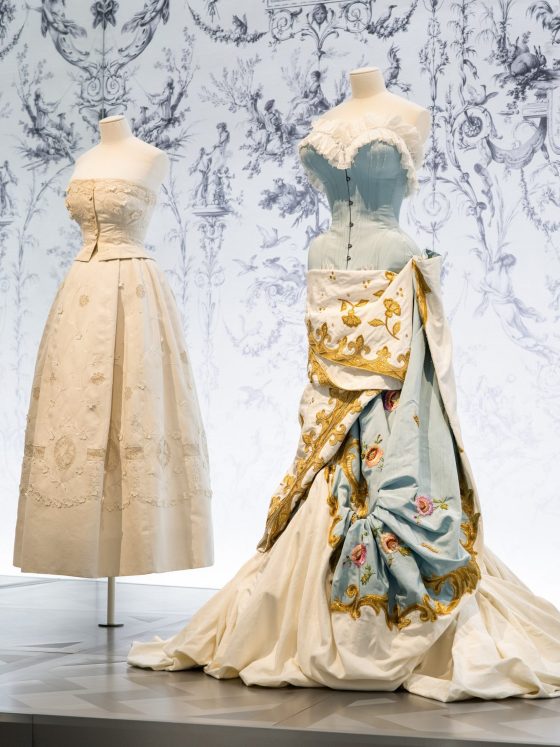
On 28 February 2026, Chouchou Lazare stood in Paris wearing a raffia-decorated hat and tunic, with a gold suit jacket, and received an achievement award at the Fashion Annual Show, which has been honouring African designers for more than 25 years. In the same week, the raffia he had braided, sewn, and glued to bustiers and skirts in his Libreville workshop gained international attention on the runways of Paris, the world’s fashion capital. The AFP photograph of raffia drying on his studio balcony appeared in publications across three continents.
The African fashion market is worth 31 billion dollars. Gabon’s recorded exports of woven or tufted fabric were US$333 in 2023, according to the United Nations COMTRADE database. The gap between those two facts is the article’s argument. Raffia has a designer. It has Paris. It has the Osaka Expo. It has a state-level cultural strategy and presidential endorsement. As France24’s March 2026 documentation of Lazare’s Paris achievement confirms, the natural material derived from palm leaves, and traditionally reserved for Gabon’s nobles and village chiefs, gained international attention on the runways of the world’s fashion capital. It does not yet have a market infrastructure that converts that attention into income for the people who weave the material in the villages of the Ogooué estuary and the craft markets of Libreville.
Gabon’s raffia gained international attention in 2026. Its recorded textile exports were $333 in 2023. The gap between those two facts is the industry question.
The Material and Its Traditional Standing
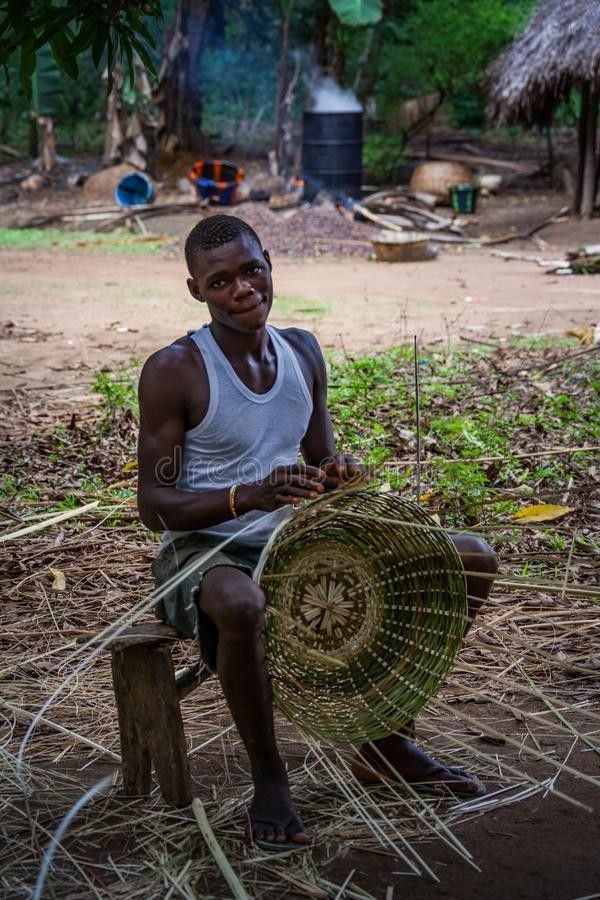
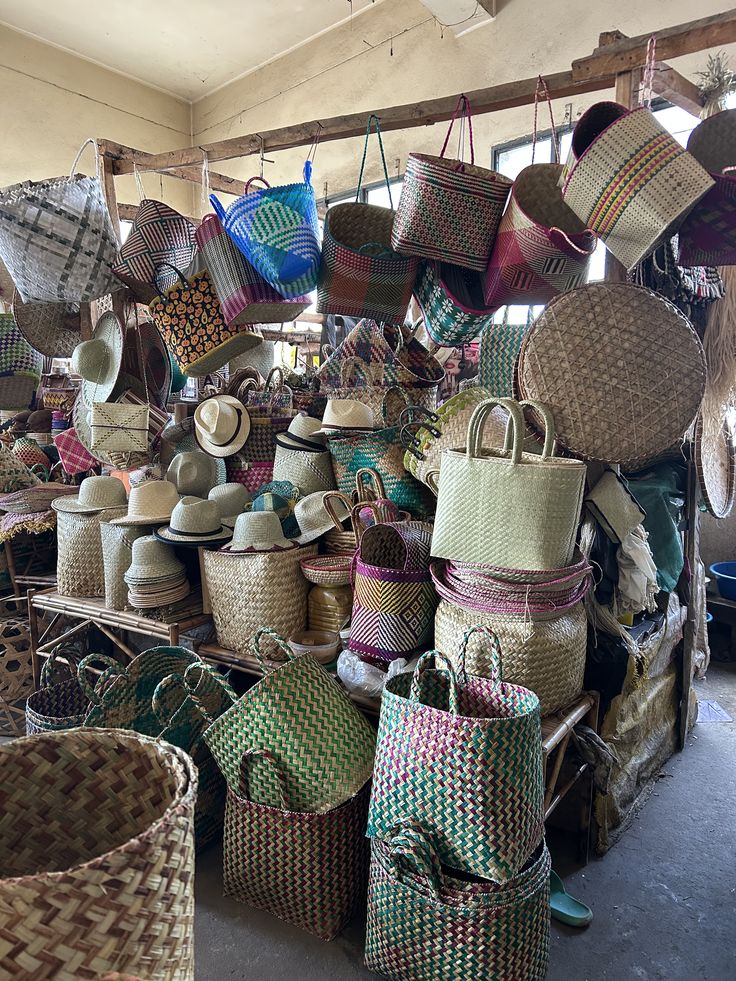
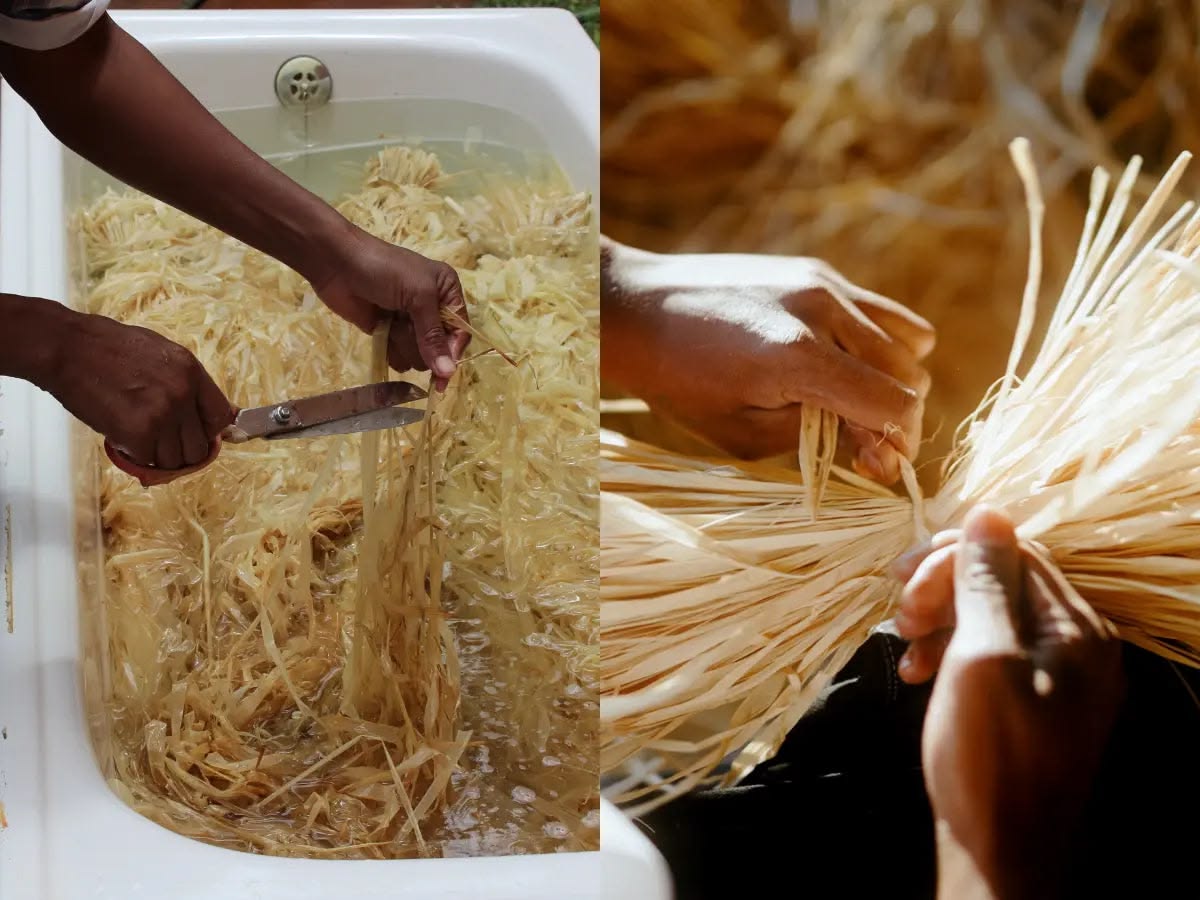
Raffia is a natural fibre extracted from the raffia palm, whose long leaf fronds are processed into fibres that can be woven, braided, or knotted into textiles. In Gabon, raffia weaving traditions exist across multiple ethnic communities: the Fang, Mpongwe, Punu, and Myene peoples all have documented traditions of raffia use in ceremonial and everyday contexts. The material’s traditional status as reserved for nobles and village chiefs lends it cultural authority in Gabonese society that is considerably greater than its current international commercial standing. A material that was the exclusive property of the ruling class in pre-colonial Gabon is now sold in village markets outside Libreville for between 2,000 and 40,000 Central African francs, approximately $3 to $65 at 2025 exchange rates.
That price range documents both the material’s availability and the limits of its current commercial positioning. At 2,000 XAF, raffia weavings are priced as craft souvenirs. At 40,000 XAF, they are priced as quality artisan objects. The question the title asks is whether raffia can reach a third pricing tier: the international design market, where the combination of cultural authority, material specificity, and handcraft production commands prices that are multiples of artisan production costs rather than fractions of them.
Chouchou Lazare said he hoped to see raffia recognised as a treasure for Gabon. That is a cultural ambition. The commercial question it raises is different: a treasure is only worth what it yields to those who hold it. Gabon’s raffia weavers in village markets sell their work for between 2,000 and 40,000 XAF. The designer who took the same material to Paris in the same month won an achievement award.
Chouchou Lazare and the Design Case
Chouchou Lazare is the most thoroughly documented Gabonese designer working with raffia at international scale. Self-taught, now in his 50s, he began his design practice at age 9 by creating dresses for his mother and grandmother. As FashionNetwork’s documentation of Lazare’s Paris achievement confirms, he is the president of the Association of Gabonese Stylists and Creators, where he teaches and mentors other designers. In 2002, he won first prize for fashion at the Saint-Étienne International Design Biennial in France. More than two decades later, he presented his creations to French President Emmanuel Macron and Gabon’s President Brice Oligui Nguema during a state visit to Gabon in November. Nearly all of his dresses incorporate raffia, whether braided, sewn, or glued to bustiers or skirts.
Lazare’s position in the raffia story is specific: he is a designer who uses raffia as his primary signature material, has built international recognition over more than two decades, and has now established a Paris runway presence and a presidential endorsement. His stated ambition is for raffia to be recognised as a treasure of Gabon, and his design practice is the most developed public articulation of what that recognition could look like in haute couture. He told AFP that raffia is for everyone, not only Gabonese or African people. That positioning is an export strategy, whether or not it is named as such.
What Lazare’s position cannot do alone is build the supply chain, pricing infrastructure, and market access systems that would allow the raffia weavers who produce the raw material to benefit proportionally from the international attention his work generates. A designer who reaches Paris is not automatically a supply chain that reaches the village. The value that Lazare adds through design, construction, and market access is real and legitimately his. The question is how much of the total value generated when his raffia garments sell internationally flows back to the weavers who provide the material he uses.
The Osaka Signal and the State Strategy
On 26 July 2025, the Cartier Pavilion at Expo 2025 Osaka became the stage for a 100% Gabonese fashion show featuring a hybrid textile blending cotton and raffia. As Gabon Terre Avenir’s August 2025 documentation of the Osaka event confirms, it was conceived as part of the artistic programme directed by Nina Abouna, Gabon’s General Commissioner of Exhibitions. The positioning was explicit: each silhouette embodied a vision of a people transforming their roots into creative power, of a fabric becoming manifest, and of an assumed political strategy in which culture becomes a driving force for sustainable development.
The Osaka event and the Paris Fashion Annual Show appearance are both institutional endorsements of raffia’s international potential. They differ in what they demonstrate. Osaka demonstrated that Gabon’s government is willing to use a major international exhibition platform to position raffia as a national cultural export. The Paris award demonstrated that a Gabonese designer can achieve recognition in the international fashion industry by using raffia as his primary material. Neither demonstrates that the supply chain connecting Gabonese raffia weavers to international markets is functioning at a scale sufficient to improve weavers’ incomes. What they demonstrate, at this stage, is institutional intent.
The Data Gap: $333
The UN COMTRADE figure of US$333 for Gabon’s woven or tufted fabric exports in 2023 is the most important number in this analysis. It is not a precise measure of raffia textile exports specifically because the customs category includes other woven fabrics and excludes products classified as garments rather than fabric. But it is the most readily available quantitative measure of Gabon’s recorded textile export performance in the period leading up to the 2025-2026 raffia visibility events.
A country whose fashion designer wins an award in Paris, whose government presents a cotton-raffia hybrid at the Osaka Expo, and whose traditional textile material is described by the president of the country’s designer association as a national treasure, with recorded woven fabric exports of $333, has a structural gap between its cultural ambitions and its commercial infrastructure. That gap is not evidence that the ambitions are wrong. It is evidence that the infrastructure has not yet been built.
The gap also raises the question of where the value of raffia is currently going. If Gabon is not recording significant textile exports, and if individual weavers are selling at craft market prices between $3 and $65, then the international transactions that do occur around Gabonese raffia are most likely happening in ways that do not flow through the producer. A retailer in Paris or New York who stocks a Gabonese raffia product may be transacting at a price point that is multiples of the craft market price. The difference between those two prices is not artisan income. It is the margin captured by the design, manufacturing, logistics, and retail chain that stands between the weaver and the consumer.
What a Real Raffia Market Would Require
Building a sustainable raffia export market that reaches Gabon’s weavers requires specific infrastructure that the 2025-2026 visibility events alone do not provide. As Omiren Styles’ analysis of the Moroccan babouche value chain confirms, export value measures what crosses the border; it does not automatically capture who controls pricing, branding, or profit after the product leaves the workshop. The same structural question applies to Gabon’s raffia. The conditions required for the market to reach the makers include: producer cooperatives that aggregate supply, set quality standards, and negotiate collectively with buyers; transparent supply chain documentation that connects international purchasers to specific Gabonese producer communities; fair pricing mechanisms that share the international premium between designers, producers, and weavers; certification or GI-type frameworks that prevent non-Gabonese products from competing under the Gabonese raffia name; and training and business support for weavers who want to sell direct to international buyers.
The Association of Gabonese Stylists and Creators, which Lazare leads, is the most developed institutional infrastructure currently available for the designer end of this chain. What has not been publicly documented is an equivalent producer-side organisation representing the weavers and village craftspeople who produce the raw raffia used by designers. The asymmetry between a nationally recognised designer association and an absent weaver collective is the most specific expression of the structural gap this article names.
The Omiren Argument
Gabon’s raffia test is whether a craft material that has generated significant international cultural visibility in 2025 and 2026, through the Osaka Expo, Paris award, and presidential endorsement, can convert that visibility into a commercial market before the pattern reasserts itself, with the designer capturing the international premium. The weaver captures the craft market price. The African fashion market is worth 31 billion dollars. Chouchou Lazare’s work is serious, his international recognition is earned, and his ambition for raffia to be recognised as a national treasure is correct. The same material that he describes as deserving to be shown because it is special and woven very finely is currently selling in village markets around the Ogooué estuary for a dollar equivalent of three to sixty-five dollars. The $333 in recorded textile exports represents the gap between the cultural story that Gabon’s raffia can tell and the commercial infrastructure that would allow the weavers who produce the material to benefit when that story travels internationally. That gap is closeable. It requires the same steps as every craft-to-market transition: producer organisation, transparent pricing, direct market access, and institutional frameworks that prevent value from being captured entirely by the chain between the weaver and the consumer. The test has started. The timer is running.
Also Read:
Frequently Asked Questions
What is Gabon’s raffia tradition?
Raffia is a natural fibre extracted from the raffia palm’s long leaf fronds, processed into fibres that can be woven, braided, or knotted into textiles. In Gabon, raffia weaving traditions are found among the Fang, Mpongwe, Punu, and Myene ethnic communities. The material was traditionally reserved for nobles and village chiefs, giving it cultural authority within Gabonese society. Contemporary raffia weavings are sold in village markets around the Ogooué estuary and at craft stands in Libreville, priced between 2,000 and 40,000 XAF (approximately $3 to $65). The material can be braided, woven, sewn, or glued to garments and is used in ceremonial, everyday, and now haute couture design contexts.
Who is Chouchou Lazare?
Chouchou Lazare is a self-taught Gabonese fashion designer based in Libreville who has made raffia his signature material. He began designing at age nine, creating dresses for his mother and grandmother. In 2002, he won first prize for fashion at theSaint-Étiennee International Design Biennial in France. In February 2026, he presented a raffia collection at the Paris Fashion Annual Show and received an achievement award. He also presented his creations to French President Macron and Gabon’s President Oligui Nguema during a state visit to Gabon. He is president of the Association of Gabonese Stylists and Creators, where he teaches and mentors other designers.
How much does Gabon export in textiles?
According to the United Nations COMTRADE database, Gabon’s exports of woven or tufted fabric were US$333 in 2023. This figure covers the customs category of woven and tufted fabric and excludes garments classified under other codes. It should be read as a directional indicator of Gabon’s very limited formal textile export infrastructure rather than as a precise measure of raffia exports specifically. The figure predates the 2025-2026 events that brought Gabonese raffia significant international attention.
What happened at Osaka Expo 2025 with Gabon raffia?
On 26 July 2025, the Cartier Pavilion at Expo 2025 Osaka hosted a 100% Gabonese fashion show featuring garments made from a hybrid textile blending cotton and raffia. The event was directed by Nina Abouna, the General Commissioner of Exhibitions of Gabon, and positioned as part of a state cultural strategy in which culture serves as a driving force for sustainable development. The event brought Gabonese raffia to an international audience at one of the world’s largest exhibitions. It reflected the government’s positioning of President Brice Oligui Nguema’s cultural heritage as a component of its economic development strategy.
Can Gabon raffia become an export market?
The conditions required for Gabon’s raffia to develop into a sustainable export market that benefits weavers include: producer cooperatives that aggregate supply and negotiate with buyers; transparent supply chain documentation connecting international purchasers to Gabonese producer communities; fair pricing mechanisms that share the international premium between designers and weavers; certification frameworks that protect the Gabonese raffia name from competition from non-Gabonese products; and business support for weavers who want to sell directly to international buyers. The Association of Gabonese Stylists and Creators provides the institutional infrastructure for the designer end of this chain. An equivalent producer-side organisation for raffia weavers has not been publicly documented.
Explore More
Read the full Fashion > Industry section for Omiren Styles‘ intelligence on African craft export markets, value-chain analysis, and the conditions that determine whether cultural visibility converts into artisan income.
Discover travel and heritage intelligence across Central Africa, including Gabon and the Ogooué estuary, at Rex Clarke Adventures.