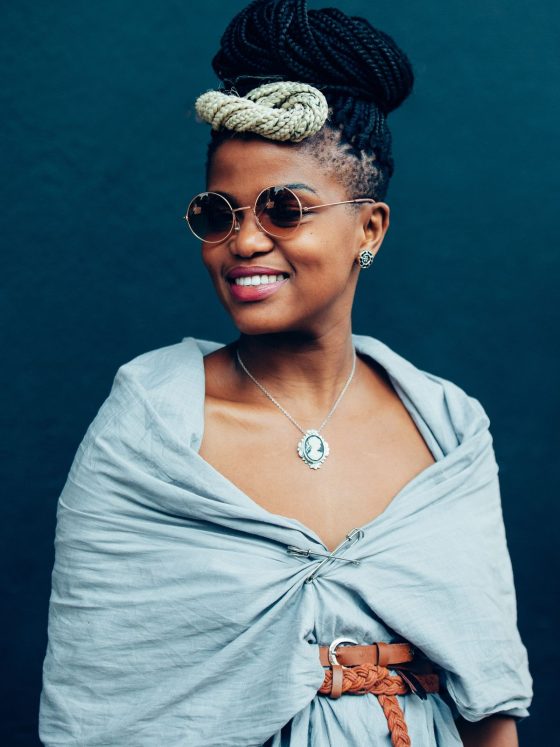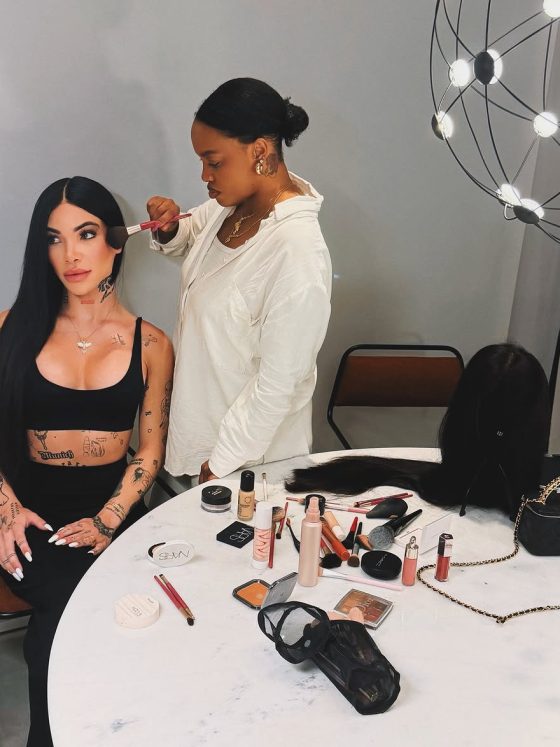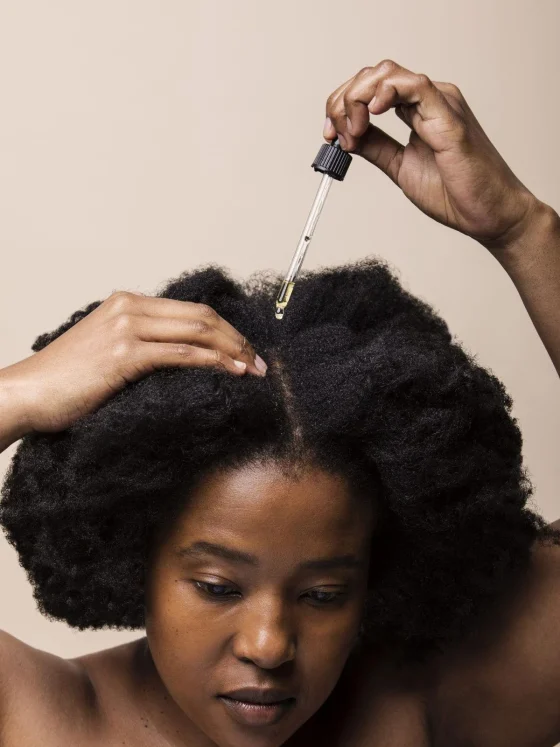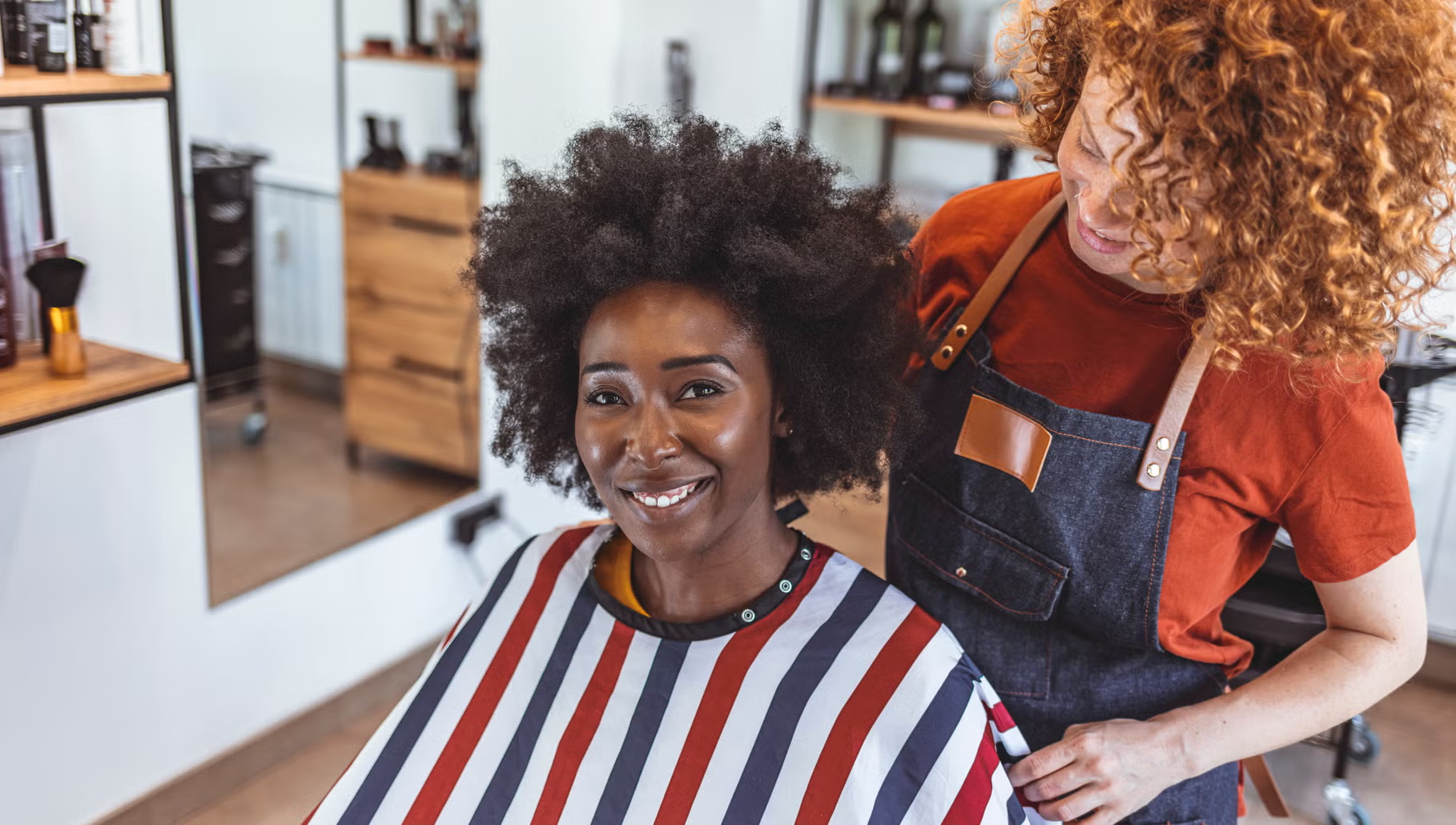
The Caribbean hair shop sells hair products, braiding services, wigs, extensions, relaxers, edge control, and a specific brand of community knowledge that is not listed on the price board and cannot be ordered online. It sells information about which landlord is moving the family out, which school just had an incident, which community member needs a word, which young person needs to be watched over, which elder is unwell. It sells the memory of how your grandmother tied her headwrap, passed down by a braider whose fingers learned the technique from her own grandmother, in a country most of the customers in this shop have never visited. That is not retail. That is infrastructure.
The African fashion and beauty market is worth $ 31 billion. Within the African diaspora in Britain, the Caribbean and Black hair shop has functioned as the most durable and most consistently accessible form of community infrastructure since the first generation of Caribbean migrants arrived on the Windrush. As Omiren Styles’ documentation of the African intelligence behind diaspora braiding confirms, salons from Lagos to London to Los Angeles make their livelihoods from techniques that originated in West Africa before recorded history and survived the Middle Passage, colonial prohibition, and institutional erasure. The hair shop is where those techniques live in daily practice, transmitted hand to hand, between people who understand what they are carrying.
The Caribbean hair shop gave the diaspora credit when banks refused, community when isolation threatened, and a place to practise culture when nowhere else would hold it.
Caribbean Hair Shop as Diaspora Infrastructure: The Foundation
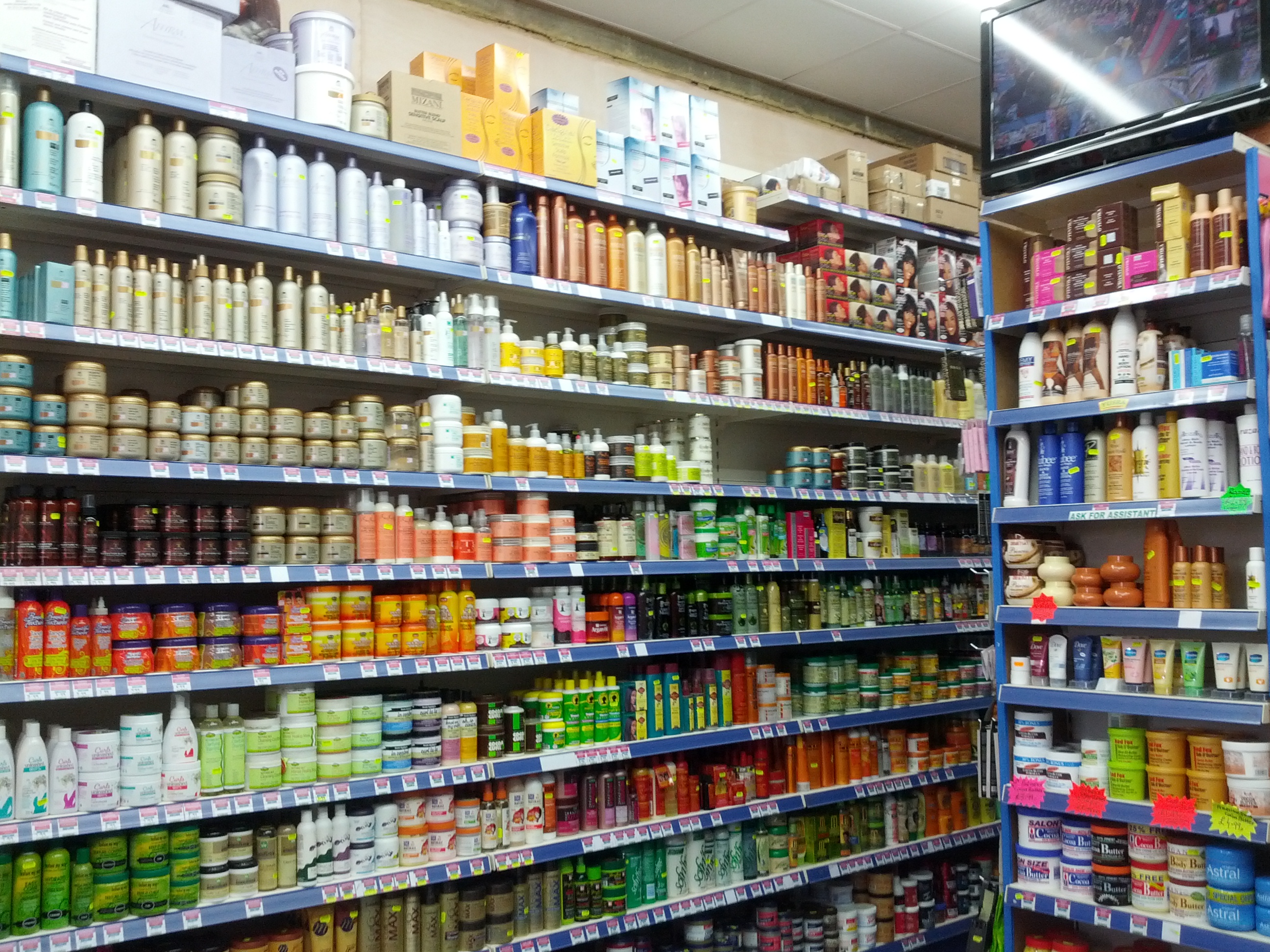
The argument that the Caribbean hair shop is infrastructure rather than retail begins with what it provided when no other institution would. When Caribbean migrants arrived in Britain in the 1950s and 1960s, mainstream beauty retail did not stock products designed for their hair. Mainstream salons did not employ stylists trained in Afro hair care. The institutional economy had, in effect, decided that Black hair did not exist as a commercial category worth serving. The Caribbean hair shop existed to correct that decision.
The founding case is Dyke & Dryden, established in May 1965 by Jamaican immigrants Lincoln Len Dyke and Dudley Dryden at 126 West Green Road in Tottenham, north London. As the Black Plaque Project’s documentation of the founders confirms, Dyke & Dryden Ltd. started as a record distribution company and a travel agency before pivoting to hair and beauty products during a time when Black women were virtually invisible to the beauty industry. Their first shop was a huge hit in the Black community. They expanded rapidly and became the UK’s first Black-owned multi-million-pound business, with their stores operating as meeting places for local community groups.
Dyke and Dryden became the largest provider of trade credit to Black hairdressers and beauty salons in Britain at a time when banks refused to lend to them. They were not just selling hair products. They were building the financial infrastructure without which the salons and barbershops that became community institutions could not have opened.
The Credit System the Hair Shop Built
The most underreported dimension of Caribbean hair shop history is the credit system. When Black hairdressers and beauty salon owners sought loans from British banks in the 1960s, 1970s, and 1980s, they were routinely refused. The formal financial system had decided that Black-owned businesses in the beauty sector were not viable credit risks. As African Investor’s documentation of the Dyke and Dryden story confirms, Dyke & Dryden became the largest provider of trade credit to Black hairdressers, beauty salons, and small retailers, offering stock on credit to help other Black entrepreneurs get on their feet when banks would not lend to them. In effect, they created an ecosystem of Black business. They were not operating within existing infrastructure. They were building infrastructure that did not exist.
This trade credit system is the foundational proof of the argument this article makes. Credit is infrastructure. The ability to stock a shop without upfront capital is the difference between a business that opens and one that cannot. Dyke & Dryden understood that their customers, the Black hairdressers and salon owners of Britain, could not access the financial infrastructure that their white counterparts could take as a baseline. So they built a parallel system. The Caribbean hair shop that exists on your high street today, in Peckham, Brixton, Tottenham, or Handsworth, may not know the name Dyke & Dryden. But it is operating within the commercial ecosystem those three men built when the formal economy refused to.
The Knowledge Transfer System
The Caribbean hair shop is also an institution of knowledge. As Omiren Styles’ documentation of African hair rituals and the transmission of hair care knowledge confirms, these practices were not merely cosmetic techniques. They were rituals embedded within daily life, passed from mothers to daughters and shared among women gathered in courtyards, family homes, and village spaces. The hair shop is the urban diaspora version of that gathering space. Braiding patterns, scalp treatment knowledge, protective styling techniques, the specific handling of different hair textures and porosity levels: this knowledge has been transmitted in Caribbean and Black hair shops across Britain for sixty years without academic recognition, without formalised curriculum, and without institutional support. It has survived because the shops survived.
A braider who learned her technique from her mother, who learned it from her grandmother in Trinidad, Jamaica, or Barbados, is transmitting a knowledge system that has travelled across an ocean and three generations. The customer who sits in her chair and repeats the same phrase her mother said to a different braider in another city is participating in a cultural continuity with no other institutional home. Churches come closest. But you cannot get your hair done in church.
The knowledge also flows sideways across communities. A shop in Brixton serves customers whose families came from Jamaica, Trinidad, Barbados, St Lucia, Ghana, Nigeria, and Eritrea, each with distinct hair textures, styling traditions, and product needs. The stylist who understands all of these is not just a skilled technician. She is a cultural polyglot, translating between hair traditions that formal beauty education has never integrated into a single curriculum.
The Community Hub Function
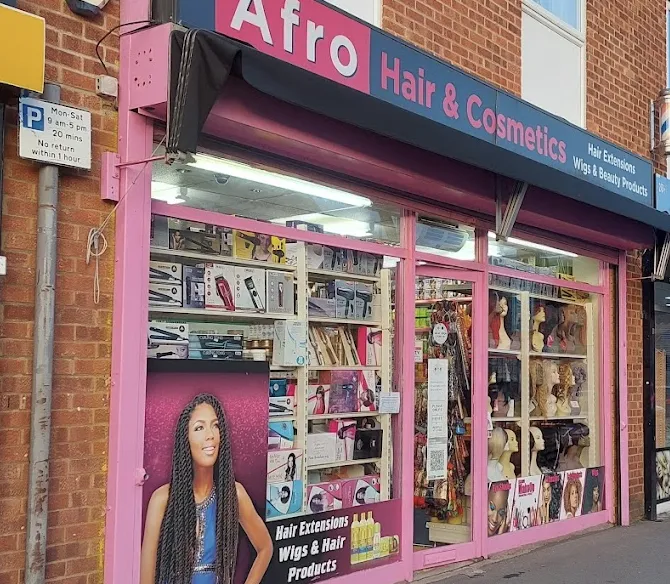
The barbershop and salon’s role as a community hub is documented by academic research in Britain. Dr Karis Campion at City St George’s University of London has researched Black barbershops in Britain as informal community hubs, perceived as trusted spaces that have long been key social institutions within Britain’s diverse Black communities. As Hackney Council’s documentation of the Dyke and Dryden legacy confirms, the Dyke & Dryden stores provided not only hair care products but also a meeting place for local community groups, a service for passport and citizenship matters, and a hub for the Caribbean diaspora living in the United Kingdom. The hair shop did not add these functions as extras. They were part of the proposition from the beginning, because the community needed them and no other institution was providing them.
The list of what happens in a Caribbean hair shop beyond the cutting and styling is long: political discussion, housing advice, immigration guidance, mental health support, employment networks, business referrals, childcare arrangements, grief support, celebration, gossip, memory. The television sitcom Desmond’s, broadcast from 1989, understood this. It set its action in a Peckham barbershop not because the barbershop was an exotic location, but because it was where the community happened. The writers knew that an audience familiar with Black British life would immediately recognise the location as the right setting for a show about the Black British community.
The Ownership Problem
The Caribbean hair shop also carries a structural problem that its infrastructure function makes more acute. As Omiren Styles’ documentation of the diaspora fashion paradox confirms, the knowledge is of African and Caribbean origin. Still, the market is not always owned by the communities that built it. Academic research confirms that when Dyke & Dryden declined, the void they left in the Black British afro hair and beauty sector was filled substantially by Asian-owned businesses. The infrastructure that Caribbean migrants built- the customer base, the product knowledge, the salon culture, the community trust- became the commercial foundation on which businesses operated by people outside the Caribbean community were built.
This is a repeating pattern in diaspora commercial history. A community builds a market from scratch, often without institutional support, using informal credit and collective knowledge to create consumer infrastructure where none existed. The market becomes commercially legible to external operators with access to formal credit, property ownership, and supply chain relationships that the original community was denied. The community retains the cultural authority. The external operators capture the commercial return. The Caribbean hair shop is a documented case of this pattern, and it remains unresolved.
What Closure Costs
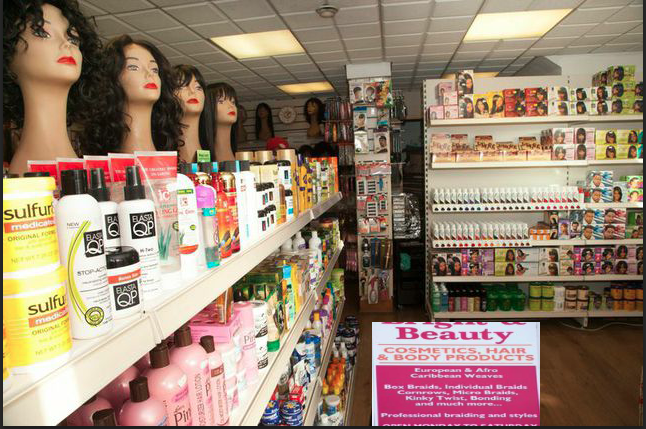
The National Hair and Beauty Federation has documented that Black, Black British, Caribbean and African hair and beauty outlets face lower survival rates past their third anniversary compared to salons in predominantly white ethnic areas. When a Caribbean hair shop closes, what closes with it is not a retail unit. It is the specific combination of knowledge, credit relationship, community function, and cultural space that took decades and multiple generations to build. A new shop selling the same products cannot replicate that. The braider who learned from her grandmother does not automatically transfer to the next person who rents the space.
The closure of Caribbean hair shops through rent increases, gentrification pressure, and the death of founding owners who have not been able to transfer the business to the next generation is therefore a form of diaspora infrastructure loss that urban planning and cultural policy do not currently have the frameworks to measure or address. Planning policy can assess the loss of a library or a community centre. It does not yet have a category for the loss of the specific knowledge, credit system, and community function that lives inside a Caribbean hair shop that has been operating for forty years.
The Omiren Argument
The Caribbean hair shop is diaspora infrastructure. The African beauty and fashion market is worth $ 31 billion. The Black-owned hair shops and barbershops of Britain built the commercial, social, and cultural infrastructure that the Caribbean diaspora needed to function in a country whose institutions had decided not to provide it. Dyke & Dryden extended trade credit to Black hairdressers and salon owners when British banks refused to lend to them. They built an ecosystem of Black business using the hair shop as its foundation. The braiders and stylists of fifty years of British Caribbean hair shops transmitted knowledge that travelled from West Africa across the Atlantic and across three generations, without formal curriculum, without institutional support, and without recognition from the beauty industry that has made billions from the market those communities created. The community hub function that academics document in Black barbershops, the political discussion, the housing advice, the mental health support, the employment networks, the grief support: all of this happened in the hair shop because the hair shop was the most consistently accessible trusted space the community had.
The ownership problem that has emerged as these shops age- the pattern in which Caribbean communities build cultural and commercial infrastructure that external capital then enters and captures- is not a new story. It is the same story that has repeated across diaspora commercial history wherever a community’s access to formal credit and property ownership lags behind the market value it has created. Omiren Styles documents the Caribbean hair shop as infrastructure rather than retail because that distinction changes what policies, urban planning, and cultural investment should do to sustain it. A hair shop is a shop. An institution that provides credit, transmits knowledge, holds community memory, and preserves cultural practice across three generations is something the planning system needs a different category for, and something the beauty industry should be crediting, compensating, and investing in rather than extracting from.
Also Read:
- Gullah Geechee Women’s Headwrap Traditions, Still Practised Today
- African Oils and Skincare: Who Owns the Ingredient Chain?
- The Madras Headwrap: How Caribbean Women Turned a Colonial Textile Into a Declaration
- Caribbean Beauty Rituals That Deserve a Global Stage
Frequently Asked Questions
Why is the Black hair shop important to the Caribbean diaspora?
The Caribbean and Black hair shop has provided the diaspora with services the mainstream economy refused to offer: specialist hair care products, styling knowledge for Afro hair textures, trade credit when banks refused business loans, meeting spaces for community groups, political discussion, immigration and housing advice, and the transmission of hair knowledge that connects diaspora communities to African and Caribbean traditions. It has been diaspora infrastructure in the full sense: not retail with community benefits attached, but a community institution whose retail function is one of several essential services it provides.
What did Dyke and Dryden do for the Black hair industry in the UK?
Dyke & Dryden, founded in May 1965 by Jamaican immigrants Len Dyke and Dudley Dryden and later joined by Montserrat-born Tony Wade, became the UK’s first Black-owned multi-million-pound business by building the distribution, manufacturing, and retail infrastructure for Black hair care products in Britain. Their most significant institutional contribution was extending trade credit to Black hairdressers and salon owners when British banks refused to lend to them, creating the commercial ecosystem within which Black British hair shops could open and operate. Their stores also functioned as community meeting places and provided passport and citizenship guidance to Caribbean migrants.
How did Caribbean hair shops become community hubs?
Caribbean hair shops became community hubs because they were among the few spaces where the diaspora could gather without hostility, seek advice from people who understood their specific circumstances, and practise cultural traditions including braiding, headwrapping, and hair rituals that connected them to African and Caribbean heritage. The first generation of Caribbean migrants in Britain found that mainstream institutions, from banks to beauty retailers to social services, were structured around assumptions that excluded or misunderstood them. The hair shop, serving a practical daily need, became the community institution that filled those gaps.
Why do Caribbean hair shops sell more than hair products?
Caribbean hair shops historically developed as multipurpose diaspora institutions because the community needed multiple services that mainstream institutions refused to provide. Dyke & Dryden, the founders of the UK’s Black hair care industry, also ran travel services and offered passport and citizenship advice alongside their hair and beauty products. Academics have documented That Contemporary Black barbershops and hair salons provide political discussion, housing and immigration advice, mental health support, employment networks, and community grief support. These functions were not added as extras. They were foundational to what the space was for.
What is the role of the Black barbershop in the UK diaspora?
The Black barbershop in the UK functions as a community institution whose commercial purpose, providing haircuts and grooming services, coexists with social, cultural, and political functions. Academic research by Dr Karis Campion at City, University of London documents Black barbershops as informal community hubs and trusted spaces for the African and Caribbean diaspora in Britain. They host cultural celebrations, support community initiatives, provide cultural continuity for Black hairstyle traditions, and serve as venues for political discussion, social support, and the informal transmission of community knowledge across generations.
Explore More
Read the full Culture > Heritage & Identity section for Omiren Styles’ documentation of Caribbean and African diaspora cultural institutions, hair traditions, and the community infrastructure that sustains diaspora identity across generations.