Marketing language has a specific moment when a geographic name stops referring to a place and starts referring to a feeling. ‘Smells like the Caribbean’ is somewhere in that transition. It evokes warm air, salt water, lime peel, coconut, frangipani, vetiver from Haitian soil, and rum-soaked wood. For a buyer encountering that claim on a product label or a brand’s website, it provides an accurate account of the intended sensory position and almost no information about the actual product.
A fragrance buyer, whether purchasing for personal use or for a retail or brand context, needs to know several things that the geographic aesthetic claim does not address: what materials are in the fragrance, in what concentrations, whether those materials and concentrations comply with applicable safety standards, which allergens must be disclosed, how the fragrance will perform in the specific product application, and whether the citrus materials that give the Caribbean olfactory archetype its brightness will be affected by the regulatory changes that are currently in progress.
This article works through each question in turn. The geographic claim earns its place as a positioning tool. The questions that follow are the ones a buyer needs answered before deciding to purchase.
“Smells like the Caribbean” is a mood claim, not a fragrance specification. This guide explains what a fragrance buyer needs to know, where to find the information, and why Caribbean-associated citrus notes are currently subject to significant regulatory change.
What a Geographic Aesthetic Claim Is and Is Not

‘Smells like the Caribbean’ is a positioning claim. It places a product in a sensory category defined by shared cultural associations rather than by technical fragrance specifications. The buyer who reads it learns about the intended mood, the market the brand is addressing, and the olfactory archetype the perfumer aimed for. They receive no information about the fragrance’s actual composition.
The same is true of adjacent geographic aesthetic claims in beauty fragrance: ‘smells like the Mediterranean’, ‘inspired by the Moroccan souk’, ‘a walk through a Japanese forest’, ‘the scent of the African savannah’. Each of these is a creative brief converted into a marketing sentence. The creative brief and the resulting fragrance formula are separate documents. Only the formula, disclosed through allergen labelling and, where available, the full ingredient list, tells the buyer what they are actually buying.
The Caribbean claim is worth examining because the olfactory materials most associated with it are under regulatory scrutiny that a buyer relying on the geographic claim alone would not expect. The brightness of a Caribbean scent archetype comes primarily from cold-pressed citrus materials: lime peel oil, grapefruit oil, bergamot, and sweet orange. These materials are the focus of the IFRA 52nd Amendment’s most significant structural change, discussed below.
A geographic claim tells a buyer where the perfumer’s imagination was when they made the fragrance. The regulatory documentation tells a buyer what they are putting on their skin, in what concentration, and whether that concentration is safe for the product format they are using.
The IFRA System: What It Is and What It Governs
The International Fragrance Association (IFRA) is the global industry body for the fragrance sector. Its standards set maximum concentration limits for fragrance ingredients across different product categories, based on safety assessments conducted by the Research Institute for Fragrance Materials (RIFM). The standards are voluntary for IFRA members but are widely adopted across the fragrance industry and are referenced by EU regulatory authorities as scientific justification for safety assessments, making compliance effectively necessary for any brand seeking EU market access.
IFRA Standards operate through product categories that reflect different levels of skin contact and absorption. Category 4 (body lotion, body oil) permits different maximum concentrations than Category 5A (face cream), Category 3 (lip products) or Category 11A (floor cleaner). A fragrance ingredient safe in a rinse-off product may exceed safe limits in a leave-on face product at the same nominal concentration. A buyer who knows only a fragrance concentration in a product, without knowing the product’s IFRA category and the ingredient’s maximum permitted concentration in that category, cannot assess whether the product is formulated within safe limits.
The IFRA Transparency List, published in its 2025 edition on 9 July 2025, covers 3,691 ingredients: 3,312 fragrance ingredients used for their odour properties or to cover malodour, and 379 functional ingredients including antioxidants, preservatives and solvents. Of these, 1,021 are Natural Complex Substances (NCSs). The list is described as the ‘perfumer’s palette’ – an overview of the ingredients used to create fragrance mixtures across personal care products, home care and fine fragrance worldwide. It documents which ingredients are in active use, not which are in any specific product. A buyer cannot use the Transparency List to verify the composition of a specific product; they can use it to understand the universe of materials the industry uses.
What ‘Caribbean’ Actually Smells Like, Technically
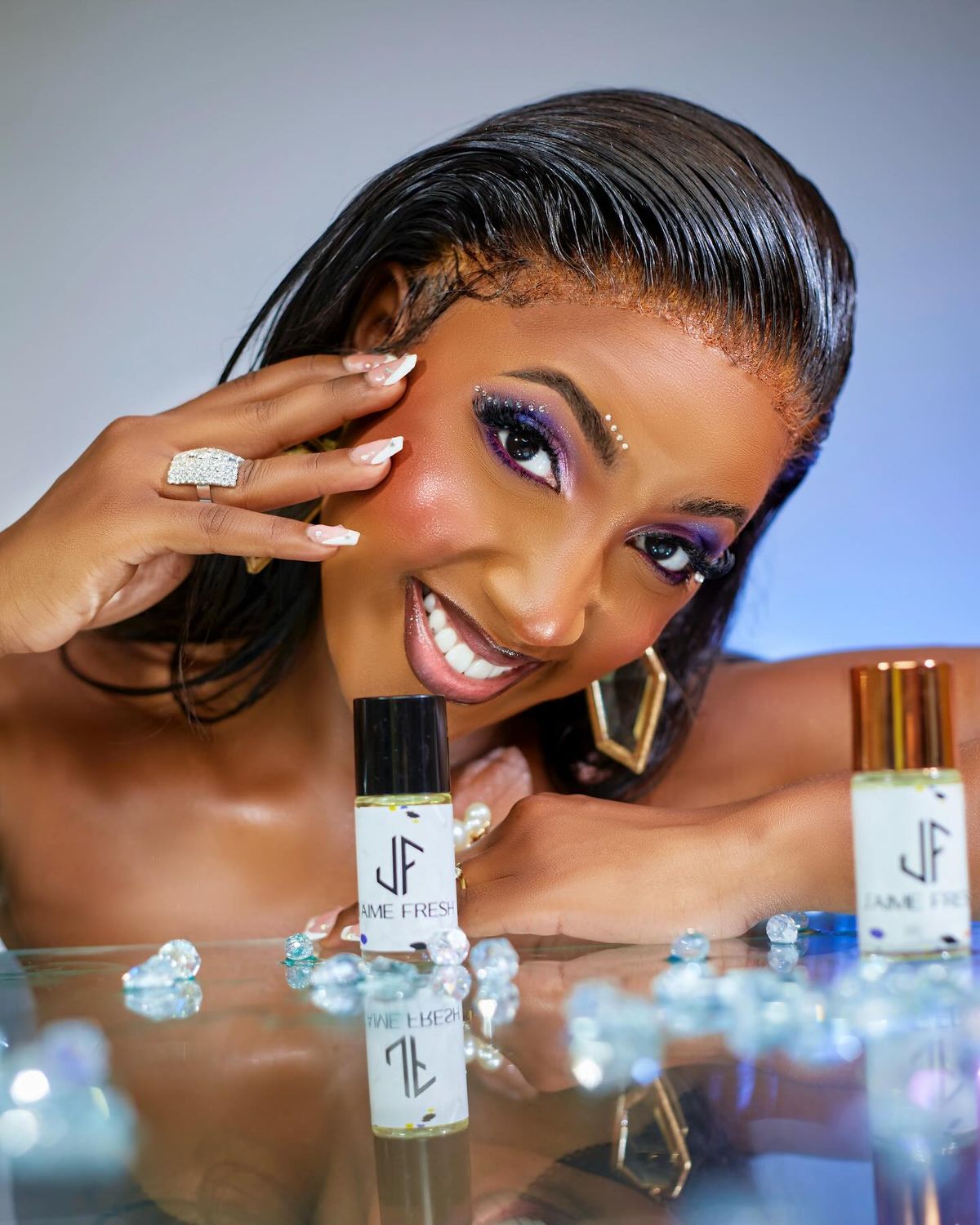
The Caribbean olfactory archetype is built on a recognisable set of materials whose combinations vary by perfumer and brand but share a characteristic citrus-tropical-woody architecture.
The top-note brightness comes primarily from cold-pressed citrus oils: lime peel oil, grapefruit oil, sweet orange, bergamot, and lemon. These materials are obtained by mechanically pressing the fruit peel rather than by steam distillation. Cold-pressing retains volatile aromatic compounds that steam distillation destroys, producing a brighter, more authentically fruit-smelling oil. Cold-pressed citrus oils also retain furocoumarins, a class of phototoxic compounds that react with UV light on skin and can cause photosensitisation, hyperpigmentation and burns in some users under sun exposure.
The middle heart notes typically include tropical florals: frangipani (plumeria), jasmine, ylang-ylang, orange blossom, and monoi (coconut-infused tiare flower). These are either natural extracts or synthetic reconstructions of natural materials that are difficult to extract at a commercial scale from their natural sources.
The base notes provide warmth and persistence: coconut, vanilla, sandalwood, vetiver, musk, amber and occasionally rum-inflected balsamic notes. Vetiver from Haiti is prized in perfumery for its earthy, smoky, rootlike character, which differs from vetiver grown in Java or Réunion.
A buyer who knows this architecture can ask the right questions about a specific ‘Caribbean-scented’ product: which citrus materials does it use, and in what concentrations? Are those materials cold-pressed or steam-distilled? Does the product carry an IFRA compliance statement? For a product used in sun-exposed conditions, what is the furocoumarin content of the citrus oils used?
The Furocoumarin Problem: Why This Matters Now
The IFRA 52nd Amendment, whose public consultation launched in December 2025 and closed on 12 June 2026, introduces what the industry is describing as a groundbreaking overhaul of the Furocoumarin Standard. The 52nd Amendment moves from ingredient-by-ingredient limits on furocoumarins to a cumulative limit model that accounts for the combined exposure from eight specific phototoxic substances commonly found in citrus oils. This is a structural change in how furocoumarin safety is assessed, not merely a tightening of individual limits.
The cumulative model matters for ‘Caribbean’-scented products specifically because a fragrance built on multiple citrus materials, each containing furocoumarins at individually compliant levels, may produce a combined furocoumarin exposure that exceeds the cumulative limit. A product formulated to the 51st Amendment standard using lime oil, bergamot and grapefruit as separate ingredients, each within their individual maximum permitted concentration, may need reformulation under the 52nd Amendment’s cumulative model if the combined furocoumarin contribution from all three citrus materials exceeds the new unified limit.
For a fragrance buyer sourcing a Caribbean-inspired product for retail, the practical implication is: does the product have an IFRA compliance statement referencing the current applicable amendment? A compliance statement referencing the 51st Amendment as the applicable standard is compliance with the rules in force through 30 October 2025 for existing creations. Fragrance buyers commissioning new creations or sourcing for products to be placed on the market after that date should ask whether the formulation follows the 51st Amendment and when the brand intends to update to the 52nd Amendment framework once it is formally notified.
The Allergen Disclosure Gap
In most markets, the ‘fragrance’ or ‘parfum’ line on a beauty product label currently represents a single ingredient entry that may contain hundreds of constituent materials. This is the fragrance disclosure gap: marketing language on a product can be highly specific about the geographic aesthetic (‘Caribbean’, ‘tropical island’, ‘Haitian vetiver’). At the same time, the regulatory label is highly non-specific about the materials producing those associations.
The EU allergen disclosure rules are expanding the list of fragrance allergens that must be individually declared from 26 compounds to more than 80 by July 2026, when the expanded list under EU Regulation (EC) No 1223/2009, as amended, takes effect. This is the most significant expansion of fragrance disclosure requirements in the EU’s recent regulatory history. For a buyer sourcing a Caribbean-scented product for EU market distribution, the expanded allergen list means materials previously covered under the general ‘parfum’ entry must now be individually declared if present above the relevant threshold.
Citrus-derived allergens, including limonene, linalool, citral, and geraniol, are on the existing EU allergen list and will remain on the expanded list. Limonene and linalool are among the most commonly occurring fragrance allergens and are found in the citrus and floral materials central to Caribbean-archetype fragrances. A buyer assessing a Caribbean-scented product for EU retail should confirm the product’s allergen declaration against the expanded list and verify that allergen thresholds are within the permitted limits for the product’s application type.
In the US, the FDA under MoCRA’s updated requirements now requires fragrance companies to supply comprehensive safety evidence and allergen disclosures. US-based brands need to prepare for mandatory fragrance allergen disclosures and maintain records of adverse events. Alignment between EU and US allergen requirements is increasing, though implementation timelines differ.
What a Fragrance Buyer Actually Needs to Know
A geographic aesthetic claim establishes the mood. The following are the questions that establish the product:
On composition:
- Which fragrance materials produce the citrus top notes? Are they cold-pressed or steam-distilled? Cold-pressed citrus materials contain furocoumarins; steam-distilled equivalents generally do not. For sun-exposed products (body oils, SPF-adjacent applications), the distinction affects safe use.
- Does the fragrance use natural vetiver, and from which origin? Haitian, Javanese, and Réunion vetiver have different olfactory profiles and supply-chain considerations.
- What is the fragrance concentration in the finished product, expressed as a percentage? What IFRA category applies to this product format?
On safety compliance:
- Does the product carry an IFRA compliance statement? Which amendment does it reference? For products created after October 2025, they should comply with the 51st Amendment minimum. New creations targeting EU retail should confirm their timeline for 52nd Amendment alignment.
- For the cumulative furocoumarin exposure in this specific formulation, has the brand assessed compliance under the 52nd Amendment’s proposed cumulative model if the product uses multiple citrus materials?
- For EU retail: has the allergen declaration been updated to reflect the expanded list of more than 80 compounds due by July 2026? Which allergens are present above the disclosure threshold for this product type?
On ingredient sourcing:
- If the brand makes a sourcing claim about specific Caribbean-origin materials (Haitian vetiver, Jamaican rum accord, Martinique sugarcane), what supplier-level documentation supports that claim? The questions from the botanical sourcing article in this series apply here: the geographic claim in the fragrance description needs the same evidence chain as any other geographic origin claim.
- Is the fragrance a synthetic reconstruction of Caribbean-associated notes, or does it use natural Caribbean-origin materials? Both are legitimate choices; the marketing language should make the distinction clear, rather than letting the geographic claim imply natural sourcing where synthetic materials are used.
The Caribbean as Fragrance Geography
The Caribbean is one of the most frequently invoked geographic aesthetics in beauty fragrances. This is not accidental. The region has a specific and commercially recognisable olfactory signature – citrus brightness, tropical florals, warm base notes – that is distinctive enough to function as a mood shorthand across markets and whose associations are positive across a broad consumer base.
As Omiren Styles has established in its analysis of independent Puerto Rican beauty brands and their distribution challenges, the Caribbean is not a single market or a single cultural context but a geographically and culturally diverse region whose constituent islands have distinct identities, distinct agricultural traditions and distinct positions in the global supply chains for fragrance raw materials. Haitian vetiver supplies a significant proportion of the world’s finest vetiver. Martinique produces high-quality sugarcane distillates. Jamaica has a commercial history with lime peel oil extraction. The Dominican Republic and Puerto Rico grow the tiare and frangipani florals associated with Caribbean tropical scent profiles.
A fragrance brand that claims Caribbean association while sourcing all of its fragrance materials from European fragrance houses using synthetic reconstructions of Caribbean-associated notes is making a geographic claim at the level of mood without any corresponding geographic claim at the level of material. Both the synthetic and the natural approaches to Caribbean fragrance are legitimate. The buyer needs to know the distinction between them, and the geographic aesthetic claim does not provide it.
As Omiren Styles has established in its guide to what a botanical sourcing story must demonstrate, a geographic claim at the level of material requires different evidence than a geographic claim at the level of mood. ‘Smells like the Caribbean’ is a mood claim. ‘Contains Haitian vetiver sourced directly from cooperative producers’ is a material origin claim. Both can appear in the same product description; they require different evidence and produce different commercial and ethical obligations for the brand making them.
The Omiren Argument
The Caribbean is the largest Spanish-speaking colour cosmetics market in the hemisphere and a significant source of natural fragrance raw materials whose contributions to global perfumery are commercially important but often uncredited. A fragrance that evokes the Caribbean without naming the specific materials it uses, without disclosing which of those materials come from the Caribbean, and without explaining the regulatory changes affecting the citrus materials most associated with that olfactory identity presents a mood as fact.
A fragrance buyer’s job is to understand the difference. The mood tells them whether the product will appeal to the customer. The materials, concentrations, allergen profile and safety compliance tell them whether the product is appropriate for the customer and the market they are selling into. Regulatory changes currently in progress in the furocoumarin and allergen spaces mean a Caribbean-scented product whose compliance has not been updated since before October 2025 may need to be assessed against the current applicable standards before it is restocked.
As Omiren Styles has argued throughout its coverage of beauty, ingredients and ownership, the Global South made fashion and never got credit. The Caribbean made fragrance – in the natural materials whose cultivation and processing have supported island economies, in the olfactory traditions whose specificity has contributed to the global perfumery palette, in the cultural associations whose recognisability the fragrance industry has converted into a commercial shorthand – and the credit that geographic aesthetic claims provide rarely reaches the producers whose work makes those claims possible. Asking what ‘smells like the Caribbean’ actually means, in technical and commercial terms, is the first step toward asking who benefits when it does.
ALSO READ
- From Botanical Name to Beauty Claim: The Checks a Sourcing Story Must Pass
- When Haircare Promises Humidity Control, What Should the Test Measure?
- Where Independent Puerto Rican Beauty Brands Sell and What Gets in the Way
- The Global South Made Fashion. It Just Never Got Credit.
Frequently Asked Questions
What is an IFRA compliance statement, and why does a fragrance buyer need one?
The International Fragrance Association (IFRA) sets maximum concentration Standards for fragrance ingredients across different product categories, based on safety assessments by the Research Institute for Fragrance Materials (RIFM). An IFRA compliance statement is a document from the fragrance supplier confirming that the fragrance has been assessed against the applicable IFRA standards and that all ingredient concentrations comply with the relevant maximum limits for the stated product category. A fragrance buyer incorporating a fragrance blend into a finished product needs the compliance statement to verify that the formulation is within safe limits for their specific product application. The compliance statement should reference the amendment it was assessed against; following October 2025, existing products should comply with the 51st Amendment at minimum.
What are furocoumarins, and why do they matter for Caribbean-scented products?
Furocoumarins are a class of phototoxic compounds found in cold-pressed citrus oils, including lime, bergamot, grapefruit and lemon peel oils. They are not present in, or are present at much lower levels in, steam-distilled equivalents of the same citrus materials. When furocoumarins come into contact with UV light on skin, they can cause photosensitisation, hyperpigmentation and burns in some users. Caribbean-archetype fragrances rely heavily on cold-pressed citrus materials for their characteristic bright, fresh top notes, making furocoumarin content a specific safety consideration for these scent profiles, particularly for products used in sun-exposed conditions such as body oils, hair mists and outdoor fragrances.
What is the IFRA 52nd Amendment, and what does it change?
The IFRA 52nd Amendment’s public consultation launched in December 2025 and closed on 12 June 2026, with formal notification expected by the end of 2026. Its most significant structural change for fragrance buyers is the overhaul of the Furocoumarin Standard from individual ingredient limits to a cumulative limit model covering eight specific phototoxic substances commonly found in citrus oils. This means that a fragrance using multiple citrus materials, each individually within their former limits, may now exceed the cumulative furocoumarin threshold under the new model. For buyers sourcing Caribbean-archetype fragrances built on multiple citrus notes, this change may require reformulation of previously compliant products.
What does the EU allergen list expansion mean for fragrance buyers in 2026?
The EU’s required fragrance allergen disclosure list is expanding from 26 compounds to more than 80 compounds, with the expanded list coming into effect by July 2026 under updated EU cosmetic regulations. This means that fragrance ingredients previously covered under the general ‘Parfum’ or ‘Fragrance’ entry on a label must now be individually declared on the ingredient list if they are present above the relevant threshold for the product type. For Caribbean-associated fragrances, this is particularly relevant for citrus-derived allergens including limonene, linalool, citral and geraniol, which are common in citrus and floral materials central to the Caribbean olfactory archetype. Fragrance buyers sourcing for EU retail need to confirm that allergen declarations have been updated against the expanded list.
Does ‘Caribbean-scented’ mean the fragrance uses materials from the Caribbean?
Not necessarily. A geographic aesthetic claim describes the fragrance’s intended mood and sensory positioning, not its material sourcing. A fragrance marketed as ‘smelling like the Caribbean’ may use entirely synthetic materials that reconstruct Caribbean-associated olfactory notes without containing any materials of Caribbean geographic origin. Alternatively, it may use natural materials sourced from Caribbean producers. The geographic claim alone does not indicate which approach the brand has taken. A buyer who wants to know whether specific Caribbean-origin materials are used needs to ask the brand directly and request supplier documentation confirming the material’s geographic origin, applying the same evidence chain described in the botanical sourcing guide for any geographic origin claim in beauty.
EXPLORE MORE
Read the full Beauty and Consumer Intelligence coverage at Omiren Styles for ongoing analysis of fragrance claims, ingredient safety standards, and the sourcing relationships behind Caribbean and Latin American beauty materials. Discover travel and heritage intelligence across the Caribbean, Africa and Latin America at Rex Clarke Adventures.