In spring 2026, Prada presented a pair of leather sandals in its Spring/Summer collection, priced at $1,200. The internet identified them within days as near-identical copies of the Kolhapuri chappal, a traditional handcrafted sandal from Maharashtra, India, whose authentic versions retail for approximately five dollars. The artisans in Maharashtra who make Kolhapuri chappals received no credit. Prada’s press materials contained no reference to the origin. The markup was in excess of 20,000%. The incident was not unusual. It was a clear example of a routine practice: a luxury brand extracts the aesthetic authority built by a specific community of makers over generations, reprices it at luxury level, and distributes the commercial benefit entirely within the institution.
The African fashion market is worth 31 billion dollars. The question this article is asking is not whether cultural appropriation in fashion is wrong. That question has been answered. The question is: who should define what counts as cultural authority in fashion, and what would the industry look like if the answer were the makers rather than the institutions? As Audencia’s February 2026 analysis of the luxury industry’s cultural appropriation crisis confirms, 2024 and 2025 were a harsh wake-up call for the global luxury industry. What was once dismissed as a creative oversight has evolved into a full-blown legitimacy crisis. The Prada Kolhapuri case is that crisis in miniature: a community’s cultural authority was taken, repriced, and returned to the market without the community.
The fashion industry decides what is culturally authoritative. The makers built what it is deciding about. That arrangement needs to change. Here is the argument.
Cultural Authority: Who Holds It and Who Claims It

Cultural authority in fashion is the power to determine what is considered sophisticated, valuable, authentic, and worthy of credit. The fashion industry currently distributes this authority through a set of institutional mechanisms: fashion weeks, editorial placements, luxury retail stockists, museum exhibitions, and international press coverage. A garment or textile tradition featured in Vogue carries cultural authority. One that has not, regardless of how long it has been practised, how technically sophisticated it is, or how deeply it is embedded in the social and spiritual life of the community that produced it.
This is the inversion that the Prada Kolhapuri case illustrates most precisely. Artisans in Maharashtra have made the Kolhapuri chappal for centuries. It is part of India’s Geographical Indication registry, meaning the Indian state has formally recognised its geographic origin and traditional production process as defining its cultural and commercial identity. It has cultural authority in every meaningful sense: historical depth, technical specificity, living community practice, and official legal recognition. What it did not have, until Prada’s $1,200 version generated a global media cycle, was the kind of international fashion industry visibility that the current system treats as the primary marker of cultural authority. The Prada controversy gave Kolhapuri international visibility in fashion. The artisans received none of the commercial benefit generated by visibility.
The artisan who spent forty years learning to cut pile raffia on a loom in the Kuba Kingdom has more cultural authority over how that technique is described, used, and credited than any editor who encountered it on a mood board this season. The fashion industry’s current system inverts that relationship. Cultural authority flows toward institutional recognition rather than toward the knowledge holder.
What Cultural Authority Actually Means
Cultural authority, correctly understood, is not the same as institutional recognition. It is the accumulated knowledge, practice, community transmission, and meaning-making that a specific group of people has built around a specific material form over a specific period of time. As Cambridge University Press’s analysis of cultural appropriation and the global fashion industry confirms, the fashion industry’s mashup-magpie mode of creativity and its rapid innovation cycle make it a frequent target of claims of cultural appropriation. The analysis demonstrates that the industry’s creative model is structurally oriented toward taking from communities whose cultural knowledge is not protected by the same IP frameworks that protect the industry’s own designs.
The maker who has spent decades learning a technique holds cultural authority over that technique in the direct sense: they understand what it is, how it works, what it means, what occasions it serves, what variations are appropriate and why, and what it would mean to misuse it. That knowledge is not available on a mood board. It is not contained in a trend report. It is held in the bodies, relationships, and community memory of the people who practise the tradition. When a fashion institution claims the authority to speak about that tradition, credit it, use it commercially, or present it to an audience, it is claiming an authority it has neither built nor been given.
The Maker as Primary Authority: Three Cases
The Ngonge Clan of Uganda’s Buganda Kingdom has been producing olubugo barkcloth for the Buganda royal family since the 12th century. The kaboggoza, the hereditary chief craftsman, still makes the Luyiira barkcloth worn by the Kabaka at coronation. In May 2026, the Ngonge Clan initiated the Geographical Indication registration process with Uganda’s Registration Services Bureau. As Omiren Styles’ documentation of the Uganda barkcloth GI registration process confirms, the GI process is an attempt to convert the Ngonge Clan’s cultural authority, which is unquestioned within Buganda and internationally recognised by UNESCO, into a legal and commercial instrument that prevents others from claiming the same authority without the same knowledge. The makers are asserting their authority through an available legal mechanism. The question is whether the international fashion market will respond to the mechanism.
The Bamana barkcloth weavers of Mali, whose bògòlanfini technique was used by Givenchy and Oscar de la Renta without attribution, are a second case. The Bamana community has cultural authority over bògòlanfini that is not derived from any fashion institution’s recognition. It is derived from the community’s origination and sustained practice of a specific resist-dyeing technique using fermented mud and botanical dyes. The fashion houses that used the patterns had no equivalent knowledge. They had access to thetechnique’s visual surface. The cultural authority belonged to the Bamana makers. It was not transferred by the fashion houses’ decision to use the pattern.
The Kuba Kingdom’s raffia weavers, whose cut-pile textile technique produces what fashion-industry mood boards describe as the Kuba print, are a third case. As Omiren Styles’ documentation of the Kuba cloth misclassification confirms, anything printed in a Kuba cloth fashion, digitally or otherwise, is not Kuba cloth. The artisan who spent forty years learning to cut pile raffia on a loom in the Kuba Kingdom has more cultural authority over how that technique is described, used, and credited than any editor who encountered it on a mood board this season. The fashion industry’s current system inverts that relationship. Cultural authority flows toward institutional recognition rather than toward the knowledge holder.
The Counter-Model: What Starting With Makers Looks Like
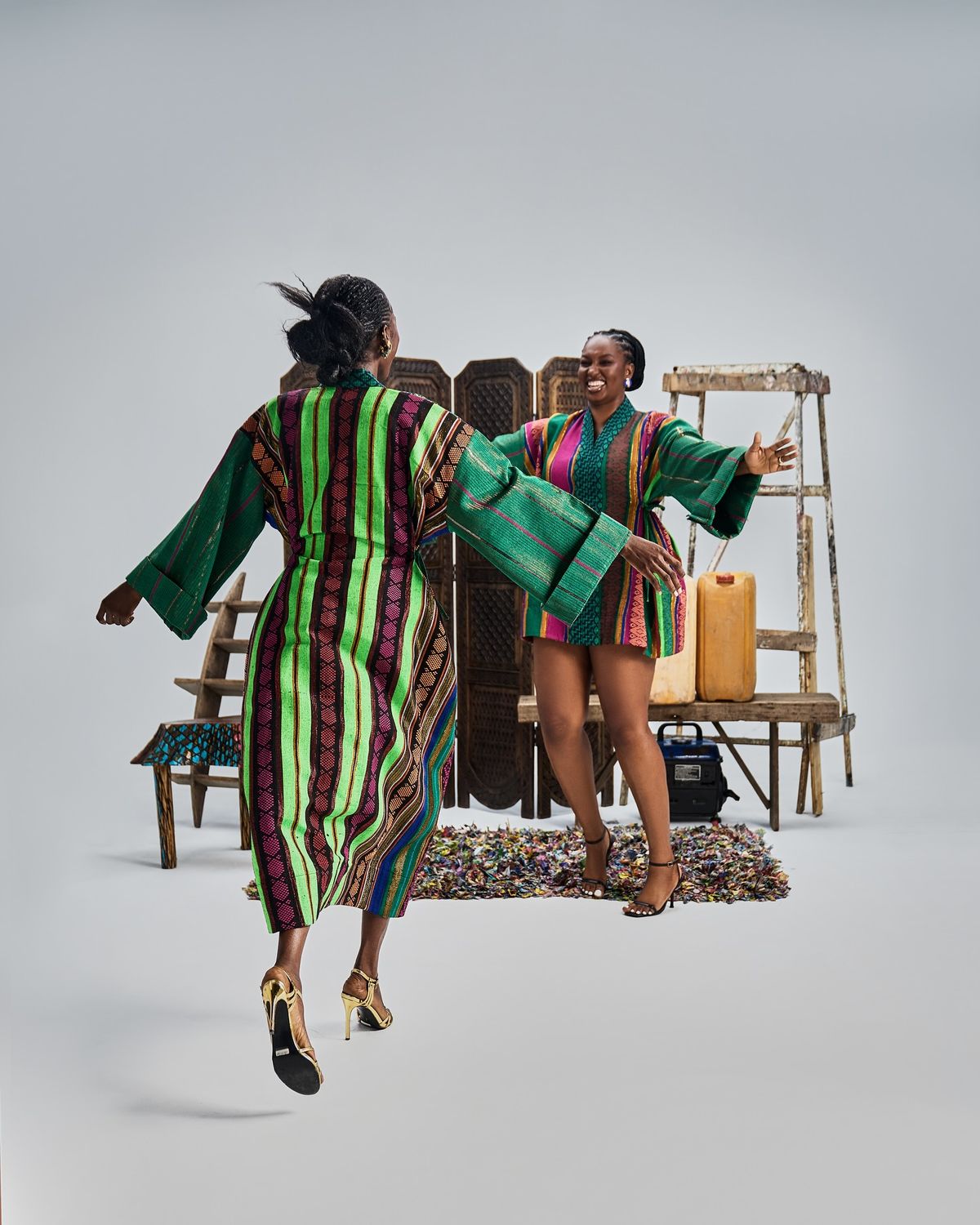
Starting with the makers does not mean that cultural exchange is impossible or that fashion must be restricted to designers working only within their own heritage. It means that the sequence is reversed. Instead of an institution deciding that a cultural tradition is valuable and then engaging with it on the institution’s terms, the engagement begins with the community that holds the knowledge, on terms that recognise the community’s authority over that knowledge.
Pharrell Williams’s January 2024 Louis Vuitton menswear show is one documented attempt at this reversal. Rather than using Native American motifs as a design reference, he involved four Native American designers from the Dakota and Lakota Nations in the actual creation process, not as consultants after the design decisions had been made but as design participants from the beginning. As Good On You’s documentation on cultural sustainability and intellectual property rights in fashion confirms, emerging best practices emphasise consent, equitable benefit-sharing, and formal recognition of cultural knowledge. This evolution challenges simplistic narratives of inspiration and encourages relationships that respect traditional cultural expressions as dynamic and owned by communities. The Williams approach is one model for what those relationships can look like when they are built into the design process rather than the press note.
Kenneth Ize’s supply chain partnership with Aso-Oke weavers in Ilorin is a second model. The weavers are not a heritage reference in Ize’s Paris Fashion Week collections. They are the supply chain foundation. The cloth is made by them, for the collection, in a direct economic relationship that puts commercial value in the hands of the community whose knowledge and labour produced the fabric. The cultural authority of the Yoruba Aso-Oke tradition is acknowledged not through a show note but through a production relationship.
What the Law Can and Cannot Do
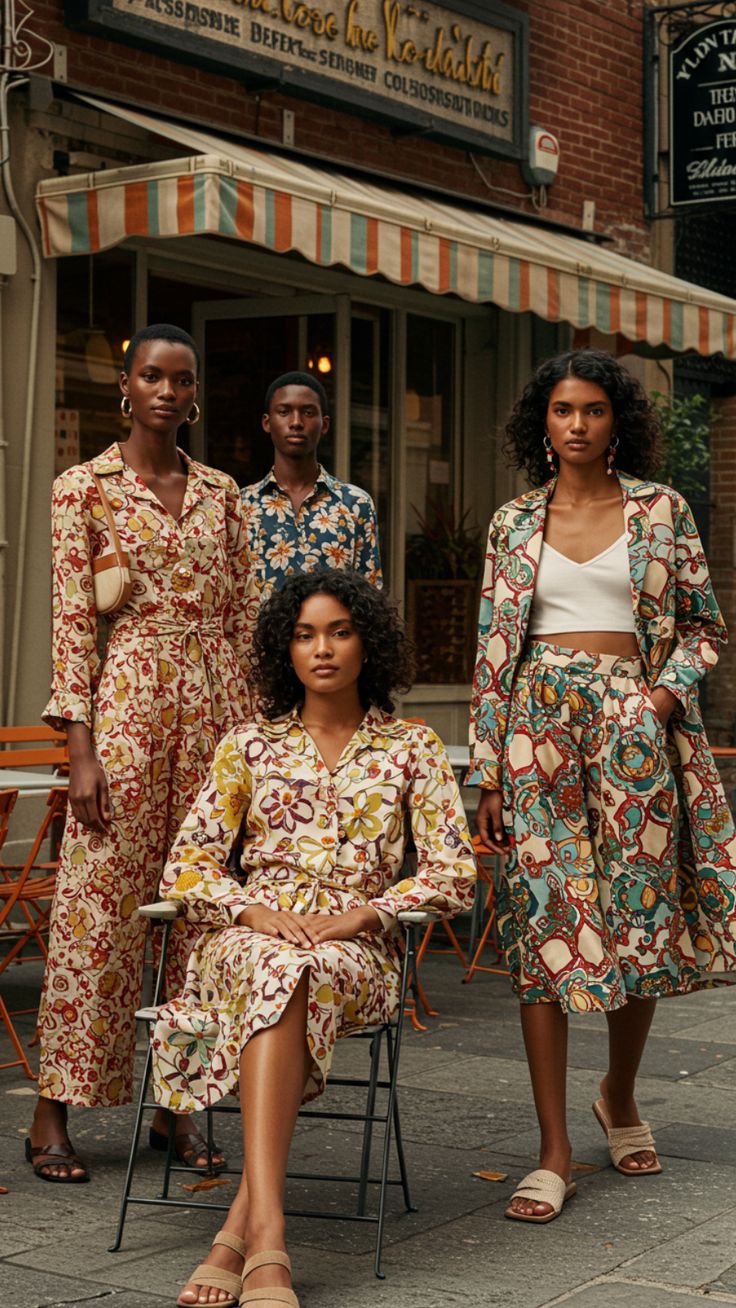
Geographical Indication protection is the most developed legal mechanism for converting community cultural authority into enforceable commercial rights. Ghana’s September 2025 formalisation of GI protection for kente, Uganda’s May 2026 initiation of GI registration for olubugo barkcloth, and India’s existing GI registry for the Kolhapuri chappal all represent attempts by communities and governments to use IP law to close the gap between cultural authority and commercial benefit. As Omiren Styles’ analysis of the African textile glossary and the terms fashion keeps getting wrong confirms, precision in naming a textile tradition is the minimum standard for engaging with it credibly. GI protection makes that precision legally enforceable rather than simply an editorial standard.
But the law cannot do what the industry must do for itself. A Geographical Indication prevents a non-conforming product from using a protected name. It does not prevent a fashion brand from using the visual language of a protected tradition without naming it. The Prada Kolhapuri sandal might not have been legally prevented from being sold under India’s GI registration. The product was not sold as a Kolhapuri chappal. It was sold as a Prada sandal. The GI protection for the Kolhapuri name did not extend to the design language associated with the name. The gap between what the law protects and what the makers’ cultural authority actually covers is the gap the industry must decide whether to address through its own standards.
The Omiren Argument
Who should define cultural authority in fashion? The makers. The African fashion market is worth 31 billion dollars. The Kuba Kingdom’s raffia weavers have cultural authority over cut-pile raffia technique. The Bamana bògòlanfini weavers of Mali have cultural authority over fermented mud resist-dyeing. The Ngonge Clan of Buganda has cultural authority over olubugo barkcloth. The artisans of Maharashtra in India have cultural authority over the Kolhapuri chappal. None of these communities derives that authority from a fashion week slot, an editorial placement, or a luxury retail stocking relationship. They derive it from origination, sustained practice, community transmission across generations, and the specific knowledge of what the tradition means and requires. When fashion institutions claim to speak authoritatively about these traditions while the makers receive neither credit nor commercial benefit, the institutions are claiming an authority they do not hold. The counter-model is not to stop fashion from engaging with cultural traditions. It is to change the sequence: begin with the community, build relationships before design, share commercial benefits proportionally, and acknowledge that cultural authority over a tradition belongs to the people who built it. That is not a restriction on creativity. It is the condition under which creativity becomes something more than extraction.
Also Read:
- Bogolan Is Not Mud Cloth: Why the Name Matters and Who Benefits From Getting It Wrong
- Diaspora Style Is Not Fashion’s Trend Reservoir
- Why Global Fashion Keeps Returning to the Same African Craft Traditions
Frequently Asked Questions
Who has cultural authority in fashion?
Cultural authority in fashion, correctly understood, belongs to the communities, craftspeople, and knowledge holders who originated, practised, and transmitted a specific cultural or material tradition. A weaver who has spent decades mastering a technique holds cultural authority over that technique through embodied knowledge, community transmission, and generational continuity. The fashion industry’s current institutional system distributes cultural authority through editorial recognition, luxury retail stocking, fashion week placement, and museum exhibition rather than through knowledge or community standing. This system consistently gives authority to institutions over the makers who built what those institutions are recognising.
Why should makers define cultural authority in fashion?
Makers should define cultural authority because they are the knowledge holders. A community’s cultural tradition is held in the bodies, relationships, and memory of the people who practise it. They understand what the tradition means, how it works, what variations are appropriate, and what it would mean to misuse it. When a fashion institution claims authority to speak about, credit, or commercially use a tradition without that knowledge, it is operating on borrowed credentials. Starting with the makers means reversing the sequence: the community’s knowledge and consent are the foundation of the engagement, not a post hoc note in a press release.
What is the Kolhapuri chappal Prada controversy?
In its Spring/Summer 2026 collection, Prada presented leather sandals that the internet identified as near-identical copies of the Kolhapuri chappal, a traditional handcrafted sandal from Maharashtra, India. Authentic Kolhapuri chappals, produced by artisans in Maharashtra using a documented traditional craft process registered in India’s Geographical Indication system, retail for approximately $5. Prada’s version was priced at $1,200, representing a markup of over 20,000%. The collection included no credit to Maharashtra artisans or to the Kolhapuri tradition. The case became a widely cited example of luxury cultural extraction.
What is the difference between cultural appropriation and cultural authority?
Cultural appropriation refers to the act of using elements of one culture by members of another, particularly when such elements are taken without acknowledgement, consent, or benefit to the originating community. Cultural authority refers to the standing to speak, make decisions, and set standards regarding a specific cultural tradition. A community can hold cultural authority over its own tradition without having international fashion visibility; an institution can claim fashion authority without holding cultural authority. The current fashion industry system frequently conflates institutional recognition with cultural authority, granting brands and editors the power to define the legitimacy of traditions whose actual authority lies with the makers.
How can fashion return cultural authority to makers?
Documented approaches include: involving makers in design decisions from the beginning rather than as post-hoc consultants (the Louis Vuitton/Pharrell Williams 2024 Dakota/Lakota model); building direct supply chain relationships with artisan communities so that commercial value flows to makers rather than only to the brand (the Kenneth Ize/Ilorin weavers model); supporting and respecting Geographical Indication frameworks that give communities legal protection for their textile and craft traditions; crediting specific communities, techniques, and traditions by their correct names rather than using generic cultural shorthand; and paying fair prices for artisan production that reflect the skill, time, and cultural knowledge the work requires.
Explore More
Read the full Fashion > Opinion section for Omiren Styles’ documented editorial positions on cultural authority, the rights of makers, and the commercial and legal frameworks that determine whether fashion’s engagement with cultural heritage returns value to the communities that built it.
Discover travel and heritage intelligence across Africa at Rex Clarke Adventures.