The African fashion market is worth 31 billion dollars. Within that market, the Kuba cloth of the Democratic Republic of Congo has moved from art museum collections and ethnographic archives into interior design platforms, fashion editorials, and global retail. As Omiren Styles’ documentation of Kuba raffia as a sacred African textile confirms, Kuba raffia textiles reveal how geometry and abstraction have been central to African visual culture for centuries. The Kuba Kingdom of the DRC has been producing raffia cut-pile velvet of extraordinary precision for hundreds of years. Manufacturers are now replicating that precision with no co. Manufacturers are now replicating that precision. Authentic Kuba cloth needs to know what they are looking for, where it comes from, and who benefits from their purchase.
This guide answers those questions directly. It covers the material properties of authentic Kuba cloth, the cultural and ethnic distinctions within the broader Kuba textile tradition, how to read a piece for authenticity before purchasing, how to ask the right provenance questions, and how to think about ethical use when bringing Kuba cloth into a design or fashion context.
Demand for Kuba cloth is growing faster than the infrastructure to authenticate it. This guide tells you what to look for, what to ask, and who actually benefits.
Authentic Kuba Cloth Sourcing: What the Textile Actually Is
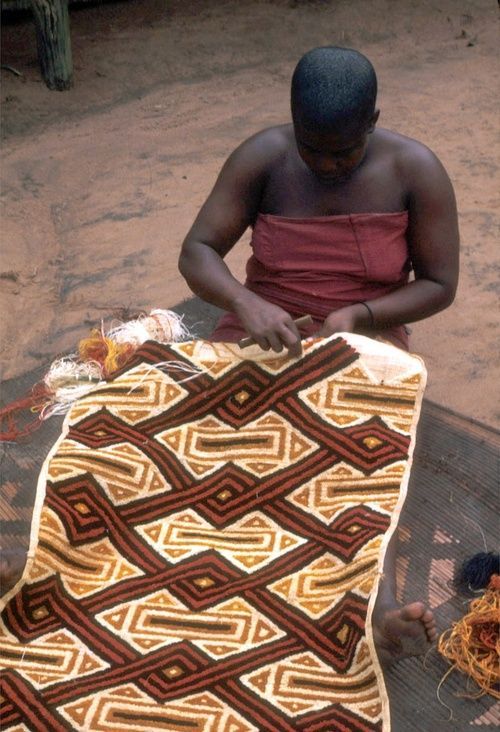
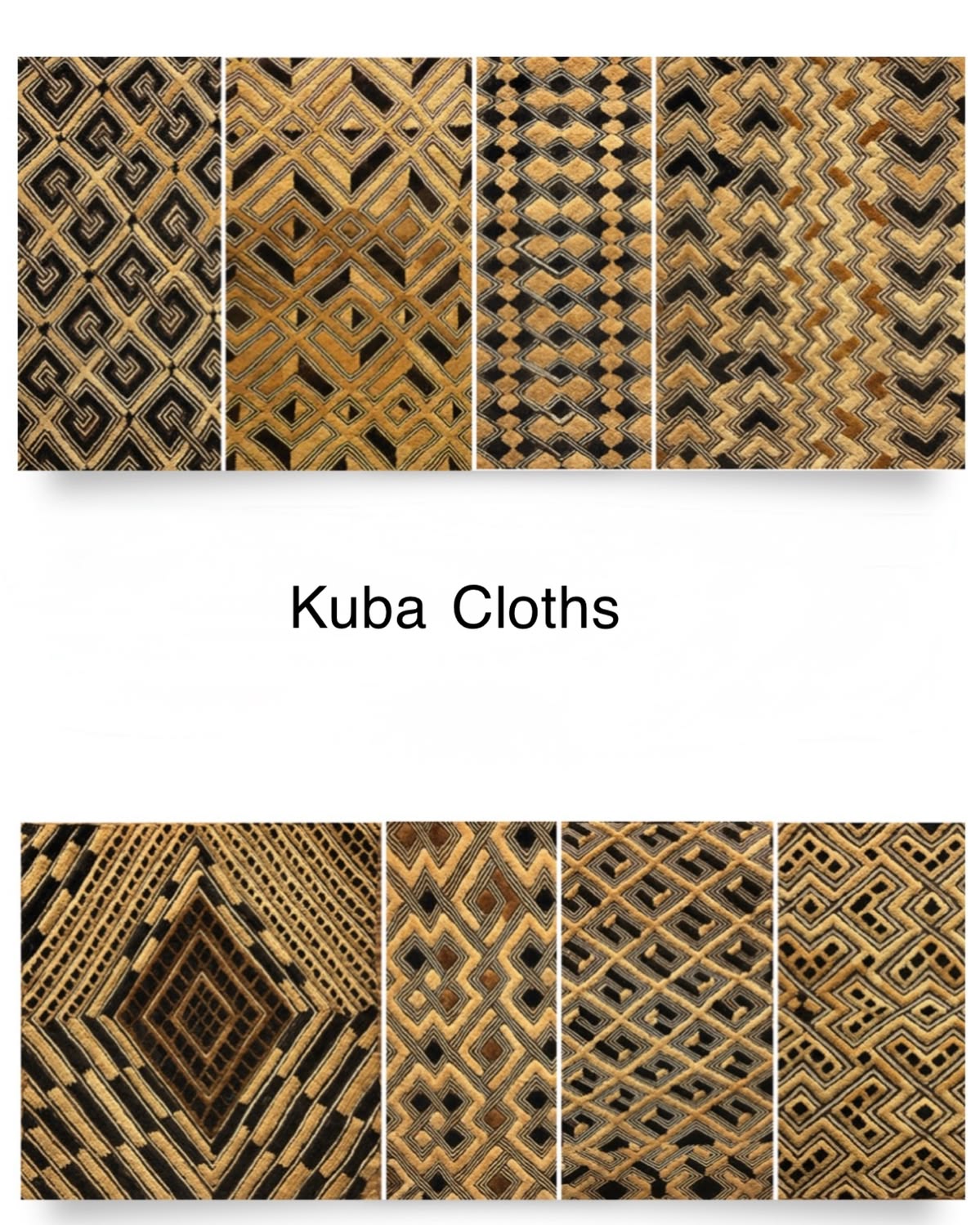
Kuba cloth is made from raffia palm fibres harvested from the Raphia vinifera tree by the Kuba people of the Democratic Republic of Congo. As The Ethnic Home’s comprehensive documentation of Kuba textiles confirms, all Kuba textiles share two defining characteristics: the material (raffia fibre) and their cultural origin within the Kuba Confederation. The fibres are peeled from the leaves of the raffia palm, woven into cloth panels on inclined, single-heddle looms by men, and then transformed into decorated textiles by women through embroidery, cut-pile, and appliqué techniques. The resulting surfaces, which Henri Matisse collected and called mes velours (my velvets), are not velvet. They are a tough, leathery plant fibre worked through processing techniques that are as ingenious as they are time-consuming.
The Kuba Confederation is made up of multiple ethnic groups, each with distinct textile traditions. The Bushoong, who constitute the royal clan and the political centre of the Kuba Kingdom, produce some of the most elaborate court textiles. The Shoowa produce the geometric panels most widely circulated in international markets as Shoowa textiles. The Ngongo, Kete, and Ngeende each contribute their own variations. This matters for buyers because the generic term Kuba cloth covers significant variation. A piece marketed simply as Kuba cloth without specifying the producing community is either unresearched or deliberately vague.
The global market uses three overlapping names for these textiles: Kuba raffia panels (the most accurate generic term), Shoowa textiles (specifically the geometric panels produced by the Shoowa, though the name is sometimes applied more broadly), and Kasaï Velvets (a misnomer referring to the velvety texture and the Kasaï region, but technically imprecise because the production extends beyond the Shoowa and beyond the Kasaï). A seller who uses all three names interchangeably without distinction is unlikely to have sourced their pieces with provenance documentation.
Manufacturers with no connection to or investment in the preservation and integrity of African cultural heritage are cashing in on Kuba cloth’s global popularity. The buyer who cannot tell authentic raffia from a synthetic imitation, or who does not ask where the piece came from, is the market condition that makes that exploitation possible.
How to Test for Authenticity
The most reliable authenticity test for Kuba cloth is tactile. As xN Studio’s buyer’s guide to authentic Kuba cloth confirms, veritable Kuba cloth is somewhat coarse to the touch. This is especially true if you run your hand along the sheared raffia fibre tufts of cut-pile varieties. A piece that is uniformly smooth, machine-even, and carries no texture variation is almost certainly not authentic raffia. Authentic raffia is an organic material. Its surface carries the evidence of the hand that worked it.
Five tests to apply when evaluating a piece:
First, texture. Run your hand across the surface. Authentic cut-pile Kuba cloth has a distinctly coarse, fibrous quality in the pile. The base cloth beneath the pile is stiffer than woven fabric from synthetic or industrial processes. Second, irregularity. Authentic handwoven raffia carries slight irregularities in the weave, pile density, and geometric pattern. Perfect regularity is a machine signature. Third, colour palette. Traditional Kuba natural dyes produce earthy tones: ochres, creams, charcoal, tan, sienna, and dark brown. A bright purple that appears in older pieces came from mimeograph ink, not a natural source. Modern synthetic dyes produce colours outside this palette. If a piece presents in vivid synthetic blue or red, treat that with caution—fourth, weight. Authentic raffia has a specific gravity. It is heavier than synthetic alternatives of the same apparent volume—fifth, back surface. The reverse of an authentic Kuba panel should show the structural logic of the making: raffia threads, the cut or tied ends of embroidery, and the evidence of the construction process. A perfectly finished reverse is a manufacturing finish, not an artisan finish.
Provenance: The Questions to Ask Before Purchasing
Provenance in the Kuba cloth market is more difficult to establish than authenticity, because the distribution chain between the Kuba Kingdom in the DRC and the international retail point of sale typically involves multiple intermediaries, each of whom may have incomplete information about the piece’s origin. The questions worth asking are:
Who is the seller and what is their relationship to the source? A specialist African textile dealer or gallery with documented Congo sourcing is more likely to provide provenance information than a general African decor platform. Ask whether the seller has direct relationships with producers or cooperatives in the DRC, or whether they source through intermediary importers. Ask when and how the piece entered the market. A vintage piece from a documented estate or collection is different in kind from a contemporary piece sourced through an anonymous import chain.
Is this piece vintage or contemporary? This distinction has ethical implications in both directions. As Omiren Styles’ guide to shopping African fashion with cultural intelligence confirms, the question of who benefits from the purchase depends on where in the supply chain the value is captured. Vintage Kuba cloth purchased from a collector or museum auction does not put money in the hands of living Kuba weavers. Contemporary pieces sourced from cooperatives or direct-trade platforms in Kinshasa or the Kuba region do. Both have legitimate places in a thoughtful collection. Still, they have different ethical profiles, and a buyer who presents a vintage piece as supporting living artisans is making a claim that the sourcing does not support.
Are there cultural use restrictions on this specific piece? Some Kuba cloth patterns are restricted in their use within Kuba society. Certain symbols are still only permitted on clothing for royalty, and violations of these restrictions within Kuba communities carry social and legal consequences. A buyer who uses a restricted-symbol piece as interior decoration or fashion material is not subject to Kuba law. Still, they are making a cultural choice whose implications deserve acknowledgement. A reputable seller will know whether a piece carries any use-specific cultural significance.
Where to Source Authentically
The most reliable sources for authentic Kuba cloth, in approximate order of provenance certainty, are:
Specialist African textile galleries with documented DRC sourcing and relationships with specific Kuba communities or cooperatives. Ask for provenance documentation and be willing to pay the price that reflects the sourcing work involved. African art dealers who have been operating in the Central African textile market for decades and who can speak to the specific provenance of individual pieces. Direct-trade platforms that work with artisan cooperatives in Kinshasa and the Kuba Kingdom, providing income directly to weavers and embroiderers. The Maman Adele cooperative in Kinshasa is one documented example of a community-based production structure that sells through direct channels. Museum shops and auction houses handle estate collections with verified provenance, for buyers interested in vintage pieces. These provide the highest confidence of authenticity but do not support living artisans.
What to avoid: marketplaces where multiple identical Kuba cloth panels are available at very low prices with no provenance information. Genuine Kuba cloth is handmade, and the labour required to produce it means that very low prices are a reliable indicator of either inauthenticity or an exploitative supply chain in which the maker is receiving far below a fair price for their work. eBay listings with no provenance information and standardised product descriptions are high-risk for authenticity. General African decor platforms that carry Kuba cloth alongside dozens of other African textile categories without specialist sourcing expertise deserve the same caution.
Ethical Use: Beyond Purchase
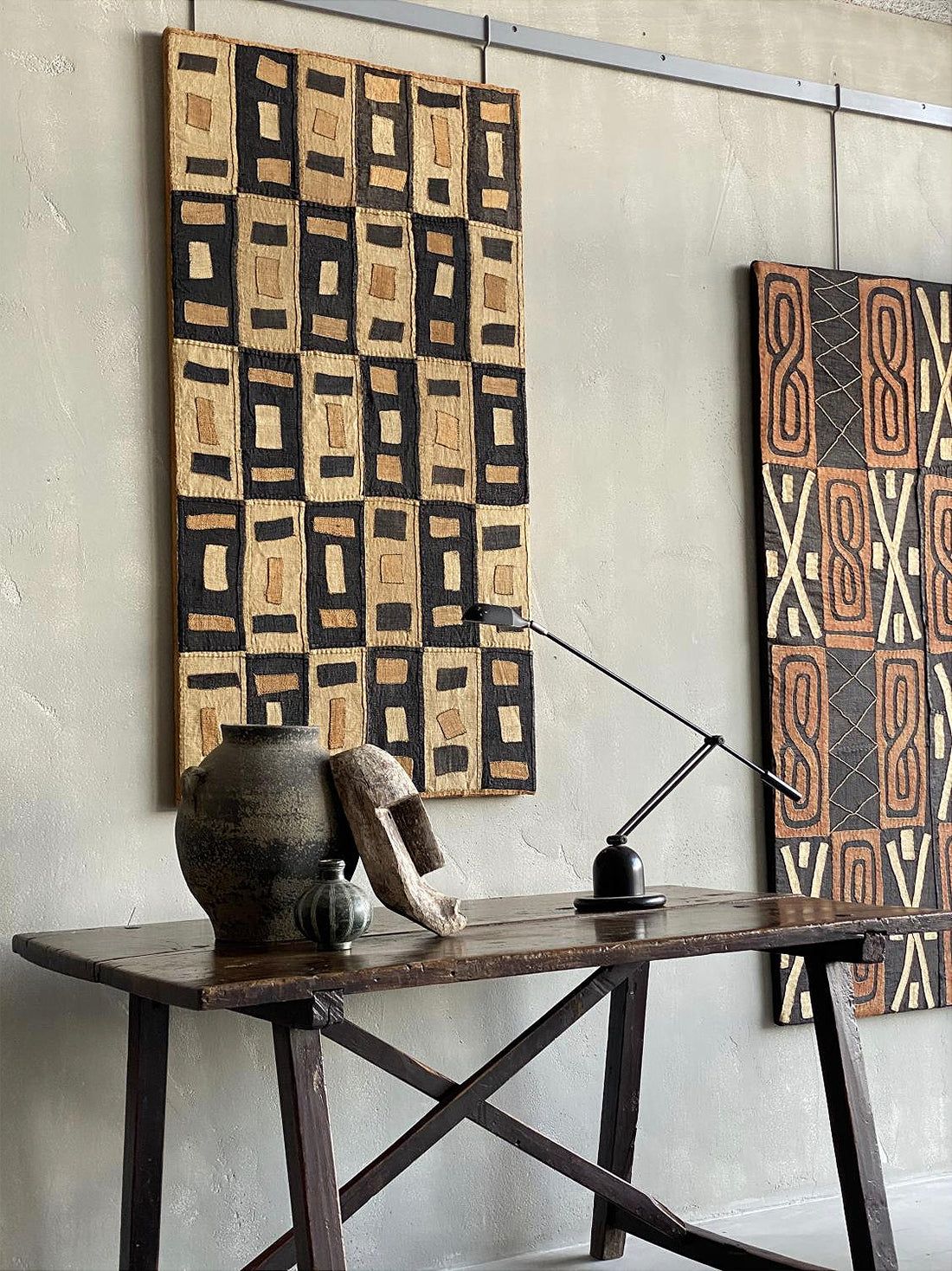
Sourcing authentic Kuba cloth is the beginning of the ethical question, not its end. How the cloth is used after purchase matters. As Omiren Styles’ documentation of African textile museums and the preservation of textile knowledge confirms, the most important work in African textile preservation is happening closer to the source, in communities where knowledge is passed down through apprenticeship rather than institutional archives. A buyer who uses Kuba cloth in a design context without acknowledging its origin, cultural meaning, or the community that produced it is participating in the aesthetic extraction that has historically characterised the relationship between African craft and Western design markets.
Ethical use involves naming the source in any public presentation of the piece. If Kuba cloth appears in a design project, a fashion collection, or an editorial, the Kuba Kingdom, the DRC, and the specific community of production, if known, should be credited. It involves not reproducing Kuba patterns for commercial production without engagement with the producing communities. The geometric vocabulary of Kuba cloth is the intellectual property of the communities that developed and have maintained it. Using it as a reference point for original design is different from directly reproducing it for commercial sale without the Kuba community’s involvement or benefit.
It involves understanding that restricted patterns have meanings within Kuba culture that do not disappear because the piece has been purchased. Displaying a piece that carries royalty-restricted symbolism in a domestic or commercial context is a cultural choice. Making that choice with knowledge of its significance is the minimum standard of respect.
The Omiren Argument
Authentic Kuba cloth sourcing is a cultural literacy test as much as a consumer guide. The African fashion market is worth 31 billion dollars. The demand for Kuba cloth is growing faster than the infrastructure to authenticate it, and the resulting market is filling with imitations produced by manufacturers who, as one buyer’s guide has documented directly, have no connection to or investment in the preservation of African cultural heritage. The buyer who can distinguish authentic raffia from a synthetic imitation, who asks where the piece came from and who made it, who credits the Kuba Kingdom when the cloth appears in their design work, and who directs their purchase toward direct-trade cooperatives and specialist dealers rather than generic decor platforms, is not only sourcing more ethically. They are preserving the market conditions in which Kuba weavers and embroiderers can earn from their work. Omiren Styles documents this guide as what it is: the minimum cultural intelligence required to engage with one of Africa’s most sophisticated textile traditions without contributing to its exploitation.
ALSO READ:
- Akwete, Kuba Cloth, Barkcloth, and Kete: The Sacred Textiles the World Is Finally Discovering
- Investing in Textile Heritage: The Business Case for Preserving What Western Fast Fashion Cannot Copy
Frequently Asked Questions
What is authentic Kuba cloth?
Authentic Kuba cloth is a raffia textile produced by the Kuba people of the Democratic Republic of Congo, within the Kuba Kingdom. It is made from fibres peeled from the leaves of the Raphia vinifera palm tree. Men weave the raffia on single-heddle looms; women transform the woven cloth into decorated textiles through embroidery, cut-pile, and appliqué techniques. The resulting textiles feature complex geometric patterns and are produced by the Kuba Confederation’s ethnic groups, including the Bushoong, Shoowa, Ngongo, Kete, and Ngeende.
How can I tell if Kuba cloth is real?
The most reliable test is tactile. Authentic Kuba cloth is coarse to the touch, especially in cut-pile varieties where raffia tufts have been sheared. The base cloth is stiffer than synthetic alternatives. Authentic pieces carry slight irregularities in weave, pile density, and geometric pattern: perfect machine-like regularity across an entire panel is a sign of industrial production. The colour palette of authentic natural-dyed pieces falls within earthy ochres, creams, charcoals, and browns. Very low prices for apparently identical multiple panels with no provenance information are a reliable indicator of inauthenticity.
Where can I buy authentic Kuba cloth?
The most reliable sources are: specialist African textile galleries with documented DRC sourcing and relationships with specific Kuba communities; established African art dealers with decades of Central African market experience who can provide provenance documentation for individual pieces; direct-trade platforms that work with artisan cooperatives in Kinshasa and the Kuba Kingdom, directing income to weavers and embroiderers; and museum shops or auction houses for verified vintage pieces. Avoid: generic African decor platforms with no specialist sourcing expertise, marketplace listings with no provenance information and very low prices, and any source that cannot answer where a specific piece was produced and by whom.
What is the difference between Shoowa and Kuba cloth?
Shoowa cloth specifically refers to textiles produced by the Shoowa ethnic group within the broader Kuba Confederation. The Shoowa produce geometric panels whose visual language is closely associated with what the international market calls Kuba cloth. However, similar textiles are produced by other Kuba Confederation groups, including the Bushoong, Ngongo, Kete, and Ngeende. The term Kuba cloth is technically a broader category that includes Shoowa production alongside other Kuba group traditions. The term Kasaï Velvets, sometimes used for the same textiles, is a misnomer that refers to the velvety texture and the Kasaï region but is imprecise because production extends beyond those boundaries.
How should I use Kuba cloth ethically?
Ethical use involves naming the source in any public presentation: credit the Kuba Kingdom, the DRC, and the specific producing community when known. Do not reproduce Kuba geometric patterns for commercial production without engagement with the producing communities. Be aware that some patterns carry royalty-specific restrictions within Kuba society. Direct purchases toward direct-trade cooperatives and specialist dealers rather than intermediary platforms where producer income is uncertain. When using Kuba cloth in a design or editorial context, frame it with the cultural intelligence it deserves: its origin, its making tradition, and the community that produced it.
Explore More
Read the full Culture > Heritage & Identity section for Omiren Styles’ documentation of African textile traditions, buyer guides, and the cultural intelligence required to engage with Africa’s most significant craft heritage.