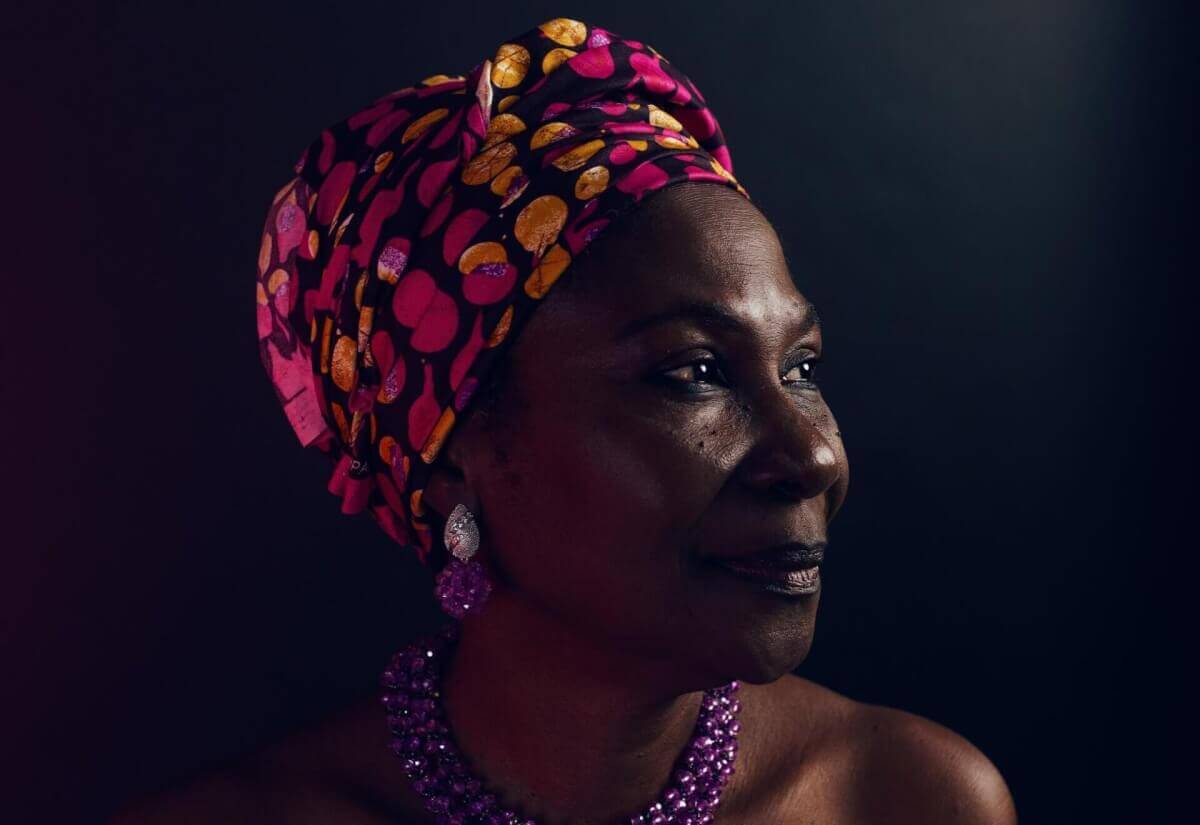
The African fashion market is worth 31 billion dollars. Within the African diaspora in America, few dress traditions have survived with the continuity and cultural specificity of the Gullah Geechee headwrap. The Gullah Geechee people are the descendants of West and Central Africans enslaved on the rice, indigo, and Sea Island cotton plantations of the southeastern United States. Their communities stretch along the coastal corridor from Pender County, North Carolina, to St. Johns County, Florida, concentrated in the Sea Islands of South Carolina and Georgia. As Smithsonian Magazine’s documentation of Gullah Geechee women as culture keepers confirms, scholars estimate that hundreds of thousands of people identify as Gullah Geechee across this southeastern coastal corridor, maintaining a distinct culture shaped by language, foodways, craftsmanship, and a deep knowledge of land and water.
The headwrap is among the most visible and most continuously practised elements of Gullah Geechee women’s cultural life. It connects directly to West African dress traditions in which covering the head carries meanings of spiritual protection, social status, marital identity, and respect for occasion. Those meanings did not dissolve during the Atlantic crossing. They were carried, adapted, and sustained by the women of the Sea Islands across more than two centuries of systematic effort to erase African cultural identity from American life. The Gullah Geechee headwrap tradition survived because the women who practised it understood what it meant and taught their daughters accordingly.
Gullah Geechee women’s headwrap traditions are among the most direct connections between West African dress culture and American life that still exist. Here is what they mean.
Gullah Geechee Women’s Headwrap Traditions: The West African Foundation
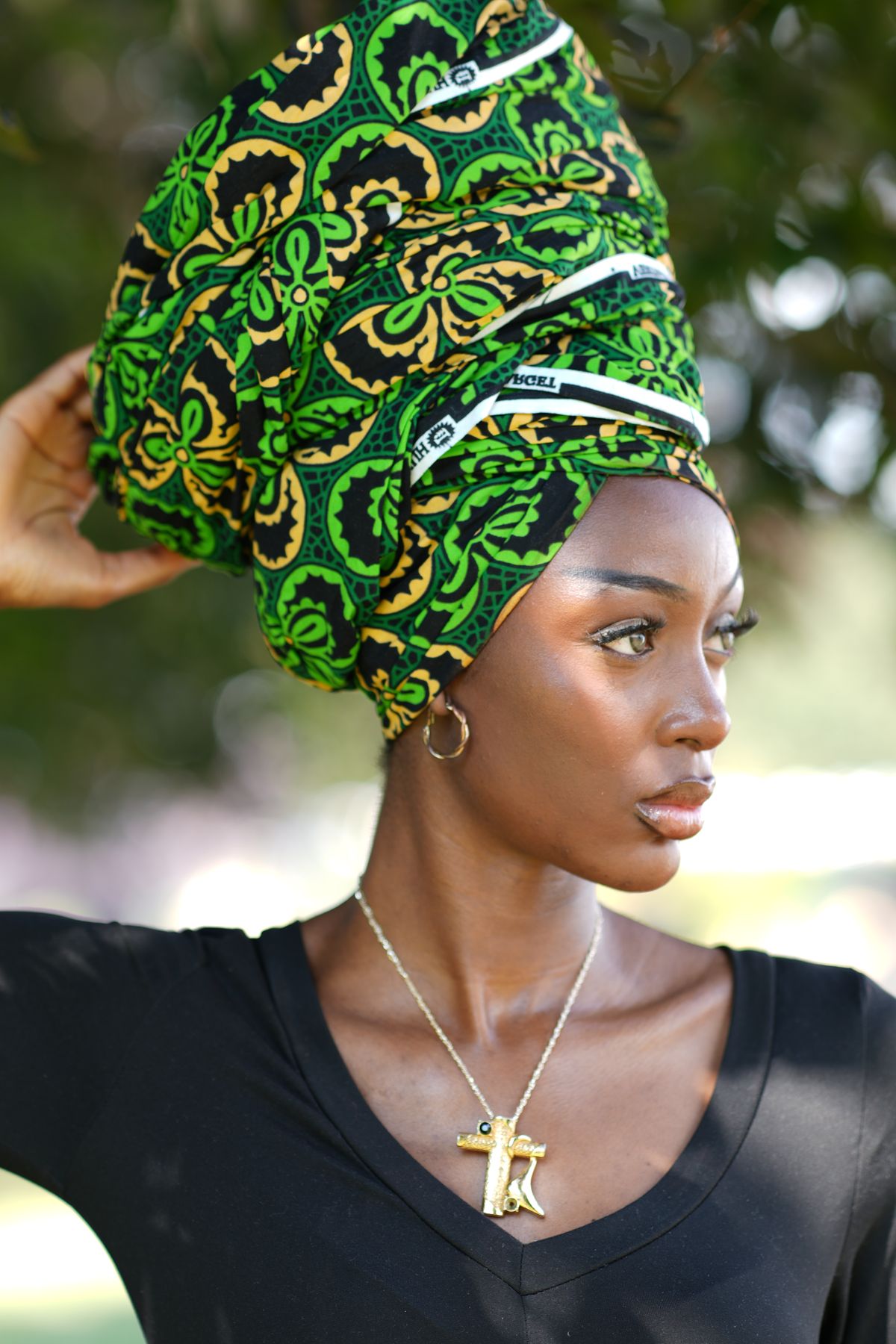
The West African roots of the Gullah Geechee headwrap are documented and specific. The Gullah Geechee people descend primarily from West Africans brought from rice-growing regions including present-day Sierra Leone, Senegal, Angola, the Ivory Coast, and the Bight of Benin. In these regions, headwraps carried a vocabulary of meaning: signalling marital status, mourning, wealth, ethnicity, age, and occasion. West African women carried headwrap traditions across oceans, planting them in the Americas and the Caribbean as symbols of memory and resistance. The Yoruba gele, the Ghanaian duku, the Namibian and South African doek: all of these belong to the same family of head-covering traditions that the women captured and enslaved on Sea Island plantations brought with them.
The geographic isolation of the Sea Islands proved critical to cultural preservation. The barrier islands along the coasts of South Carolina and Georgia, separated from the mainland by marshes and water, allowed the communities living on them to maintain African cultural practices with less disruption than African American communities elsewhere. Language, food, spiritual practice, craft, and dress all survived with stronger African retentions in the Sea Islands than in areas with more sustained contact with the dominant culture. The headwrap was part of that retention, sustained by its integration into the social and spiritual life of the community rather than existing as a ceremonial relic.
Gullah Geechee women wrapped their heads at church on Sundays, at ceremonies, and in daily life, not as a costume choice or a heritage performance, but as the continuation of a practice that their grandmothers carried from West Africa across an ocean and kept intact through the most sustained assault on African cultural identity in American history.
The Political History of the Headwrap in America
The Gullah Geechee headwrap does not exist in isolation from the broader political history of the headwrap in Black American life. In 1786, the Tignon Law was enacted in Louisiana, requiring women of African descent to cover their hair, attempting to use the headwrap as a marker of subordination. The politicisation of the headwrap was not gradual. It was forced. Colonial sumptuary laws across the Caribbean and Louisiana mandated that free and enslaved women of African descent cover their hair in public. The communities subjected to these laws responded by transforming the mandated covering into a statement: decorating it with jewels, ribbons, and elaborate tying techniques that declared cultural pride rather than subordination.
In the Sea Islands, the headwrap was not mandated by law in the same way as in Louisiana. Its continuity in Gullah Geechee communities came from within: from the West African understanding of the head as sacred and the headwrap as appropriate covering for public life, for church, for ceremony, and for the daily work of a woman who understood herself to be operating within a community that read these choices. The Gullah Geechee headwrap survived the colonial period not because it was forced but because the women who wore it chose to maintain it as part of a coherent cultural identity.
After Emancipation in 1865, many Gullah Geechee people remained on the Sea Islands where their families had lived, and the cultural practices they had developed, including the headwrap tradition, remained intact in those communities. As the National Park Service’s documentation of Gullah Geechee culture confirms, the traditions of the Gullah Geechee people, from their English-based creole language to their spiritual practices and crafts, are examples of cultural preservation across generations. The headwrap is part of this pattern: a practice maintained by transmission rather than by institutional support.
The Headwrap at Church and Ceremony
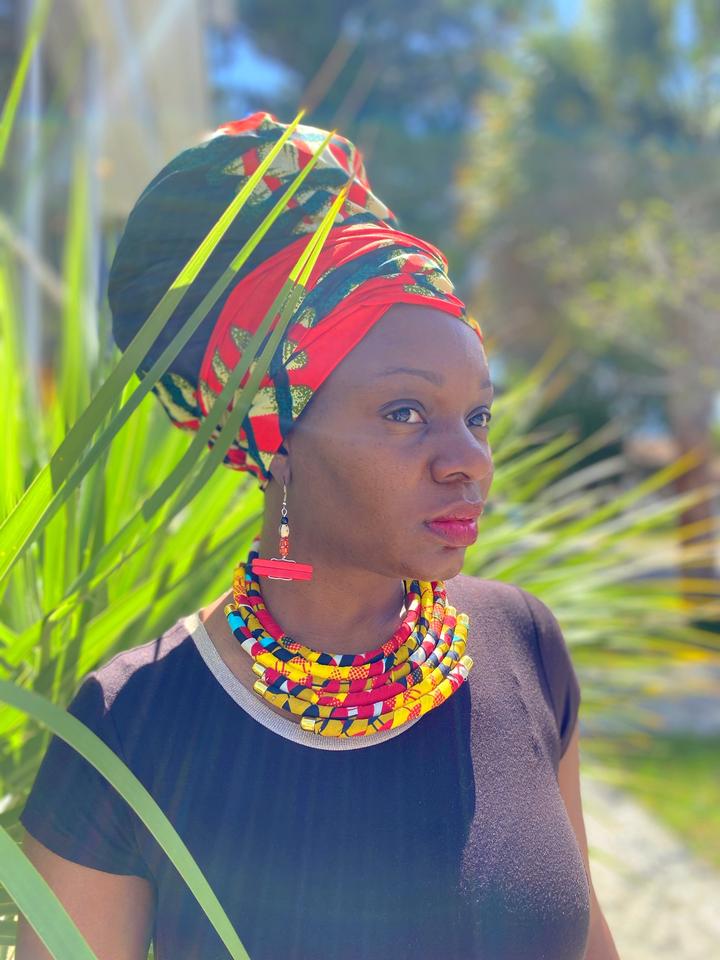
The most consistent and visible context for the Gullah Geechee headwrap is Sunday church. In Gullah Geechee communities, attending church in a proper headwrap has been part of women’s dress culture for generations. The specific style of wrapping, the fabric chosen, and the formality of the result communicate the wearer’s understanding of what the occasion requires. A woman who appears at Sunday service in a carefully wrapped and pressed headwrap is not simply following a fashion preference. She is participating in a visual system that the community shares and reads.
The ring shout, one of the most distinctively Gullah Geechee spiritual practices, brings together this headwrap culture with communal worship in a way that makes the garment’s role visible. The ring shout is a counterclockwise circle movement performed during or after Christian prayer meetings, with participants shuffling, clapping, and singing call-and-response songs. When women in headwraps move in the ring shout, the wrapping becomes part of the visual grammar of the ceremony: the covered head and the moving body together declare participation in a spiritual practice whose West African roots the community understands and honours.
At funerals, naming ceremonies, weddings, and other major life occasions, the headwrap carries additional layers of meaning. The fabric selection and tying style can signal mourning or celebration, elder status or young womanhood, the specific role the woman is playing in the ceremony. As Omiren Styles’ documentation of what Jamaica kept from West African head-tie traditions confirms, in West African and diaspora communities, headwraps carry meaning in concentrated form. They can signal age, marital status, respectability, and social awareness. The act of tying the head is both practical and symbolic. For Gullah Geechee women, this dual function has been maintained across the centuries since their ancestors arrived on the Sea Islands.
The Connection to Broader Gullah Geechee Cultural Preservation
The headwrap tradition sits within a broader culture of preservation that Gullah Geechee women have led. Sweetgrass basket weaving, oyster reef conservation, and the maintenance of foodways, language, and spiritual practice have all been sustained primarily by Gullah Geechee women who understood their role as carriers of the culture. The Gullah Geechee Cultural Heritage Corridor, established by Congress in 2006, formally recognised the significance of this preservation work across the region from North Carolina to Florida.
The headwrap’s survival is connected to this broader culture of women’s transmission. In Gullah Geechee communities, women have historically been the primary transmitters of cultural knowledge: the makers of sweetgrass baskets, the keepers of food traditions, the practitioners of ring shout and spiritual work, the speakers of Gullah Creole to children. The headwrap belongs to this inventory of women’s cultural knowledge. It is transmitted the way all such knowledge is transmitted: through daily practice, through observation, through the gradual understanding of what it means to wrap one’s head in the way one’s mother and grandmother wrapped theirs.
The parallel with other diaspora headwrap traditions is direct. West African communities understood hair and head covering as a system that carried social information, spiritual protection, and community identity. That system was among the most resilient cultural practices to cross the Atlantic, because it required nothing but knowledge and cloth to sustain it. The Gullah Geechee headwrap tradition is the most geographically continuous example of that resilience on American soil.
Contemporary Practice and the Living Tradition
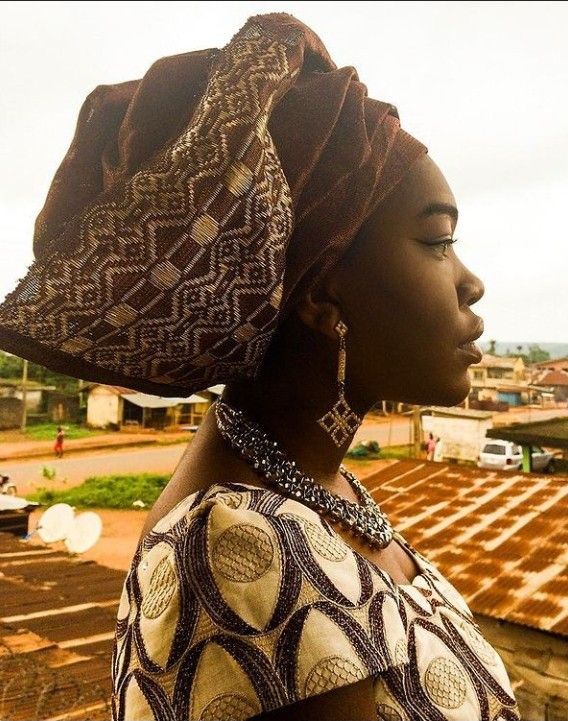
The Gullah Geechee headwrap tradition is not a historical artefact. It is practised today by women across the Sea Islands and in Gullah Geechee communities throughout the southeastern United States and their diaspora. As the New Georgia Encyclopedia’s documentation of Geechee and Gullah culture confirms, the Gullah and Geechee culture on the Sea Islands of Georgia has retained ethnic traditions from West Africa since the mid-1700s. The tradition is contemporary because the women practising it are contemporary: they are choosing, daily and on occasions that matter, to wrap their heads in ways that their grandmothers would recognise and that their daughters are being taught to understand.
The contemporary natural hair movement has created broader cultural context for the Gullah Geechee headwrap tradition, connecting it to a wider reclamation of African diaspora hair culture by Black women across the United States. But the Gullah Geechee headwrap is older than the natural hair movement, older than any contemporary cultural reclamation project, and more continuously practised than any revival. It was never abandoned in the communities where it originates. It does not need to be reclaimed because it was never given up.
The Omiren Argument
The Gullah Geechee women’s headwrap tradition is among the most direct, continuous, and historically documented connections between West African dress culture and American life. The African fashion market is worth 31 billion dollars. The cultural knowledge embedded in the Gullah Geechee headwrap, how it is tied, what fabric is chosen, what occasion it marks, what it communicates to the community that reads it, represents a transmission chain that extends without interruption from the rice-growing regions of West Africa to the Sea Islands of South Carolina and Georgia, across two and a half centuries of systematic effort to sever exactly that chain. The women who kept the tradition alive did not preserve it in a museum or schedule heritage performances. They kept it by wearing it to church on Sundays, by teaching their daughters how to tie it, by understanding it as part of what it means to be a Gullah Geechee woman in a community that has always known what its dress means. Omiren Styles documents it here as what it is: a living dress tradition that survived because the women who practised it were clear about its value and deliberate about its transmission.
ALSO READ:
- The Madras Headwrap: How Caribbean Women Turned a Colonial Textile into a Declaration
- Cornrows Were a Map: The African Intelligence Behind Diaspora Braiding
- African Headwraps and Turbans: From Arabian Origins to Cultural Identity
- The Pollera, the Wob Dwiyet, and the Baiana: The African Women Who Dressed the Americas
Frequently Asked Questions
What is the Gullah Geechee headwrap tradition?
The Gullah Geechee headwrap tradition is the practice of covering the head with wrapped cloth, maintained by Gullah Geechee women on the Sea Islands of South Carolina, Georgia, and Florida and in related coastal communities. It derives directly from West African headwrap traditions in which covering the head carries meanings of spiritual protection, social status, marital identity, and respect for occasion. The tradition has been practised continuously in Gullah Geechee communities for more than two centuries, transmitted between generations of women as part of a broader culture of African heritage preservation.
Where do the Gullah Geechee people live?
The Gullah Geechee people live along the southeastern coastal corridor of the United States, from Pender County, North Carolina, to St. Johns County, Florida, with their heartland in the Sea Islands of South Carolina and Georgia. The term Gullah refers to communities primarily in South Carolina, while Geechee refers to communities in Georgia, though the terms are used interchangeably to describe the shared culture. Scholars estimate that hundreds of thousands of people identify as Gullah Geechee across this region. The Gullah Geechee Cultural Heritage Corridor, established by Congress in 2006, formally recognises and supports the preservation of their heritage.
What is the West African origin of the Gullah Geechee headwrap?
The Gullah Geechee people descend primarily from West Africans brought from rice-growing regions including present-day Sierra Leone, Senegal, Angola, the Ivory Coast, and the Bight of Benin. In these regions, headwraps carried a vocabulary of meaning, signalling marital status, mourning, wealth, ethnicity, age, and occasion. Specific West African traditions include the Yoruba gele, the Ghanaian duku, and the Namibian and South African doek. The geographic isolation of the Sea Islands from the mainland allowed these traditions to survive with stronger African retentions than in areas with more sustained contact with dominant American culture.
How is the Gullah Geechee headwrap tradition practised today?
The Gullah Geechee headwrap tradition is practised today by women across the Sea Islands and in Gullah Geechee communities throughout the southeastern United States. The most consistent context is Sunday church, where women wrap their heads as part of the dress culture that the community reads and understands. The tradition is also practised at life ceremonies including funerals, naming ceremonies, and weddings, where the specific style and fabric of the wrapping can communicate the woman’s role in the ceremony. The tradition has never been abandoned in the communities where it originates and does not require revival or reclamation.
How does the Gullah Geechee headwrap relate to other diaspora headwrap traditions?
The Gullah Geechee headwrap belongs to the broader family of African diaspora headwrap traditions that include the Caribbean maré tèt, the tignon of Louisiana, the Jamaican head tie, and the Palenquera headwrap of Afro-Colombian communities. All of these share a common West African root in which covering the head carries social, spiritual, and identity meanings. The Gullah Geechee tradition is distinguished by its continuous, uninterrupted practice in a geographically specific community over more than two centuries, making it one of the most documented examples of West African dress culture surviving intact in American life.
Explore More
Read the full Culture > Heritage & Identity section for Omiren Styles’ documentation of African diaspora dress traditions, headwrap cultures, and the women who have kept African material culture alive across the Americas and the Caribbean.