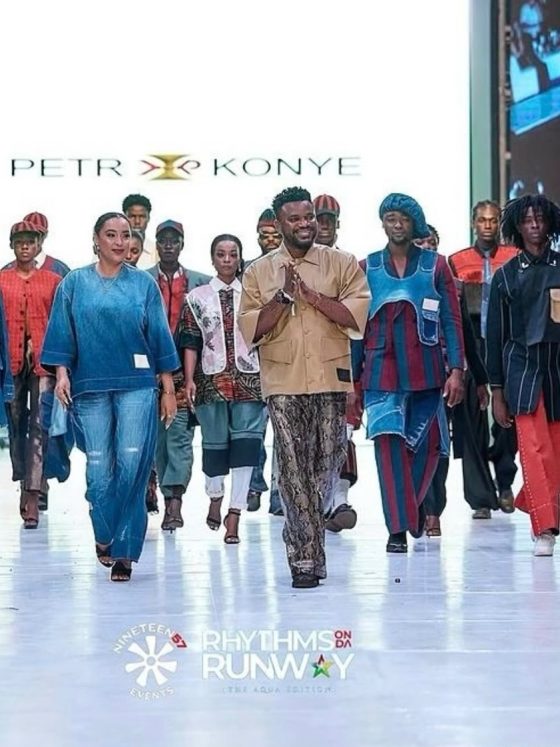
The African fashion market is worth 31 billion dollars. Within that figure is a growing category of brands that have made a specific argument: that African-made luxury does not need external certification to justify the price, the positioning, or the language. REIMMS by Petr Konyé, founded in Lagos by Nigerian designer Petr Konyé, is one of the clearest examples of that argument being made through a single disciplined creative decision. The brand chose denim, a fabric with no African origin, and built a luxury house around what happens when West African tailoring craft is applied to it with complete precision and no concession to mass-market logic. Nigeria’s fashion industry contributes approximately 6.1 billion dollars to the country’s GDP, confirmed by the Minister of Art, Culture, and Creative Economy in October 2024. REIMMS is operating at the top of that industry’s ambitions.
That is the thesis. Not African-inspired luxury. Not luxury with African elements. A luxury house that is African, made in Lagos, rooted in bespoke construction, and using denim as its medium because denim is the material most in need of cultural reauthorship on the continent.
REIMMS by Petr Konyé is a Lagos luxury house that uses bespoke denim as a platform for African craft. Here is what the brand is building and why it matters.
REIMMS by Petr Konyé: What the Brand Is and What It Is Building
REIMMS by Petr Konyé was established in 2023 under the name PETR KONYE. The evolution from that founding identity to REIMMS was not a rebrand. It was a clarification. The name REIMMS derives from Restless Immigrants: people who refuse the limitations placed on their creative output, their cultural identity, or their access to spaces not originally designed for them. That description is precise, and it is the design brief. Every REIMMS garment is built from an understanding of what it means to move between cultures, cities, and expectations without being flattened by any of them.
The shift from PETR KONYE to REIMMS by Petr Konyé extended the creative vision and formalised the international luxury positioning that the original work was already reaching for. It also preserved what made the original work worth building on: every piece individually constructed in Lagos, by hand, using the precision that West African tailoring traditions have developed over generations. The brand name changed. The manufacturing condition did not.
Handmade in Lagos: What Bespoke Construction Actually Means
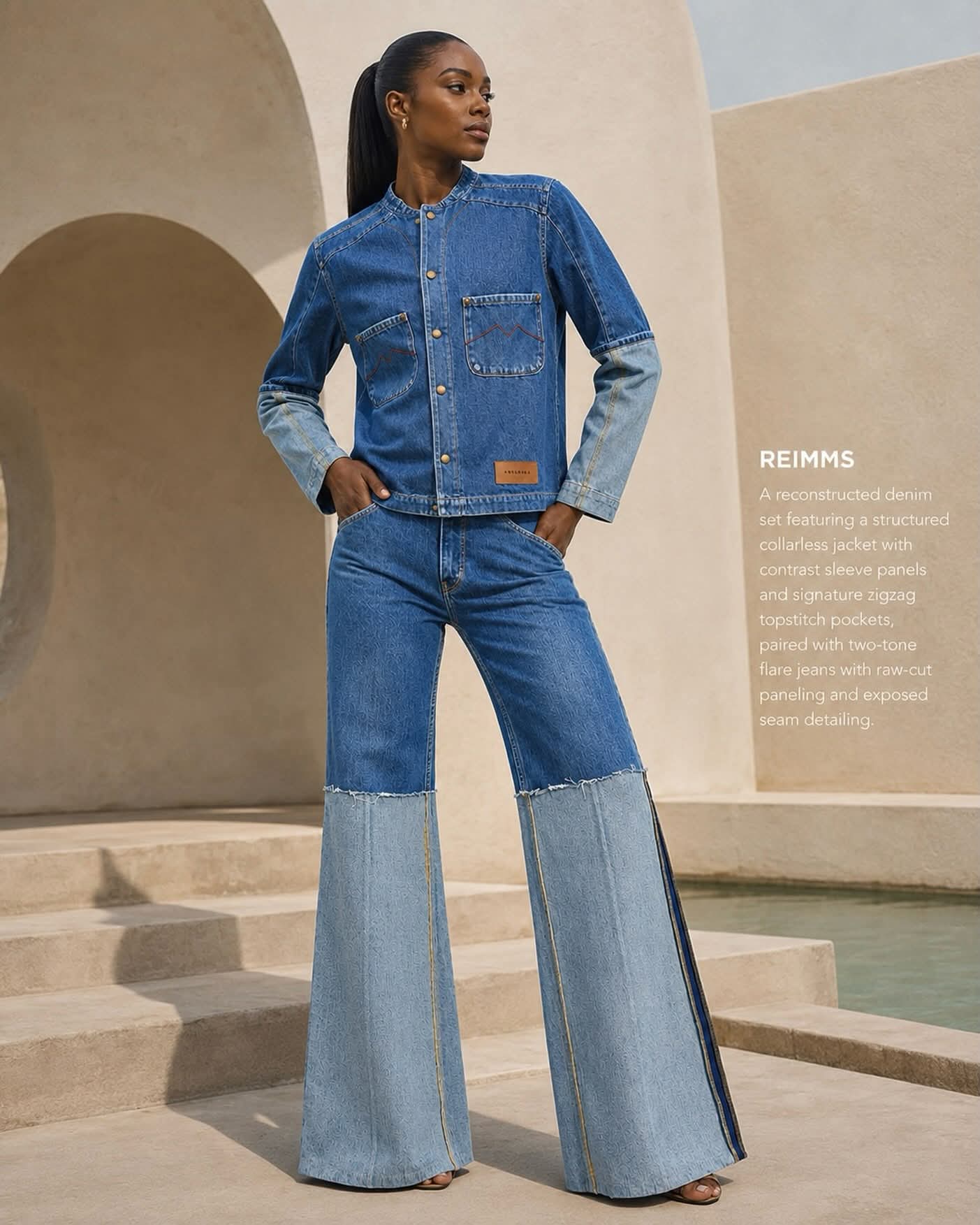
The phrase handmade carries specific weight in luxury fashion. For the houses that use it accurately, it signals a manufacturing condition that cannot be replicated at scale: individual construction, by hand, with skills that accumulate through years of practice rather than through machinery investment. As Ekinken’s documentation of the African tailoring economy confirms, tailoring districts like Lagos’s Yaba sustain micro-economies built around artisan skill transfer from master to apprentice across generations. The techniques are not taught in classrooms. They are transmitted through practice, accumulated in the hands of craftspeople who have spent years learning what each adjustment to a cut produces. That is the tradition REIMMS draws from.
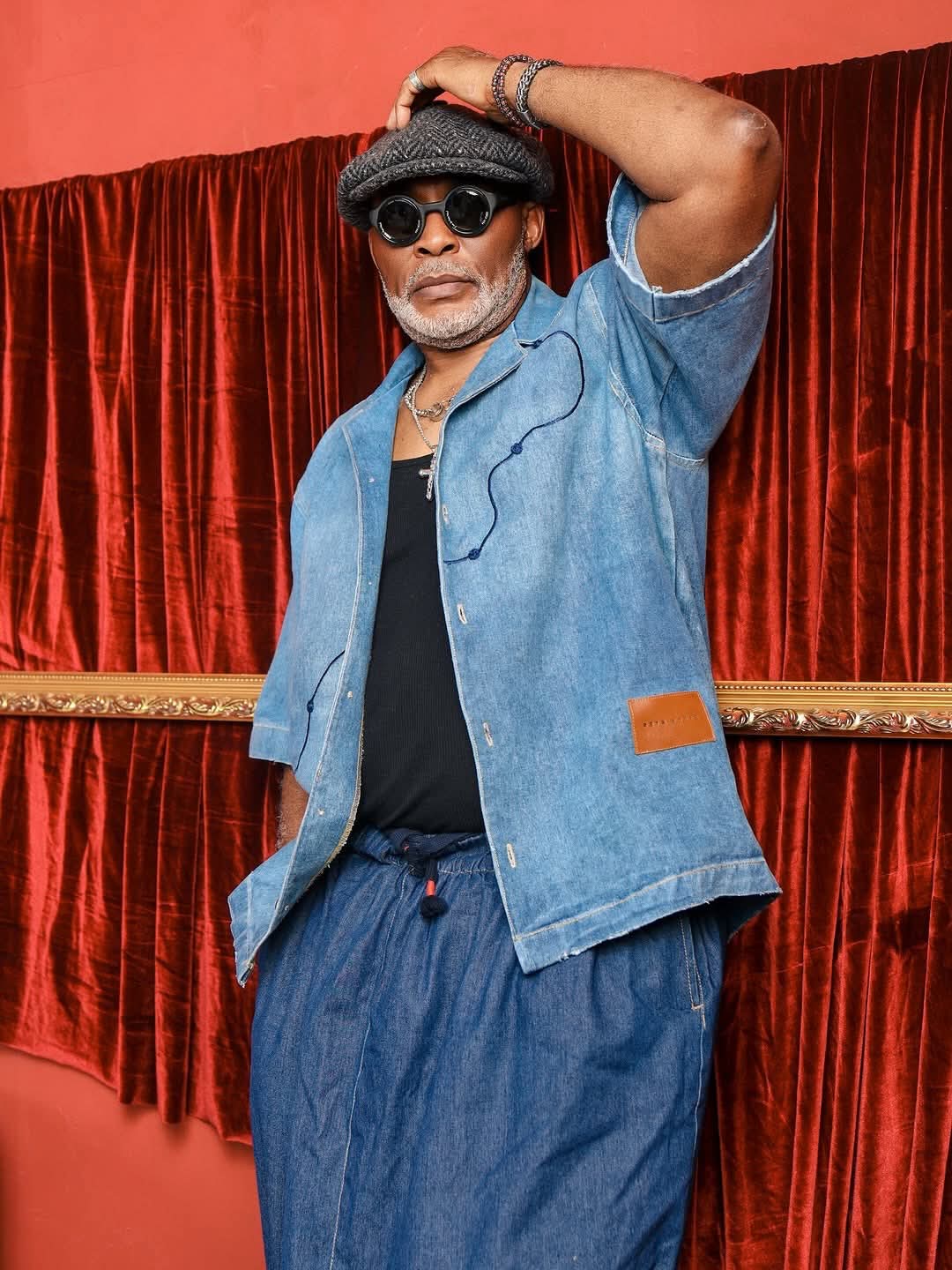
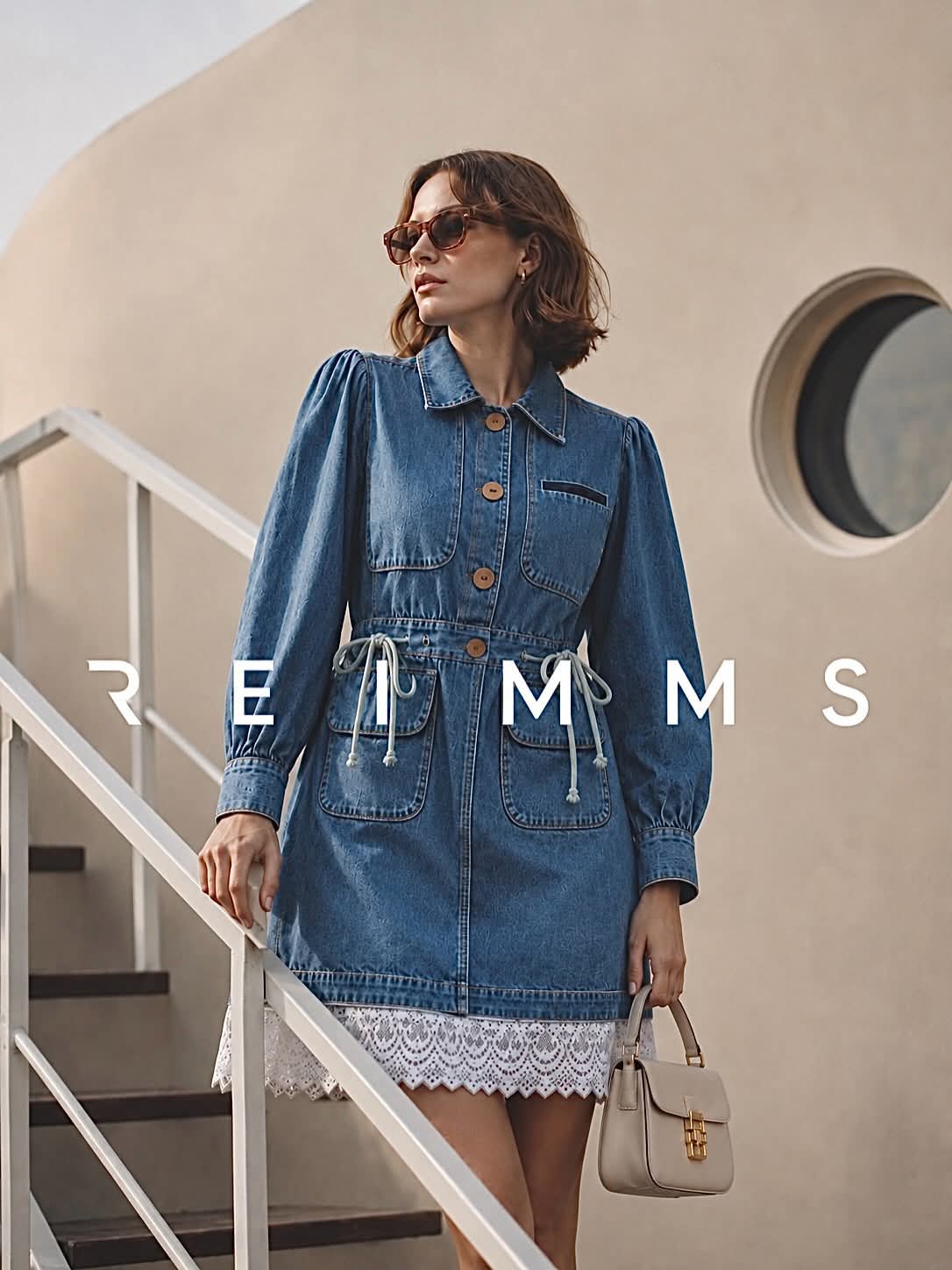
For REIMMS, handmade in Lagos is a fixed manufacturing condition, not a marketing description. A bespoke REIMMS piece carries the evidence of human attention at every stage of construction: in the cut, fitted to a specific body rather than a standard pattern; in the finishing, resolved as part of the construction rather than applied as decoration; and in the distressing, applied by hand to specific areas of a specific garment rather than processed uniformly across a production run. As Grokipedia’s documentation of Nigerian fashion history confirms, the precedent for this standard in Lagos goes back to 1960, when Shade Thomas-Fahm founded Maison Shade, Nigeria’s inaugural fashion boutique, and elevated local craftsmanship to an international level through structured tailoring and bespoke services. REIMMS is building on that foundation in a contemporary medium.
Distressing, treated as a luxury intervention rather than a casualwear process, requires controlled, hand-applied work to a specific garment cut for a specific body. That is what separates REIMMS from the mass-market denim category it visually references and refuses to belong to.
Why Denim Is the Right Medium
Denim arrived in Africa the way most Western consumer products arrived: through trade, cultural dominance, and the slow replacement of local aesthetic systems with imported ones. African designers have spent the last decade systematically reauthoring that inheritance, turning a colonial-era working-class fabric into a platform for African creative intelligence.
The Nigerian denim jeans market was valued at 803.67 million US dollars in 2025, projected to reach 1.44 billion dollars by 2034 at a CAGR of 6.7%. Nigeria contributed 0.9% of the global denim market in 2025. That figure will grow. What REIMMS is building is the argument that the most significant Nigerian contribution to that market is not volume but authorship: that a Lagos luxury house can apply bespoke craft to denim and produce something the global market has not seen from this geography before.
The choice of denim as the central medium is also strategic. Denim is globally legible. It carries no geographic loyalty. When a Lagos-based luxury house builds a bespoke denim piece at the level of craftsmanship that REIMMS is reaching for, the garment speaks to a global audience that already understands what denim is, and must now understand what it becomes under these hands. REIMMS is claiming cultural authority through craft alone, on material that did not originate here, and making that claim stick.
The Design Language: Silhouette, Structure, and the Luxury Argument
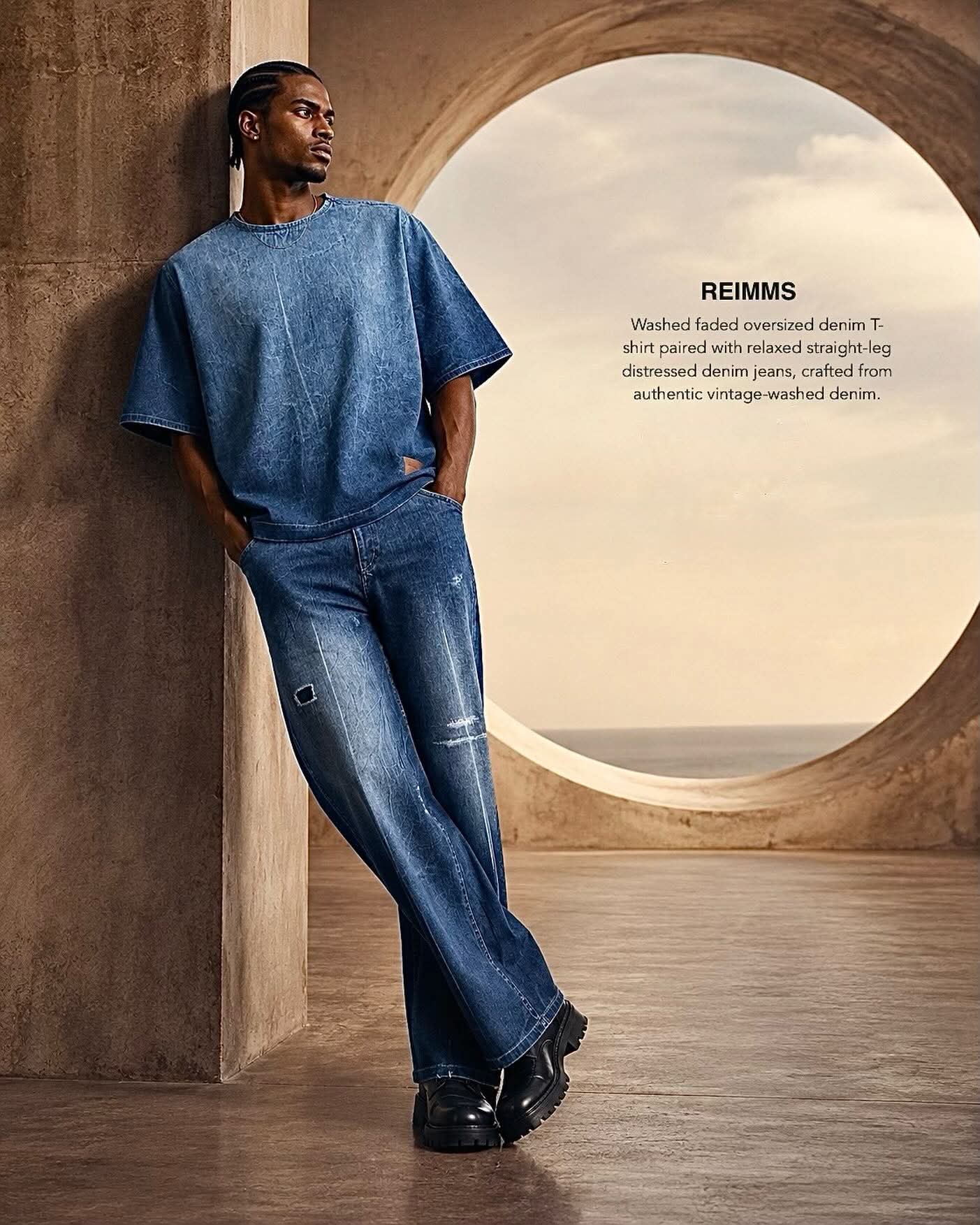
REIMMS builds elevated silhouettes in which the denim’s structure is treated as a precision material rather than a casual one. The silhouette carries weight and control: not the relaxed fit of casualwear or the rigid fit of workwear, but the calibrated fall of a garment cut for a specific body by someone who knows what each adjustment produces. Artisanal finishing throughout each piece confirms the construction decisions visually. The details are not decorative additions. They are the resolutions of construction problems, made visible rather than hidden.
This approach sits within a broader argument that the most significant African fashion is making about craft as the primary luxury signal. Omiren Styles’ documentation of the African deconstructed denim movement confirmed that Lagos Fashion Week SS26 identified deconstructed and artisan denim as one of the defining trends of 2025, with multiple designers presenting work that had been in development for years before global fashion weeks recognised the movement. REIMMS occupies a distinct position within this: not deconstruction or upcycling, but luxury bespoke construction in which the denim is treated with the same material precision as any fabric in a Parisian atelier.
The parallel is Kenneth Ize, the Nigerian designer who builds collections from hand-woven aso-oke in which the weave variation of their making is carried directly into the final garment. The cloth does not pretend to be machine-produced. Its irregularity is its authority. REIMMS is making the same argument in denim: the evidence of hand construction is not a quality failure. It is the quality marker.
Where REIMMS Sits in the African Luxury Fashion Conversation
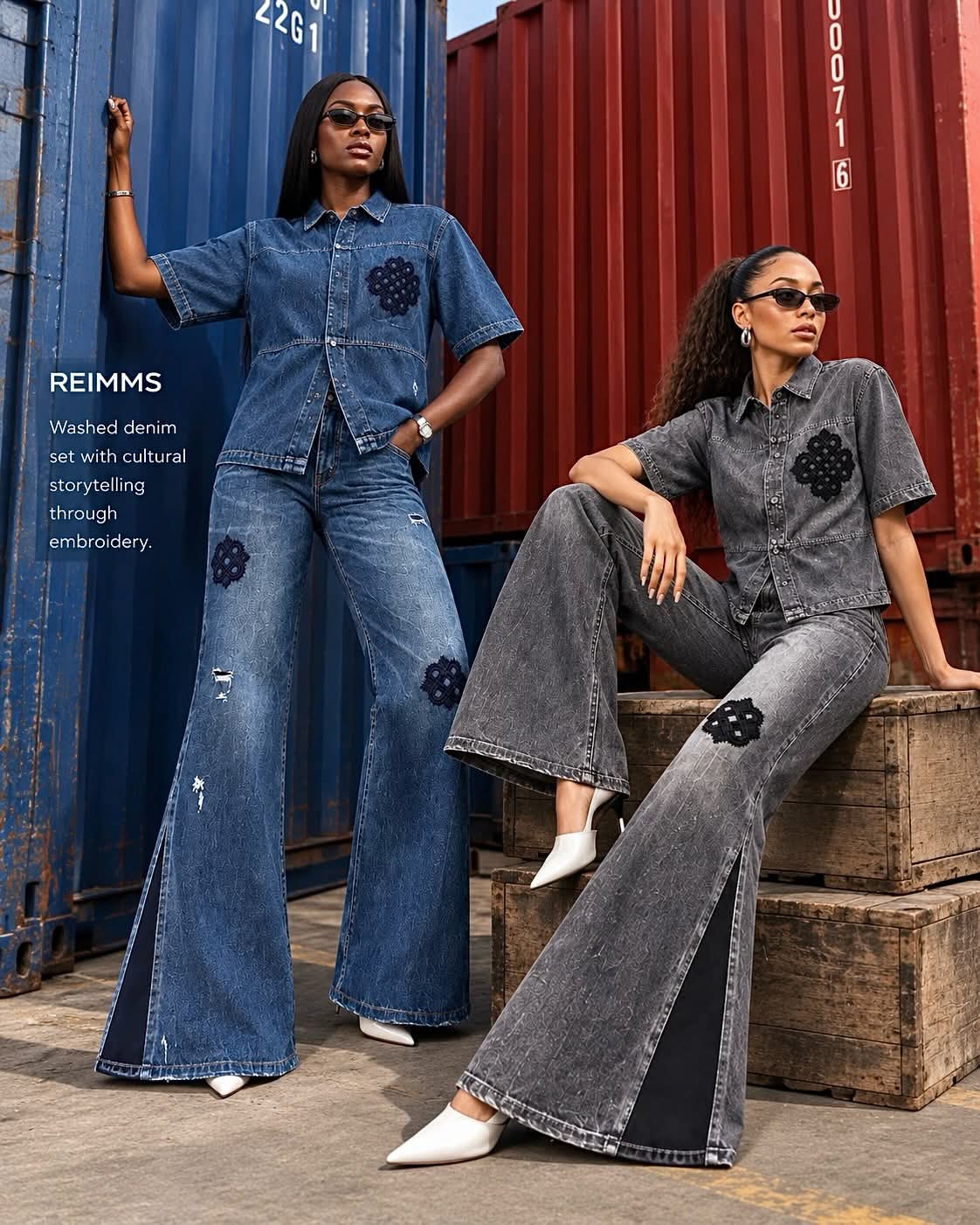
The structural challenge for Lagos-based luxury brands has always been the gap between creative quality and market infrastructure. Omiren Styles’ Lagos Fashion Market Report 2026 documents that Nigeria’s fashion and lifestyle market is valued at approximately 30 billion dollars, with bespoke tailoring among the fastest-growing categories. The market rewards those who understand not just the economics but the culture. What REIMMS represents within that market is the highest-ambition tier: a brand building for permanence rather than seasonality, in a medium global enough to travel beyond Lagos on its own terms.
The precedent that matters most for understanding what REIMMS is attempting is the model documented by Omiren Styles in its profile of Abiola Olusola: a brand produced entirely in Lagos and presented at Tranoi Paris in February 2024, where FashionNetwork specifically named it as a Nigerian slow-fashion brand whose collections are produced in Lagos. That framing- a brand produced in Lagos received by international buyers on its own terms, without relocation or compromise- is the model REIMMS is building toward through denim rather than through Olusola’s architectural tailoring.
REIMMS is not the only Lagos brand making this argument. What it is doing is making it through a specific medium, with a specific craft position, and a specific cultural name that declares its own terms before the garment is even seen. Restless Immigrants is not a soft brand story. It is an instruction: do not expect this work to fit within the frame you have prepared for African fashion.
The Omiren Argument
REIMMS by Petr Konyé is a Lagos luxury house using bespoke denim construction as a platform for West African tailoring craft, and it is making that argument on its own terms without apology or external validation. The African fashion market is worth 31 billion dollars. Nigeria’s fashion industry contributes 6.1 billion dollars to GDP. The Nigerian denim market alone is projected to reach 1.44 billion dollars by 2034. REIMMS is operating at the top of that stack: handmade in Lagos, bespoke construction, elevated silhouettes, and distressing applied as a precision luxury intervention rather than a casualwear process. The brand’s name, derived from Restless Immigrants, is the clearest statement of what it is doing: refusing the limitations placed on where African luxury is permitted to exist, and building the work anyway. Omiren Styles documents this brand because the argument it is making is exactly the argument this platform was built to cover.
Also Read
- African Deconstructed Denim Movement: What Lagos, Accra, and Johannesburg Built From a Western Fabric
- Lagos Fashion Market Report 2026: Retail, Price Points and Growth Categories
- From Ibadan to Paris to Lagos: How Abiola Olusola Built a Global Brand by Staying Rooted
- Imperfection as Intention: Why Undone Dressing Defines 2026 High Fashion
Frequently Asked Questions
Who founded REIMMS by Petr Konyé?
REIMMS was founded by Nigerian designer Petr Konyé, originally launched in 2023 under the name PETR KONYE before evolving into REIMMS by Petr Konyé with a broader creative vision and explicit international luxury positioning.
What does REIMMS mean?
REIMMS derives from Restless Immigrants, describing people who refuse limitations on their creative output, cultural identity, or access to spaces not originally designed for them. The name is the design brief, not the backstory.
What does REIMMS specialise in?
REIMMS specialises in handcrafted luxury denim, bespoke tailoring, and elevated silhouettes with artisanal finishing. Its signature is bespoke distressed denim, with distressing applied by hand as a precision luxury intervention rather than a casualwear process.
Where is REIMMS made?
Every REIMMS garment is handmade in Lagos, Nigeria. Individual hand construction in Lagos is a fixed manufacturing condition, not a marketing description.
Why is REIMMS significant in African fashion?
REIMMS demonstrates that a Lagos-based luxury house can apply West African tailoring craft to a globally legible fabric and claim luxury authority through construction precision alone, without relocation or external validation.
How can I buy REIMMS?
For purchasing and bespoke commissions, follow REIMMS by Petr Konyé on its official channels for current stockists and contact information.
Explore More
Read the full Fashion > Designer Profiles section at omirenstyles.com for Omiren Styles’ documentation of African fashion houses, creative directors, and the luxury arguments being built from Lagos, Accra, Dakar, Nairobi, and across the diaspora.