On a Saturday afternoon in Soweto, a teenager pours expensive whisky over a pair of designer trainers, sets them alight, and records the video on a smartphone. The trainers cost more than his family earns in a week. The video circulates through WhatsApp groups before the fire goes out. This is not a waste. It is a statement so precise that it required every element to be exactly right: the brand, the public setting, the documentation, the audience. The practice has a name. It is izikhothane, the plural of iskhothane. And what it is doing with designer goods is not destruction in any straightforward sense.
Izikhothane burns designer clothes in public to claim humanity. Inside the Soweto subculture that turned conspicuous destruction into a post-apartheid identity argument.
What Izikhothane Is
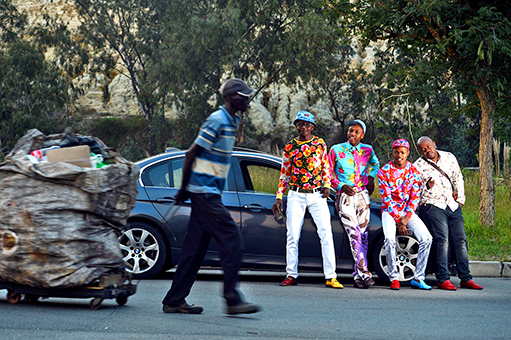
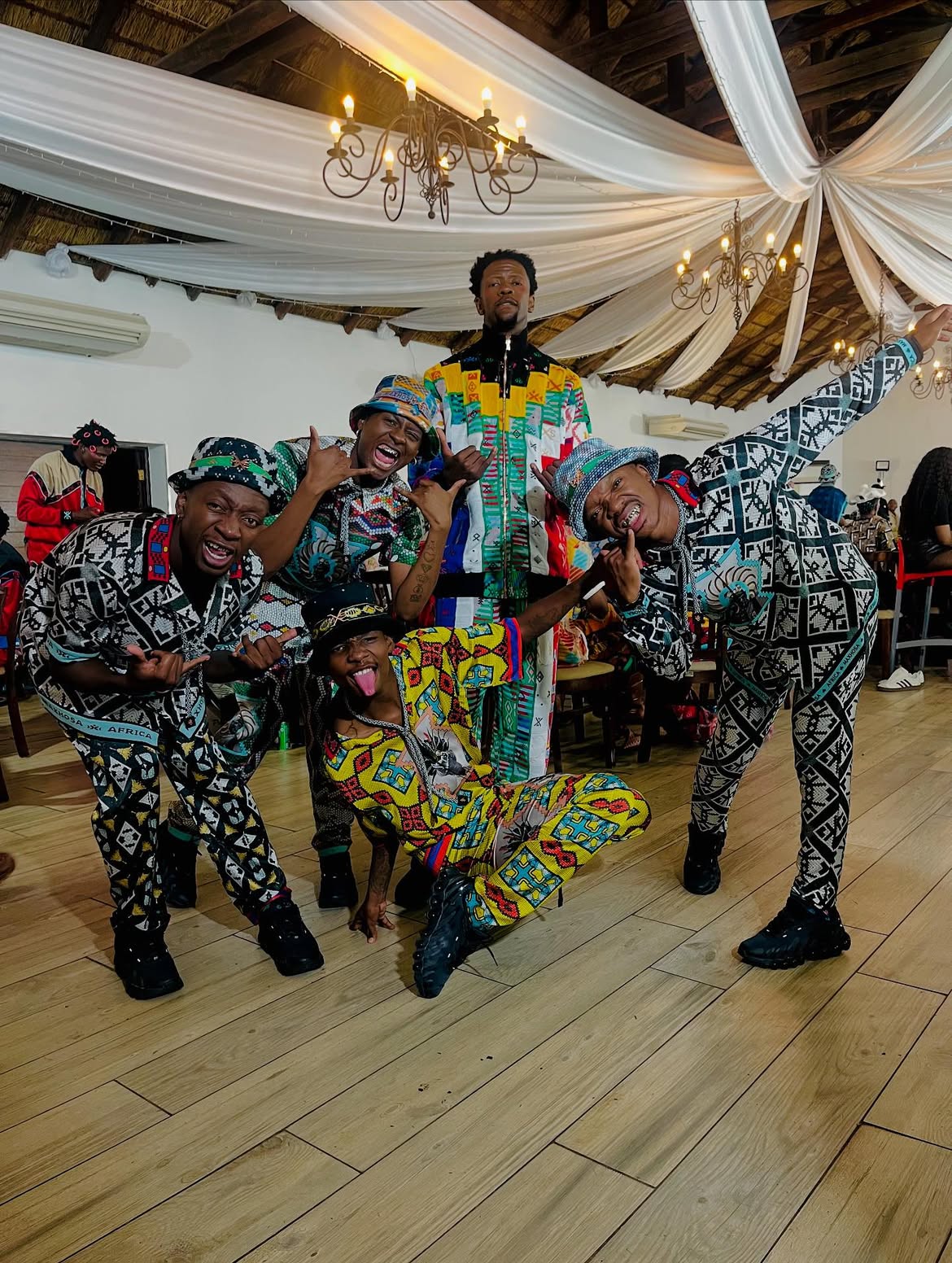
Izikhothane, a Zulu and Sotho term loosely translating to “those who lick” or “those who boast,” is a South African youth subculture that emerged from Soweto and the townships of Gauteng in the late 2000s and reached its peak of public visibility between 2010 and 2014. Its participants, known as izikhotane in both singular and plural forms, gather in competitive groups to display, compete with, and, in many cases, deliberately destroy luxury goods: designer clothing, expensive food, money itself. The destruction is the point. Burning a pair of Gucci trainers in public is not the act of someone who cannot appreciate their value. It is the act of someone who wants to demonstrate that that value does not control them.
The academic literature on izikhothane is not large, but it is precise. The most cited scholarly work is Niq Mhlongo and Sifiso Mzobe’s documentation of the subculture in the context of post-apartheid South African youth identity, and the analysis of Ntombizodwa Mzobe, a researcher at the University of the Witwatersrand, whose work situates izikhothane within a broader theoretical framework of conspicuous destruction as a response to post-apartheid inequality. The Journal of Consumer Culture has published a peer-reviewed analysis that frames the behaviour within Thorstein Veblen’s framework of conspicuous consumption, inverted: where Veblen described the display of wealth as a marker of status, izikhothane stages the destruction of wealth as a more extreme claim to social authority.
Where It Came From
Izikhothane emerged in Soweto in the late 2000s, drawing on a longer history of competitive display cultures in South African townships. It has documented connections to the pantsula tradition, a South African street dance and youth culture that emerged in the 1950s and 1960s, in which dress was a central competitive element: the quality, freshness, and specific brands of clothing worn to pantsula events carried direct social meaning. Pantsula was always partly about displaying access to goods that township residents were systemically denied under apartheid. Izikhothane escalated that logic in a post-apartheid context, where access to luxury goods had technically expanded, yet structural inequality remained acute.
South Africa’s Gini coefficient, which measures income inequality, remains among the highest in the world. According to the World Bank’s 2024 South Africa Economic Update, South Africa’s Gini coefficient is approximately 0.63, making it one of the most unequal societies on earth by this measure. The transition from apartheid in 1994 did not dissolve that inequality. It shifted its legal basis while leaving its material structure largely intact. For township youth growing up in this context, the meaning of designer goods is not straightforward. They signal access, aspiration, and the willingness to spend beyond necessity. But they are also objects produced by and for a global luxury system that was never designed with them in mind. Izikhothane’s destruction of those objects is partly a rejection of the system that produced them and partly an assertion that the people who burn them are not in thrall to it.
What Rehumanisation Means in This Context
The academic framework that best makes sense of izikhothane is the one developed by South African sociologist Xolani Hadebe in his analysis of township youth identity and post-apartheid consumption. Hadebe argues that the destruction of luxury goods in public represents a form of rehumanisation: an assertion of personhood that the apartheid system explicitly denied to Black South Africans, and that the post-apartheid economic system implicitly continues to deny by making the markers of full social citizenship, economic security, access to luxury, participation in the consumer economy, structurally inaccessible to most township residents.
When an iskhothane burns a pair of designer trainers, the act communicates several things simultaneously. It demonstrates that they had the goods in the first place, thereby marking a claim to social status. It demonstrates that they are not subject to the goods’ value in the way that someone who could not afford them would be. And it performs, in public and on camera, a kind of sovereignty over the object that the luxury system has never intended its consumers to possess. The brand is not being honoured. It is being subordinated. As Professor Grace Khunou of the University of Johannesburg, one of the leading academic voices on South African youth identity, has argued in published work on post-apartheid subjectivity: “These young people are saying: we exist, we matter, and we will define the terms of our own recognition.”
“These young people are saying: we exist, we matter, and we will define the terms of our own recognition.” — Professor Grace Khunou, University of Johannesburg, on post-apartheid township youth subculture.
The Sapeur Parallel
Izikhothane is not the first African youth subculture to make luxury dress a tool of social argument. The most precise parallel is La Sape, the Congolese Sapeur tradition in which working-class men from Brazzaville and Kinshasa assemble extravagant designer wardrobes and parade them through streets that are economically among the most deprived on the continent. As Omiren Styles has documented in its analysis of La Sape, the Sapeur argues that elegance is a form of dignity, and that dressing extravagantly in conditions of poverty is not delusion but insistence: an insistence that the person wearing the garment deserves to occupy beautiful things regardless of what the surrounding economic system says about their worth.
Izikhothane takes that argument one step further. Where the Sapeur insists on the right to wear luxury, izikhothane insists on the right to destroy it. The Sapeur mastered the coloniser’s wardrobe and used it as a declaration of dignity. The iskhothane mastered it and set it on fire. Both practices assert the same underlying claim: that the people performing them are not objects of the economic system. They are its subjects, and they will decide what the objects are for.
The Media Moment and Its Distortions
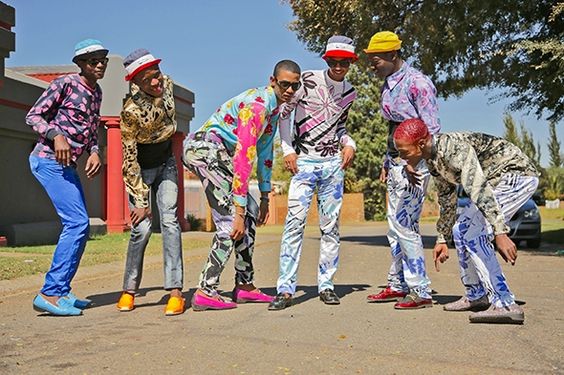
Izikhothane reached its widest media coverage between 2012 and 2014, when South African television programmes, including SABC’s coverage and international outlets, began documenting the practice. That coverage was almost uniformly framed as pathological: reports emphasised the destruction as evidence of financial irresponsibility, misplaced values, and the corrupting influence of materialism on township youth. The moral-panic framing was both consistent and consequential. It allowed the media to document the spectacle without engaging in the argument.
The academic response was more careful. Researchers at the University of the Witwatersrand and the University of Johannesburg who studied the subculture during its active period consistently noted that izikhothane practitioners understood their activity as a social statement rather than reckless behaviour. The goods destroyed were often acquired through months of saving, pooling resources within groups, or purchasing heavily discounted or replica items specifically for destruction rather than from the luxury brands themselves. As the South African History Archive documents, the practice was a performance rather than an expression of actual wealth, which is itself significant: the performance was enough to generate social recognition. The brand on the burning trainer was a symbol being used, not a product being consumed.
Where Izikhothane Sits in 2026
The peak of izikhothane as a publicly visible, media-covered subculture passed by the mid-2010s. The practice has not disappeared, but it has receded from the kind of sustained public attention that generated academic studies and television segments. What has continued is the underlying dynamic: Soweto and Gauteng township youth culture remains one of the most generative fashion and cultural production environments in South Africa, feeding into the Amapiano aesthetic, the pantsula revival, and the broader visual culture of township-rooted South African identity that Omiren Styles has documented in its analysis of the Amapiano fashion aesthetic. The specific practice of public destruction may have peaked, but the argument it was making, about who gets to determine the value of luxury goods, and about the right of township youth to define their own terms of social recognition, is still being conducted through every streetwear choice, every Soweto Fashion Week appearance, and every Galxboy collection that builds from this specific cultural inheritance.
The Omiren Argument
The standard reading of izikhothane puts the subject in the wrong place. It treats the practice as evidence of damaged values in township youth: too much aspiration, too little wisdom, too ready to waste what they cannot afford. That reading requires ignoring everything the practice is actually doing. Izikhothane is a structured argument about recognition. It uses the objects of the global luxury economy not to signal participation in that economy but to demonstrate sovereignty over it. The burning trainer is not evidence of irresponsibility. It is evidence of a social intelligence that the luxury system and the media that cover it were not designed to recognise.
The comparison with La Sape is instructive precisely because both subcultures have been consistently misread by media that can describe the spectacle but not read the text. The Sapeur is not a man who values European tailoring above his own dignity. He is a man who values his dignity so highly that he insists on European tailoring to express it. The iskhothane is not a teenager who cannot manage money. He is a teenager who understands that the only way to assert sovereignty over a system that uses luxury as a mechanism of exclusion is to master the symbols and then refuse to be mastered by them. As Omiren Styles has argued in their analysis of African fashion identity, the fashion intelligence embedded in African youth culture has consistently preceded the frameworks developed to explain it. Izikhothane is the clearest South African example of that principle. The fire was not a failure. It was the argument.
Post-apartheid South Africa did not solve the question of who gets to be human in a system built to exclude. Izikhothane gave that question a visual form. The answer was a lit match.
ALSO READ
- The Visual Language of Amapiano: How South Africa’s Biggest Sound Built a Fashion Aesthetic From the Ground Up
- The Congo’s Sapeurs: What La Sape Tells the World About Elegance, Resistance, and African Identity
- The Geometry of Heritage: Why Shweshwe Still Defines South African Fashion
- African Fashion Is Not Emerging. It Has Always Been Here.
Frequently Asked Questions
What does izikhothane mean?
Izikhothane is a Zulu and Sotho term loosely translating to “those who lick” or “those who boast.” It refers to a South African youth subculture that emerged from Soweto and the townships of Gauteng in the late 2000s, in which participants gather to display, compete with, and deliberately destroy luxury goods, including designer clothing, expensive food, and money. The singular form is iskhothane.
Why do izikhothane destroy expensive designer clothes?
The destruction is a social argument, not financial irresponsibility. Academic researchers at the University of the Witwatersrand and the University of Johannesburg who studied the subculture consistently found that participants understood the practice as a statement of sovereignty over luxury goods, not as a failure to value them. By destroying an object produced for and by a global luxury system that structurally excludes township residents, the iskhothane asserts that they are not controlled by the value the system assigns to that object. Professor Grace Khunou of the University of Johannesburg has described this as a form of rehumanisation: an assertion of personhood in a post-apartheid economic context that continues to deny most township residents full social citizenship.
Where did izikhothane come from?
Izikhothane emerged in Soweto in the late 2000s, drawing on a longer history of competitive display cultures in South African townships, including the pantsula tradition, a street dance and youth culture from the 1950s and 1960s in which dress carried direct social meaning. The South African History Archive documents pantsula as a tradition in which the quality and brand of clothing displayed at events served as competitive social currency. Izikhothane escalated this logic in a post-apartheid context where legal access to luxury goods had expanded, but structural economic inequality remained acute.
Is izikhothane still active in 2026?
The peak of izikhothane as a publicly visible, media-covered subculture passed by the mid-2010s. The practice has not disappeared, but the sustained public attention that generated academic studies and television coverage has receded. The underlying dynamic continues through Soweto and Gauteng township youth culture more broadly, feeding into Amapiano fashion aesthetics, the pantsula revival, and the broader visual culture of township-rooted South African identity. Soweto Fashion Week, which runs twice yearly in Soweto, is the institutional platform most directly connected to this creative inheritance.
How does izikhothane compare to La Sape in Congo?
Both subcultures use objects from the global luxury economy as social arguments rather than as straightforward consumption. La Sape asserts the right to wear luxury amid poverty as a declaration of dignity: the Sapeur masters the coloniser’s wardrobe and uses it to insist on personhood. Izikhothane asserts the right to destroy luxury in public as a demonstration of sovereignty: the iskhothane masters the wardrobe and sets it on fire. As Omiren Styles has documented in its analysis of La Sape, both practices share the same underlying claim: the people who perform them are not objects of the economic system. They are its subjects, and they will decide what the objects are for.