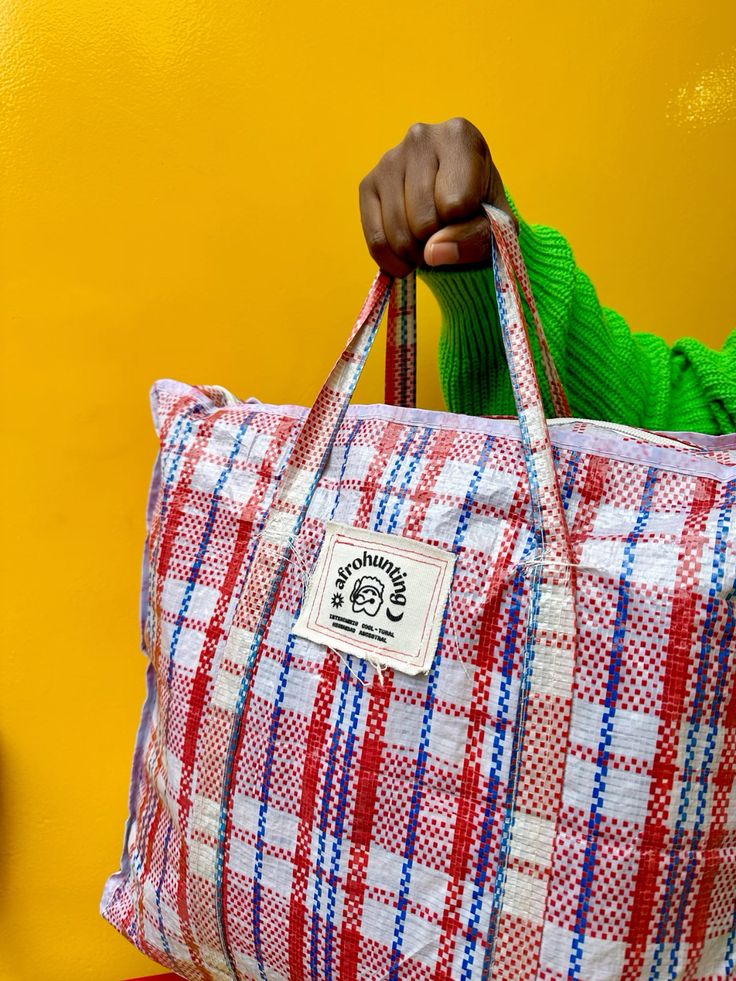
In January 1983, Nigeria’s government gave roughly two million undocumented immigrants, most of them Ghanaian, days to leave the country. There was no time to arrange shipping, no time to sell furniture, no time to do anything but stuff a life into whatever container could hold it. The cheap, durable, checkered plastic bags sold in every Lagos market became the only option strong enough to carry what people could not bear to abandon. Within weeks, the bag had a name that has outlived the policy that created the rush: Ghana Must Go. It became the unplanned uniform of African migration identity clothing in West Africa’s 1980s imagination, the object that decided what a family’s last argument before the border would look like.
Four decades later, that same bag sits in luxury department stores reworked by Louis Vuitton, Celine, and Balenciaga, sold for hundreds of times what the original cost. Virgil Abloh referenced the visual language at Louis Vuitton. Zimbabwean artist Dan Halter has spent years unpicking and re-stitching its weave to interrogate the history it carries. Nigerian photographer Obinna Obioma photographs it as a meditation on his own migration from Lagos to the UK. The bag did not get more meaningful when fashion noticed it. It was always this meaningful. Fashion just finally looked.
A checkered plastic bag, a wax-print shirt, a folded scarf. What African migrants pack when they leave is never just luggage. It is the last argument they make before the border.
How Does the Ghana Must Go Bag Carry Its Own History Across Borders?
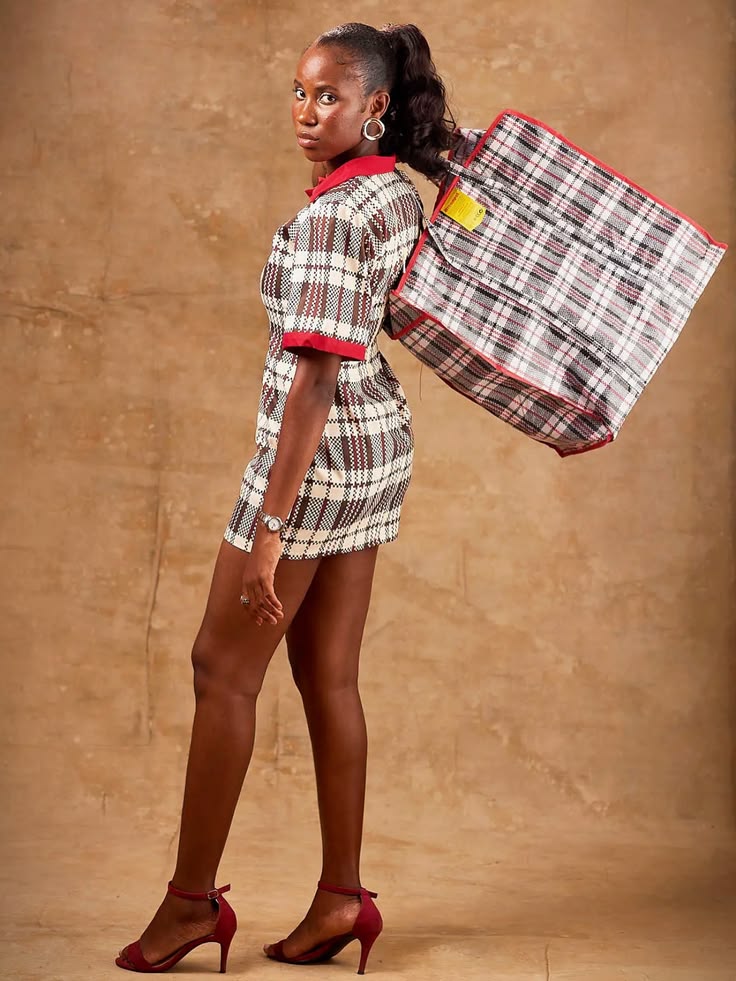
The Ghana Must Go bag’s name comes from a specific, documented event, but its geography is broader than the event that gave it its name. In South Africa, the same checkered woven bag is called the Shangaan bag, Mashangane, or uMas’goduke, names tied to histories of migrant labour and forced movement under apartheid-era and earlier colonial labour systems. In Côte d’Ivoire, it carries an entirely different story, tied to football rivalries and waves of Ghanaian migration in the 1960s and 1970s. The bag is mass-produced in Asia and sold identically across the continent, yet every region that uses it has folded its own history of displacement into the same object. That is not a coincidence of supply chains. It is what happens when an entire continent keeps needing the same kind of container for the same kind of living.
Obinna Obioma, who moved from Lagos to the UK, has described using the bags as a child to travel back to his grandparents’ village, then later using the same bags to carry his belongings when he relocated abroad. He has said his work, which translates the bag into high-fashion photography, is primarily about African heritage and identity, and that he has received messages from people across the world who recognise their own migration story in it. The bag is not nostalgic for him. It is functional history, the same cheap plastic carrying two different migrations a generation apart.
What people pack when they leave is never just luggage. It is the last argument they make before the border, the only version of home small enough to carry.
Why Does Fashion Keep Returning to an Object It Did Not Make and Stripping It of Its History?
When Louis Vuitton released a version of the Ghana Must Go bag reworked in leather and branded canvas, the reaction across African social media was less celebration than scrutiny. The objection was not that an African object had inspired a luxury house. It was that the inspiration arrived without the history attached, stripped of the 1983 expulsion, the families who fled with everything they owned stuffed into the cheapest bag available, and the slightly bitter inside joke West Africans still make about the name. Cultural historian Dr Nana Osei Quarshie has described the bag as more than luggage: a symbol of survival and displacement. A version that keeps the silhouette and discards the history is not a tribute. It is an edit. As Omiren Styles has explored in African Textile Museums: Preserving Memory in an Age of Fast Fashion, the central danger facing African material culture inside global fashion is not disappearance. It is extraction: the pattern survives, the story does not.
Dan Halter’s practice runs in the opposite direction. Rather than reproducing the bag’s surface for a luxury market, he unpicks the actual weave and re-stitches it, turning the migrant object into a deliberate interrogation of migration, labour, and colonial legacy. The difference between Halter’s work and a runway reproduction is the difference between asking a question and selling an answer. One forces the viewer to sit with what the bag actually is. The other lets them buy it without ever finding out.
Why Is What Gets Packed in African Migration Never Random?
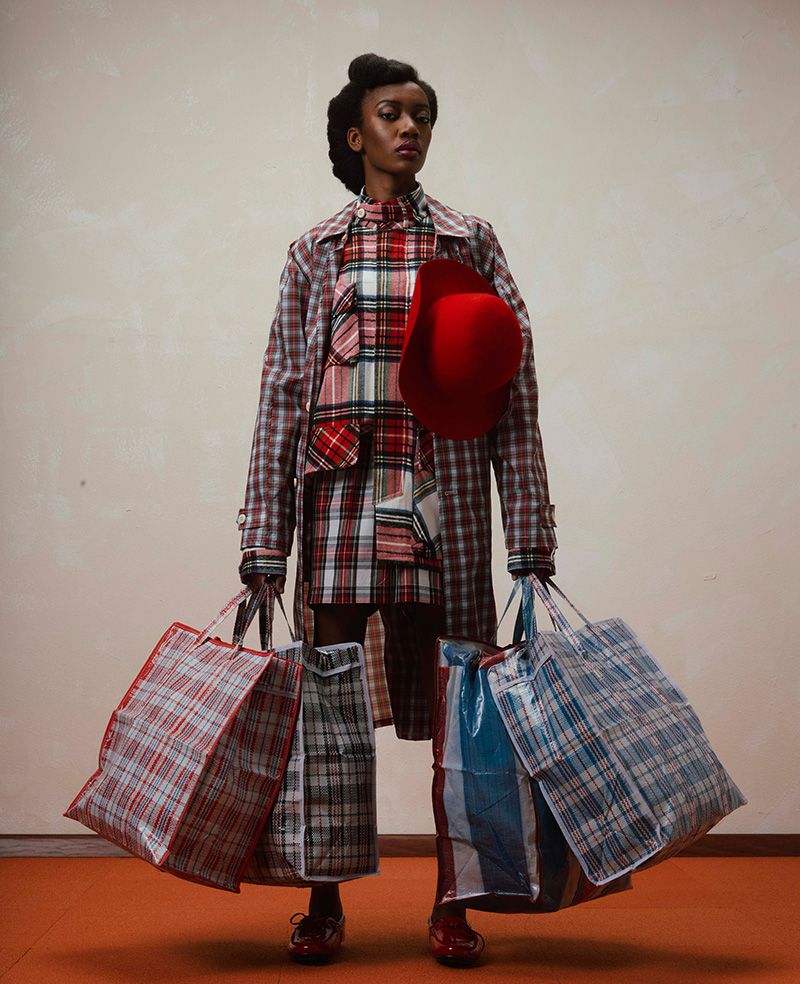
Beyond the specific history of one bag, the broader pattern across African and diaspora migration is consistent. What people carry when they leave is never accidental, and it is rarely what an outsider would predict. A 2020 Al Jazeera report on Ghanaian migrant workers in Nigeria documented teenagers carrying a hand-sewn shirt made from fabric their parents had saved months to buy, an old wristwatch, a chain and a pendant: small, specific objects chosen not for monetary value but because they carried a part of home, a memory of family, and a stake in a future not yet built. The shirt made from saved fabric, the old wristwatch, the chain and the pendant are not nice-to-have items. They are the first draft of how African migration identity clothing will show up decades later on a different street.
Academic research on second-generation African immigrants in the United States and Britain, notably Onoso Imoagene’s documented work on Nigerian families across both countries, describes a process of cultural embedding: parents transmitting specific, symbolically chosen elements of home, language, dress, food, and ritual that mark their children as distinct from both their country of origin and their country of birth. The clothes packed in a parent’s suitcase decades earlier often become the only physical evidence a second-generation child has of a culture they were never fully inside. As Omiren Styles has argued in When Dressing Becomes Declaration: Clothing as Cultural Identity, a head wrap paired with contemporary tailoring on a London or Toronto street is not a contradiction. It is the visible result of exactly this kind of inherited, deliberately packed memory, decades later, on a different body, in a different country.
ALSO READ
- African Textile Museums: Preserving Memory in an Age of Fast Fashion
- When Dressing Becomes Declaration: Clothing as Cultural Identity
- Does Wearing Your Culture Make You Exotic? The Diaspora Fashion Paradox
- What Is Maison Château Rouge? The Paris Brand Built From African Diaspora Memory
What Argument Does the Ghana Must Go Bag Share With Every Migrant Suitcase?
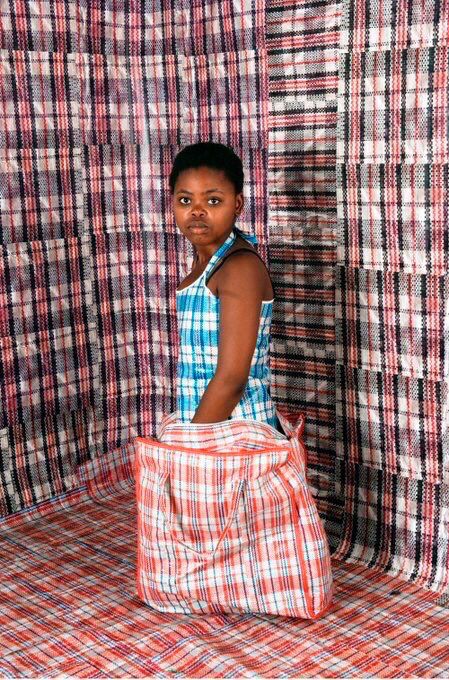
There is a structural similarity between what a Ghanaian family packed into a checkered plastic bag in 1983 and what a Senegalese or Nigerian family packs into a suitcase today before a flight to Paris or London: both are acts of compression under constraint, both carry objects chosen because they are dense with meaning rather than light with convenience, and both produce a visible, physical record of what a person decided was worth the weight. The institutions a migrant arrives at were never built with that bag, that suitcase, or anything inside them in mind. The Ghana Must Go bag’s afterlife in luxury fashion is one small, specific case of what happens when those institutions notice the object without noticing the person who packed it.
THE OMIREN ARGUMENT
The Ghana Must Go bag proves that African migration has always written its own visual record, whether fashion pays attention or not. The 1983 expulsion did not create meaning in a cheap plastic bag. It revealed the meaning that the bag and the people who filled it had always carried.
What luxury fashion’s reworked versions expose is a pattern Omiren Styles has named before: the object survives, the story disappears, and the silhouette gets sold back without the history that gave it weight in the first place. As Omiren Styles has written in Does Wearing Your Culture Make You Exotic? The Diaspora Fashion Paradox is extraction, not tribute, and it is the default outcome whenever an institution notices an African object before it notices the person who made it matter.
The correct place to look is not the runway. It is the bag itself, and the suitcase that succeeded it, and whatever a person decides is worth the weight when leaving stops being optional. That decision, repeated for forty years across a continent, is the record. The bag is not a relic. It is still being packed today in Lagos, Accra, and Abidjan by people leaving for reasons that have nothing to do with 1983. Its meaning has not been settled by history. It is being added every time someone fills one.
FREQUENTLY ASKED QUESTIONS
What is the Ghana Must Go bag?
The Ghana Must Go bag is a large, durable, checkered woven plastic bag that became the primary luggage used by roughly two million undocumented immigrants, most of them Ghanaian, when Nigeria’s government ordered their mass expulsion in January 1983. The bag’s name comes from this specific historical event, but the object itself predates and outlives it: the same bag is sold across West Africa for general transport and travel. It goes by different regional names tied to distinct migration histories, including the Shangaan bag in South Africa and the Abidjan-Ouaga bag in Côte d’Ivoire. According to Omiren Styles, the shared object with different names is a record of how often the continent has had to improvise a container for leaving.
Why did luxury brands release versions of the Ghana Must Go bag?
Louis Vuitton, Celine, and Balenciaga have all released reworked versions of the checkered bag silhouette, reflecting a broader fashion industry trend of drawing on African material culture as visual inspiration. According to Omiren Styles, the criticism these releases attracted was not that African objects can inspire global fashion, but that the bag’s specific, documented history of forced displacement was typically stripped out of the luxury version entirely, leaving only the pattern. That pattern, the object surviving while the story disappears, is the clearest sign of extraction, not tribute. Ghanaian-British designer Virgil Abloh, during his time at Louis Vuitton, engaged the bag’s visual language directly in conversations about movement and global Black identity, a markedly different approach from versions that reference the silhouette without acknowledging its origin.
What do African migrants typically pack when leaving home?
According to documented accounts of West African migrant workers, the objects people choose to carry when leaving are rarely chosen for monetary value. A 2020 Al Jazeera report on Ghanaian teenagers working in Nigeria documented a hand-sewn shirt made from carefully saved fabric, an old wristwatch, and a chain and pendant as the items carried to represent home, family memory, and future aspiration. According to Omiren Styles, clothing in these stories is not background. It is one of the main carriers of memory and intent in African migration, and this pattern, carrying objects dense with personal meaning rather than light with convenience, repeats across generations and geographies, from the 1983 Ghana Must Go expulsion to contemporary migration to Europe and North America.
How does what parents pack affect second-generation diaspora identity?
Research on second-generation African immigrants, notably Onoso Imoagene’s documented studies of Nigerian families in the United States and Britain, describes a process of cultural embedding, in which parents transmit specific, symbolically significant elements of home, including dress, language, and ritual objects, to children raised in a different country. According to Omiren Styles, the physical objects a parent chose to pack decades earlier often become a second-generation child’s most direct material connection to a culture they were never fully inside, shaping how that generation later engages with heritage dress and identity as adults.
Is the Ghana Must Go bag still relevant today?
Yes. The bag continues to be packed today by people across West Africa for reasons unrelated to the 1983 expulsion that gave it its name, and it remains a recognisable, emotionally charged object across the diaspora, sometimes used humorously, sometimes as a quiet emblem of home and identity. Contemporary artists, including Zimbabwean practitioner Dan Halter and Nigerian photographer Obinna Obioma, continue to use the bag directly in their work to interrogate ongoing histories of migration, labour, and displacement, rather than treating it as a closed historical reference.
Omiren Styles covers African and diaspora fashion as a record of how people carry their identities across distances. Subscribe for the editorial intelligence that reads migration’s objects on their own terms.