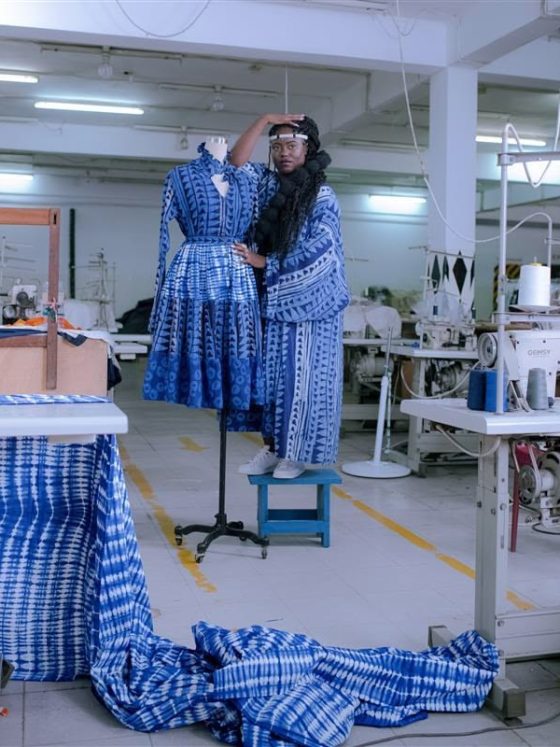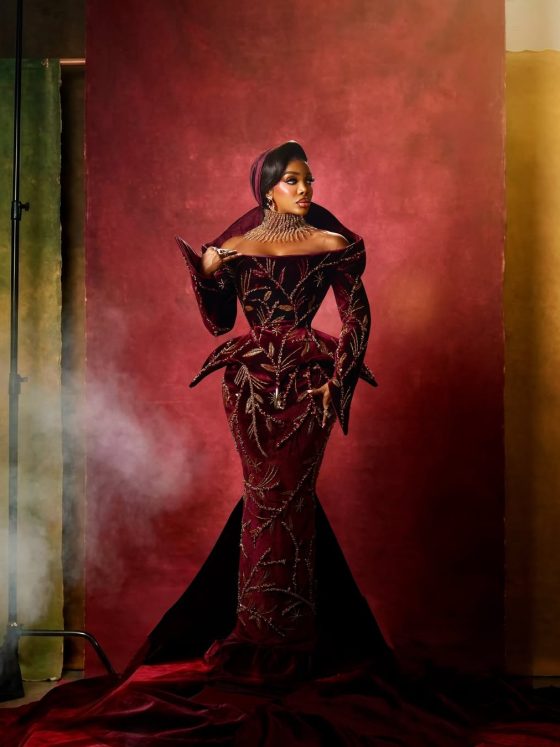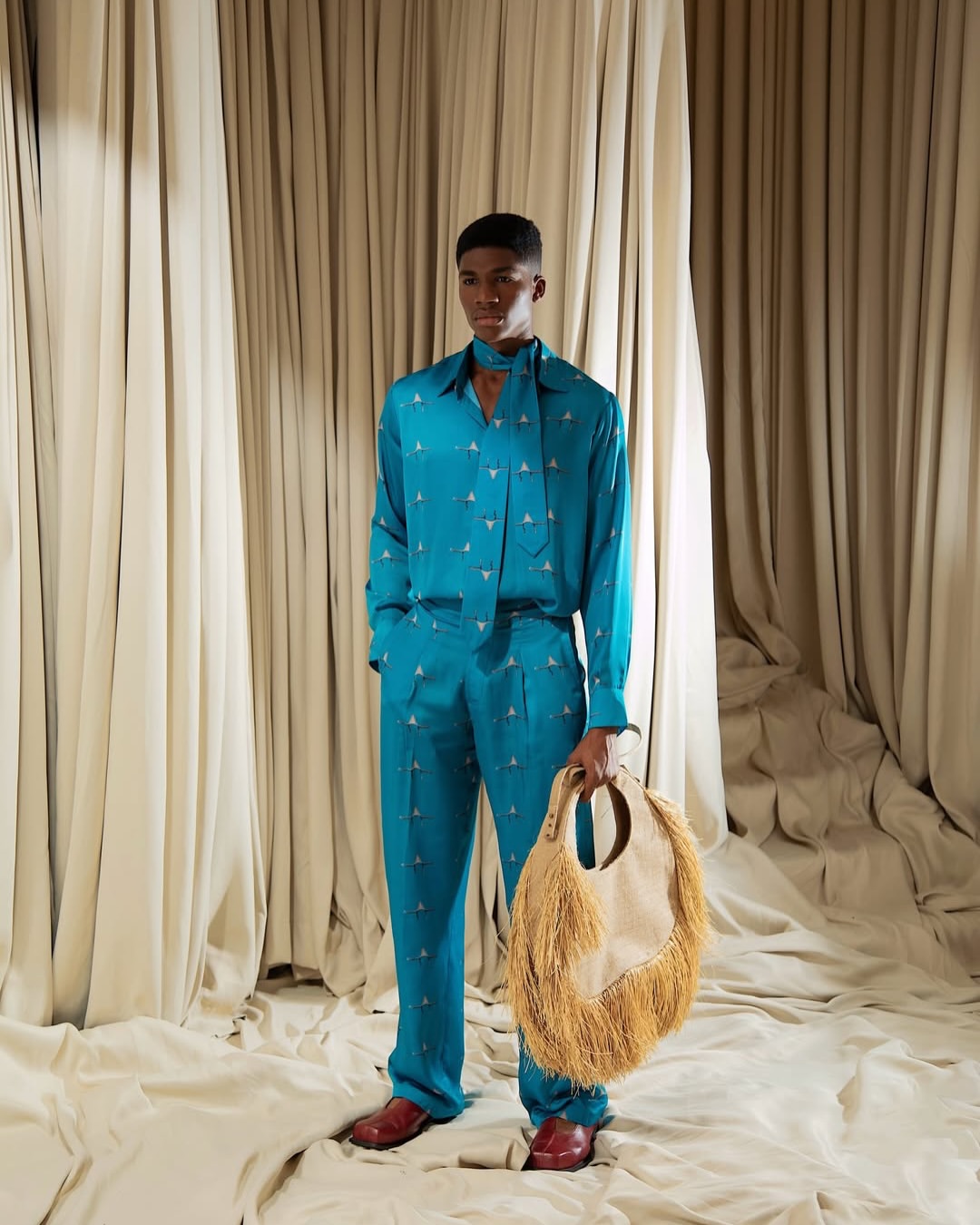
In 2025, Emmanuel Okoro designed a green-and-white polka-dot two-piece that EGOT-winning musician John Legend wore during his outfit changes at Global Citizen’s Move Afrika Lagos concert, one of three Nigerian designer looks He wore that night. The appearance generated significant commercial attention for the brand and was covered across Nigerian and international fashion media. For most brands, that would be the headline: a global celebrity endorsement, a viral commercial moment, the kind of visibility a marketing department spends years trying to engineer. For Emmy Kasbit, it was one moment in a story that began over a decade earlier, in 2014, with a young designer from Abia State trying to find a way to put Akwete, the handwoven textile of his Igbo homeland, into clothes that people in Lagos, and eventually the world, would actually wear.
The distinction matters because it is the brand’s entire argument. Akwete is not a print Emmy Kasbit references. It is not a pattern licensed for a capsule collection or a single statement piece in an otherwise conventional range. Akwete panels are structural elements of the garments themselves, integrated into suit jackets, worked into deconstructed necklines, and used as the material the tailoring is built around rather than applied to. The fabric is the construction method, not the decoration.
Emmy Kasbit does not use Akwete as a reference on the runway. The handwoven Igbo fabric is the construction method. Emmanuel Okoro built a decade-long brand on that distinction.
Akwete: The Handwoven Fabric From Abia State That Predates the Brand by Generations
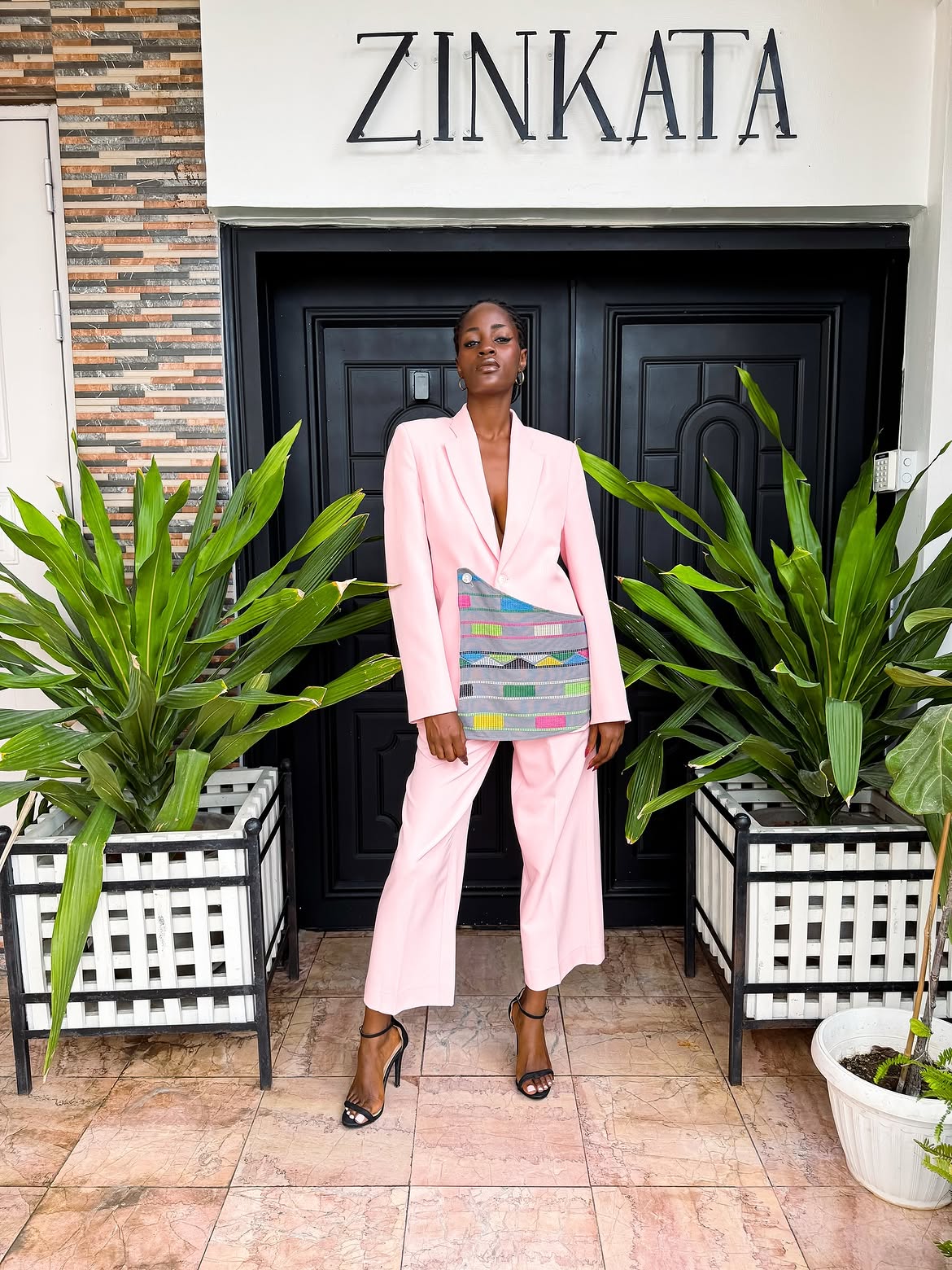
Akwete is a handwoven textile tradition from Akwete, a town in Abia State in southeastern Nigeria, historically produced by Igbo women on vertical looms, using techniques and motifs passed down through generations. Unlike Aso-Oke, the Yoruba woven cloth associated with horizontal looms and ceremonial Yoruba dress, Akwete carries its own distinct visual language: bold geometric and figurative motifs, often produced in rich, saturated colourways, are traditionally worn by Igbo women of status on significant occasions.
Emmanuel Okoro grew up in this textile tradition without initially planning to build a fashion brand around it. He studied computer science in Calabar, supporting himself through university by making clothes for classmates. He founded Emmy Kasbit in Lagos in 2014, and the brand gained wider recognition that same year with the release of his collection, The Definition. Okoro develops textile patterns based on Nsibidi, the ancient Igbo system of symbols and ideograms, which he delivers to weavers in eastern Nigeria to produce. The decision to build the brand’s entire visual identity around Akwete was not an aesthetic afterthought. It was a return to the textile his own family and community had been producing for generations, brought into a tailoring vocabulary built in Lagos and shown on runways from Lagos Fashion Week to Paris.
Most fashion brands that use traditional fabric treat it as a surface. Emmy Kasbit treats it as a structure. The difference between those two decisions is the difference between heritage as marketing and heritage as method.
The Architecture of Emmy Kasbit: Structured Tailoring as the Vehicle for Akwete
Emmy Kasbit’s aesthetic has been consistently described in architectural terms over a decade of coverage: clean lines, structured shoulders, deconstructed necklines, fringed hemlines, and daring cutouts. This is deliberate. Okoro has built a brand around the idea that Akwete, a fabric historically associated with traditional ceremonial dress, can accommodate contemporary architectural tailoring without losing its identity. The collection that won the Fashion Focus Fund at Lagos Fashion Week in 2018 used Akwete in exactly this way: panels were integrated into suit jackets, and structured silhouettes were built from a fabric that most Western fashion vocabulary would categorise as folkloric or ethnic, refusing that categorisation by simply being well-tailored. As Omiren Styles has argued in Stop Calling It Emerging: African Fashion Is the Foundation, Not the Future, the framing that treats African textiles as needing to be made compatible with global tailoring gets the relationship backwards. Akwete does not need architectural tailoring to become legitimate. Emmy Kasbit’s tailoring is legitimate because it is built from Akwete.
Okoro has described his design philosophy in direct terms: when someone wears an Emmy Kasbit piece, he wants them to feel powerful, bold, and African. Not African as a qualifier or a category, but African as the source of the power and boldness itself. This is consistent with what Omiren Styles has documented across Nigerian and broader African fashion: the designers building the most durable brands are the ones whose cultural inheritance is the design intelligence, not an explanation appended to it.
The Emmy Kasbit Initiative: Akwete as a Supply Chain, Not Just a Fabric
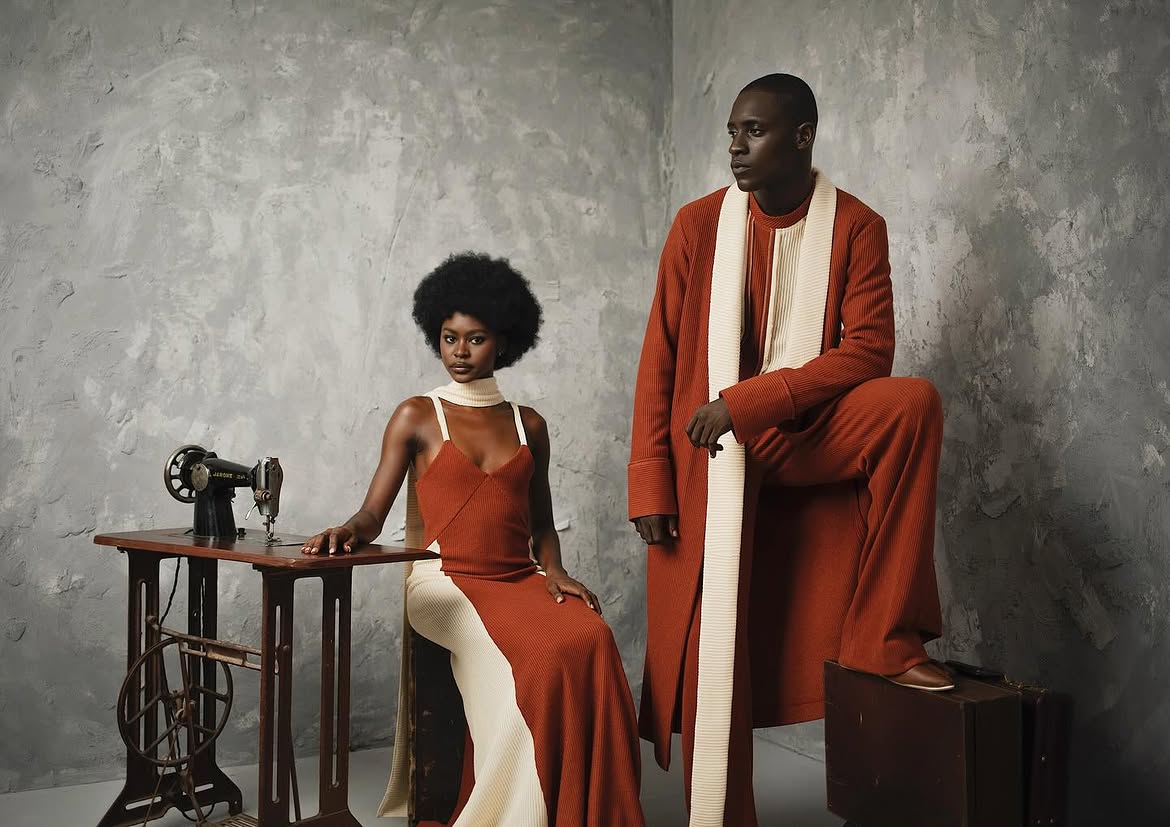
Emmanuel Okoro’s relationship with Akwete extends beyond his use of the fabric in his collections. The Emmy Kasbit Initiative was established to work directly with the craftswomen who weave Akwete, providing employment and education in sustainable fashion practices. Okoro has described his approach to running the brand in terms of the full supply chain: the cotton growers, the weavers, the ateliers, and the artisans who make Akwete production possible. This framing matters because it positions Emmy Kasbit not as a brand that sources from a heritage textile tradition, but as part of the infrastructure that sustains that tradition’s continued existence.
This distinction has become more significant as the wider Nigerian fashion industry has moved, through 2025 and into 2026, toward what industry commentators are calling the Made-in-Nigeria movement: a systematic shift by Nigerian designers toward locally sourced textiles, including Akwete, Adire, and Aso-Oke, integrated into contemporary silhouettes, including bomber jackets, cargo trousers, and denim hybrids. Emmy Kasbit and Onalaja are repeatedly named as the brands that have been doing this work for years, ahead of the broader industry shift. Okoro’s relationship with Akwete weavers in Abia State is not a response to a 2026 trend. It predates the trend by over a decade, and the trend is, in part, catching up to what Emmy Kasbit was already doing.
ALSO READ
- Stop Calling It Emerging: African Fashion Is the Foundation, Not the Future
- Afropolitan New York: How African Designers Are Building a US Market Without Compromising Their Identity
- The African Fashion Economy: A $31 Billion Industry the World Still Undervalues
- The African City That Fashion Forgot: How Benin, Oyo, Dahomey, and Asante Dressed Before Europe Arrived
From Lagos to Paris: What a Decade of Akwete on International Runways Has Proven
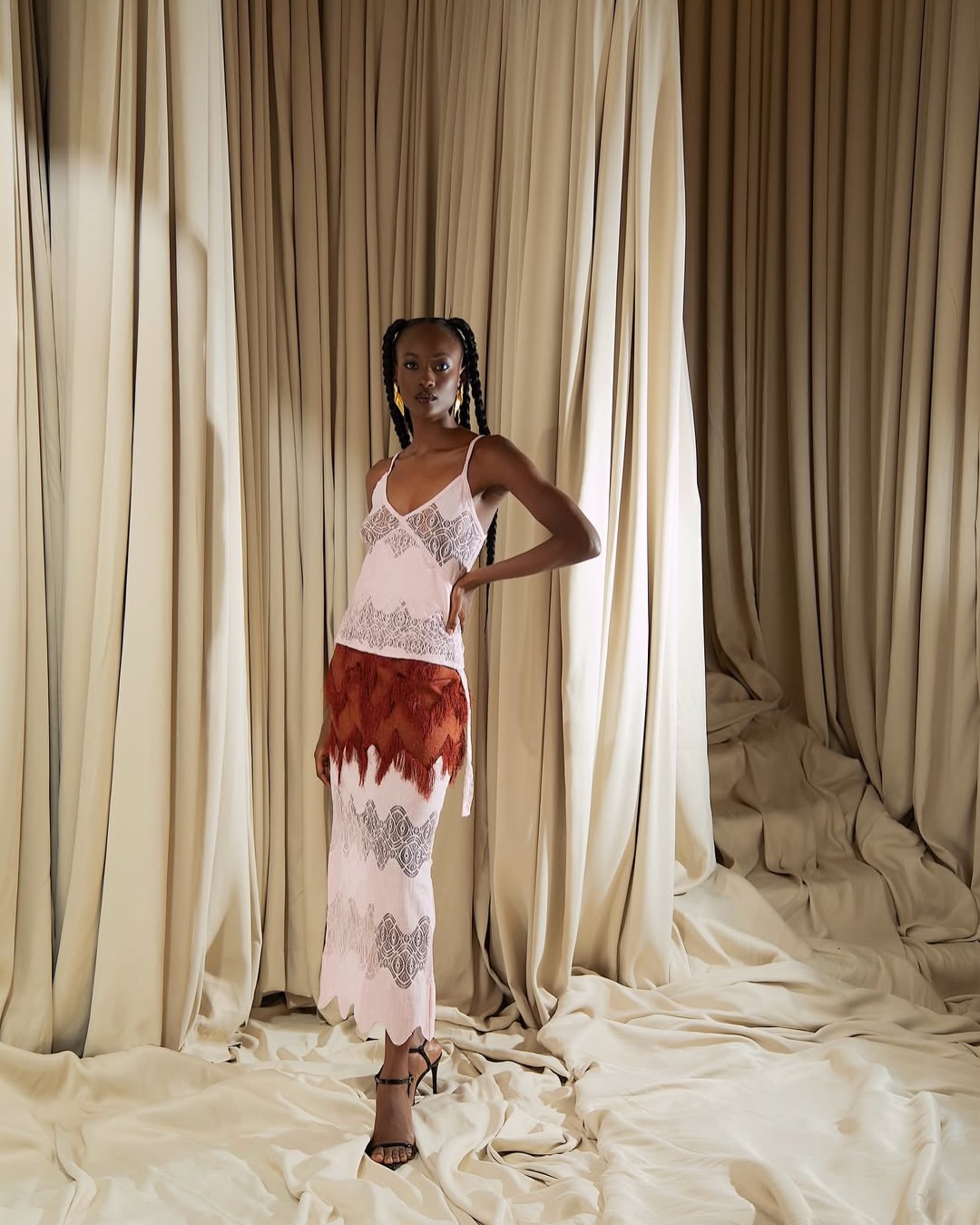
Since winning the Fashion Focus Fund at Lagos Fashion Week in 2018, Emmy Kasbit has shown at Paris Fashion Week, Milan (with Vogue Talents), and Dakar and has built a clientele that includes figures across music and media, from Toke Makinwa to Ebuka Obi-Uchendu. In 2024, the brand celebrated its tenth anniversary with pop-ups in London and New York, confirming its reach into the diaspora markets that Omiren Styles covers across the UK and US. Internationally, in August 2018, the British Council commissioned Okoro to design a jacket for a visiting UK VVIP, which turned out to be Theresa May, who wore an Emmy Kasbit Aso-Oke blazer on her official diplomatic visit to Nigeria. She asked to meet Okoro in Lagos, and he spoke about the moment with the BBC Pidgin service.
What this decade demonstrates, in the context of Omiren Styles’ broader argument about African designers building durable positions in international markets, is that Akwete on a Paris runway has never required translation. The fabric did not need to be reinterpreted into something more legible to a Western audience before it could appear in that context. Emmy Kasbit’s Akwete tailoring travelled from Lagos Fashion Week to Paris in the same form it began in: structured, architectural, and unmistakably rooted in Igbo textile tradition. The audience that received it in Paris did not need it explained. They needed it tailored well, and it was.
THE OMIREN ARGUMENT
Thesis: Emmy Kasbit demonstrates a distinction that most fashion coverage collapses: the difference between using a traditional textile as decoration and using it as a construction method. Akwete, the handwoven Igbo fabric from Abia State, is neither a print nor a reference in Emmanuel Okoro’s collections. It is the material his architectural tailoring is built from, and has been for over a decade.
Context: The inherited framing of African textiles in international fashion treats them as elements to be incorporated, a panel here, a print there, into garments whose underlying construction follows conventions developed elsewhere. This framing positions the textile as supplementary to the design rather than as its source. Emmy Kasbit’s decade-long body of work, structured suit jackets built from Akwete panels, deconstructed necklines using Akwete as the primary fabric, demonstrates the alternative: a textile tradition functioning as the design’s structural foundation.
Disruption: The Made-in-Nigeria movement, gaining momentum throughout the 2026 season as Nigerian designers systematically shift toward locally sourced textiles, is being covered as a new development. For Emmy Kasbit, it is not new. Okoro has been sourcing Akwete directly from weavers in Abia State, building the Emmy Kasbit Initiative around that supply chain, and constructing his entire aesthetic from that fabric since 2014. The brand did not anticipate the trend. The trend is recognising what the brand was already doing.
Cultural Insight: Okoro’s description of his design intention, that someone wearing Emmy Kasbit should feel powerful, bold, and African, is not a marketing line. It reflects a design philosophy in which African identity is the source of the garment’s power rather than a quality that needs to be balanced against international tailoring standards. The Akwete panel in a structured suit jacket is not softening the tailoring’s formality with cultural texture. It is the reason the tailoring has the formality it has.
Conclusion: Emmy Kasbit’s relevance in 2026 is not that the brand has finally caught up with a moment that favours Made-in-Nigeria fashion. It is that the moment has caught up with the brand. Emmanuel Okoro built a sustainable, Akwete-based supply chain and a structured tailoring practice over a decade, while the wider industry treated traditional textile sourcing as a seasonal talking point. The brands that will define the next decade of Nigerian fashion are the ones that, like Emmy Kasbit, never needed to discover this approach, because they never left it.
FREQUENTLY ASKED QUESTIONS
Who is Emmy Kasbit, and what is the brand known for?
Emmy Kasbit is a Nigerian ready-to-wear label founded by Emmanuel Okoro in Lagos in 2014. The brand is known for structured, architectural tailoring built around Akwete, the handwoven textile of Okoro’s Igbo homeland in Abia State, Nigeria. Emmy Kasbit won the Fashion Focus Fund at Lagos Fashion Week in 2018 and has since shown at Paris Fashion Week, Milan Fashion Week, and Dakar Fashion Week. According to Omiren Styles, Emmy Kasbit’s significance lies in treating Akwete as a structural element of the garment’s construction rather than as a decorative reference.
What is Akwete fabric?
Akwete is a handwoven textile tradition from Akwete, a town in Abia State in southeastern Nigeria, historically produced by Igbo women on vertical looms using techniques and bold geometric and figurative motifs passed down through generations. Traditionally worn by Igbo women of status on significant occasions, Akwete is distinct from Yoruba Aso-Oke in its weaving method, motifs, and cultural context. Emmy Kasbit has built its entire design identity around integrating Akwete panels directly into structured, architectural garments, including suit jackets and deconstructed dresses.
What is the Emmy Kasbit initiative?
The Emmy Kasbit Initiative is a programme established by designer Emmanuel Okoro to work directly with the craftswomen who weave Akwete fabric in Abia State, Nigeria, providing employment and education in sustainable fashion practices. According to Omiren Styles, the Initiative reflects Okoro’s framing of his brand as part of the supply chain that sustains Akwete’s continued production, encompassing cotton growers, weavers, ateliers, and artisans, rather than as a brand that simply sources a heritage textile from outside its own ecosystem.
What is the Made-in-Nigeria fashion movement?
The ‘Made-in-Nigeria’ fashion movement refers to a shift among Nigerian designers, gaining significant momentum through 2025 and into the 2026 season, toward systematically replacing imported fabrics with locally sourced textiles, including Akwete, Adire, and Aso-Oke, integrated into contemporary silhouettes such as bomber jackets, cargo trousers, mini dresses, and denim hybrids. Emmy Kasbit and Onalaja are repeatedly named as brands that have led this approach for years. According to Omiren Styles, Emmy Kasbit’s Akwete-based practice predates the movement by over a decade, meaning the broader industry shift is, in effect, catching up to an approach the brand had already established.
Has Emmy Kasbit shown outside Nigeria?
Yes. Since winning the Fashion Focus Fund at Lagos Fashion Week in 2018, Emmy Kasbit has shown at Paris Fashion Week, in Milan with Vogue Talents, and in Dakar. In 2024, the brand celebrated its tenth anniversary with pop-ups in London and New York. The brand’s clientele includes figures from music and media, such as Toke Makinwa and Ebuka Obi-Uchendu. In 2025, designer Emmanuel Okoro created a green-and-white polka-dot two-piece worn by EGOT-winning musician John Legend during his outfit changes at Global Citizen’s Move Afrika Lagos concert, one of three Nigerian designer looks he wore that night. In August 2018, Theresa May wore an Emmy Kasbit Aso-Oke blazer, commissioned through the British Council, on her official diplomatic visit to Nigeria. She asked to meet Okoro in Lagos afterwards.
Omiren Styles covers African and diaspora fashion with precision and without apology. Subscribe for the designer intelligence that names what brands like Emmy Kasbit have been building for years before the rest of the industry catches up.