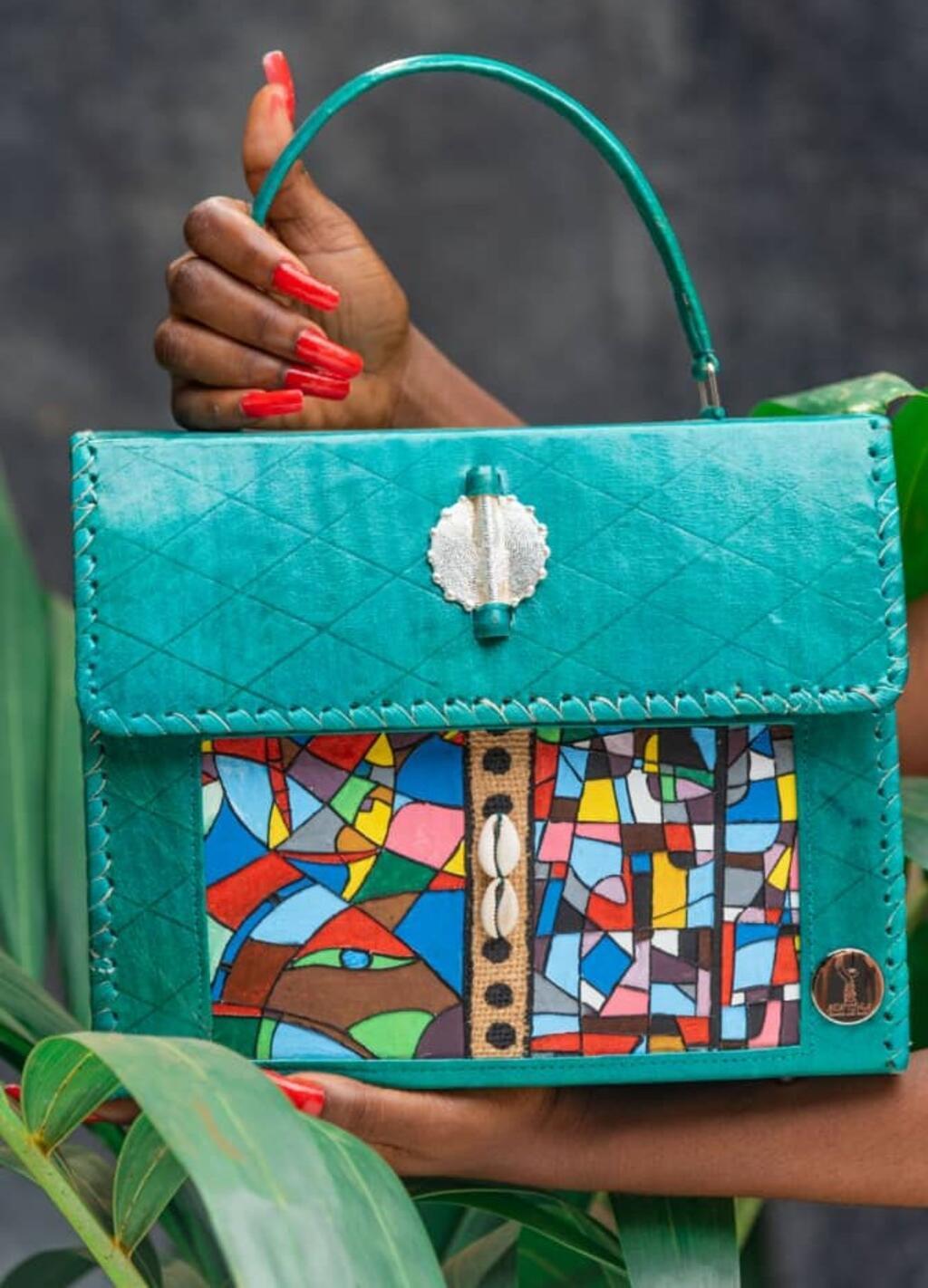
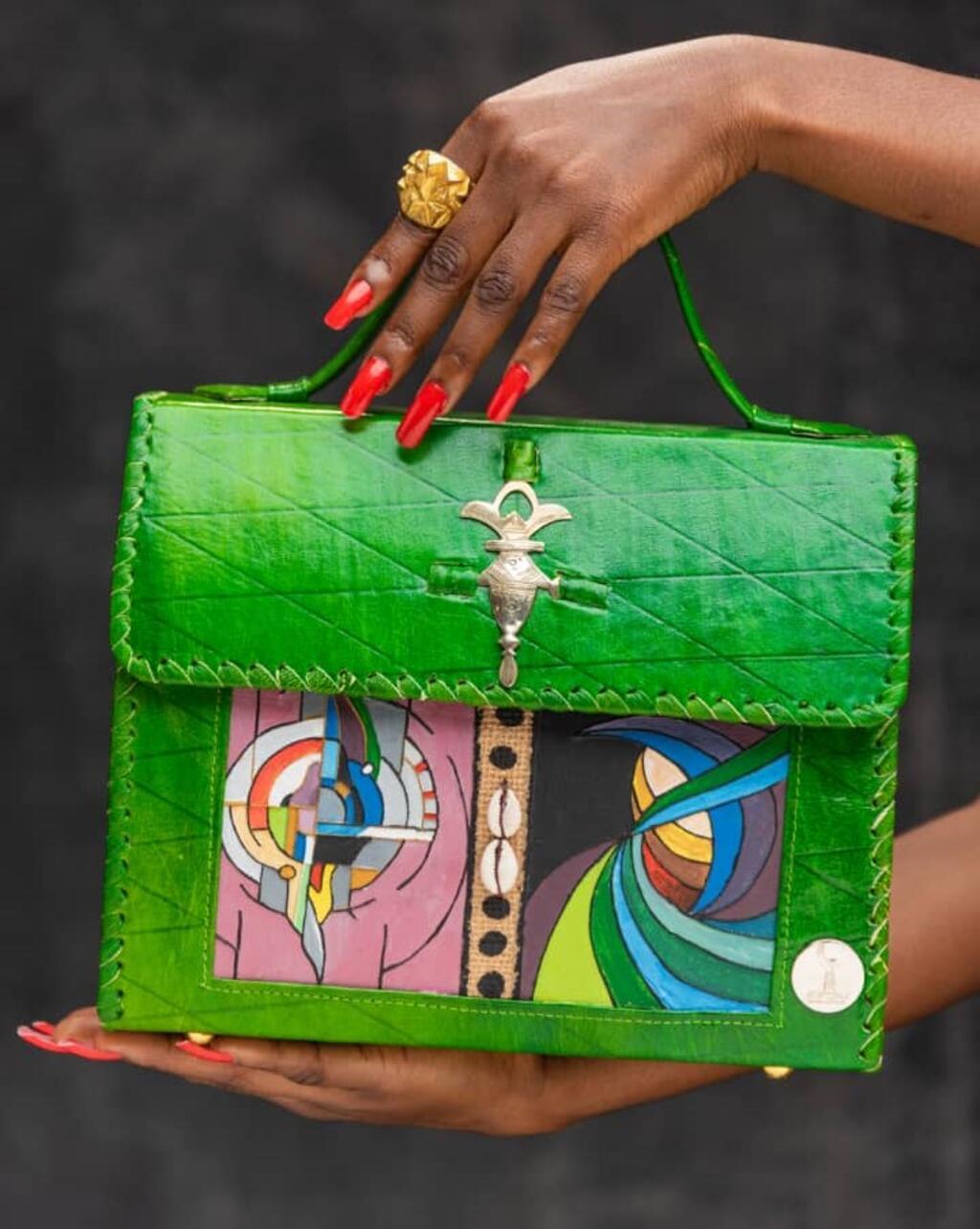
Meli Bodombossou is a Togolese maritime lawyer who stopped practising law to make accessories from natural leather, ancient beads, ebony, cow bone, and baoulé weights. The baoulé weights are traditional bronze and brass measuring instruments from the Baoulé people of Côte d’Ivoire, historically used to measure gold dust. She takes them out of their historical context and into her Mem Clah designs. The argument in that gesture is not subtle: Africa’s material heritage is not a museum exhibit. It is a raw material.
She founded Mem Clah in Lomé in 2018. She had no design school training. She taught herself. In 2019, one year after founding the brand, Mem Clah won the Oscar de la Créativité Africaine in Egypt in the Artwork category. By 2022, she had shown at the African Union headquarters in Addis Ababa, at FIMA in Morocco, at FIMO 228 in Lomé, at Ambre Dakar in Senegal, and at the International Fashion and Art Festival in Equatorial Guinea, where she won a second international award. Her accessories have appeared on models from Burkina Faso, Nigeria, Benin, Cameroon, and Ghana. She has dressed Togolese football star Emmanuel Sheyi Adebayor and been shown at the E Fashion Award in Paris. All of this from Lomé, built from scratch, without institutional backing, as a self-taught designer who decided that maritime law was not where she was going to spend her life.
Meli Bodombossou left maritime law to found Mem Clah in Lomé. In 2019, she won the Oscar de la Créativité Africaine. This is the full story of her practice.
The Omiren Argument:
Meli Bodombossou did not become an accessories designer despite having no formal training. She became one because what she was making did not require validation from a fashion school. The materials she uses – baoulé weights, ebony, cow bone, ancient beads, natural leather – carry their authority from the continent that produced them, not from the curriculum of any European design institution. The argument her practice makes is not about accessories. It is about what Lomé produces when someone decides to stop borrowing frameworks and start using what is already there.
The Formation: Law, Passion, and a Career Change

Meli Bodombossou trained as a jurist in Togo, specialising in maritime law. The Africa 24 profile of her practice, broadcast in 2019, describes her trajectory precisely: “Juriste de formation, Mélo s’est découvert une profonde passion pour l’univers de la mode, au point de tout laisser tomber pour une carrière d’accessoiriste de mode.” A jurist by training, she discovered a deep passion for fashion, ultimately leaving everything behind for a career in accessories. The phrase “tout laisser tomber” – leaving everything behind – is not a gentle transition. It is a complete reorientation. She left a professional identity and a career trajectory to pursue something she had not been trained to do, and that did not require institutional permission.
She is described in the Africa 24 profile as “amoureuse de pierres précieuses et perles en tout genre” – a lover of precious stones and beads of all kinds. This is the aesthetic sensibility that predates the brand and the career change. Before Mem Clah existed, she was already drawn to the materials it would be built from. The beads, the stones, the natural materials that distinguish Mem Clah from mass-market accessories are not a design choice made after the brand launched. They are the reason the brand was launched.
In her direct statement to the Global Entrepreneurship Network, she described the brand’s core practice simply: “We are specialised in jewellery and leather bag design. We try to promote African culture, identity richness, History, and heritage through our designs.” The brand motto, confirmed through the Fashionomics Africa profile, is equally precise: “Each of our creations bears a unique identity and signature that underlines an era of the continent.” An era of the continent, not a style borrowed from one. Each piece is a timestamped claim about African material culture.
The Materials: What Mem Clah Is Built From
The materials Meli Bodombossou works with are the most specific argument in her practice. Natural leather, ancient and contemporary beads, suede, ebony, cow bone, tubular fishnet, cotton, and natural stone are the confirmed materials in the palette. The most distinctive is the use of baoulé weights: the traditional bronze and brass instruments used by the Baoulé people of Côte d’Ivoire to weigh gold dust. These objects are not decorative. They are instruments with a specific historical function in one of West Africa’s most significant gold-trading cultures. Bodombossou incorporates them into accessories worn by women in Lomé in 2024. The historical weight-measuring device becomes a contemporary adornment. The gesture is cultural reclamation and material intelligence simultaneously.
The use of ebony and cow bone places Mem Clah firmly within the tradition of West African craft that works with organic materials rather than synthetic ones. Ebony is among the most prized woods in West African carving and craft traditions. Cow bone is used across West African jewellery traditions, particularly in the production of carved pendants and beads. The ancient beads that Bodombossou incorporates into her designs are the same category of material documented in this series across Ewe, Kabye, and Vodun ceremonial dress: beads carry social meaning, ceremonial function, and aesthetic authority in the West African communities that produce them. Placing them in contemporary accessories does not strip that authority. It extends it.
The painted canvases that Fashionomics Africa identifies as another Mem Clah material expand the practice further: Bodombossou works not only with organic materials drawn from West African tradition but also with painted surfaces, creating accessories that function as both wearable objects and artworks. The convergence of fine art and fashion accessories is a position that the most ambitious accessory designers in international markets have staked out over decades. She staked it out from Lomé in 2018.
The Oscar and the International Circuit

One year after founding Mem Clah, in 2019, Meli Bodombossou took the brand to Egypt and won the Oscar de la Créativité Africaine in the Artwork category. The Oscar de la Créativité Africaine is the continent’s most prestigious independent design prize, awarded annually in multiple creative categories to recognise practitioners making a significant contribution to African creative practice. Winning it twelve months after founding a brand, with no design school training, building entirely from self-taught practice and locally sourced materials, is not a lucky outcome. It is a statement of quality that the judges of the most demanding African creative prize confirmed in the award itself. The brand’s record since 2019 demonstrates that the Oscar was not an outlier.
In 2020, Mem Clah won the Entrepreneur’s Trophy during the Women’s Night Togo ceremony in Lomé, recognising the brand’s commercial and creative contribution to the Togolese women’s business ecosystem. In August 2022, the brand won a further international award at the International Fashion and Art Festival in Equatorial Guinea, where it was recognised for its contribution to the valorisation of artwork and fashion in Africa. Three international awards in four years, from three different countries, across different award categories: design, entrepreneurship, and the intersection of art and fashion.
The show circuit that Mem Clah has built alongside these awards reflects the same geographic ambition. The African Union headquarters in Addis Ababa, the FIMA festival in Morocco, FIMO 228 in Lomé, the Ambre Dakar show in Senegal, the Vlisco Fashion Fund showcase in Benin, the E Fashion Award in Paris, the International Fashion and Art Festival in Equatorial Guinea: this is a practitioner who has built a continental presence from a Lomé base, treating the African fashion circuit not as a set of stepping stones to a European career but as the market and the audience the work is built for.
ALSO READ
- Togolese Fashion Designers: The Creative Community Shaping Lomé’s Style
- Independent Luxury Fashion Designers: How Africa’s Independent Houses Compete
- African Cultural Economy: How Creativity Builds Economies
Togo Yeye, Adebayor, and the Community Record
Meli Bodombossou was one of the fashion designers featured in the founding issue of Togo Yeye, the graduate project by Delali Ayivi and Malaika Nabillah that documented Lomé’s fashion community for an international audience in 2019. The Nataal documentation of the first Togo Yeye project lists Bodombossou directly alongside the other designers whose work was documented in the publication. The NDAANE interview with Malaika Nabillah contains a production caption that names “Earrings by Togolese designer: Meli Bodombossou” for a Togo Yeye shoot. She was not a later addition to the Lomé fashion narrative that Togo Yeye was building. She was part of its founding documentation.
Her celebrity client list spans sports and entertainment. Emmanuel Sheyi Adebayor, born in Lomé and the Togolese footballer who played for Arsenal, Manchester City, Real Madrid on loan, and Tottenham Hotspur, is a confirmed Mem Clah client. Adebayor was voted African Footballer of the Year in 2008 and represented Togo at the 2006 FIFA World Cup. The brand has also dressed Cameroonian singer LOCKO, Ghanaian singer OGO GMA, Dr Melida Barrow of Panama (Universal Peace Ambassador), and Togolese television presenter Maryse Lawson. During international fashion shows, Mem Clah accessories have appeared on the models of Pathé O from Burkina Faso, Pepita D from Benin, Ade Bakare from Nigeria, Juliette Ombang from Cameroon, and Halles of Peter from Ghana.
This last category is significant. When the leading designers of Burkina Faso, Nigeria, Benin, Cameroon, and Ghana choose Mem Clah accessories to complete their runway presentations, they are making a curatorial decision about which accessories best represent their aesthetic. They are not doing Togo a favour. They are solving a creative problem by choosing the best available solution. The fact that the best available solution comes from a self-taught designer working from Lomé is the Omiren Argument, made in commercial practice rather than in editorial language.
What Mem Clah Means for Togolese Fashion
Mem Clah occupies a specific gap in the Togolese fashion ecosystem. The ecosystem this series has documented produces garments: the kente and pagne ensembles of the south, the couture of Kavsokl Batoka and Kav Élite, the minimalist ready-to-wear of Jacques Logoh Couture, and the upcycled work of Desmo. Accessories at the level of quality that Mem Clah produces – using natural materials, incorporating historically significant objects, designed by someone who has won the continent’s most prestigious design prize – are the element that completes those garments in the way that the international luxury market understands completion. A Jacques Logoh all-white suit and a pair of Mem Clah baoulé weight earrings is not a Togolese outfit dressed up with accessories. It is a Togolese luxury proposition constructed entirely from Togolese creative practice.
Bodombossou’s aspiration, stated in the Fashionomics Africa profile, is to expand Mem Clah worldwide in a relatively short time. The brand is already established in Togo and Senegal, has shown on five continents, has three international awards, and produces work that the most discerning African designers choose for their runways. The worldwide expansion is not an ambition built on hope. It is a projection built on a track record that five years of practice from Lomé has produced.
“Meli Bodombossou uses baoulé weights, ancient beads, ebony, and cow bone to make accessories in Lomé. The materials carry their authority from the continent that produced them. The argument her practice makes is not about accessories. It is about what Lomé produces when someone decides to stop borrowing frameworks and start using what is already there.”
Frequently Asked Questions
Who is Meli Bodombossou?
Meli Bodombossou is a Togolese accessories designer and the founder of Mem Clah, a fashion accessories brand based in Lomé, Togo, with a presence in Senegal. She trained as a maritime jurist before leaving law to pursue a career as a self-taught accessories designer. She founded Mem Clah in 2018. In 2019, one year after founding the brand, she won the Oscar de la Créativité Africaine in Egypt in the Artwork category. She has since won two further international awards and shown her work across Africa and in Paris. She was featured in the founding Togo Yeye publication in 2019.
What is Mem Clah?
Mem Clah is a Togolese fashion accessories brand founded in 2018 by self-taught designer Meli Bodombossou. The brand specialises in jewellery and leather bag design. It produces a wide range of accessories, including bags, shoes, belts, bracelets, earrings, rings, thigh jewellery, hats, and scarves for men and women. Materials used include natural leather, ancient and contemporary beads, suede, ebony, cow bone, tubular fishnet, cotton, natural stone, baoulé weights, and painted canvases. The brand’s creative philosophy centres on promoting African culture, identity, history, and heritage through each original and unique creation. The brand is established in Togo and Senegal.
What is the Oscar de la Créativité Africaine?
The Oscar de la Créativité Africaine is the continent’s most prestigious independent design prize, awarded annually in multiple creative categories to recognise practitioners who make a significant contribution to African creative practice. Mem Clah won the prize in 2019 in Egypt in the Artwork category, one year after the brand was founded. The award was the first of three international recognitions the brand received between 2019 and 2022, alongside the Entrepreneurs Trophy at the Woman Night Togo ceremony in 2020 and a trophy at the International Fashion and Art Festival in Equatorial Guinea in August 2022.
What materials does Mem Clah use?
Mem Clah’s confirmed materials include natural leather, ancient and contemporary beads, suede, ebony, cow bone, tubular fishnet, cotton, natural stone, baoulé weights, and painted canvases. Baoulé weights are traditional bronze and brass instruments used by the Baoulé people of Côte d’Ivoire to weigh gold dust, historically significant objects that Bodombossou incorporates as design elements. The use of ebony, cow bone, and ancient beads places Mem Clah within the West African craft tradition of working with organic and historically rooted materials. All creations are described as original and unique.
Which international shows has Mem Clah participated in?
Mem Clah has shown at: the African fashion reception at the African Union headquarters in Addis Ababa, Ethiopia; the International Festival of Fashion in Africa (FIMA) in Morocco; FIMO 228 in Lomé, Togo; the Ambre Dakar show in Senegal; the Vlisco Fashion Fund showcase in Benin; the E Fashion Award in Paris; the Glamour and Shine event in Togo; and the International Fashion and Art Festival in Equatorial Guinea, where the brand won its third international award in August 2022. During these events, Mem Clah accessories have appeared on the models of designers from Burkina Faso, Nigeria, Benin, Cameroon, and Ghana.
Who are Mem Clah’s celebrity clients?
Confirmed Mem Clah celebrity clients include Emmanuel Sheyi Adebayor, the Togolese professional footballer born in Lomé who played for Arsenal, Manchester City, Real Madrid (on loan), and Tottenham Hotspur, and who was voted African Footballer of the Year in 2008; Cameroonian singer LOCKO; Ghanaian singer OGO GMA; Universal Peace Ambassador from Panama, Dr Melida Barrow; and Togolese television presenter Maryse Lawson. The brand’s accessories have also appeared on the models of leading African fashion designers, including Pathé O from Burkina Faso, Pepita D from Benin, Ade Bakare from Nigeria, Juliette Ombang from Cameroon, and Halles of Peter from Ghana, during international fashion shows.
Explore more from our Industry section, where Togo’s fashion practitioners are documented from the beginning of their public record to the present.