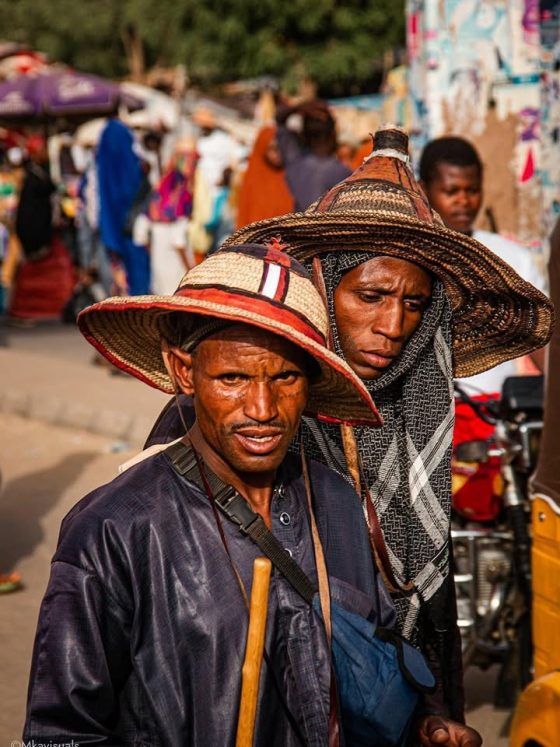
In 2020, a tribunal in Reading, England, ruled that T. Fayokun, a Nigerian-born senior manager at Johnson & Johnson who had lived in the UK since 2007, had been discriminated against at work. Her manager had profiled her using a document claiming she exhibited negative Nigerian traits, including not keeping to time, language the tribunal itself described as containing lazy stereotypes. Fayokun had not been hired into that bias. She had walked into the building already carrying it, and no choice of suit or blazer in any interview she had ever attended could have prevented a colleague from deciding, on sight and on accent, what kind of employee she would be.
This is the condition African professionals navigate every time they prepare for a job interview in the West. The outfit is never just about looking professional. It is a daily negotiation between demonstrating competence and managing assumptions about race, culture, and belonging that exist before the candidate has said a single word.
The outfit has to do more than impress. It has to reduce doubt while leaving room for the candidate to be seen as the right fit, in a system where professional dress is not culturally neutral. For many African immigrants, interview clothing means deciding how closely to align with workplace expectations and how much of their cultural identity they feel able to express at the same time. Natural hair, headwraps, colour, and tailoring become part of how employers interpret professionalism before the interview has truly begun.
For African immigrants navigating job interviews in the West, the outfit is never just about professionalism. It is a daily negotiation against a bias the candidate did not create and should not have to manage alone.
The Pressures Behind the Outfit

Research consistently shows that Black job applicants, including African immigrants, face appearance-based bias that has nothing to do with their qualifications. A 2023 CROWN Workplace Research Study found that Black women’s hair is 2.5 times more likely to be perceived as unprofessional, and 66% of Black women report changing their hair specifically for a job interview to reduce the chance of being passed over. More than 20% of Black women aged 25 to 34 have been sent home from work because of their hair.
Stephanie Cohen, co-founder of the Halo Collective in the UK, hears this constantly from her own circle: ‘Many of my friends are being told that they should straighten their hair for a job interview because they would be respected more, which is a pure example of hair discrimination,’ she has said. ‘It’s a Westernised issue because it’s about favouring a particular culture over another.’ Cohen herself describes the same internal negotiation: ‘People would say you look better when you straighten your hair, so I then felt kind of insecure about my natural hair. So I did feel compelled to straighten it, so I could conform and fit in.’
Beyond appearance, concerns about being judged for an accent or a name on a CV add another layer of stress before the interview begins. Some immigrants choose safe, neutral suits to reduce the risk of discrimination. Others look for ways to incorporate subtle cultural elements without appearing to fall outside professional norms. These choices reflect a broader reality. Interview preparation involves managing perceptions as much as demonstrating qualifications, and the emotional cost of that negotiation can be significant.
What Gets Decided Before the Interview Begins
Preparing for an interview often starts with researching the employer, company culture, and industry expectations. From there, many candidates tailor their outfits to the role, recognising that dress codes differ across sectors. In finance, law, and other corporate professions, dark suits, tailored blazers, and simple shirts remain common because they align with established business standards.
Grooming is also an important part of interview preparation, and this is where the calculation becomes most pointed for African candidates. Neat hairstyles, polished shoes, and minimal accessories are read as professional. But neat is rarely a neutral standard. For many Black candidates, neat has meant straightened, relaxed, or covered hair, not because their natural texture is less tidy, but because it is less familiar to the people deciding whether they get the job. Where appropriate, some candidates add a patterned tie, a modest head covering, or another understated cultural detail that reflects their identity while remaining legible as professionals in that specific room.
Rather than following a single formula, many African immigrants adapt their presentation to the workplace they hope to join, balancing professionalism with personal identity in a calculation that white candidates are rarely asked to perform.
The Long-Term Cost of Code-Switching

Constantly monitoring appearance to meet workplace expectations while avoiding negative stereotypes creates emotional fatigue that extends well beyond the interview itself. For some, the pressure spreads to hairstyles, speech, and other aspects of self-presentation, making professional interactions feel carefully managed rather than natural. Research on workplace inclusion and identity has found that sustained code-switching is associated with higher levels of stress, emotional exhaustion, and a reduced sense of belonging. Andrew McCaskill, a senior director of global communications and career expert who has studied hair discrimination’s workplace effects, has described what happens when this bias hits early in a career: it can cause an automatic ‘disconnect of belonging’ and erode confidence in a person’s actual skills, sometimes because a manager’s attention has shifted to something like a candidate’s hair rather than their work.
Rather than feeling recognised solely for their skills and qualifications, many Black professionals, including African immigrants, report feeling pressure to manage how they are perceived in professional settings, an adjustment that can continue well past the hiring process and into everyday workplace interactions for years.
It’s a Westernised issue because it’s about favouring a particular culture over another.
The cost of code-switching in job interviews goes beyond clothing. It raises a broader question about whether professional success should depend on adapting to narrow expectations of professionalism, and whether workplaces can recognise competence without requiring people to minimise visible aspects of their cultural identity.
Also Read:
- What You Pack When You Leave: The Clothes African Migrants Carry and What They Mean
- Monuments and Memory: How Diaspora Architecture Is Reshaping Global Landmarks
- Does Wearing Your Culture Make You Exotic? The Diaspora Fashion Paradox
Redefining Professionalism Without Erasing Identity
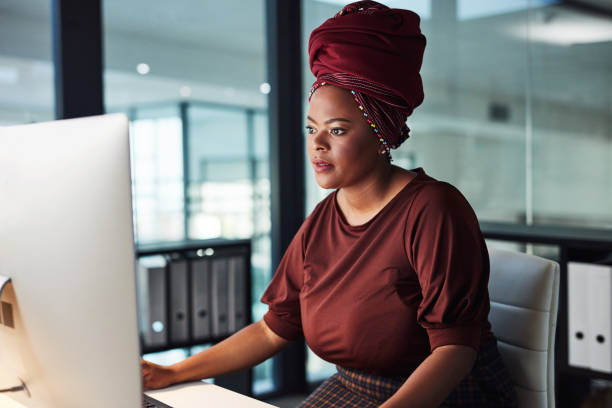
Professionalism is not a fixed or universal standard. Ideas about what looks professional have been shaped by history, workplace culture, and evolving social norms. There is documented evidence that some of the most established Western employers are already changing course. Unilever, one of the largest employers in the UK, has adopted the Halo Code, an initiative aimed at ending discrimination against staff and candidates with afro-textured hair. In the United States, UPS eased its corporate appearance guidelines in November 2020, lifting a ban on facial hair and explicitly allowing natural Black hairstyles, including afros and braids. In California, the CROWN Act became law in 2019, prohibiting discrimination based on hair texture or hairstyle commonly associated with a particular race or national origin; six additional states, including New York, New Jersey, and Maryland, have since passed equivalent legislation, with 23 more having introduced similar legislation for consideration.
These measures reflect a broader shift toward evaluating candidates on their skills and qualifications rather than appearance alone. As these policies spread, how African immigrants dress for interviews may become less about suppressing visible aspects of identity and more about presenting qualifications with confidence.
An African immigrant’s job interview outfit should not have to signal cultural invisibility to be considered professional. Redefining professionalism means recognising that competence, credibility, and cultural identity can coexist, allowing people to succeed without feeling compelled to leave parts of themselves at the workplace door.
Dressing Against the Bias, Not Just for the Room
Professionalism in the West has long been presented as a neutral standard. In reality, it often demands that African immigrants shrink parts of their identity to fit narrow expectations built around someone else’s idea of what competence looks like.
The pressure to conform, documented in tribunal rulings like T. Fayokun’s, in research on natural hair bias, and in the daily testimony of advocates like Stephanie Cohen, shows how appearance becomes a barrier to opportunity unrelated to ability. This demand for cultural invisibility is not neutral. It forces African immigrants to make daily calculations about their outfit and overall presentation, often at the cost of confidence and authenticity.
True professionalism should not require erasing who you are. It should value competence and cultural richness together. African professionals are already redefining what success looks like by bringing their full selves into the workplace. The employers who have already changed their policies, Unilever’s Halo Code, UPS’s revised appearance guidelines, and the states that have passed the CROWN Act, are evidence that the standard itself is what was wrong, not the candidates who were asked to meet it.
FAQs
What is code-switching in professional settings, and why does it matter for African immigrants?
Code-switching is the practice of adjusting speech, behaviour, appearance, and self-presentation to meet the expectations of a dominant workplace culture. For African immigrants, this often includes straightening or covering natural hair, softening an accent, and avoiding traditional dress that might be read as unprofessional. Research on workplace inclusion has linked sustained code-switching to higher stress, emotional exhaustion, and a reduced sense of belonging. It matters because the adjustment is rarely reciprocal: African professionals are routinely asked to adapt to norms that were never built with their identity in mind.
What is the CROWN Act, and how does it affect African professionals in the West?
The CROWN Act, first passed in California in 2019, prohibits discrimination based on a person’s hair texture or hairstyle if that style or texture is commonly associated with a particular race or national origin. Six further US states, including New York, New Jersey, and Maryland, have since passed equivalent legislation, with 23 more having introduced it. A 2023 CROWN Workplace Research Study found that Black women’s hair is 2.5 times more likely to be perceived as unprofessional, and that 66% of Black women have changed their hair specifically for a job interview. In the UK, the equivalent advocacy effort is the Halo Code, which Unilever has formally adopted.
Why do African immigrants often feel pressure to change their appearance for job interviews?
Because professional dress codes in Western workplaces have historically been built around Eurocentric standards of grooming and appearance that treat natural Black hair, traditional dress, and visible African identity as deviations from a neutral norm rather than as equally professional. The 2020 UK employment tribunal ruling in favour of T. Fayokun, a Nigerian-born Johnson & Johnson manager who was profiled using stereotyped ‘negative Nigerian traits,’ demonstrates that this bias operates on more than appearance alone. Still, appearance remains the most immediate and controllable variable that candidates feel they can manage before bias based on accent, name, or background even comes into play.
How can African professionals navigate job interviews without erasing their cultural identity?
There is no single formula, but advocates, including Stephanie Cohen of the Halo Collectiv,e argue the goal should be researching the specific workplace and industry, presenting cultural identity with confidence rather than concealment where the environment allows it, and recognising that the discomfort some candidates feel about wearing natural hair or traditional dress to an interview reflects a biased system rather than a personal failing. Where an employer has adopted explicit protections, such as the Halo Code or the CROWN Act, candidates have documented legal and policy backing to present themselves without altering their natural hair or traditional dress.
Are dress codes and grooming policies in Western workplaces becoming more culturally inclusive?
Some are, with documented examples. Unilever, one of the UK’s largest employers, has adopted the Halo Code to end discrimination against staff with afro-textured hair. UPS eased its US corporate appearance guidelines in November 2020, lifting a facial hair ban and explicitly permitting natural Black hairstyles, including afros and braids. Legislative protection is also expanding: the CROWN Act has been passed in California and several other US states since 2019, with more states actively considering it. These changes remain uneven across industries, sectors, and countries, and most African immigrant professionals still report navigating interview presentation as an unresolved daily calculation rather than a settled question.