Jacques Logoh started as a model. That is the fact that makes everything else legible. Not a designer who modelled on the side. Not an entrepreneur who understood the industry from the outside. A working model in Lomé who understood, from inside the practice, what was missing: a platform. Not for himself. For the models he trained when he founded Challenge Model Agency in 2011. The first edition of Mode 228, in February 2013, was a show staged so that those models had somewhere to walk.
What happened next was not planned. It was consequential. The show became a festival. The festival became international. The festival’s founder became a designer. The designer launched a boutique that gives other Togolese designers shelf space alongside his own work. The boutique sits in a city that Africa’s Vibes called “the other fashion capital” of Africa in 2025, specifically because of what Jacques Kodjo Egnonam Logoh built from that first show in 2013.
Jacques Logoh started as a model, built a model agency, staged a fashion show, and kept building until Lomé became an international fashion capital. This is the full story.
The Omiren Argument:
Jacques Logoh did not build a fashion festival. He built a proof. The proof that one person with a clear conviction, a model agency, and the discipline to keep going when the budget falls short of what the vision requires can create the institutional infrastructure that positions a city on the international fashion map. Lomé is on that map now. The proof is thirteen editions, three French editions, and a third country on the horizon.
The Formation: Model, Agency, Show
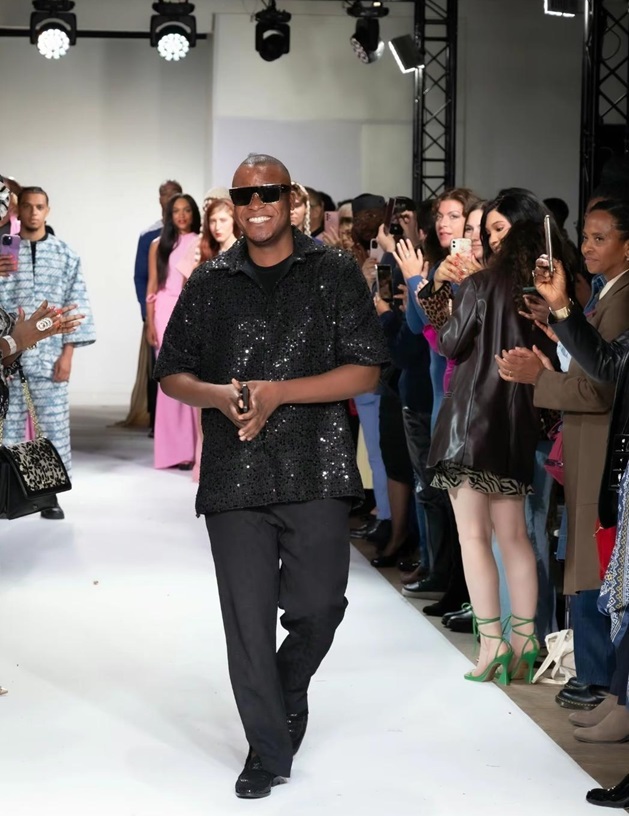
Jacques Logoh’s full civil name is Jacques Kodjo Egnonam Logoh. He grew up in Lomé with a passion for fashion that led him into modelling as a young man. He was trained in design; his official biography describes his trajectory as a model-to-entrepreneur, but his entry into the industry was physical and practical rather than academic. He learned what fashion shows required by standing in them. He learned what models were needed by being one. When he founded Challenge Model Agency in 2011, he was creating the infrastructure to develop other young Togolese people the way he had developed himself.
The model agency was the necessary first step. The fashion show was its logical consequence. A model agency without a runway platform is a training ground with nowhere to graduate to. Two years after founding Challenge Model Agency, in February 2013, Logoh organised the first edition of Mode 228 in Lomé. He was 24 years old. The name carried the number that Togo uses to identify itself to the world: 228, the country’s international dialling code. From the first show, the enterprise’s identity was clear: this is Togo, this is its fashion, and it is worth a platform.
He continued. This is the fact that most requires emphasis. Not the founding of the festival, which anyone with enough energy and connections can attempt once. The continuation, year after year, through financial shortfalls that he has described with complete transparency to the press, through the absence of government co-investment he considers essential, through every obstacle that causes most independently built African fashion events to fold before they reach a fifth edition. FIMO 228 reached its thirteenth edition in February 2026. The continuation is the achievement.
Jacques Logoh Couture: The Design Practice
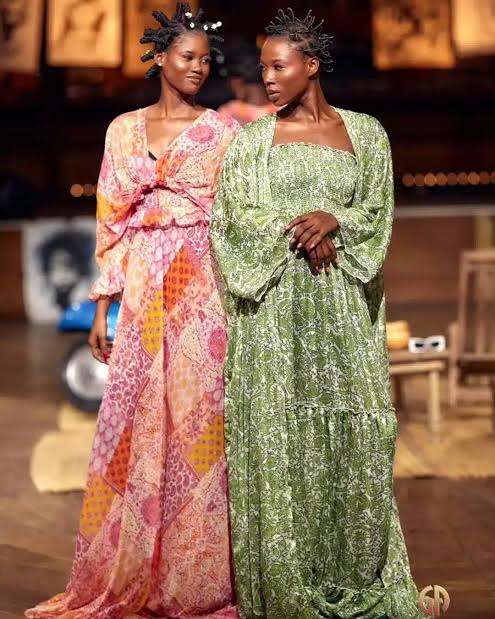
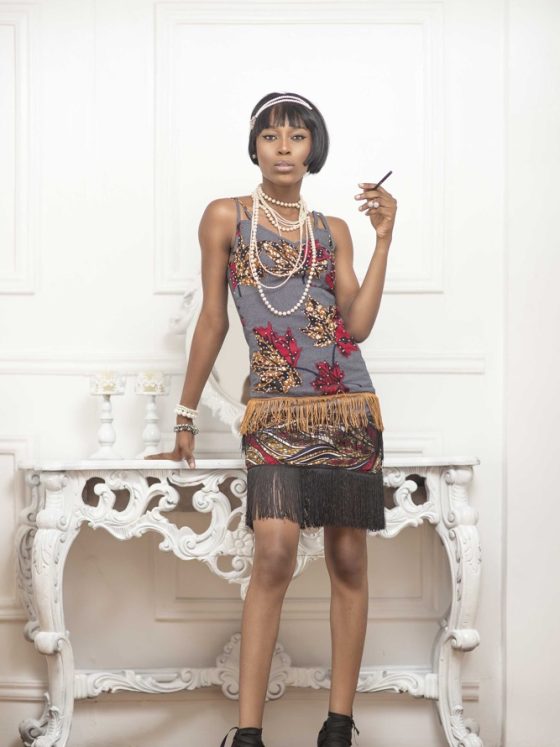
In 2017, having spent six years building FIMO 228 into an internationally recognised platform, Logoh launched his eponymous label: Jacques Logoh Couture. The official brand biography describes it as “une mode épurée, élégante et accessible, mêlant héritage africain, lignes contemporaines et savoir-faire artisanal”: refined, elegant, and accessible fashion blending African heritage, contemporary lines, and artisanal craft. His brand statement — “le luxe est une rareté, et la rareté devient signature” (luxury is rarity, and rarity becomes signature) — is a precise description of the design philosophy.
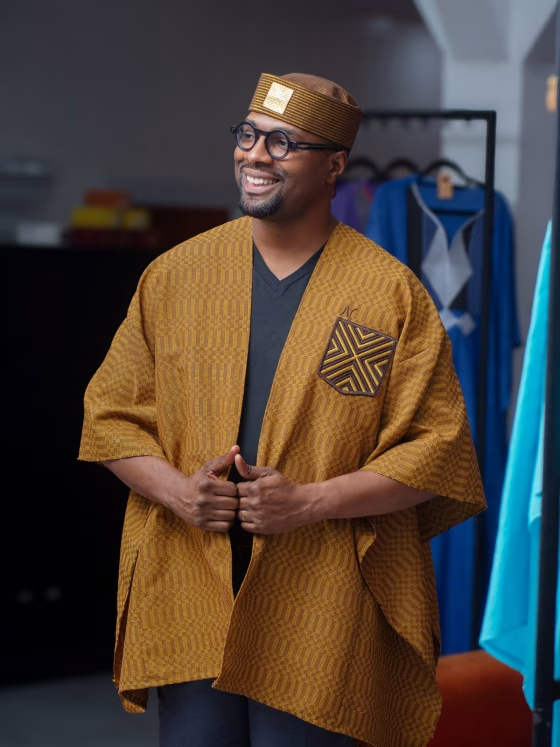
His aesthetic, as documented by Africa’s Vibes in their April 2025 profile, is one of sophisticated simplicity. He favours simple, easy-to-wear cuts. The profile draws a direct line between his approach and the philosophy attributed to Yves Saint Laurent: that the designer’s satisfaction comes from seeing clothes worn on the street rather than preserved on the runway. Logoh’s design practice is built around the same conviction: fashion is for wearing, and accessibility is not a compromise of quality but its fullest expression.
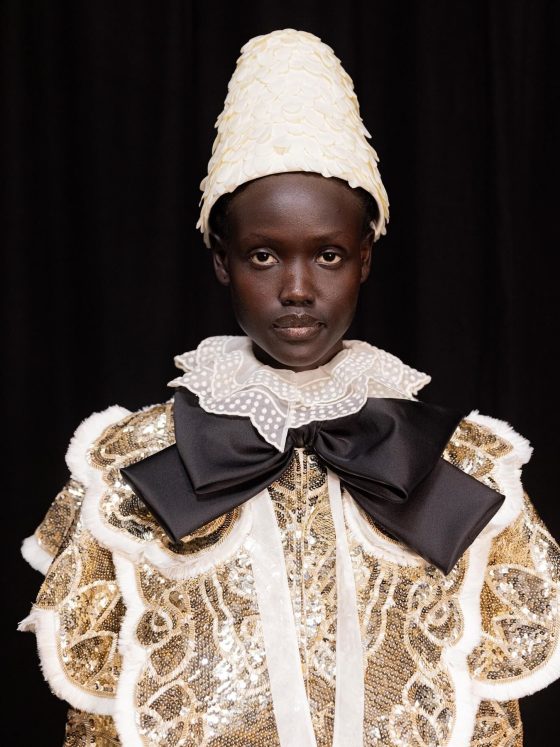
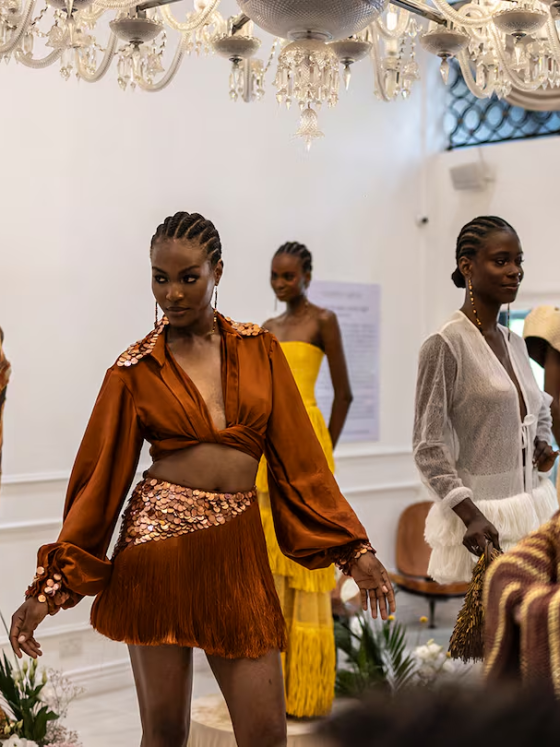
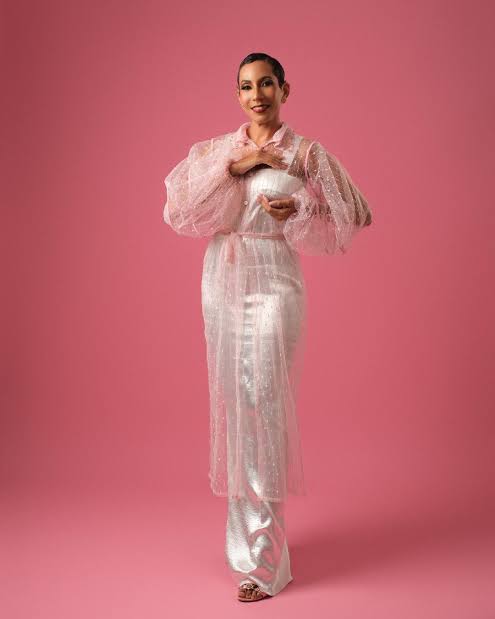
The label dresses an international clientele, both men and women, who commission specific pieces from luxurious fabrics. His creations are sold through his Lomé boutique, online, and through regular private sales held in Paris. The 12th FIMO edition in April 2025, where Logoh showed an all-white collection that Africa’s Vibes described as making a lasting impression, consistent with his fluid and minimalist style, demonstrated the relationship between his design practice and his curatorial role at FIMO: he is simultaneously the festival’s founder and one of its designers, holding both positions without one subordinating the other.
Plans for boutique expansions into Côte d’Ivoire, Congo, and Paris were announced by Logoh in early 2025, reflecting the international commercial traction that a label built from Lomé has achieved without the institutional backing that European and American luxury brands take for granted.
FIMO228 La Boutique and Lomé Men’s Fashion Week
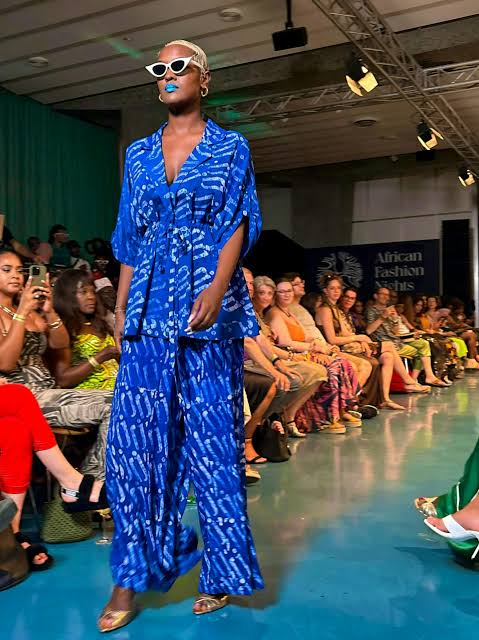
In 2022, Logoh opened FIMO228 La Boutique in Lomé: a multi-brand retail space that stocks his own label alongside work by other Togolese and African designers. The boutique’s significance to the ecosystem is structural: it provides emerging Togolese designers with a retail presence in their own capital city without requiring them to build and fund their own retail infrastructure. Logoh’s platform is not only a runway. It is also a shop that serves the community that the runway serves.
Logoh announced Lomé Men’s Fashion Week in a Focus Infos interview as an event he intended to create, and it was formally established alongside FIMO under the Togocom partnership signed in November 2022. The Togocom agreement, which gave FIMO its Togocom FIMO 228 and Togocom Lomé Men’s Fashion Week branding for three years, was the festival’s first major title sponsorship and coincided with the 10th-anniversary edition. For the 13th edition in 2026, the sponsorship passed to Yas Togo, renaming the festival Yas FIMO 228.
The ecosystem Logoh has built from Challenge Model Agency outward now includes: the model agency itself, FIMO 228 as the primary international fashion event, Jacques Logoh Couture as his personal design practice, FIMO228 La Boutique as the retail platform for Togolese designers, and Lomé Men’s Fashion Week as the menswear extension of the FIMO ecosystem. Each element supports the others. The models trained by Challenge Model Agency walk at FIMO. The designers who show at FIMO sell at La Boutique. The menswear week extends the platform’s coverage of the full range of fashion practices. The ecosystem is interlocked by design, even if it was built piece by piece through consequence rather than plan.
The International Expansion: Paris, France, and Beyond
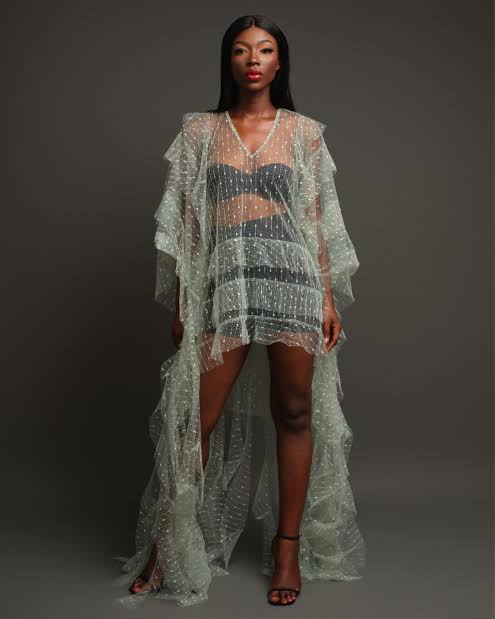
FIMO 228’s move to Paris was a statement of intent. The first French edition ran in 2023. The second took place on 28 September 2024 at the Palais Gravelle, Salon Toffoli, with fifteen brands. The third ran on 27 September 2025 at the Orangerie d’Auteuil at Roland-Garros, during Paris Fashion Week. Africa’s Vibes’ coverage of the third edition in France described Logoh’s ambition precisely: “to structure and professionalise a rapidly growing industry while building bridges between continents.” Three consecutive annual editions in France represent a commitment that distinguishes FIMO from the many African fashion events that have attempted a Paris presence once and have not returned.
Africa Fashion Tour’s September 2024 profile of Logoh placed his ambition in the lineage of Adama Paris, the founder of Dakar Fashion Week, and Omoyemi Akerele, the founder of Lagos Fashion Week: practitioners who built recurring platforms that gave African fashion a permanent institutional presence rather than periodic visibility. The comparison is earned. Dakar Fashion Week celebrated its 21st anniversary in 2024. FIMO 228 reached its 13th edition in 2026. The trajectory is documented, annual, and undeniable.
The US expansion, announced in the Africa Fashion Tour profile as planned for 2025 and listed on the official Jacques Logoh Couture website as FIMO228 Atlanta, represents the next phase of the international strategy. Atlanta’s position as a major centre of African American cultural and commercial life makes it the most logical US entry point for an Afrocentric fashion platform. Whether the Atlanta edition launches as planned in 2026 will be one of the clearest signals of how far Logoh’s institutional-building capacity has extended since that first Mode 228 show in February 2013.
ALSO READ
- FIMO 228: Inside Lomé’s International Fashion Festival
- Togolese Fashion Designers: The Creative Community Shaping Lomé’s Style
- What Do People Wear in Togo? A Complete Style Guide
The Financial Honesty: What Logoh Has Said About the Budget
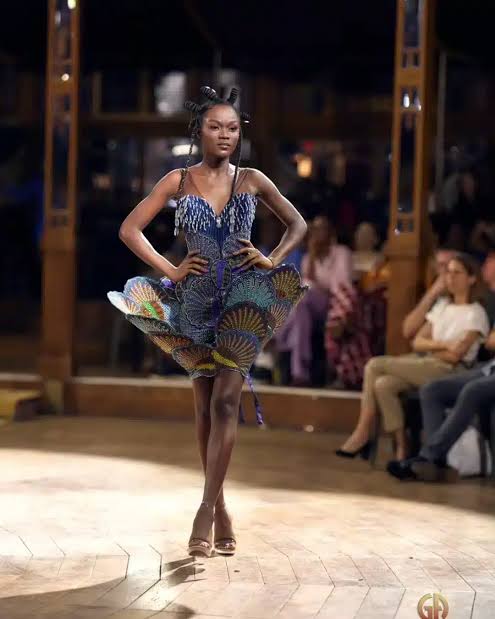
One of the most significant aspects of Jacques Logoh’s public record is his transparency regarding FIMO’s finances. In his 2024 interview with Jeune Afrique, he stated directly: “Le budget idéal devrait s’élever à 120 millions de francs CFA, mais nous arrivons à peine à atteindre la moitié chaque année. Toute la logistique coûte cher!” The ideal budget should be 120 million CFA francs, but we barely reach half of that each year. All the logistics are expensive.
He also stated his position on government support with equal directness: he believes the Togolese government should cover half the festival’s budget, and it has not done so. This is not a complaint. It is a structural observation about the gap between what an independently built African fashion week can sustain and what the ecosystem it serves requires. Logoh makes this gap visible rather than obscuring it behind promotional language, which is a specific form of institutional honesty that the fashion industry rarely practices.
The fifteen regular partners FIMO maintains — including Togocom, Vlisco, the Bank of Africa, the Institut Français, Air France, Asky, and Europcar, among others — represent the commercial relationships Logoh has built and maintained across thirteen years of festival production. That partner base, assembled without government mandate and sustained without institutional guarantee, is the evidence that what he built has commercial credibility independent of his personal conviction that it should exist.
What Jacques Logoh Means for Togolese Fashion
Jacques Logoh occupies a position in the Togolese fashion ecosystem that no other practitioner holds. He is simultaneously its most internationally visible designer, the founder of its primary fashion event platform, the operator of its most important multi-brand retail space, and the person most publicly associated with the argument that Lomé belongs in the same conversation as Dakar, Lagos, and Accra as a West African fashion capital.
That argument required someone to make it first, consistently, and in public, with their own resources and their own name attached to it. The practitioners who come after Logoh — the designers who show at FIMO, the emerging talents who stock their work at La Boutique, the young people who train at Challenge Model Agency — work in a context where the argument has already been made, and the institutional infrastructure to support it is partially in place. They did not have to build from nothing. Logoh did. The rest of this series documents what Togolese fashion has built in the environment that his conviction made possible.
“Jacques Logoh did not build a fashion festival. He built a proof. The proof that one person with a clear conviction can create the institutional infrastructure that positions a city on the international fashion map. Lomé is on that map now. The proof is thirteen editions, three French editions, and a third country on the horizon.”
Frequently Asked Questions
Who is Jacques Logoh?
Jacques Logoh, whose full civil name is Jacques Kodjo Egnonam Logoh, is a Togolese fashion designer, founder of a model agency, and cultural promoter based in Lomé. He is best known as the founder of FIMO 228, the Festival International de la Mode au Togo, which he launched in 2013 as Mode 228, following his founding of Challenge Model Agency in 2011. In 2017, he launched his eponymous label, Jacques Logoh Couture. In 2022, he opened FIMO228 La Boutique in Lomé, a multi-brand retail space for Togolese and African designers. He also created Lomé Men’s Fashion Week. He is one of the most internationally recognised figures in West African fashion institution-building.
What is Jacques Logoh Couture?
Jacques Logoh Couture is Logoh’s eponymous fashion label, founded in 2017. The brand offers refined, elegant, and accessible fashion that blends African heritage, contemporary lines, and artisanal craftsmanship. His design philosophy centres on sophisticated simplicity: simple, easy-to-wear cuts crafted from luxurious fabrics for an international clientele of men and women. Creations are sold through his Lomé boutique, online, and through regular private sales in Paris. His brand statement, “Le luxe est une rareté, et la rareté devient signature” (“luxury is rarity, and rarity becomes signature”), defines his positioning. Plans for boutique expansions into Côte d’Ivoire, Congo, and Paris were announced in 2025.
How did Jacques Logoh start FIMO 228?
Jacques Logoh founded Challenge Model Agency in 2011 to professionally develop young Togolese models. Two years later, in February 2013, he organised the first edition of Mode 228, the event that would become FIMO 228, to give his models a runway platform. He was 24 years old. The festival grew from that initial show through thirteen consecutive annual editions, going international and taking the FIMO 228 name in 2016. Logoh has continued building the festival without government co-investment, consistently describing the financial reality publicly: the ideal budget is 120 million CFA francs, and FIMO consistently achieves approximately half of that each year.
What is FIMO228 La Boutique?
FIMO228 La Boutique is a multi-brand retail space in Lomé opened by Jacques Logoh in 2022. It stocks his Jacques Logoh Couture label alongside work by other Togolese and African designers. The boutique’s purpose is to give emerging Togolese designers a retail presence in their own capital city without requiring them to build and fund their own retail infrastructure independently. It is one of several interconnected initiatives Logoh has developed around FIMO 228, alongside Lomé Men’s Fashion Week and the festival’s French editions.
Has FIMO 228 expanded internationally?
Yes. FIMO 228 has held three French editions: the first in 2023, the second on 28 September 2024 at the Palais Gravelle in Paris, and the third on 27 September 2025 at the Orangerie d’Auteuil at Roland-Garros during Paris Fashion Week. Each edition has grown in scale. An Atlanta edition in the United States was announced and listed on the official Jacques Logoh Couture website as a planned expansion. Africa Fashion Tour’s profile of Logoh situates his approach within the tradition of Adama Paris (Dakar Fashion Week) and Omoyemi Akerele (Lagos Fashion Week), the founders of recurring platforms that give African fashion a permanent institutional presence.
How does Jacques Logoh describe his design style?
Africa’s Vibes has described Logoh’s design style as sophisticated simplicity: simple, easy-to-wear cuts crafted from luxurious fabrics for a universal clientele. His brand statement is Le luxe est une rareté, et la rareté devient signature — luxury is rarity, and rarity becomes signature. His official brand biography describes the label as offering refined, elegant, and accessible fashion that blends African heritage, contemporary lines, and artisanal craftsmanship. At the 12th FIMO edition in April 2025, his own all-white collection was described as making a lasting impression, true to his fluid and minimalist aesthetic.
Explore more from our Industry section, where Togo’s fashion practitioners are documented from the beginning of their public record to the present.