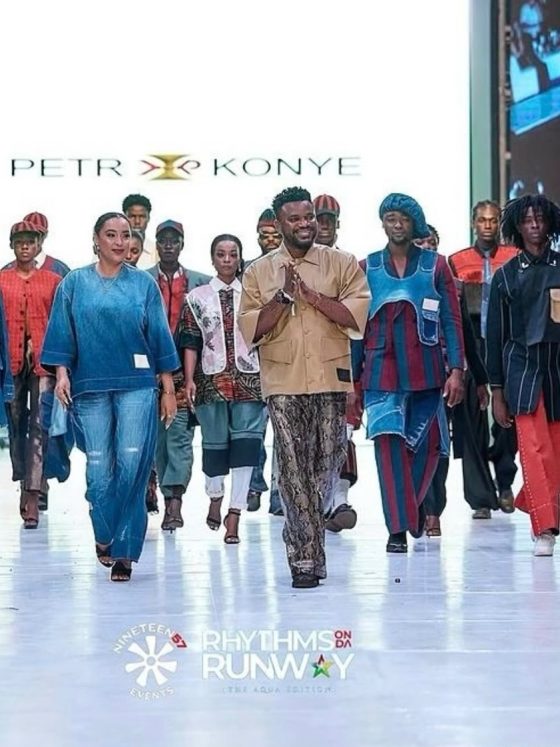
On 26 November 2022, a fashion show took place at the Hôtel Sarakawa in Lomé. The designer who staged it had been operating her atelier in the city for more than 22 years. She had dressed African first ladies. She had built a client base that she described as a solid family around her. She had been featured in Ivorian and French publications. She had shown at FIMO 228. She had never, in those 22 years, staged a public fashion show.
Her name is Kavsokl Batoka. Her house is Kav Élite. The name is constructed from her own: KAV is an abbreviation of KAVSOKL, combined with ÉLITE to form the identity of the house she has built over two decades. At the 2022 show, she explained the 22-year delay in plain terms: “For those wondering why, after 22 years I am doing my first public show, I took all my time to focus on my clientele. Now that I have a very solid client family around me, I have decided to give my craft to the public.”
Kavsokl Batoka ran Kav Élite for 22 years before her first public show. African first ladies wear their work. This is the story of a fashion empire built in silence.
The Omiren Argument:
Kavsokl Batoka spent 22 years building the most private kind of fashion reputation: one that operates entirely through client trust, without a runway, without press, without a public profile. When she finally staged her first show, she did not do it to introduce herself to the world. She did it to honour a clientele that had already made her one of Togo’s most sought-after couturiers. The African first ladies who wear their work did not find her through editorial coverage. They found her through the network that discretion builds, a kind of authority that no press campaign can manufacture and no press campaign can undo.
The Formation: From the Plateaux Region to Dakar
Kavsokl Batoka was born on 22 February in the Plateaux region of Togo, the daughter of a Nawda father from Niamtougou and an Akposso mother from Atakpamé. The Nawda, also known as the Losso people, are a Kara-region ethnic community whose district capital, Niamtougou, lies in the Togo Mountains between the Kabyè ranges. The Akposso are a people of the Plateaux region. Her heritage places her at the intersection of two distinct Togolese cultural communities, north and south, which is not incidental to a designer whose creative work addresses what Grand Reporter described as “typically African stories” told through fabric and cut.
After completing her primary and secondary studies in Togo, she enrolled in a four-year fashion training programme. She graduated at the top of her class in 1998. She then moved to Dakar, Senegal, for further professional development, an important detail that locates her training within the West African fashion ecosystem rather than in European institutions. Dakar in the late 1990s was the headquarters of Alphadi’s FIMA festival and a centre of West African couture activity. To go there for advanced training was to choose African fashion authority over European fashion authority as the standard against which her craft would be measured.
She returned to Lomé and launched the Kav Élite atelier in 2000, starting with three apprentices. This detail is worth holding: not a solo operation, not a workshop, but an atelier structured from its first year to train others. In the two decades that followed, she trained a significant number of couturiers and sewists who went on to build their own practices. The house was both a school and a business from the beginning.
Twenty-Two Years Without a Runway: The Client-First Philosophy
The decision to work for 22 years without a public show is not a passive one. It is a deliberate commercial and creative philosophy. In an industry that conflates visibility with success, Kavsokl Batoka built her reputation through the opposite: absolute discretion about who she dressed, absolute focus on the quality of what she produced, and absolute prioritisation of the client relationship over the editorial relationship. The clients she calls Perles rares (rare pearls) are the women and men for whom she makes garments described in every Togolese press account as distinguished by their finesse, their particular finishing techniques, and the precision of their construction.
That clientele includes African heads of state and first ladies. The Togolese press confirms this without naming specific individuals, and this article follows the same discipline: the fact of that clientele is documented and significant; the identities are not this article’s to publish. What is significant is what it means for a couturier based in Lomé to have built, without international press coverage, without a Paris address, without European training credentials. This client list reaches the highest levels of African institutional power. That is not luck. That is a specific combination of craft excellence, trust-building, and geographic positioning in a capital city whose political and diplomatic networks are denser than its fashion coverage would suggest.
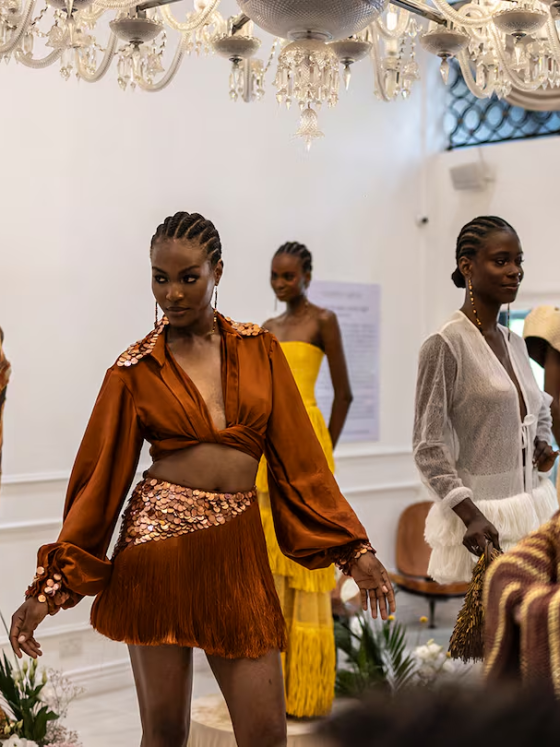
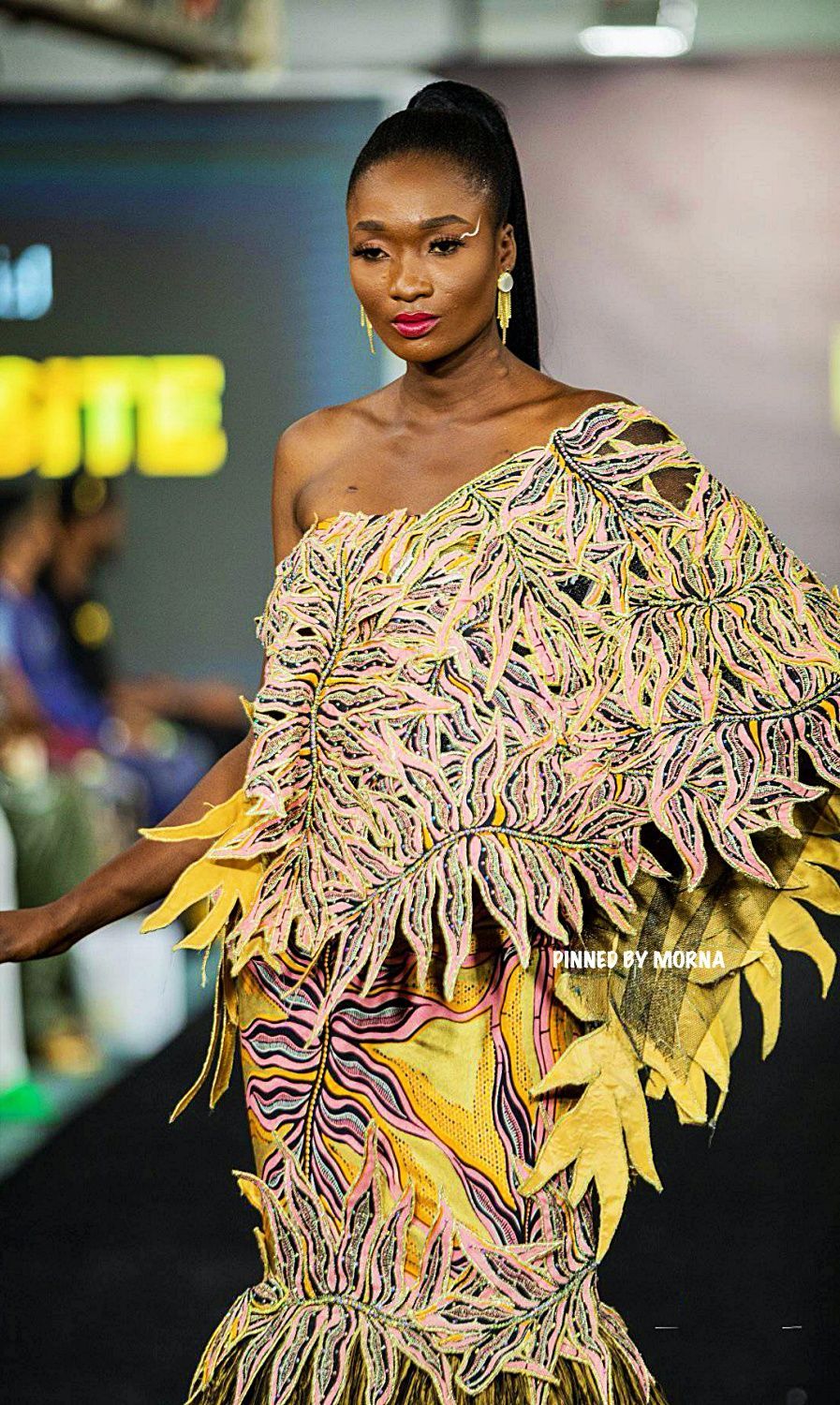
The 2022 show was not a debut. It was a consolidation. After 22 years of building the Kav Élite name through private client relationships, Batoka chose to share the craft with the public when she judged the foundation strong enough to withstand scrutiny. The Arc-en-ciel (Rainbow) collection, structured in three tableaux called Travail (Work), Foi (Faith), and Réussite (Success), was not a trend presentation. It was an account of the values that had sustained the house for two decades. The Togolese press consistently noted that the garments on the runway were already familiar to an audience that had been seeing them on the women who wore Kav Élite to public occasions for years.
The Collections: Craft, Environment, and Diaspora
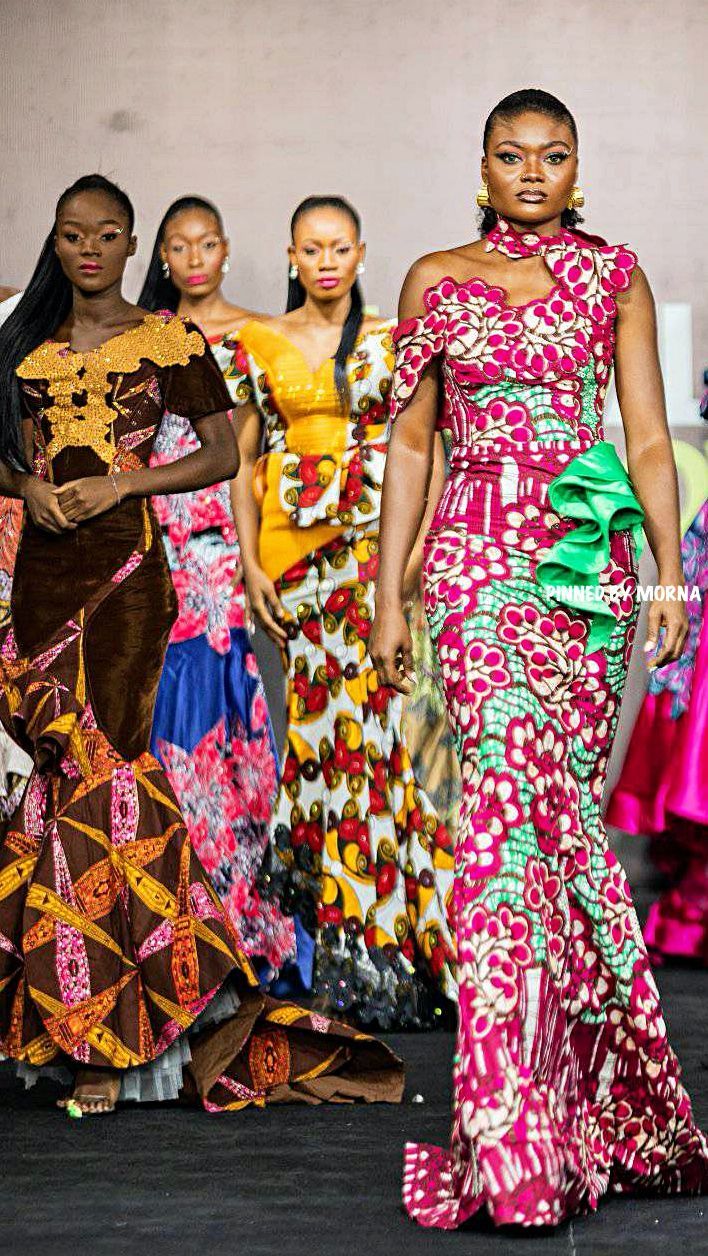
The collections Kavsokl Batoka has presented publicly since 2022 reveal a creative sensibility that moves between luxury craft and social argument. At the 9th edition of FIMO 228 in 2022, she showcased Gneto-lim, a collection focused on environmental protection. Green was the dominant colour, chosen, as she explained directly, “to pass a simple and strong message: the protection of nature, because it positively and effectively influences our health and our wellbeing.” The collection won significant attention from the FIMO audience and made the front pages of several Lomé media outlets.
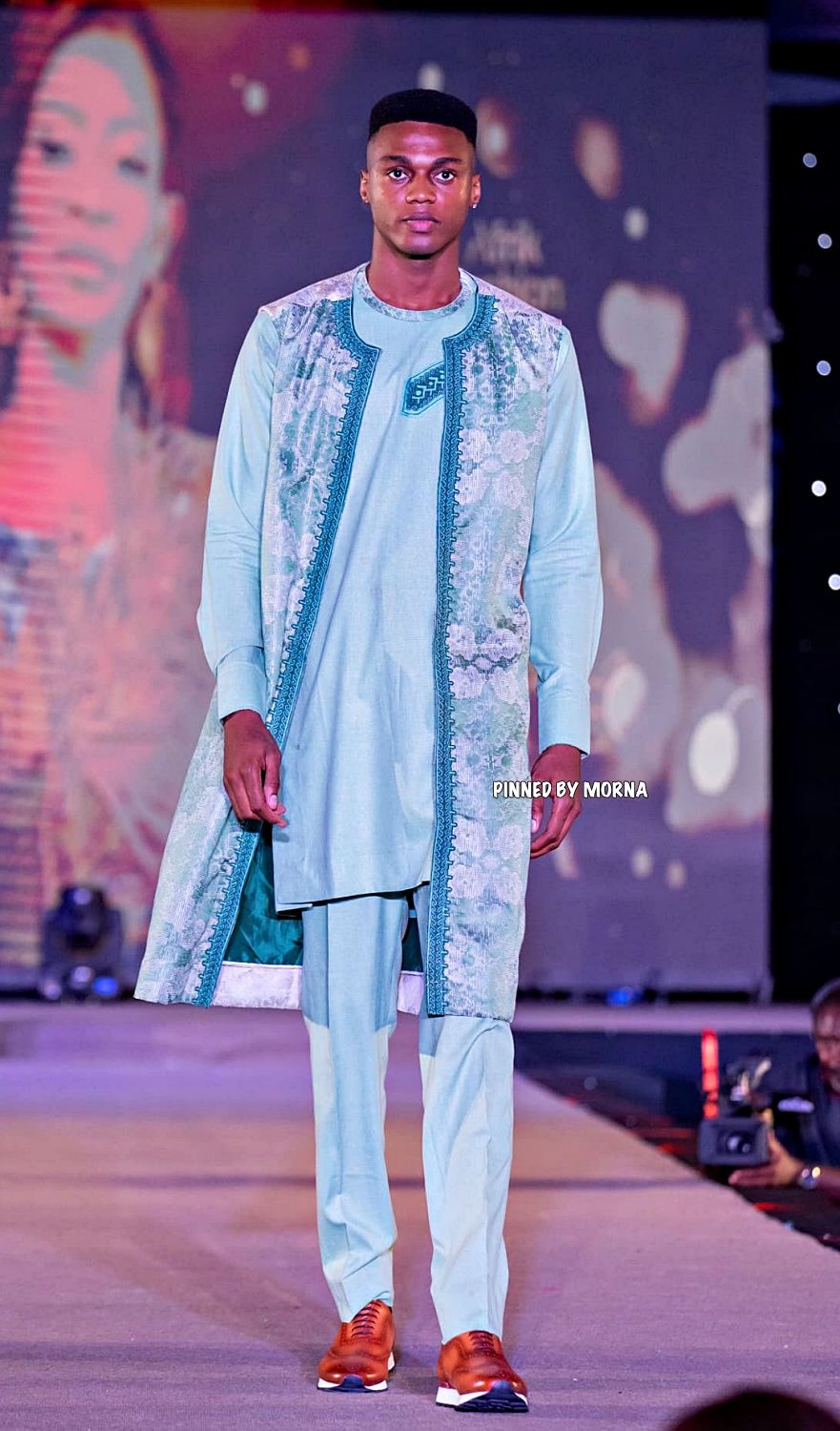
The Fraternité collection, presented on 29 June 2024 at the Birmingham Palace in Brussels, extended the social argument to the diaspora. Invited to Belgium by the Association Action Europe Afrique for a White Party cultural evening organised by the Togolese diaspora in Europe, Batoka presented a set of luxury evening wear for men and women, crafted from tissu and luxury pagne, with coordinated motifs and embellishments. The collection’s message was explicitly community-oriented: Fraternité, to urge the Togolese and the African diaspora to cultivate living together, respect, and acceptance of the other in their host countries, and to work together. This was couture as a statement directed not at buyers but at an entire community.
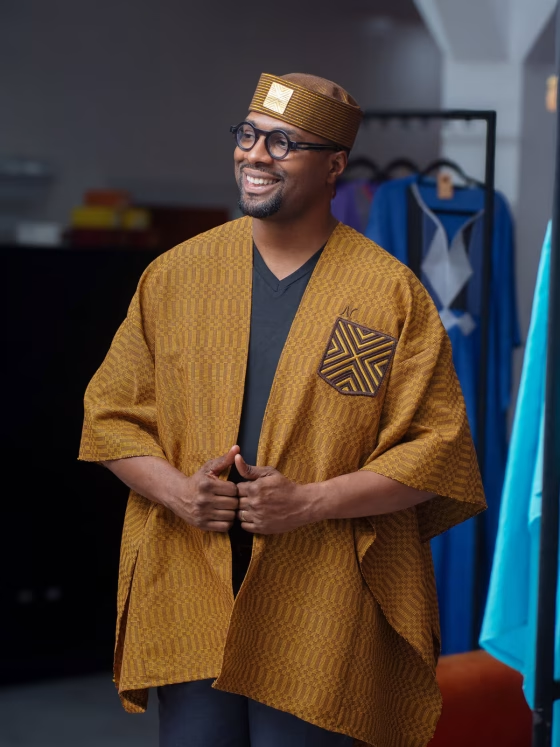
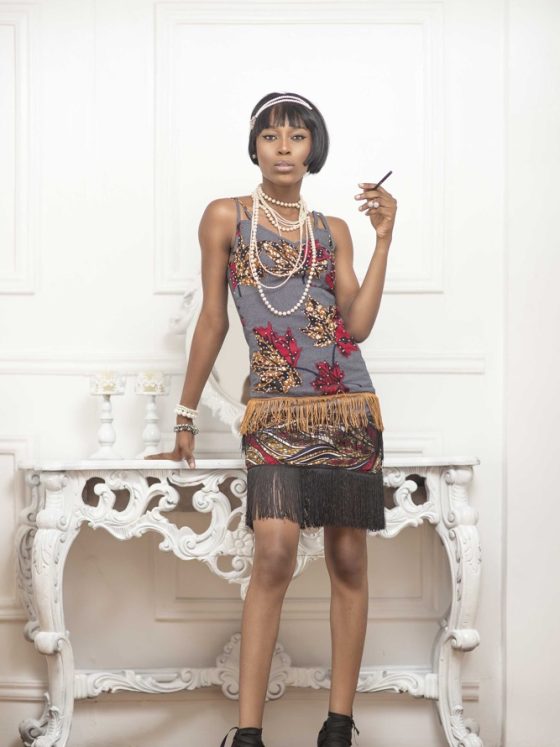
The technical foundation of Kav Élite’s work is pagne, the woven fabric that is the backbone of West African dress across generations and occasions. Actubilan documents that Batoka has used all types of pagne for 20 years to dress men, women, and children. This is not a brand that works within a narrow aesthetic category. It is a house that treats pagne as the full-spectrum material it is: capable of producing workwear, ceremonial dress, evening wear, and luxury couture within the same creative framework. The range is the point. A designer who can dress a head of state for a state occasion and a child for a ceremony from the same material intelligence is not limited by genre.
ALSO READ
- FIMO 228: Inside Lomé’s International Fashion Festival
- What Do People Wear in Togo? A Complete Style Guide
- Why Lomé Should Be on Every African Fashion Investor’s Map
Beyond Togo: Brussels, Europe, and the Diaspora Market
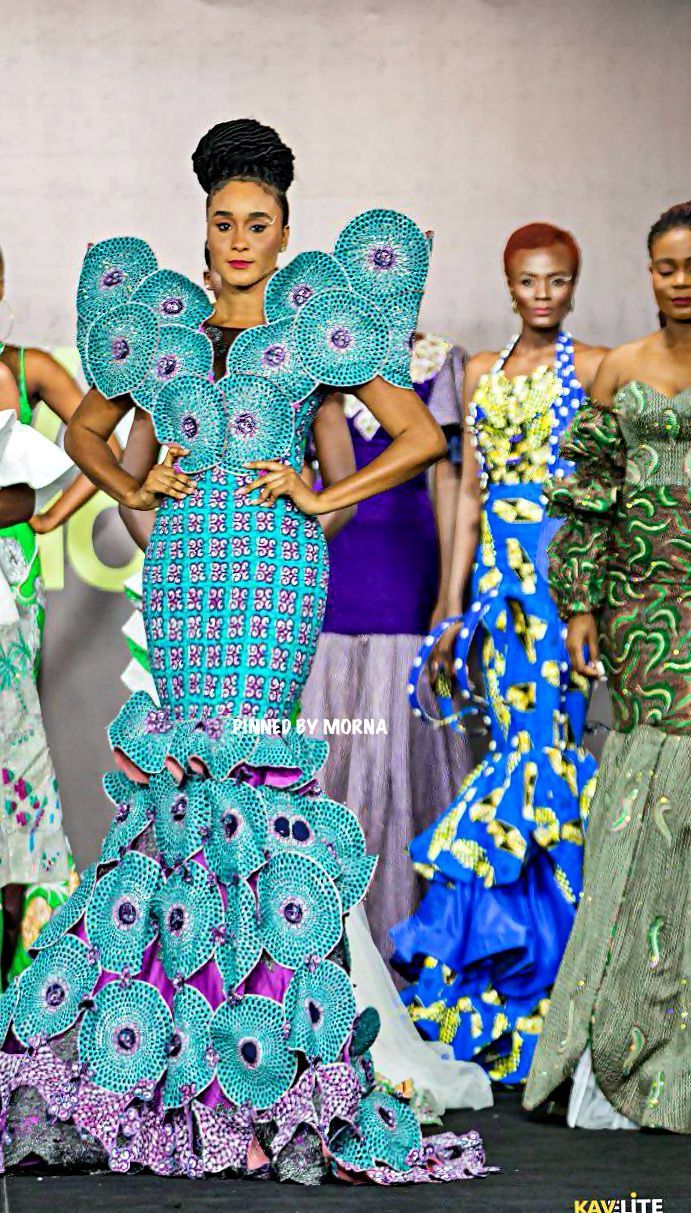
The Brussels appearance in June 2024 was not Kav Élite’s first engagement with the Togolese diaspora in Europe, but it was its most documented international showcase to date. Actubilan’s coverage of the event notes that the collection was received with enthusiasm by Togolese from across Europe who had gathered for the diaspora evening. After Brussels, Batoka planned a second Fraternité edition in Kara, in Togo’s northern region, bringing the diaspora message home to the northern Togolese community that shares her father’s Nawda ethnic heritage.
Her international media presence, while still developing, includes coverage in Life Magazine, the Ivorian publication with a significant West African readership, and Brut, the French digital media outlet with a large young Francophone African audience. These are not fashion trade publications. They are general-interest and culture media, which are the audiences that a designer building name recognition beyond an existing client base needs to reach. The press strategy, if it can be called that, is consistent with the Kav Élite philosophy: selective, quality-focused, and building at the pace the house can sustain.
Craft and Social Commitment: The Kav Élite Model
The charitable work that runs alongside Kav Élite’s commercial practice is documented at the 2022 show, where a voluntary fundraising collection was held for orphanages alongside the runway presentation. L’Eveil de la Nation’s coverage notes this as a regular dimension of the house’s work rather than a one-off gesture. The decision to embed charitable work into the brand’s public presentation, making it simultaneous with the runway rather than separate from it, is a deliberate framing: the house is not only a couture business. It is an enterprise that takes its civic responsibilities seriously.
The quote from Kav Élite’s Facebook page, which Batoka maintains directly, captures the personal philosophy behind the commercial and social practice in language that is worth recording: “I am not yet where I want to be, but I am proud to no longer be where I was. I move step by step, with the help of God and the people God has placed on my path, because I know that dreams have no expiration date. I love work because it liberates, and its fruits are delicious. I focus on my own path. I do not need to prove anything to anyone. I just want to be the best version of myself.”
This is the statement of a practitioner who has built something real and knows it, who measures success against her own standard rather than against the visibility metrics that the fashion industry typically applies, and who has done so across more than two decades without the kind of institutional or media infrastructure that most couture houses treat as preconditions. Kav Élite is evidence that those preconditions are not required. What is required is the craft, the commitment, and the discipline to build a client family that trusts you completely before you ask the world to look.
“Kavsokl Batoka spent 22 years building the most private kind of fashion reputation: one that operates entirely through client trust. The African first ladies who wear their work did not find her through editorial coverage. They found her through the network that discretion builds, and that is a kind of authority that no press campaign can manufacture, and no press campaign can undo.”
Frequently Asked Questions
Who is Kavsokl Batoka?
Kavsokl Batoka is a Togolese fashion designer and the founder of Kav Élite, a couture house based in Lomé, Togo. She was born on 22 February in the Plateaux region of Togo, the daughter of a Nawda father from Niamtougou and an Akposso mother from Atakpamé. After completing secondary studies in Togo, she undertook a four-year fashion training programme, graduating at the top of her class in 1998, and then pursued further training in Dakar, Senegal. She founded Kav Élite in Lomé in 2000 with three apprentices and has been running it for more than two decades. She is known for dressing African heads of state and first ladies, as well as for her work in luxury pagne couture for men, women, and children.
What is Kav Élite?
Kav Élite is a luxury couture house founded by Kavsokl Batoka in Lomé, Togo, in 2000. The name is constructed from KAV, an abbreviation of KAVSOKL, combined with ÉLITE. The house specialises in luxury menswear and womenswear made from all types of pagne, producing garments known for their finesse and precise finishing. Batoka refers to her clients as “Perles rares”-rare pearls. The house operated for 22 years before staging its first public show in November 2022, during which time it built a clientele that includes African first ladies and heads of state. Kav Élite has shown at FIMO 228 and presented collections in Brussels to the Togolese diaspora in Europe.
Why did Kavsokl Batoka wait 22 years before staging a public show?
In her own direct words at the 2022 show, Kavsokl Batoka explained: ‘For those wondering why, after 22 years, I am doing my first public show, I took all my time to focus on my clientele. Now that I have a very solid client family around me, I have decided to give my craft to the public.’ The decision reflects a deliberate philosophy: building the house’s reputation entirely through client trust and craft quality before seeking public visibility. By the time of the first show, the Kav Élite name was already well established within the Togolese fashion community and among her private clientele.
What are Kav Élite’s most notable collections?
Three collections have been publicly documented. Arc-en-ciel (Rainbow), presented at the first public show at Hôtel Sarakawa in Lomé on 26 November 2022, was structured in three tableaux: Travail (Work), Foi (Faith), and Réussite (Success). Gneto-lim, shown at the 9th edition of FIMO 228 in 2022, focused on environmental protection with a predominantly green palette and a direct message about protecting nature for health and wellbeing. Fraternité, presented in Brussels on 29 June 2024 at the Birmingham Palace, was luxury evening wear for men and women in tissu and pagne, carrying a message of unity and mutual respect for the Togolese and African diaspora in Europe.
How does Kav Élite connect to the broader Togolese fashion ecosystem?
Kav Élite connects to the Togolese fashion ecosystem through FIMO 228, at which the house has shown collections; through coverage in Togolese media, including Togo Breaking News, L’Eveil de la Nation, and Grand Reporter; and through the broader network of Lomé’s couture community. The house has trained a significant number of Togolese couturiers and sewists over its two decades of operation. Its appearances at diaspora events in Europe, including the Brussels show in 2024, position it as a bridge between the Lomé-based couture tradition and the Togolese diaspora market.
What materials does Kav Élite use?
Kav Élite uses all types of pagne, the woven fabric that forms the foundation of West African dress across generations and occasions. Actubilan confirms that Kavsokl Batoka has worked with all types of pagne for more than 20 years, producing luxury menswear, womenswear, and children’s garments. The Fraternité collection specifically used tissu and luxury pagne with coordinated motifs and embellishments for evening wear. The house is described across Togolese press sources as specialising in luxury garments distinguished by their finesse and particular finishing techniques.
Explore more from our Industry section, where Togo’s fashion practitioners are documented from the beginning of their public record to the present.