Every year, tonnes of clothing discarded by consumers in Europe and the United States arrive in West Africa compressed into 45-kilogram bales. They fill the warehouses and market stalls across the continent. Most of it circulates locally and is absorbed into everyday dress. Some of it cannot be used at all: winter coats in tropical climates, fur-lined jackets no one in Lomé has a use for, formal suits from a different world. This is the raw material of a global textile waste circuit that the fashion industry spends considerable effort discussing as a problem to be solved.
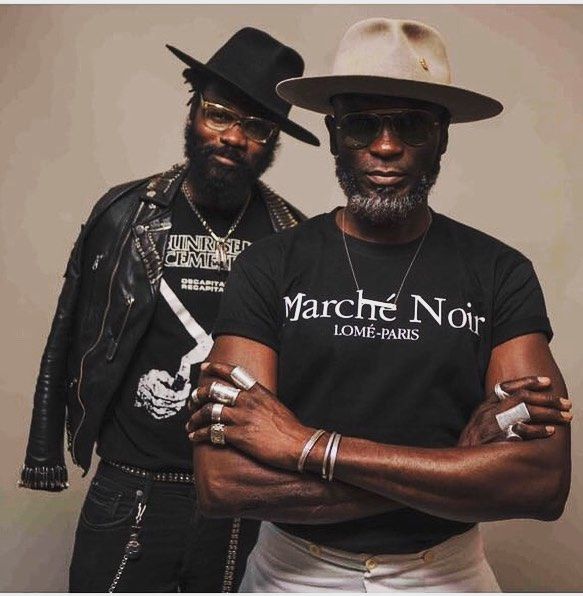
Amah Ayivi has been solving it since 2012, from a 600-square-metre showroom in Paris’s 3rd arrondissement, near the Carreau du Temple. His brand, Marché Noir — which translates literally as Black Market — is built on a single logistical reversal: take the clothing that Europe sent to Africa as surplus, select the pieces worth transforming, clean and restore them, tailor them into specific garments or sell them as curated vintage, and ship them back to Europe as fashion. His summary of the model is direct: “You send it as trash. I bring it back as treasure and sell it to you.”
The Omiren Argument: Amah Ayivi did not discover sustainable fashion. He recognised that Lomé had been practising it for decades before European fashion coined the term. The Hédzranawoe market processes Western textile waste at a commercial scale. It always has. Ayivi took what that market had always done and reversed the direction: instead of the reclaimed fabric staying in Togo, he took it back to the continent that discarded it and sold it as luxury. The argument embedded in that circuit is precise. Africa was not behind. It was ahead.
Amah Ayivi left Lomé at 12, spent 11 years as a casting director, then built Marché Noir into a 600m² Paris institution. His material? Africa’s textile waste is returned as luxury.
From Lomé to Les Puces: The Formation of a Vintage Eye
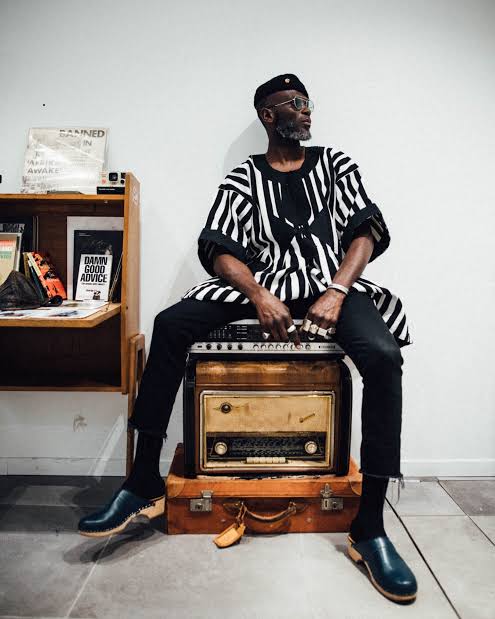
Amah Ayivi was born in Lomé. He moved to Paris at twelve years old with his uncle to complete his studies, eventually graduating in marketing. The earliest shaping of his aesthetic sensibility came not from a fashion school but from geography: his uncle’s home was near Les Puces de Saint-Ouen, the largest flea market in France. As he explained in a direct interview published by The Brooklyn Circus: “When I came from Togo with my uncle, we lived near the biggest vintage market in France called Les Puces de Saint Ouen. I became curious about it at 15. I remember at that age wanting to be unique when I was dressing, and vintage helped me with that.”
He did not go directly into fashion. He spent approximately eleven years working as a casting director for some of the most substantial advertising and creative agencies operating in Paris, including McCann, Ogilvy, and Publicis. He cast music videos, commercial shoots, and runway presentations. He worked on productions for Junya Watanabe. He cast for Canal+. He also owned an African restaurant outside Paris with a friend for two to three years. This career history gave him a practitioner’s understanding of how image is constructed, how a specific aesthetic vocabulary is translated into commercial material, and what makes something visually compelling to a European market.
He arrived at Comptoir Général in 2012 as its face and general manager, and became one of its chief executives by 2014. Comptoir Général was a specific kind of Parisian cultural institution: part bar, part venue, part concept space, built around an Afro-Caribbean aesthetic that was drawing the kind of audience, designers, musicians, and artists that Ayivi had spent his casting career watching. It was there that Marché Noir formalised as a business the vintage curation practice that Ayivi had been developing through personal obsession, making it a commercial model within a venue that could give it an audience.
The Hédzranawoe Circuit: Where Marché Noir Is Actually Built
When Ayivi decided to source vintage commercially, he went directly to Lomé. The logic was straightforward: Hédzranawoe is Lomé’s primary secondhand market and one of the largest markets of its kind in West Africa. The secondhand clothing that arrives there from Europe and North America through the charity and export chain fills the market’s warehouses in 45-kilogram bales, each containing hundreds of items. These items are known locally as ablôni — the Ewe-language term for secondhand clothing. They sell for less than one euro each.
Ayivi moves through Hédzranawoe with the same trained eye he developed at Les Puces de Saint-Ouen: looking for specific cuts, specific materials, specific garments worth transforming. L-FRII’s documentation of his sourcing process confirms that he ships four tonnes of clothing to Europe per sourcing trip. These are not random selections. They are the product of a highly developed aesthetic judgment applied to a market that most European fashion practitioners have never visited and could not navigate.
The items that arrive at his Paris showroom undergo cleaning, restoration, and, in many cases, tailoring. Garments destined for charity shops in Europe and exported to Africa as surplus come back to Paris as curated vintage, selected and transformed by a Togolese designer with an eye trained across two continents and a career in image-making. The clients who buy at Marché Noir, appreciating what the Paris market calls unique pieces with a global vision, are buying something the market collectively produced: the aesthetic intelligence of the Hédzranawoe circuit and the transformative capacity of Ayivi’s workshop.
His own framing of the political dimension of this circuit is worth quoting directly: “I decided to go to Africa because, a) I wanted to work with my people and pay them more than the local price, b) It was also a militant act for me, being that all the stuff in the market came from Europe, and they send everything there like trash.” The brand’s name, Marché Noir, carries that militancy: a Black market, in the sense of a market that refuses the terms the mainstream fashion system sets for what counts as valuable and what counts as waste.
The Batakari Work: Craft Production at Controlled Scale
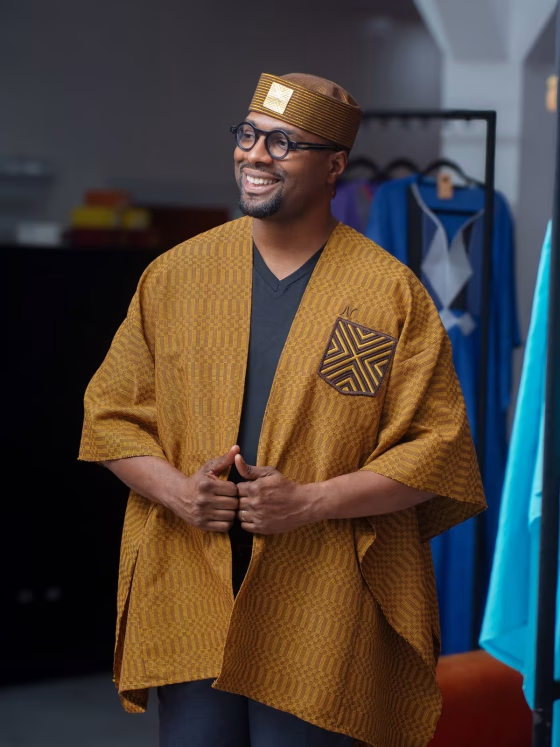
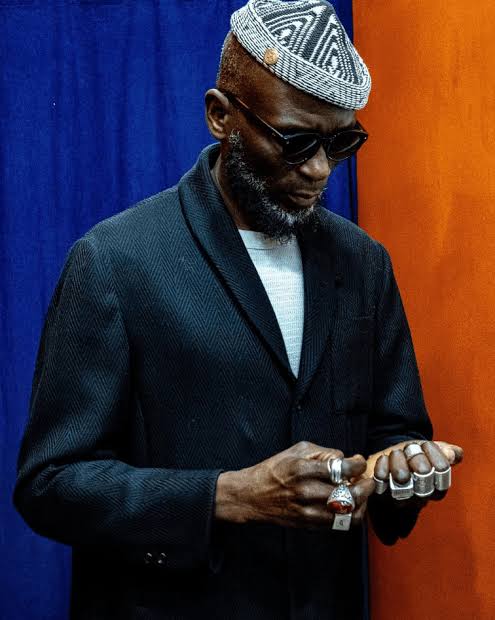
Alongside the vintage curation and upcycling practice, Ayivi has developed a second creative strand: the redesign of traditional Batakari pieces. The Batakari is a handwoven smock worn in northern Ghana and Togo, historically associated with the region’s courts and craftspeople. It is woven from Kente cloth, one of West Africa’s most technically complex textiles. As Ayivi explained to Cool Hunting, “I always loved to mix my style with traditional attire from everywhere. When I decided to design, I naturally went back to Africa, and I started with Ghanaian traditional attire called Batakari. It’s made with Kente cloth, which is a very antique, traditional cloth. It used to be worn by the nobles in Ghana; now it’s very popular.”
The Batakari pieces are made entirely in Africa. Ayivi selects the fabric; it is woven for him by a team of weavers, and the garments are constructed by his tailors on the continent. This production model is a deliberate constraint: handwoven fabric cannot be produced at an industrial scale, and Ayivi does not want to do so. Each run produces approximately 100 to 200 pieces, a number consistent with high-end limited production rather than anything that would qualify as mass market.
The limitation is the point. In his own words: “I love sustainable; I didn’t want to produce too much. Because with the craftwork, you don’t produce that many, maybe 100 or 200 pieces. I don’t really like this craziness around fashion, to be honest, it’s too much.” This is not a designer constrained by resources. It is a designer who has deliberately structured his production to resist the logic of volume that defines the contemporary fashion industry. The Batakari work operates as a counterargument: you can build a sustainable fashion business by making very little, very carefully, from materials that already exist.
Marché Noir Lomé-Paris: The Name Change and What It Signals
The brand was originally called Marché Noir Paris. Cool Hunting documents its renaming to Marché Noir Lomé-Paris as a deliberate step to further integrate Ayivi’s African roots into the brand’s public identity. The addition of Lomé to the brand name is an editorial decision: it makes explicit what the sourcing circuit had always made true, that the brand is not a Parisian phenomenon that happens to have African references. It is a Togolese-Parisian operation, with Lomé as a constitutive part of its output.
The new name also functions as a geographic argument for Lomé itself. In the English-language fashion press, Lomé has historically been absent. West African fashion coverage centres on Lagos, Accra, and Dakar. Marché Noir Lomé-Paris places the city’s name within a brand identity that circulates through Paris Fashion Week coverage, international press profiles, and the social media feeds of the European fashion community that shops at the showroom. Every mention of the brand is, incidentally, a mention of Lomé as a fashion geography.
The 600-square-metre space near Carreau du Temple holds a boutique, an exhibition space, a tailoring workshop, and a salon, confirmed by multiple Paris venue directories. This is not a pop-up. It is a permanent institution in a city where fashion institutions are taken seriously. The scale and permanence of the Marché Noir showroom place Ayivi in a different category from most African designers operating in Paris, who typically access the market through wholesale relationships, press coverage, or temporary pop-up appearances.
ALSO READ
- Togo Yeye: The Platform Putting Lomé’s Creatives on the Global Map
- The Nana Benz of Lomé: How Togolese Women Traders Built West Africa’s Wax Print Empire
- Why Lomé Should Be on Every African Fashion Investor’s Map
The Hyperlocal Fashion Trip: Bringing the Circuit to Visitors
Ayivi has extended the Marché Noir model into an experiential offering: the Hyperlocal Fashion Trip, through which he guides visitors through Lomé’s markets, introduces them to local artisans, and co-creates upcycled garments from material sourced during the visit. The Hyperlocal world documentation describes the ONOMO Hotel in Lomé as his operational base for these trips, and notes his relationship with the hotel through previous events. The Grand Marché features as his primary market destination, described in his own words as a place where “wax prints from the 80s, vintage buttons, embroidered details” can be found hiding in plain sight.
The Hyperlocal Fashion Trip is a condensed version of the argument Marché Noir makes materially. It invites participants to experience the Hédzranawoe sourcing circuit from the Lomé end rather than the Paris end, to understand the garments in the showroom as products of a specific place and practice rather than as abstract luxury objects. Ayivi’s description of Lomé in the Hyperlocal documentation is the clearest articulation of the city’s creative identity available in his public record: “This city is small, yes, but it’s bursting with beauty. Everything’s within reach: the beach, the forest, the market, the music. You just have to know where to look.”
His broader collaborative practice is consistent with this positioning. Cool Hunting documents his appearance at Oasis Festival’s Mbari House pop-up in Marrakech, where he worked alongside the London art collective Art Comes First and the Museum of African Contemporary Art Al Maaden. These are not peripheral associations. They are evidence of a practitioner who moves fluidly between Lomé’s markets and the most international tier of the contemporary African creative ecosystem.
What Amah Ayivi Means for Togolese Fashion
In the broader Togolese fashion ecosystem documented in this series, Amah Ayivi occupies a specific and important position. He is not a runway designer in the FIMO 228 tradition. He is not a wax print trader in the Nana Benz or Nanette tradition. He is not a community platform in the Togo Yeye tradition. He is a commercial creative practitioner who has built a sustainable fashion business on a Paris scale, rooted in Togolese material, running between two cities, and legible to the international fashion market without requiring translation or context.
The Marché Noir model demonstrates something not self-evident within the Togolese fashion ecosystem: that a Togolese creative practice, built from specifically Togolese materials and knowledge, can sustain a 600-square-metre institution in one of the world’s most competitive fashion markets. Ayivi did not achieve this by making his practice less Togolese for a European audience. He achieved it by making his practice more specifically Togolese, by naming the city in the brand, by sourcing materials from the city’s own market, and by making garments on the continent rather than in a Parisian atelier.
The question his practice poses to the wider Togolese fashion ecosystem is a productive one: if the material the Hédzranawoe market processes every day, and the knowledge the Batakari weavers carry, and the aesthetic intelligence that a Togolese eye developed across two continents can build a Paris institution, what else is possible from Lomé? This series is, in part, an attempt to answer that question by building an editorial record that makes it visible to the people best positioned to respond.
“Amah Ayivi did not discover sustainable fashion. He recognised that Lomé had been practising it for decades before European fashion coined the term. The argument embedded in the Marché Noir circuit is precise. Africa was not behind. It was ahead.”
Frequently Asked Questions
Who is Amah Ayivi?
Amah Ayivi is a Togolese designer and the founder of Marché Noir Lomé-Paris, a fashion brand and showroom based in Paris’s 3rd arrondissement. Born in Lomé, he moved to Paris at 12 years old with his uncle, studied marketing, and spent approximately 11 years as a casting director, working with agencies including McCann, Ogilvy, and Publicis, and on productions for Junya Watanabe and Canal+. He formalised Marché Noir as a business at Comptoir Général in 2012, moved into his own 600-square-metre space in Paris by 2016, and has built the brand into one of the most internationally recognised examples of Togolese creative practice.
What is Marché Noir?
Marché Noir, which means Black Market in French, is a fashion brand and showroom founded by Amah Ayivi. Its model is built on two creative practices: the sourcing of secondhand and vintage clothing from West African markets, primarily Lomé’s Hédzranawoe market, which are restored, sometimes tailored, and sold as curated vintage in Paris; and the creation of limited-run garments based on traditional Batakari smocks woven from Kente cloth, produced in Africa at 100-200 pieces per run. The brand was originally called Marché Noir Paris and was renamed Marché Noir Lomé-Paris to explicitly integrate Lomé as a constitutive part of the brand’s identity.
Where does Marché Noir source its material?
Marché Noir’s primary sourcing location is Lomé’s Hédzranawoe market, one of the largest secondhand clothing markets in West Africa. The market receives 45-kilogram bales of clothing discarded by consumers in Europe and North America, distributed through charity export chains. Ayivi visits Lomé multiple times a year to source material, selecting specific garments by hand and shipping approximately four tonnes per trip to Paris. The Batakari garments are made from Kente cloth woven by Ayivi’s team in Africa, with tailoring also completed on the continent.
What is the Hyperlocal Fashion Trip?
The Hyperlocal Fashion Trip is an experiential offering co-hosted by Amah Ayivi through which travellers join him in Lomé to explore local markets, meet artisans, and upcycle textile finds into wearable pieces. The ONOMO Hotel in Lomé serves as its base. The trip is a direct extension of the Marché Noir sourcing model: participants experience the Hédzranawoe circuit from the Lomé end, understanding the material before it becomes the Paris product. Ayivi’s itinerary includes the Grand Marché and the Palais de Lomé among its key locations.
Why did Amah Ayivi add Lomé to the brand name?
The renaming from Marché Noir Paris to Marché Noir Lomé-Paris was a deliberate decision to more explicitly integrate Ayivi’s Togolese roots into the brand’s public identity, as documented by Cool Hunting. The change makes explicit what the sourcing circuit had always made materially true: the brand is not a Parisian phenomenon with African references but a Togolese-Parisian operation with Lomé as a constitutive part of what it produces. The addition of Lomé to the brand name also places the city’s name into every press mention and profile of the brand in international fashion media.
How does Amah Ayivi relate to Togo’s broader fashion scene?
Amah Ayivi occupies a distinct position in the Togolese fashion ecosystem. He is not a runway designer in the FIMO 228 tradition, not a wax print trader in the Nana Benz or Nanette tradition, and not a community platform in the Togo Yeye tradition. He is a commercial creative practitioner who has built a sustainable fashion business on a Parisian scale using Togolese material and knowledge. His model demonstrates that a Togolese creative practice, built from specifically Togolese material sources, can sustain a major institution in one of the world’s most competitive fashion markets without becoming less specifically Togolese in the process.
Explore more from our Industry section, where Africa’s fashion practitioners are documented from the beginning of their public record to the present.