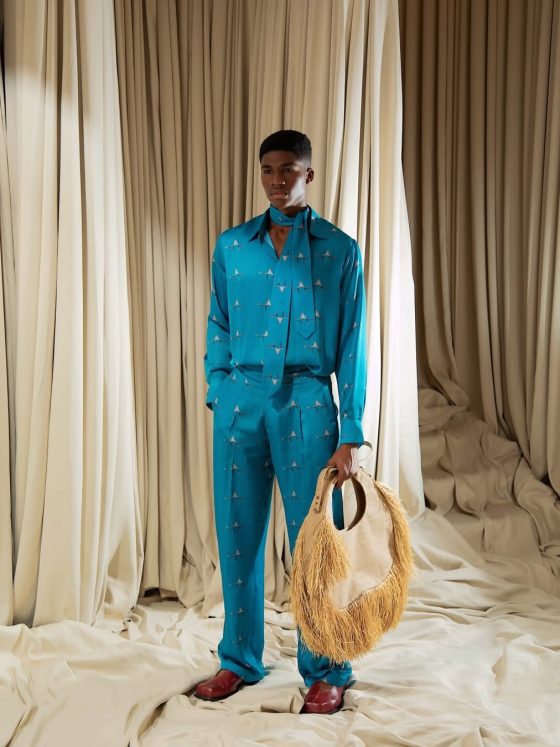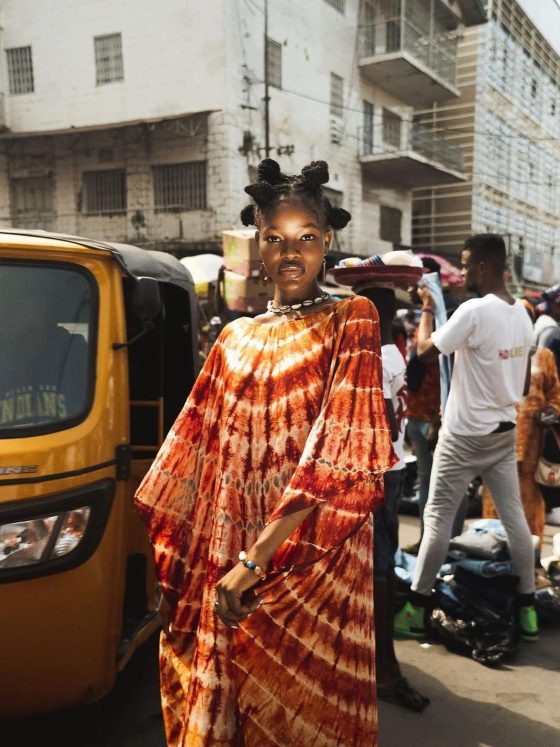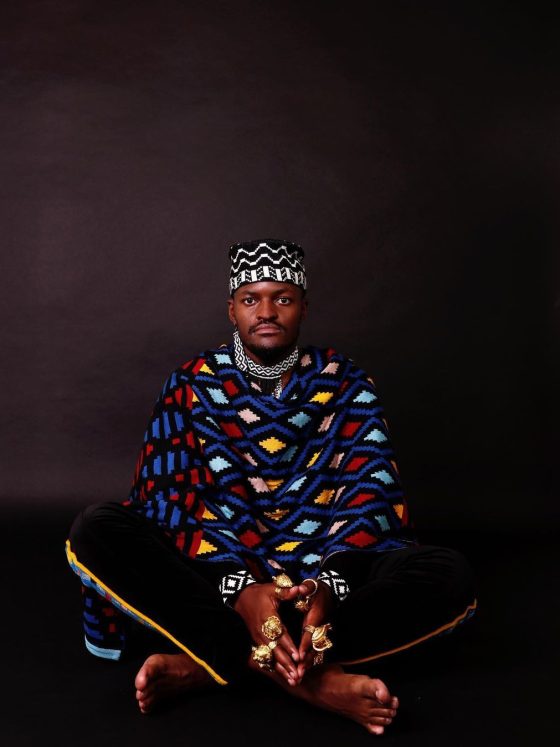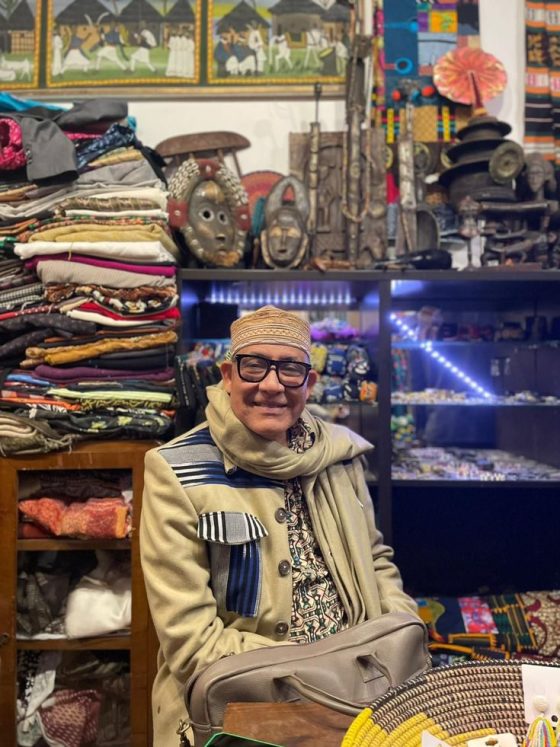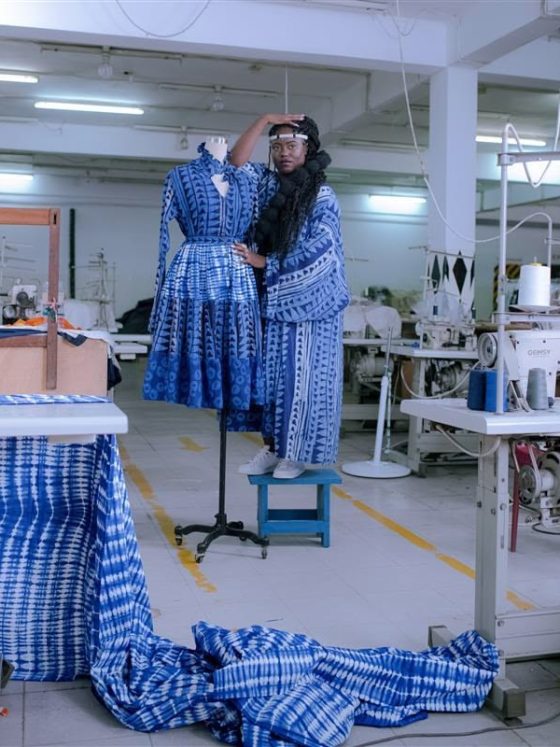
Kanvô had three reputations working against it when Elvira Akplogan decided to build a brand around it. Too heavy. Too old. Too expensive. These were not market research findings. They were the assessments of Beninese consumers who had grown up seeing kanvô at formal ceremonies and funerals, worn by elders and stored in the backs of wardrobes. The fabric had royal origins, a direct lineage to the Dahomey court, and a weaving tradition that stretched back more than two centuries. None of that translated into daily demand in a market where printed wax paper was lighter, cheaper, and more available.
Akplogan’s response to those three objections was not to argue against them. It was to solve them. LOAN-H, the brand she created in 2014 and commercially launched in April 2018 in Cotonou, has built its production practice around making kanvô more flexible, easier to manage, and easier to use in everyday life. In her own words: “People have now understood that the woven fabric is a sought-after material, an exploitable material, and we are working to make our woven fabric, the Loan-H woven fabric, more flexible, more manageable and easier to use in everyday life.” Within two years of commercial launch, LOAN-H had clients from more than 40 nationalities. The argument about kanvô was never that it was not worth wearing. The argument was that nobody had made it wearable.
The Omiren Argument: LOAN-H did not revive kanvô. It resolved the specific material and commercial obstacles that had made kanvô inaccessible to everyday buyers. Then it built an international business on the fabric waiting on the other side of those obstacles.
Elvira Akplogan built LOAN-H to make Benin’s ancient woven kanvô fabric wearable for today. Customers from 40 countries agree it is working.
The Formation: Porto-Novo to Cotonou via Central Africa
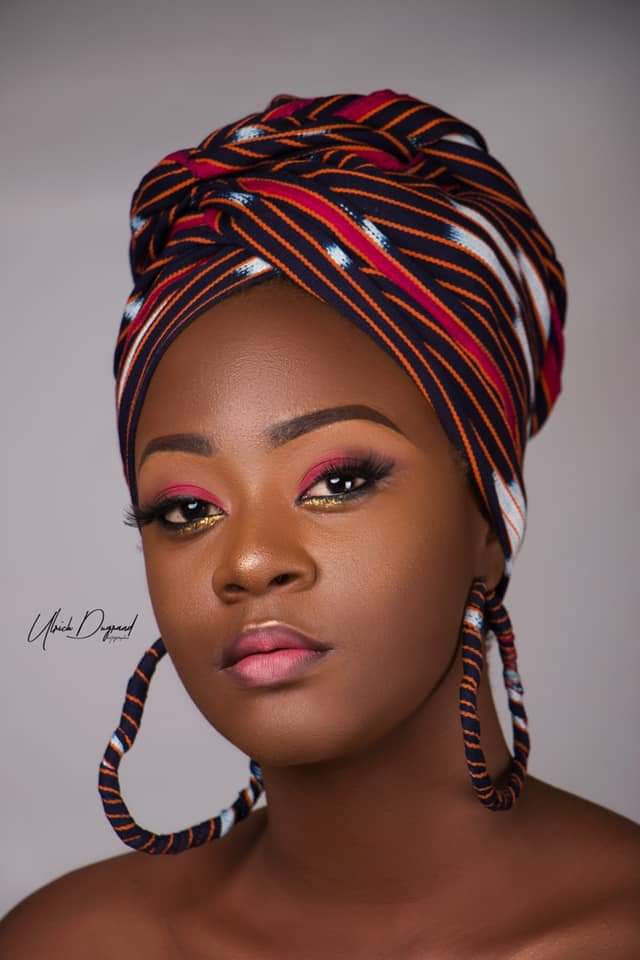
Elvira Akplogan was born in Porto-Novo and is originally from the Ouémé department in southern Benin. She is a self-taught fashion entrepreneur: no design school, no fashion house training. Her background before LOAN-H included a period working in Central Africa, where she developed an understanding of artisanal promotion and craft-based businesses that she brought back to Benin upon her return. Her objective, as stated on the Africa Fashion Code profile, was to make Africans wear proudly around the world through her creations, produced in her ateliers by skilled and passionate Beninese artisans.
The brand she formally created in 2014 began as a broader African textiles enterprise. LOAN-H worked with woven fabrics from across the continent: the mandjak from Senegal, the baoulé from the Ivory Coast, and other West African woven cloth traditions. This multi-fabric approach gave Akplogan a deep working knowledge of what woven fabrics could and could not do structurally, technically, and commercially. When she adopted kanvô as the brand’s signature material in 2017, she did so with three years of production experience behind her and a precise understanding of what needed to change to make the fabric competitive in the contemporary market.
The commercial launch in April 2018 marked the point at which LOAN-H became a publicly operating business, with distribution channels, a production structure, and a client-facing identity. The four years between formal creation in 2014 and commercial launch in 2018 were not delayed. They were development, the same kind of foundational R&D that FARE’s Peter Toni-Basengula describes in his own formation as a designer. Both represent Beninese fashion practitioners who spent years building the technical and commercial foundations of their practice before presenting it publicly.
The Production System: What Handmade at Scale Looks Like
The full name of the brand is Rehoboth Loan-H, described by Agence Ecofin as an enterprise of artisanal promotion and fashion, specialising in clothing and accessories made from African woven cloth. Every product LOAN-H makes is handmade. This is not a quality claim. It is a production constraint that shapes everything about how the business operates: the collection timeline, pricing, client relationships, and the scale at which the brand can grow.
For each collection, LOAN-H produces at least 54 rolls of 25-metre woven fabric and 300 garments per quarter. These figures represent the minimum output of a 100% Beninese production unit that Akplogan established after the brand’s commercial launch, bringing fabric production in-house rather than sourcing entirely from external weavers. The decision to produce her own fabric, rather than buying from independent weavers and converting it, gave LOAN-H direct control over the quality, texture, and weight of the kanvô that goes into each piece. It also anchored the brand to a specific production relationship with the weavers who form the core of its supply chain.
The target of making kanvô “more flexible, more manageable and easy to use in everyday life” is a technical brief, not a marketing one. Kanvô, in its traditional form, is a heavy cotton-linen-hemp weave. Making it suitable for contemporary garments requires adjusting the weave density, the thread combinations, and sometimes the finishing process. LOAN-H’s production unit is the laboratory where these adjustments are tested and refined. The brand is not simply selling kanvô. It is producing a version of kanvô that its clients can actually wear.
The Fabric Map: Kanvô and the West African Woven Cloth Tradition

LOAN-H’s working relationship with multiple African woven fabrics before settling on kanvô as its signature material gives the brand a specific authority: Akplogan knows where kanvô sits in the broader West African textile tradition because she has worked with its closest comparators. The mandjak from Senegal is a handwoven cloth from the Mandinka and Diola communities of Guinea-Bissau and the Casamance region, characterised by narrow-strip weaving and bold geometric patterns. The baoulé from the Ivory Coast is a prestige handwoven fabric from the Baoulé people, typically featuring earth tones and geometric motifs. Both are part of the West African woven-cloth family, which includes kanvô, Faso Dan Fani from Burkina Faso, and kente from Ghana.
Kanvô’s specific character within this family lies in its royal origin and material composition. Where Faso Dan Fani is primarily cotton and kente is primarily silk, kanvô is woven from cotton, linen, and hemp, a combination that produces its characteristic weight and texture. Its introduction to the Dahomey court by King Agonglo in the late 18th century gave it a specific cultural authority in Benin that the other fabrics do not hold. LOAN-H’s decision to position kanvô as its signature material was as much about cultural specificity as it was about market positioning. In a market full of African woven cloth, kanvô is the one that belongs specifically to Benin.
LOAN-H’s label describes the brand as working broadly with African woven cloth, which means kanvô sits within a larger material intelligence. The brand is not a single-fabric house. It is a woven cloth house that has chosen kanvô as its primary voice because that fabric is Beninese and because the market gap around it was the most clearly identifiable.
The Label Question: What Akplogan Is Actually Asking For
Akplogan’s most quoted statement is precise in its ambition: “My great wish is for Benin to have its own real label because it is useless to have cotton at home but to go and take entrants elsewhere.” The word she uses, label, refers to the kind of formal protected designation that France has for champagne, Scotland has for tartan, and Ghana has begun to formalise for kente. A label is a legally enforced guarantee of geographic origin and production method. It prevents other countries or manufacturers from producing fabric and calling it kanvô. It also creates the conditions for international buyers to know exactly what they are purchasing and where it is coming from.
This ambition connects LOAN-H directly to the government’s institutional agenda. The Beninese government officially labelled kanvô in 2020, giving it formal cultural recognition. FIPAT, the Festival International du Pagne Tissé, is the government-backed platform working toward a more formal international protective designation. LOAN-H is listed in the FIPAT reference canon alongside Lolo Andoche, JB Hounyovi, Edi Sessi, and Gerba Edi as a key kanvô designer contributing to this institutional project. The brand is not simply a commercial enterprise. It is a participant in a national policy effort to give kanvô the protected status that Akplogan believes it deserves.
The commercial and policy arguments are the same. If kanvô has a formal protected label, buyers internationally know what they are buying. Beninese weavers have a guaranteed market for the authentic product. Designers who use kanvô can source it with confidence that the material is what it claims to be. And the fabric’s cultural authority, the royal history, the Dahomey lineage, and the artisan knowledge passed down through generations are protected by a legal framework rather than solely by the reputation of individual brands. This is what Akplogan means by a real label. She is describing infrastructure, not branding.
ALSO READ
- Kanvô: Benin’s Royal Handwoven Fabric, Fully Explained
- Cotton as Identity: How Benin’s White Gold Shaped Its Fashion Culture
- Benin Fashion Month: The Government-Backed Festival Quietly Reshaping West African Fashion
Programme Lumière: Building the Next Generation

LOAN-H’s Programme Lumière, the initiative Akplogan launched to support emerging designers, is the most direct expression of her understanding of what the Beninese fashion sector needs beyond her own brand. Through Programme Lumière, LOAN-H provides access to materials and showroom space for designers at an early stage who do not yet have the production relationships or commercial infrastructure to operate independently.
The logic behind the programme mirrors that of LOAN-H itself. Akplogan built her production unit and her material knowledge over years of development work. The barrier to entry for a young Beninese designer who wants to work with kanvô is access: access to quality fabric, access to weavers, access to a space where clients can see and handle the work. Programme Lumière lowers those barriers by making LOAN-H’s infrastructure available to designers at the stage Akplogan was at when she first built hers.
This is the institutional logic that distinguishes LOAN-H from a single-designer brand. Akplogan is not only building a label. She is building a platform for kanvô as a material category, with LOAN-H as the anchor label and Programme Lumière as the talent development arm. The international client base spanning 40+ nationalities provides LOAN-H with market evidence to support its platform argument. There is demand for kanvô, and that demand can support more than one brand if the production infrastructure and quality standards are maintained.
40 Nationalities: What International Demand Actually Looks Like
Within two years of LOAN-H’s commercial launch in 2018, Akplogan had registered clients from more than 40 nationalities worldwide. This was achieved through digital communication and periodic private sales, not through a wholesale distribution network or retail partners in international markets. The brand’s e-shop at loan-h.com and its presence on Afrikrea, the African fashion marketplace, provided the access points for international buyers. The 40-nationality figure is not a marketing claim. It is a distribution record: buyers in more than 40 countries have found LOAN-H, understood what kanvô is, placed an order, and received a handmade garment from Cotonou.
The diaspora dimension is significant here. Beninese and broader Francophone West African diaspora communities in Europe and North America represent a core segment of LOAN-H’s international buyers. These are people with a personal connection to the material culture Akplogan is working with: they know what kanvô is, have seen it worn at ceremonies, and are looking for a contemporary version they can wear in London, Paris, or Montreal without it reading as purely ceremonial. LOAN-H is producing exactly that garment.
The broader international buyer, with no prior connection to kanvô, arrives through the story of the fabric itself: its royal origins, artisan lineage, limited production, and handmade construction. These are the qualities that the international luxury and ethical fashion market has spent the last decade claiming to value. LOAN-H is not trying to access that market by meeting its criteria. It built those qualities into its production practice before the market arrived at them. The 40-nationality client base is evidence that the approach works.
“LOAN-H did not revive kanvô. It resolved the specific material and commercial obstacles that had made kanvô inaccessible to everyday buyers. Then it built an international business on the fabric that was waiting on the other side of those obstacles.”
Frequently Asked Questions
Who is Elvira Akplogan?
Elvira Akplogan is a self-taught Beninese fashion entrepreneur born in Porto-Novo, originally from the Ouémé department of southern Benin. She formally created her brand LOAN-H in 2014 and commercially launched it in Cotonou in April 2018. Before founding LOAN-H, she worked in Central Africa, where she developed expertise in artisanal promotion and craft-based businesses. Her brand adopted kanvô, Benin’s traditional handwoven fabric, as its signature material in 2017.
What is LOAN-H?
LOAN-H, whose full name is Rehoboth Loan-H, is a Beninese fashion brand specialising in clothing and accessories made from African woven cloth, with kanvô as its signature material. All products are handmade. For each collection, LOAN-H produces at least 54 rolls of 25-metre woven fabric and 300 garments per quarter. The brand was formally created in 2014 and commercially launched in April 2018 in Cotonou. Within two years of commercial launch, it had registered clients from more than 40 nationalities worldwide.
What is the difference between LOAN-H kanvô and traditional kanvô?
Traditional kanvô is a heavy fabric woven from cotton, linen, and hemp on traditional looms. LOAN-H produces its own kanvô through a 100% Beninese production unit, modifying the weave density and thread combinations to make the fabric lighter, more flexible, and easier to manage for everyday contemporary wear. The goal, in Akplogan’s own words, is to make the woven fabric more supple, more manageable, and easy to use in daily life without losing the material’s essential character.
What is Programme Lumière?
Programme Lumière is an initiative launched by LOAN-H to support emerging Beninese designers. It provides access to materials and showroom space for designers at early stages of their practice who do not yet have the production relationships or commercial infrastructure to operate independently. The programme makes LOAN-H’s production infrastructure available to designers who are building the foundations Akplogan herself spent years developing.
What does Elvira Akplogan mean by a ‘real label’ for kanvô?
Akplogan has stated that her great wish is for Benin to have its own real label for kanvô, comparable to France’s protected designation for champagne or Scotland’s for tartan. A protected label is a legal framework that guarantees geographic origin and production methods, prevents other manufacturers from using the kanvô name for different fabrics, and ensures that international buyers know exactly what they are purchasing. The Beninese government officially labelled kanvô in 2020, and the government-backed FIPAT festival is working toward a more formal international protective designation.
Where can I buy LOAN-H?
LOAN-H is available through its e-shop at loan-h.com and on the Afrikrea African fashion marketplace. The brand ships internationally. Periodic private sales events are also held in Cotonou for local clients. The brand’s Instagram presence is its primary digital communication channel. All pieces are handmade and produced in limited quantities per collection.
Explore more from our Industry section, where Beninese fashion practitioners are documented with the precision and depth their work demands.